Most dogs can be got to swallow a tablet one of two ways: disguise it in a small, sticky, high-value food so the dog swallows without tasting it, or place it manually past the natural hump at the back of the tongue and trigger the swallow reflex. The food route takes seconds and works for most dogs. The manual route takes about ten seconds and works even when a dog refuses everything you offer. This guide walks through both, in the order to try them, plus what to do when the pill ends up back on the floor.
Before any technique, talk to your veterinarian or ask the dispensing pharmacist about the specific medication. Some drugs must be given with food, some on an empty stomach, and some can never be crushed. A short phone call to the clinic that prescribed it prevents most of the problems people run into later.
Dogs are not being stubborn on purpose. They have roughly 300 million olfactory receptors compared with about 6 million in humans, so a tablet that smells like medicine reads as medicine from several feet away, and any bitter coating gives it away the moment it touches the tongue. Everything below is designed either to mask that smell and texture or to skip the tasting stage completely.
This article offers general guidance for administering medication your veterinarian has already prescribed. It is not a substitute for veterinary advice. If your dog is choking, struggling to breathe, collapsing, or has trouble with an unclear dose, stop and contact your vet or an emergency clinic right away.
Table of Contents
- 1What You Need
- 2Step-by-Step: How to Get a Dog to Take a Pill
- 3How to Get a Dog to Take a Pill With Food
- 4Try a Pill Pocket or Treat That Covers the Tablet
- 5Offer the Pill by Hand
- 6Use a Pill Gun Only With Veterinary Guidance
- 7Check That the Pill Was Swallowed
- 8Common Mistakes
- 9Use a Slow, Low-Stress Setup
- 10When to Stop and Call Your Veterinarian
- 11Frequently Asked Questions
- 12What if my dog spits out the pill?
- 13Can I crush a dog’s pill or mix it with food?
- 14How can I give a dog a bitter-tasting pill?
- 15Should I give my dog a second pill if I am unsure whether it swallowed the first one?
- 16Can I use a pill gun to give my dog medication?
- 17Conclusion
What You Need
Start by confirming exactly what you are giving. Look at the label: name of the drug, strength, whether it is a tablet, capsule, chewable, or liquid, and how often it goes in. Then check two things with the vet or the pharmacist that most people skip.
- Does this medication need food, or an empty stomach? Some antibiotics and pain relievers upset the stomach when given on a full belly. Others need food in the gut to be absorbed properly.
- Can this specific tablet be crushed? Enteric-coated, extended-release, and some seizure and thyroid medications cannot be crushed or split. Ask by drug name, not by general rule.
Gather the administration aids next. You do not need all of them at once, and you do not need anything expensive.
- A high-value sticky food in a tiny portion: xylitol-free peanut butter, cream cheese, soft cheese, butter, liverwurst, or a spoonful of wet food.
- A second plain treat for the bait-and-switch sequence in the next section, plus one spare pill kept out of reach in case the first attempt fails.
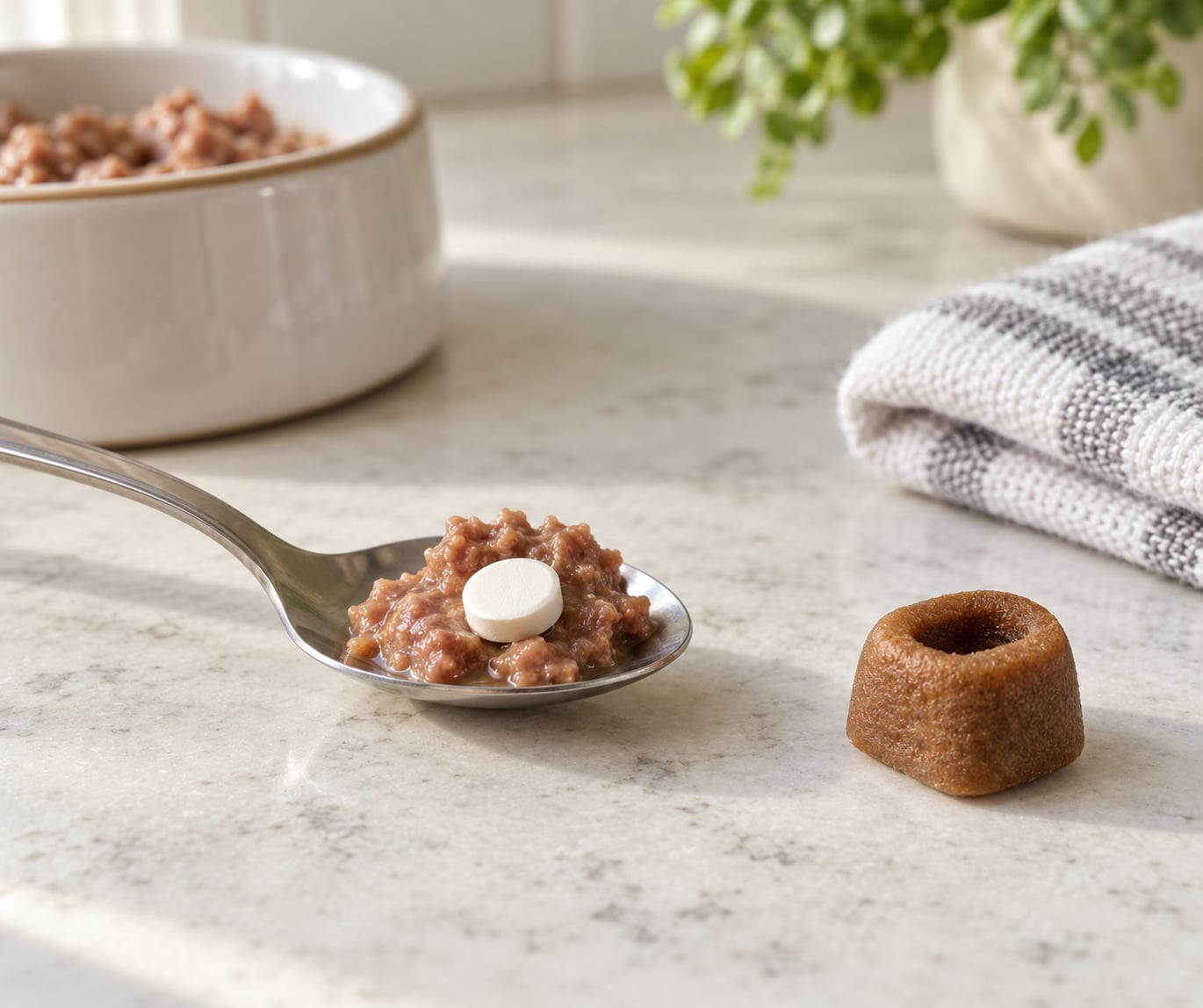
- A pill pocket or moldable treat if your dog has not worked out what they are for.
- A hollowed chicken heart or a chunk of cheese with a pocket cut into it, for dogs who eat around anything suspicious.
- An oral syringe without a needle, if the medication is liquid.
- A pill pusher or pet piller only if your veterinarian or pharmacist tells you it suits your dog and shows you how.
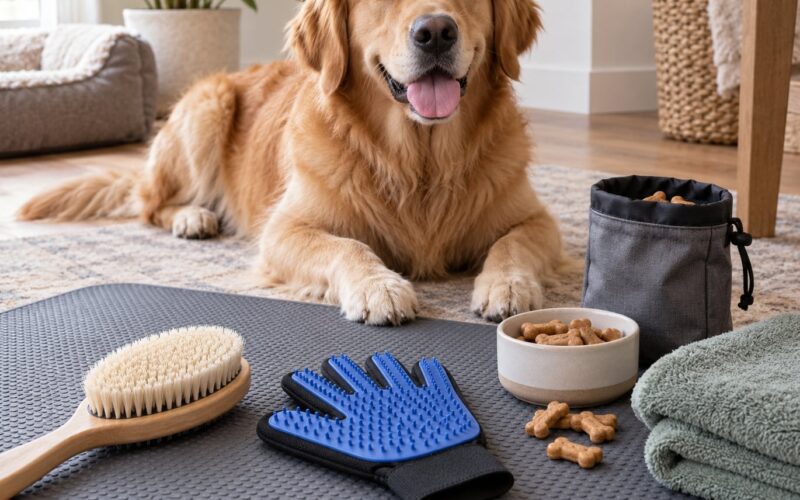
- A quiet, familiar spot such as a non-slip mat on the floor or a chair in another room, plus a towel.
For a course lasting 10 to 14 days, write the schedule on paper and keep it somewhere visible. Repeated dosing anxiety is as much a planning problem as a technique problem.
If the medication is a liquid, you need a dosing syringe rather than a kitchen spoon, because spoons measure inaccurately and you will not know how much the dog actually swallowed. Ask the clinic to demonstrate the syringe method if it has not been shown to you, and never force a large volume at once. If your dog has a tablet that goes down easily alongside a liquid, ask whether the drug even needs both.
Step-by-Step: How to Get a Dog to Take a Pill
How to Get a Dog to Take a Pill With Food
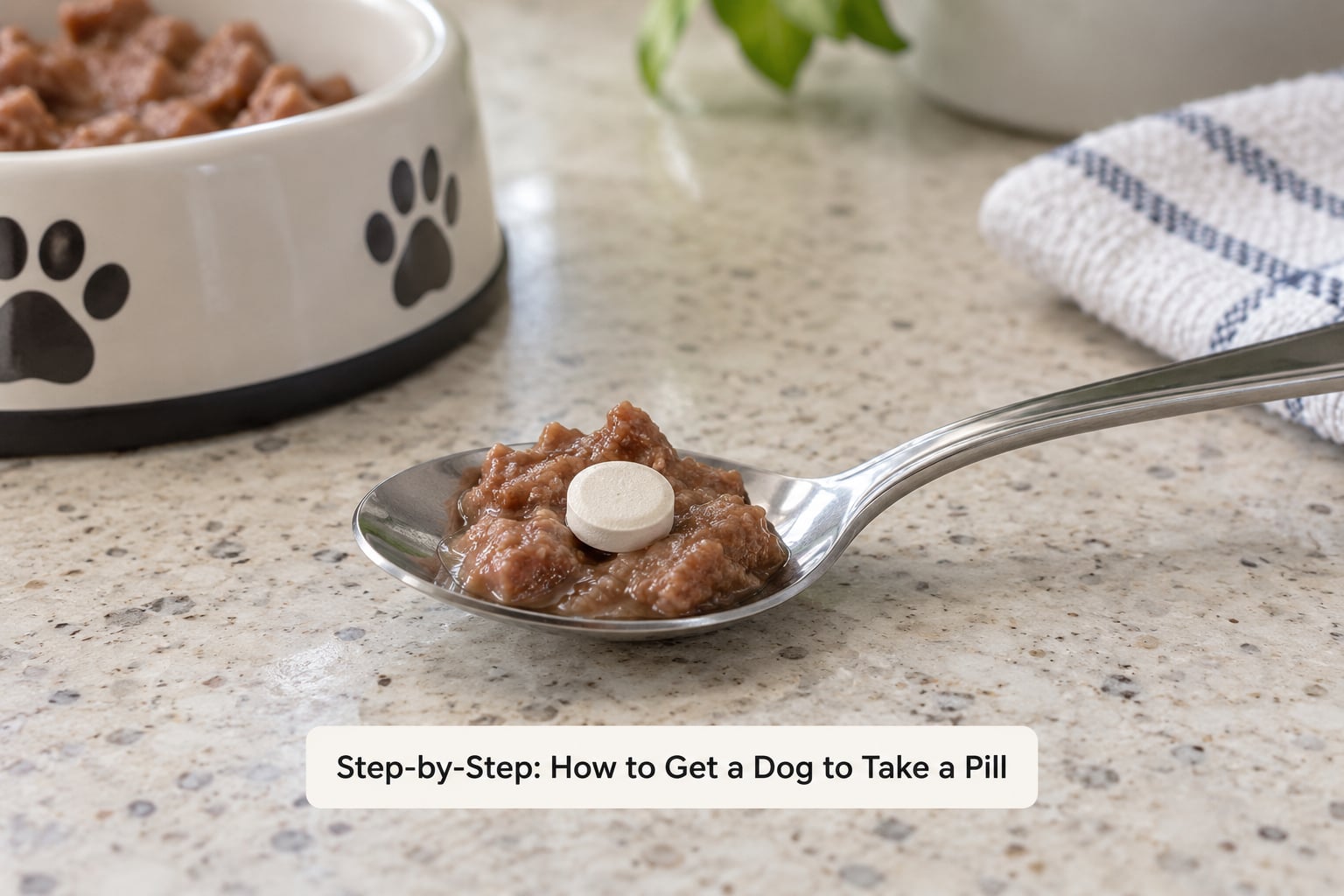
The food method is the first thing to try for any dog who eats treats enthusiastically, and it works about as often as people expect. The whole trick is that the portion has to be smaller than the treat your dog normally gets, sticky enough to hold the tablet, and bigger than the tablet so nothing shows at the edges.
Spread a teaspoon-sized amount of peanut butter, cream cheese, or wet food on a spoon or a small plate. Press the tablet into the middle so it is fully covered, then fold the sticky food over it and roll it into a ball roughly the size of a pea or a small grape.
Offer it with an open hand, or drop it on the floor and step back a pace. Then watch. Do not hover, do not talk, and above all do not reach for the dog’s face in the first two seconds. Let the dog work.
How you tell it worked: the dog swallows once, without chewing back and forth, and moves on to look for more. If your dog chews, pauses, drops it, or looks at you while holding it, assume it did not go down and switch to the next method rather than trying to fish it out.
If a plain sticky food works but your dog starts spitting the ball out, try a different one. Owners posting on r/dogs and r/Pets report the same pattern repeatedly: wet food alone is the most common failure because the tablet slides back out, while cheese, butter, liverwurst, and peanut butter hold the tablet firmly.
When a single treat is not enough, run the three-treat bait-and-switch. Offer one plain piece of the sticky food first, then the medicated piece, then another plain piece, moving fast and in sequence without pausing. Dogs often swallow the middle piece without tasting it because they are focused on the next one. Threads on r/Pets and r/DOG describe this as the most reliable food-based fix, and it costs nothing to try.
The variation owners of clever dogs use is conditioning first: hand over two or three empty sticky treats over a few days with no pill inside, then load one. By the time the loaded treat arrives, the dog is eating that food without inspecting it.
Sticky does not have to mean sweet or soft, and the best choice depends on your dog. Sticky and strongly flavoured options reported as working well include cream cheese, butter, liverwurst, soft cheese and xylitol-free peanut butter, plus cooked chicken or a meatball made from their usual wet food. Foods reported as unreliable include plain wet food, dry kibble pieces, and anything crumbly that leaves a bitter powder behind when the tablet is chewed.
Never use chocolate, grapes or raisins, onions and garlic, macadamia nuts, cooked bones, raw dough, alcohol, or anything containing caffeine. Xylitol, a sugar substitute, is toxic to dogs and appears in some peanut butters and sugar-free products, so read the label of anything you buy as a treat.
Try a Pill Pocket or Treat That Covers the Tablet
A pill pocket is a soft, moldable treat with a hole in the middle made to hold a tablet. Pinch it closed around the pill so nothing is visible, then offer it the same calm way.
This is the right tool when your dog swallows food quickly but is wary of an unfamiliar shape, and the wrong tool when your dog has already decided pill pockets mean medicine. That second problem is common: once a dog has spit out a medicated pocket, that specific treat stops working, sometimes permanently.
The fix is to stop using the pocket and go back to plain sticky foods, or to hollow out a cooked chicken heart and tuck the tablet inside. Owners of clever dogs report that the heart or a chunk of cheese works precisely because the dog swallows the whole thing without inspecting it.
Watch for the specific failure mode with pockets: the dog eats the treat, then stands there chewing. That is the tablet coming back out. If it drops onto the floor, pick it up quickly before it rolls away, and do not re-offer it without checking whether it is still intact.
Offer the Pill by Hand
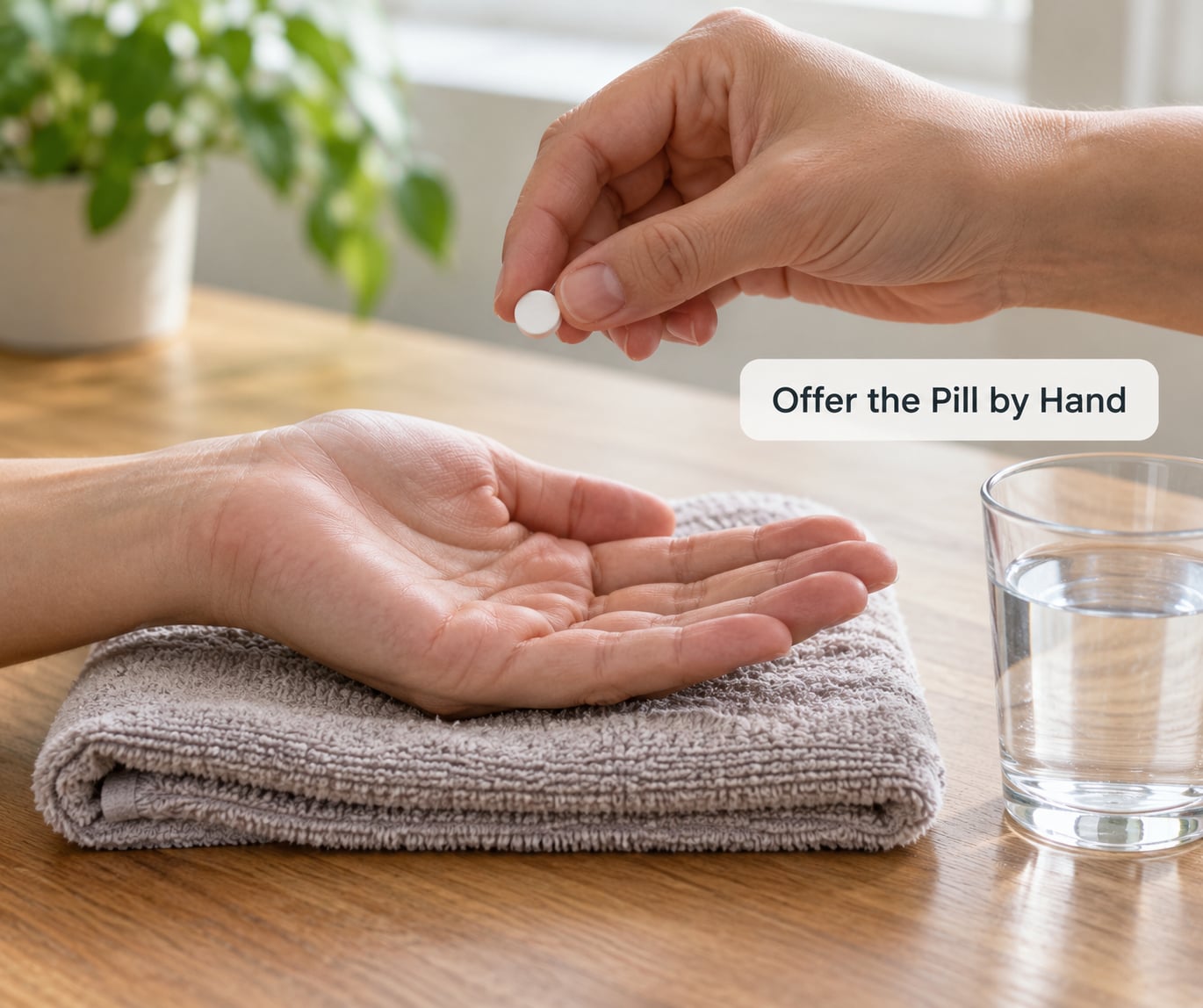
The manual technique is what your veterinarian does, and it is the most reliable method on this page. It takes practice on both ends. Put a towel on the floor, stand or kneel behind your dog so you can reach over the top of the head, and stay low and calm. Your own nerves transfer straight to the dog.
- Prepare the pill. If the pharmacist has said crushing is allowed, a light coating of butter or a drop of water makes it slippery and easier to swallow. Otherwise offer the tablet as it is.
- Open the mouth. Put one hand on top of the dog’s head, tilt the head back slightly, and use the thumb and middle finger of the other hand to pull the cheeks apart so the tongue falls forward. Many people find it easier to stand beside the dog than in front.
- Place the tablet on the floor of the mouth. Set it just past the natural rise at the back of the tongue, on the left side, aiming toward the side of the mouth rather than straight down the throat. That way the pill slides along rather than dropping straight onto the gag reflex and triggering a gag.
- Close the mouth gently. Hold the jaws shut without squeezing the muzzle. Tilt the head very slightly upward.
- Trigger the swallow. Rub the throat lightly, or blow gently across the nostrils. Owners on r/DOG describe blowing on the nose as the single most reliable trigger, and it works because it mimics the airflow the dog expects when it smells food.
- Hold for three to five seconds. Then reward immediately, whatever you used as the treat.
Do not shove the pill far down the throat, do not hold the nostrils closed, and never use force if the dog is struggling. Pushing a tablet past the point where it can be coughed back up is how medication ends up in the lungs.
Flat-faced dogs such as pugs, bulldogs and Boston terriers need a slower version of this. Their airways are narrowed, so give one small step at a time, pause between each, and expect snorting rather than silence. If the dog is struggling to breathe around the pill, stop and call the vet rather than repeating the attempt.
Use a Pill Gun Only With Veterinary Guidance
A pill pusher, pet piller, pill gun, or pill popper is a plastic device that sends the tablet to the back of the tongue without putting your fingers in the mouth. For a dog that has bitten or snapped during medication, this can be the difference between a dose and an injury.
It is also the tool most often misused, because it is sold as a shortcut and it is not one. If it is inserted at the wrong angle, or used on a dog that is already panicking, the tablet can end up in the airway instead of the esophagus.
Ask your veterinarian or the veterinary pharmacist to confirm the device is appropriate for your dog and to show you the technique. Confirm the tablet fits the tip, keep the dog’s head roughly level rather than tilted straight back, and never push hard enough to trigger a gag. If you cannot get clear guidance before you need the dose, call the clinic rather than guessing.
Ask about alternatives while you are on the phone. A compounded flavor, a chewable formulation, a transdermal medication, or an injection at home may all be options for the same drug, and any of them is easier than forcing a tablet.
Check That the Pill Was Swallowed
This is the step people skip, and skipping it is how dogs get double-dosed. Confirm in this order: open the mouth briefly and look, watch the dog’s behavior for thirty seconds, then check the floor.
The positive confirmation cue that veterinary hospitals describe, and that owners on r/dogs and r/DogAdvice have learned to rely on, is a lick of the nose. A dog that swallowed the pill gives one quick nose lick, or returns to normal sniffing. A dog that is still chewing, pawing at the mouth, or gagging did not swallow it.
Immediate warning signs after a dose: repeated gagging, coughing, a noisy breath, pawing at the mouth, drooling, or panic. Those mean stop and call the vet. Do not reach into the mouth of a gagging dog, and do not try to retrieve a pill you know went down.
Search the floor if you have to. Owners on r/DOG describe finding an intact tablet behind the sofa an hour later, long after they had assumed the dose was done. It is a two-minute check and it settles the re-dose question immediately.
If you are genuinely unsure whether the dose went in, that is not a guessing question. Call the clinic, describe exactly what you saw, and let them decide whether to re-dose.
Common Mistakes
Most failed doses come down to a handful of repeated errors. Each has a straightforward fix.
Forcing the pill. Pinching a dog’s muzzle hard, holding the mouth closed until it panics, or pushing the tablet deep into the throat creates fear that makes the next ten doses harder. The fix is to stop while you are still ahead, wait a minute, and use a slower method. A dog that bites at medication is telling you the technique has gone wrong, not that it needs more pressure.
Using leftover human medication. Ibuprofen, acetaminophen, aspirin, and many cold and allergy products are dangerous for dogs and must never be used. If a pill is not in a labelled container with a veterinary prescription on it, do not give it. Call the vet.
Crushing the wrong formulation. Enteric-coated tablets, extended-release and sustained-release drugs, and cytotoxic or seizure-control medications cannot be crushed, because the point of the coating is to control where and when the drug releases. A crushed extended-release tablet can dump the entire dose at once. Ask about the specific drug before you crush anything.
Repeating an uncertain dose. If you cannot tell whether the pill went down, do not give a second one “to be safe”. Too much of many drugs causes real harm, and a missed dose is usually far safer than a doubled one. Call the clinic for that individual drug.
Re-dosing immediately after regurgitation. If the dog brings the pill back up or spits it out after swallowing, most vets advise waiting rather than immediately repeating the dose, because it is unclear how much was absorbed. Ask your vet how long to wait for your dog and your drug, and write the answer down.
Hiding pills in something toxic. Xylitol is toxic to dogs, and it appears in some peanut butters and many sugar-free products. Never use it. Also avoid chocolate, grapes and raisins, onions and garlic, macadamia nuts, cooked bones, raw dough, alcohol, and caffeine.
Relying on wet food alone. A tablet in a scoop of wet food is easy to slide back out. If you use food, pick something sticky enough to grip the pill.
Using a human-sized pill. A tablet sized for a person is not appropriate for a small dog. If the tablet looks large for your dog, ask the vet whether a smaller tablet, a liquid, or a compounded chewable is available.
Chasing the dog around the room. A dog cornered after it has learned that pills mean pills will use everything it has to refuse. Stand still, work at floor level, and let the dog come to you. A calm setup beats a fast one every time.
Use a Slow, Low-Stress Setup
Most dogs can be conditioned to treat medication time as treat time, and the conditioning takes about a week. Start on a day when you do not need to give medication at all.
- Choose a quiet, familiar spot. The kitchen floor of a busy household is the worst possible place. A non-slip mat on the carpet of a closed room works much better.
- Prepare before the dog appears. Pill in the sticky food, treat portion measured, syringe filled. Fumbling while the dog watches teaches them that something is about to happen.
- Practice once without medicine. Give the plain sticky food, then walk away. Repeat for a few days and the dog will start coming to that spot expecting something good.
- Reward calm behavior. Praise and treat the moment the dog settles, not only after the pill. A dog that lies down and waits is behaving well and should be told so.
- Pair medication with something the dog loves. Follow a successful dose with a normal, high-value treat so the last memory of the moment is a reward.
- Stop while you are still ahead. If the dog gets highly distressed after two or three attempts, stop for the day. You can try again in a few hours, or ask the vet about a different formulation.
For a 14-day antibiotic course, this setup is worth the effort. Owners managing long courses report the same thing: the first few days are the hardest, and once medication time feels routine rather than alarming, dosing becomes a five-second job.
When to Stop and Call Your Veterinarian
Some situations are not for home technique. Stop dosing and contact your veterinarian, or an emergency clinic, if any of these happen.
- Choking, gagging that does not stop, or repeated attempts to cough the pill back up. A tablet that goes down the wrong way can end up in the airway.
- Difficulty breathing, noisy or labored breathing, pale or blue gums, or collapse. These are emergencies.
- Severe distress: whining, thrashing, snapping, or a bite. At-home dosing has become unsafe, and forcing it makes the next attempt worse.
- You suspect the wrong medication or the wrong strength. Do not give it. Keep the packaging and call.
- You cannot tell whether the dose went in. Describe exactly what happened and let the clinic decide.
- The tablet is too large for your dog, or the dog is missing many teeth, has a sore mouth, or has recently had dental or oral surgery. Ask for a different form.
- The dog is flat-faced, such as a pug, bulldog, or Boston terrier, and keeps gagging or struggling. These dogs have narrowed airways and need a slower approach, ideally one your vet has shown you.
- There is vomiting within a short time after the dose, or you have given more than one dose by mistake. Call immediately, even if the dog seems fine. Bring the packaging.
If your vet can see your dog quickly, ask to watch the technique happen in person. A few minutes of demonstration from someone who does it every day solves problems that online guides cannot.
Frequently Asked Questions
What if my dog spits out the pill?
Pick the pill up and do not give a second one straight away. Note the time, check whether the tablet is intact or chewed, and wait the interval your veterinarian advises before repeating a dose, since the amount absorbed is unclear. If the dog chews the tablet and you cannot tell what happened, photograph the pieces and call the clinic with the drug name and strength. Never crush a pill you are unsure about without checking first.
Can I crush a dog’s pill or mix it with food?
Sometimes, but not always. Enteric-coated, extended-release and sustained-release tablets must never be crushed, and neither should cytotoxic, seizure-control or thyroid medication, because the coating controls when the drug releases. Call your vet or the dispensing pharmacist and ask about the specific drug by name. Regular tablets that are safe to crush are usually best mixed into a small portion of sticky food such as peanut butter or cream cheese.
How can I give a dog a bitter-tasting pill?
Bitter tablets are easier to swallow whole than chewed, so either place it past the hump of the tongue at the back of the mouth and trigger the swallow reflex, or coat it and bury it in a strong-flavoured sticky food. Cheese, butter, liverwurst and xylitol-free peanut butter all help because their taste overwhelms the bitterness. If the same drug always tastes bad enough to make the dog refuse, ask about a compounded or flavoured version.
Should I give my dog a second pill if I am unsure whether it swallowed the first one?
Do not repeat the dose on a guess. Doubling up on many medications causes real problems, including liver injury with certain pain relievers and overdose with seizure and heart medications, while one missed dose is usually far less risky. Look for the pill on the floor and in the dog’s mouth, check whether the dog licked its nose, then call your veterinarian with the drug name and describe what you saw. They will tell you how long to wait or whether to re-dose.
Can I use a pill gun to give my dog medication?
A pill gun, pet piller or pill popper can be safe and useful, especially for a dog that bites or snaps during medication, but only with guidance. Ask your veterinarian or veterinary pharmacist to confirm the device suits your dog and to show you the technique, and check the tablet fits the tip. Insert it gently with the head roughly level, never angled upward into the airway, and stop if the dog panics. Never use force.
Conclusion
Start here: confirm the drug with your vet or pharmacist, including whether it needs food and whether it can ever be crushed, then prepare a small portion of a high-value sticky food with the tablet buried in the middle. Watch the dog swallow it and confirm with a quick look and a nose lick. If the food method fails, move to manual placement past the hump of the tongue, and if that fails, ask your vet about a pill device or a compounded flavoured option.
Stay calm, keep your own movements slow, and reward the dog the moment the dose is done. Most importantly, know when to stop: a snapping dog, a choking dog, or a dose you cannot confirm is a reason to phone the clinic, not to try harder. That conversation is what separates a five-second dose from a two-week struggle, and every answer here is general guidance to support it, not a substitute for advice about your own dog.