To make a kids costume safe for trick or treating, you check four things before the child puts it on: the fabric will not catch fire, the outfit is visible to drivers after dark, nothing hangs loose enough to trip or snag, and the face is not covered. Most parents can do the whole job in an evening with a sewing kit and a roll of reflective tape.
The good news is that you rarely have to buy a new costume. Almost every safety problem can be fixed on the one already hanging in the closet, and the character your child picked matters more to them than anything a safety catalog would sell you. Trim the hem, swap the mask for face paint, add reflective tape to the back, and the same pirate outfit works.
Here is the order I would work in. Fit first, because a costume that fits wrong causes more real problems than a costume with slightly risky fabric.
Table of Contents
- 1What You Need
- 2Step-by-Step: How to Make a Kids Costume Safe for Trick or Treating
- 31. Check the Fit and Movement
- 42. Remove or Cover Potential Hazards
- 53. Protect Skin and Improve Visibility
- 64. Secure Accessories and Footwear
- 75. Do a Final Trick-or-Treating Safety Check
- 8Common Mistakes
- 9Frequently Asked Questions
- 10How can I tell whether a kids costume fabric is safe to wear?
- 11Should a child wear a mask while trick or treating?
- 12Is reflective tape enough to make a costume visible at night?
- 13What costume accessories are unsafe for young children?
- 14How do I make a costume safe if it is already homemade?
- 15What should I do if the weather is cold or rainy?
- 16Conclusion
What You Need
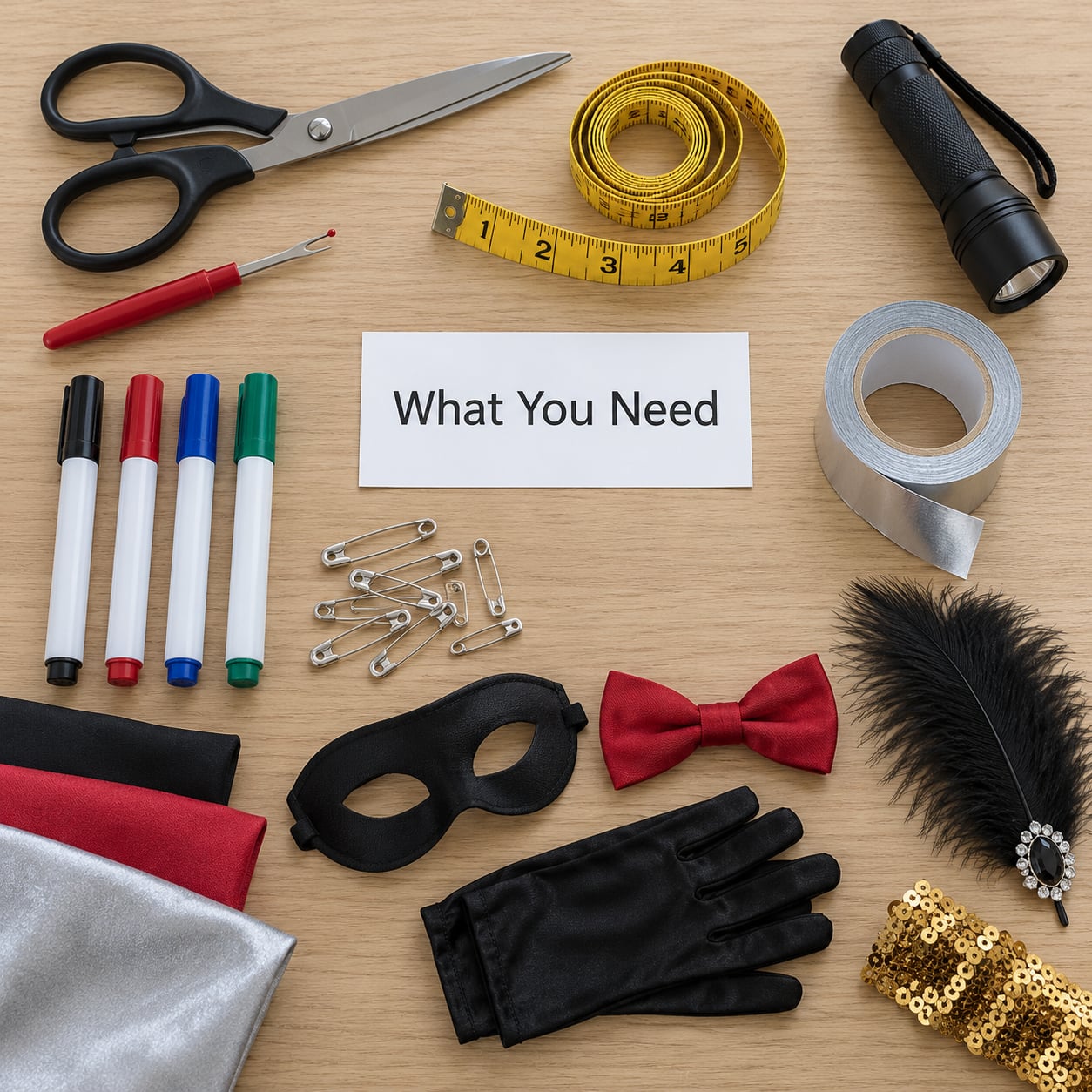
Gather these before you start so the costume is off and in front of you once, not half finished on a bedroom floor.
- Fabric scissors and a seam ripper for removing detachable pieces and trimming hems without pulling the fabric.
- Measuring tape to check where the hem falls on your child, knee and mid-thigh are the marks to aim for.
- A flashlight for the visibility test. You check the costume in a dark hallway or outside at dusk, not in a lit room.
- Reflective tape, the sewn-on or iron-on kind rated for outdoor gear rather than a thin decorative ribbon.
- Fabric-safe markers to write the parent’s phone number inside the costume where it will not rub.
- Safety pins, clips or soft Velcro strips to hold accessories in place without sharp fasteners.
- Nontoxic face paint in case a mask has to come off. Cosmetic-grade face paint made for skin is the safe swap.
- Spare accessories you already own to replace anything that turns out to be sharp, rigid or cracked.
Step-by-Step: How to Make a Kids Costume Safe for Trick or Treating
Have the child put the costume on before you change anything. Measuring it on the hanger tells you nothing about how it sits when they move, and most of the fixes below only make sense once you have watched them walk, turn and reach.
1. Check the Fit and Movement
A costume should fit snugly, sit above the knee, and let your child walk, run, climb stairs and bend over without the fabric catching. Anything that drags is a tripping hazard, and a full-length robe or a long cape can put a child face-first into a curb.
Have them walk up and down a hallway, then run a few steps. Watch the hem from behind at knee height and watch what happens when they put their hands out to catch a trick-or-treat bag or steady themselves on a railing.
If fabric is too long, mark it with the fabric marker while the costume is on, then take it off and cut a few centimeters at a time. Cutting is faster than letting kids stand still for a hemming job.
Turn the costume inside out, fold the excess under, and stitch it with a wide zigzag or a straight stitch. Kids outgrow costumes by length first, so leave an inch of allowance at the top in case it needs to be taken in later.
Check the shoulders next. Padding under the arms, a stiff bodice, or a bodice that is one size too small limits breathing and makes running hard. A costume that has to be pulled over the head every time at the door gets left on the porch more often than it should.
You will know the fit works when the child can cross both arms in front of them, walk up a flight of stairs, and pick something up off a low table without the costume grabbing anything.
2. Remove or Cover Potential Hazards
Take the costume off and read the tag. The U.S. Consumer Product Safety Commission advises looking for costumes, masks, beards and wigs labeled flame resistant, and warns that loose fibers and flammable decorations can catch fire quickly. If there is no label, treat the costume as flammable and keep it well away from open flame and flames from jack-o’-lanterns.
Run your hand along every edge looking for three things: sharp points, small detachable parts, and anything rigid enough to poke someone during a hug or a crowded doorway.
- Dangling cords and ties catch on branches and door frames. Shorten them or tuck them under the costume.
- Small loose pieces such as felt letters, plastic gems, tiny bells or beaded chains come off and become a choking hazard. Pull them off or glue them down.
- Breakable decorations including thin plastic pieces and ceramic-looking ornaments go in the trash.
- Rigid props made of hard plastic or wood are the ones to swap. Foam and cardboard bend and give way instead of poking.
- Wig glue and heavy costume makeup near the hairline can irritate skin and eyes.
Masks need the most attention. A mask that covers the eyes and nose narrows the field of vision, traps heat and adds another layer between the child and the grown-up watching them. Face paint made for skin is the swap parents report switching to after a child walked into a mailbox in one.
Wigs are worth a look too. Long synthetic hair is a snag risk, and cheap wigs with a heavy adhesive are a scalp and skin irritant. Tuck or shorten long hair and use a fringe clipped short if the child will not go without it.
3. Protect Skin and Improve Visibility
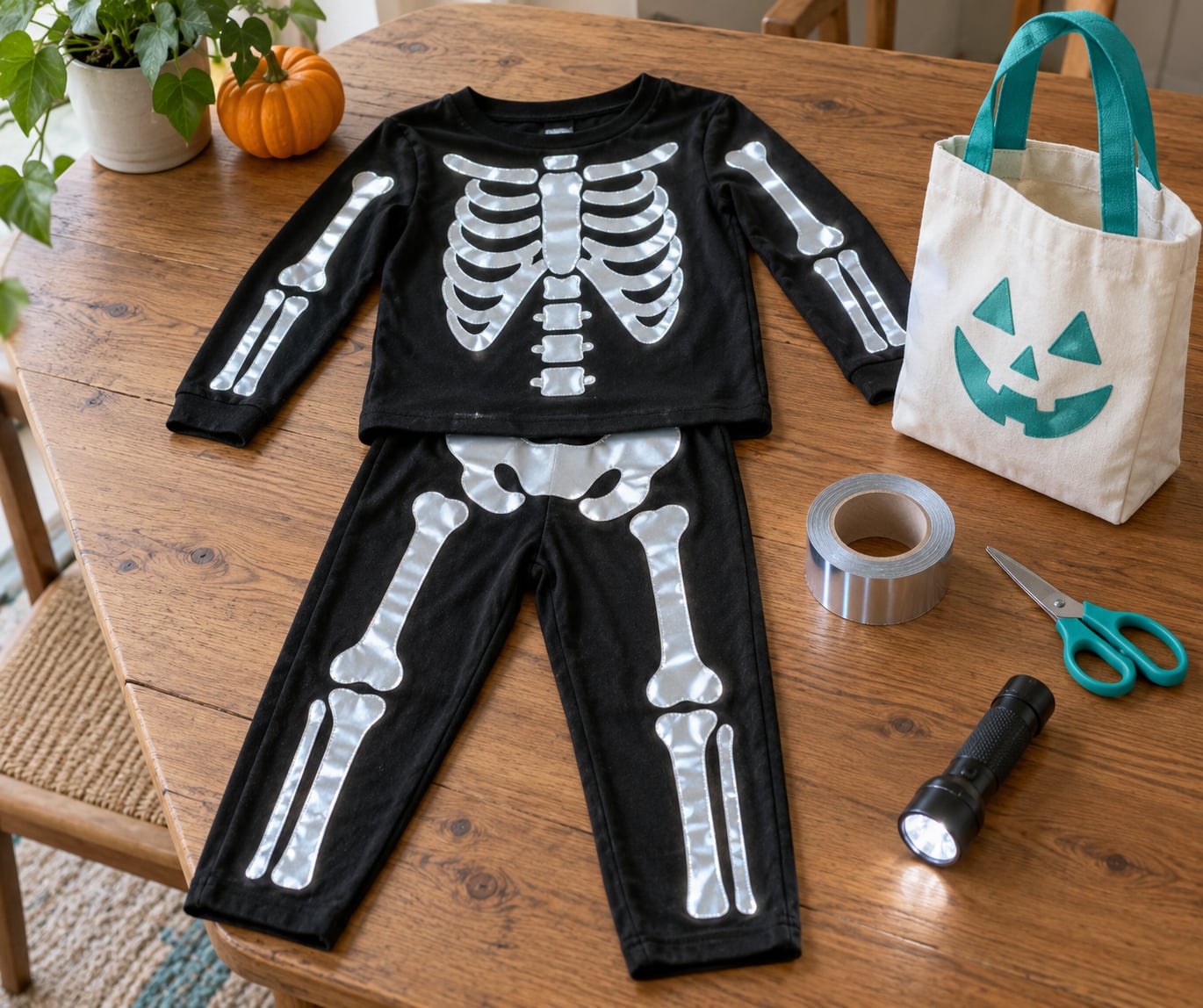
Visibility is the part parents are most willing to skip, because the costume looks fine in a lit room. Take it outside at dusk or into a dark hallway with the flashlight off and see whether you can pick your child out in under three seconds. If you cannot, a driver on a residential street at that same moment will not see them either.
Reflective tape returns light straight back at its source, which is what makes it work at angles. Put it where motion happens and where the torso turns: across the back, around the upper arms, on the lower legs, on the back of the hood if there is one, and on the front of the chest.
Add a second layer of visibility for the bag. A light-colored trick-or-treat bag with a reflective strip reads far better than a black bucket, and the bag is where the candy weight pulls a child to one side and can tip their balance.
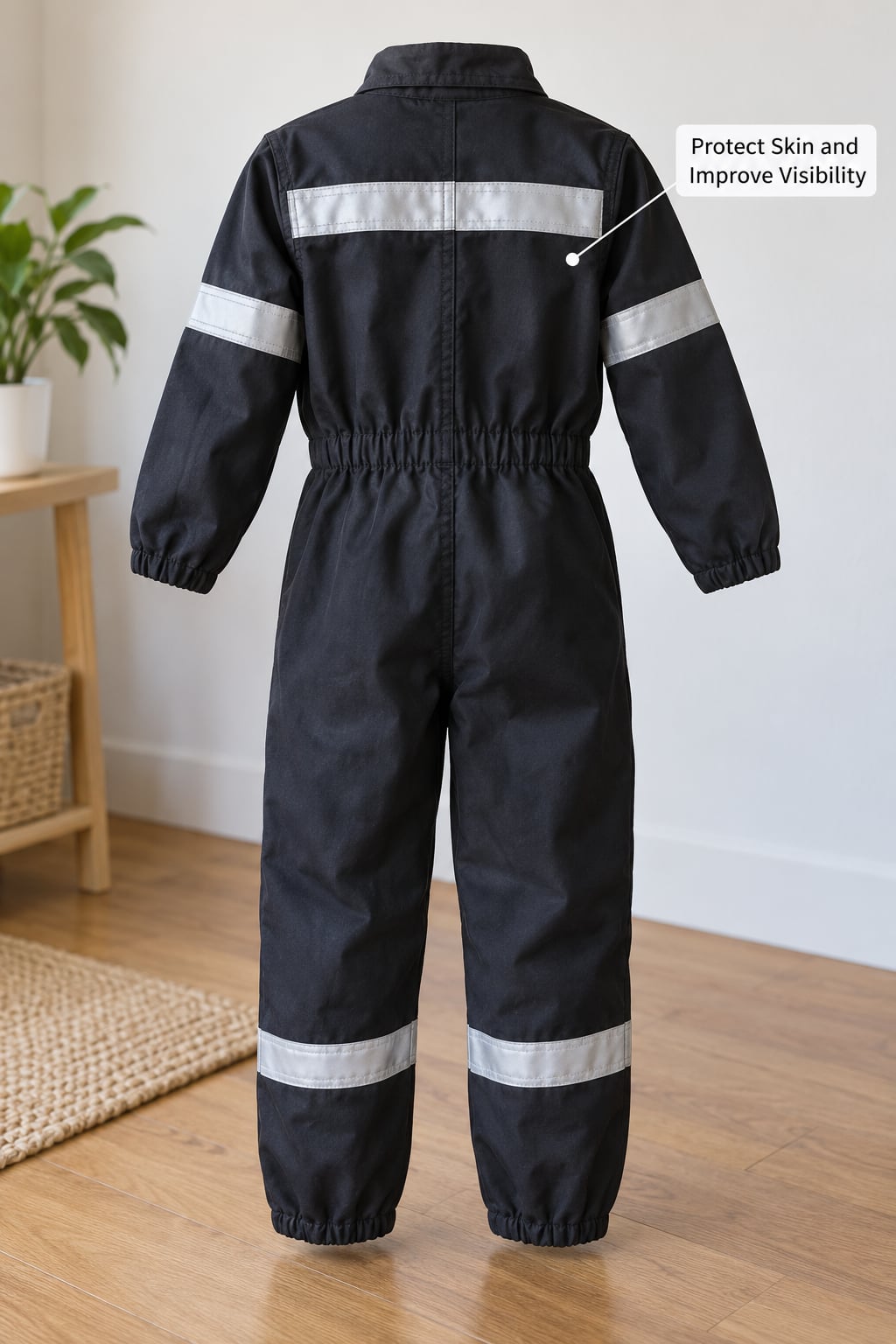
Color matters more than most people expect. Bright or light colors contrast against a dark street and a wet lawn, while black, navy and dark brown essentially vanish once headlights sweep across them. If the costume is dark, the tape and a carried light do most of the work.
Give the child something to hold. A flashlight, a clip-on light on the collar, a glow bracelet on the wrist, or glow-in-the-dark patches sprayed onto the costume add up. A child who is responsible for keeping their own light on tends to treat the whole thing as a fun job instead of a rule, which is how parents on parent forums describe making it stick.
On the skin side, anything scratchy or tight gets a layer of soft clothing underneath. Fleece-lined or long-sleeve base layers under a thin costume solve the cold-weather problem without a heavy coat that ruins the shape.
If the child has a known allergy or sensitive skin, test any face paint on a small patch of skin the day before. The cosmetic-grade, nontoxic face paints sold for children are the ones to use, and the allergy-test point matters even when nobody has reacted before.
For skin exposure beyond the face, check the costume for rough seams and fiber shedding by rubbing a damp white cloth over the fabric. Color that comes off onto the cloth is dye that ends up on the child’s arms for a full evening.
4. Secure Accessories and Footwear
Accessories are where an otherwise safe costume gets undone. The cape, mask, sword, wand, hat and treat bag all need to stay attached through a night of running, petting a dog and squeezing through a crowd.
Any accessory that can swing needs to be short enough that the child cannot trip on it. Capes are the usual culprit: shorten the back so it clears the knees when the child is moving, or pin it up short for the night. Belts and sashes have to be cinched tight rather than knotted, because a loose end is something to catch on.
Swords, wands and staffs should be soft, flexible and obviously make-believe. Foam and padded cardboard are the two materials worth using. Anything with a hard edge, a metal blade tip or a realistic look tends to frighten younger children on the same street, which can turn a fun night into a meltdown.
Footwear does more work than the costume does. Sneakers or well-fitting boots beat costume boots every time, especially the stiff plastic ones with thin soles. Broken-in shoes mean the child will not hobble, and a shoe that slides off on a wet step is a fall. Anything with laces needs double knotting, and long untucked laces are a step away from a face plant.
Snow boots work until they don’t, once the sugar starts melting in them. If the route involves puddles or mud, spare dry socks in the treat bag take about thirty seconds and save the evening.
Move small bags and buckets up so they sit high on the back rather than swinging low at the hip. Low and heavy makes a child lean, and leaning while crossing a street is the combination to avoid.
5. Do a Final Trick-or-Treating Safety Check
Do this check a few days before Halloween, not at 6pm on the 31st. Time pressure is how the sharp prop and the dragging hem both make it out the door.
Walk to the front door in normal light, then again from the direction of an approaching car at dusk. Look at the child from behind, from the side and from the front, at the height of a driver sitting in a sedan.
- Nothing below the knee and nothing dragging on the ground.
- Reflective tape on the back, arms or legs, visible from behind.
- A light or glow item the child is carrying or wearing.
- No rigid or sharp prop anywhere on the body.
- No mask blocking the eyes; face paint or an open hood instead.
- Shoes that fit, with laces double knotted.
- A treat bag that is light-colored, strapped on high and not overstuffed.
- Layers under the costume that suit the forecast, including a warm layer for after dark.
- A flashlight charged, plus spare batteries, in an adult’s pocket.
- Parent phone number written inside the costume or on a bracelet the child wears.
- A check-in plan agreed for phones, and a tracker in a pocket if the child goes with friends.
The last item is worth a moment of explanation. A tracker in a costume pocket costs nothing to add and answers the question parents actually worry about most, which is where the child is right now. For younger children going door to door, an adult within arm’s reach matters far more than any gadget.
Do the walk-through with the child, not around them. Ask them to show you what the flashlight is for and why the bag goes on the back. Children who can explain the rule are far more likely to follow it when you are not standing right there.
Common Mistakes
Treating an unlabelled costume as flame resistant. Mass-market costumes often have no flame-resistant label at all, and most parents never look for one. Check the tag, and where nothing is stated, keep the outfit away from porch candles, lit jack-o’-lanterns and fireworks, and prefer cotton or fleece layers over loose synthetic fiber.
Checking visibility in a lit room. A costume can be bright pink at noon and invisible at 6:30pm. Test it at dusk, from behind, and add reflective tape if you hesitate for even a few seconds.
Leaving the mask on. Full-face masks cut peripheral vision, add heat, and separate the child from the adult keeping watch. Face paint made for skin, an open hood, or a mask the child can see well past are better options.
Buying the costume for the look and adjusting the fit on Halloween night. Skipping the fit test is what produces children tripping on hems and limping in hard shoes. Try the costume on a week ahead, walk, run and climb stairs in it.
Leaving accessories loose or rigid. Swords, capes, wands and dangling cords are the items most likely to cause contact or tripping. Use foam or cardboard props, shorten the cape above the knees, and pin or clip accessories so they stay put.
Forgetting footwear and the treat bag. Costume slippers and hard plastic costume boots are a fall waiting to happen, and a heavy black bucket tips a child’s balance in the dark. Real shoes, and a light-colored bag worn high on the back.
One more that gets missed: loose fibers and costume fringe near a lit jack-o’-lantern. The risk is small but the fix is trivial, which is why it belongs on the checklist rather than in a footnote.
Frequently Asked Questions
How can I tell whether a kids costume fabric is safe to wear?
Check the care tag inside the costume first. The U.S. Consumer Product Safety Commission advises choosing costumes, masks, beards and wigs labeled flame resistant, and noting that some costumes carry no label at all. If nothing is stated, treat the fabric as flammable, skip loose fringe and long fiber, keep the child away from candles, lit jack-o’-lanterns and fireworks, and add a cotton or fleece base layer.
Should a child wear a mask while trick or treating?
Most safety guidance, including the Red Cross, favors face makeup over masks. A full mask narrows the field of vision, traps heat and makes it harder for an adult to see and read a child’s face. If the child insists on wearing one, choose an open-bottom style that clears the eyes, check the field of vision in daylight first, and test it at dusk.
Is reflective tape enough to make a costume visible at night?
Tape is the single most effective addition to a dark costume, because it returns light straight back to headlights. It works best on a moving child, so place strips across the back, around the upper arms, on the lower legs and on the chest. Pair it with a light-colored or bright costume and something the child carries, such as a flashlight or glow bracelet.
What costume accessories are unsafe for young children?
Avoid rigid or sharp props, including hard plastic or wooden swords, staffs and knives, and anything with a metal tip or point. Skip small detachable pieces such as loose felt letters, tiny bells, beads and plastic gems, which are choking hazards once they come off. Long capes, sashes and cords are also worth avoiding because they snag and swing into walking feet.
How do I make a costume safe if it is already homemade?
Run the same checks you would on a store-bought costume. Trim or pin the hem above the knee, remove loose small parts and rigid props, cover anything scratchy with a soft base layer, and add reflective tape to the back, arms and legs. Homemade fabric has no label at all, so treat it as flammable and keep it away from open flames.
What should I do if the weather is cold or rainy?
Layer soft clothing underneath rather than relying on a heavy coat over the costume. Fleece or cotton base layers keep warmth without bulk, and worn pants under a short costume solve the cold-leg problem. Add waterproof layers below the costume, use water-resistant shoes with laces double knotted, pack spare dry socks, and carry a reflective strip on the treat bag for low-light conditions.
Conclusion
Start with the fit. If the costume sits above the knee, does not drag and does not restrict walking or breathing, most of the remaining risks get smaller on their own. Then work outward: trim and pin loose fabric, remove sharp props and small parts, swap a full mask for face paint, and add reflective tape to the back, arms and legs along with something the child carries to light the way.
Finish with the accessories and footwear, then walk your child to the door a few days before Halloween. Let them show you where the flashlight goes and why the bag rides high on the back. That short conversation is what turns a modified costume into a habit the child actually keeps.