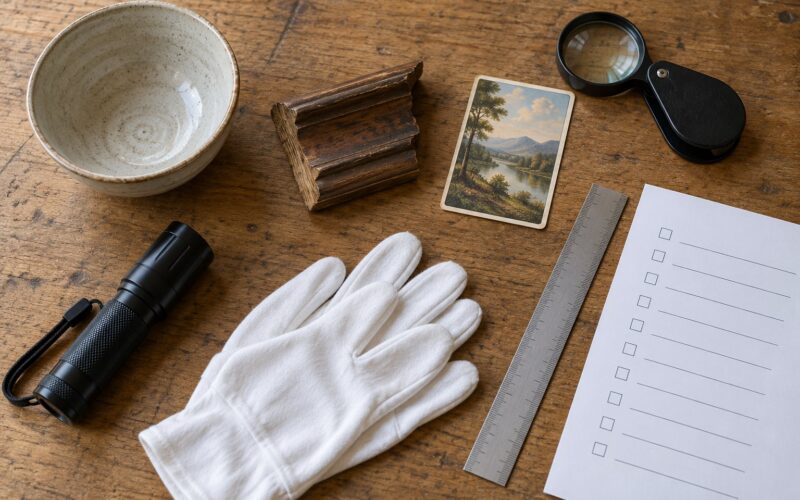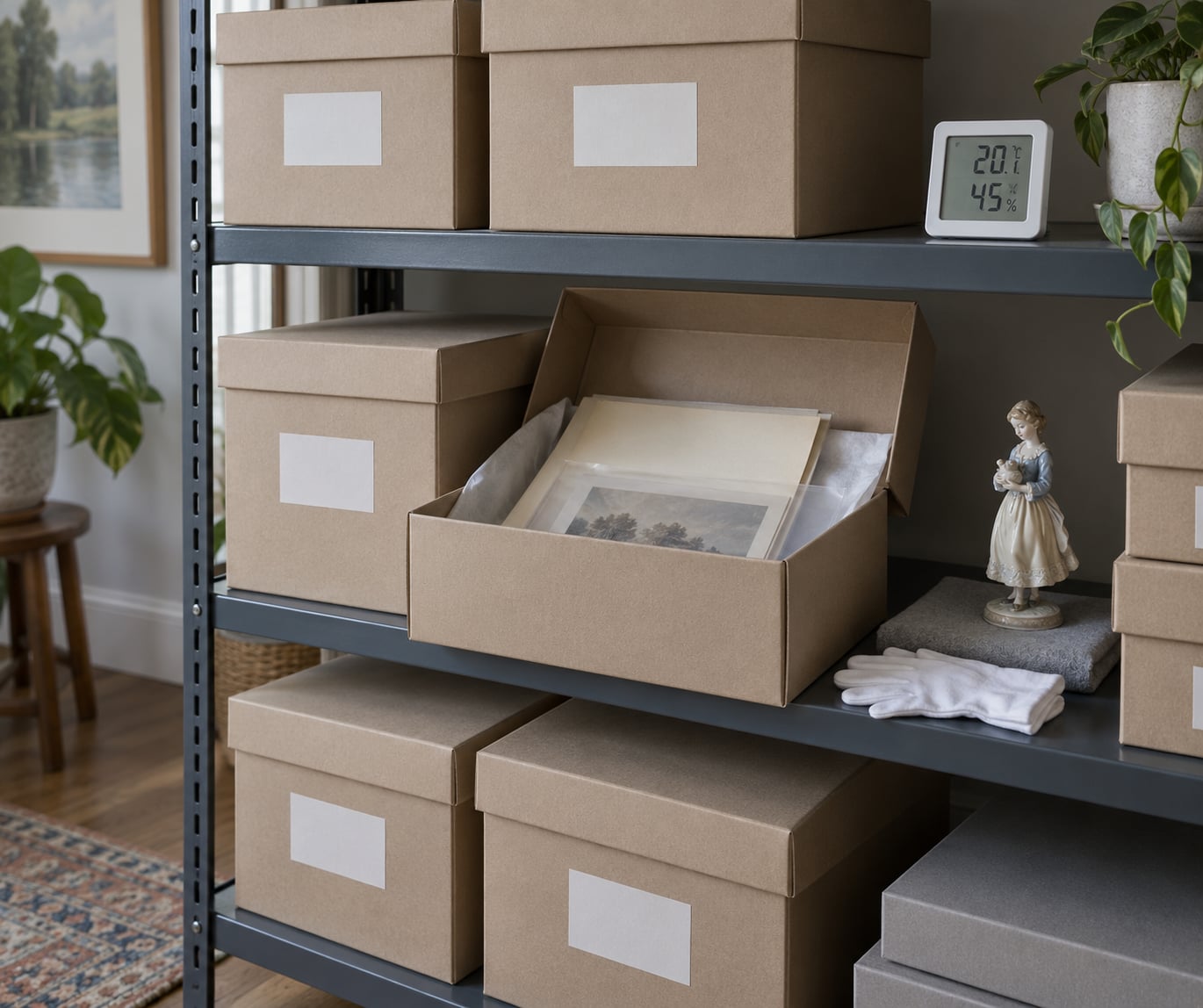
Four things destroy most of the value in a collection: humidity, ultraviolet light, heat swings, and mishandling. Block those four and store the item in archival, acid-free, PVC-free packaging inside a dry, shaded room, and its condition ten years from now looks like its condition today. Value is set by condition, so a shelf that stays dry and dark protects your money more reliably than any display case you can buy.
Most collectors lose value through storage mistakes, not bad buying decisions. A sun-faded toy box or a warped card can drop most of its market worth while still looking complete to the owner. The eight steps below cover how to store collectibles so they keep their value, and they take a few hours for a modest collection or an afternoon for a large one.
Table of Contents
- 1What You Need
- 2Step-by-Step: How to Store Collectibles So They Keep Their Value
- 31. Document Each Item Before Storage
- 42. Research the Item’s Material and Storage Risks
- 53. Clean Only When It Is Safe
- 64. Choose Acid-Free and Supportive Packaging
- 75. Use Containers That Fit the Collection
- 86. Create a Stable Storage Environment
- 97. Arrange Items to Prevent Physical Damage
- 108. Inspect and Update the Collection
- 11Common Mistakes
- 12Storage Tips for Valuable Collections
- 13Frequently Asked Questions
- 14What temperature should collectibles be stored at?
- 15How should I store collectibles in plastic bins?
- 16Should collectibles be stored in a basement or attic?
- 17How do I prevent paper collectibles from yellowing?
- 18Do acid-free boxes keep collectibles from fading?
- 19How often should I check my stored collection?
- 20Conclusion: Start With Your Most Fragile Items
What You Need
Before buying a single folder or bin, sort the collection into groups. What you learn during that sort dictates every supply purchase that follows, and it stops you from buying 200 sleeves you will never fill.
Group by material first, since materials behave differently. Paper, textiles, metals, plastics, wood, photographs and mixed-media objects each react to moisture, light and contact materials in their own way. A cardboard box that suits a stack of comics can trap enough moisture to bloom mould inside a bag of vintage parts within a single summer.
Then group by size and value. Small flat items want shallow boxes. Large boxed toys need rigid containers sized so nothing shifts. Keep the most valuable items in a separate group, because they justify better supplies than the bulk of the collection does.
Note sensitivity for each group. Light-sensitive items include anything with printed paper, dyed fabric, coloured plastic or photographs, and they need a dark box or a UV-filtering case. Moisture-sensitive items include paper, textiles, cardboard packaging, wood and anything with a glue joint. Metals mostly worry about humidity and salt air rather than light.
Check what packaging already exists. Original boxes, card sleeves and certificates of authenticity are worth more than most supplies you will buy, and they change what you need. An unopened boxed set already has most of the protection an archival box provides, so it needs light control and humidity control, not repackaging.
Finally, decide how each group will be used. Displayed items need light management and rotation. Archived items need flat, stable, pest-proof storage. Items you expect to transport need to survive being moved, which usually means individual protection and boxes that can be lifted one-handed.
A basic kit covers most collections: archival folders or buffered paper, lignin-free cardboard boxes, clear polypropylene sleeves and top loaders for cards, cotton and nitrile gloves, a soft brush, silica gel packets, a digital thermometer with hygrometer, and unbleached acid-free tissue for wrapping.
Step-by-Step: How to Store Collectibles So They Keep Their Value
1. Document Each Item Before Storage
Photograph every significant item before it goes into a box, including the box, the labels and any condition marks. Date-stamp the photos and keep them in the same folder structure as your written records.
Record identifying details in a spreadsheet: maker, model or series, serial number, date acquired, where it came from, current condition and a rough value range. The serial number matters more than people expect, since it is how insurers verify a claim and how heirs know what they actually own.
Keep receipts, certificates and grading reports with the inventory record rather than in a drawer. If you ever sell, trade or pass the collection on, that paperwork is the difference between a documented collection and a pile of objects.
You will know documentation worked when someone other than you can identify and value the collection without opening a single box.
2. Research the Item’s Material and Storage Risks
Every material has a weak point, and storage only protects what you understand. Paper and photographs yellow as acids from cardboard, wood and newspaper migrate into the fibre, and they fade under UV light. Textiles are weaker still, and moth larvae find wool and cotton long before they touch synthetics.
Metals mostly tarnish, and coin surfaces react to PVC plastic by sticking to it and picking up a sticky residue that is painful to remove. Plastics soften and deform with heat, and soft PVC off-gases, which yellows whatever it touches.
Wood splits when humidity swings, and glue joints fail in dry air, so an old wooden cabinet can end up with loose joints after a winter with a radiator underneath it. Mixed-media items carry the sum of their parts, so a painted wooden figure inherits both the paint’s light sensitivity and the wood’s moisture sensitivity.
Here is the short version of the targets that come out of that research:
| Material | Temperature | Relative humidity | Light | Packaging and handling |
|---|---|---|---|---|
| Trading and sports cards | 65-70 F (18-21 C) | 40-50% | Dark or UV-filtered | Soft polypropylene sleeve plus toploader, stored upright |
| Comic books | 65-70 F (18-21 C) | 40-50% | Dark | Bag and board with backing board, upright in an archival box |
| Boxed action figures and LEGO | 60-68 F (16-20 C) | 40-55% | Away from direct sun | Original box kept, boxed upright with inert filler |
| Vinyl records | 65-70 F (18-21 C) | 35-45% | Avoid long exposure | Sleeved, upright, never stacked flat |
| Coins | 65-70 F (18-21 C) | 35-45% | Not critical | PVC-free holders or capsules, never loose cardboard flips |
| Stamps | 65-70 F (18-21 C) | 40-50% | Dark, filters under 75 lux | Glassine or polypropylene sleeve, hinged album, away from gum |
| Paper, books, photographs | 65-70 F (18-21 C) | 40-50% | Dark | Acid-free folder, buffered at about 30% alkaline reserve |
| Oil and acrylic paintings | 65-70 F (18-21 C) | 45-55% | UV-filtered glazing, low light | Off the floor, never against an exterior wall |
| Vintage electronics | 60-70 F (16-21 C) | 40-50% | Not critical | Batteries removed, ventilated, silica gel nearby |
| Glassware and crystal | Stable room | 40-55% | Not critical | Individual padding, no stacking, avoid contact with acids |
| Plush and textiles | 65-72 F (18-22 C) | 40-50% | Avoid prolonged sun | Acid-free tissue wrapping, sealed against moths |
You will know the research worked when you can point to a specific threat for each group, such as UV for the printed cards and off-gassing for the soft-plastic toys, instead of repeating cool and dry.
3. Clean Only When It Is Safe
Cleaning is where well-meaning collectors do the most damage. Dust is abrasive, and the wrong brush on a painted or glued surface removes original finish that cannot be replaced. When in doubt, leave it alone.
Generally safe: a soft brush or clean microfiber cloth on a hard, glazed or non-fragile surface, and nothing more. Coins can be rinsed in distilled water and dried gently, though never rub a coin dry. Also generally safe is nothing at all for most antique and early items.
Do not clean antiques, painted pieces, glued assemblies, textiles with loose dye, rusted metal, anything with an intact patina, or anything whose maker specified a cleaning method. Water and household cleaners strip varnish, dissolve adhesives and take the finish with them.
If an item is genuinely valuable and genuinely dirty, ask a qualified conservator. It costs less than the item. A cleaning mistake usually cannot be undone, and buyers and graders both treat it as condition damage.
The test is simple: if you would not try this cleaning method on a photocopy of the item, do not use it on the item itself.
4. Choose Acid-Free and Supportive Packaging
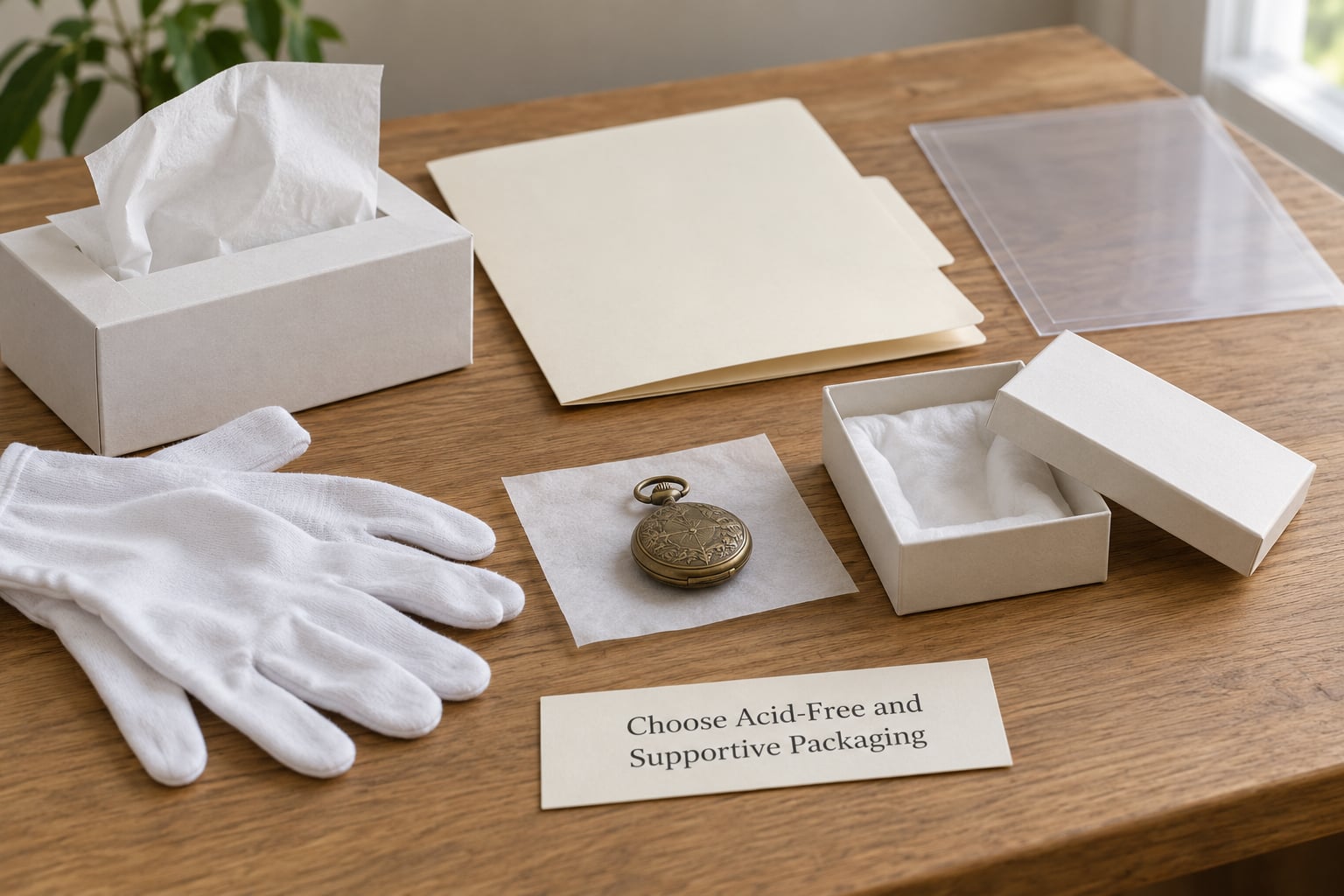
Archival means acid-free and lignin-free. Acid-free paper has a pH of 7 or above, and lignin-free cardboard has been made without the wood pulp acids that yellow over decades. Buffered folders add an alkaline reserve that neutralises acids in the item itself.
For cards, use a soft polypropylene sleeve as the inner layer and a toploader or semi-rigid holder as the outer. Soft PVC sleeves stick to surfaces over time and off-gas into them, so PVC-free is not a preference here, it is the requirement. Never write on a card or its holder with a felt-tip or permanent marker; a pencil on the sleeve is reversible, ink is not.
For anything with a printed surface, buffer the fold or avoid folding entirely. Tissue paper between layers stops a surface print or a photograph from sticking to whatever sits next to it, which is the single most common way an unblemished item develops permanent marks.
Never use newspaper as wrapping, since the ink carries acids and will transfer. Skip rubber bands, which crush and stain, and PVC bags, which off-gas. Ordinary paper is only useful for wrapping genuinely low-value items such as loose hardware or textiles you will wear.
Check the packaging by smell and feel. Good archival stock feels crisp, smells faintly neutral rather than musty, and holds a fold without springing back.
5. Use Containers That Fit the Collection
Shallow boxes suit documents, photographs and flat cards, because the contents are closer to the surface where humidity moves. Archival comic boxes with snug backing boards suit issues stored upright.
Rigid bins work for mixed, less fragile collections where you want visibility and durability. Give them airtight lids only for groups you have already dried thoroughly, since a sealed bin traps whatever moisture went in, and it lets you throw in a silica gel packet.
Display cases earn their keep for the items you rotate through them, not for the whole collection. Buy fewer cases than you think you need and fill them with acid-free support material so items do not float on their own weight.
Give especially fragile or valuable objects individual protection regardless of the container around them. A single padded cavity protects a fragile item from the movement of everything stored beside it.
Skip the plastic storage tub for anything you care about long term, unless it is a purpose-made archival tub. Household tubs get brittle, the lids let in vapour, and the plastic can off-gas. If you already own tubs full of items, add inert wrapping inside and do not rely on the lid.
6. Create a Stable Storage Environment
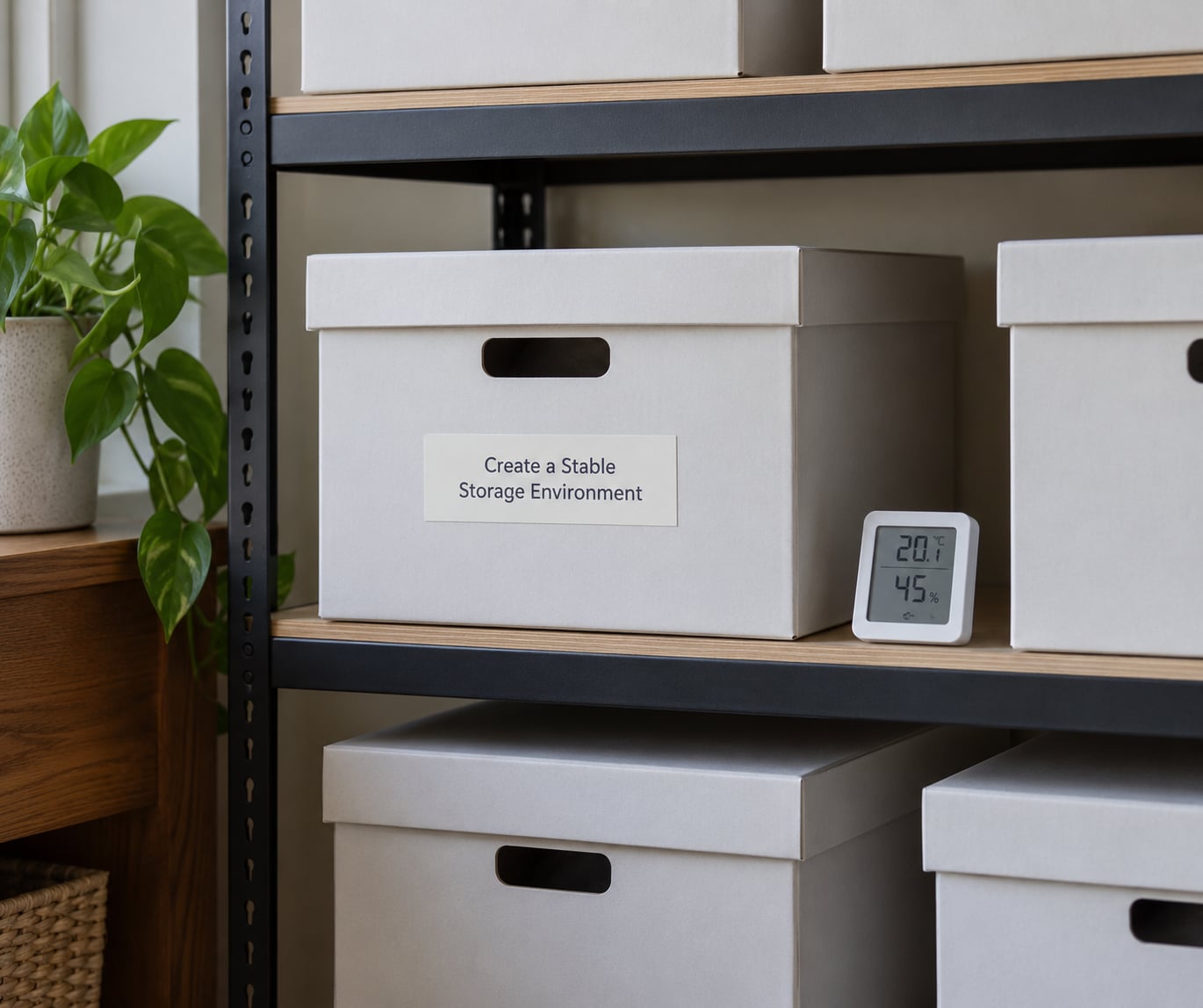
Pick an interior room with stable conditions rather than the most convenient corner. Avoid basements because of ground moisture and flooding risk, attics because of heat swings and roof leaks, and garages because of temperature extremes. Also avoid exterior walls, radiators, fireplaces, kitchen and bathroom humidity, and air conditioning vents.
Aim for around 40-50% relative humidity and a temperature between 65 and 70 F, and put a digital thermometer with a hygrometer on the shelf so you are reading numbers rather than guessing. Stability matters more than hitting a perfect figure, because swings do more damage than a slightly high reading.
Light control is simple: darkness. Keep items in closed boxes, curtains over any nearby window, and no shelf in direct sun. If you display, use UV-filtering acrylic or glass in the case, keep lighting low, and run items on rotation so nothing sits under a lamp for years.
Ventilation prevents trapped moisture and discourages mould and pests. Airflow holes in a box, or a small desiccant pack in an airtight container, keep things drier without letting humidity cycle in freely.
You will know the environment is right when the hygrometer holds within its band for a week and a box opened after a month smells clean rather than musty.
7. Arrange Items to Prevent Physical Damage
Support each object at its strongest point. Cardboard walls in an archival box are there to carry the load and stop covers sagging. For flat items, pad between layers and never stack heavy items on top of a box without checking the shelf’s weight limit.
Stop things leaning. Comics, records and card holders all go upright, supported so nothing tilts forward and puts a crease in the spine. A leaning book left for a year develops a permanent set that lowers its grade.
Separate incompatible materials. Rubber and newspaper stain; newspaper browns paper; PVC blurs plastic surfaces; wood at high moisture touches mould. Physical separation between materials within one collection removes most of these risks for free.
Upright is right for cards and comics because pressure causes warping and it lets you flip through without handling edges. Flat is right for documents and photographs. For cards, some collectors prefer pages in a binder laid flat over an upright box, because the binder’s flat top-liner keeps bowed cards from curving into half-pipes.
Do not overpack. A box crammed full has no room to absorb a knock and no way to inspect the middle later, so leave slack and keep the heaviest items low.
8. Inspect and Update the Collection
Put inspection on the calendar rather than waiting for a reason. Monthly works for anything displayed or opened often, and every six to twelve months works for sealed archive storage. Seasonal checks in early spring and late autumn catch condensation and temperature extremes.
Look for the whole list each time: fading or yellowing, warping and curl, mould spots and musty smells, pest activity including webbing, frass and small holes, corrosion on metal, packaging that has gone brittle or sticky, and labels that no longer read.
When you find something, isolate the affected group immediately and keep other items away from it. Then replace the packaging, photograph the corrected state, and update the inventory date. Mould and pests spread through a box in weeks, so isolation is the whole point.
Update the records as the collection changes. If you sell a graded card, remove its row; if you buy a new set, add a photo; if a value moves sharply, revise the estimate so the insurance cover still matches the collection.
You will know the routine is working when an inspection takes twenty minutes and finds one faded label rather than a pile of surprises.
Common Mistakes
Most lost value comes from a short list of avoidable errors. Each one has a straightforward correction.
- Hanging storage in direct sun. A window shelf fades print, dyes and card faces within a couple of summers. Move the items to a shaded wall or a UV-filtering case and stop the exposure.
- Using a damp basement or hot attic. Ground moisture and roof heat create the two fastest paths to mould and warping. Move the collection to an interior, climate-controlled room even if it means using less of your space.
- Sealing items in ordinary plastic bags. Household bags and off-gassing PVC trap moisture and stick to surfaces over time. Repackage in polypropylene or polyester sleeves and acid-free folders.
- Rubber bands around rolled items or card bundles. They stretch, crush and leave a dark stain ring. Use a paper band, acid-free tissue wrap or a proper sleeve instead.
- Wrapping in newspaper. Printing ink carries acids that transfer to anything touching it. Use unbleached acid-free tissue or buffered paper.
- Stacking weight on top of flat items. Boxes of records, boards or albums on top of documents leave permanent press marks. Store heavy items on the bottom shelf and keep tops empty.
- Storing directly on bare wood shelving. Wood bleeds acids, holds moisture and can carry insects. Line shelves with acid-free board or shelf liner.
- Leaving strong scents around the collection. Air fresheners, camphor, mothballs and scented candles attach to fabric, plastics and paper and never come out. Keep scented products in another room entirely.
- Skipping inspections for years. Small problems become expensive ones. Set a date, even a twice-yearly one, and check.
- Assuming a collector case makes an item safe. A display case is a light and dust control, not a humidity control. The box behind it still needs archival packaging if the case lives in a bright room.
Two more cause damage quietly: leaving batteries inside vintage electronics and toys, where leakage corrodes contacts and housings, and writing on items with permanent markers, which bleeds through sleeves and cannot be reversed.
Storage Tips for Valuable Collections
Keep the inventory current in a spreadsheet or an app designed for collections, with one row per item and a photo link. It takes twenty minutes a month and it turns a collection into something an insurer, an appraiser or an heir can actually work with.
Label the outside of every box with its contents and the date of packing, and never rely on memory when twenty identical boxes are stacked. Keep an index in the lid of the first box in a series so a shelf does not need to be emptied to find what is missing.
Sort by storage need rather than by category alone. Group everything into light-sensitive, moisture-sensitive, dust-sensitive and robust, then give each group its own container type. One system per need beats one system for everything.
Limit handling. Every pickup is a chance for a scratch, a fingerprint or a dropped corner, so photograph once and handle rarely. Keep cotton gloves for handling coins, jewellery and textiles, and nitrile gloves for comics, cards and photographs, since cotton fibres and snags do more harm on soft surfaces than bare clean hands.
Rotate what is on display. A case that holds a three-month cycle means no item sits in the light for more than a quarter, and you still get to enjoy the collection rather than storing it in a cupboard for a decade.
Prepare for a move before the move. Pack items into their storage containers rather than loose, pad the boxes, keep them upright and dry, label the outside, and unpack into the same grouping you used. A move is the single most common day a collection gets damaged.
Get high-value items appraised and insured on a scheduled basis, usually annually or every two years, and check that the cover reflects the current value. Remember that sentimental value cannot be insured, so document it in the inventory and in a letter to whoever inherits the collection.
Ask a qualified conservator about rare, antique or fragile pieces, and about anything you would be upset to lose. That covers the things a general storage rule cannot cover, and it is worth the fee as a one-off or an occasional review.
Finally, keep an honest eye on what holds value. Graded cards, coins, comics, key toys, fine art and sealed limited editions tend to hold demand best. Cheap mass-produced toys, novelty cards, generic figurines and unopened modern product often do not, so those deserve a shelf rather than a climate-controlled budget.
Frequently Asked Questions
What temperature should collectibles be stored at?
Aim for a stable 65-70 F (18-21 C) and 40-50% relative humidity for most collections. Consistency matters more than hitting an exact figure, because repeated heat and humidity swings cause warping, mould and glue failure far faster than a slightly warm room. Avoid basements, attics, garages, radiators, fireplaces and exterior walls. A digital thermometer and hygrometer sitting on the shelf is the cheapest insurance you can buy, because it tells you whether the room is actually holding steady.
How should I store collectibles in plastic bins?
Use the bin for structure, not protection. Line it with acid-free tissue or backing board, wrap each item in a PVC-free sleeve or buffered folder, and separate materials that should not touch. Add a silica gel packet if the lid is airtight, but remember an airtight lid also traps any moisture already inside. Purpose-made archival tubs are fine. Household storage tubs become brittle with age and their plastic can off-gas onto contents, so never let the lid be the only thing protecting the item.
Should collectibles be stored in a basement or attic?
No. Basements bring ground moisture, flooding and temperature swings that drive mould and warp cardboard, while attics get hot enough to soften plastics, fade dyes and shrink glue joints. An interior closet or spare room on an outside wall with a hygrometer is far better. If you have no choice but to use a basement, keep items in sealed archival boxes on shelves well off the floor with a dehumidifier, and check them twice a year for condensation marks.
How do I prevent paper collectibles from yellowing?
Keep paper away from acids. Use acid-free, lignin-free folders and buffered paper, because ordinary cardboard, newspaper and wood pulp release acids that migrate into fibres and cause yellowing that cannot be reversed. Keep items out of direct sun, which fades ink and dyes independently of acid damage, and store at 40-50% relative humidity in a room with air movement. Never tape paper directly; use acid-free polyester sleeve tape or a folder sleeve instead.
Do acid-free boxes keep collectibles from fading?
Only partly. Acid-free packaging stops chemical yellowing and staining from acids in cardboard, wood and newspaper, and acid-free glazing helps a little. Fading caused by ultraviolet light is a separate problem that a plain acid-free box does not solve. For light-sensitive items, store the box in a shaded room, use UV-filtering acrylic or museum glass in any display case, keep lighting levels low, and rotate what is on display so no item sits under a lamp indefinitely.
How often should I check my stored collection?
Monthly for anything displayed or opened regularly, and twice a year for sealed archive storage, ideally in early spring and late autumn when damp and heat peaks show up. Each check should be quick: look for fading, warping, curl, mould spots, musty smells, pest signs such as webbing or frass, corrosion, brittle or sticky packaging and labels you can no longer read. Isolate any affected group immediately, replace the packaging and update the inventory date.
Conclusion: Start With Your Most Fragile Items
Do not begin with a shopping list. Begin by finding the items that are light-sensitive, moisture-sensitive or physically fragile, documenting them with photos and records, and giving them archival packaging in a stable interior room. That group is where storage effort pays for itself fastest.
Everything else in how to store collectibles so they keep their value follows from that: keep moisture, light and heat swings away from the collection, handle pieces as little as possible, choose acid-free and PVC-free packaging sized to the item, and inspect on a schedule you actually keep.
Start today with the box you have been meaning to deal with. Two hours of sorting and packaging now protects the condition that sets your collection’s value for the next decade.