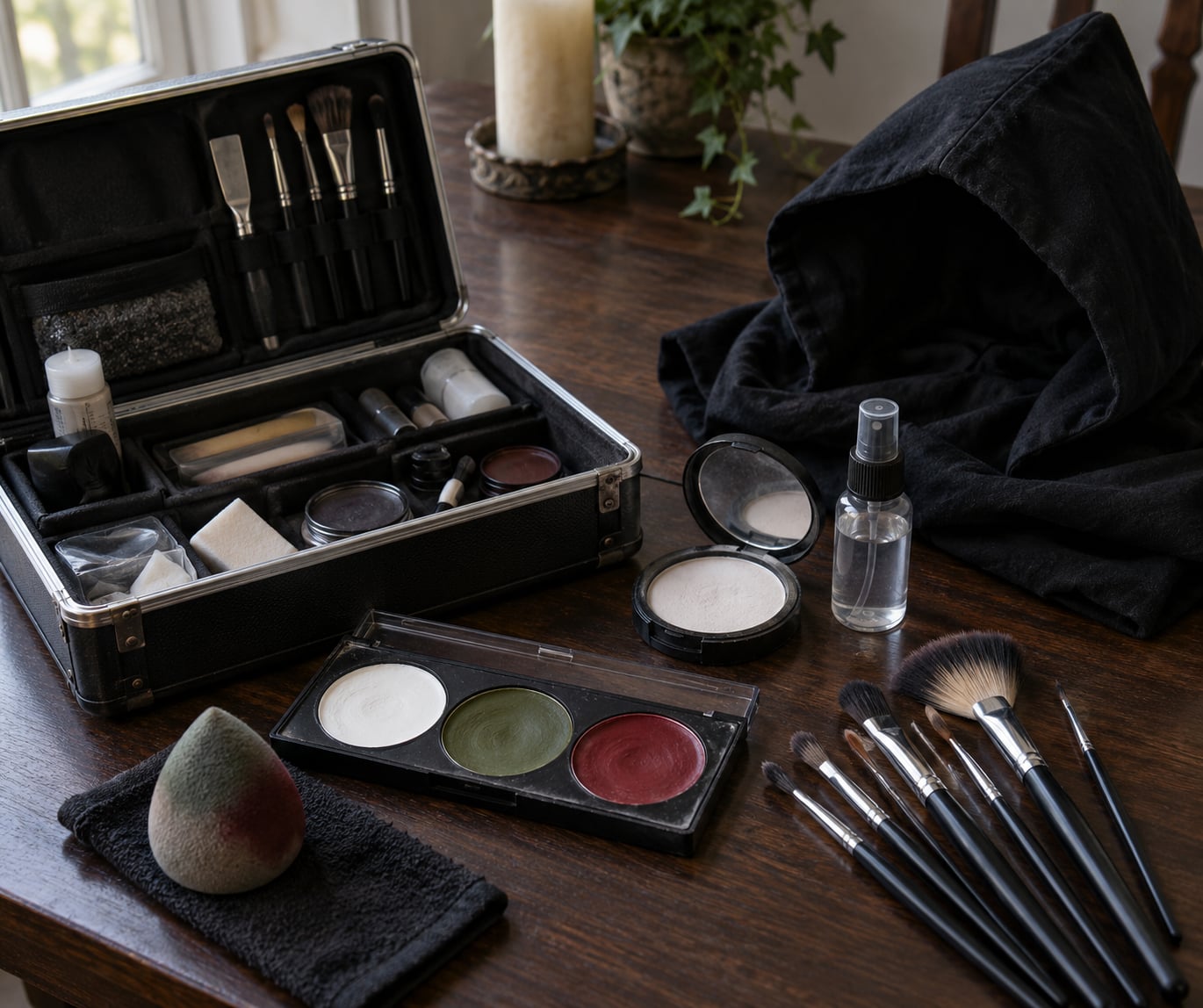
To make costume makeup that lasts all day, build it in four stages: prep the skin, prime for grip, apply your colour in thin layers, then set with powder and a setting spray. Each stage blocks a different way makeup fails, so skipping one undoes the work of the other three.
Most of the wear time comes down to what happens after the base goes on. Makeup slides when sweat and skin oil dissolve the binders holding pigment to your face, and it lifts when a wig, collar or seat belt drags across it. Primer stops the first problem, powder absorbs the oil, spray glues the layers back together, and a transfer plan handles the friction.
Here is the short version, in order:
- Cleanse, moisturise and let the skincare settle for a few minutes.
- Patch test anything new, then apply a primer that suits your skin type.
- Build the base in two or three thin layers rather than one thick one.
- Add cream colour in thin coats, powdered lightly rather than packed.
- Set cream work with translucent powder and bake it for 5 to 10 minutes.
- Use waterproof liner and mascara on a proper eye base.
- Spray setting spray between layers, not just at the end.
- Finish with a light powder pass and a final full-face spray.
Budget about 60 to 90 minutes for a full-face look, and add another 20 minutes if you are building prosthetics or wounds.
Table of Contents
- 1What You Need
- 2Step-by-Step
- 3How to Prep Your Skin Without Making Makeup Slide
- 4How to Apply a Long-Wearing Base
- 5How to Make Character Details Stay Put
- 6How to Set Makeup for an All-Day Finish
- 7Common Mistakes
- 8Frequently Asked Questions
- 9What setting spray actually makes makeup last all day?
- 10What is the best primer for cosplay makeup?
- 11How long does Halloween makeup last?
- 12How do I keep my makeup from melting off in heat?
- 13How to make makeup last all day without primer or setting spray?
- 14How do I stop makeup transferring onto my costume or wig?
What You Need
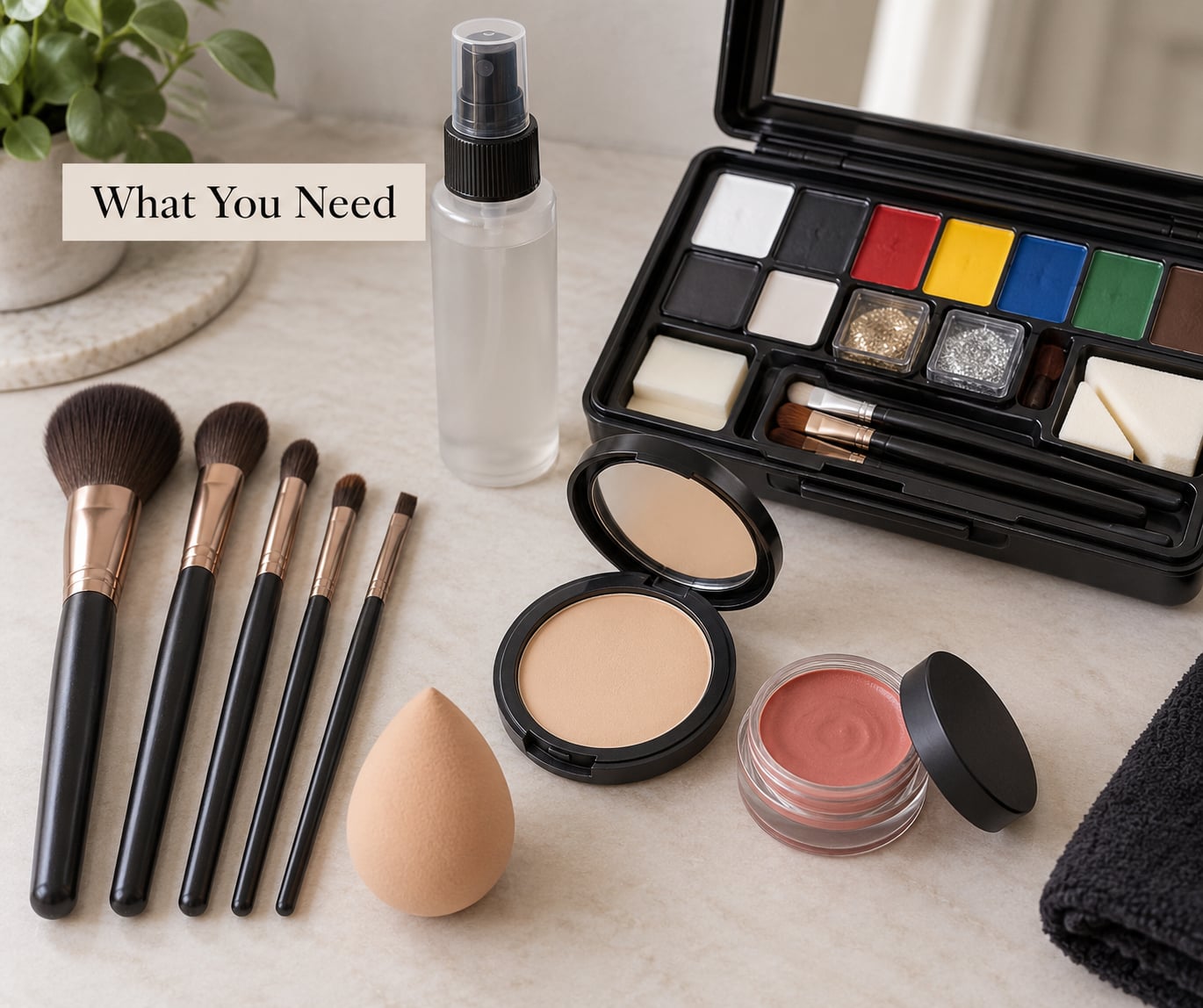
You can do this with a small kit, and you do not need a pro set to get a full day of wear. What matters is having one product from each category below, plus a couple of things most people forget.
- Primer: a tacky grip or bonding primer for heavy character work, a silicone-based mattifying primer for oily skin, or a gel or illuminating primer for dry skin.
- Base: a long-wear liquid foundation, or a cream colour stick if the character needs opaque coverage. Thin layers beat thick ones every time.
- Concealer: a buildable formula for the under-eye and for any gaps in the base. It doubles as a cheap eye primer.
- Cream colour and face paint: a few shades for cheeks, temples, lips and detail work.
- Translucent setting powder: the workhorse. It sets cream colour without adding a layer of colour.
- Waterproof eyeliner and mascara: the one place where smudging ruins a look fastest.
- Setting spray: a long-wear or water-resistant formula, applied in stages rather than one final blast.
- Brushes and a sponge: a fine detail brush for line work, a fluffy brush for powder, a damp sponge for the base.
- A removal plan: an oil-based balm or cleanser, plus a warm flannel for heavy looks.
Pack a small touch-up pouch too: a pressed powder, a cream colour stick, a cotton bud, a clear lip balm, blotting papers and a travel-sized spray. It fits in a pocket and covers most of what can go wrong in hour six.
Step-by-Step
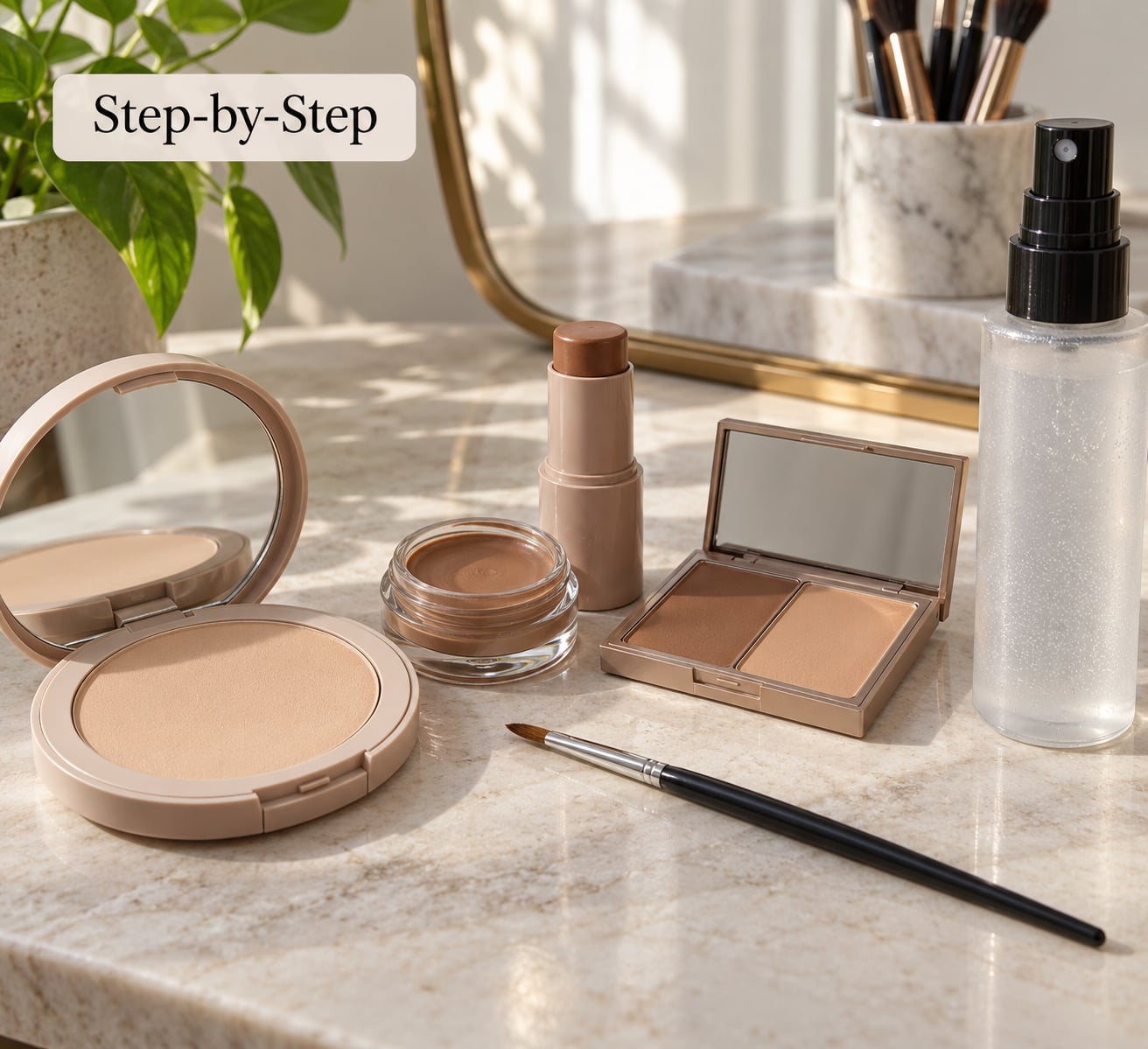
Work in this order and each layer locks the one beneath it. Prep first, then base, then detail, then set. Rushing the prep is the single most common reason a look gives up by hour four.
How to Prep Your Skin Without Making Makeup Slide
Cleanse, then moisturise, then wait. Moisturiser that has not settled creates a slippery surface, and primer applied over it slides instead of gripping. Five minutes of waiting does more for wear time than any product you can buy.
Patch test anything you have not used before, especially anything alcohol-activated or around the eyes. Give a new face paint or adhesive 24 hours on a small patch near your jaw, and skip it entirely if you react.
Primer choice follows skin type. Oily skin wants a silicone or mattifying primer that gives the product something to sit on. Dry skin wants a gel or illuminating primer, because heavy product clings to dry patches and flakes. Heavy cosplay work wants a tacky grip primer, which keeps the look from shifting when you move.
How to Apply a Long-Wearing Base
Apply the primer in a thin layer and let it set for a minute. Then take your base in two or three thin layers, blending the edges of the face down past the jaw into the neck. Missing that neck area is the giveaway that reads as a mask rather than a character.
You will feel like the coverage is too light. It is not. Thin layers press down into the skin and move with you, while one thick coat sits on top, cracks when it dries and peels off in sheets when it finally goes.
How long each base holds under normal movement:
| Base type | Wear time | Comfort | Best for |
|---|---|---|---|
| Water-activated face paint | 8-12 hours | Cool and light, can feel dry | Full-face characters, heat and sweat |
| Cream colour | 6-10 hours once powdered | Warm, sometimes heavy by hour four | Opaque coverage, bold features |
| Long-wear liquid foundation | 10-14 hours | Comfortable all day | Subtle looks, events with movement |
| Alcohol-activated paint | 12 hours or more | Tight and drying | Stage work, patch-test carefully first |
| Powder foundation | 5-8 hours | Dries the skin out | Dry climates, quick looks |
Know when it worked: the base should look even rather than heavy, and your skin should still move freely when you smile or talk. If it cracks at the mouth or across the cheek, you have gone too thick.
How to Make Character Details Stay Put
Cream colour moves, powder holds. That is the trade-off, and it decides where you use each. Cream colour is right for the parts of the face that move most: lips, the crease of the eye, the bridge of the nose, and anywhere you will open your mouth wide.
Everything else gets powdered lightly. Press powder on with a damp sponge rather than sweeping it, and use a small amount. Packing powder on looks dusty and will crack over a cream base, which is why a lot of costume makeup flakes by hour five.
For the eyes, use a proper eye base or a thin layer of concealer, then waterproof liner and waterproof mascara. Standard mascara will smudge under a wig or a hood by the first warm room you walk into. A tightlining pass along the lash line with waterproof liner keeps the eye area clean when you blink.
Seal glitter and small gems by misting your brush with setting spray and tapping the product on. Dry glitter applied straight to the skin sheds all night, and a surprising amount of it ends up in your eyes.
Think about the costume while you are applying. Colour sitting at the hairline, jaw and neck will print onto collars, wigs and masks all evening, so shade those areas down a touch or skip the colour there entirely.
How to Set Makeup for an All-Day Finish
Set the cream work with translucent powder using a damp sponge, then bake. That means leaving the powder on untouched for 5 to 10 minutes while you do your hair and costume, then brushing off the loose excess with a fluffy brush. A heavy layer left on for a full night is what causes caking, so brush it back rather than leaving it.
Use setting spray between layers, not only at the end. Mist a light layer after the base, another after powder, and a final generous pass over the whole face when you are finished. The spray bonds the layers together, and doing it mid-routine keeps each new layer from lifting what is already underneath.
Let each pass dry for 30 to 60 seconds before touching your face. A face that is still tacky when you put a wig on will transfer within the hour.
You know the finish worked when the makeup barely moves after an hour, feels comfortable, and the T-zone has not gone shiny. If the skin feels tight and the base looks chalky, you have set too hard and the look will crack rather than last.
Common Mistakes
Applying too much product at once. A thick base cracks and peels. Fix it by building coverage in thin layers and adding more only where the skin still shows through.
Using the wrong primer for your skin type. A mattifying primer on dry skin and a hydrating one on oily skin both make the base move. Pick by skin type, and go tacky if the look is heavy.
Setting cream colour with a thick powder layer. Heavy powder over cream gives you a chalky finish that cracks and flakes. Press it on lightly and brush off the excess after the bake.
Skipping the patch test. Face paint, adhesives and alcohol-activated products are the most likely things to irritate skin on the night. Test 24 hours ahead so a reaction does not ruin the event.
Touching your face all evening. Every touch drags product off and puts it back on. It adds up. Blot with blotting papers instead, and keep your hands away from the T-zone.
Leaving lips glossy. Shine means transfer onto cups, masks and teeth. Use a matte liquid colour and powder over it lightly, or a long-wear lip product.
Ignoring the costume. A collar, wig cap or mask will print onto a fresh face. Powder the neck and hairline, let the look set fully before dressing, and take a colour photograph of the collar area to check for transfer before you leave.
One more habit worth building: apply your makeup before you put on the costume, not after. Dressing first means pulling a hood or collar over an unfinished base, and you will be touching it all night.
Frequently Asked Questions
What setting spray actually makes makeup last all day?
A long-wear or water-resistant setting spray, applied in two or three light passes rather than one heavy one. Mist it after your base, again after setting powder, and a final generous layer over the whole face. Let each pass dry for 30 to 60 seconds before the next step, and avoid rubbing the skin while it dries.
What is the best primer for cosplay makeup?
A tacky grip or bonding primer. It creates a sticky surface that heavy cream colour and face paint actually adhere to, instead of sitting loosely on the skin. Apply it thin, let it set for a minute, then build the base in layers. For light cosplay looks, a silicone-based mattifying primer works well on oily skin.
How long does Halloween makeup last?
Expect 8 to 12 hours from a well-set water-activated face paint, and 6 to 10 hours from cream colour finished with powder. In heat or high humidity, drop that by a couple of hours and plan a touch-up. The figure on the box assumes room temperature, light movement and a thin set of powder.
How do I keep my makeup from melting off in heat?
Prep the skin properly and let moisturiser settle, use a mattifying or grip primer, keep layers thin, and set with translucent powder rather than a heavy coat. Choose a water-activated face paint over a cream base if you will be outdoors, and carry blotting papers plus a compact for touch-ups. A full-face setting spray every few hours re-seals the top layer.
How to make makeup last all day without primer or setting spray?
You can get most of the way there with technique alone. Base in thin layers instead of one thick coat, use waterproof liner and mascara, and set cream work with translucent powder pressed on with a damp sponge and baked for 5 to 10 minutes. Powder the neck and hairline, and blot rather than touch. You will lose a few hours of wear, not the look.
How do I stop makeup transferring onto my costume or wig?
Shade the hairline, jaw and neck down so there is less colour to lift, and keep those areas powder-light. Let the look set fully for 20 minutes before dressing. Bring a powder and a cream colour stick to the event, and re-powder the collar area after any hug or seat belt. A darkly coloured costume hides transfer better than white.
Tonight, start with the boring part: cleanse, moisturise, wait five minutes, and prime for grip. Build the base thin, set the cream work with translucent powder, spray between layers as well as at the end, and let the whole look dry properly before you put the costume on. That sequence is what carries costume makeup through a full day and most of the night, and it costs you nothing beyond the time the steps take.