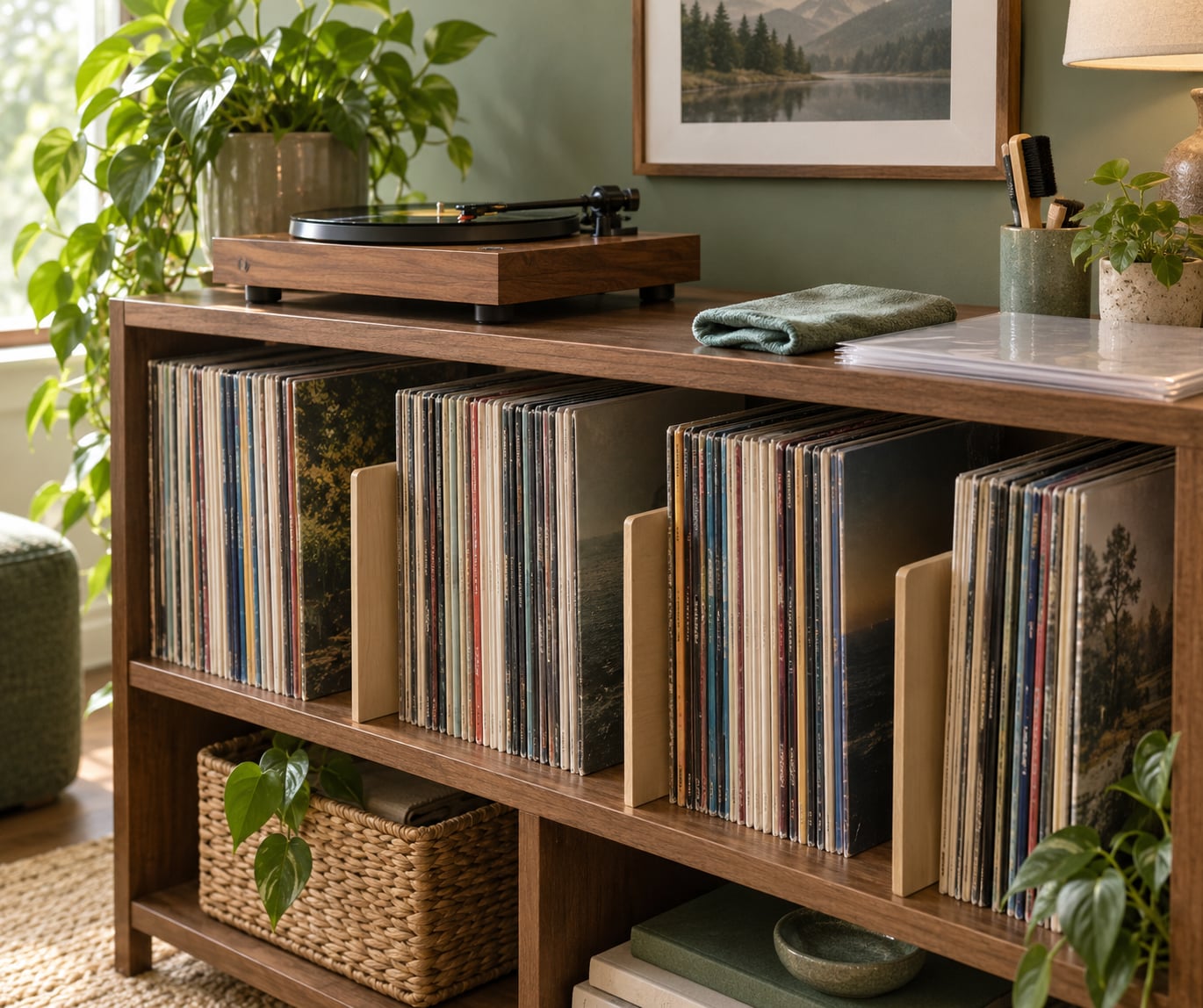
To store vinyl records properly, keep every album upright, never flat-stacked and never leaning, in a dark cool room around 65-70°F (18-21°C) and 40-50% relative humidity, with the disc inside an inner sleeve inside its jacket. That is the whole system, and it costs almost nothing to set up.
Vinyl is one of the most durable music formats ever made. A well-stored LP will play cleanly for decades, which is why the format keeps coming back. The problem is that damage is quiet and cumulative. Warping, cracking, fading and mold do not announce themselves, and none of it reverses.
This guide is written for people with a shelf in a rented apartment and no dedicated climate-controlled room, which is where most collections actually live. It covers what to gather, the seven steps that matter, the mistakes that quietly ruin albums, and what to do with records that are already damaged.
The advice itself is not contentious. As collectors have said on r/vinyl, upright in a cool place out of direct sunlight covers the basics. The parts people argue about are the details, and the details are where collections get saved.
Table of Contents
- 1What You Need
- 2Step-by-Step: How to Store Vinyl Records Properly
- 31. Choose a Stable, Cool Storage Location
- 42. Clean the Records Before Storage
- 53. Inspect and Repair Sleeves and Jackets
- 64. Sort and Organize the Collection
- 75. Store Records Upright, Not Flat
- 86. Use Shelving That Supports the Collection
- 97. Protect the Collection from Dust, Sunlight, and Humidity
- 10Common Mistakes
- 11Frequently Asked Questions
- 12What temperature and humidity should I use when storing vinyl records?
- 13Should vinyl records be stored upright or flat?
- 14Do vinyl records need their original sleeves?
- 15Can I store vinyl records in a basement, attic, or garage?
- 16How do I prevent my vinyl records from warping?
- 17What type of shelf is best for vinyl records?
- 18Conclusion
What You Need
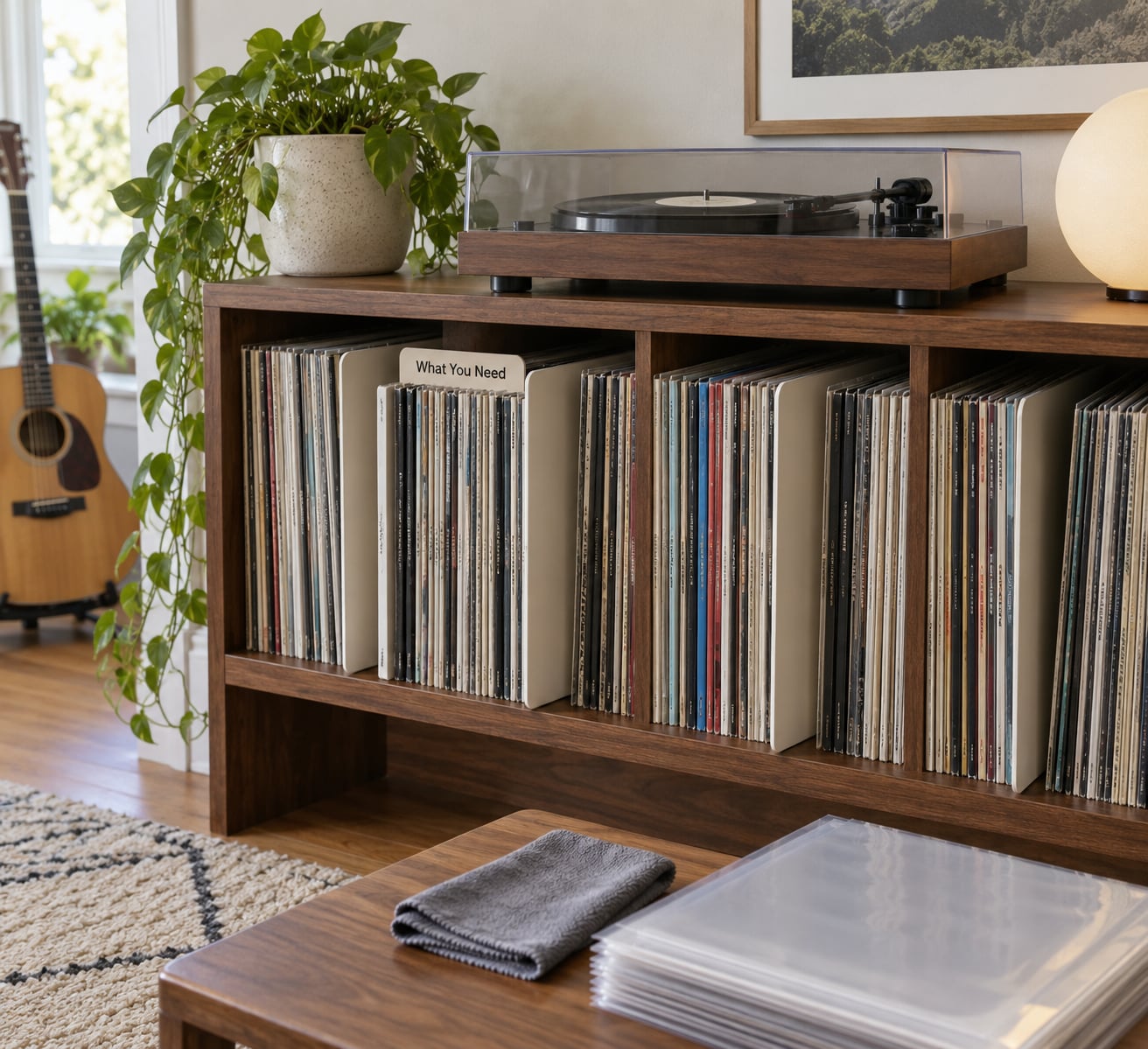
Most of the equipment is cheap, and three items do most of the work. Start with a piece of shelving that will not bow, a pack of dividers, and a small hygrometer. Everything else can be added over time.
- Shelving or crates. A bookcase with adjustable shelves, a dedicated record cabinet, or wooden or metal record crates. Whatever you choose needs a flat, level surface and enough depth that a 12-inch LP sits on its edge without tipping.
- Dividers. Cardboard or plastic shelf dividers keep albums standing straight instead of slumping into a lean.
- Inner sleeves. Anti-static polyethylene or rice paper sleeves for each record that has no sleeve or has a worn one.
- Outer poly sleeves. Thin clear sleeves for the jackets. These take the abrasion from shelf edges and neighbor to neighbor.
- A hygrometer. A cheap digital model on the shelf tells you the actual humidity where the records sit, not the number on the weather app.
- A soft brush or cloth. For dust on sleeves and jackets. Vinyl itself needs a proper washer or cleaning machine, not a damp wipe.
- Archival materials. Acid-free tissue, corner protectors and archival-safe tape if jackets need repair.
You do not need a dedicated room. A renter in a small apartment can do this well in a closet, a bedroom shelf or a hallway cabinet, as long as that spot stays dry, shaded and reasonably stable. What you cannot do is compensate for a damp basement or a shaded garage with better sleeves.
Step-by-Step: How to Store Vinyl Records Properly
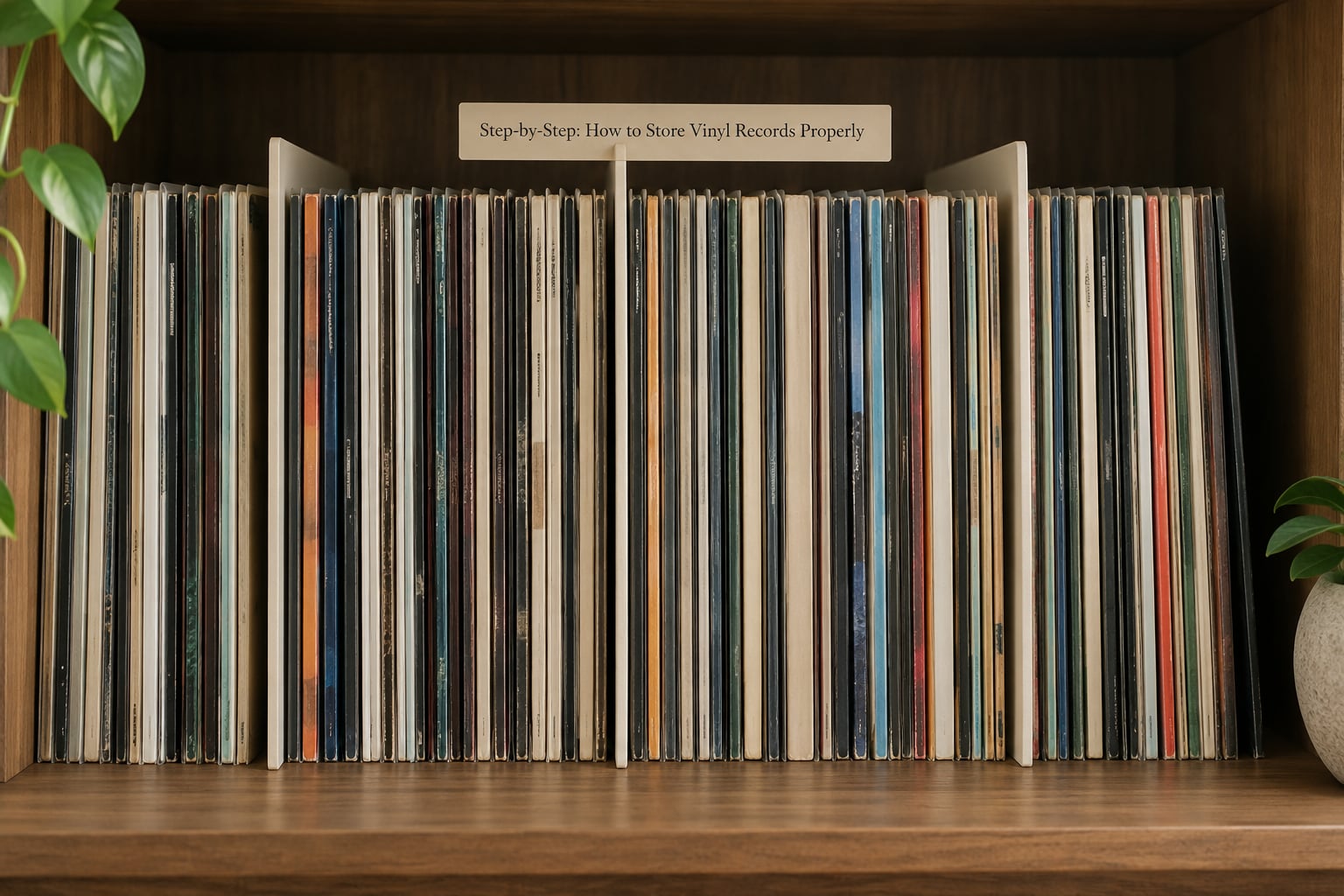
1. Choose a Stable, Cool Storage Location
Pick an interior room, not a garage, attic or unfinished basement. Interior walls give you more stable temperature and humidity than exterior ones, and they are further from plumbing, exterior damp and temperature swings.
Aim for 65-70°F (18-21°C) and 40-50% relative humidity. Between 40% and 55% is a workable tolerance band for most homes. The room does not need to be climate controlled, it just needs to avoid extremes.
You have found a good spot when the hygrometer stays in that band across a week and the shelf is not beside a window, a radiator, a vent, or a wall that runs along an outside wall. If condensation ever appears on the wall or window nearby, choose somewhere else.
2. Clean the Records Before Storage
Take each record out, brush dust off the jacket with a soft dry cloth, and brush the disc itself with a soft anti-static brush used in the direction of the grooves. A record that has never been played usually needs nothing more than this.
For a record that has been played, use a manual or motorized washer with distilled water and a mild detergent, rinse it properly and dry it upright on a rack before resleeving. Never use household spray cleaner, vinegar or soapy water on vinyl. Solvents and surfactants attack the plastic and leave a film that collects dust faster than the record did before.
Dust is abrasive. Every speck that sits in a groove is ground into the vinyl by the stylus, which is why dust control in storage and dust control before playback are the same habit.
3. Inspect and Repair Sleeves and Jackets
Go through the collection album by album and look at each jacket. You are hunting for torn seams, split corners, creased spines and a faded or sun-bleached cover. A seam with a few inches of split can be reinforced with archival tape on the inside; a loose corner can be held with a paper corner protector.
Replace the inner sleeve on anything with a tear or a sticky, sugary residue. Outer poly sleeves are worth adding to any jacket with scuffed corners or a glossy surface that is starting to stick to its neighbor.
Never discard original artwork to make storage easier. Replace the sleeve, keep the jacket. Brown spotting on old card sleeves is called foxing, and it is a sign of age and damp, not something you can scrub off. If a jacket is beyond saving, sleeve it separately and keep it flat rather than binning it.
4. Sort and Organize the Collection
Choose one system and stick to it. Artist then album works for most people. Format works well for mixed collections: LPs together, 45s together, 78s on their own shelf because they are heavier, smaller and more fragile than you expect. Genre works if you mostly want to browse rather than look something up.
Divide the sort into shelf-length runs of 40 to 60 albums rather than a whole wall. Smaller runs mean less leaning, easier dust-wiping and faster reshuffling when you bring something home.
Label the front edge of each run so you can find things without pulling half the shelf out. Filing sleeves with no record inside take up space that a record needs, and they bend.
5. Store Records Upright, Not Flat
This is the rule people argue about most, so here is the direct answer. No, you cannot store vinyl records flat, even with nothing stacked on top. An unsupported record lying flat sags under its own weight over time, a slow process called vinyl creep. It is slower than stacking but it never stops.
Leaning is worse. A slumping shelf puts uneven load across the disc, bending one part and producing a permanent curl that skips on playback. Albums leaning at more than a few degrees are the ones that come out warped.
Fill the shelf snugly so records support each other. Leave about half an inch between the front faces and the shelf edge so you can pull an album out with two fingers instead of tilting the whole row. You have it right when every spine stands vertical and you can lift one album without the rest shifting.
6. Use Shelving That Supports the Collection
Weight matters more than people expect. A 12-inch LP weighs roughly 180-200 grams, so a run of 70 records in a crate comes to around 13 kg. Bookcase shelves rated for books handle that, but particle board and cheap flat-pack units do not always, especially in the middle of a long span.
Check that the shelf does not bow when loaded and that the unit is anchored to a stud if children or pets are in the house. Load from the bottom up and from the middle outward. Lift albums rather than sliding them along the shelf, because dragging the cardboard edge of a sleeve across the vinyl in the next slot is a quiet way to scratch it.
A weight estimate is easy. Multiply your average album count per shelf by 200 grams and compare that with the shelf’s rating. If you are unsure, move the collection to the floor and use crates rather than guessing.
7. Protect the Collection from Dust, Sunlight, and Humidity
Sunlight fades jackets and yellows white sleeves, and it heats the vinyl at the same time. Keep records out of direct sun and off windowsills. A curtain or blind blocks the light but does nothing about heat from a radiator, a heating vent or a floor heating mat running under that area.
Cover shelves if dust is a problem, and leave airflow around the records rather than sealing them in plastic. Check the hygrometer monthly, and run a dehumidifier when readings climb above 55% or when you notice a musty smell in the room. Forum collectors on audiogon are blunt about the order of priorities: humidity brings mold, heat brings warping.
Avoid basements, attics and garages whenever another option exists. A rented self-storage unit is workable but not ideal, since those units are unheated in winter and can reach damaging temperatures in summer. You have the right setup when you can open the box after a year and the records are dry, straight and smell of cardboard rather than damp.
Common Mistakes
- Stacking records flat. Weight on top of the disc causes vinyl creep and the flat stacked rows most likely to warp. Fix: move them upright this week, starting with anything already looking bent.
- Letting records lean. Uneven load bends part of the disc and leaves a permanent curl. Fix: add dividers and fill the shelf more fully.
- Leaving records in a sunny room. Fading of jackets and sleeves is permanent, and the heat contributes to warping. Fix: shade the shelf and move it away from glass.
- Overcrowding one shelf. Overfilled rows tip, fall and bend, and they are impossible to dust. Fix: split the collection across more shelf length instead of packing tighter.
- Using household cleaners. Spray cleaners and soapy water leave a residue that traps dust and can haze the plastic. Fix: soft brush for dust, distilled water and mild detergent for a real wash.
- Storing in an unstable environment. Attics, basements and garages swing between heat and damp faster than any sleeve can protect against. Fix: interior room first, climate control second, products last.
- Handling by the grooves. Fingers carry oils and grit straight onto the playing surface. Fix: hold by the edges or by the center label only.
One more worth naming, because it is tempting: do not try to flatten a warped record with the heat-and-glass method you find online. It works sometimes, and when it goes wrong the disc cracks and takes the jacket with it.
Frequently Asked Questions
What temperature and humidity should I use when storing vinyl records?
Aim for 65-70 degrees Fahrenheit (18-21 degrees Celsius) and 40-50% relative humidity. A workable tolerance band is 40-55% humidity, since most homes cannot hold a narrow range all year. Check with a hygrometer placed on the actual shelf. Sustained heat above 80 degrees Fahrenheit and sustained humidity above 60% are where damage starts.
Should vinyl records be stored upright or flat?
Upright, always. Flat stacking is the most common way collections get damaged, and even a single record lying flat with nothing on top will sag under its own weight over years. Leaning is worse still, because uneven pressure bends part of the disc and leaves a permanent curl. Fill the shelf snugly so albums support each other, and keep spines vertical.
Do vinyl records need their original sleeves?
Keep the original jacket, always, but an inner sleeve matters more for the disc. The jacket protects and identifies the record and often carries artwork worth more than the vinyl itself. Inner sleeves stop dust, static and scratches from the playing surface, and a 45 or 78 RPM single is close to ruined without one because it plays inside a sleeve. Replace torn inner sleeves, keep every jacket.
Can I store vinyl records in a basement, attic, or garage?
Only as a last resort. Attics reach damaging heat in summer and can freeze in winter. Basements bring humidity, leaks and pests, and garages swing between both extremes daily. An interior closet or bedroom shelf beats all three. If a basement is all you have, run a dehumidifier, keep records on shelves rather than the floor, use a hygrometer, and check the collection every few months.
How do I prevent my vinyl records from warping?
Control four things: weight, lean, heat and time. Store records upright and snug, never flat and never leaning. Keep them between 65-70 degrees Fahrenheit and away from windows, radiators and heating vents. Avoid attics, garages and parked cars. Handling less also helps, because a record flexed repeatedly is a record that slowly remembers the bend.
What type of shelf is best for vinyl records?
Any solid, level shelf that holds the weight without bowing. A bookcase with adjustable shelves, a dedicated record cabinet, or wooden or metal record crates all work. Skip particle board and cheap flat-pack units for heavy collections. Anchor tall units to a stud, add dividers to stop albums leaning, and check the shelf is level once it is loaded.
Conclusion
Start with the shelf. Get every record upright, spaced snugly so nothing leans, on a solid piece of furniture in a dry interior room. Put a hygrometer on that shelf and see what the number actually says. Then work outward: replace torn inner sleeves, add dividers, pull anything warped out of the pile and give it its own space.
None of this is expensive. A few pounds of shelving and a pack of sleeves protect decades of listening, and the habits take about an afternoon to set up. Do that much and how you store vinyl records properly stops being a question.