You can survive a convention in a hot costume by managing heat rather than outlasting it: prep the outfit so air can move through it, wear a moisture-wicking base layer, carry a handheld fan and a cooling towel, drink on a fixed schedule, and take timed cool-down breaks before you feel hot rather than after. Most people who struggle at a con never forgot their water bottle. They simply waited too long to sit down.
The reason a costume gets dangerous is mechanical. Your body sheds heat two ways, by moving warm air off your skin and by evaporating sweat. A sealed, lined costume blocks both, so heat piles up around your core while sweat that never evaporates just runs down your arms.
Heat exhaustion is the body’s warning stage, and heatstroke is the emergency that follows it. This guide covers how to survive a convention in a hot costume, from the outfit you build to the moment you decide character comes off. It reflects what cosplayers actually report from events like Comic-Con, Anime Expo and Gencon, plus standard heat guidance from public health bodies.
Updated for October 2026.
Table of Contents
- 1What You Need
- 2How to Survive a Convention in a Hot Costume: Step-by-Step
- 31. Choose heat-smart costume layers
- 42. Prepare your body before the event
- 53. Pack cooling and emergency supplies
- 64. Build breaks into your convention schedule
- 75. Manage sweating and costume damage
- 86. Know when to take the costume off
- 97. Cool down and recover afterward
- 10Common Mistakes
- 11Wearing non-breathable layers as your base
- 12Skipping food because the day is busy
- 13Waiting until you are thirsty to drink
- 14Treating cooling gear as optional
- 15Ignoring early warning signs
- 16Staying in costume the entire day
- 17Never testing the build before the con
- 18Pouring your own water on a costume that cannot dry
- 19Frequently Asked Questions
- 20How can I stay cool while wearing a full costume at a convention?
- 21What should I wear under a hot cosplay costume?
- 22How often should I take a break from my costume at a convention?
- 23What signs mean I should take off my costume and cool down?
- 24How do I keep my makeup from melting in the heat?
- 25What can I use to cool down quickly without losing my costume?
- 26Conclusion
What You Need
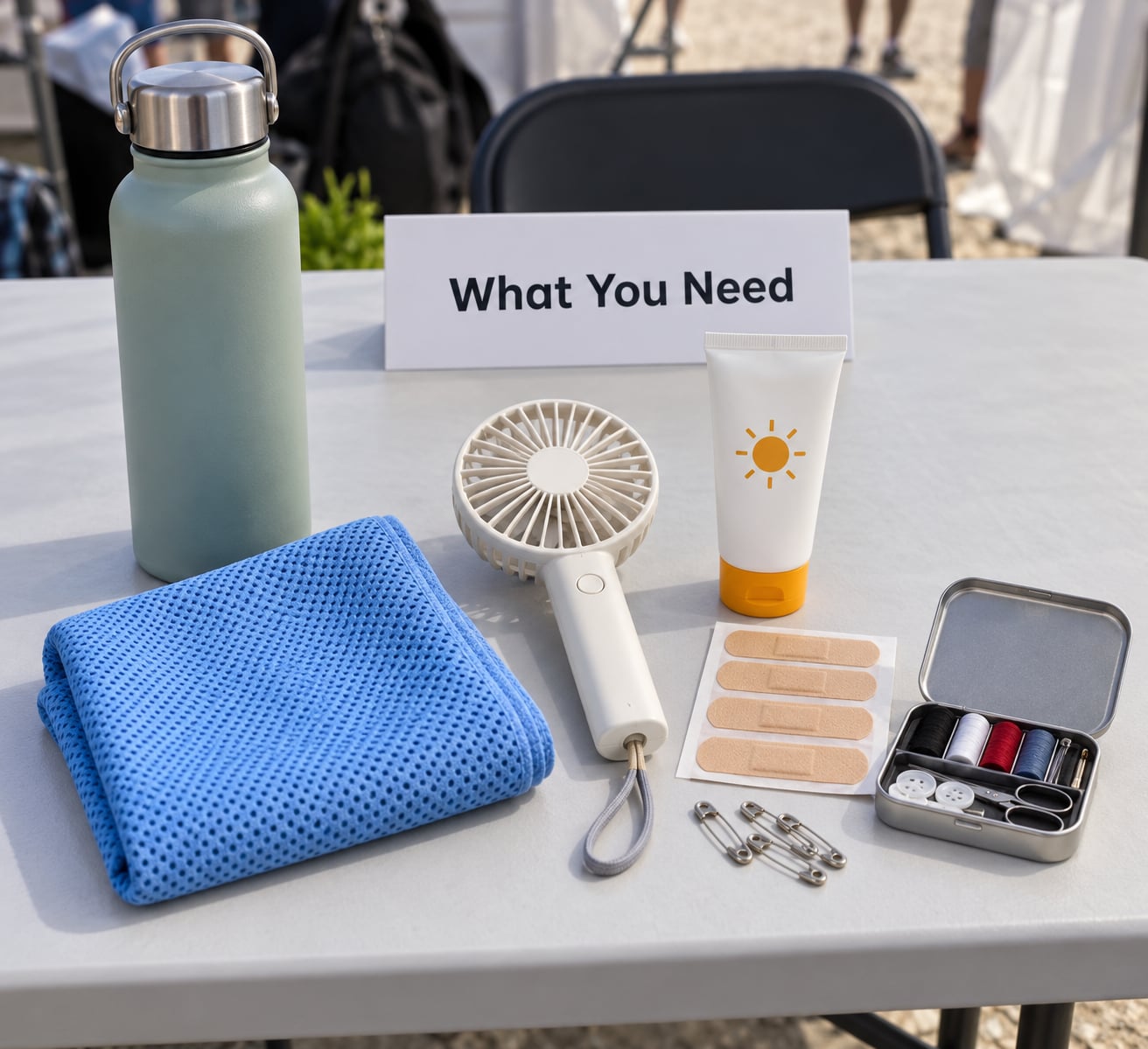
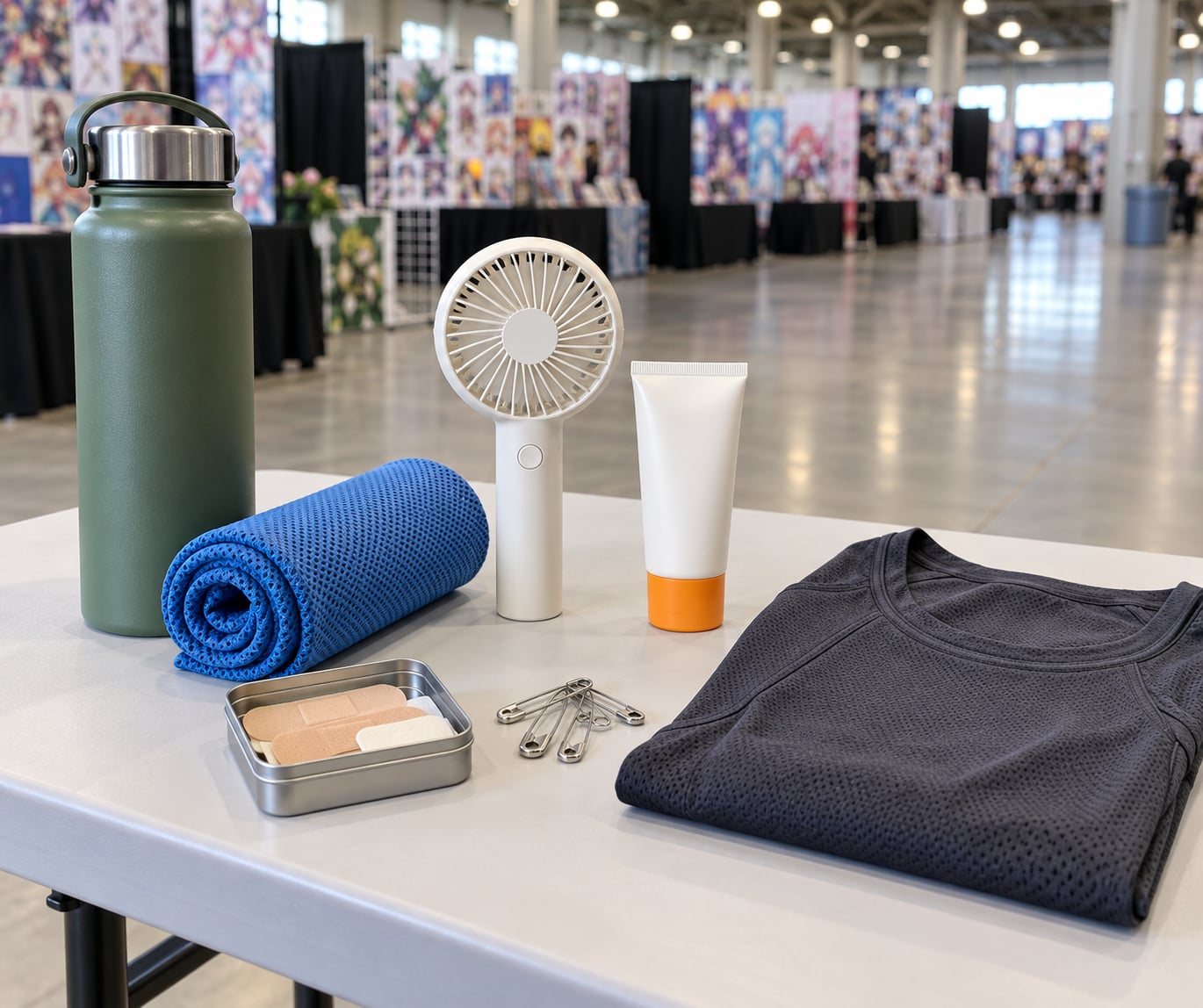
Everything here fits in a small backpack or a big pocket, and every item earns its place by attacking heat build-up, dehydration or the inevitable costume failure.
- Breathable base layer. A moisture-wicking long-sleeve top and leggings or shorts. Synthetic or merino, not cotton, which holds sweat against your skin.
- Refillable water bottle. One you can operate with gloved or numb hands, carried in a belt pouch or a backpack so both hands stay free.
- Electrolyte tablets or sachets. Useful after the first hour, when plain water starts tasting boring and you stop drinking.
- Handheld portable fan with a spare battery or a small power bank. This is the single most repeated item in cosplayer heat threads.
- Cooling towel or neck wrap, plus a mister bottle for evaporative cooling on arms and neck.
- Phase-change neck wrap or reusable ice packs if your costume includes a helmet, mask or heavy headpiece.
- Sunscreen for outdoor queue lines, because the queue before doors open is often the hottest stretch of the day.
- Blister plasters, anti-chafing balm and any personal medication you would not want to be without for eight hours.
- Cosplay repair kit: safety pins, thread, fabric glue, tape, spare fasteners and a multi-tool.
- Spare base layer and a change of clothes for the walk back to your hotel or car.
Leave the costume itself out of the bag if you can. Costumes are easier to repair in a hotel room or a car than carried across a convention centre.
How to Survive a Convention in a Hot Costume: Step-by-Step
1. Choose heat-smart costume layers
The layer closest to your skin decides most of how hot you get, and you can change that on the morning of the con even when the outer costume is fixed.
Start with synthetic or merino base layers that pull sweat off your skin and dry quickly. Skip cotton entirely; once it soaks, it stays wet against you for hours and blocks the evaporation that would have cooled you.
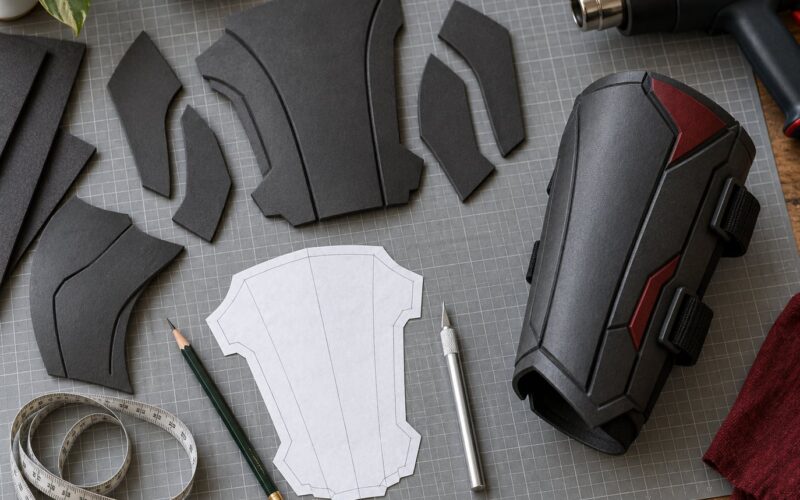
Then work outward. Leave linings off where you can, because a lining adds a sealed second skin. Add mesh panels at the ribs, under the arms and along the spine, and cut small ventilation slits at the sides of foam armour. Cosplayers on the CosplayHelp subreddit consistently recommend routing channels along the underside of EVA foam with a rotary tool and letting armour sit slightly looser off the body, because trapped air that can move is air that can leave.
Fittings matter more than fabric myths. A costume with 3 cm of clearance at the chest and back breathes noticeably better than a skin-tight version of the same design. If a piece cannot be removed quickly, add a hook-and-loop tab or snap so you can strip it on a queue.
2. Prepare your body before the event
Heat tolerance on a con floor is mostly decided the night before, not on the floor itself.
Eat a real meal with protein and salt before you leave, then carry two or three portable snacks. A costume costs energy, often several hundred calories an hour of walking and standing, and an empty stomach makes nausea hit sooner.
Drink on a schedule rather than on thirst. A rough guide for a warm, crowded hall is around 250 to 500 ml an hour, sipped steadily, with an electrolyte drink after the first hour or two. Chugging several litres at once is its own problem.
Skip the heavy coffee and the energy drinks before doors open. Both add a diuretic effect, and people who lean on them report headaches and light-headedness that feel like heat but are not. Alcohol the night before does the same, worse, with dehydration on top.
Travel in light clothes and change at the venue or your hotel. Wearing the costume from the train station doubles your exposure before the con has even started, and that outdoor queue in full sun can be the worst heat of the day.
3. Pack cooling and emergency supplies
Your cooling gear only works if it is within reach while you are in costume. That rules for a backpack buried under a foam chest plate.
Fan goes in a belt pouch or a chest bag. Cooling towel around your neck, not in a bag. Water bottle where you can reach it one-handed. Mister bottle capped and clipped, because a loose mister leaks into your costume and makes the problem worse.
Add the repair kit to the same bag: safety pins for a popped seam, thread for a split hem, glue and tape for a failing prop, spare closures for quick-release panels. Most convention centres also run a cosplay repair booth, and it is worth finding its location during your first hour rather than when a strap fails.
Finally, tell someone what you are wearing. A friend with your hotel name, your room number and the fact that you are in a full mask saves a lot of guessing if you have to be found.
4. Build breaks into your convention schedule
The single change cosplayers regret not making earlier is treating the cool-down as scheduled rather than reactive. By the time you feel bad, you are already in trouble.
Use this table as a starting point and adjust it downward for your first con, for a heavy build or for a hot year.
| Costume type | Realistic continuous wear | Cool-down break | Most likely problem |
|---|---|---|---|
| Bodysuit, latex or full-zip spandex | 60 to 90 minutes | 10 to 15 minutes out of costume | Heat rash under seams, headache |
| Shirt, jeans and jacket | 2 to 3 hours | 15 minutes seated, still in costume | Dizziness, thirst you stop noticing |
| Robes, capes and long coats | 2 to 3 hours | 10 to 15 minutes | Neck heat, shoulder fatigue |
| EVA foam armour | 60 to 90 minutes | 15 to 20 minutes, outer pieces off | Sweat pooling under foam |
| Fursuit or head-to-toe mascot suit | 45 to 60 minutes moving | 15 to 20 minutes, suit stripped | Mask fog, rapid dehydration |
| Multi-layer historical or plated armour | about 90 minutes | 20 minutes, layers loosened | Heat cramps, visible exhaustion |
Map your break times to the day. The best cool-down spots are rarely the main floor: stairwells and corridors outside the exhibit halls, outdoor queue shade, a quiet panel room after it empties, your vehicle, or your hotel room if you have one.
Cooling down does not have to mean leaving the con. Sit down, loosen every strap and closure, remove outer pieces, wet a towel and fan yourself, and drink. That is a legitimate costume decision, and other cosplayers will not think less of you for it.
If your con is multi-day, build your costume around your hotel. Wear the costume to the venue, change into base layers for the trip back, and rehydrate in the room. That single habit removes hours of unnecessary heat exposure.
5. Manage sweating and costume damage
Sweat chafing is a friction burn where skin rubs against skin or against a soaked lining, usually under arms, between thighs, along the spine and where a prop presses in. Dry the skin, change the position of the load-bearing piece, and use an anti-chafing balm on the hot spots before the spot becomes raw.
Dry sweat where you can reach it. A towel at the hairline, a quick wipe down the neck and chest during a break, and dry rather than damp skin under your base layer all help.
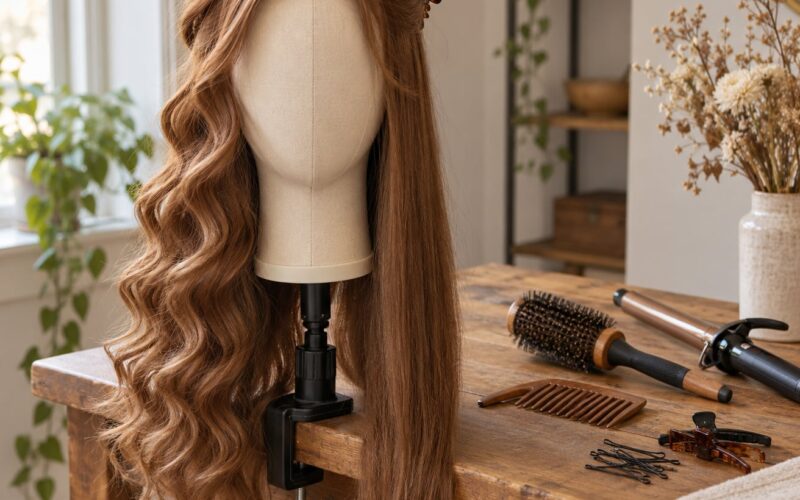
Makeup needs a plan for heat. Set it with a long-wearing powder and setting spray, keep colours away from the eyes, and expect to touch up in a bathroom rather than on the floor. Wigs get their own problem: heat and tight straps cause wig headache, so loosen any grip the wig can survive, use the wig grip rather than clips at the temples, and take pain relief early rather than once the headache has settled in.
Small failures get worse when ignored. A popped seam, a loose snap or a prop bracket can undo itself within minutes. Ten seconds with a safety pin beats an hour with a costume half-undressed in a corner.
6. Know when to take the costume off
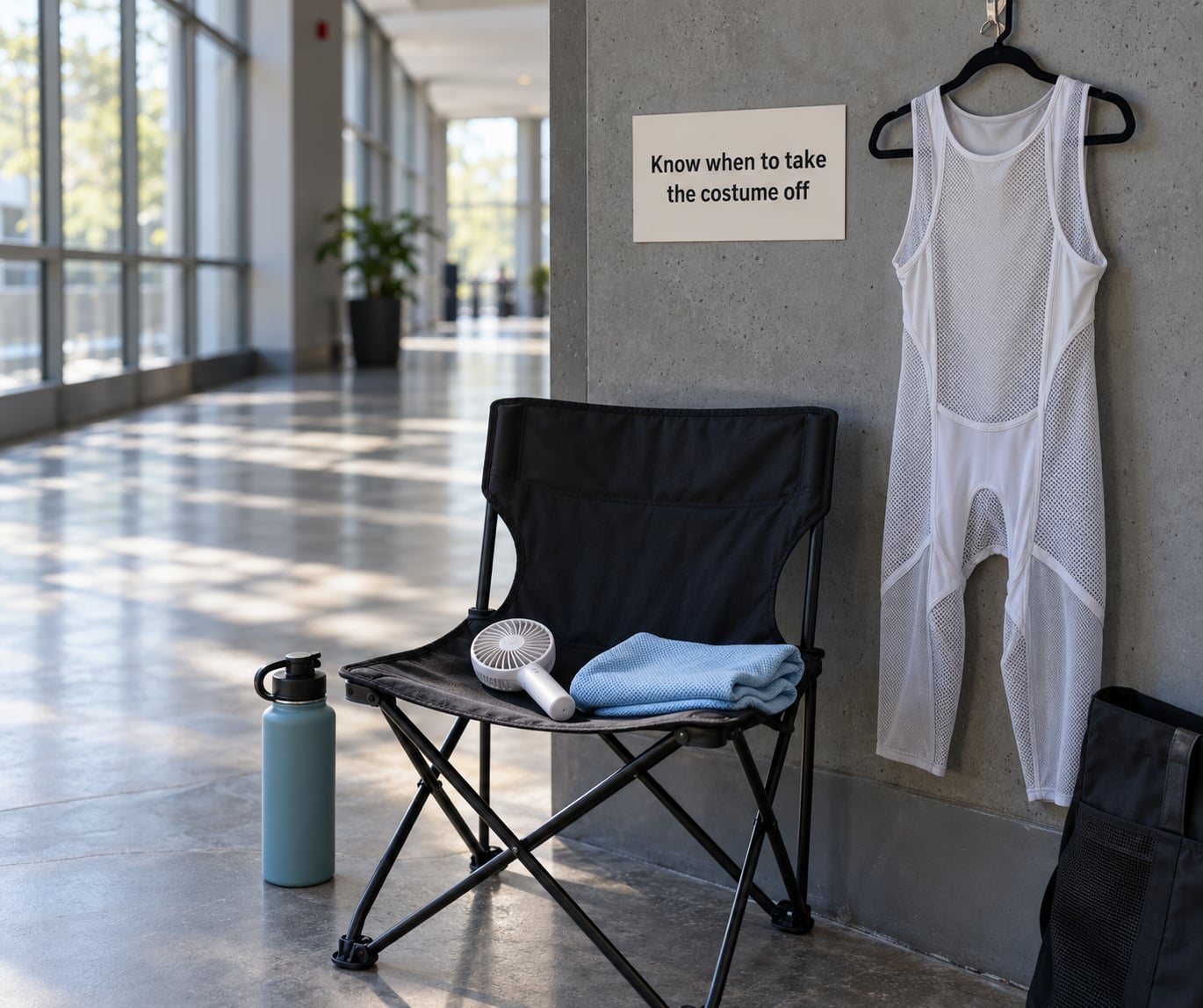
Do not negotiate with these symptoms. They are your body telling you the heat has beaten your costume’s insulation.
| Heat exhaustion | Heatstroke | |
|---|---|---|
| Core temperature | Normal or slightly raised | 103°F or higher |
| Skin | Cool, pale, clammy, heavy sweating | Hot, flushed, may be dry or still sweating |
| Thinking | Dizzy, headache, nauseated, irritable | Confused, slurred, unusual behaviour, unresponsive |
| Pulse | Fast and weak | Fast and strong |
| Action | Stop, move to shade or air conditioning, cool with cold water and a fan, sip water, get help if vomiting | Call emergency services and cool the person immediately, do not wait for symptoms to improve |
The first sign of heat exhaustion is usually the boring one: a headache and a sudden irritability that has nothing to do with your day. Heavy sweating, cold clammy skin, a fast weak pulse, dizziness, nausea and weakness follow. Heat cramps in the legs or abdomen are another warning.
Your ten-minute protocol: get out of the heat, take off the outer layers and any mask or helmet, wet skin with cold water and fan it, put cold packs at the neck, armpits and groin, and sip water steadily. Do not go back in costume until you have stopped feeling unwell, and do not be alone while you recover.
If you cannot tell heat exhaustion from heatstroke, treat it as the more serious of the two. Heatstroke is a medical emergency and needs emergency services, not a nap in the quiet room.
And if you are in a full mask or helmet, symptoms are harder for you and everyone else to read. Take the helmet off early and on purpose rather than waiting for someone to notice you wobble.
If someone else goes down, clear a space around them, get a staff member or badge volunteer, give them water only if they are fully awake, and keep cooling them. Ask loudly for the convention’s medical staff. At large events the medical room is usually listed on the convention app or on signage near the registration hall, and the information desk knows where it is.
7. Cool down and recover afterward
The day is not over when the costume comes off, and this is the part most people skip.
Change out of everything damp. Sweat sitting on warm skin overnight is how you end up with sweat rash, chafing and an itchy back for three days, so rinse, dry properly and put on clean clothes before you sit down anywhere.
Rehydrate properly with water and electrolytes, eat within the hour, and expect to sleep well. Get your feet checked, especially if you spent the day in boots or heavy shoes; blisters are far easier to treat the night before than on day two.
For a multi-day con, air the costume rather than folding it into a bag. Hang it up, let it dry fully, and wipe costume-worn skin areas or spray a light sanitiser on hard surfaces where you can. Do not put a soaking costume straight back on.
If you spent the day in heavy armour or a fursuit, give the skin underneath a proper look. Persistent redness, blisters or a rash that keeps returning after you have cooled down is worth raising with a pharmacist or a doctor rather than trying to power through a second day.
Common Mistakes
Wearing non-breathable layers as your base
Cotton and thick padding under a costume trap sweat against the skin and block evaporation. Switch to a moisture-wicking layer and remove padding you do not strictly need.
Skipping food because the day is busy
Low blood sugar and heat amplify each other, and nausea from heat is much harder to handle on an empty stomach. Eat before you arrive and carry something portable.
Waiting until you are thirsty to drink
Thirst lags behind actual hydration, especially in a crowded hall. Drink on a timer instead: a few sips every fifteen minutes beats a large bottle you empty once at three in the afternoon.
Treating cooling gear as optional
A handheld fan, a cooling towel and water are ten minutes of prep. Without them you have no plan for a hot queue or a warm panel room.
Ignoring early warning signs
A headache and a rush of annoyance are symptoms, not a personality. Cool down at the first sign rather than after you are dizzy, nauseated or unsteady.
Staying in costume the entire day
Most cosplayers who feel fine all day are the ones who took breaks. If you need to strip a piece to survive the afternoon, do it early and do it without guilt; the costume will be on again tomorrow.
Never testing the build before the con
One full dress rehearsal at home, timed, in a warm room, tells you where the costume traps heat and whether you can sit down in it. Finding that out on the convention floor is expensive.
Pouring your own water on a costume that cannot dry
Spilled water under armour or a fursuit does not evaporate, it pools. If your costume is sealed, use a mister on exposed skin and a towel, not a soaking.
Frequently Asked Questions
How can I stay cool while wearing a full costume at a convention?
Heat builds up because a costume blocks both airflow and sweat evaporation. Fight it with a moisture-wicking base layer, breathable or mesh panels in the outfit, a handheld fan, and a fixed schedule of timed breaks taken before you feel hot. Drink steadily rather than in one go, remove outer pieces when you can, and never treat a headache as something to push through.
What should I wear under a hot cosplay costume?
A moisture-wicking base layer is the single most useful thing you can wear underneath: synthetic or merino, long sleeves and leggings or shorts, never cotton. Add anti-chafing balm on the usual hotspots. Keep the layer thin and loose enough to move, because a base layer that fits like underwear under armour defeats the purpose entirely.
How often should I take a break from my costume at a convention?
Most people need a cool-down every 60 to 90 minutes in heavy costume, every 2 to 3 hours in lighter outfits, and every 45 to 60 minutes in a fursuit or full mascot suit. Take ten to twenty minutes, strip outer layers, wet and fan yourself, and drink. Your first con deserves a shorter window than your fifth.
What signs mean I should take off my costume and cool down?
Headache, dizziness, nausea, heavy sweating with cool clammy skin, a fast weak pulse, muscle cramps and sudden irritability all mean stop now. Take off outer layers and any helmet or mask, move to shade or air conditioning, cool with cold water and a fan, and sip water. If symptoms worsen or you cannot tell if it is heat exhaustion or heatstroke, get medical help.
How do I keep my makeup from melting in the heat?
Set it properly rather than relying on powder alone: long-wearing base, a good setting powder pressed on with a damp sponge, then a setting spray to lock it down. Keep heavy colour away from your eyes and brow, where sweat runs first. Pack a small touch-up kit and find a bathroom before you need one, because fixing a face on the convention floor rarely works well.
What can I use to cool down quickly without losing my costume?
Cooling neck, arms and wrists is what most people miss, because those areas have surface blood vessels close to the skin. A cooling towel or wet bandana plus a handheld fan will cool you while you stay in costume. Loosen closures, remove gloves, gauntlets and outer armour panels, and clip a mister bottle to your belt instead of unslinging your whole outfit.
Conclusion
Start with the four things that matter most: wear a breathable moisture-wicking base layer, pack water with a fan and a cooling towel you can reach without taking off, schedule your cool-down breaks in advance rather than reacting to symptoms, and treat any headache, dizziness or clammy skin as a reason to strip a layer and sit down.
Everything else on this list makes those four easier. Fix the details now and the costume becomes something you get to enjoy, not something you survive.