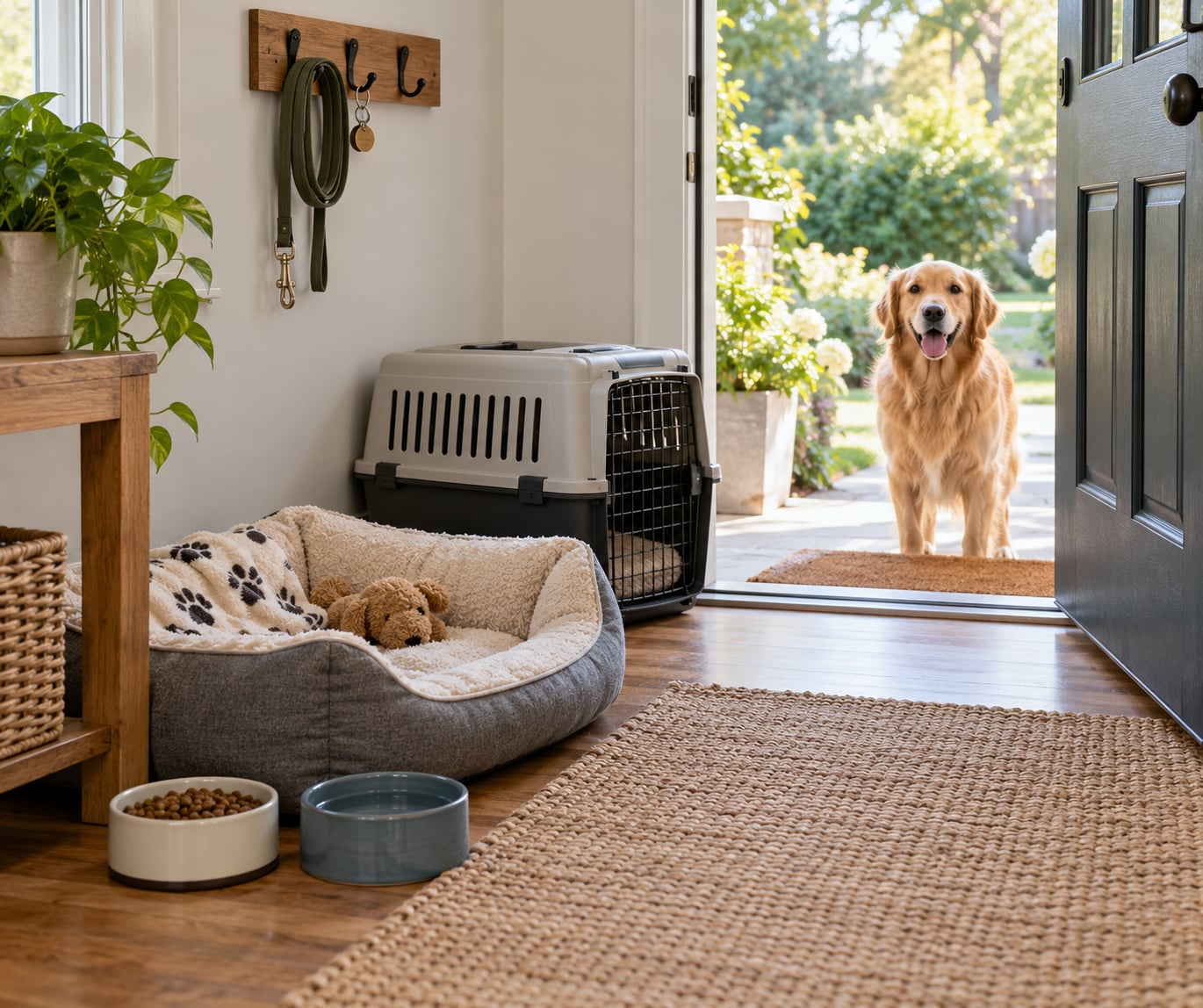
Learning how to adopt a dog from a shelter comes down to eight steps: find a reputable organisation, check its requirements, submit an application, meet the dog in person, complete any home check, sign the contract and pay the adoption fee, set the home up, then give the dog three months to settle. Most adopters who prepare in advance finish the whole process in two to six weeks.
That preparation is the part most guides skip. A shelter dog is usually an adult, often a mixed breed, and almost never a blank slate — but they also carry kennel stress that distorts how they behave on the day you meet them. Bring realistic expectations and the process runs smoothly.
Table of Contents
- 1What You Need
- 2How to Adopt a Dog From a Shelter: Step-by-Step
- 3Research how to adopt a dog from a shelter online
- 4Choose the right dog for your household
- 5Start an application and speak with the shelter
- 6Attend the meet-and-greet and ask the right questions
- 7Review the contract, fees, and medical records
- 8Prepare your home and bring your dog home
- 9Common Mistakes
- 10Frequently Asked Questions
- 11Is it hard to adopt a dog from a shelter for the first time?
- 12How long does the shelter dog adoption process usually take?
- 13Why do shelters charge an adoption fee?
- 14Can I adopt a shelter dog if I rent?
- 15How do I know whether a shelter dog is right for my family?
- 16What should I do if the adoption is not working out?
- 17Start With the Right Shelter
What You Need
Shelters screen adopters carefully because they need to place dogs in homes that last. Expect to prove that your household, your landlord (if you rent) and your schedule can support a dog for twelve to fifteen years.
- Every adult in the household on board. If one person is uneasy about a 12-15 year commitment, the adoption will fracture. Agree on who handles daily care, who pays for it, and who covers the days everyone works.
- Landlord permission in writing. Many leases ban pets outright, others cap the number, and some require a pet addendum. Get the answer from the landlord, not the tenant who signed the lease.
- Honest time budget. A dog cannot be alone for ten hours on a regular basis. Map out your work hours, commute and travel days before you commit.
- Government photo ID and proof of residence, such as a utility bill or lease. Most organisations require both before an application is processed.
- One or two personal references who can confirm you have never surrendered a pet or rehomed one without notice.
- Veterinary records for any current pets, plus proof of spay/neuter and up-to-date vaccinations.
- A realistic budget. Plan beyond the adoption fee. See the cost breakdown below.
- An age floor. Many shelters require adopters to be 18 or 21 depending on the animal and the state.
For first-time adopters, an adult dog is usually a gentler entry point than a puppy. Puppies need intensive house training and supervision for their first months; an adult arrives with a bladder habit, a known temperament and a diet you can keep.
How to Adopt a Dog From a Shelter: Step-by-Step
Research how to adopt a dog from a shelter online
Start wide and shortlist three or four organisations before you fall in love with a single dog. Municipal shelters often hold large numbers of adult dogs with lower fees and open public visiting hours, humane societies run similar programmes with broader community services, breed-specific rescues concentrate on one breed or type, and foster-based networks place dogs in volunteer homes instead of kennels.
That last distinction matters more than most articles admit. A foster dog has lived in a house, walked on lead, ridden in a car and slept on a sofa, so its profile is a far better predictor of daily life. A kennel dog’s profile is written mostly from staff observation under stressful conditions. Read the profile anyway, then weigh the source.
Choose the right dog for your household
Match the dog’s needs to your actual life rather than to the breed label on the listing. Most shelter dogs are mixed breed, so the useful information is behavioural: energy level, noise sensitivity, dog selectivity, comfort with children, and how it responds when handled.
- Energy level. A high-energy dog needs two substantial walks a day plus daily training. If your exercise plan is realistic, say so honestly on the application rather than hoping it works out.
- Age. Puppies cost more in time, adults cost less, and seniors usually come with disclosed dental, arthritis or heart conditions and a shorter timeline.
- Children and other pets. Look for explicit “good with kids” or “no cats” statements, and confirm with the staff rather than the profile summary. Adults with a settled temperament usually integrate more easily than a bouncy adolescent.
- Space. Apartment dwellers should check the size and energy combination, not just the size. A large, calm dog can suit a small home better than a small, frantic one.
Success here means you can point to specific dogs whose needs match your hours, space and experience — not simply the dog that looked sweetest.
Start an application and speak with the shelter
Most applications are a short questionnaire with a few serious questions: who lives with you, who is home during the day, whether you have fenced space, and what happened to any previous pets. Answer all of it truthfully. A mismatch caught on paper is far kinder than a return three months later.
Large rescues and many breed-specific groups also run reference checks, phone or video interviews, and sometimes a home visit. A home visitor is looking for a secure setup rather than perfection: a fenced yard or an understanding of the dog not having a yard, a plan for the dog when you are at work, gates that latch, and no hazards that would land in an email to a vet.
Ask directly what the decision timeline looks like and whether you can meet more than one dog in parallel. Many applications are approved in days; foster-based rescues with waitlists can take weeks. You have done everything you can at this point, so treat it as waiting rather than pushing.
Attend the meet-and-greet and ask the right questions
The meeting is where shelter dogs get misread, in both directions. Kennel environments amplify fear and suppress curiosity, so a dog that pressed against the back of the kennel may be anxious rather than antisocial. Watch how the dog behaves on a neutral walk away from the building — that is closer to the truth than anything you see through the mesh.
Let the dog choose the distance. Ignore the dog for the first minute so you can watch the voluntary approach, and never reach over its head.
Questions worth asking, on behaviour and history:
- What is this dog’s known history, and what is genuinely unknown?
- How does the dog handle being handled, groomed and left alone?
- Has there been resource guarding, fear of strangers or separation anxiety, and how was it managed?
- What is the dog’s current diet, and is it on any medication?
- Who was the previous caretaker, and why did they need to rehome the dog?
- What do the fosters or the kennel staff see on a normal day that staff rarely mention?
If a dog came through a foster home, ask the foster family directly. Adopters consistently say the foster or volunteer’s description of a specific dog beats the shelter’s own listing.
Review the contract, fees, and medical records
Read the adoption contract before you sign, not after you leave with the dog. This is the piece no ranking guide covers well, so slow down. Look for the trial period, the return policy, the spay-neuter and microchip clauses, and any requirement to keep the dog indoors or to stay in contact with the organisation.
Ask whether the fee is refundable, and what happens practically if the match fails. Some shelters require the dog to come back to them; others offer a refund within a stated window; a few will help rehome it. Understanding the exit clause before you sign is not distrustful — it is the single most useful question you can ask.
On the fee itself: this is a legitimate objection worth understanding. Municipal shelter fees often sit lower, while humane societies and breed-specific rescues typically charge more. What you are paying toward is the veterinary work already done — spay or neuter, core vaccinations, deworming and often a microchip — plus intake, medical assessment and post-adoption support for animals who may never be adopted. A low fee is not a mark of a better organisation, and a high fee is not proof of one. Ask what is included and what your local rate includes, and ask whether your own vet will accept the records.
Before leaving, get the medical file in your hands: vaccination and deworming records, spay/neuter status, microchip number and registration details, current medications with dosing instructions, and any disclosed condition. Confirm who is responsible for registering the microchip in your name and your state, since the fee may cover the chip but not the registration.
Prepare your home and bring your dog home
Buy before you bring the dog, not after. The first-day list is short: a bed in a quiet corner away from draughts and heavy foot traffic, a harness and lead, an ID tag with your contact details, sturdy food and water bowls, the food the shelter is currently feeding, a crate if you want one for the car and for overnight, and a vet appointment within the first week.
Dog-proof the rooms the dog will actually reach before it arrives, not after the first chewed cable. Remove wires, cords, shoelaces and small chewable items; move human medicines, cleaners and bins out of reach; check which houseplants are toxic (lilies are dangerous to cats, and pothos, philodendron and lilies trouble dogs); and check gates and fences, because escape attempts cluster in the first week. Move toilet paper rolls and electrical cords on low surfaces. A baby gate across a doorway buys you an afternoon.
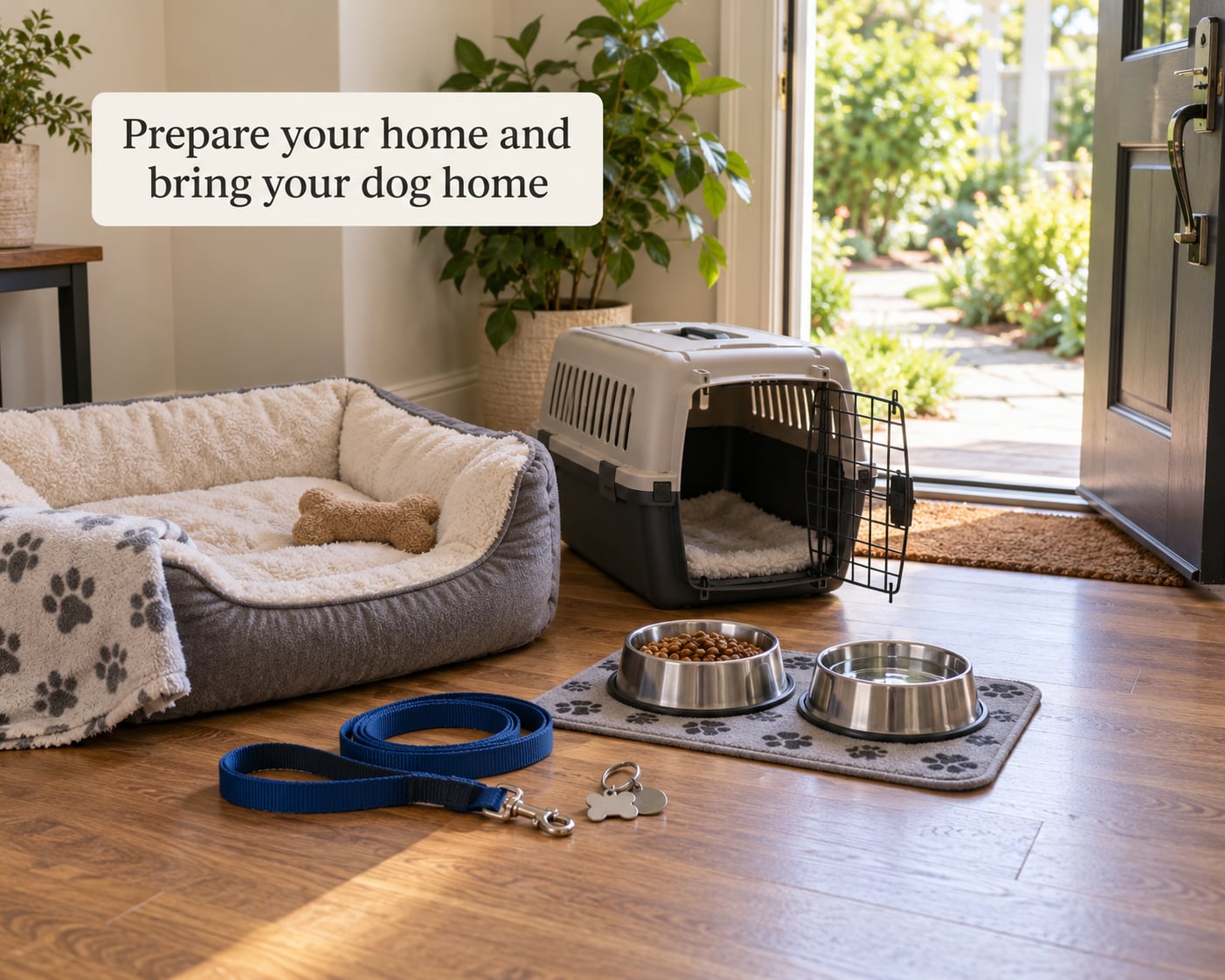
On the ride home, secure the dog in the back seat with a harness and seat belt or in a crate. Expect crying, panting or silence — all three are stress signals, not trouble.
Plan the first 72 hours like this:
- Hour zero to four. One room, one person at a time, water available. Let the dog wander and sniff without following you around. Sit on the floor and read aloud; do not invite handling.
- Hours four to twenty-four. Take the dog out to toilet before you leave the room, and reward outdoors rather than indoors for the first few days so the house stays clean. Keep walks short and low-key.
- Day two and three. Introduce the rest of the home one room at a time. Keep children calm and instructed: no grabbing, no reaching over the head, no cornering. Start with a leash around guests rather than letting a nervous dog be approached.
- First week. Book the veterinary appointment, keep a note of anything you see and cannot explain, and hold off on pet introductions except through a barrier until the dog is eating and sleeping normally.
That decompression is what the 3-3-3 rule describes. It is a rough guide, not a deadline — some dogs relax sooner, others need longer, and a dog with a rough history can take half a year.
| Phase | What to expect | What to do | What to avoid |
|---|---|---|---|
| First 3 days | Disorientation, sleep disruption, fussiness near the door, flat appetite | Small room, short lead walks, no visitors, no discipline | Full-house tours and “sit” drills |
| First 3 weeks | True personality emerging, routine forming, house training taking shape | Fixed meal and walk times, positive reinforcement training, first walks in quiet areas | Introducing every friend at once |
| First 3 months | Reliable habits, calmer responses, a bond built on predictability | Group classes, gradual pet introductions, leash work, a second vet visit | Assuming the first good week means every good week |
Put the first veterinary appointment in the calendar on day one. That visit covers a physical exam, a check that the vaccines and deworming from the shelter are current, and a talk about anything you have noticed at home. If the organisation offers a post-adoption check or behaviour support line, use it — support often disappears exactly when the behaviour questions start.
Common Mistakes
Choosing on appearance. The sweetest dog in the room is often the most stressed one in the room. Fix: watch behaviour over two visits, and ask how the dog behaves at a foster home or on a walk.
Skipping behavioural questions to avoid disappointing staff. Adopters get filtered out for honesty far more often than for a carpeted home. Fix: disclose resource guarding, previous returns and long workdays upfront.
Budgeting only the adoption fee. Owners consistently underestimate food, routine vaccines, dental work and emergencies. Fix: build a first-year budget and a separate emergency fund before the application goes in.
Rushing the introductions. Dogs and children meeting face to face in week one is the fastest route to a return. Fix: barrier introductions first, calm supervised contact second, and let the new dog control the pace.
Expecting the kennel personality to be the dog. Fix: ask what the dog looks like at home, and if possible meet one in a foster environment.
Skipping the post-adoption vet visit. The records only cover what the shelter knew. Fix: book the appointment in the first week and keep a written note of changes in appetite, behaviour or elimination.
A few habits carry more weight than any of these. Keep the routine boring and predictable early on, use positive reinforcement rather than punishment, and remember that kennel stress and temperament look similar for a while — so give a dog more data before you decide who it is.
Frequently Asked Questions
Is it hard to adopt a dog from a shelter for the first time?
Not especially, as long as you prepare the answers. Shelters ask about your household, your hours, your landlord and your previous pets, and the application itself takes under an hour for most organisations. The parts that catch first-timers out are having landlord permission in writing, knowing where your dog will be alone during the workday, and expecting an adult dog rather than a puppy.
How long does the shelter dog adoption process usually take?
From first visit to signing, expect roughly two to six weeks at a municipal shelter or humane society, and longer with a foster-based rescue that runs a waitlist and a home visit. Approval on a complete application is often a few days. Applying to several organisations at once is normal and is usually the fastest route, as long as each application is honest.
Why do shelters charge an adoption fee?
The fee usually covers veterinary work already completed on the dog, including spay or neuter, core vaccinations, deworming and a microchip, plus intake assessment, medical care and post-adoption support. Fees vary widely by organisation type, so ask what your local shelter includes and request the medical file in writing. A lower fee is not a sign of a better organisation.
Can I adopt a shelter dog if I rent?
Yes, but check your lease before you apply. Many leases ban pets or limit the number, and some require a pet addendum or a deposit, so you need written landlord permission, sometimes on the organisation’s own form. Some landlords also impose weight or breed limits. Tell the shelter about the restriction early, because it can affect which dogs they will place with you.
How do I know whether a shelter dog is right for my family?
Match needs rather than breed, since most shelter dogs are mixed breed. Compare energy level, noise sensitivity, history with children and other pets, and expected grooming against your hours, space and experience. Meet twice if the organisation allows, and ask staff about known behaviours such as resource guarding. A calm adult dog that fits your routine suits a settled household better than a bouncy adolescent.
What should I do if the adoption is not working out?
Call the organisation before doing anything else, and do not rehome the dog on your own. Most contracts include a return policy or a trial period, and shelters usually prefer a dog returned over one passed along informally. Bring medical notes, feeding details and dates from the first veterinary visit. Returns do happen; handling them early is normal and far better than waiting months.
Start With the Right Shelter
Knowing how to adopt a dog from a shelter is mostly a question of sequencing. Research three or four reputable organisations before you visit one, write down your household’s constraints — hours alone, landlord terms, children and other pets — then apply widely and honestly. Read the contract’s trial period and return clause before you sign, buy the basics, and give the first three months a quiet routine instead of expecting an instant friendship.
The dog who thrives is the one whose needs match your actual life. That match is worth a few extra weeks of patience.