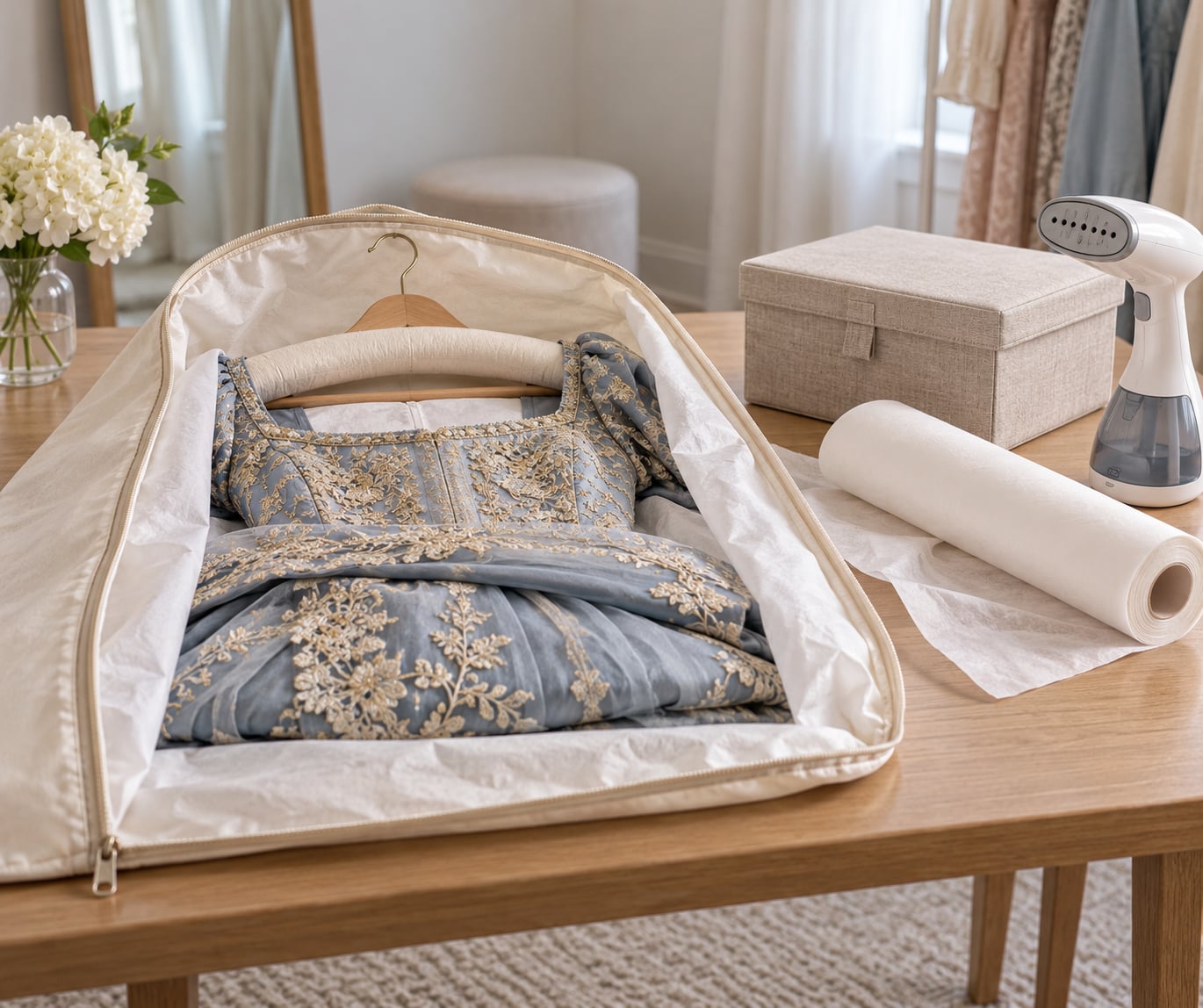
Most costume wrinkles come down to two things: fabric sitting folded under its own weight, and a hanger that cannot hold the garment’s shape. To learn how to store costumes so they do not wrinkle, clean each piece and let it dry fully, hang structured costumes on wide padded hangers inside breathable cotton or muslin bags, and fold soft costumes with acid-free tissue paper between every crease before boxing them in a cool, dark closet. Ten minutes per costume, and no special skills.
Fabric behaves differently from everyday clothes. A felt cape, a foam shoulder pad and a beaded bodice will not bounce back on their own, so a crease that forms under a stack of other gear can stay put for years. That is why the method matters more than the container you buy.
Last updated: October 2026
Table of Contents
- 1What You Need
- 2Step-by-Step
- 31. Clean the costume and dry it completely
- 42. Get the existing wrinkles out before they set
- 53. Decide hang or fold in one second
- 64. Hang it without creating new creases
- 75. Fold it with tissue at every crease
- 86. How to store costumes so they do not wrinkle all season
- 9Common Mistakes
- 10Cramming costumes into narrow containers
- 11Using plastic bags or sealed plastic bins for long-term storage
- 12Hanging heavy costumes on wire hangers
- 13Crushing embellishments and foam
- 14Storing damp fabric
- 15Using vacuum or compression bags
- 16Leaving costumes near heat or in direct sun
- 17Frequently Asked Questions
- 18Do garment bags prevent wrinkles?
- 19What is the best type of garment bag for storage?
- 20Which clothes and costumes should not be hung?
- 21How do I get wrinkles out of a costume?
- 22Can you vacuum pack a costume?
- 23Should costumes be washed before storing them?
- 24Conclusion
What You Need
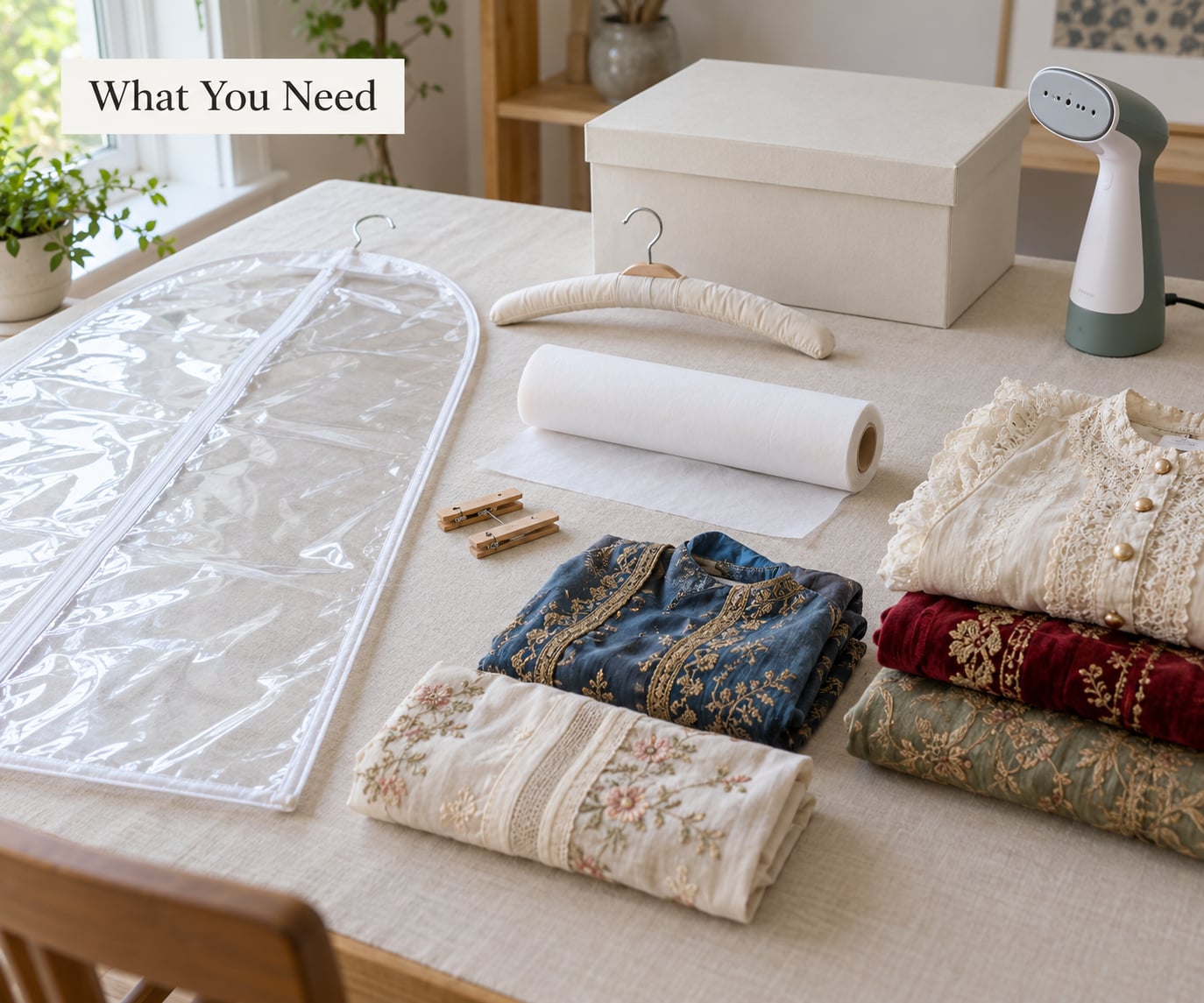
Most of this list is cheap and you may already own half of it. Set everything out on a clear, dry surface before you start, because the real enemy is a cramped worktable where costumes end up folded on the floor.
- A clean, dry work surface — a bed, table or floor mat you can wipe down. Costumes pick up body oils and makeup fast, and those stains turn yellowish over time.
- Padded or wide wooden hangers — never the thin wire ones. A costume shoulder needs the weight spread along the whole seam, not pinched at one point.
- Breathable garment bags — cotton, muslin or a non-woven fabric cover. Skip anything plastic or vinyl.
- Acid-free tissue paper — pH-neutral buffered tissue that will not yellow or weaken fibres. You can buy it in rolls and tear off sheets as needed.
- Acid-free storage boxes or sturdy cardboard boxes for anything you fold. Line the bottom and every fold with tissue.
- Wooden clips or soft ties for capes, skirts with loose threads, and costume pieces that would slip off a hanger.
- A garment steamer, or the use of your bathroom shower, for releasing folds before you store anything.
- A few silica gel packets if your closet or storage spot runs damp.
- A label maker or masking tape and a pen — the single most useful item on this list for next October.
Step-by-Step
1. Clean the costume and dry it completely
Wash or spot-clean before you store, following the care label. Body oils, sweat and makeup are sticky, and they attract moths and yellow over time.
Never store damp fabric. Trapped moisture is what causes mildew, a musty smell, and yellowing, and it is far harder to fix than a wrinkle. Let pieces air-dry flat or on a hanger until the fabric feels room-temperature and dry to the touch, including the lining and the inside of sleeves.
2. Get the existing wrinkles out before they set
Never store a wrinkled costume. Fresh wrinkles release easily; set ones are a much harder problem.
- Hang the costume on a padded hanger in the bathroom and run a hot shower for ten minutes with the door mostly shut. The steam does most of the work and needs no equipment.
- Use a garment steamer for stubborn folds, holding it a few inches away and working from the inside out.
- For a cotton or linen piece that still has marks, press it with a press cloth between the fabric and the iron. Never iron straight onto sequins, tulle, spandex or foam.
- Let the piece hang for twenty minutes after steaming so the fibres cool and set smooth.
- If a venue bans irons and steamers, hang the costume in the steamy bathroom on the night before. It is slower, but it works.
3. Decide hang or fold in one second
Here is the rule most guides leave vague. If the costume has a defined shoulder line, structured bodice, bodice boning, cape or long hem, hang it. If it is a flat, soft rectangle of fabric, fold it. Weight, shape and drape all point the same way.
| Costume type | Store it by | Why |
|---|---|---|
| Structured bodice, princess gown, vampire cape, armour top | Hanging | Shape and shoulder line collapse permanently when folded |
| Princess dress with a full tulle skirt | Hanging, layered skirt flat if too bulky | Weight crushes the volume and shreds net |
| Sequined or beaded top | Hanging, embellished side facing out | Beads crack and snag under pressure |
| Flat robe, tunic, leggings, plain T-shirt costume | Folding with tissue | Nothing to distort, and folds release easily |
| Stretchy dance costume in spandex | Folding, loosely | Hanging on a narrow hanger stretches it out |
| Foam prop, armour plate, oversized headpiece | Flat in a large box | Any weight on top causes compression set |
4. Hang it without creating new creases
Pick a hanger at least as wide as the costume’s shoulders. Add shoulder pads, a bust form or a rolled towel inside the bodice so the shape is held from within rather than by the fabric itself.
Turn embellished pieces inside out or face the beading outward so nothing presses into it. Fasten loose closures, tie skirts at the natural waist, and secure capes with a soft tie rather than a tight knot.
Put the costume in a breathable muslin or cotton bag. Dust is the real enemy of a year in storage; fabric bags let air move while keeping it off the piece. For gowns, a second hanger with a bottom bar keeps the hem off the floor.
5. Fold it with tissue at every crease
Lay the costume face down on tissue paper. Fold in thirds the way you would a bed sheet, rather than rolling or stacking it flat.
Put a fresh sheet of acid-free tissue in every fold. The tissue acts as a buffer so no hard edge exists for the fabric to crease against, and it stops embellishments digging into the layer above. For a layered costume such as a princess gown or caped superhero outfit, place tissue between the layers themselves.
Fold the sleeves inward, add a bolster of tissue along the folded edges, then place the whole bundle in an acid-free box. Line the box bottom with tissue and leave nothing resting on top.
6. How to store costumes so they do not wrinkle all season
Choose a spot that stays cool, dry and dark. Avoid attics, basements, garages and anywhere with a heater, a damp patch or a strong light source. Direct sun fades dye and degrades fibre, and humidity invites moths and mildew.
Do not pack the box to the brim. Cramming is the single most common reason a stored costume comes out creased, because nothing has room to sit naturally.
Label the front of every bag and box with the costume name, the year, the wearer and the fabric, plus one line on how to clean it. When next October arrives, you are not opening twelve mystery boxes to find out which one is the pirate.
Common Mistakes
Cramming costumes into narrow containers
A box with room inside lets the fabric rest the way it was folded. A tight fit forces folds and wrinkles that will still be there in six months. Choose a bigger box, or hang the costume instead.
Using plastic bags or sealed plastic bins for long-term storage
Plastic traps moisture, which yellows fabric and encourages mildew. It also makes wrinkles worse, because the piece cannot breathe. Use breathable fabric bags, and reserve airtight plastic for damp things like swim costumes you need to separate from everything else, ideally only for a season.
Hanging heavy costumes on wire hangers
Wire hangers pinch at a single point and stretch the shoulder line out. A costume with boning or a structured bodice will lose its shape and never come back. Use a wide wooden or padded hanger instead.
Crushing embellishments and foam
Sequins, beading, feathers and foam should never carry weight. Fold around them rather than through them, tissue-warm each decorated panel separately, and keep foam pieces flat with nothing on top.
Storing damp fabric
Damp fabric stored in a closed box or bag will smell musty within weeks, and the yellowing that follows is permanent. Air-dry fully, check the lining, and only then close things up.
Using vacuum or compression bags
Vacuum bags are fine for smooth, unstructured, unembellished fabric. They are a bad idea for foam, pleated skirts, tulle volume, costumes with shoulder structure and anything beaded, because the pressure crushes those materials and the deformation does not reverse. The space saved is rarely worth a reshaped costume.
Leaving costumes near heat or in direct sun
Radiators, hot attics, dryers and sunny windows cause fading, yellowing and brittleness over a season of storage. A closed closet in the middle of the house is the boring, correct answer.
A few household shortcuts are genuinely useful: an old cotton pillowcase works as a cheap dust cover, a shoebox is the right size for a mask or a bundle of accessories, and a labelled bin under the bed solves storage when you have no closet at all, as long as the room stays dry.
Frequently Asked Questions
Do garment bags prevent wrinkles?
Garment bags prevent dust, snagging and contact with other garments, but on their own they do not prevent wrinkles. What removes wrinkles is the hanger inside the bag: a wide padded hanger that holds the shoulder line keeps the costume’s weight spread along the seam instead of bunching at the bust. Use a breathable cotton or muslin cover, never plastic, and never overfill the bag.
What is the best type of garment bag for storage?
Cotton, muslin or non-woven fabric bags are the best choice for costume storage because air moves through them while dust stays out. Look for a bag that is wider and longer than the costume, ideally with a zip closure so nothing escapes. Skip plastic and vinyl covers, which trap moisture and cause yellowing. Full-length zipper bags on the closet rail keep a whole row tidy.
Which clothes and costumes should not be hung?
Do not hang anything stretchy, lightweight or unstructured: spandex and stretch jersey, plain T-shirt costumes, knitwear, leggings and soft robes. Hanging them on a narrow hanger stretches the shoulders and leaves a permanent bulge. Fold those with acid-free tissue between each crease instead. Hang structured pieces such as bodices, gowns, capes and armour, which lose their shape the moment they are folded.
How do I get wrinkles out of a costume?
Hang the costume in a bathroom and run a hot shower for ten minutes, then let it hang for twenty minutes while the fibres cool. A garment steamer works better for stubborn folds. For cotton and linen, press with a press cloth between the iron and the fabric. Never iron directly onto sequins, tulle, spandex or foam, and always let the piece cool before folding or hanging it away.
Can you vacuum pack a costume?
Only for smooth, unstructured, unembellished costumes that will be stored for weeks rather than years. Vacuum compression crushes foam props and armour, flattens tulle volume, sets pleats and can press sequins permanently into the fabric. If you use a bag, roll rather than fold the costume first, leave it loosely packed, and unpack it within a month so the fabric has time to recover.
Should costumes be washed before storing them?
Yes. Body oils, sweat, makeup and deodorant are sticky, they yellow over time and they attract moths. Wash or spot-clean according to the care label, using a mesh laundry bag on a cold delicate cycle for machine-washable items and hand washing for anything delicate. Dry it completely, lining and sleeves included, before folding or bagging, because trapped moisture leads to mildew and a musty smell.
Conclusion
Start by cleaning the costume and letting it dry all the way through, then check its shape: hang structured pieces on a wide padded hanger inside a breathable fabric bag, and fold soft ones with acid-free tissue at every crease. Store both in a cool, dry, dark space, leave room around each piece, and label the front so next year’s search takes seconds instead of an afternoon.