Litter training is mostly instinct. Kittens are born with a strong urge to dig and bury waste in loose, sandy material, so most pick up a box within a few days once the setup is right. Put one low-sided tray of unscented litter in a quiet spot, set the kitten in it after meals, naps and play, and reliable habits usually appear inside two weeks.
Two things change the plan. Kittens younger than four weeks lack the bladder and bowel control to use a tray on their own and need a hand-stimulation routine instead. Older rescue and stray kittens take longer because nobody ever showed them, but the same method works on them. If a kitten strains in the box and produces nothing, that is not a training problem, and you should read the warning signs further down before changing anything else.
A few numbers run through the whole guide: a tray about 1.5 times your cat’s length from nose to base of tail, 2 to 3 inches of litter in the box, and unscented non-clumping litter until a kitten reaches 8 to 10 weeks. Get those three right and most of the hard part is done.
Table of Contents
- 1What You Need
- 2Step-by-Step: How to Litter Train a Kitten
- 31. Choose a quiet, accessible litter box
- 42. Add a thin layer of suitable litter
- 53. Show the kitten where the box is
- 64. Keep a simple bathroom schedule
- 75. Reward the right choice right away
- 86. Respond calmly to accidents
- 97. Gradually increase unsupervised access
- 10Common Mistakes
- 11Frequently Asked Questions
- 12At what age should a kitten start litter-box training?
- 13How long does it take to litter train a kitten?
- 14Should I use clumping or non-clumping litter for a kitten?
- 15How often should I clean a kitten’s litter box?
- 16How many litter boxes does a kitten need?
- 17When should I call a vet about a kitten that avoids the litter box?
- 18How to Start Today
What You Need
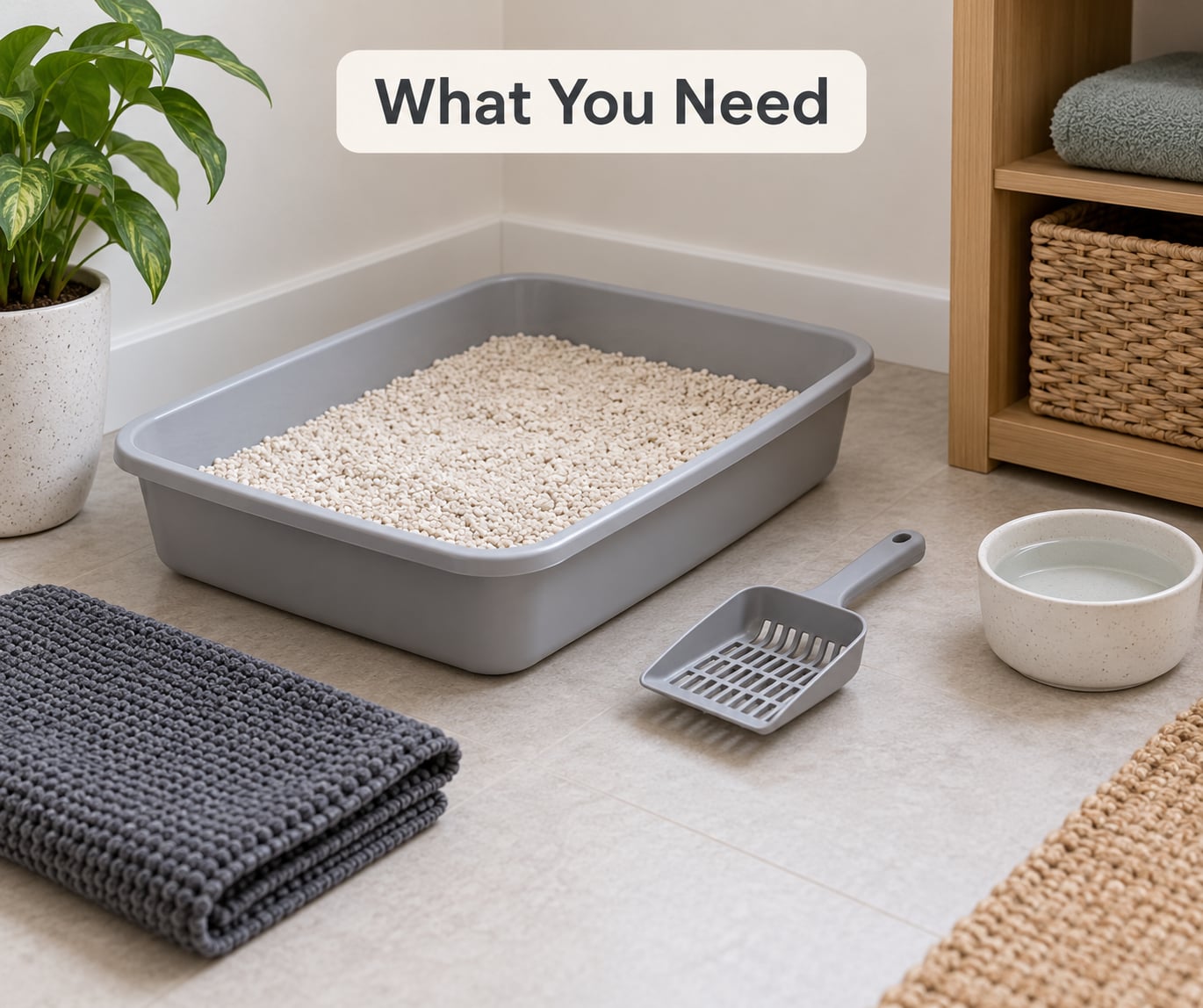
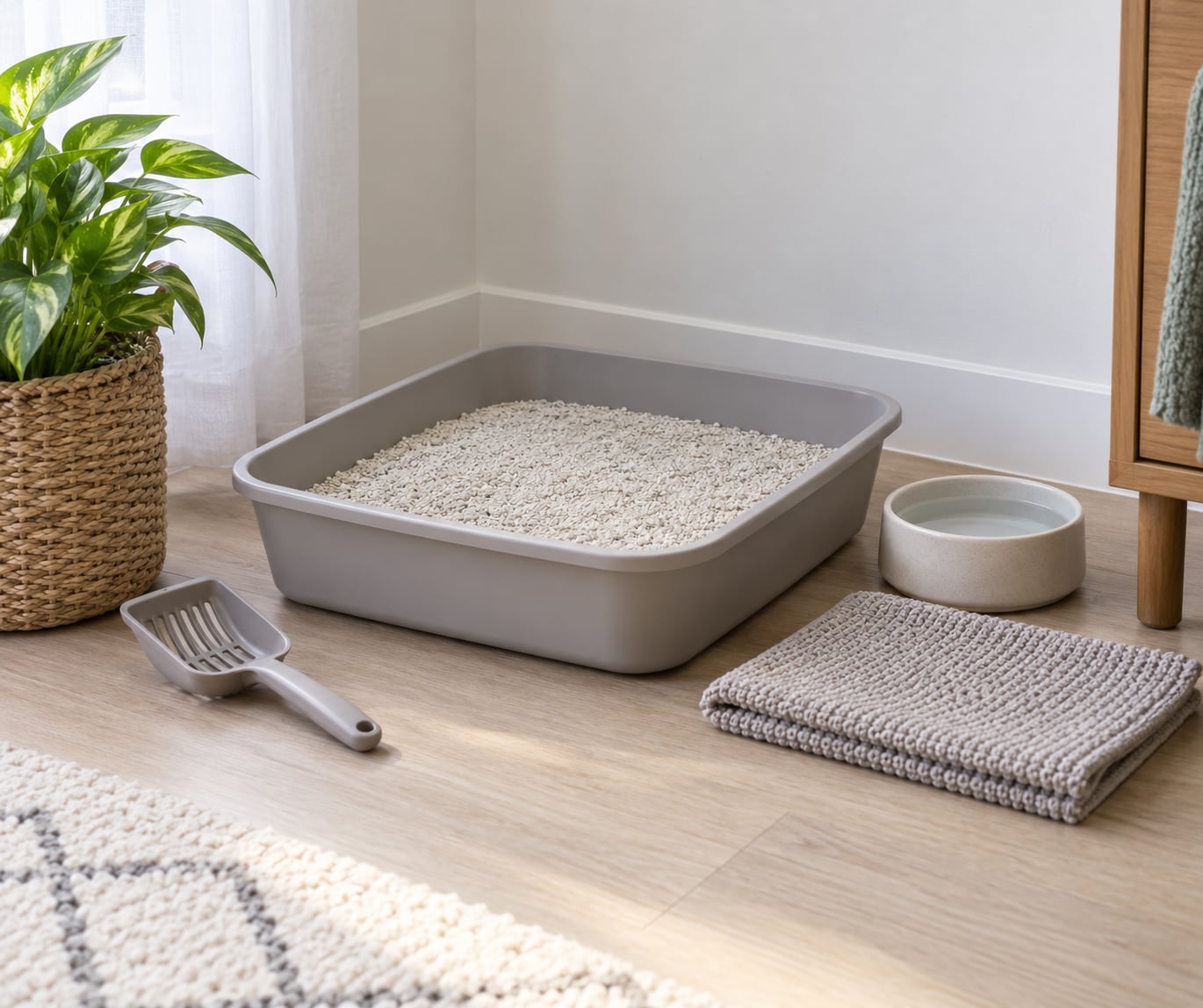
- A shallow, uncovered tray. Low sides let a small kitten climb in without help, and an open top gives you something to look into. Lids and tall walls make the box feel like a trap, so skip enclosed boxes until the cat is fully trained.
- The right litter. Unscented and fine-grained for kittens under 8 to 10 weeks. Non-clumping is the safe pick at that age because clumping clumps are easy to swallow while a kitten digs and chews, and that is a real ingestion risk.
- A scooper and a mat. The mat catches litter that gets kicked out of the box, which solves the single most common complaint from people with bouncy kittens.
- An enzymatic cleaner. Ordinary cleaners leave a scent trail that tells your cat exactly where you cleaned. Enzymatic cleaners break down the urine itself, so the spot stops advertising itself.
- Kitten-safe treats. Tiny ones. The reward only works in the first few seconds, so have them in your hand before you need them.
- A backup box. Not for a second cat, but so you have somewhere to move a tray while you work out why a kitten stopped using the first one.
On size, aim for a tray at least 1.5 times the length of your cat from nose to base of tail, because most box refusals are really about a cramped footprint. For a very young kitten a tray around 13 by 9 inches works, and you will outgrow it within a couple of months.
Step-by-Step: How to Litter Train a Kitten
Work through these in order and stay on a step until your kitten uses the box several times in a row rather than once. One lucky visit is noise, six in a row is a habit.
1. Choose a quiet, accessible litter box
The direct answer to how to litter train a kitten starts with location. Put the tray somewhere calm, well lit and easy to reach. A laundry room beside a dryer, or a spot in a busy hallway, teaches your kitten that the toilet is loud and stressful, and a closet or behind the dryer door is even worse because it is dark and hidden.
Keep it away from the food and water bowls, since cats do not want to eat beside where they eliminate. Two boxes pushed into the same corner count as one box to a cat, so spread extras across different rooms or floors, and leave space around the tray so the kitten can turn and dig without bumping into a wall.
2. Add a thin layer of suitable litter
Fill the tray with 2 to 3 inches of unscented litter. Non-clumping, fine-grain clay is the easiest surface for tiny paws, and keeping the depth consistent means your kitten learns one footing rather than several.
Scoop clumps and waste at least once a day and top up with fresh litter instead of pouring a clean layer over the top. A stable, predictable surface is what turns a sniff into a repeat visit.
3. Show the kitten where the box is
After waking, eating, playing or being handled, pick your kitten up and set them gently into the tray. Say something quiet and encouraging, then let the kitten dig, sniff and settle. Do not scoop them straight back out even if nothing happens yet.
Kittens under about four weeks cannot manage a box on their own. Warm damp cotton or a soft cloth rubbed over the area after feeding, then a wipe of that same cloth or tissue placed in the litter, is the routine used with hand-raised and orphaned kittens. Ask your vet or rescue contact for a feeding schedule to pair with it.
If your kitten hops straight out, that is normal. Many people get faster results with a treat or a wand toy aimed into the box, which desensitizes a kitten to going in and coming back out.
4. Keep a simple bathroom schedule
Young kittens need frequent chances, roughly every couple of hours while they are awake and active. Build the day around waking, meals, naps, play and any handling, and note down the times that actually worked so you can copy your kitten’s own rhythm rather than guessing at it.
Ten calm minutes in or beside the box after each of those moments beats one long session. Watch for the physical tells that a visit is needed, which include sniffing the floor in tight circles, squatting, and suddenly dropping out of whatever game they were playing.
5. Reward the right choice right away
The moment your kitten finishes in the box, give calm praise, a gentle pet and one small treat. Timing matters more than the treat itself, because a reward delivered a minute later teaches your kitten almost nothing.
Then leave them be. Plenty of kittens eliminate and bolt out of the box in one motion, which is enthusiasm rather than refusal, and picking them up straight after teaches the wrong lesson. You want the box to be the best part of the kitten’s day.
6. Respond calmly to accidents
Shorten unsupervised access first. A kitten-proof room or a playpen holding a bed, water, food, toys and the tray in one corner does more in a single afternoon than a week of chasing a kitten through the house, and it also works for owners who cannot watch full time.
Clean up with an enzymatic product and never punish. Putting a kitten’s face in a mess teaches fear of the box and of you, and scrubbing with an ammonia-based cleaner leaves a scent that invites a repeat. The correct response to an accident is to put the kitten back on schedule as if nothing happened.
Treat every accident as information rather than disobedience. It usually means the box is too small, too dirty, too far away, or that something hurts.
7. Gradually increase unsupervised access
Once the kitten has used the box reliably for a week or so, open up another room. Keep rewarding and keep checking the litter, because a routine that only works while you are standing over it is not finished training.
People who work full hours sometimes see a regression at this point. How to litter train a kitten that has started slipping back is mostly a matter of going to the earlier rhythm for a few days instead of scolding, and adding a second tray in a quieter part of the home so there is always an option within reach.
Common Mistakes
Almost every stalled training run traces back to one of these, and each one has a simple correction.
- Enclosed or high-sided boxes. A hood and tall walls trap noise and block sightlines. Move to an open, low-sided tray.
- Scented litter. Strong perfume is made for people, not for a nose that has to find the box again in a dark hallway. Unscented wins.
- Punishing accidents. No face in the mess, no shouting, no swatting. It does not teach where to go and it makes the box frightening.
- A noisy or hidden location. Beside the washing machine, behind the dryer door, or in the darkest corner of the bathroom. Relocate it and leave it there.
- A dirty tray. Scooping once a day, twice in the first week, is the cheapest fix available.
- Switching litter brand abruptly. Owners report the same sequence again and again: a new bag goes in and the kitten stops using the box. Put the new litter in a second tray beside the old one and let the kitten choose for a couple of weeks.
- Expecting overnight results. Owners usually report three days to two weeks once size, litter and location are corrected. A month of no progress means the setup is wrong, not the kitten.
Three failure patterns come up so often that they deserve names. When a kitten poops right beside the box, the sides are usually too high or the tray too small, so treat it as a footprint problem and not an attitude problem. When a kitten digs and then jumps out without going, the litter is too loose to stand on, so firm up the footing with a mat under a shallower tray or a thinner layer. When the litter ends up across the floor, the box is too big and too deep for a bouncy kitten, and a smaller tray with a litter mat in front of it solves most of it.
Frequently Asked Questions
At what age should a kitten start litter-box training?
Start as soon as the kitten is mobile, usually around four weeks, because the digging and burying instinct is already there. Put the kitten in the tray after every meal and nap from the first day. Kittens under four weeks lack the bladder control to use a box alone and need damp cloth or cotton stimulation after each feeding instead.
How long does it take to litter train a kitten?
Most owners report success in three days to two weeks once the box is the right size, the litter is unscented and non-clumping, and the location is quiet. A full week of consistent sessions is typical for a kitten from a breeder or shelter. Rescue and stray kittens who never had guidance often need a few weeks longer. Slow progress almost always points to the setup.
Should I use clumping or non-clumping litter for a kitten?
Use unscented non-clumping litter from about four weeks until 8 to 10 weeks, when the kitten is reliably using the box. Clumping clumps are easy for a young kitten to swallow while digging and chewing, which is a genuine ingestion risk, and some kittens dislike the texture. After 8 to 10 weeks, change gradually rather than emptying the whole tray.
How often should I clean a kitten’s litter box?
Scoop clumps and waste at least once a day, and twice a day during the first week when accidents are most likely. Top up with fresh litter instead of layering a new bag over the old. A dirty tray is the most common reason a kitten that trained well suddenly stops using the box, and a clean tray is usually the whole fix.
How many litter boxes does a kitten need?
Start with one box per cat plus one extra, so a single kitten gets two. The spare gives a shy kitten an escape route and a backup if one tray is being avoided, and two boxes in the same corner count as one, so spread them across rooms or floors. One box is workable in a very small home as long as it stays in the same spot.
When should I call a vet about a kitten that avoids the litter box?
Call promptly if the kitten strains or cries in the box, passes only drops of blood-tinged urine, or keeps entering and leaving without producing anything. Repeated attempts with no output can signal a urinary obstruction, which is an emergency in cats. Loss of appetite, lethargy, or diarrhea lasting more than a day also warrants a vet visit.
How to Start Today
Put one clean, uncovered tray in a quiet corner away from the food bowls, fill it with 2 to 3 inches of unscented litter, and leave it exactly there for the next two weeks.
Feed the kitten, wait about ten minutes, then set them in the box. Praise whatever happens, scoop once a day, and clean any accident with an enzymatic product without a word of scolding.
Repeat that rhythm after every meal, nap and play session until the pattern sticks, then add a room at a time. If your kitten is under four weeks old, straining in the box, or producing nothing at all, talk to your vet or rescue contact before you adjust anything else.