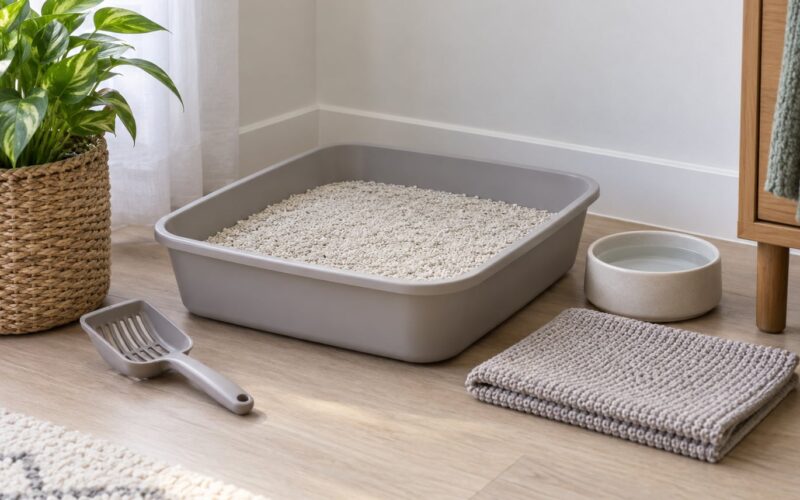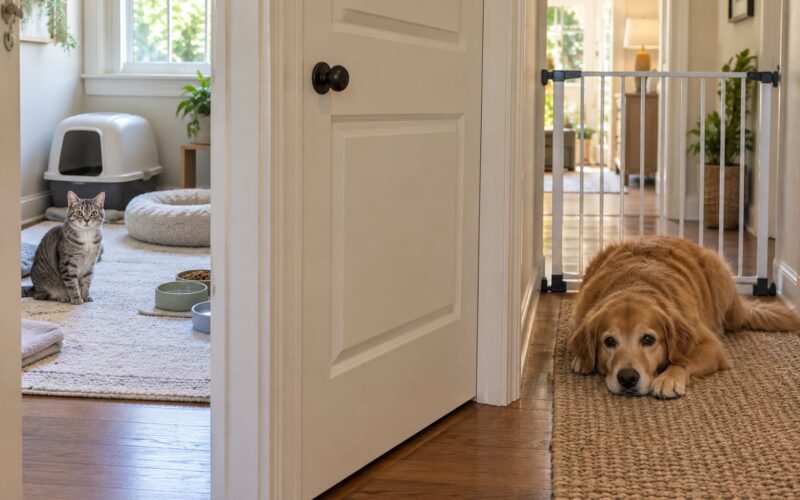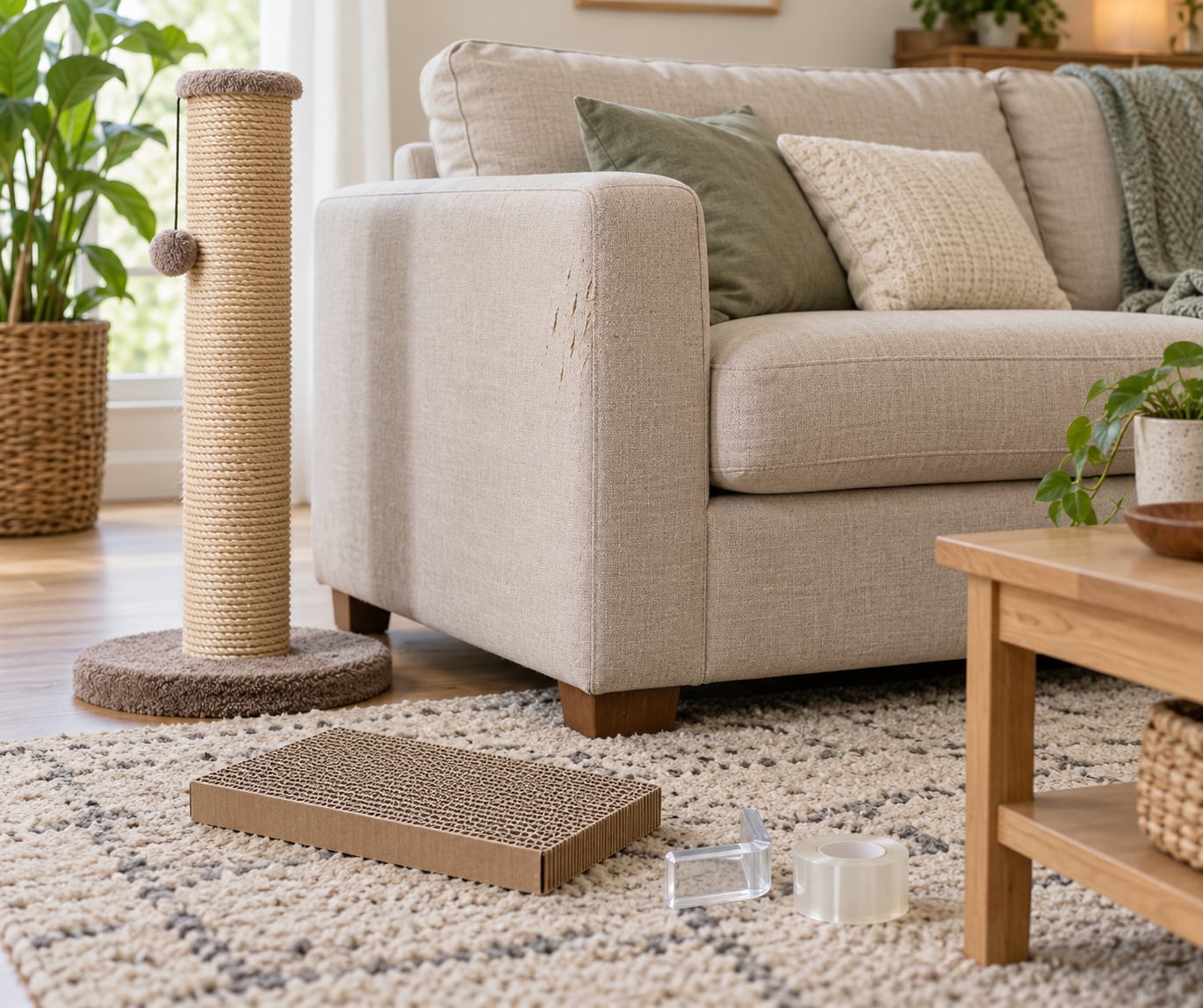
To stop a cat from scratching furniture, you have to redirect the instinct, not suppress it. Give your cat a scratching surface it prefers, put that surface right beside the sofa it likes to ruin, make the sofa itself physically unpleasant, then reward every single correct scratch.
That sounds simple, and the first week usually is not. Most owners who give up do so around day twelve, right when the new post is still being ignored.
Scratching is normal, healthy feline behaviour. Cats scratch to stretch the muscles in their back and shoulders, to shed dead outer layers of claw, and to leave scent from glands in their paw pads so other animals know the room is taken. It is not punishment, dominance, or your cat being difficult. You cannot train it out of a cat. You can only redirect it.
Expect two to six weeks. Most households see a real drop in furniture scratching within the first month, and the change tends to stick as long as the alternative surface stays in the same spot.
Quick note before you start: scratching that appears suddenly, comes with bald patches or irritated skin, or shows up overnight for no obvious reason deserves a vet visit rather than a furniture guard.
Table of Contents
- 1What You Need
- 2Step-by-Step: How to Stop a Cat From Scratching Furniture
- 3Step 1: Find Out Where and Why Your Cat Scratches
- 4Step 2: Introduce Scratching Posts Around the Home
- 5Step 3: Make the Alternative More Inviting
- 6Step 4: Protect the Furniture Without Harm
- 7Step 5: Reward Your Cat for Using the New Surface
- 8Step 6: Discourage Continued Scratching on Furniture
- 9Step 7: Maintain the Routine and Reassess
- 10Common Mistakes
- 11Frequently Asked Questions
- 12How do I stop a cat scratching sofa cushions?
- 13Is double-sided tape safe for stopping a cat from scratching furniture?
- 14What type of scratching post does my cat prefer?
- 15Should I get rid of a scratching post after a while?
- 16Why is my cat suddenly scratching the furniture more?
- 17Can scratching be a sign that my cat is stressed?
- 18Start With One Change Today
What You Need
None of this is expensive, and most of it is one trip to a hardware store. The list below covers the full method.
- Two or more scratching surfaces, not one. A tall vertical post for cats who stretch and scratch upward, a flat pad or cardboard board for cats who scratch horizontally, and ideally one of each. One-to-one is the rule of thumb. If your cat damages three pieces of furniture, offer three scratching options.
- A material that matches what your cat already likes to destroy. Box chewers take to cardboard. Cats that dig at carpets want carpet or fabric. Cats that scratch wooden legs tend to prefer sisal rope or wood-grain textured surfaces.
- Double-sided pet-safe deterrent tape. The wide kind sold for furniture guards, applied over a strip of cardboard so no adhesive ever touches upholstery. This is the single most reported fix among cat owners.
- An enzyme-based cleaner. Not a scented cleaner. Enzymes break down the scent glands your cat left behind, which is often the reason it returns to the same spot.
- Clear plastic corner guards or a fitted furniture cover. Cheap corner protectors handle door frames and sofa arms. A washable slipcover handles a full sofa.
- A small handful of treats and a spray bottle of water for the cat only, never for the furniture. Plus catnip or silver vine for luring a hesitant cat to a new surface.
- Nail clippers and, optionally, soft claw caps. Trimming every ten to fourteen days blunts the tips enough to protect fabric. Soft vinyl caps glue on to the claws and last a few weeks at a time.
Budget about an afternoon for the first setup and roughly two to six weeks of consistency after that. Put the tape and the guards on the same day you place the post, so protection and redirection start together rather than weeks apart.
Step-by-Step: How to Stop a Cat From Scratching Furniture
Step 1: Find Out Where and Why Your Cat Scratches
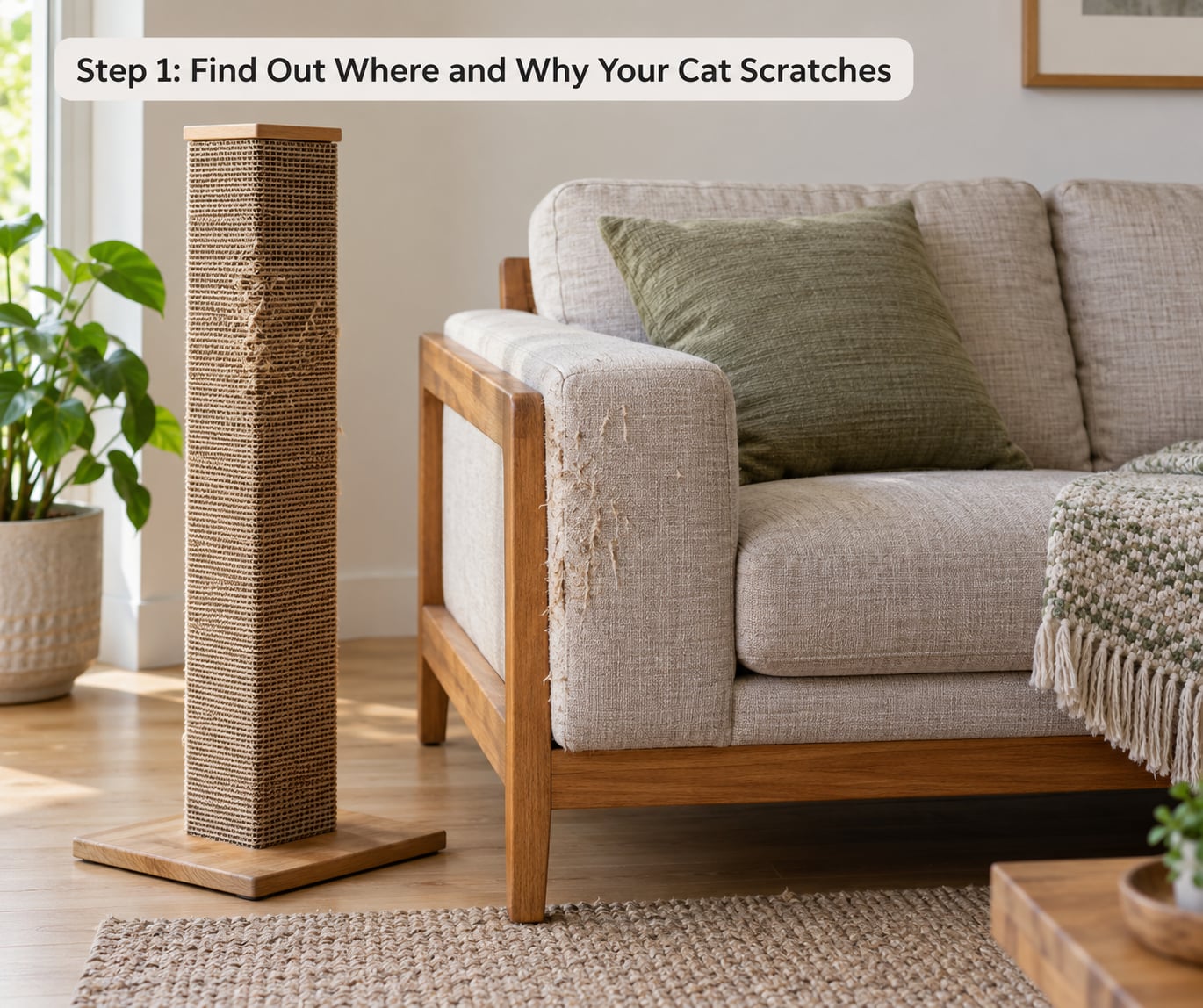
Before you buy anything, watch the cat for a week. Note the time of day, the exact furniture, and what happened a minute earlier. Cats are creatures of routine and the pattern is almost always there once you look.
The usual pattern: a stretch and scratch on waking, a marking session after eating or using the litter box, a long session before bed, and an increase during any change in the house. Scratching right after eating is scent marking, since a fed cat feels confident and marks its territory harder.
Kittens scratch more often and more wildly than adults because they are learning a full-body motor skill. Adult cats tend to concentrate on a few specific spots, often a single sofa arm or a leather recliner, because that surface already smells most like them. The ASPCA notes that scratching is most intense in cats between one and five years old.
Make a list. That list is your shopping list.
Step 2: Introduce Scratching Posts Around the Home
Put the first new surface exactly where the damage is. If the left arm of the sofa is the target, stand the post beside that arm, not in the spare bedroom where the cat tree already collects dust. Then move the post a few inches per week, closer to where your cat actually spends time, until it is in a room the cat uses daily.
Size matters more than most owners expect. A post shorter than about three feet gets ignored by cats that stretch upward, because it does not let them reach full extension. Look for a base wide enough that the cat cannot tip it, and a surface that feels solid rather than wobbly.
Cover the rooms your cat lives in. One post in one corner is not a scratching solution for a house with four rooms the cat circulates through, so add a second surface in whichever room gets the most use. Cover or block the one your cat likes least.
For scratching after naps, a low horizontal pad next to the favourite sleeping spot works better than a tall post, because the behaviour there is a stretch rather than a territory claim.
Step 3: Make the Alternative More Inviting
Now improve the odds that the cat tries the new surface. Rub a little catnip on the sisal or cardboard and offer a treat on the base at the same time. One cat owner recommended scattering catnip a few feet from the sofa as a lure, which is a good approach when the post is somewhere your cat does not usually go.
Match the shape to the style. Cats that stand and scratch upward need a vertical post. Cats that crouch and rake sideways need a horizontal pad, a cardboard board, or a barrel lying on its side. Cats that target corners need a corner scratcher or a post fitted into the corner of the room.
Match the material to the damage. A cat that shreds cardboard boxes will use a cardboard scratcher. A cat that pulls at carpet fibres will want carpet or fabric. A cat that attacks wooden table legs usually transfers happily to a wood-grain textured post.
Secure anything that slides. A scratcher that moves under the cat’s weight gets abandoned fast, and a toppling post teaches the cat that scratching surfaces are unreliable.
Step 4: Protect the Furniture Without Harm
Now make the sofa feel wrong under the paws while the post feels right. The classic method is double-sided tape, and owners on cat forums report it working almost immediately. Apply the tape to a strip of cardboard and staple or tape that onto the arm or corner, so no residue ever touches the fabric. The same trick with cardboard and tape over a furniture corner tends to hold for months.
Aluminium foil works on the same principle. Crumple it tightly over the surface and tape the edges down. Cats dislike the sound, the texture, and the way it shifts under a paw.
Clear plastic corner guards handle door frames and the outer arms of a sofa well. A fitted cover or slipcover is the bluntest option but the most effective, since it removes the texture entirely.
Here is how the common methods compare, with what each one does, how safe it is, how well it tends to work, and how long it holds.
- Double-sided tape over cardboard. Sticky feel on the paw. Safe when taped to cardboard rather than fabric. The most frequently reported success, and it lasts until the tape picks up fur.
- Aluminium foil. Unstable, noisy texture. Safe. Works well, especially on door frames, and holds for months.
- Clear plastic guards. Removes the grippy surface. Safe. Good on corners and sofa arms, and they last months.
- Fitted cover or slipcover. Changes the whole surface. Safe. Very good on sofas, washable, and long-lasting.
- Citrus or vinegar scent. Unpleasant smell. Use only weak solutions, on surfaces rather than the animal. Mixed results, and it fades as it dries, so expect hours and repeat sprays.
- Cayenne or pepper. Burning on the paw. Not recommended. Unreliable and irritates skin until it is vacuumed up.
On scents: citrus peel, a very dilute vinegar solution, or rosemary are the ones owners report using. One homemade recipe combined rosemary oil with dish soap and water and sprayed on furniture. Concentrated essential oils are toxic to cats, so never use undiluted oils and never spray a repellent on the animal. Apply it to the surface only, and let it dry fully before letting the cat near the room.
Clean the old marks with an enzyme cleaner first. Scent left in the fabric is a reason to come back.
Step 5: Reward Your Cat for Using the New Surface
The moment your cat scratches the post, give it something. A treat, a soft voice, a short petting session, or a few seconds of play with a wand toy. Timing has to be immediate. Reward three seconds late and your cat will not connect the two events.
Keep the reward quiet and brief. A jumping, squealing celebration every time is fine for a kitten, but an adult cat often stops using the post if the payoff becomes loud and demanding.
If the cat scratches the furniture while you are watching, do not scold. Simply pick it up, carry it to the post, and wait. Cats cannot process a lecture, and the interruption teaches them that your presence means nothing at all.
Step 6: Discourage Continued Scratching on Furniture
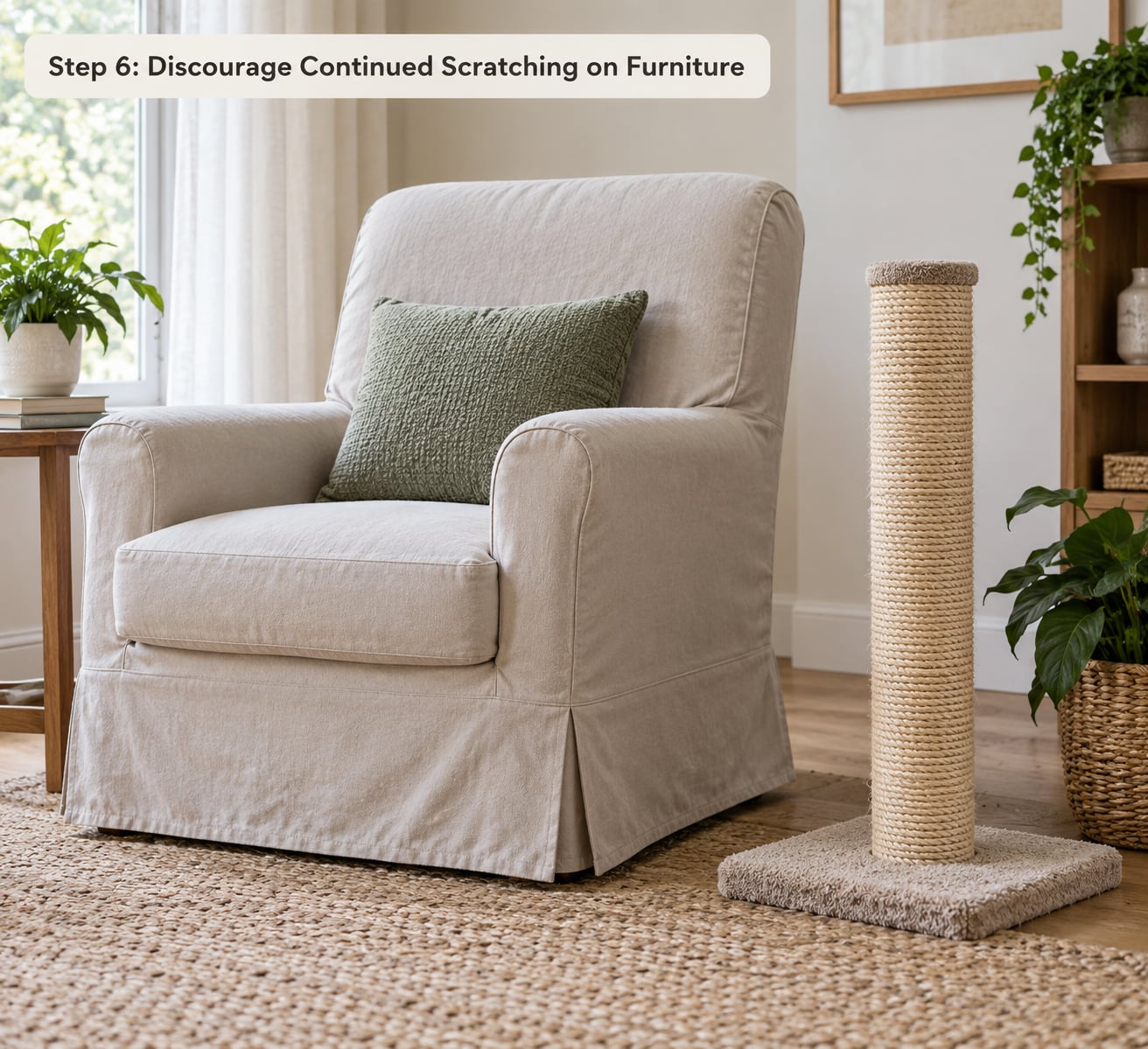
Removing the opportunity works better than confronting the cat. Block the spot, cover it, or move the piece. The most reliable version of this comes down to one move: find the scratcher your cat already likes and place it to occupy the exact spot the cat wants to scratch, which resolves it almost every time.
Same logic applies to furniture you own. If your cat goes after one leather recliner, put a cover on it and shift the chair out of the corner where the scratching happens. If the damage is to door frames, guards go on the frames, not on a post across the room.
Consistency is the whole trick here. Tape, cover, or block the furniture every day for two to three weeks. If you alternate between leaving it open one day and taping it the next, you are teaching the cat that persistence works.
Step 7: Maintain the Routine and Reassess
Keep going after the scratching slows. Replace worn surfaces, restick loose tape, and keep treats associated with the post rather than handing them out at random. Weekly nail trims make a real difference too, since blunt tips stop fabric from unravelling as fast. Every ten to fourteen days is a reasonable rhythm for most cats.
Move scratchers around every four to six weeks. A post that has sat untouched for months often needs relocating or re-luring before a cat will use it again.
Track what changes. A quick note on your phone each week, such as which surface the cat used and how many scratches the sofa got, tells you in four weeks whether the redirection is working or whether you need a different surface.
Call a veterinarian if the scratching is sudden, comes with hair loss, redness, scabs, or a hunched posture, shows up in the middle of the night, or appears alongside straining in the litter box, hiding, or appetite changes. Fleas, ringworm, dermatitis, and pain all make scratching worse, and none of them respond to tape. A qualified veterinary behaviourist is the next step when the scratching looks emotional rather than territorial.
Common Mistakes
Declawing. Onychectomy amputates the last joint of each claw. The International Cat Association opposes it, and the physical consequences can include persistent pain and litter-box avoidance. It is not an alternative to a scratching post.
Punishing. Yelling, clapping, or spraying the cat with water teaches it to hide from you, not to stop scratching. Punishment raises stress, and stress drives more scratching. The fix is redirection every single time.
Scattering irritants. Cayenne, pepper, and strong ammonia create a surface the cat avoids and then scratches somewhere worse, often a rug or a bed frame. If you use scent at all, keep it weak, use it on furniture only, and keep it away from the animal.
Removing the favourite surface too early. Taking away a well-used post the moment the sofa is scratched undoes weeks of work. If the cat stops using the post, fix the post: new location, new material, or catnip. Do not take it away.
Treating scratching as a litter-box problem. Accidents near a scratched spot are often a separate issue, usually a dirty or small box, and clearing the accidents with an enzyme cleaner solves that half of the problem on its own.
Buying one post and stopping there. The most common failure is a single expensive post in a room the cat avoids. Owners who went on to solve this usually added more surfaces, in more rooms, in materials that matched what their cat already destroyed.
A few things worth keeping in mind once the crisis passes. Trim claws on a schedule you can actually stick to, rotate toys and scratchers so nothing goes stale, and give your cat daily interactive play, around ten to fifteen minutes. A bored cat scratches more, and enrichment is the cheapest deterrent on this whole list. Puzzle feeders and a couple of high perches take some of the edge off without any of the expense.
Frequently Asked Questions
How do I stop a cat scratching sofa cushions?
Cover the sofa before your cat starts, not after. Double-sided deterrent tape on cardboard over the arm and back cushions works well, and a fitted cover is even more thorough. Stand a vertical sisal post right beside the sofa first so there is somewhere acceptable to scratch, then clean existing marks with an enzyme cleaner so the scent does not draw the cat back.
Is double-sided tape safe for stopping a cat from scratching furniture?
Yes, when you apply it to cardboard or plastic and staple that onto the furniture. Tape placed straight onto upholstery or leather can lift dye or leave residue that takes a long time to work out. Keep the adhesive away from any place your cat chews, and replace strips once fur builds up on them.
What type of scratching post does my cat prefer?
Match the shape to how your cat already scratches. Cats that reach upward and scratch vertical surfaces want a post at least three feet tall and stable enough not to tip. Cats that crouch and rake sideways want a horizontal pad or cardboard board. Cats that attack furniture corners want a corner scratcher. If it destroys cardboard boxes, a cardboard scratcher is the safe bet.
Should I get rid of a scratching post after a while?
Keep it, and if the cat has stopped using it, move it rather than binning it. Relocate it closer to where the cat spends time, refresh the catnip, or try a different material. Owners who solved this problem generally added more surfaces rather than replacing them. A post that works is the one thing holding the behaviour redirect in place.
Why is my cat suddenly scratching the furniture more?
Sudden increases usually mean something changed. A new cat, a moved sofa, a new baby, redecorating, or a disrupted routine can all trigger more marking. Pain, fleas, ringworm, and dermatitis also make scratching worse and will not respond to tape. Book a vet appointment if the change is abrupt or comes with hair loss, redness, or hiding.
Can scratching be a sign that my cat is stressed?
Yes. Scratching is how a cat releases tension and leaves calming scent marks for itself, so stressed cats often scratch more and in new places. Fifteen minutes of interactive play each day, puzzle feeders, high perches, and a predictable routine reduce it. If the scratching is paired with hiding, appetite changes, or overgrooming, speak to a vet or a veterinary behaviourist.
Start With One Change Today
Go and watch your cat scratch for five minutes tonight. Write down the one piece of furniture it uses most and buy a scratching surface that suits that style, then set it directly beside the spot.
That single move is where every fix begins. If you want to stop a cat from scratching furniture, the pattern is always the same: alternative surface first, protection on the sofa second, patience for six weeks.