The basic tools every homeowner needs are a small core of hand tools, one cordless drill, basic safety gear, and a handful of emergency items like a plunger and a flashlight. That combination covers hanging pictures, assembling flat-pack furniture, tightening a loose cabinet handle, and stopping a running toilet without a contractor’s visit. Twelve tools is the practical starting point, and most of it costs less than one service call.
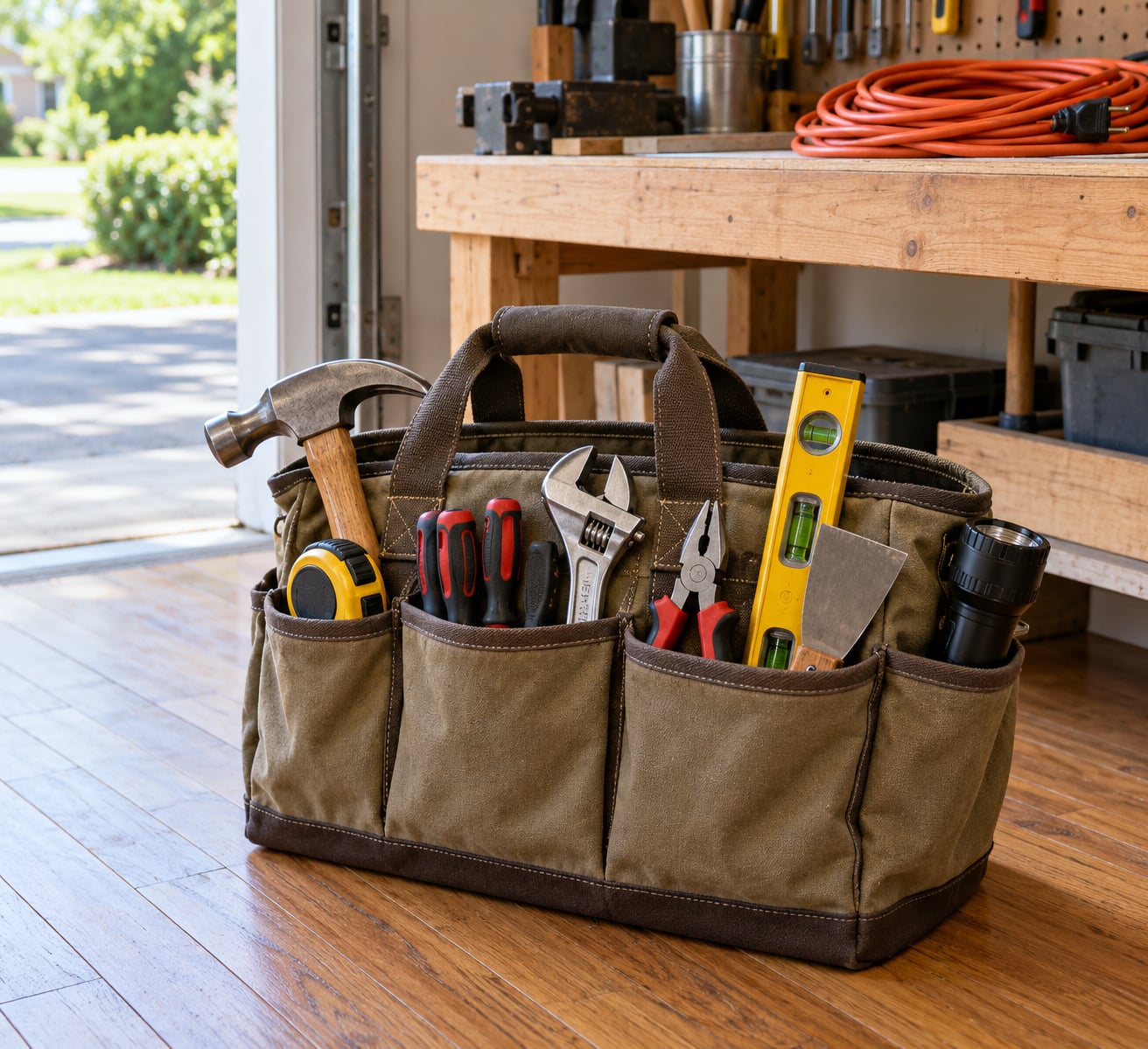
I keep my kit in a single tote by the door, and everything in it has been used. That is the test I use for anything someone asks me to add. A tool that has never earned its space in six years is a tool that only takes up room.
Table of Contents
- 1Basic Tools Every Homeowner Needs at a Glance
- 21. Screwdriver Set
- 32. Hammer
- 43. Adjustable Wrench
- 54. Pliers Set
- 65. Tape Measure
- 76. Utility Knife
- 87. Level
- 98. Screwdriver Bit Socket Set
- 109. Hex Keys or Allen Wrench Set
- 1110. Staple Gun
- 1211. Putty Knife
- 1312. Flashlight
- 14Where to store the kit and keep it working
- 15Frequently Asked Questions
- 16What is the most important tool for a new homeowner?
- 17Do I need a full tool set or can I buy tools as I need them?
- 18What tools should every household keep in an emergency kit?
- 19Where should homeowners store their basic tools?
- 20When should I hire a professional instead of using a household tool?
- 21How do I choose tools that will last?
Basic Tools Every Homeowner Needs at a Glance
| Tool | What it does | What a beginner should choose |
|---|---|---|
| Screwdriver set | Drives and removes slotted and Phillips screws | Six-piece set, flat and Phillips in three sizes |
| Claw hammer | Drives nails, pulls nails | 16 oz steel head with a fiberglass handle |
| Adjustable wrench | Grips nuts, bolts, and supply lines | 8 inch, smooth jaw |
| Pliers set | Grips, bends, cuts, reaches | Combination, needle-nose, and slip-joint |
| Tape measure | Measures length and spacing | 25 foot, auto-lock, 1 inch blade |
| Utility knife | Cuts cardboard, carpet, packaging, trim | Retractable blade with a fresh edge |
| Bubble level | Confirms level and plumb | 9 inch torpedo with a vial |
| Socket set | Works hex-head bolts and nuts | Shallow SAE or metric set, ratchet sold apart |
| Hex key set | Turns internal hex fasteners | Metric set with ball-end long arms |
| Staple gun | Fastens insulation, mesh, fabric | Standard office-duty stapler |
| Putty knife | Fills holes, applies sealant, scrapes compound | 4 inch flexible blade, plus a 1 inch rigid one |
| LED flashlight | Lights inspections, outages, dark spaces | Sturdy body, adjustable brightness, spare batteries |
1. Screwdriver Set
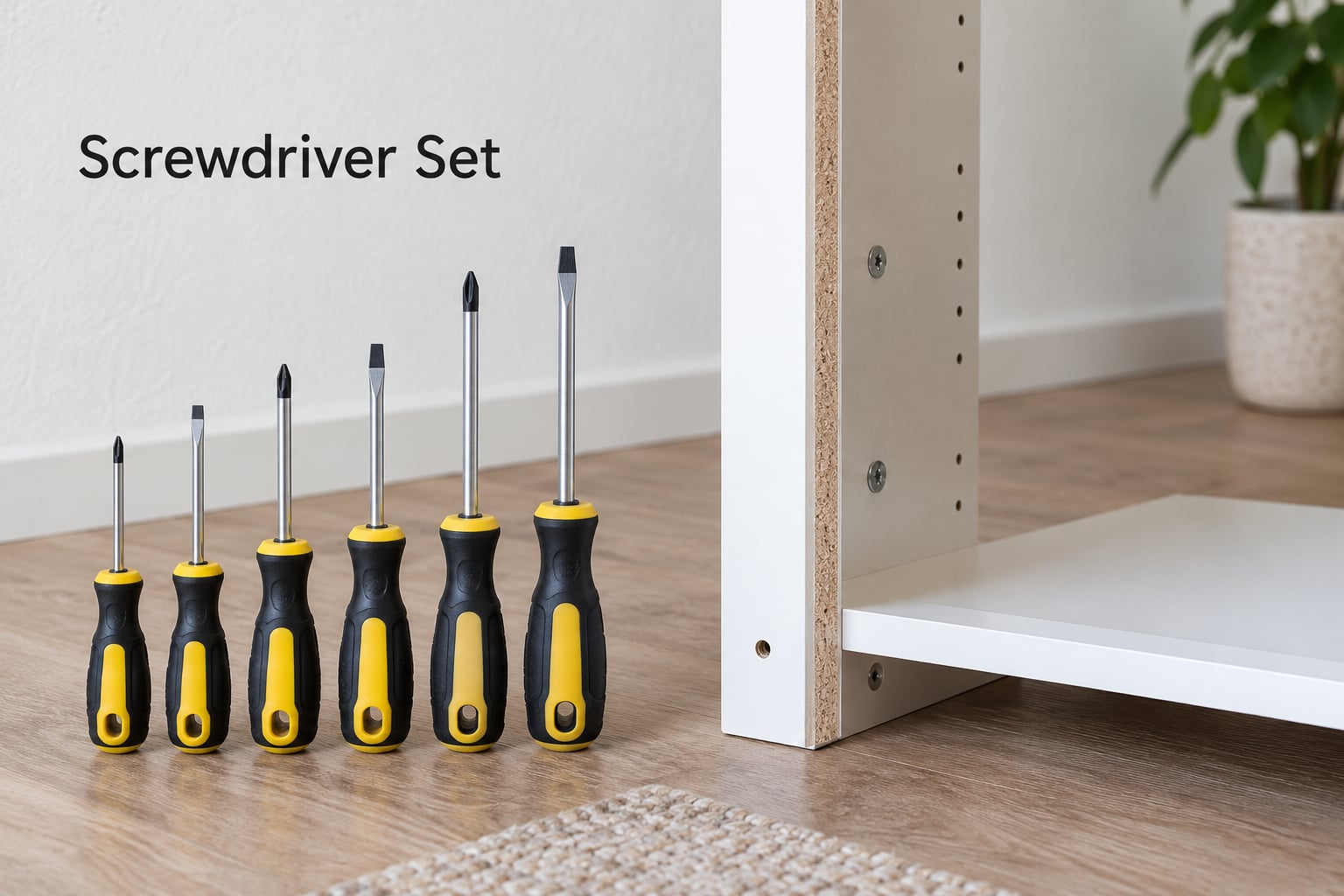
A varied screwdriver set handles more jobs than most people expect. It covers assembly furniture, tightening loose outlet covers, replacing a cabinet hinge, and anything with a visible screw head in it.
Look for at least flat-head and Phillips tips in three sizes. That covers the small terminal screws found on light fixtures and the long screws used in flat-pack furniture, which is the pair beginners most often leave out.
Grip matters more than price. Hold the handle near the ferrule for torque on a stubborn screw and near the tip for fine control around a switch plate. If a tip gets chewed or slips out of its handle, replace the driver rather than the whole set.
2. Hammer
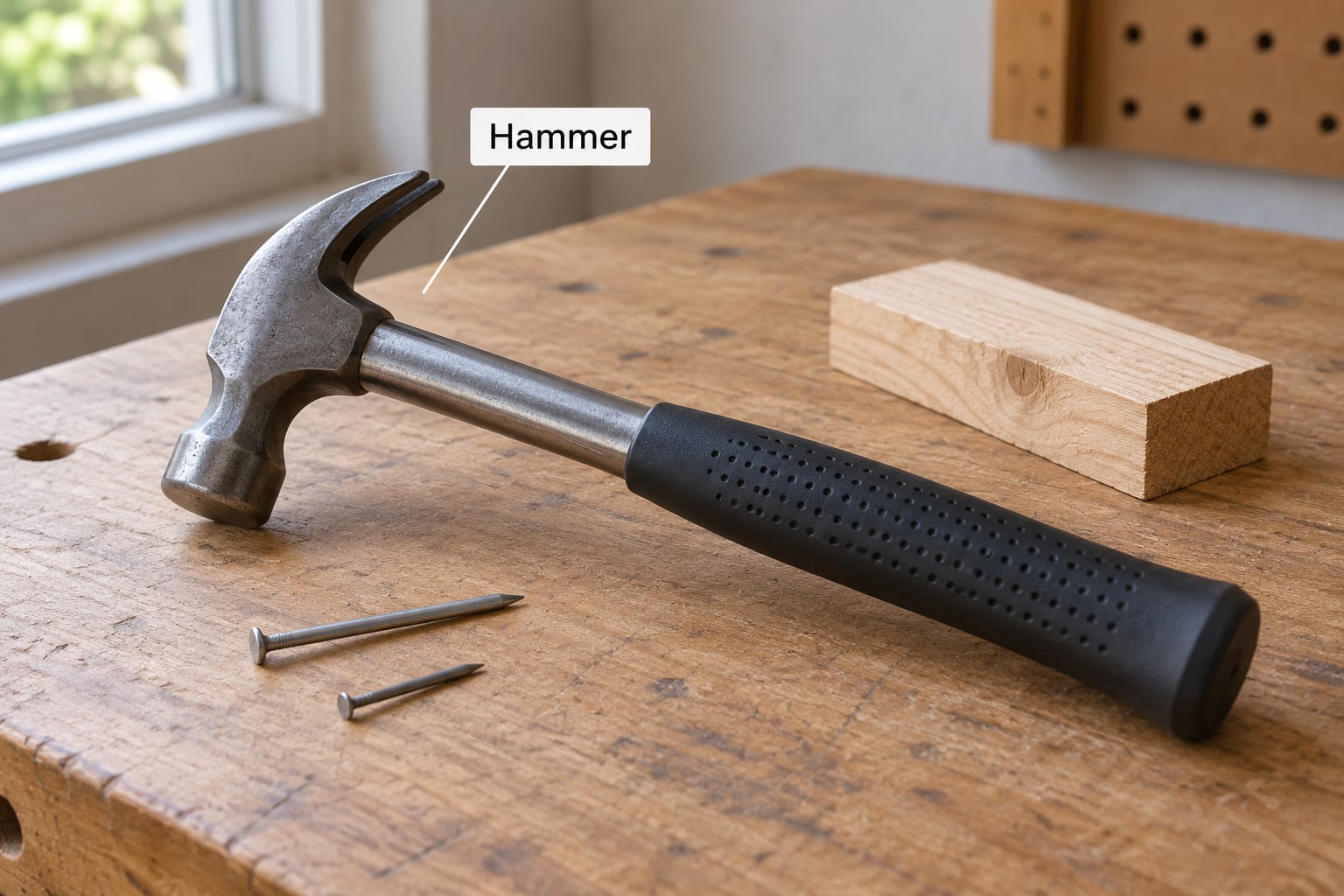
A claw hammer drives nails and pulls out temporary fasteners like picture hangers and trim pins. It is the tool that shows up in nearly every household repair.
Claw style pulls nails. A ball-peen hammer has a rounded face and is meant for metal work and rivets, so it earns its place in a garage, not a junk drawer. A rubber mallet is for knocking things apart gently and driving plastic spacers without damage.
For most homes, a 16 ounce head with a fiberglass handle is the useful size. Strike with two hands on a firm wrist, not with your arm, and let the weight do the work. A framing hammer is heavier and better for framing lumber, which is not something a homeowner tool tote needs.
3. Adjustable Wrench
An adjustable wrench fits nuts, bolts, and plumbing connections that a fixed-size wrench cannot. It grips supply lines, mounting bolts, and the odd fitting under a sink that no standard wrench will match.
Set the jaw snug on the fastener before turning, with the movable jaw on the side that takes the turning force. An over-tightened wrench slips and rounds the corner of the nut, which means a plumber gets the harder job later.
An 8 inch model is the general-purpose size for household work. Skip the locking variety unless you work on one stubborn connection for a long stretch. For plumbing supply fittings specifically, a pipe wrench grips better than any adjustable wrench, so keep the two separate.
4. Pliers Set
Pliers are where beginners buy duplicates. Combination pliers grip and cut, needle-nose pliers reach into narrow gaps, and slip-joint pliers clamp onto a round object. One of each beats three of the same.
Combination jaws let you hold a wire while you twist, needle-nose tips work inside a crowded outlet box, and slip-joint jaws grip pipe or a stubborn round fitting. Overhead work on a ladder deserves slip-joint, since the wider handle keeps your knuckles farther from the wire.
One warning that matters: household pliers are not insulated tools. They are for mechanical work only. Anything involving a live circuit belongs to a licensed electrician, and a non-insulated tool in a live box is a serious hazard.
5. Tape Measure
An accurate tape measure decides whether a shelf sits level or a curtain reaches the floor. Furniture placement, shelving spacing, and finding the right replacement part all start with a measurement.
Read the largest number first, then the fraction after it. 48 and a half inches is 4 feet plus a half inch, not 48.5 inches, and that difference matters when you are fitting into a wall.
A 25 foot tape is the most versatile length for home work. Auto-lock models hold the blade in place so both hands are free, and a wide hook at the end stays snug against a stud wall for exact inside measurements. If the hook starts to wobble, tighten it before you trust a tight dimension.
6. Utility Knife
A retractable utility knife opens paint and caulk tubes, cuts carpet, trims drywall, and cuts through the heavy packaging that flat-pack furniture arrives in. It is the fastest way to make a clean, straight cut in a thin material.
Cut away from your body with the blade pointing down, and draw the knife toward you on a scoring pass rather than sawing back and forth. Use a fresh blade. A dull blade needs pressure, and pressure near your fingers is where cuts happen.
Retract the blade fully before you set the knife down, and keep it out of reach of children. If a segment snaps off inside a cut, stop and change the blade rather than trying to fish it out.
7. Level
A level prevents crooked shelves, canted cabinets, and a picture frame that drifts downhill on its own wall. It is the fastest way to know your work is right before anything is drilled or hung.
The common beginner choice is a 9 inch torpedo level with a bubble vial. Set it on a shelf, watch the bubble sit between the lines, then turn the tool 90 degrees to check the other axis. For a vertical check, hold it against a door edge or a corner and read the vial upright.
Confirm placement with the tape measure as well. Longer tools win for wide doors, cabinets, and long shelves, but a torpedo level tells you quickly whether an idea is straight before you commit to it.
8. Screwdriver Bit Socket Set
A socket set is for hex-head bolts, nuts, and standard machine hardware, not for slotted or Phillips screws. Bikes, basic automotive work, and furniture hardware use hex fasteners often enough that hand tools alone run out quickly.
A shallow SAE or metric set covers most household hardware. Buy metric unless your work specifically involves older imperial hardware, and check which sizes are actually included since shallow sets often omit the larger sizes.
The ratchet usually comes apart from the sockets. Set the direction lever so you turn counterclockwise to loosen, and ratchet back over empty space on the return stroke. Holding the selector in the wrong direction is the reason new ratchets feel broken.
9. Hex Keys or Allen Wrench Set
Hex keys reach fasteners with an internal hex socket, which are everywhere in furniture assembly and bicycle components. Flat-pack instructions often include the sizes, so read them before buying a set.
The short end of a key goes into the fastener, the long end gives you leverage for torque. Ball ends let you angle the key into a fastener that sits awkwardly in a narrow space.
Using the wrong size rounds the fastener, and then nothing removes it. If the key slides in loosely or has to be forced, stop and try the adjacent size. Force is how a hex key ends up embedded in the fastener head.
10. Staple Gun
A staple gun secures insulation, mesh screening, fabric, and light household materials to wood. It also handles quick repairs like holding carpet edge down during a patch job.
Load the staple with the crown facing the direction of travel, rest the nose flat on the material, and squeeze the handle fully. Add a bit of force on thin or smooth surfaces so the staple bites wood instead of bouncing off.
Keep your off hand behind the nose. For upholstery, a plain office stapler is the right tool. A construction-grade stapler handles longer brad nails and heavier material, and it is worth buying only when the job is already in front of you.
11. Putty Knife
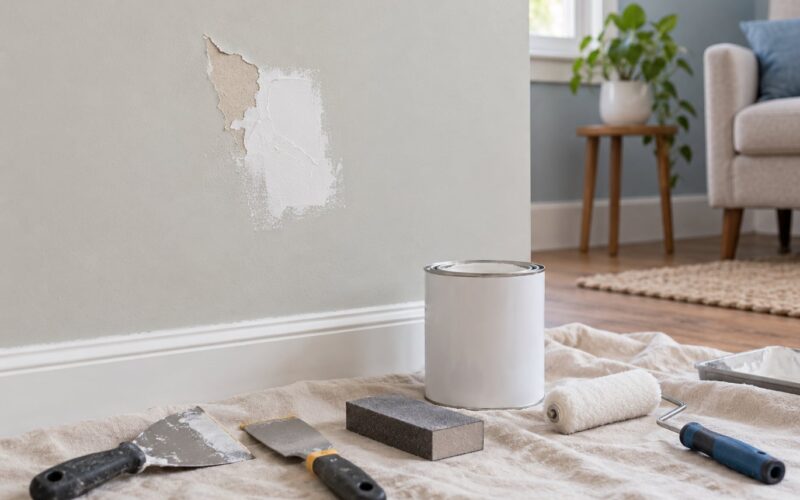
A putty knife fills small nail holes, applies sealant, scrapes loose compound, and spreads patch material. It is the tool that decides whether a wall repair looks like a repair.
Flexible blades bend for filling and curved surfaces. Rigid blades scrape and spread cleanly without following every contour, so keeping one of each size covers more ground than a single wide blade.
Two sizes handle almost everything: a 1 inch rigid blade for scraping and a 4 inch flexible blade for filling. Deep damage, moving cracks, or holes larger than a couple of inches are repair jobs for patch kits and a finishing pass, not a putty knife alone.
12. Flashlight
A flashlight is an essential household tool for inspections, outages, repairs, and finding things in closets, attics, and behind appliances. It is also the cheapest insurance in the kit, since the tool costs little and the dark costs a lot.
Choose a sturdy LED body with adjustable brightness rather than a thin plastic one. Check the runtime rating and keep spare batteries with it, since the batteries are usually the weak point.
Owners I know keep one flashlight per room for outages. It is a habit worth copying. Skip candles during an outage for lighting or heat; a battery-powered light is safer and lasts longer.
Where to store the kit and keep it working
A single tote, a tool bag, or a wall-mounted rail keeps everything in one place instead of scattered across the house. Homeowners often say their biggest frustration is tools that turn up when a project is half finished.
Give each tool a fixed spot, and hand tools stay organized by shape. Wipe steel surfaces dry before storing them, especially in humid closets or basements, where a light coat of oil on the blade and jaw prevents rust. Sharpen screwdrivers and putty knife edges occasionally, and a dull blade is what makes people force a tool.
Check the drill battery every few months so it does not sit dead for months. That is the whole maintenance routine for a basic kit.
Frequently Asked Questions
What is the most important tool for a new homeowner?
Most new homeowners get the most value from a tape measure, a screwdriver set, and a cordless drill in that order. A tape measure stops wrong cuts and misplaced shelves, screwdrivers handle almost every visible fastener in a house, and a drill takes over the boring and driving work that makes projects drag. If you can only buy one thing on day one, take the drill, but the other two pay for themselves within a week.
Do I need a full tool set or can I buy tools as I need them?
Buying piecemeal usually serves a homeowner better than a pre-built kit, because kits tend to include duplicate screwdrivers, pliers, and hex keys while skipping the fasteners and plumbing tools you actually reach for. Buy the twelve tools above first, then add as real jobs appear. A kit makes sense only when it happens to contain what you were going to buy anyway.
What tools should every household keep in an emergency kit?
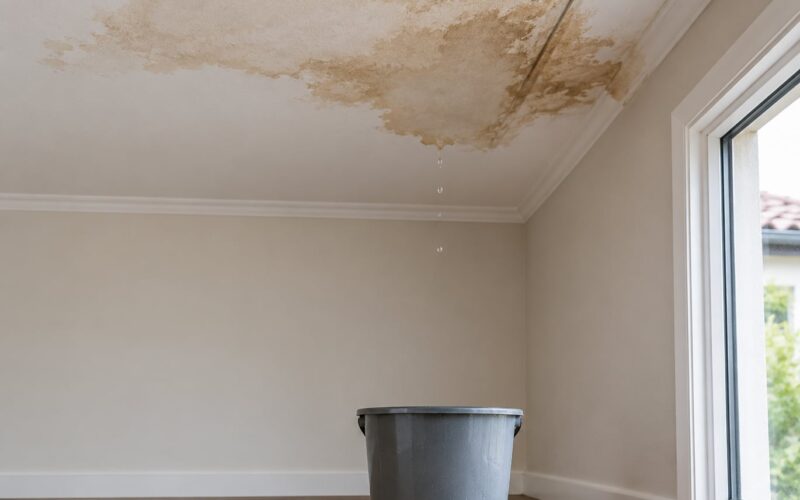
Keep a plunger, a flashlight with spare batteries, a five-gallon bucket, a set of pliers, an adjustable wrench, and a duct tape roll in one container. Homeowner forums bring these up constantly because they get used during the messy, unplanned problems. A bucket under a leak and a plunger for a slow toilet solve more urgent situations than any power tool will.
Where should homeowners store their basic tools?
One tote, tool bag, or wall rail in a dry, reachable spot works better than several partial collections. Keep hand tools in assigned positions so a missing item is obvious, and store steel tools dry to avoid rust. A garage or utility room is fine as long as humidity stays low and the kit is not buried behind the lawnmower.
When should I hire a professional instead of using a household tool?
Call a licensed pro for anything involving the electrical panel, wiring, gas lines, the water heater, or structural changes. Those are not learning projects, and a basic hand tool set cannot make them safe. Also hire out anything you cannot complete in a single sitting, because half-finished repairs are what turn a small job into an expensive one.
How do I choose tools that will last?
Pick weight, grip, and warranty over brand labels. A tool with a solid handle, a shank that will not flex, and a replacement part policy tends to outlast a cheaper one. Skip tools that feel lightweight for the job, especially screwdrivers and pliers, because thin steel is what strips screws and cracks under pressure.
Start with the screwdriver set, the tape measure, and the hammer. They are cheap, they never sit idle, and every other tool on this list of basic tools every homeowner needs makes more sense once those three are in the tote and the tote is in one place.