Hang a heavy mirror on drywall by driving long screws into a wall stud whenever a stud lines up with the mirror’s D-rings or hanging wire. When it doesn’t, use heavy-duty toggle bolts or a French cleat rated well above the mirror’s weight. A 12 by 12 inch section of half inch drywall supports roughly 40 lb, so the sheet itself is never the answer.
Most people can do this in an afternoon. The lift is the hard part, not the drilling, so plan on a helper for anything wider than about three feet.
Table of Contents
- 1What You Need to Hang a Heavy Mirror on Drywall
- 2How much weight can drywall hold?
- 3Which anchors are rated for heavy mirrors?
- 4Step-by-Step: How to Hang a Heavy Mirror on Drywall
- 5How to Hang a Heavy Mirror on Drywall with Studs
- 6How to Hang a Heavy Mirror on Drywall Without a Stud
- 7Common Mistakes That Bring a Heavy Mirror Down
- 8Frequently Asked Questions
- 9Can you hang a heavy mirror on drywall without a stud?
- 10How do I find a stud behind drywall?
- 11What type of anchor is best for a heavy mirror?
- 12How much weight can drywall hold with toggle bolts?
- 13What should I do if I miss a stud?
- 14How do I remove a heavy mirror without damaging the drywall?
- 15Conclusion
What You Need to Hang a Heavy Mirror on Drywall
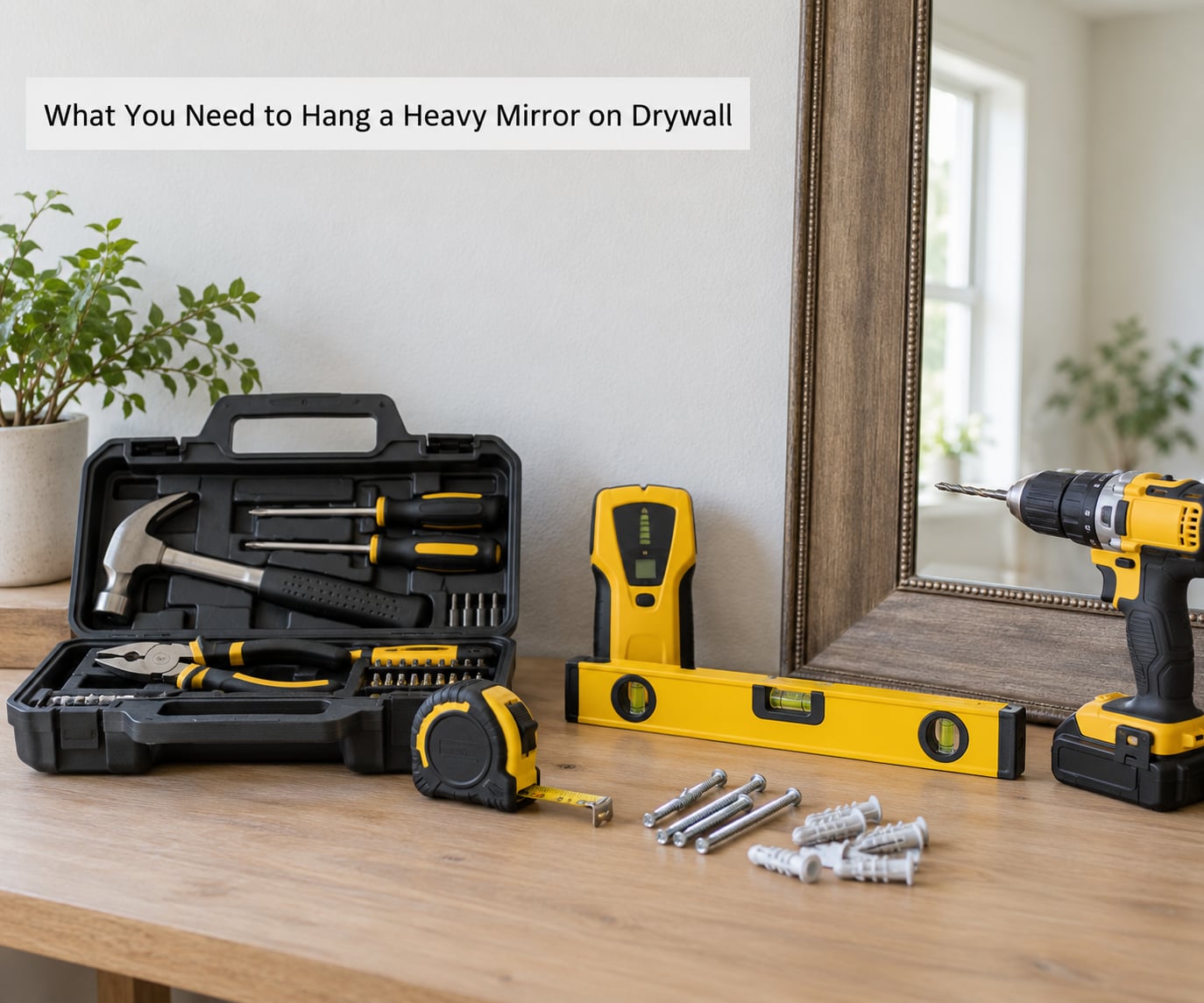
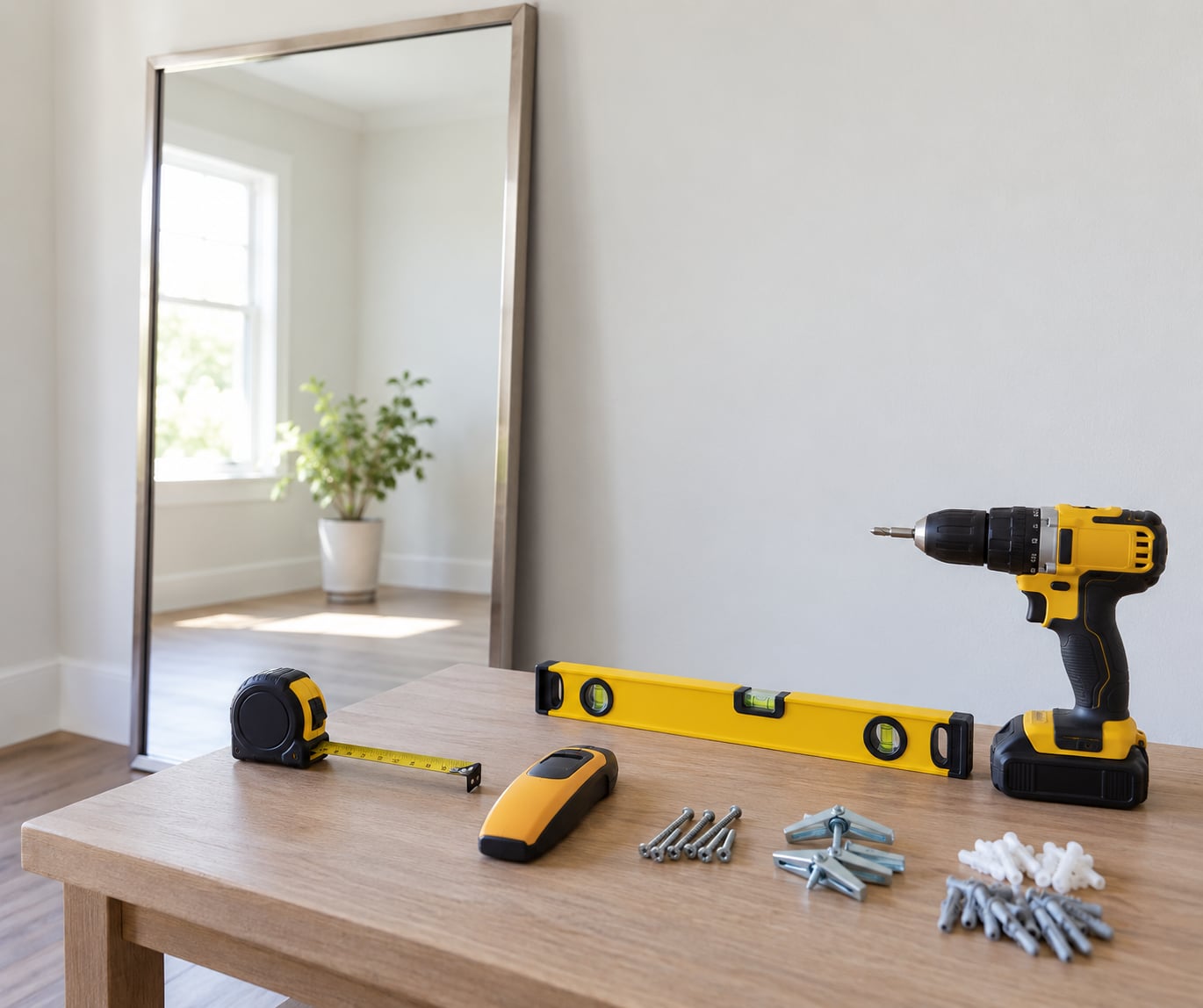
The tools are ordinary. What matters is having the right hardware in your hand before the mirror comes off the floor, because a second trip to the store usually means a second hole in the wall.
- Stud finder plus a spare battery, or a 1 inch notch in a stud finder edge and a hammer to tap for framing
- Tape measure and a pencil or painter’s tape for the footprint
- Level, 6 inch torpedo or longer, plus the mirror’s mounting point spacing
- Drill/driver with a bit matched to your anchor (often 1/2 inch for toggle bolts)
- #2 wood screws in 1.5 to 2 inch length for studs
- Toggle bolts or a heavy French cleat for no-stud walls, sized in step 2
- Gloves, safety glasses, and a helper for the lift
Now find out how much the mirror weighs. Check the spec sheet or the box first, and remember that large mirrors are often heavier than they look because of the glass alone. If the paperwork is long gone, use the bathroom scale trick: stand on the scale alone and note the number, then stand on it again holding the mirror and subtract the first reading from the second. Users on r/DIY have done exactly this, and it gets you within a couple of pounds.
How much weight can drywall hold?
Drywall is gypsum between paper faces, and paper facing is what fails first. The widely used rule of thumb is that a 12 by 12 inch section of half inch drywall supports around 40 lb, though that drops if the sheet is old, pierced, or repeatedly screwed into.
| Mirror weight | Best mounting method | What to buy |
|---|---|---|
| Under 20 lb | One stud screw, or two light anchors if no stud lines up | Factory hardware is usually fine |
| 20 to 50 lb | Two studs, or two anchors rated 30 lb and up | 4 inch toggle bolts or self-drilling anchors |
| 50 to 100 lb | Two studs preferred; otherwise a French cleat | Toggle bolts rated 50 lb or more, plus an anti-tip restraint |
| 100 to 150 lb | French cleat screwed into two or more studs | Heavy-duty cleat and structural screws |
| Over 150 lb | Installer, with the framing verified | Nothing from a hardware store |
Pick the row that matches your mirror, then buy more capacity than the table requires. Weight ratings assume a static, hanging load, and a mirror that gets bumped, swung, or leaned on pulls several times harder than its resting weight.
Which anchors are rated for heavy mirrors?
| Anchor | Typical rating | Hole size | Best use |
|---|---|---|---|
| Toggle bolt, 1/4 inch | 50 to 100 lb | 1/2 inch | Heavy mirrors on hollow drywall with no stud |
| Metal Molly bolt | 50 to 90 lb | Size of the sleeve | Heavy loads where you want steel behind the sheet |
| Self-drilling drywall anchor | 20 to 40 lb | None, it drills itself | Fast installs on drywall only |
| Plastic expansion anchor | 20 to 30 lb | 5/16 inch | Light to medium mirrors, no-stud locations |
| Snap-style toggle anchor | 40 to 50 lb | 1/2 inch | Hollow walls, installs without a separate bolt |
Ignore anything labelled small duty for this job. Forum consensus across DIY boards is that the plastic anchors and hooks shipped in the box with a mirror fall apart somewhere around 20 to 30 lb, which is well below the weight of most decorative pieces.
Step-by-Step: How to Hang a Heavy Mirror on Drywall
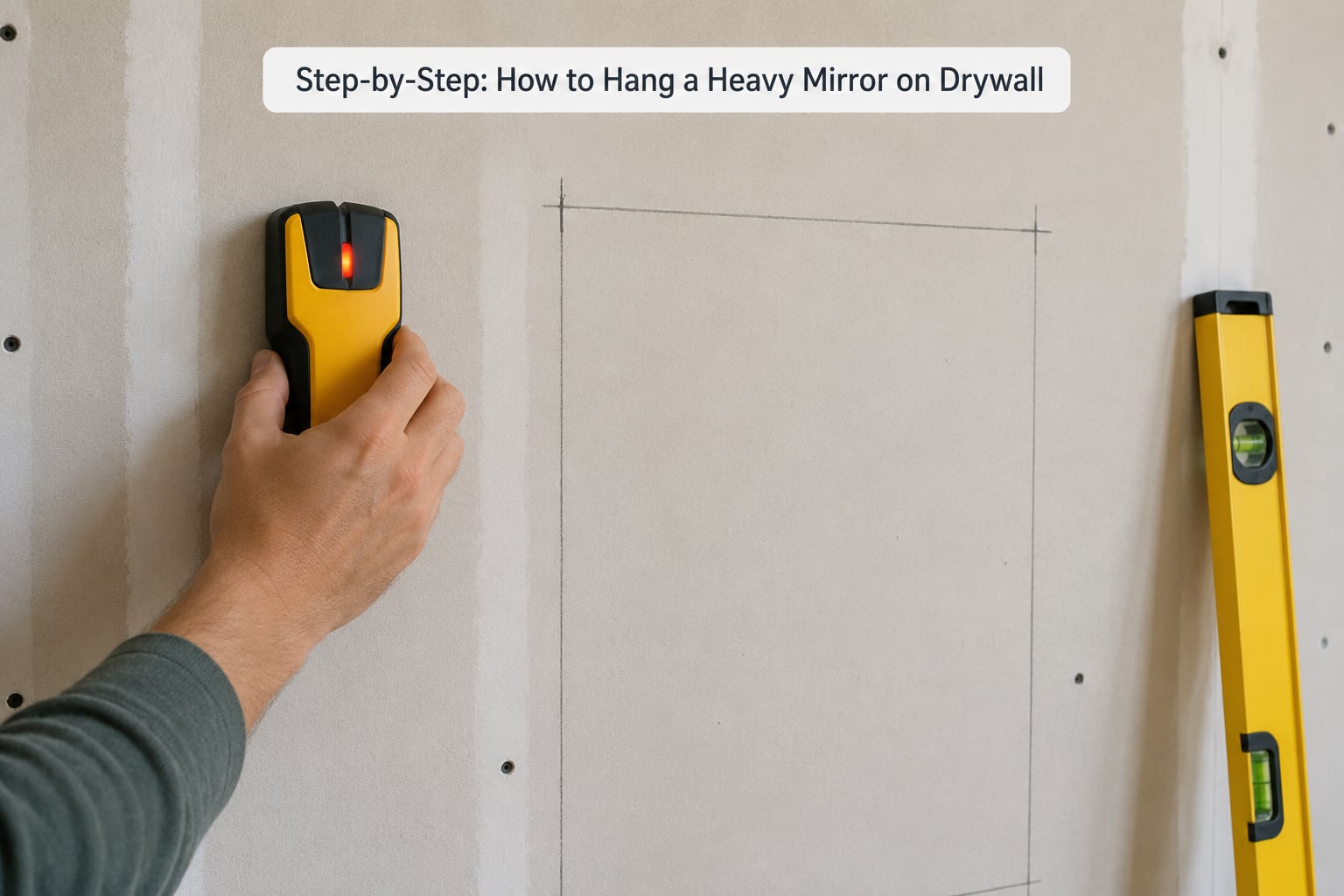
Eight stages, in this order. Do not skip step 3, even when the wall looks like an easy spot.
- Weigh the mirror. Use the scale trick or the spec sheet. Write the number down; every later decision depends on it.
- Know what you are drilling into. Tap the wall with a knuckle. A hollow, papery thud means modern drywall. A dull, dense knock can mean plaster and lath or masonry, which changes both the anchors and the drill bit. Push a thumbtack into a spot you don’t care about; if it goes in with almost no resistance, you are in a cavity with nothing behind it.
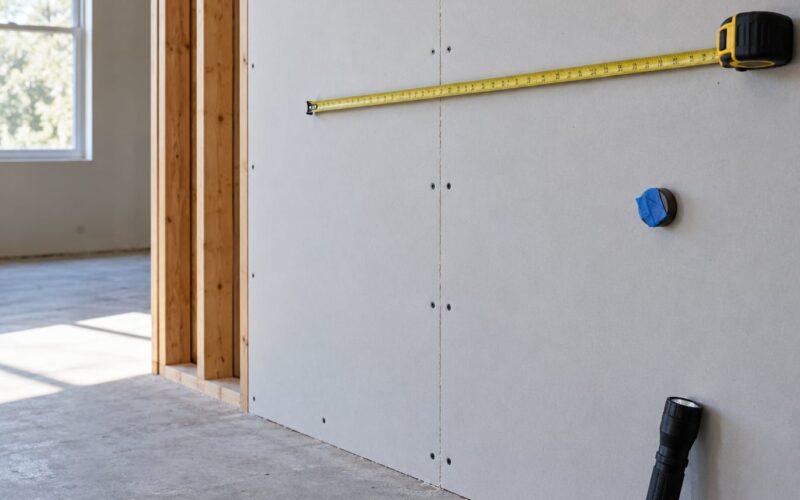
- Locate studs and check for hidden utilities. Sweep the stud finder across the full height of the wall at the height where the mounting points will sit, then verify each hit by knocking and by driving a small test screw. Mark the stud centres with pencil, and remember that studs sit 16 inches on centre in most US framing. Look for outlets and switches on the wall or the wall above; keep well clear of them, and assume buried wiring runs between the first and second stud from an opening.
- Choose the mounting method. Stud if one lines up, French cleat if the hangers don’t line up with studs, toggle bolts if there is no stud and no interest in framing work. If the mirror’s D-rings or keyholes fall in the gaps between studs, a cleat is the answer, because it lets you move the hanging point to wherever you need it. A homeowner in r/handyman weighing a 150 lb mirror said the same thing in plainer words: rated anchors are not enough at that weight unless the cleat catches at least one stud.
- Measure and mark. Decide the height first. The common standard is 57 inches from the floor to the centre of the mirror, with most people landing somewhere between 57 and 65. Tape the mirror’s outline on the wall so you can see the footprint before drilling, mark the centre line with the level, and mark the mounting point spacing from the mirror itself rather than guessing.
- Drill pilot holes and install the anchors. Use the bit size printed on the anchor and drill straight in, not at an angle. For toggle bolts, remove the bolt, push the toggle through the hole and open the wings by pulling gently, then set the bolt back through and tighten until the head sits flat. Tighten until snug, then stop.
- Hang it with a helper. One person lifts and holds, the other steps back and checks the gap behind the mirror. Wire can be twisted onto the anchors, D-rings hooked over screws or bolts, and a cleat simply dropped onto its partner.
- Verify. Check the level, press gently at the corners to confirm the fasteners are engaged, and look for the frame flexing or the drywall dimpling around each hole.
How to Hang a Heavy Mirror on Drywall with Studs
Studs are the whole job when they cooperate, because the screw bypasses the gypsum entirely and carries the load in wood. Find the stud centre, not just the edge; a screw driven at the edge splits the stud and loses most of its holding power.
Hold the mirror’s hanging hardware against the wall and mark through the holes, or mark the spacing you measured in step 5. Drill pilot holes half the diameter of your screw so the screw does its own work of splitting the stud. Then drive number 2 wood screws 1.5 to 2 inches long, which is long enough to bite an inch and a half into framing without punching through the far side of a two-by-four.
Stop when the screw head is snug against the hardware. If the drywall dimples around the head or the frame creaks, you are too tight. Re-drive the screw and stop a quarter turn short.
Follow the fastener and load recommendations that came with the mirror where they exist. Manufacturers know their own frames, and an antique or ornate frame with thin backboard wants its original screws rather than a heavy toggle.
How to Hang a Heavy Mirror on Drywall Without a Stud
Hollow wall anchors are the right tool when the studs simply are not there, which is common over a bed, above a console, or anywhere a mirror is hung for looks rather than framing. Choose an anchor rated at least two to three times the mirror’s weight per attachment point, and use two points rather than one whenever the hardware allows it.
Mark the anchor positions, drill the exact hole size printed on the anchor packaging, and insert it. A toggle bolt or Molly bolt opens a metal sleeve behind the sheet, so the load is carried by the sleeve bearing on the back face rather than by a screw chewing into gypsum. That is why a properly rated toggle bolt can hold far more than that same 40 lb per 12 by 12 inch patch of sheet suggests.
Install the sleeve first, then hang the mirror’s D-rings, wire, or mounting plate over the bolt heads so the hardware hangs from the anchor instead of resting against the wall face. If a toggle will not collapse flat behind the sheet, you drilled too small a hole; enlarge it slightly rather than forcing it.
Two details get missed. Tighten only until the head is seated, because an over-tightened anchor crushes the paper face and the load then hangs on crushed material. And if the studs miss the hanger spacing, stop using anchors and install a 2×4 ledger board across two studs, or a French cleat that lands on framing. Reddit commenters and a Houzz thread both point at the same fix, and it is a better one than four anchors hoping for the best.
If the mirror has no D-rings, no wire, and no keyholes on the back, you have two workable options. Bond a mirror-rated adhesive or a two-part epoxy mounting pad directly to the wall, which only suits mirrors under about 10 lb on clean drywall, or screw mirror clips or a mounting board to the wall and rest the mirror against it, which is what people do with antique mirrors they refuse to drill. Anything heavier than that should get new hardware fitted to the frame rather than an adhesive workaround.
Common Mistakes That Bring a Heavy Mirror Down
Almost every failed mirror install traces back to one of these, and each has an easy fix.
- Trusting the stud finder without confirming. Deep scanners read pipes and wiring as studs, and cheap finders drift. Knock, then drive a small test screw. The fix is two minutes of verification.
- Using short drywall screws. An inch screw bites maybe a quarter inch of wood and nothing else. Go to 1.5 or 2 inches.
- Choosing anchors that are too light. Two points at 30 lb each will not carry a 70 lb mirror, because static ratings leave nothing for a swing or a bump. Double the number and the rating.
- Hanging on one anchor. A single point lets the mirror pivot and twist, which works the fastener loose over time. Two points, always, and prefer four for very heavy pieces.
- Drilling into wiring or plumbing. Keep well away from outlets, switches, and fireplaces, and stop if the bit starts to bite something unusual. Moving the mirror 4 inches usually solves it.
- Over-tightening. Crushing the paper face or cracking a frame weakens both surfaces. Snug is enough.
- Oversized pilot holes. A hole bigger than the fastener removes the bearing surface the fastener depends on. Match the bit to the fastener.
- Skipping the level. A mirror that is off by a degree looks wrong from every seat in the room. Check before the helper lets go, not after.
- Hanging above a fireplace. Rising heat degrades adhesives and can crack the glass. Cleat or studs, and skip anything adhesive.
A few safety habits go with the drilling. Check for wiring and plumbing before the first hole, wear glasses, and keep fingers clear of the bottom edge while a helper carries the weight, since a swinging edge is how people get cut. Two attachment points, plus an anti-tip restraint strap where kids or pets are in the room, covers the most likely real accident.
Renters can still do this well. Removal is the part that costs you: after the mirror comes off, back the anchors out, fill each hole with setting-type spackle, sand flush, and skim. Tackle the holes before you paint. Knowing you can undo the install cleanly tends to make people braver about drilling in the first place.
Call a professional above roughly 150 lb, for antique or ornate frames with compromised backboards, above stairwells and fireplaces, on upper floors where vibration is a factor, or any time you are unsure what is inside the wall. A mirror that falls onto a bed or a landing is a serious injury, and the installer fee is small next to that.
Frequently Asked Questions
Can you hang a heavy mirror on drywall without a stud?
Yes, using anchors rated well above the mirror’s weight. Toggle bolts and Molly bolts open a metal sleeve behind the sheet and carry the load on the back face, so two of them can hold a 50 lb mirror comfortably. Use two attachment points, size the hardware at two to three times the load per point, and check for hidden wiring before you drill.
How do I find a stud behind drywall?
Sweep an electronic stud finder across the wall at the height your mounting points will sit, marking both edges of each hit. Then verify every hit by knocking on the wall and by driving a small test screw; deep scanners and phone apps often mistake pipes and wires for framing. Studs are usually 16 inches on centre in US houses.
What type of anchor is best for a heavy mirror?
A 1/4 inch toggle bolt or a metal Molly bolt is the best general choice for a heavy mirror on hollow drywall, typically rated between 50 and 100 lb each. Avoid plastic expansion anchors above about 30 lb, and remember that ratings assume a static hanging load, so buy more capacity than the mirror weighs.
How much weight can drywall hold with toggle bolts?
Per anchor, most toggle bolts are rated between 50 and 100 lb in half inch drywall, so two of them handle a mirror well past 100 lb. The limiting factor is usually the sheet itself, since a 12 by 12 inch section of half inch drywall supports roughly 40 lb on its face. Above 150 lb, use a French cleat into framing instead.
What should I do if I miss a stud?
Do not just use a bigger screw; you will split nothing and hold nothing. Either fill the hole and move to a spot that lines up with a stud, or switch to a toggle bolt or Molly bolt sized to the mirror’s weight. If the mirror’s hangers never line up with framing, install a 2×4 ledger board or a French cleat across two studs.
How do I remove a heavy mirror without damaging the drywall?
Support the mirror with one hand while you back out screws or anchors with the other, never let it drop free. Back the fasteners out rather than pulling them, fill the holes with setting-type spackle, let it dry, sand flush, and skim with a thin coat. Patch before you paint so the repair disappears under the wall’s finish.
Conclusion
To hang a heavy mirror on drywall without damage, find the mounting points first, drive long screws into a stud whenever one is available, and fall back on toggle bolts or a French cleat rated two to three times the mirror’s weight when the framing is not cooperating. Weigh the mirror before you buy anything, use two attachment points, and check level and fastener engagement before the helper walks away.
Follow the fastener and load recommendations that came with the mirror, and bring in a qualified installer for anything exceptionally large, ornate, or going up over a fireplace or stair landing.