To store a car for the winter, wash and dry it inside and out, fill the fuel tank and add a stabilizer, change the oil, over-inflate the tires or lift the car, fit a battery maintainer or disconnect the battery, then cover it with a breathable cover in the driest spot you have. Add a start procedure for when spring comes back.
Most of the damage I see in stored cars traces back to a skipped step rather than a hard winter. A flat battery in February costs a morning and a tow. A mouse nest in the passenger footwell costs a wiring harness.
Table of Contents
- 1What You Need
- 2How to Store a Car for the Winter: Step-by-Step
- 31. Check the Owner’s Manual and Storage Plan
- 42. Clean and Dry the Car Thoroughly
- 53. Protect the Fuel System and Engine
- 64. Inflate or Store the Tires Correctly
- 75. Disconnect and Maintain the Battery
- 86. Store the Car and Restart It Safely
- 9Common Mistakes
- 10Frequently Asked Questions
- 11How long can I store a car for the winter?
- 12Should I start my car every month while it is in storage?
- 13Do I need a car cover if my car is stored in a garage?
- 14How full should the fuel tank be before long-term storage?
- 15What type of battery maintainer should I use?
- 16What should I check before driving a car after winter storage?
- 17What To Do First
What You Need
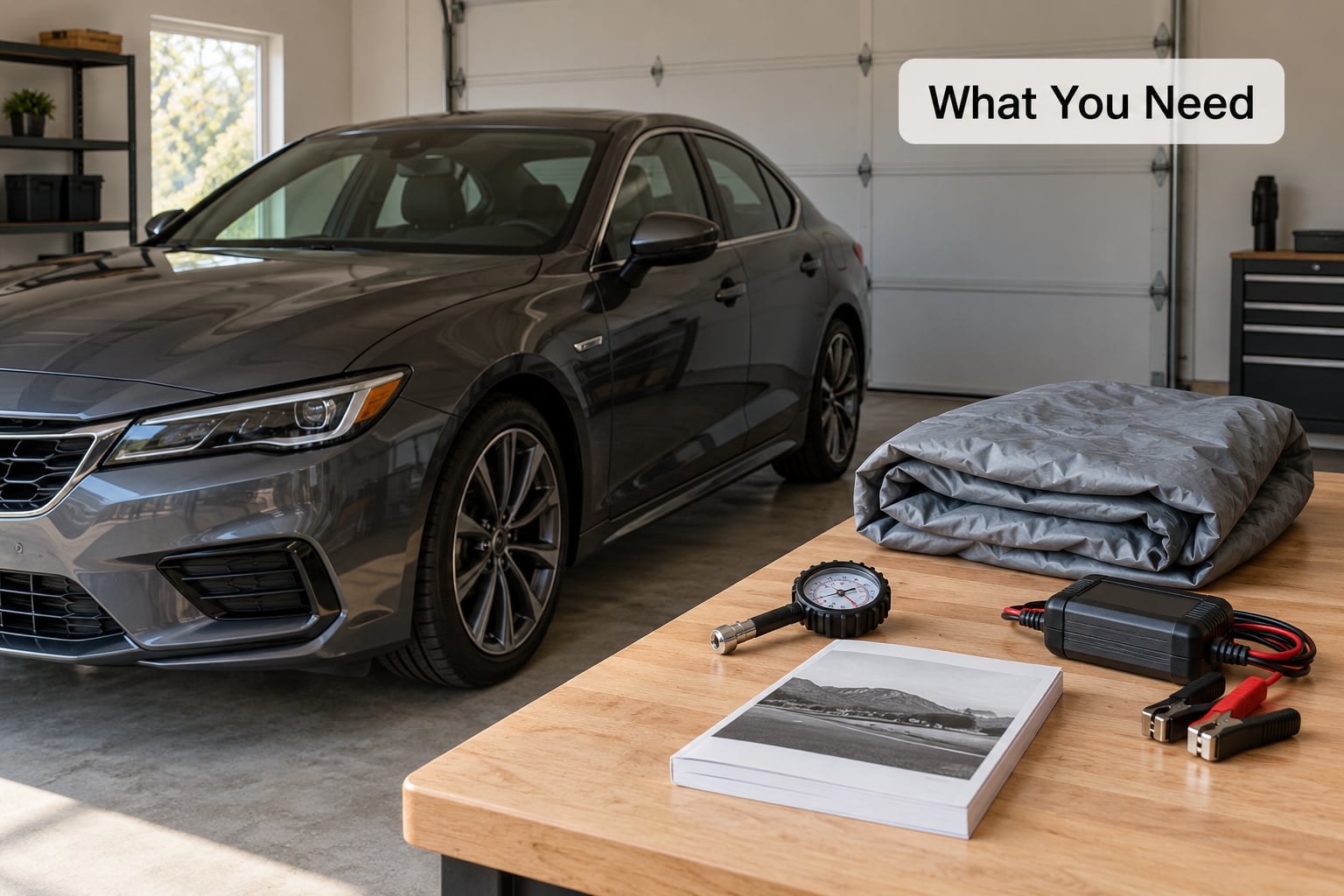
Gather everything before the car goes cold. Once it is sitting with a dead battery and no gas, a forgotten part means a trip across town in a truck bed.
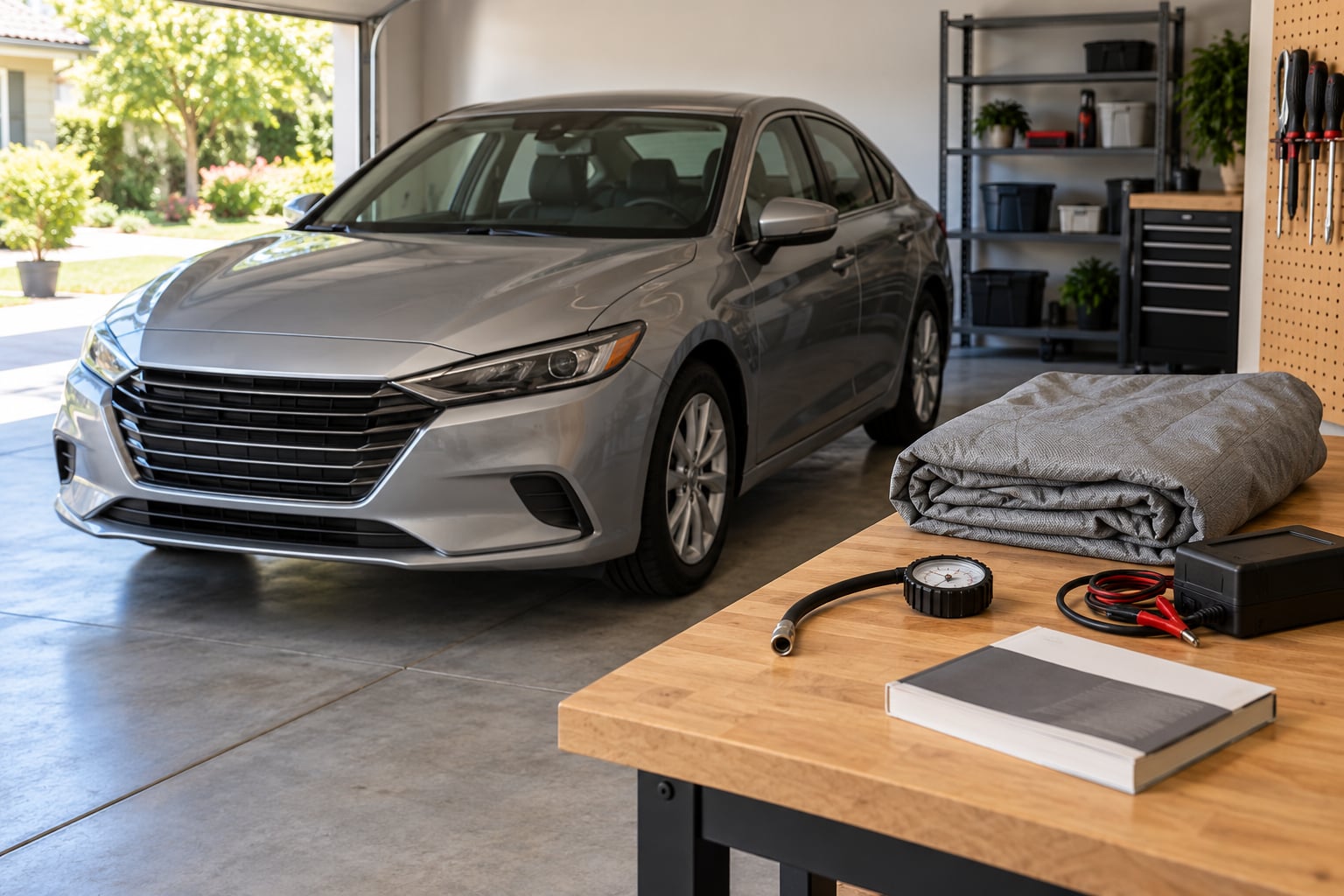
- The owner’s manual, or the storage section of the manufacturer site for your model. It tells you how long the car can sit, what fuel and oil it wants, and whether the battery is a lithium pack or plain lead-acid.
- A quality battery maintainer, or the tools to disconnect the battery if the car will be away long enough that a maintainer makes no sense.
- Fuel stabilizer in the correct dose for your tank size. Most bottles cover a full tank or less, and the label tells you.
- A tire pressure gauge and, for a long lay-up, a floor jack plus four jack stands rated for the weight of your car.
- Car wash supplies, a vacuum, and a bucket for cleaning window channels and door seals.
- A breathable car cover for indoor storage, or a heavier outdoor one if the car lives outside.
- Moisture absorbers, cotton swabs for door and window drains, and something to block the exhaust pipe.
Keep the manual nearby. Every step below is a general practice that the manual for your car can override, and for a hybrid or EV the high-voltage battery rules are specific enough that you should not guess.
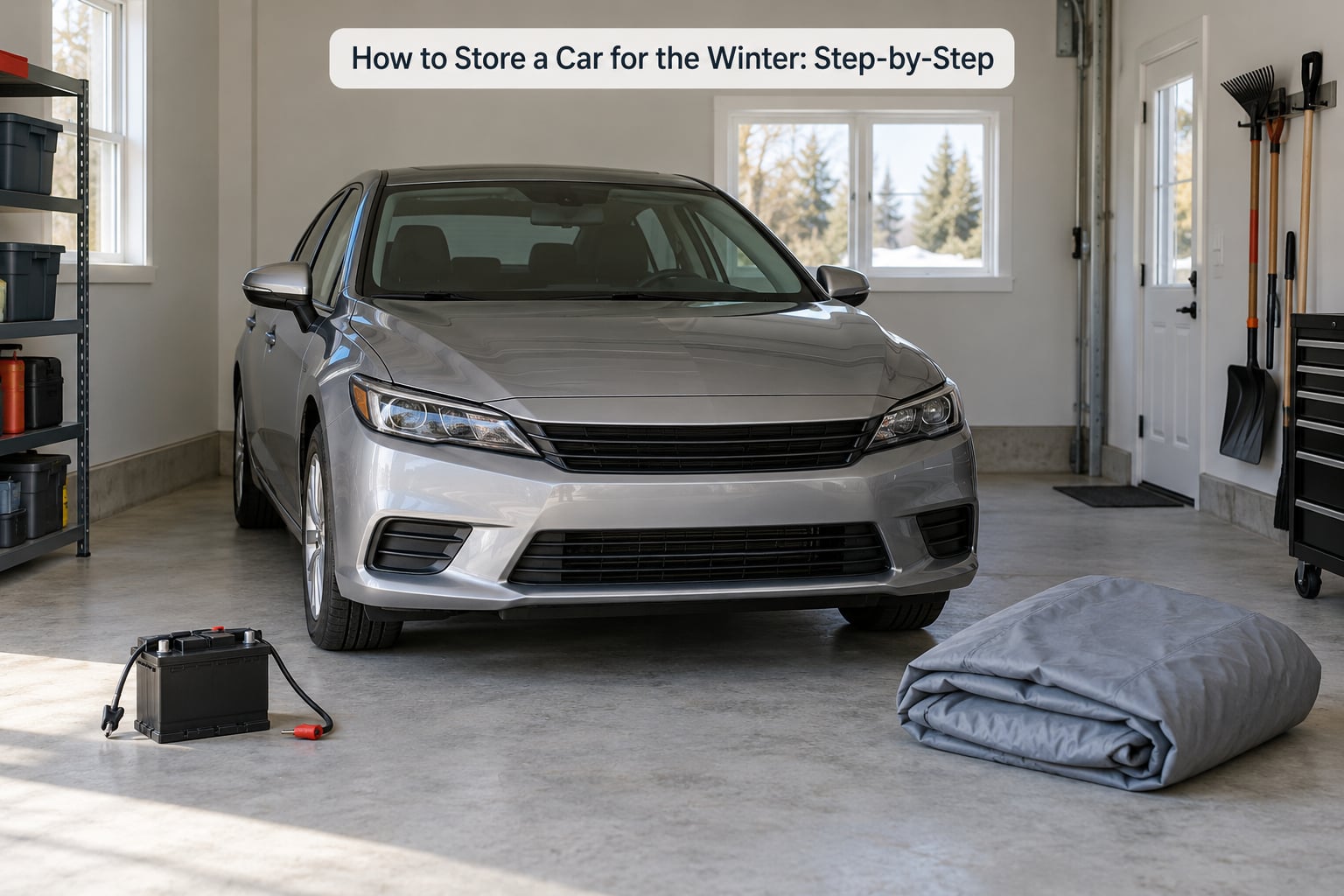
How to Store a Car for the Winter: Step-by-Step
1. Check the Owner’s Manual and Storage Plan
Start with the manual because storage requirements are model-specific. Some cars are built for long idle periods, others lose coolant or battery charge in weeks, and hybrids want the high-voltage battery at a stated charge level rather than empty.
Write down three numbers before you touch anything: how many months you will be away, what temperature range that space sees, and what the manual says about the battery. Storage duration drives every other decision here.
A useful rule of thumb from the owner community is the 30-60-90 idea: under about 30 days of sitting is generally fine with a full tank of fuel; 30 to 60 days asks for stabilizer and a maintainer; beyond 60 days the car needs a full prep and will not be started during storage at all.
2. Clean and Dry the Car Thoroughly
Road salt and road grime hold moisture against paint and underbody metal, and they keep working after the car is parked. Wash the exterior, and if you can, wash the undercarriage too. This is the single most skipped step and the one that decides whether the car still looks good in April.
Vacuum the interior, take out the trash, and wipe down anything damp. Road salt tracked in boots dissolves into the carpet and keeps the cabin humid all winter, which is how a musty smell and mildew start.
Leave the windows down a crack or remove them if the car will be outside, so trapped moisture can escape. Run the defroster for 20 to 30 minutes with the doors open after cleaning, then wipe the window channels and door weather seals dry. Those channels drain into the body, and a plugged one traps water against the sill.
One more detail from long-time storage owners: a silicone spray on rubber seals, weatherstripping and hood or trunk duct areas before the car sits. It costs little and it keeps rubber from taking a set.
3. Protect the Fuel System and Engine
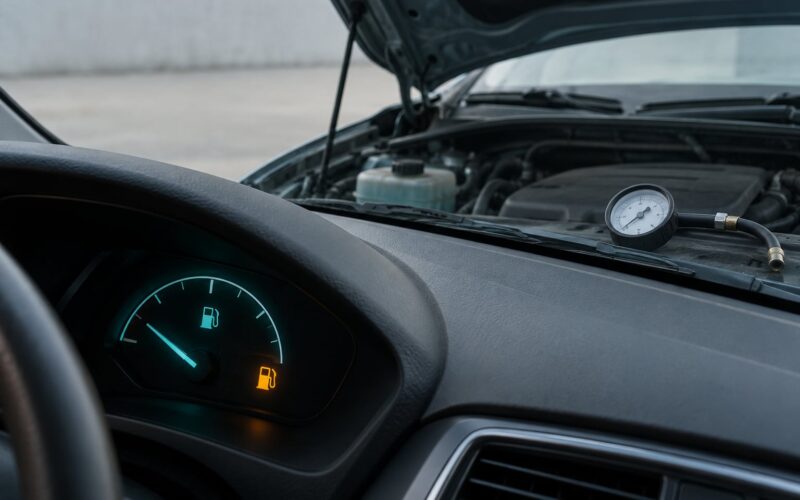
Fill the tank before storage. A full tank holds less air above the fuel, and air is what carries condensation down into the system. Half-full tanks are the source of most varnished fuel systems and gummed injectors I hear about.
Add fuel stabilizer to a full tank and run the engine long enough to push the additive through the lines and into the injectors. Five to ten minutes of running does it. This is the one run that helps, not the monthly start-up that does more harm than good.
Change the oil and filter before storage. Old oil holds water and acid, and with the car sitting those contaminants attack the bearings and the cylinder walls while nothing is circulating. Fresh oil is cheap insurance against the single most common engine outcome of a long lay-up.
Check the coolant level and the antifreeze strength, and confirm the heater hose and radiator cap are sound. Also, do not start the car during storage. A short monthly run does not burn off the moisture it creates, it leaves condensation in the exhaust, it leaves a half-used tank, and it churns oil that has not been warmed through. Leave the engine sealed and quiet.
4. Inflate or Store the Tires Correctly
Inflate the tires well above the door-jamb pressure. Around 5 to 10 psi extra on each tire is the common recommendation, and it reduces how much the contact patch flattens against cold rubber. Check pressure in cold weather, since a warm tire reads high.
For a winter lay-up of three or four months, over-inflating is usually enough. For six months or longer, the safer route is to lift the car on jack stands rated for its weight and either leave the tires inflated at high pressure or remove them and store them upright in a cool dark space.
Never rely on a flat tire carrying the car. Rubber that sits under load for months takes a permanent set, and a flat spot shows up as a shimmy at highway speed long after storage ends. Jack stands must sit on firm, level concrete, and the car stays exactly as it was parked. Never leave it supported by the jack alone.
If the car is not on stands, move it every few weeks. Rolling it forward a little rotates the tire contact patch and keeps the seals from setting in one position. Four small moves across a winter is plenty.
5. Disconnect and Maintain the Battery
A disconnected battery is the simple, passive option. Switch off, remove the negative terminal first, clamp or bag the loose cable so it cannot arc against the post, and store the battery somewhere cool and dry if your climate is severe. It still works in the spring after a few months of cold, and it needs nothing else for two or three months.
A smart battery maintainer is the better option for a car that is away all winter. A maintainer only sends charge when the battery voltage drops, so it does not overcharge, and it keeps the battery off the sulfation threshold. A plain trickle charger set to a fixed rate is not the same thing and can cook a battery that is already full, so check that anything you connect is rated as a maintainer, not just a charger.
Match the device to the battery. Lithium-ion and AGM batteries need a charger that supports that chemistry, and no charger is right for every battery. The label on the battery and the manual for the car tell you what you have. If the car is an EV or hybrid, the 12-volt auxiliary battery is usually still there, and the high-voltage pack wants a stated charge level rather than either end of the scale.
Before you connect anything, clean the terminal corrosion with a wire brush and a baking soda and water paste, then dry it. Dirt and moisture on a post are what turn a small leak into a dead battery.
6. Store the Car and Restart It Safely
Location beats everything else. A heated garage held near 50 degrees is the easy answer, and collectors who keep several cars in an off-site heated space report their cars start reliably every spring.
An unheated garage works fine as long as the car stays dry. The car should be parked nose-in where exhaust cannot enter the space, because a tailpipe can push fumes back into a closed garage, and a car that has sat for weeks will have condensed water in the exhaust that turns to a mist on first start.
Avoid running any engine in a closed garage, attached or not. Carbon monoxide is colorless and odorless, and this is where the near-misses happen.
Outside, a breathable cover matters. A waterproof vinyl cover traps condensation against the paint, and that trapped water causes the spotting and abrasion people blame on the cover material. For an indoor cover, breathable fabric is the right choice, and it protects against dust and a curious rodent rather than weather.
Block the tailpipe with steel wool stuffed in firmly and cover the opening, after checking the engine is cold, to keep rodents out. Keep all food out of the car, place desiccant packs on the floor and under the seats, and consider a covered box under the car to deny entry to anything that gets underneath.
When the car comes out, take it slowly. Let the engine sit and then start it, do not rev it. Check oil, coolant, brake fluid and tire pressure, and look for evidence of mice before the first long drive.
On the first start, let it idle a few minutes and watch for a warning light, a rough idle or a knock. If a plug was removed, a rodent chewed a wire or the throttle is stuck from sitting, the engine can be damaged in seconds.
Build in an hour of gentle re-commissioning: walk around the car, turn the steering lock to lock and release both ends, cycle the lights, check the brake pedal travel, verify all four tires are inflated, and confirm the fuel you left is the fuel in the tank.
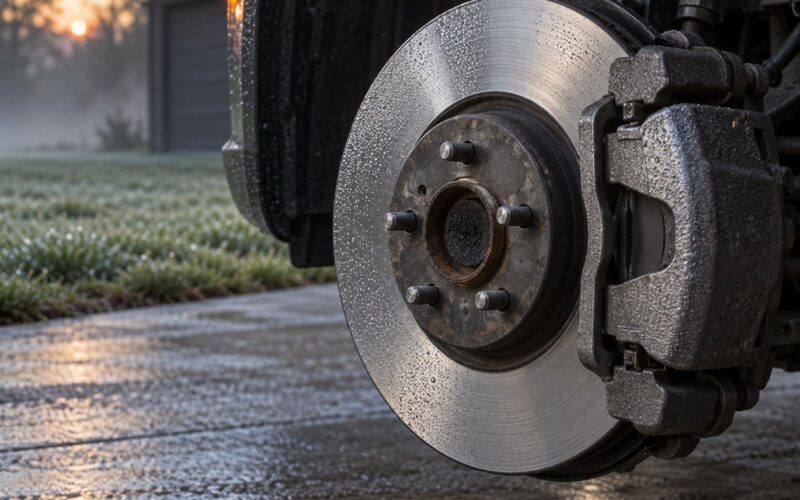
Check the rotor surface and the pads, since a thin film of surface rust on a rotor is normal but seized pads are a different problem. Cycle the parking brake and the gear selector, including park and reverse, and pump the brakes until they feel normal.
Before driving, remove anything you plugged into the exhaust and check the tires for cracking or a flat spot from the winter. A first short drive of ten minutes or so, gently, finds whatever the cold hid.
Common Mistakes
These are the errors that show up again and again, with the fix attached.
Starting the car every month. It burns fuel, it condenses moisture into the exhaust and the oil, and it churns oil that is not fully warm. If the car is on a smart maintainer, do not start it at all. If it must be run, run it long enough to reach full operating temperature and fully vent, and never in a closed garage.
Storing a nearly empty tank. Air volume above the fuel is condensation space. Fill the tank, add the stabilizer dose for that volume, and run the engine a few minutes to circulate it.
Skipping the oil change. Water and acid in used oil attack the engine while it sits. Fresh oil and filter before it goes.
Using the wrong cover. Vinyl traps condensation and sunlight heats it, and in a dry garage a cover mainly collects dust. Use breathable fabric indoors and a proper outdoor cover with a good anchor system outdoors.
Leaving the car on four flat tires. Flat spots set in the rubber and turn into a vibration you feel at speed. Over-inflate for a short lay-up, or use stands for six months or more.
Forgetting the battery. A cold battery holds less charge and parasitic drain from the alarm, clock and OBD port continues whether you drive or not. Disconnect it or put a maintainer on it, and match the device to the battery type.
Leaving the tailpipe open to the garage. Rodents treat a warm tailpipe as an invitation, and a single nest can take out a wiring harness. Steel wool and no food in the car go a long way.
Forgetting to take the steel wool out. Check for it before the first start, along with any battery clamp or block you installed.
Frequently Asked Questions
How long can I store a car for the winter?
A car left with a full tank of fuel and no maintenance rarely has trouble sitting under about 30 days. From 30 to 60 days, add fuel stabilizer and a battery maintainer, and keep it out of the cold if you can. Beyond six months, do a full prep and leave the engine sealed instead of starting it. The owner’s manual for your model always has the last word, especially for hybrids and EVs.
Should I start my car every month while it is in storage?
Usually not. A monthly start burns fuel, leaves condensation in the exhaust and the oil, and never gets the engine fully warm, so it can do more harm than leaving the car alone. A smart battery maintainer and a full tank of stabilized fuel cover a winter without it. If the car must be run, run it to full operating temperature, outside or in a very well ventilated space, and never in a closed garage.
Do I need a car cover if my car is stored in a garage?
A cover is optional indoors, but a breathable indoor cover earns its keep by keeping dust out, limiting rodent access and protecting the interior from any water on the floor. Skip a vinyl cover, which traps condensation against the paint. Outdoors, use a proper outdoor cover with straps or a cable, and make sure it cannot lift in wind. Dry the car completely before covering it either way.
How full should the fuel tank be before long-term storage?
Full. A full tank leaves little air space, and air is what carries condensation down into the fuel system and onto cylinder walls and injectors. Add the stabilizer dose for a full tank, then run the engine for five to ten minutes so the additive reaches the fuel rails and injectors. A half-full tank is the most common cause of varnished fuel and gummed injectors after storage.
What type of battery maintainer should I use?
Choose a smart maintainer that only sends current when the battery voltage falls, and confirm it supports the battery chemistry you have, whether that is flooded, AGM or lithium. A fixed-rate trickle charger is not a maintainer and can boil a full battery dry. Match the amp rating to the battery group size, keep the charger in a dry ventilated spot, and disconnect it before you start the car.
What should I check before driving a car after winter storage?
Walk the car first. Remove anything you blocked or plugged in, check under the cabin and engine bay for nests, confirm the battery is secure, then check oil, coolant, brake fluid and tire pressure including the spare. On the first start, let it idle and watch for warning lights, a rough idle or a knock. Then check brake pedal travel, cycle the lights, and take the first drive slowly and briefly.
What To Do First
Read the owner’s manual, then fill the tank and add stabilizer. Those two steps, with a smart maintainer on a clean battery, decide whether your car starts without a fuss in March.
The rest is protecting the things that are quietly harmed by sitting still: paint holding road salt, tires carrying weight, seals and carpet holding moisture, and a tailpipe a mouse considers a warm hallway.
This process is current as of 2026 and follows the standard manufacturer guidance for long-term storage. If your car is a hybrid or EV, check the manual for the high-voltage battery requirements before anything else.