If you are wondering why does my car pull to one side when driving, the short answer is that something has changed the grip or the geometry on one side of the vehicle. Uneven tire pressure, a bad wheel alignment, and a sticking brake caliper are the three most common causes. Add uneven tire wear, worn steering or suspension parts, and a bent wheel, and you have most of the list. Slow down, keep the wheel straight, and stop driving if the pull is sudden or violent.
If you feel constant resistance and the wheel sits off center on a perfectly flat road, that is a fault worth chasing. If the car only wanders on a crowned road and tracks straight everywhere else, you are probably fighting road slope, not a mechanical problem.
Table of Contents
- 1Why Does My Car Pull to One Side When Driving?
- 2Is It Safe to Keep Driving When Your Car Pulls?
- 3What Causes a Car to Pull to One Side?
- 4Why Your Car Pulls to One Side, and What Each Symptom Points To
- 5What Can You Check Before Taking It to a Mechanic?
- 6Which Repair Fixes a Car That Pulls to One Side?
- 7Why Might a New Tire or Repair Still Not Fix the Pulling?
- 8How Much Does It Cost to Fix a Car That Pulls?
- 9When Should You See a Mechanic?
- 10Frequently Asked Questions
- 11Can low tire pressure make a car pull to one side?
- 12Should I get an alignment if my car pulls to one side?
- 13Why is my steering wheel not centered when I drive straight?
- 14Can I keep driving if my car pulls slightly to one side?
- 15Why does my car pull to one side when I brake?
- 16Do I need a wheel alignment after replacing a tire?
- 17What Should You Do First?
Why Does My Car Pull to One Side When Driving?
Anything that changes rolling resistance, wheel geometry, or friction on one side shifts the forces acting on the car, and the driver feels it as a drift. A tire with lower air pressure creates more rolling resistance on that corner. A wheel tilted out of alignment grips unevenly. A brake caliper that never fully releases drags on one rotor. Each of those is a small imbalance; the steering system is what turns it into a pull.
Three causes cover most of the cases drivers walk into shops with, and they are worth checking in this order because two of them cost nothing to check:
- Uneven tire pressure. Even 5 PSI low on one tire is enough to make the car drift toward that side.
- Wheel misalignment. Toe, camber, or caster out of spec makes the tire scrub instead of roll cleanly.
- A sticking brake caliper. One rotor drags continuously, and the car pulls toward that wheel.
Alignment is the answer most people expect, and it is often the wrong one. The most common complaint on car forums is not a mystery pull — it is paying for an alignment that did not fix it.
Is It Safe to Keep Driving When Your Car Pulls?
A gentle, constant drift with a car that still steers normally is drivable at low speed, but it is a warning, not a nuisance. Keep both hands light on the wheel, avoid highways, and drive straight to a shop rather than to work.
Pull over and arrange help instead when any of these show up:
- The steering suddenly goes heavy, loose, or won’t turn back.
- A vibration or shimmy comes through the wheel or seat.
- You feel a grinding, clunking, or squealing noise under braking.
- One wheel is hot enough to smell, or the pedal sinks further than usual.
- The pull came on suddenly after a pothole, curb, or collision.
- Tire pressure drops repeatedly, or you can see a cord, bulge, or tread strip separating.
The distinction that matters is constancy. A pull that is always there, always the same direction, is a geometry or friction problem and it will not get dramatically worse over a day. A pull that appears out of nowhere, gets stronger as you speed up, or comes with noise is a failure in progress.
What Causes a Car to Pull to One Side?
Here is the order in which drivers actually meet these causes, cheapest check first.
- Tire pressure out of spec. Read the door-jamb placard, not the sidewall. The sidewall number is a maximum rating; the placard is the pressure the car was designed around. Underinflated tires also change ride height, which twists the geometry.
- Tire wear, damage, or a mismatched set. Uneven tread wear across a tire rather than shoulder-to-shoulder points to alignment. Shoulder-to-shoulder on one side usually means the car has been pulling against that tire for a long time. Different brands, models, or wear ratings on the same axle will pull, as will a bald tire next to a fresh one.
- Wheel alignment. Toe is how the front wheels point relative to each other, camber is how each wheel leans, and caster is how the steering axis tilts back. Toe and camber cause a straight-line pull. Caster mostly affects steering feel and return-to-center, and when it is off, the wheel sits off center on a straight road.
- Steering and suspension wear. Tie rod ends, ball joints, control arm bushings, strut mounts, and worn wheel bearings each add slop or a shift in geometry. A worn bushing on one side is a very common reason a car tracks straight, then wanders, then tracks straight again.
- Brake problems. A caliper that sticks, a parking brake left engaged on one wheel, a wheel cylinder dragging, or badly uneven pad wear will all pull the car toward the dragging corner. The giveaway is simple: one wheel noticeably hotter than the others after a short drive.
- Less common causes. A bent wheel or rim from a pothole, a broken engine or transmission mount, a seized strut, or frame damage from a collision. Rare, but these are the ones that follow a specific event rather than creeping up on you.
Why Your Car Pulls to One Side, and What Each Symptom Points To
| What you notice | Most likely cause | Quick check | Next step |
|---|---|---|---|
| Constant pull on a flat road | Alignment, tire wear, pressure | Cold PSI all four corners | Alignment check if pressures are correct |
| Pulls only when braking | Dragging caliper, parking brake, uneven pads | Feel for a hot wheel after driving | Brake inspection before alignment |
| Pulls only under acceleration | Torque steer from worn drivetrain or wheel bushings | Coast downhill in neutral | Drivetrain and bushing inspection |
| Steering wheel off center while driving straight | Caster off, or center position shifted | Note wheel position at highway speed | Alignment with caster check |
| Vibration or shimmy at highway speed | Unbalanced wheel, bent rim, tread separation | Inspect tread and rim edges | Tire and wheel service, then re-test |
| Pull that changes direction | Worn steering play, memory steer, uneven bushings | Test on the same road both ways | Steering and suspension inspection |
| Pull started after new tires | Mismatched set or bad install | Cross the front tires left to right | Return to the installer first |
What Can You Check Before Taking It to a Mechanic?
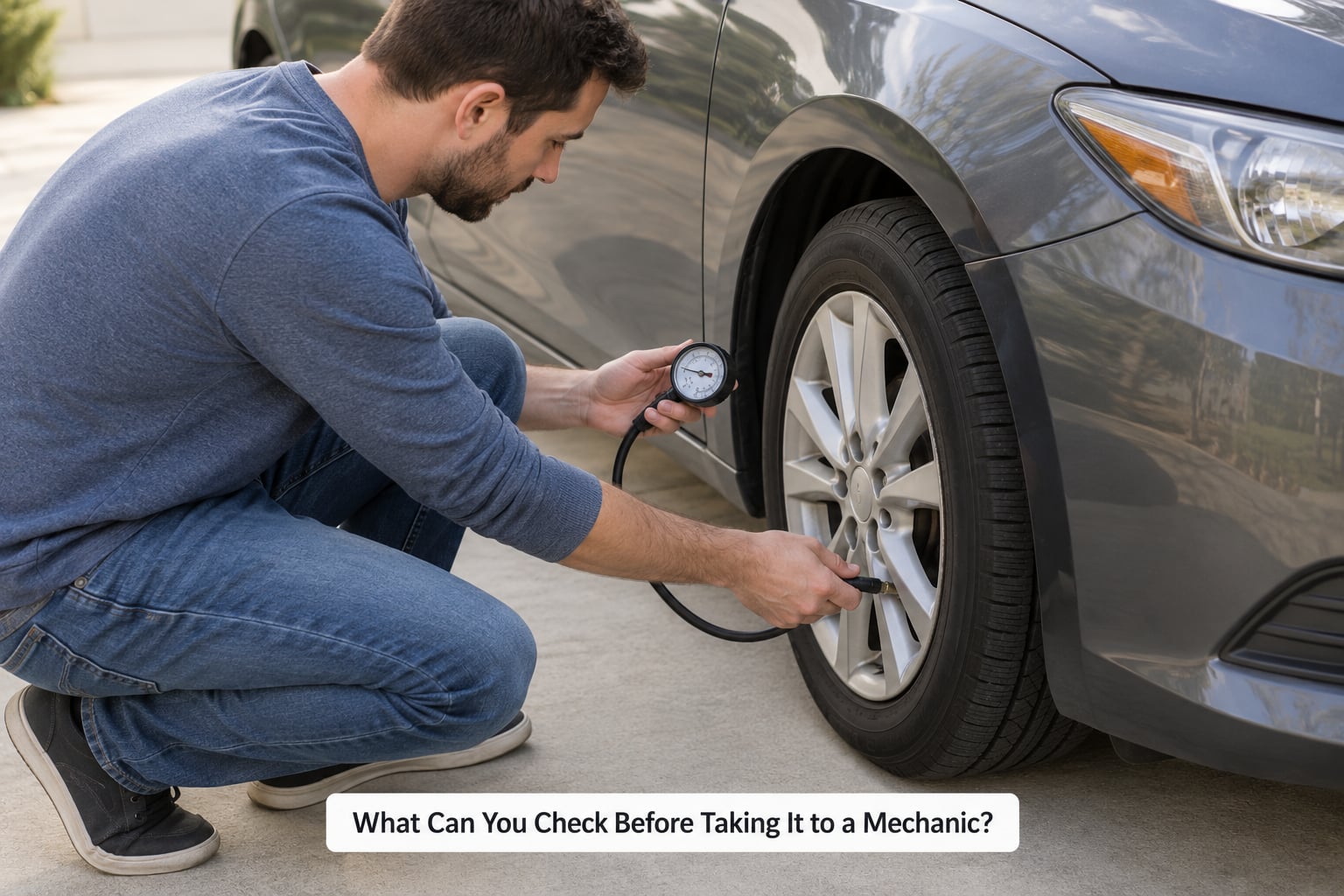
Five checks take about fifteen minutes and rule out most of the cheap causes.
- Cold tire pressure, all four corners. Check before driving more than a mile or after the car has been in the sun. Compare against the number on the driver’s door-jamb placard and inflate to that figure.
- Visual tire inspection. Look across every tire for uneven shoulder wear, cupping, cracks, bulges, and objects stuck in the tread. Judge wear from the pattern, not from how the sidewall looks.
- Wheel hardware. With the car on level ground and off, check that each lug nut is snug and that the wheel sits flush. Never use the engine running with the vehicle in gear or on a jack to test for play in the wheel bearing; support the car properly if you inspect underneath.
- The hot wheel test. After a normal drive, park and hold your hand a few inches from each wheel. One noticeably warmer corner points straight at a dragging brake.
- Coast in neutral. On a quiet downhill, roll to a stop in neutral. If the drift vanishes, you have torque steer — a drivetrain or bushing issue, not an alignment one.
Do not inspect tires, brakes, or suspension components while they are hot, while the car is on a jack you have not properly supported, or while the vehicle is jacked but not on stands. If a tire shows a sidewall cut, a visible bulge, or exposed steel belt, do not drive on it.
Swapping the front tires left to right is the most useful free test in this whole list. If the pull follows the tires to the other side, the fault is in the tire. If it stays put, it is in the car.
Which Repair Fixes a Car That Pulls to One Side?
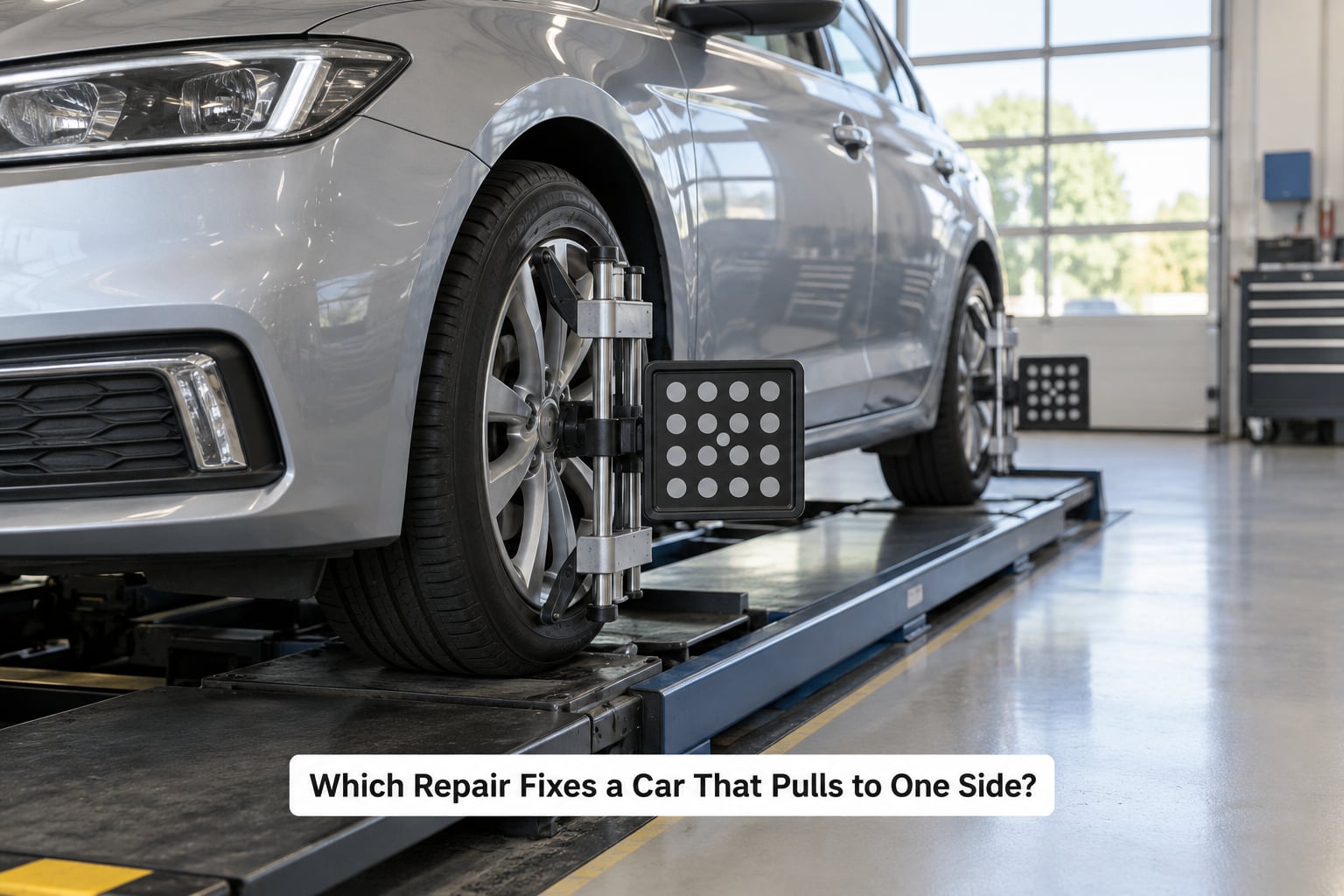
Each cause has one obvious repair, and the temptation is to buy parts before anyone has confirmed the diagnosis.
- Pressure or wear: inflate to the placard specification, then replace tires in matched sets on the same axle rather than one at a time.
- Wheel damage: repair the rim if it is serviceable, replace it if it is not. A bent wheel destroys new tires and misaligns the car as it runs.
- Alignment: a four-wheel alignment resets toe, camber, and caster to spec. It is quick, which is exactly why it gets sold before anyone checks the tires.
- Steering and suspension: replace tie rods, ball joints, bushings, or struts on the side that is actually worn. This is usually the expensive branch.
- Brakes: caliper, hardware, pad, or rotor replacement depending on what seized or wore unevenly. A sticking caliper is often a cleaning and lubrication job on the hardware, sometimes a rebuild.
Diagnosis before parts is the entire game. Replacing a tire on a car with a bent wheel, or aligning a car with a dragging caliper, wastes money and leaves you back at the same shop.
Why Might a New Tire or Repair Still Not Fix the Pulling?
The most common post-repair complaint is a car that still pulls after the alignment, the rotation, or the new tires. When that happens, the fault is usually something the repair did not look at.
- A bent wheel or rim. The car pulls straight and always did, and the tire looks new.
- Brake drag. Alignment cannot fix a caliper holding the rotor.
- Worn bushings. Loose control arm bushings let the geometry change under load, so the car pulls at speed and wanders over bumps while an alignment reading on the rack looks fine.
- A mismatched set. Two tires of different model, size, or wear rating on one axle.
- Tire conicity. A manufacturing defect where the belts are not perfectly aligned, so the tire behaves like a cone and pushes the car sideways. It is rare, and the front-tire swap reveals it.
- Road crown mistaken for a fault. Technicians sometimes offset alignment slightly to compensate for crowned roads, which is why a straight feel can seem off. Road crown is real, and it is also the most common excuse for a pull that was never diagnosed.
A good shop road-tests the car, crosses the tires, checks for a hot wheel, and only then quotes a fix. If you get a parts list without a road test, ask for the diagnosis.
How Much Does It Cost to Fix a Car That Pulls?
What moves the total: region, vehicle type, parts choice, labor time, and whether the shop has to diagnose it from scratch. A pressure correction or a road test is quick; suspension work that requires removing a corner can run all day.
| Repair | Relative cost | Typical shop time |
|---|---|---|
| Tire pressure correction | Free | 10 minutes |
| Tire set replacement and balancing | Low | 1 to 2 hours |
| Wheel repair or replacement | Low to moderate | 1 to 3 hours |
| Four-wheel alignment | Low | 1 hour |
| Brake pad and rotor service | Moderate | 2 to 4 hours |
| Caliper rebuild or replacement | Moderate to high | 2 to 4 hours |
| Tie rods, ball joints, bushings, struts | High | 3 to 8 hours per corner |
| Bent rim or frame repair | High, varies widely | Days, sometimes much longer |
Treat these as typical US ranges that shift by region and change over time, and ask for a written quote after inspection. The pairing that matters: if the pull costs almost nothing to check and the fix is expensive, get the diagnosis in writing before you authorize the parts. A good alignment should hold a year or more, so a pull that returns quickly points elsewhere.
When Should You See a Mechanic?
Book an inspection rather than a specific repair when the pull is sudden or severe, when the steering or brakes feel wrong in any way, when a tire is damaged, when there is a repeated vibration, when the pulling started right after a collision or pothole, or when it returns right after you corrected tire pressure.
Do not drive it at all if the steering goes heavy or loose, if the wheel will not return to center, if the brake pedal sinks, or if a tire is losing pressure repeatedly.
Frequently Asked Questions
Can low tire pressure make a car pull to one side?
Yes, and it is the most common cause. A tire that is several PSI below the others creates more rolling resistance, changes the ride height at that corner, and twists the geometry slightly, so the car drifts toward the low tire. Check all four tires cold against the number on the door-jamb placard, not the sidewall. If the pull goes away after correcting pressures, you found it.
Should I get an alignment if my car pulls to one side?
Check the tires first, because alignment is the most commonly sold fix and one of the least common causes. Correct pressures, inspect tread, swap the front tires left to right, and feel for a hot wheel. If the pull follows the tires, the tires are the problem. If it stays with the car and the tires check out, an alignment is a reasonable next step.
Why is my steering wheel not centered when I drive straight?
The wheel shows where the front wheels actually point. If you are holding it off center to drive straight, something has shifted the geometry, most often caster or toe. Caster is the main reason a wheel sits off center and the car still tracks straight. A shop that sets toe may need caster corrected too, so ask for all three angles to be checked.
Can I keep driving if my car pulls slightly to one side?
A slight, constant pull with normal steering feel is usually drivable at low speed, but treat it as a warning. Keep both hands light on the wheel, drive straight, avoid highway speeds, and get it inspected within a few days. Stop driving immediately if the pull becomes sudden, the wheel goes heavy or loose, a vibration appears, or the brake pedal changes.
Why does my car pull to one side when I brake?
Braking amplifies friction differences on one side, so a caliper that is not fully retracting, a parking brake left slightly engaged, or badly uneven pad wear will pull the car toward the dragging wheel. Feel for a hot rotor after a normal drive and watch for a burning smell. This is worth checking before anyone touches your alignment.
Do I need a wheel alignment after replacing a tire?
Usually not, because replacing a single tire does not change the car’s geometry. You do need an alignment if the pull appears afterward, if the old tires showed uneven wear, or if the wheel had to be repaired or removed from the rim. Replace tires in matched pairs on the same axle so you are not running a fresh tire beside a bald one.
What Should You Do First?
Check all four tire pressures cold against the door-jamb number, and look at each tire for uneven wear or damage. Those two checks take ten minutes and settle more cases than anything else on this list.
If the pull is gone, you found it. If it is still there, drive cautiously and arrange an inspection, and tell the shop you have already ruled out pressure and wear so the diagnosis starts somewhere useful. If the pull came with a noise, a heavy wheel, a vibration, or a sudden change in steering feel, skip the driving and get the car looked at.