Checking your oil level correctly takes about five minutes and needs nothing more than a clean rag and your owner’s manual. Park on level ground with the engine off, wait 10 to 15 minutes for the oil to drain back into the pan, pull the dipstick, wipe it, push it fully back in, then pull it again and read whether the oil sits between the low and full marks.
That is the whole routine, but the difference between a correct reading and a wrong one is usually down to three small things: parking on a slope, skipping the wipe, or not waiting after the engine has been running. Get those right and you can catch a falling oil level before it turns into metal-on-metal contact inside your engine.
I check mine the first thing in the morning, before the car has moved, because a cold overnight settle is the most repeatable reading you can get. My own manual tells me to warm the engine up first, which is exactly the kind of contradiction that sends people down rabbit holes online. More on that in a moment.
Table of Contents
- 1What You Need Before You Check Your Oil Level
- 2Step-by-Step: How to Check Your Oil Level Correctly
- 3Step 1: Park the Car Safely
- 4Step 2: Check Whether Your Car Uses a Dipstick
- 5Step 3: Remove and Wipe the Dipstick
- 6Step 4: Read the Oil Level
- 7Step 5: Recheck and Add Oil Only If Needed
- 8Common Mistakes That Give You a Wrong Reading
- 9Frequently Asked Questions
- 10Should I check my oil when the engine is hot or cold?
- 11What is the most accurate way to check engine oil?
- 12Is it better to overfill or underfill oil?
- 13Why is my oil level low right after an oil change?
- 14How long should I wait after adding oil before checking the dipstick again?
- 15What does the oil pressure warning light mean?
- 16Conclusion: Where to Start
What You Need Before You Check Your Oil Level
You need four things, and three of them are free.
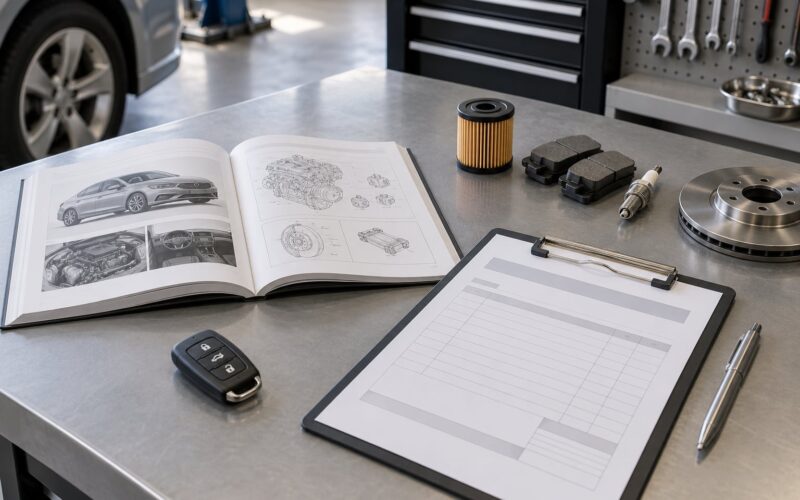
- The vehicle owner’s manual. It is the authority for your engine, including whether you check hot or cold and how long you wait.
- A clean rag or paper towel. A single fold is enough. It needs to be clean, because you are wiping oil onto it and then reading the stick.
- The engine dipstick. Usually a yellow, orange or red loop handle near the engine block. If your car has no dipstick, you need the dashboard oil-level display instead.
- A flat, level parking spot. A sloped driveway skews the reading, sometimes by enough to fool you completely.
A funnel is worth keeping in the boot if you plan to top off your own oil. So is the right bottle of oil, because the viscosity grade your engine takes is printed in the manual and nowhere else.
Lighting matters more than people expect. A dipstick read in shadow at night can put an oil film on one side of the tip that is not there, which is why the two-sides habit below matters most at night.
And a quick safety note, since this is the step people rush. After a drive, the dipstick handle, the oil filler cap and the exhaust manifold are all hot enough to burn you. Either check cold first thing in the morning, or give the engine the settling time below so you are reaching into something that has cooled.
One note on modern cars: plenty of vehicles from roughly 2016 onward ship without a dipstick. Fords in particular use an electronic oil life monitor that measures the level from inside the crankcase and reports it on the dash. If your engine bay has no yellow loop handle, you are in that group.
Step-by-Step: How to Check Your Oil Level Correctly
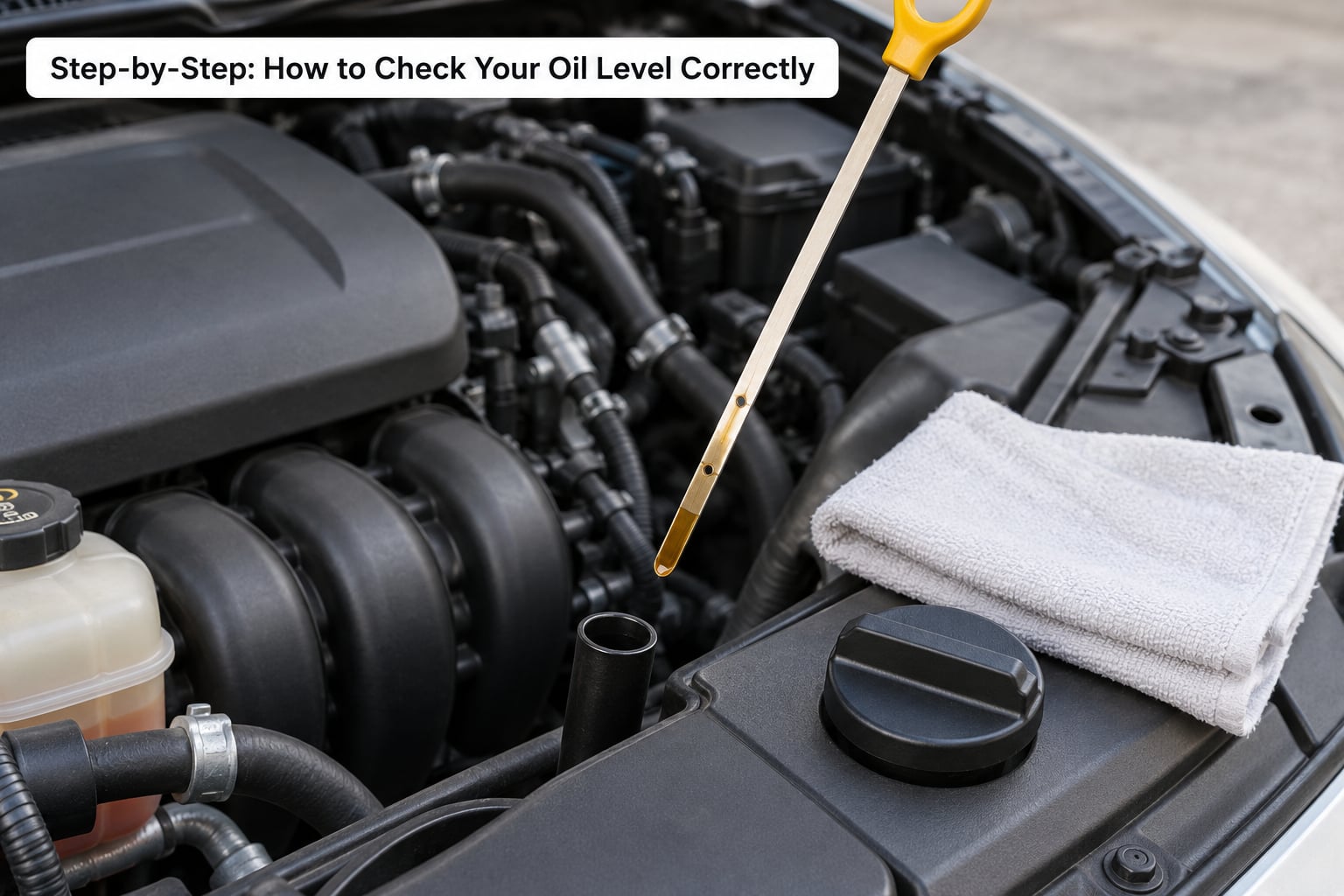
Work through these in order. Skipping ahead to the pull-and-read is the single most common reason people get a bad number.
Step 1: Park the Car Safely
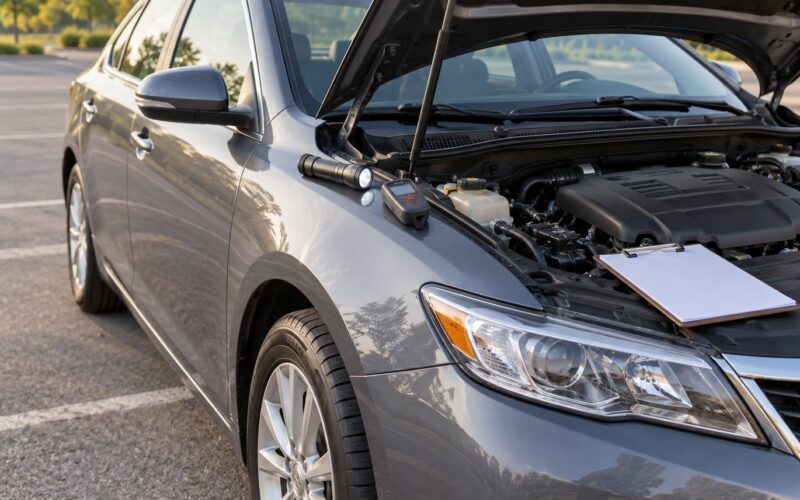
Park on genuinely flat ground, engage the parking brake, and switch the engine off. Automatic transmissions go in park; manuals go in first gear or neutral with the brake on.
A slope pools oil toward the downhill side of the pan, which makes the level read high on one end and low on the other. If your driveway drops away, either find a flatter spot or accept that the reading is approximate. You can tell it worked: the car sits square, the brake is set, and nothing is running.
Step 2: Check Whether Your Car Uses a Dipstick
Most engines have a marked steel or plastic rod that reaches from the engine bay down into the oil pan. You can spot it by its loop handle, which is usually yellow, orange or red, and it never moves with the engine when you wiggle it by hand.
If there is no loop handle anywhere near the block, your car measures its own oil level electronically. Find the oil level or oil life menu in the instrument cluster and read the number there instead, following the procedure in your manual rather than guessing at a dipstick location. Many of these systems need the engine to have run for several minutes first, and they read reliably once the car has been driven.
Step 3: Remove and Wipe the Dipstick
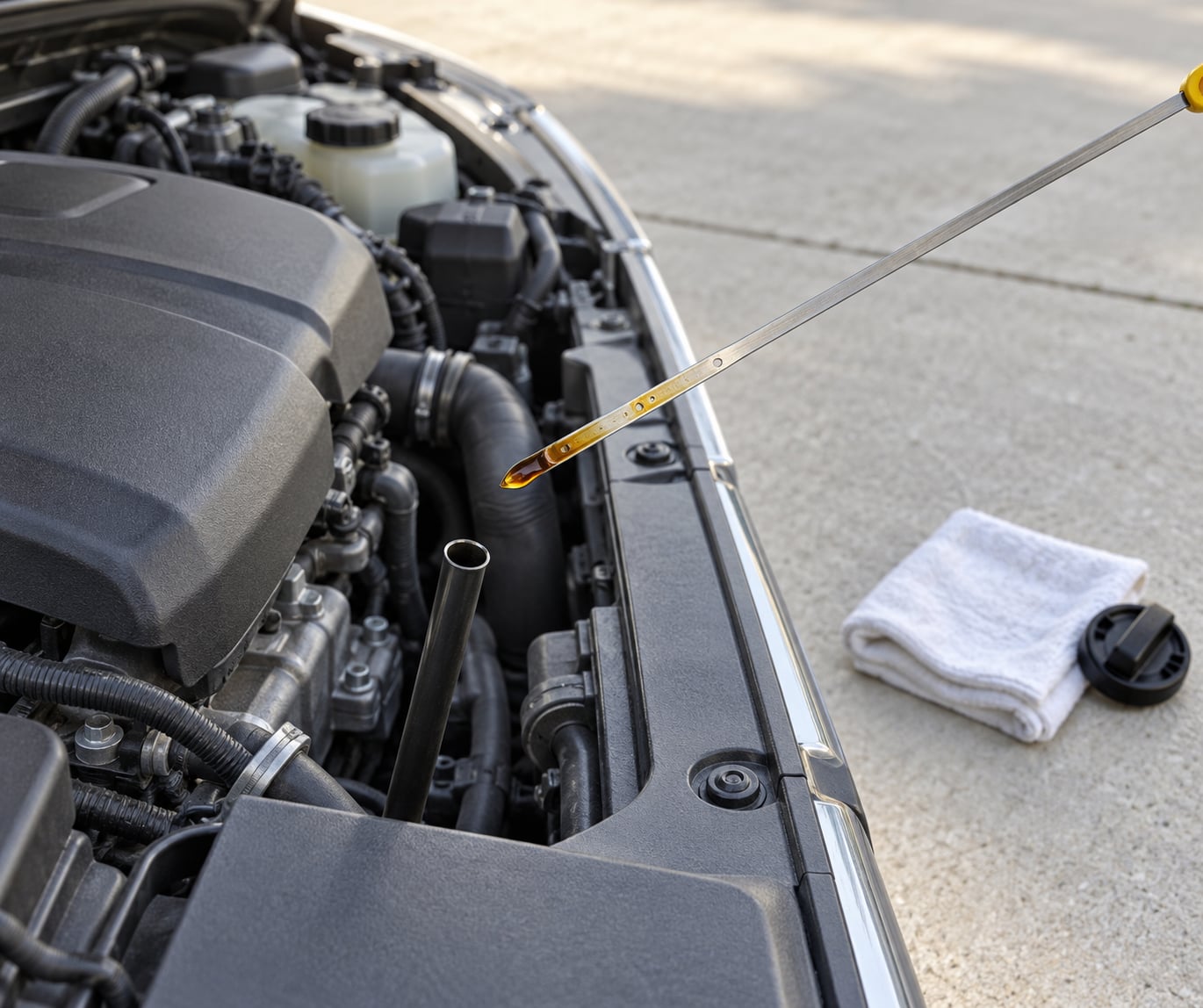
Pull the dipstick straight out, hold it up so you can see the end, and wipe both sides clean with your rag. Do not just flick it. Then push it all the way back in until it seats properly and the handle sits down at the top of the tube.
This is where most first-timers go wrong. Pulling the stick and reading whatever oil is already on it tells you about the last time somebody looked, not about now. Partial reinsertion is the sneakier version of the same mistake: on some makes the handle is stiff, the stick stops a few millimetres short of its stop, and you get a falsely low reading every single time. Push until it stops.
Step 4: Read the Oil Level
Pull the dipstick a second time and hold it level so you can see both sides of the tip. Oil collects in the pan below, and the level is correct when the oil film reaches between the two marks near the end of the rod.
Turn the stick and look at both faces of it, because the rod is often slightly bent or the oil coats unevenly. Advice that circulates on mechanic forums is to trust whichever side shows the lower line. It costs you three seconds and removes a real source of error.
Here is what each zone means and what to do about it.
| Where the oil sits | What it means | What to do |
|---|---|---|
| Below the low or MIN mark | The pan is running low. The light amber film stops short of the first indicator. | Add oil a little at a time, then recheck. If it drops again within a few hundred miles, the engine is burning oil and that needs a workshop, not a top-off. |
| Between the low and full marks | The correct zone. Most makers show it as a cross-hatched area or an L-H range. | Nothing. Put the stick back in and close the hood. |
| At the full or MAX mark | Acceptable, though nearer the middle is the safer long-term target. | Leave it. Many drivers assume the level must sit at full, which is how engines end up overfilled. |
| Above the full mark | Overfilled. Excess oil is aerated by the crankshaft and foams, which drops real oil pressure and can blow seals. | Remove the surplus. See the section on overfilling below. |
| Thick black, gritty or milky | Condition, not level. Grit suggests contamination; a milky, foamy film can mean coolant is getting into the oil. | Stop using it as a routine reading and get the oil tested and the cause checked. |
Dipstick markings vary between makes. Some have two pinholes, some use L and H, some say MIN and MAX, and some print a cross-hatched safe zone. Whatever the styling, the answer sits between the two indicators.
Step 5: Recheck and Add Oil Only If Needed
Put the dipstick back in, and if you added anything, let the engine run for a few minutes or turn the key with the engine off to cycle the pump, then wait at least a minute before pulling it again. Half a quart at a time is the sensible increment.
Add oil through the filler cap on top of the engine, never into the dipstick tube. Use the viscosity grade your manual specifies, such as 0W-20 or 5W-30, and pour slowly so you can see it going in. A funnel makes this far less messy.
You can tell it worked when the oil now sits in the cross-hatched zone or between the marks, the dipstick seats fully with no resistance halfway down, and there is no oil weeping from the filler cap.
Common Mistakes That Give You a Wrong Reading
Almost every wrong reading traces back to one of these six.
- Parking on a slope. Oil pools on the downhill side and the stick reports more than there is. Fix: find flat ground, or take the reading as approximate.
- Reading the dipstick without wiping it first. The oil on it is from last time. Fix: wipe both sides clean, reinsert fully, pull again.
- Reading the stick upside down. The marks are pressed into one face only, and the oil film wraps around the tip. Fix: hold it so the marked face is upright and level.
- Checking the second before the oil has settled. Right after a drive, a good chunk of oil is still coating the cylinder walls and the filter. Fix: wait 10 to 15 minutes with the engine off.
- Failing to push the stick all the way in. A sticky handle or a slightly bent rod stops short of the tube stop and reads low forever. Fix: press until it bottoms out.
- Overfilling after a top-up. People add a full quart and recheck immediately. Fix: add in half-quart increments, wait a minute, recheck.
Two more traps catch people out. The first is checking immediately after an oil change: much of the fresh oil is still in the filter and the upper engine, so the pan genuinely holds less than you just paid for. The reading will climb over the next few drives. The second is grabbing the dipstick straight after a drive, when the stick and the exhaust manifold are hot enough to hurt you. Wait for the engine to cool or handle it with a rag.
On frequency, check weekly for the first month after a service so you learn your engine’s normal level, then settle into a monthly habit, plus a look before a long trip and any time the low-oil or oil-pressure light appears. If your car uses an electronic monitor, follow its own interval instead.
The hot-versus-cold argument gets settled the same way every time. Warm oil is thinner and drains off the upper engine faster, which is why some manuals ask you to run the engine to temperature first and then wait 5 to 10 minutes. Others prefer a cold engine overnight, where nothing is circulating at all. Both give you a settled reading, and both fail in the same way if you check on a slope or pull the stick immediately. Read your manual, follow its settle time, and be consistent so you are comparing like with like every month.
If you have gone past full, the fix is not more waiting. Overfilled oil gets churned into foam by the crankshaft, the aerated mix drops the pressure the bearings actually see, and the pressure warning light can come on even though the level looks healthy. Let the engine sit overnight, then pull a quart or two with an oil extraction pump or a large syringe through the dipstick tube. If the same thing happens after you top off, stop topping off and have the level checked properly.
Diesels usually follow the same dipstick routine, but the working volume is larger and many take a higher viscosity grade than the petrol engine in the same range, so the manual matters even more. Electric vehicles have no engine oil at all. If you are shopping a used car, a cold reading on a warm engine with no engine running is the one quick check worth doing before you talk about anything else.
Frequently Asked Questions
Should I check my oil when the engine is hot or cold?
Follow your owner’s manual, because the answer differs between makes. Many manuals ask for a cold engine on level ground; others ask you to run it to operating temperature, then wait 5 to 10 minutes. Both are defensible: warm oil coats the upper engine and drains back faster. What is never correct is checking on a slope or reading instantly after shutting off.
What is the most accurate way to check engine oil?
Park level, engine off, wait 10 to 15 minutes, pull the dipstick, wipe it fully, reinsert it completely, then pull and read. Cold first thing in the morning gives the most repeatable number because nothing is still circulating. Check both faces of the stick and trust whichever side shows the lower line.
Is it better to overfill or underfill oil?
Neither. Underfilling starves the engine of oil and puts metal on metal, which can destroy it quickly. Overfilling aerates the oil in the crankcase, which drops real oil pressure, causes foaming, and can push seals. Aim for the middle of the range between the marks, and add oil in half-quart increments.
Why is my oil level low right after an oil change?
It is normal for the first reading after a service. A good part of the fresh oil is still coating the cylinder walls and sitting in the oil filter, so the pan holds less than the volume that went in. The level rises over the next few drives. If it still reads low after several hundred miles, the engine is consuming oil.
How long should I wait after adding oil before checking the dipstick again?
Wait at least a minute, and run the engine for a few minutes or cycle the key first so the pump distributes the oil. Add in half-quart increments rather than a whole quart, then recheck. If you skip the wait, the new oil has not reached the pan and you will add more than you need.
What does the oil pressure warning light mean?
It is a different check from an oil level. The light comes from an oil pressure sensor, and it means circulating pressure has dropped low enough to be dangerous, usually within seconds of oil loss. A low oil level is one cause, but a failed sensor or a blocked pickup can do it too. Switch the engine off and check the level; if it is correct, treat it as a fault.
Conclusion: Where to Start
Open the owner’s manual first, because it settles the hot-versus-cold question and the settle time for your engine. Then park on flat ground, pull the dipstick, wipe it, push it fully home, and read it again. If the oil sits between the two marks, you are done. If it sits at or below the low mark, add a little at a time and recheck. If it drops again within a few hundred miles, book a workshop rather than topping it up forever.