Most slow and blocked drains clear with a plunger, a pair of hands, and hot water — no caustic cleaner required. The order matters: plunge first, pull debris out by hand next, then clean the P-trap. A pot of hot water and a half cup of baking soda handle the rest. Ten minutes of work covers the majority of clogs you’ll ever hit.
The physics is simple. A chemical cleaner dissolves or burns its way through a blockage; a plunger changes the air pressure in the pipe so the blockage moves. Hot water loosens grease and soap film. Nothing you need comes in a caustic bottle, and nothing eats through old galvanized pipe or fumes up your bathroom.
Before you pour anything, work out which drain you’re dealing with and whether it drains slowly or not at all. That single distinction decides the method.
Table of Contents
- 1What You Need
- 2Step-by-Step: How to Unclog a Drain Without Chemicals
- 3How to Unclog a Drain Without Chemicals: Start With a Plunger
- 4Use Baking Soda and Hot Water for a Gentle Cleanse
- 5Remove the Stopper and Clear the Drain by Hand
- 6Check the P-Trap When the Sink Still Clogs
- 7Clear a Tub or Shower Drain Without Chemicals
- 8Know When to Stop and Call a Plumber
- 9Common Mistakes
- 10Frequently Asked Questions
- 11Can baking soda really unclog a drain?
- 12Is boiling water safe for every type of drain?
- 13What is the best tool for a hair-clogged shower drain?
- 14Why does my sink keep clogging after I remove the stopper?
- 15How do I prevent household drains from clogging?
- 16When should I stop trying DIY methods and call a plumber?
What You Need
The tools are cheap and most of them are already in the house. Gather them before you start so you are not drying your hands on a towel and searching a cupboard mid-clog.
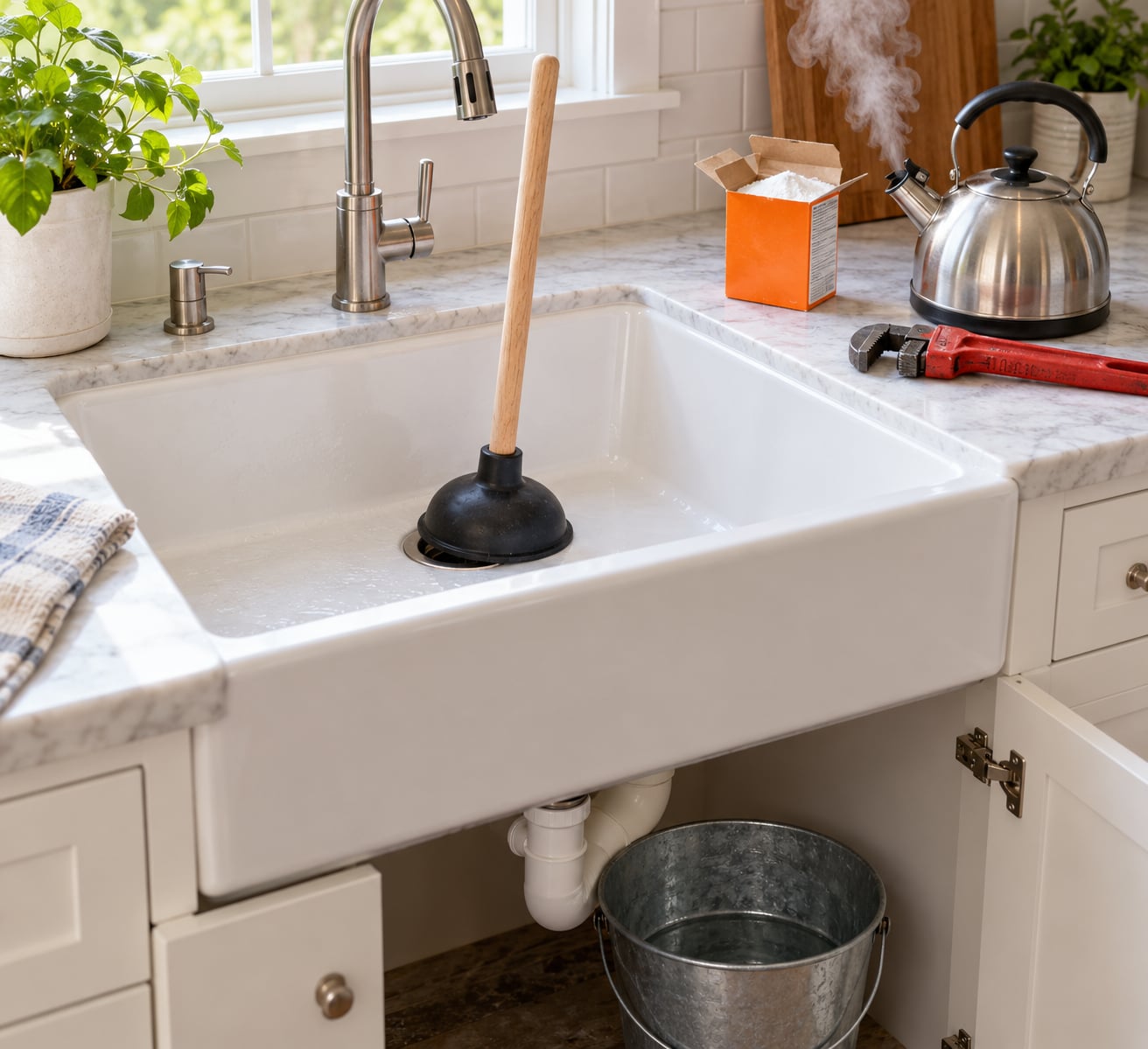
- A rubber plunger. A cheap bell plunger with a flat rim works better on flat sink and tub drains than the cone-shaped toilet plunger. Get the seal wet before you pump.
- A bucket and old towels. Removing a P-trap releases a surprising volume of water. Put the bucket under it first.
- Adjustable pliers, slip-joint pliers, or a drain wrench. Slip nuts under most sinks are hand-tight, but older corroded ones need a wrench. Never use channel-lock pliers on a slip nut; they crush the nut.
- Gloves and an old toothbrush. Hair, grease and soap scum are unpleasant to handle.
- Baking soda and hot water. Half a cup of baking soda plus a kettle of near-boiling water for the gentle cleanse.
- A small flat screwdriver, a plastic pick, or a bent wire hanger. Useful for lifting a stopper or fishing debris out of a strainer.
- A short drain snake (hand auger). A 5 to 10 foot coil clears most tub and shower hair mats without a power tool.
Whether you need a removable strainer or cover depends on the drain. Kitchen sinks usually have a strainer or flat plug you lift out. Bathroom sinks often have a pivot ball that you can lift and twist to release. Tub and shower drains are usually covered by a screw-in or lift-out stopper, and floor drains have a square or round grate you pry up.
Step-by-Step: How to Unclog a Drain Without Chemicals
How to Unclog a Drain Without Chemicals: Start With a Plunger
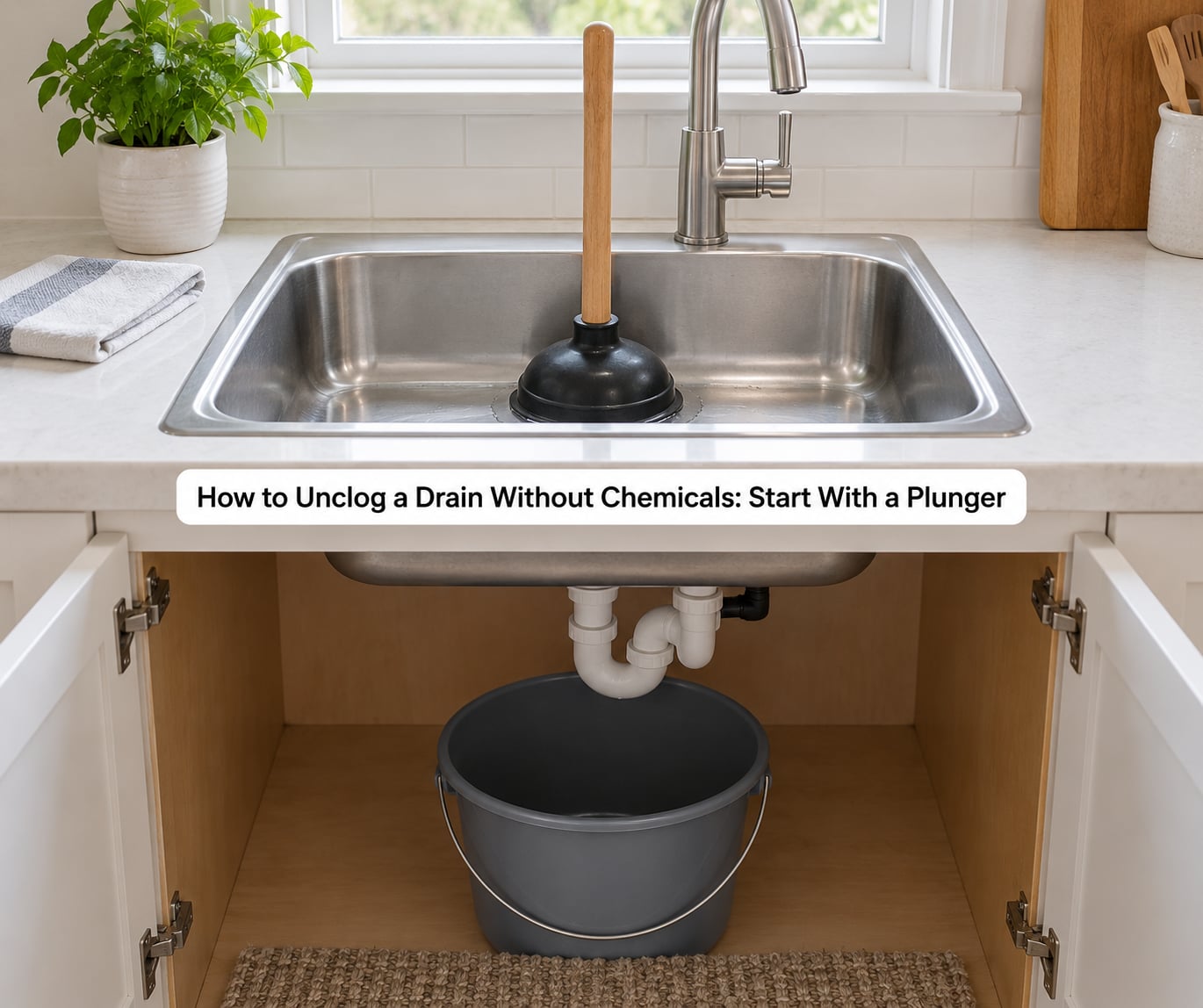
Fill the sink with enough water to cover the plunger rim, then place the plunger flat over the drain so no air leaks around the edge. A broken seal is the reason most plunges fail. If water is escaping around the cup, add a little more water or smear the rim with petroleum jelly.
Push down firmly, then pull up straight, and keep a steady rhythm for about 20 to 30 strokes. The pressure wave is what dislodges the blockage, so slow swirling does nothing.
Check the result by pulling the stopper and watching whether water runs off freely. If it drains normally you are done. If not, cover the drain and plunge 20 more strokes, then move to the next method.
The technique changes slightly by drain type. In a sink, match the plunger to the drain hole and keep the sink wet. In a toilet, seat the plunger fully inside the bowl so it stays submerged as the water level drops. In a bathtub or shower, remove the stopper first so air can escape, and plug the overflow plate with a wet towel. On a floor drain, add a couple of inches of water before sealing.
Use Baking Soda and Hot Water for a Gentle Cleanse
This is maintenance, not a cure, and knowing the difference saves you an afternoon of waiting for nothing. Baking soda and hot water work on light soap scum and slow kitchen drains that never fully block.
Pour half a cup of baking soda straight down the drain, then run a kettle of hot water over it in one steady pour. Let it sit for 15 to 30 minutes, then flush with another kettle of very hot tap water. The heat softens grease and soap, and the soda gives the water a little scrubbing action on the pipe walls.
About hot water and vinegar: vinegar reacts with baking soda to make carbon dioxide, and that fizz lifts a little residue off the sides of the pipe. It does not dissolve a grease blockage or a packed hair mat, and it is weaker than any chemical opener. If the drain still runs slow after 30 minutes, stop repeating it and go to a physical fix.
One safety note on temperature. Near-boiling water is fine for modern PVC and for a periodic flush. Repeated boiling pours can soften older thin-walled pipe and gasketed joints, so stick to hot tap water if your plumbing is original to the house or you have a garbage disposal you just used.
Remove the Stopper and Clear the Drain by Hand
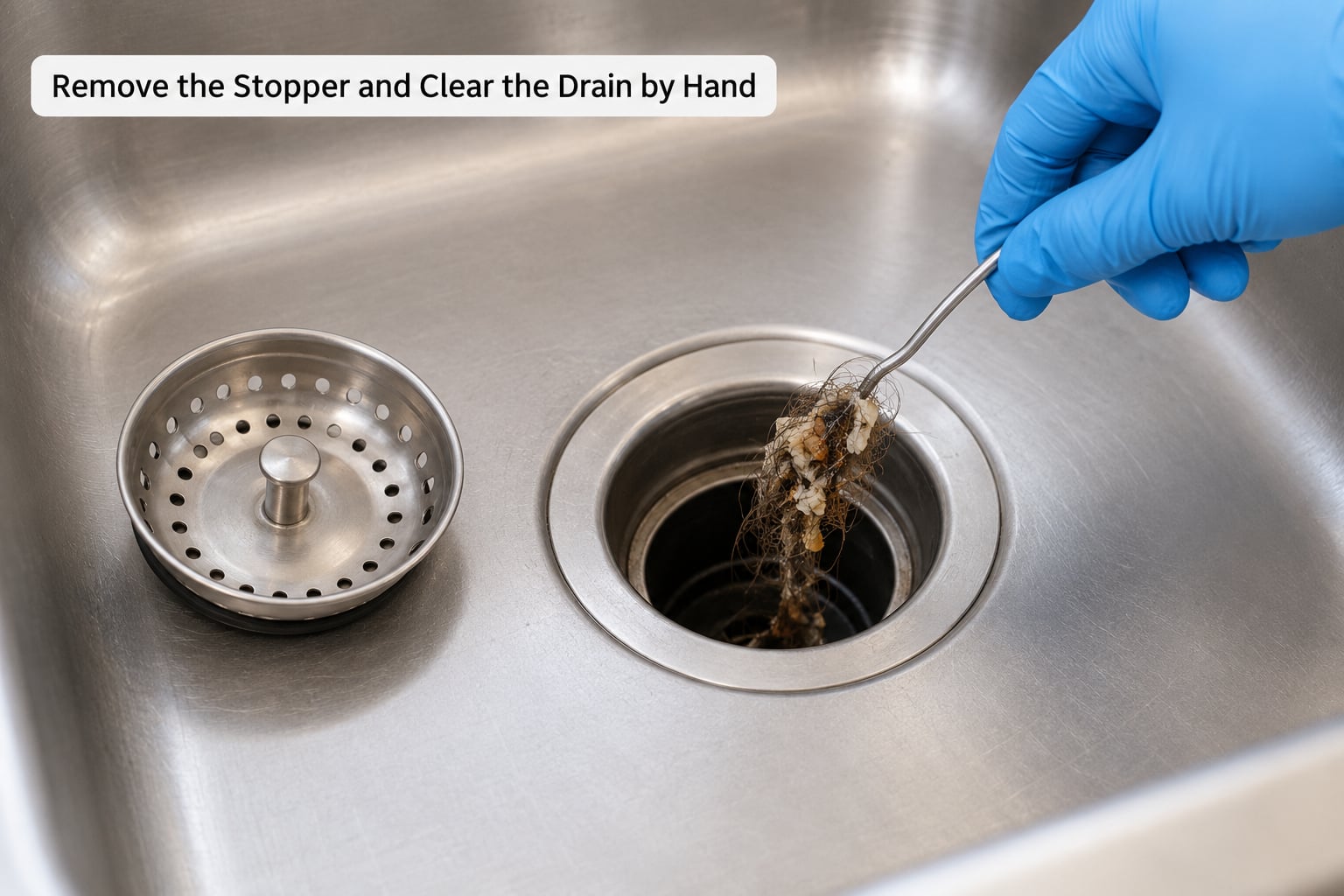
This is the step that actually clears most kitchen clogs. Pop the strainer out, or lift and twist the pivot ball until the stopper arm clears the flange, then pull it free.
Put on gloves and reach in. Pull out the matted food, grease solids, hair and toothpaste caps you can feel. Use a bent wire or a plastic pick for the ones stuck against the walls.
Never push anything downward. Anything you push deeper often just moves the blockage toward the trap, where it will be harder to reach. Work from the sides and pull up.
Flush with hot water and run it for a full minute to see whether the drain keeps up with the flow.
Check the P-Trap When the Sink Still Clogs
The P-trap, that U-shaped bend under the sink, catches debris on purpose so sewer gas stays out of your house. It is also the single most common place a blockage forms, sitting about six inches below the drain opening.
Set the bucket under the trap and put a towel down. Most slip nuts tighten by hand; if yours will not move, use slip-joint pliers and support the pipe so you do not twist the tailpiece.
Loosen the nut on the sink side and the one on the wall side, then lower the bend. Expect a gush of water and whatever has collected on the bottom — this is unpleasant, but it is normal. Rinse the bend in the bucket, clear the residue with a toothbrush, and check the slip nuts for cracks or stripped threads.
Reassemble in the same order: hand-tighten both nuts with a quarter turn past snug, wipe the joint dry, run the tap for a minute, then feel under the trap with a dry paper towel. A drip there means the nut needs another quarter turn. If a slip nut will not seat properly or the pipe threads are gone, replace the trap section with PVC before you call anyone.
Clear a Tub or Shower Drain Without Chemicals
Tub and shower clogs are almost always hair bound together with soap scum and stopped water. Take the stopper off, clean the stopper itself, and pull out the mat by hand.
For hair sitting deeper in the drain, feed a short hand auger down. Turn the handle as the cable meets resistance, crank it into the clog, and pull the wet mass back out. Do several passes.
A bent wire hook works for shallow hair and for retrieving dropped screws. Never drive any tool into an unknown fitting, and do not force a snake against a stubborn blockage — a coil bends or breaks, and you end up with a cable stuck in your drain.
Flush with very hot water and watch it leave. If the tub holds standing water, bail most of it out first so you can see the drain clearly, and cover the overflow while you work.
Know When to Stop and Call a Plumber
Some clogs are not yours to fix. Stop and call a plumber when you see any of these:
- Two or more drains on the same floor gurgle, slow down, or back up at the same time.
- A sewage smell shows up in the house and will not clear with a trap refill.
- Water comes back up after you use the toilet, a washing machine, or a dishwasher.
- You see a leak at a joint while plunging or working the trap.
- The drain will not accept water at all, or a snake meets solid resistance you cannot pass.
- Clogs come back every few weeks no matter what you do.
Multiple fixtures moving at once points to a problem in the main drain line rather than a branch pipe, which usually means tree roots, a collapsed line, or a blockage in the street-side cleanout. A blockage in one branch pipe never affects a second fixture.
Common Mistakes
Not enough water in the sink. A plunger needs water to push against; in a half-dry sink it just makes air noise. Fill the basin.
A leaky seal. If water escapes under the rim, nothing happens. Match the plunger to the hole and seat it flat.
Forcing the snake. Push, feel, rotate, pull. When resistance will not break, stop and reassess instead of twisting harder.
Forgetting the trap. Disassembling the trap fixes more clogs in five minutes than any pour-and-wait method fixes in a week.
Ignoring repeat clogs. If the same drain backs up monthly, you have an underlying cause: a vent problem, a sagging pipe, a failing trap seal, or roots. Repeated plunging treats a symptom.
Mixing cleaners. Never combine bleach or ammonia with vinegar. That combination produces chloramine gas, which is genuinely dangerous. Skip the drains entirely if the previous person poured something in and you cannot identify it.
Waiting for a miracle. Prevention beats every method on this page. Flush a half cup of baking soda with hot water once a month, keep hair out of tub drains with a catcher, wipe grease into the trash instead of the sink, and run hot water for a minute after every cooking session. Flush nothing labeled flushable; most of it is not.
Frequently Asked Questions
Can baking soda really unclog a drain?
Baking soda with hot water clears light buildup: grease film, soap scum, food residue on a drain that runs slow. Half a cup of soda plus a kettle of near-boiling water, left 15 to 30 minutes, then flushed, is a useful monthly habit. It will not shift a packed hair mat or a hard blockage, and vinegar’s fizz adds very little. If the drain has not improved after 30 minutes, move on to plunging and the P-trap.
Is boiling water safe for every type of drain?
Near-boiling water is safe for modern PVC and for an occasional flush. Repeated boiling pours can soften older thin-walled pipe, corroded galvanized lines, and gasketed fittings in an older house, so use hot tap water there instead. Skip boiling water if the drain has a garbage disposal you have just run, and let the water cool a few seconds before pouring so you do not warp plastic sink liners.
What is the best tool for a hair-clogged shower drain?
A 5 to 10 foot hand auger is the best tool, because it reaches past the stopper and grabs the hair mat instead of pushing it deeper. Remove and clean the stopper first, then feed the cable in, crank into the clog, and pull it back out. For shallow hair near the surface, a bent wire hook works. Never force the cable; a bent or snapped cable becomes a second blockage.
Why does my sink keep clogging after I remove the stopper?
The stopper is rarely where the problem is. The trap about six inches below the drain catches debris by design, and it is the most common blockage point in a home. If the sink still clogs after you pull out the stopper, put a bucket underneath, loosen both slip nuts, and clean the U-shaped bend. Water in the sink that never fully drains or returns after you plunge usually means deeper, and that is where a plumber helps.
How do I prevent household drains from clogging?
Flush half a cup of baking soda with a kettle of hot water once a month, and hot water for a full minute after each cooking session. Wipe grease and oil into the trash, keep coffee grounds out of the sink, and use a hair catcher in the tub or shower. Keep a strainer over the kitchen sink and empty it before it overfills. Nothing labeled flushable belongs in a pipe.
When should I stop trying DIY methods and call a plumber?
Stop when several drains on one floor slow down or gurgle at the same time, when you smell sewage inside, or when water returns after a toilet or dishwasher cycle. Those symptoms point to the main drain line, where tree roots or a damaged pipe are the usual cause. Also stop if a snake meets resistance it cannot pass, or if a slip nut will not seat. Leaking joints need a repair, not more plunging.
Start with a plunger and a full sink, then get your hands in the drain and pull out whatever is in there. If it still runs slow, drop a bucket and clean the P-trap — that fixes more blockages than any pour-and-wait remedy. Save the baking soda flush for monthly upkeep, and call a plumber the moment a second fixture starts behaving oddly.