You can clean gutters safely by working from a sturdy extension ladder on level ground, wearing gloves and eye protection, scooping debris out with a plastic tool, and flushing the run with a garden hose. You never need to set foot on the roof, and you never need to reach past your belt buckle. Most single-story homes take an hour or two, and a second round of cleaning in fall is what keeps water moving all winter.
Before any of that, five rules cover nearly every gutter accident I have heard about:
- Work on firm, level ground. A ladder on soft soil, a slope, or a wet deck is the first thing to slide.
- Keep three points of contact. Two feet and a hand, or two hands and a foot, at all times. This is the American Ladder Institute rule and it holds up.
- Use a ladder stabilizer or standoff. The ladder should rest on the roof edge, not on the gutter, and should extend about three feet past the gutter line.
- Never walk the roof. Shingles are not a walking surface and a wet one will not hold you.
- Have someone nearby. A helper standing at the base of the ladder is cheap insurance, and they can hand you tools.
The rest of this guide covers the equipment, the step-by-step routine, and the mistakes that send people to urgent care instead.
Table of Contents
- 1What You Need
- 2Step-by-Step: How to Clean Gutters Safely
- 3Choose a Safe Work Area
- 4Set Up Your Ladder and Tools
- 5Remove Debris Without Damaging the Gutters
- 6Flush and Check the Downspouts
- 7Finish with a Final Inspection
- 8Cleaning Second-Story Gutters Without a Ladder
- 9Common Mistakes
- 10Frequently Asked Questions
- 11Can I clean gutters without a ladder?
- 12How often should gutters be cleaned?
- 13Is it safe to clean gutters while standing on a roof?
- 14What is the best tool for removing leaves from gutters?
- 15What should I do if water backs up in a downspout?
- 16When should I hire a professional to clean gutters?
What You Need
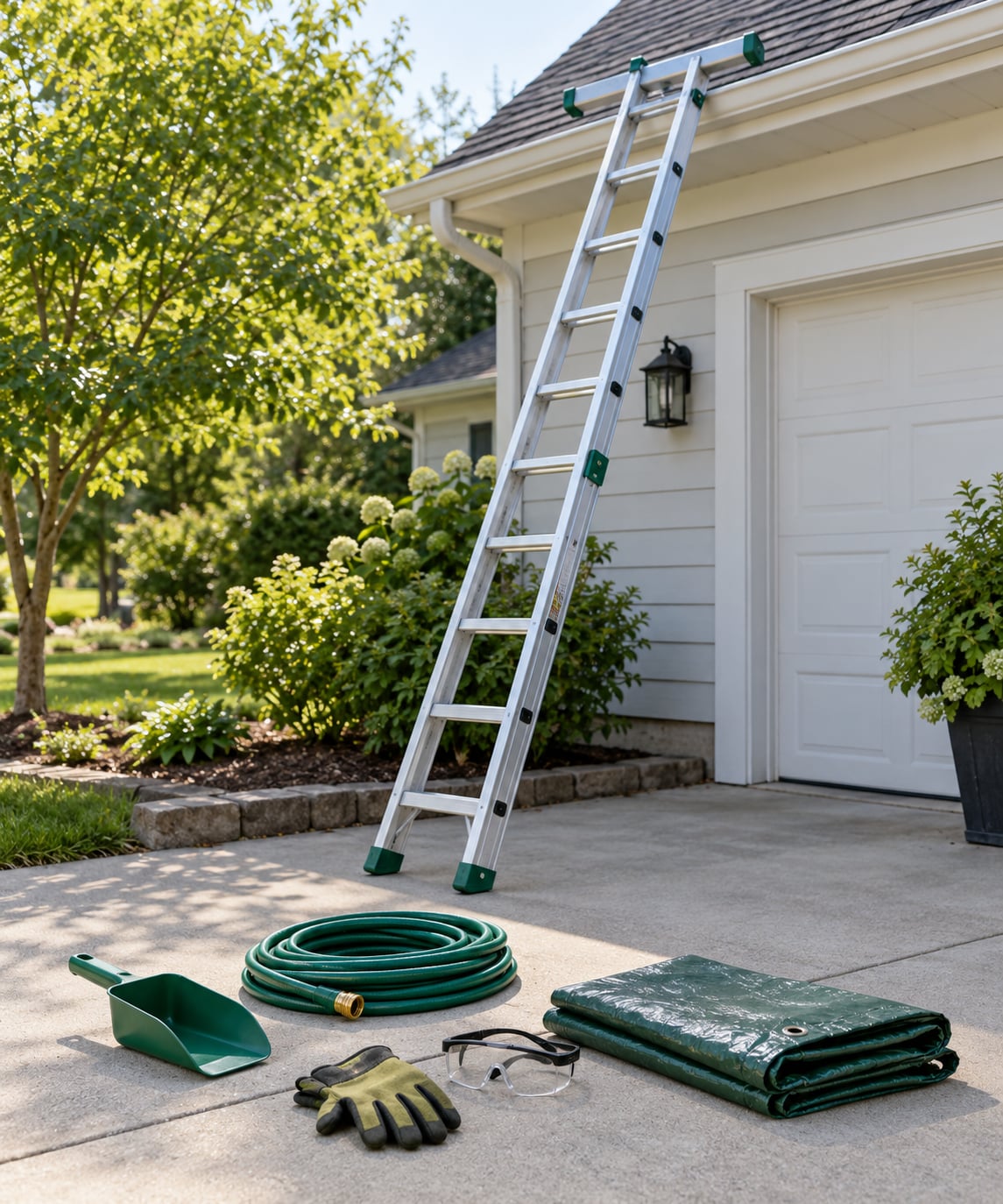
Gather everything before you climb. Reaching for a missing tool halfway up a ladder is how good afternoons turn into ER visits.
- An extension ladder with a stabilizer or standoff. A fiberglass or heavy-duty aluminum ladder rated well above your weight, with non-slip feet. Check the rails and rungs for cracks, and check the rope and pulley on a rope-wind model.
- Plastic gutter scoop or trowel. Plastic only. Metal scoops scratch and dent aluminum gutters, and the damage shows as a permanent dull line along the run.
- Heavy work gloves. Packed leaves hide sharp twigs, rusty gutter edges, and the occasional hidden nail. Gloves are the cheapest protection in this whole list.
- Safety glasses. Debris flies unpredictably when you scoop wet grit out of a channel.
- A bucket and a tarp. A tarp under the work area catches what misses the bucket and protects the planting bed below.
- A garden hose with a spray nozzle. For flushing the run and confirming water moves through the downspout.
- A small brush and a plumber’s snake for the downspout stage.
A ground-based tool beats a ladder in a few situations. If the gutter run is low, over a patio, or along a section the ladder cannot reach without leaning past the safe point, a telescoping gutter wand, a wet/dry vacuum, or a leaf blower attachment will do the job with your feet on the ground. If the run sits high with no safe ladder angle, hire someone. No tool is worth a fall.
Step-by-Step: How to Clean Gutters Safely
Choose a Safe Work Area
Walk the ground before you unclip the ladder. Look for uneven soil, buried hose or sprinkler lines, decking gaps, and slopes that would send the feet sideways once you are loaded with weight.
Look up too. Overhead power lines, service drops, and low-hanging branches are the hazards people forget. If a power line is anywhere near your working height, stop and call the utility or a professional.
Then look at the gutter itself. Run a gloved hand along the top lip and feel for sharp edges, protruding nails, and loose hangers. Sagging sections mean the fascia behind them may be wet or soft, and that is a repair job rather than a cleaning job.
Set Up Your Ladder and Tools
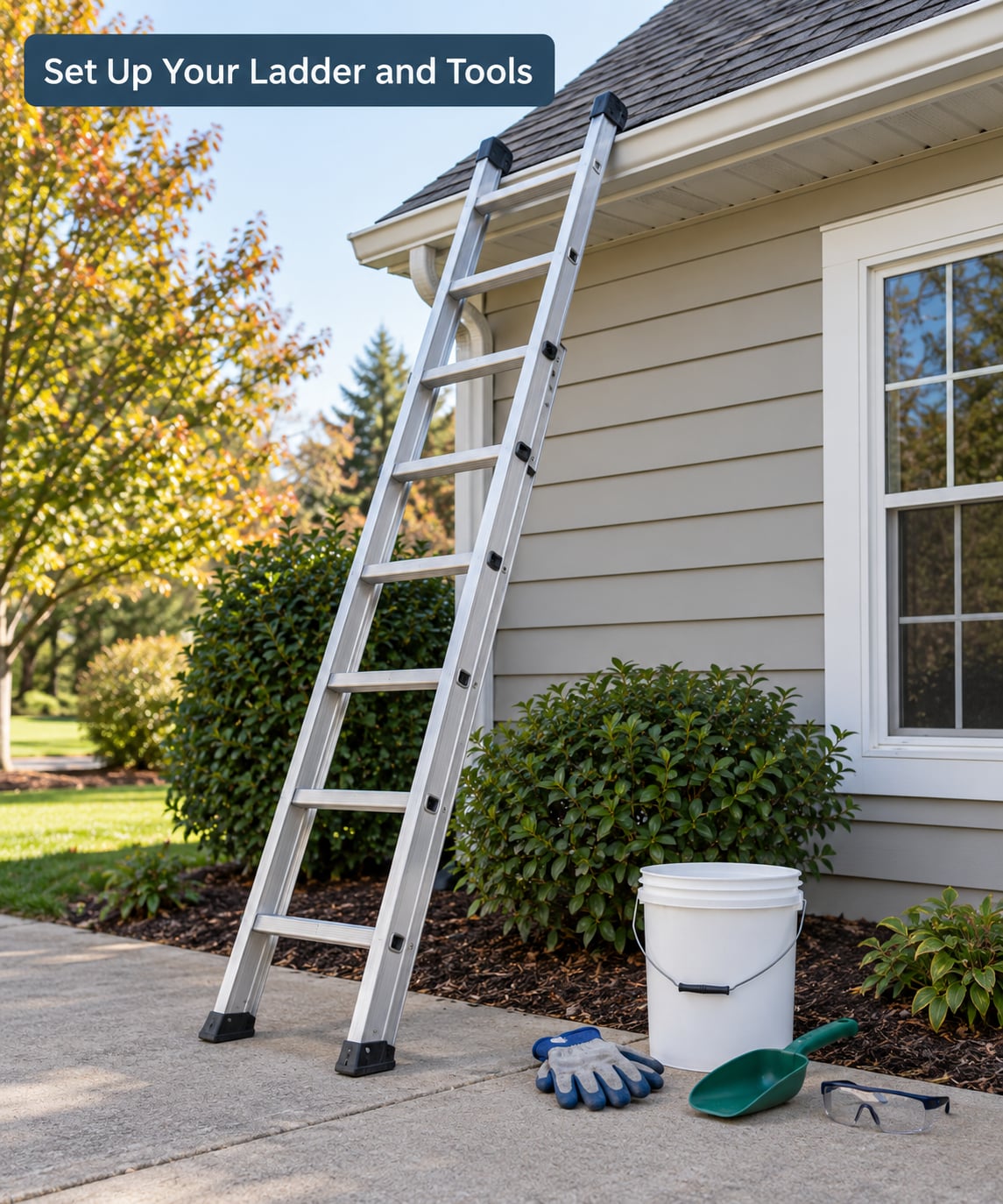
Set the ladder feet squarely on firm, level ground and open it so the base sits about one foot out for every four feet of height. That ratio, often called a 4:12 pitch, puts you at roughly a 75-degree angle, which is the safe working angle. Too steep and you slide off the top; too shallow and the bottom kicks out from under you.
Fit the stabilizer or standoff so the ladder clears the gutter entirely and rests on the roof edge instead. Add a ladder jack or leveler on uneven ground. The top should extend about three feet above the gutter line so you have something to hold.
For balance, think of a belt buckle rule: stay between the rails, and keep your belt buckle between the two ladder rails. If you cannot get your belt buckle between the rails, you are reaching too far, and you need to move the ladder rather than lean.
Before climbing, unclip the cords and move the hose, tarp, and bucket to where you can reach them from a rung. Organize the rest on the ground so your helper can hand tools up rather than you climbing down for each scoop.
Remove Debris Without Damaging the Gutters
Start at the end nearest a downspout. This is the technique tip homeowners repeat most often on home forums, and the reason is practical: water always has somewhere to drain as you work, and if you start at the high end you are scooping into a channel that has nowhere to go.
Work in three-to-four-foot sections. Scoop out the loose top layer, then the wet packed layer beneath it, and drop it into the bucket or onto the tarp. Keep the scoop flat against the bottom of the channel and lift debris up and over the lip rather than dragging it sideways, which is what bends hangers and pulls brackets loose.
Fir needles and compacted debris are the hard case. Once they mat together they resist scoops and sticks, and the only reliable answer is flushing them with water once the bulk is gone, or working them loose by hand in small amounts so the water has somewhere to carry them.
Empty the bucket before it feels heavy. A full bucket of wet leaves pulls your center of gravity away from the ladder, and a four-to-five pound imbalance is enough to start a swing. Two light trips beat one awkward one.
Flush and Check the Downspouts
With the run clear, attach the spray nozzle and run water along the channel from the high end toward the downspout. Watch how it moves. Water that runs freely and exits the downspout at the bottom tells you the channel is clear.
If water backs up and stops, the clog is in the downspout elbow or the outlet. The lowest elbow usually unscrews by hand so you can clear the trap. Above that, feed a plumber’s snake or a flexible drain auger down from the gutter end and work it through slowly. A garden hose with enough pressure sometimes clears a soft blockage on its own, but never force it, because a hose connection can split an older downspout.
Water that leaves the top of the downspout and spills out the side, or that drains but leaves the gutter visibly damp on a dry day, points to a cracked section or a failed joint. That is a repair, not a cleaning, and patching or replacing gutter runs is work for someone comfortable on a ladder.
Finish with a Final Inspection
Step down, walk the perimeter, and look up from the yard. Check that the run sits level and that no section has pulled away from the fascia, since a sagging gutter holds water in a low spot and defeats the whole job. Look for staining or damp patches on the fascia board or the siding below, which usually mean a joint is leaking rather than clogged.
Run the hose one more time and confirm water exits each downspout clear of the foundation. Water pooling six inches from the foundation is how gutter clogs turn into foundation erosion, and it is a much more expensive problem than debris.
Clear everything, including the tarp and any ladder left in place overnight. Debris left in a downspout after sunset is an invitation to pests, and an ice-prone section is what builds ice dams in a hard freeze.
Cleaning Second-Story Gutters Without a Ladder
Second-story runs are the most common question on homeowner forums, and the honest answer is that the decision depends on reach, roof shape, and how you feel at height.
Start with ground tools. A telescoping gutter wand on a long handle, a wet/dry vacuum hose, or a leaf blower attachment can clear light debris from a second-story run without a ladder, and a ladder stabilizer off the ground costs nothing but patience. These work on leaves and loose grit. They do not move compacted wet debris or anything frozen in place.
If the ground tools leave the run dirty, the choice comes down to three things: how far the gutter sits from the house, whether the roof pitch is steep, and whether you have someone to hold the ladder. A long, level two-story run with a generous setback can be cleaned safely from a properly placed extension ladder.
Three stories, a steep or complex roofline, a narrow setback that forces you to lean, or any discomfort with heights means you should hire a professional. A two-story fall is a serious injury, and the cost of having the work done by someone with proper equipment is small next to a recovery. On Reddit, homeowners with three-story homes describe borrowing taller ladders or simply hiring out, and that is the sensible call.
Common Mistakes
Walking the roof. It is the most common shortcut and the most dangerous. Shingles are designed to shed water, not to hold weight, and a damp roof edge gives way. The gutter is reachable from a ladder in nearly every case that people decide to climb instead.
Using an unstable ladder. A household folding step ladder opened on a step is meant for indoor floors, not for a gutter run. Use an extension ladder on the ground, on a stabilizer, and never stand on the top three rungs.
Working alone in bad weather. Wet ground, wind, and cold hands reduce grip and balance. Home maintenance forums are full of people who learned this the hard way on a damp morning. Pick a dry, mild day, and wait a full day after rain so the ground firms up.
Overfilling the bucket. Water weighs about eight pounds a gallon. Carry half-full loads and keep the bucket between your feet on a rung rather than hanging on the side rail where it swings you off balance.
Ignoring loose hangers and damaged sections. Cleaning a gutter that is already sagging or pulling off the fascia wastes the afternoon and can drop debris on whoever is below. Stop and repair before you clean.
Reaching with metal tools. Metal scoops, trowels, and screwdrivers dent aluminum and leave scratches that catch dirt forever. Plastic and wood only.
Pointing a pressure washer at the roof edge. High-pressure water forces its way under shingles and up into the roof deck, which robs the nails of their seal and can cause leaks that show up months later. Flush from inside the gutter with a garden hose instead.
The single best safety upgrade for most homes is a standoff and a second person. The second best is picking a dry day and stopping when the light goes.
Frequently Asked Questions
Can I clean gutters without a ladder?
For low runs, patio edges, and overhangs that a ladder cannot reach at a safe angle, yes. A telescoping gutter wand, a wet/dry vacuum hose, or a leaf blower attachment clears loose leaves and light grit from the ground. They will not move compacted wet debris or ice. If the run sits higher than about ten feet or the ground under it is uneven, a properly placed extension ladder is the safer option.
How often should gutters be cleaned?
Twice a year is the usual advice: once in spring after the last seed and bud drop, and once in fall before the first hard freeze. Add a third check after any major storm, since branches deposit debris quickly. Homes under large trees, or with roof valleys that funnel runoff into a short run, need attention more often. Inspect from the ground in between and clean when water visibly overflows.
Is it safe to clean gutters while standing on a roof?
No. Roof surfaces are not designed to be walked on, and shingles, especially when damp or when temperatures are near freezing, give way underfoot. Working from the roof edge also puts you in a position where a fall drops you past the gutter and onto hard ground. Clean from a ladder with a stabilizer or standoff, staying between the rails so your belt buckle stays inside them.
What is the best tool for removing leaves from gutters?
A plastic gutter scoop is the most reliable everyday choice, paired with heavy work gloves for bulky wet debris. A plastic trowel works just as well and many homeowners cut one from a plastic milk jug with a utility knife. Avoid metal scoops, trowels, and screwdrivers, which scratch and dent aluminum. For loose dry leaves, a leaf blower or a wet/dry vacuum speeds things up considerably.
What should I do if water backs up in a downspout?
Unclip the lowest elbow and clear the trap by hand, then flush with the hose to see where the blockage sits. If it is higher up, feed a plumber’s snake or a flexible auger down from the gutter end and work it through slowly. Do not force a hose connection, since older downspouts can split. If water still backs up after clearing both ends, the section is likely crushed or disconnected and needs replacing.
When should I hire a professional to clean gutters?
Hire out for three-story homes, steep or complex rooflines, narrow setbacks that force you to lean, and any situation where you feel unsteady at height. Professionals also handle cracked or sagging runs, fascia repairs, ice-dam prevention, and downspout replacement, which are repair jobs rather than cleaning. If the gutter sits too far from the house to reach at a 4:12 ladder angle, that is a clear sign to stop climbing.
Start on a dry morning with a stabilizer on the ladder, a plastic scoop, and a tarp under the work area. Walk the ground first, start at the downspout end, and finish by flushing the run so you can see the water leave. If your roofline is two stories or steeper, or you have any doubt about the ladder angle, hire it out and spend the time on inspection instead.