If you want the short version: replace a kitchen sponge every 1 to 2 weeks, a kitchen towel every week or two, a toothbrush every 3 to 4 months, hand towels every 2 years, a pillow every 1 to 3 years, a mattress every 7 to 10 years, and smoke detector batteries once a year. Those are the items most homes put off longest, and they are the ones causing the most damage when you do.
There is no single correct answer to how often to replace household items, because the honest answer depends on three things: what the manufacturer states, what the item looks like now, and whether it still works properly. A schedule gets you close. Condition decides the rest.
This guide covers the whole home, room by room, with the intervals people most often get wrong. I have also included a master table at the top so you can check a single item without scrolling. The intervals lean on published guidance from the U.S. Fire Administration, the American Dental Association, the National Sleep Foundation and the manufacturer’s own instructions.
Table of Contents
- 1How Often to Replace Household Items by Category
- 2Kitchen Items and Food-Safety Equipment
- 3Kitchen consumables: sponges, towels, boards and utensils
- 4Small appliances: coffee makers, toasters, blenders and microwaves
- 5Major appliances and food safety
- 6Bathroom Items That Need Regular Replacement
- 7Bedroom, Living Room, and Laundry Essentials
- 8Cleaning Tools and Everyday Maintenance Supplies
- 9HVAC, Water, and Safety Equipment
- 10How to Tell When an Item Should Be Replaced Early
- 11How to Make a Household Replacement Schedule
- 121. Take a room-by-room inventory
- 132. Record dates, and mark the items with no date
- 143. Prioritise by consequence, not by frequency
- 154. Repair before you replace, using the 50% rule
- 165. Set calendar reminders you will actually see
- 17Frequently Asked Questions
- 18Do I need to replace household items that still work?
- 19Should I repair an old appliance or replace it?
- 20What should be replaced in the house every year?
- 21What can renters keep in good shape but not replace?
- 22What do I do after a leak, fire, or flood?
- 23Conclusion
How Often to Replace Household Items by Category
Two families of items sit on completely different clocks. Consumables such as sponges, filters, batteries and caulk expire on a calendar measured in days, weeks or months, because they collect bacteria, lose potency or physically stop working. Durable goods such as mattresses, refrigerators, sofas and light fixtures are judged in years, and the interval only holds if you maintain them.
Here is the schedule most households can run on. The final column is the part people skip, and it is the part that matters most, because most items fail before the clock says they should.
| Item | Where it lives | Replace every | Replace sooner if |
|---|---|---|---|
| Kitchen sponge | Kitchen sink | 1 to 2 weeks | Smells, sheds food or tears at the edges |
| Paper or cloth kitchen towels | Kitchen | 1 week (cloth: every 2 to 3 days if greasy) | Odour that survives a hot wash |
| Wooden cutting board | Kitchen | 1 to 3 years, or sooner with deep cuts | Deep grooves that hold food, or one side gone flat |
| Wooden spoons and spatulas | Kitchen | 2 to 3 years | Splitting, swelling, or a loose handle |
| Toothbrush | Bathroom | 3 to 4 months, or after an illness | Bristles flare out or the colour has faded |
| Shower poof or loofah | Bathroom | 2 to 4 weeks | Any blackening or a musty smell |
| Razor blades | Bathroom | 5 to 10 shaves | Pulling, rust spots, or razor burn |
| Hand and bath towels | Bathroom | 2 years | Edges are thin, or the pile won’t hold dampness |
| Washcloths | Bathroom | 6 to 12 months | Stays damp for hours after use |
| Toilet brush | Bathroom | 1 year | Bristles are bent or the bristles have stopped spreading |
| Bath mat | Bathroom | 2 to 3 years | Mildew spots, a rubber backing that has cracked |
| Shower head | Bathroom | 2 to 5 years | Limescale build-up you cannot shift, or a dripping seal |
| Silicone caulk around tub and shower | Bathroom | 3 to 5 years | Cracks, peeling edges, or a damp smell after use |
| Grout | Bathroom and kitchen | Re-caulk as needed, not on a schedule | Crumbling grout, or black staining that will not scrub off |
| Throw pillows | Bedroom, sofa | 2 years | Loss of loft, or a pillow that no longer holds its shape |
| Bed pillows | Bedroom | 1 to 3 years | The bounce test fails, or you wake with a stiff neck |
| Mattress | Bedroom | 7 to 10 years | Sags in the middle, surface sag, or waking up un-rested |
| Fitted sheets | Bedroom | 2 to 3 years | Thin spots, or elastic gone slack |
| Duvet or quilt | Bedroom | 5 to 10 years | Filling has clumped into lumps |
| Curtains and blinds | Every room | 5 to 7 years | Sun-faded colour, thin fabric, or a bent slat run |
| Area rug | Living room, bedroom | 5 to 10 years | Worn patch in the walking line, or a persistent odour |
| Upholstered furniture | Living room | 10 to 15 years | Frame creaking, cushions flat, or fabric thinning at the arms |
| Kitchen cabinet hardware and hinges | Kitchen | As they loosen, not on a timer | A door that sags or will not stay shut |
| Vacuum filters | Closet, utility room | 3 to 12 months, more with pets | It leaves debris behind, or the motor runs hot |
| Vacuum bags | Utility room | When full, or every 4 to 6 bags | Loss of suction at the hose |
| Dishwasher filter | Kitchen | Clean every 1 to 3 months | Cloudy glasses, or a smell after a cycle |
| Refrigerator water filter | Kitchen | 6 months, or per the gallons on the unit | Water tastes flat or has an odd taste or smell |
| Humidifier filter | Bedroom | 3 to 6 months | White crust in the tank, or a musty smell from the unit |
| Washing machine and dryer | Laundry room | 10 to 15 years | Drum bearing noise, burning smell, or a cycle that stopped mid-way |
| Dryer lint screen | Laundry room | After every load | Any visible lint, always |
| Smoke detector batteries | Every level | 1 year, test monthly | The unit chirps or fails the test |
| Smoke detector unit | Every level | 10 years, or the date on the unit | Fails the test after a fresh battery |
| Carbon monoxide detector | Every level | Replace unit per label, often 5 to 7 years | End-of-life date reached |
| Furnace or air conditioning filter | HVAC cabinet | 1 to 3 months | Dust, damage, or a system working harder than it should |
| Water softener resin | Utility room | Service the tank yearly, resin lasts far longer | Water stops tasting or feeling soft |
| Batteries in remotes and sensors | Whole home | Every 1 to 2 years | Slow response or a device that needs a shake |
| Surge protector | Home office, TV area | 3 to 5 years, or after a surge | A reset button that no longer holds, or scorch marks |
| Socks, underwear, bras | Wardrobe | 6 to 12 months | Elastic gone, holes, or a faded, thin waistband |
| Sneakers and running shoes | Wardrobe | 300 to 500 miles | The midsole is compressed or the outsole is worn smooth |
| Wood coat hangers | Wardrobe | 5 to 10 years | Bent shoulders, or a coat slipping off |
| Candles | Living room | Burned down completely | Wick mushrooming or a sooty flame |
Two things to note about that table. First, several rows are not fixed intervals at all: grout, cabinet hardware and dryer lint screens are condition-based, and treating them as calendar items wastes time. Second, the safety rows at the bottom are the ones where the manufacturer’s date beats any general rule, so check the label printed on the back of the unit.
Kitchen Items and Food-Safety Equipment
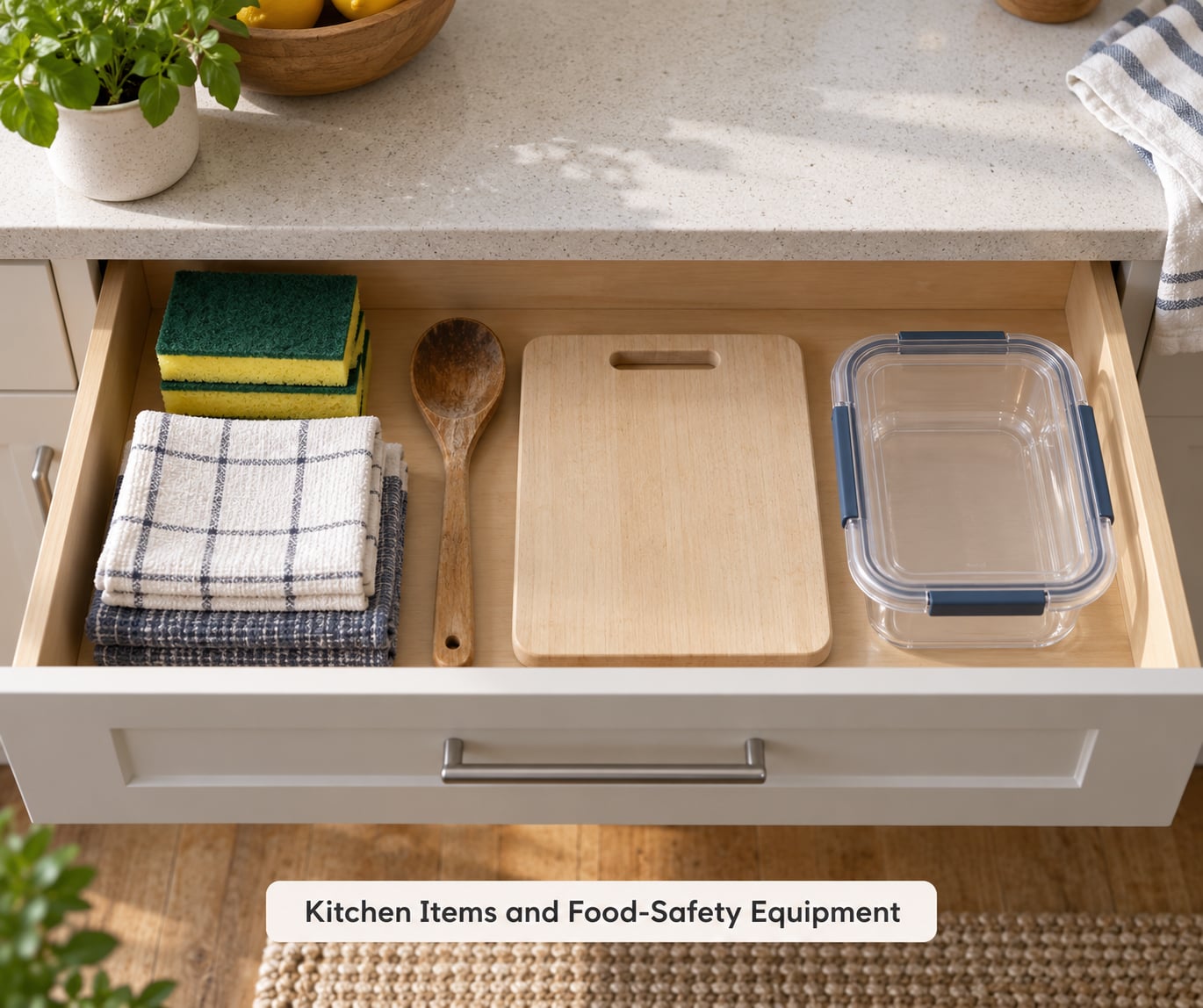
The kitchen is where most households are quietly guessing. A damp sponge that gets squeezed and dropped back on the sink edge every day is the single most-discussed everyday item online, and every source gives a different number, which is exactly why readers distrust the whole category.
My take, after arguing about it with more people than I would like to admit: a sponge gets about two weeks of daily use, and a silicone or mesh scrubber that dries properly gets several months. The deciding factor is not the calendar, it is whether the sponge dries out between uses. A sponge that stays damp overnight is a closed environment for bacteria. Microbe-killing sponges extend that window but do not make a wet sponge a permanent solution.
Kitchen consumables: sponges, towels, boards and utensils
Dish towels and cloth wipers rotate weekly. Grease sets into cotton and survives a normal wash, so towels that smell must be washed hot or retired, not merely wiped again.
Cutting boards vary by material. Plastic boards last about one to three years and should go the moment knife grooves turn deep enough to trap food. Wooden boards are gentler on knives and can last much longer, but once they crack, or one end thins from years on one side, they are done. Keep two boards, one for raw meat and one for everything else, and colour-code them so the habit sticks.
Wooden spoons, spatulas and rolling pins last two to three years on average. Warm water and a short soak clean them; the dishwasher dries the wood out, splits the grain and shortens the life. A split handle is the point of no return, because it can break into a pot.
Small appliances: coffee makers, toasters, blenders and microwaves
Small appliances wear out on their moving parts and their scale, and both are fixable before you buy anything. Coffee makers build a bitter coffee oils film in the carafe, the shower head and the tubing. Descaling every 3 to 6 months for a drip machine, more often in hard water areas, and running a vinegar cycle on the water reservoir keeps the taste right. A coffee maker that is only slow may just be full of scale. Descale first, replace second.
Blenders lose performance when the jar gasket and the drive coupling harden, which shows up as a jar that will not seat. Toasters, sandwich presses and air fryers give no service warning at all, so watch for scorch marks on the heating element, a smell that is not food, or a cord where the insulation is cracking. A toaster that sparks is an electrical hazard, and the safe move is to unplug it permanently rather than hunt for a replacement model.
Microwaves typically last around 10 years. Two specific signals mean the tube is going: a microwave that hums but no longer heats a glass of water, and one that sounds like lawn equipment when it runs. The magnetron is the expensive part, and a dead magnetron on a ten-year-old unit is usually the point where repair stops making sense.
Major appliances and food safety
Refrigerators are rated around 10 to 15 years. Keep an inexpensive thermometer in the coldest spot and check it monthly; anything that will not hold 40°F or below is a food safety problem, not an inconvenience, and it needs service or replacement. Dishwashers last about 10 years, and the single most useful thing you can do is clean the filter every 1 to 3 months, which takes about five minutes and avoids the most common repair bill.
Garbage disposals run roughly 10 to 12 years. They fail from grease and fibrous waste, and both are preventable by running cold water during the disposal and avoiding fibrous stalks. Sewage and drain lines in the sink cabinet are the item most renters forget: an opaque plastic drain that mingles for years is a leak waiting to happen, and it is cheap to replace.
Food storage containers get a lifespan people ignore. Plastic containers go translucent, stretchy or brittle and should be replaced, especially once they carry a scratchy or greasy smell. Rubber gaskets on lids are the part that dies first, and a gasket that no longer grips lets smells into the whole cabinet. Discard takeout containers, deli containers and any container you would not use for its original purpose.
Bathroom Items That Need Regular Replacement
How frequently should you replace towels? Every two years for hand and bath towels, and every 6 to 12 months for washcloths and face towels. The reason is structural: cotton fibres break down in the wash, the pile thins, and an old towel holds water instead of moving it. A towel that dries you slowly stays damp longer, which encourages the mildew smell that makes people buy new towels before they need to.
Replacing bath towels yearly is mostly a style habit. Replacing them the moment the edges go thin is a wear habit, and it is the better one. If the fabric is still plush and the edges are intact, keep using them.
Toothbrushes get replaced every 3 to 4 months, and after any illness, which is the advice the American Dental Association has repeated for years. The reason is bristle flare: once the bristles splay, they clean the gum line less well and trap more debris. Electric brush heads follow the same interval. A worn toothbrush is the clearest example on this list of an item that expires with no visible damage.
Razor blades last roughly 5 to 10 shaves for a good-quality blade, far less on tough stubble. A tugging blade is the signal, not a date, and after six months a sitting razor becomes a micro-safety problem: blades corrode at the base, and corrosion is what pulls and tears.
Shower poofs and loofahs go every 2 to 4 weeks. They are a lot of skin on a wet surface, and once they develop dark spots or a smell they cannot be rescued by a long soak. A washcloth rotating every 6 to 12 months covers the same ground with less to launder.
Toilet brushes get replaced every year, and the trigger is the brush itself, not the bowl. Bent or permanently clumped bristles stop reaching under the rim, which is the part that needs cleaning most. Keep one spare, because a toilet brush is exactly the thing you discover is finished when you cannot use it.
Bath mats are replaced every 2 to 3 years or when the rubber backing starts to crack and slide. A cracked backing cannot be mopped clean and it is a slip hazard in exactly the place a slip hurts most.
Shower heads last 2 to 5 years. Hard water deposits turn the nozzles into a white ring and cut flow, and silicone nozzles that have calcified will not clear with vinegar. Old rubber nozzles are worth checking first: replace the head or the nozzles, not the entire fixture.
Silicone caulk around tubs and showers needs replacing every 3 to 5 years. This one has a real consequence: caulk fails, water gets behind the wall, and mould grows in a cavity you cannot see. Replace the moment it cracks, peels or loses adhesion, and use a bath-grade silicone. Kitchen and bathroom caulk is not interchangeable. Grout, by contrast, is condition-based: crumbling grout and staining that will not scrub away are the reasons to touch it, not a calendar date.
Bedroom, Living Room, and Laundry Essentials
How often should you change bedroom furniture? For soft goods, think in years rather than a single lifespan, because a mattress is judged by how it feels at 6am. Most quality mattresses last 7 to 10 years, and cheaper ones less, and the National Sleep Foundation’s guidance is that a mattress should be replaced when a new one would make a measurable difference to how you sleep. Sags in the middle, surface sagging, or waking up stiff are the practical signals.
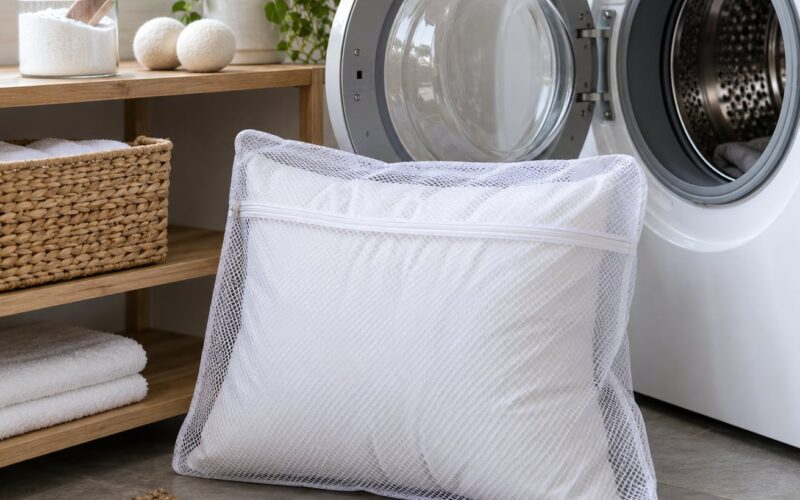
Pillows are the item with the most conflicting numbers in print, and that conflict exists because pillow quality varies so much. Memory foam, latex, feather and down all fail differently. Work the bounce test: fold the pillow in half and let it go. A pillow that does not spring back to its original height has lost its support, and dust mites and body oils are now part of the foam. Foam pillows tend to run 1 to 2 years, and good latex ones can run much longer. Replace on the test, not on the label.
Fitted sheets last 2 to 3 years, and a flat sheet gets the same interval unless it is a delicate fabric. Duvets and quilts run 5 to 10 years, with the tell being clumped filling you cannot redistribute by shaking it. Pillowcases rotate far more often than pillows, and 1 to 2 years is a good number for them.
Curtains and blinds get replaced every 5 to 7 years, driven by UV damage rather than wear. Look for faded colour along the top edge where sun hits hardest, and for fabric thin enough to see light through it. Curtains in a room with direct sun fail much sooner than those in a north-facing room. Rotate panels and curtains the way you rotate shoes.
Rugs last 5 to 10 years, and the walking line is the honest test. A rug in a busy hallway wears down the centre while the edges stay perfect, so a rug that looks fine on the border can be badly worn underfoot. Upholstered furniture is a 10 to 15 year category, and the usual reason to retire a sofa is a frame that creaks, cushions that stay flat, or arms thinned to the point the padding is showing through.
Laundry is a service-life conversation more than a replacement one. Washers and dryers are generally rated 10 to 15 years, and the things that end them early are drum bearings, a burning smell, and a machine that stops mid-cycle with water still in the drum. Clean the lint screen after every load and clear the dryer vent duct roughly once a year; that single habit accounts for a meaningful share of dryer longevity and reduces the fire risk that blocked vents create.
Vacuum filters are a consumable and get replaced every 3 to 12 months, or monthly in a home with pets, and most people never look at them. A filter packed with dust starves airflow, which makes the motor run hotter and the machine burn through more electricity. Vacuum bags are replaced when full, which is roughly every 4 to 6 bags. A carpet that is not coming clean is usually a full bag or a clogged filter rather than a dead vacuum.
Cleaning Tools and Everyday Maintenance Supplies
Cleaning tools fail quietly because they keep working badly. Mop heads go every 3 to 6 months for cotton, and every 6 to 12 months for microfiber, with a smell or a permanently greasy feel as the signal. Synthetic heads outlast cotton ones by a wide margin because they do not hold bacteria in the fibres the same way.
Broom heads last about 12 months, and bristles that flare or bend outward clean less with each pass. Dusting pads and microfiber cloths get replaced when they stop releasing dust, which for microfiber means when they feel smooth and grabby rather than loose. Washing them too hot and too often is what destroys microfiber. Warm water and a mild detergent, air dried, buys you months.
Dishwasher filters are the easiest money in the building. Cleaned every 1 to 3 months, a dishwasher that was leaving cloud on glass often stops doing it. A 1 inch piece of food in the spray arm is enough to undermine a whole cycle, and the arm unscrews by hand on most models.
Batteries are the quiet cause of a startling number of dead smoke detectors, key fobs and remotes. Replace them every 1 to 2 years, and set a reminder for the same month you test your detectors. Rechargeable batteries are not recommended for smoke detectors, because a battery that reaches the end of its charge may not warn you before it stops.
Surge protectors are replaced every 3 to 5 years, or immediately after any surge, and sooner if the protector has done its job and the reset button no longer holds. Clipped or pinched power strips and extension cords are not protectors at all, and a cord that is warm to the touch or shows discolouration at the plug should be unplugged and removed, not monitored.
The general rule for this category is a scent test. When a cleaning cloth, a mop head, a sponge or a trash can lid develops an odour that will not come out, the item is past its life no matter how recently you bought it. Odour is the most reliable expiry signal in a home, and it costs nothing to check.
HVAC, Water, and Safety Equipment
These two groups get lumped together and should not be, because one is a consumable and the other is a service call.
Consumable HVAC parts are filters. A furnace or air conditioning filter is replaced every 1 to 3 months, or per the unit’s own note, and a filter you can see dust on should come out regardless of age. A dirty filter is the most common cause of a furnace running constantly, it is the most common reason a summer air conditioner struggles, and it is the cheapest fix in the list. Never re-energise a system with a torn or waterlogged filter, and never touch a system with a wet filter.
Everything else in the mechanical room is serviced, not replaced on a schedule. Refrigerant lines, blower motors, condensate pans and the water softener resin tank all have service intervals, and the resin in a softener is replaced or re-salted during professional service rather than on a household calendar. The rule is simple: filters are yours, systems are not.
Big-ticket systems have useful lifespan ranges that rarely appear in household lists. Water heaters are commonly quoted at 8 to 12 years for a tank and 20 years or more for tankless. Furnaces are usually rated 13 to 15 years, and central air conditioning around 15 years. Read the efficiency label on your own equipment, because the SEER or efficiency rating often drops before the system fails outright, and a falling efficiency number is your earliest warning.
Smoke and carbon monoxide detectors are the non-negotiable row of the whole table. Smoke detector batteries go every year, detectors themselves every 10 years or on the printed date, and carbon monoxide detectors on the label’s date, which is often 5 to 7 years. The U.S. Fire Administration recommends testing detectors monthly and replacing the whole unit at the end of its listed life rather than trusting a fresh battery to revive an expired alarm. A chirping unit is not the alarm, it is the battery, and a unit that chirps constantly after a new battery has reached end of life.
Electrical, gas and structural work is where this guide ends and a licensed professional starts. Replacing a smoke detector on a hardwired ceiling is fine for most people. Opening a gas valve, rewiring a panel, cutting into a load-bearing wall, or touching a water heater flue is not. Follow the owner’s manual and the manufacturer’s specs, and call a pro.
How to Tell When an Item Should Be Replaced Early
Condition beats the calendar, every time. These are the signals worth checking when you walk through a room, and any one of them justifies replacing the item regardless of its age on your schedule.
- Odour that survives cleaning. A musty towel, a sponge, a mop head, a pillow or a trash can that reeks after a proper wash is carrying what the wash did not remove.
- Mould, or a surface that stays damp. Black grout lines, dark spots on a shower poof, a mildew ring under a bath mat, or a window sill that is wet in the morning.
- Cracks, splits and peeling. Caulk that has pulled away from the tub is a water intrusion problem. A spatula with a loose rivet is a small failure that becomes a dropped utensil.
- Fraying and thinning fabric. Towel edges, mattress piping, upholstery at the arms, and socks that have gone sheer at the heel.
- Rust and corrosion. Any rust on a blade, a hinge, a shelving bracket, or a battery compartment means water has been getting in.
- Failed parts. A drain that will not clear, a dishwasher that no longer dries, a dryer that takes two cycles for a load that used to take one.
- Performance drop. A refrigerator that will not hold 40°F, a furnace that runs constantly, a vacuum that leaves a line of debris.
- Overdue safety checks. A detector past its date, an expired fire extinguisher, or a surge protector that took a hit years ago and was never reset.
There is a ninth signal, and it is the one readers raise most often: something that still works but was never right for the job. Bent, mismatched or weak hangers get retired, and a dated, stained, ill-fitting item can be the honest reason to swap something out long before its lifespan ends. Aesthetic and organisational reasons count too.
Then there is the opposite error, and it is the one that wastes money: replacing items that are still good because a number on a website said so. A mattress that supports you well at 12 years does not need replacing at 7. A well-maintained, well-used item that beats its interval is a success, not a failure.
How to Make a Household Replacement Schedule
A schedule only works if it is short enough to keep. Five steps beat a 40-row spreadsheet every time.
1. Take a room-by-room inventory
Walk one room at a time and list the items you would not want to discover were failing: the smoke detectors, the fridge thermometer, the dryer vent, the shower caulk, the kitchen sponges. The best way to know your own schedule is to count your own usage over a month. Your kitchen does not have to match anyone else’s.
2. Record dates, and mark the items with no date
Write the purchase month on anything you own with a manual, a warranty card or an end-of-life date on the back. Anything without a date gets a test instead: the bounce test for pillows, the sniff test for cloths, the caulk check in the tub. Undated items are where nearly every household is overdue.
3. Prioritise by consequence, not by frequency
Sponge frequency is high and consequence low. Smoke detector battery frequency is once a year and consequence catastrophic. Sort your list into safety first, then high-use items you would notice missing, then appearance and comfort items, and set your effort to match. A family with a newborn reorders that list entirely, and a family with hard water and a shower full of limescale reorders a different part of it.
4. Repair before you replace, using the 50% rule
The widely used rule of thumb: if a repair estimate comes in under half the cost of a new unit, repair it. Above that, replace. Two other reasons are just as legitimate: the item has quit on you outright, or the repair has crept close enough to the price of new that the money is better spent elsewhere. A child’s use of a dresser is a reminder that the safety question can outrank the lifespan question, which is the whole argument of this section in one sentence.
Before you repair, check the item is still under warranty, and check that the part still exists. Neither takes long and both save a wasted afternoon.
5. Set calendar reminders you will actually see
One annual reminder for smoke detector batteries and the seasonal filter, one seasonal reset in spring and one in autumn, and a running list for weekly consumables. Most of the value here comes from the four recurring dates, not from a detailed list you abandon in March.
Frequently Asked Questions
Do I need to replace household items that still work?
Usually no. If an item performs properly, has no smell, no visible damage and no safety date expired, keep using it. Age alone is a weak reason to replace something, and swapping a well-functioning mattress or appliance early is the most common waste in a home. Replace on condition or on a deadline the manufacturer printed, not on a generic number from a website.
Should I repair an old appliance or replace it?
Use the 50% rule: if the repair estimate is under half the price of a new unit, repair it. Above that, replace. Also check whether the part is still made and whether a warranty is still active. A third reason to replace is efficiency: if a system or appliance has lost efficiency, the running cost can exceed the cost of a new one over several years.
What should be replaced in the house every year?
The annual list is short and worth memorising: smoke detector batteries, the test of every smoke and carbon monoxide detector, furnace or air conditioning filters, refrigerator water filters, dryer vent duct cleaning, and a look at caulk and grout in the bathroom. Batteries for remotes, sensors and flashlights fall into the one to two year bucket rather than the annual one.
What can renters keep in good shape but not replace?
Renters still own the consumables, so toothbrushes, sponges, towels, filters, batteries, caulk that is not permanently fixed, pillowcases and cleaning tools all apply exactly as they do for owners. Built-in fixtures, the water heater, the furnace, hardwired detectors and anything screwed into the structure usually belong to the landlord. Document the condition of those items in photos at move-in and flag problems early in writing.
What do I do after a leak, fire, or flood?
Replace anything soaked rather than drying it out. Carpet, drywall, insulation, mattresses and upholstered furniture that have taken on water usually grow mould inside the material where you cannot see it, and they are not safely salvageable. Dispose of porous items in bags, have a professional assess structural damage and any electrical or gas work, and check detectors and HVAC filters first, because those are the cheap items that get contaminated.
Conclusion
The rule that has held up best for me is simpler than any table: check safety equipment first, then anything visibly damaged, then the items you use every single day. Dates matter for consumables and for anything with a printed expiry. Condition matters for everything else, and it usually gets the final say.
If you do one thing after reading this, walk your home looking at three things. Test every smoke and carbon monoxide detector and note the date on the back. Check the caulk around your tub and shower. Throw out the sponge, the dish towels and the washcloths that have been in rotation too long. That is an hour, it costs almost nothing, and it closes most of the gap between what the schedule says and what your house is actually doing.