The fastest way to remove stains from a white shirt is to work on the spot before it dries: blot the excess, identify what caused it, apply a cleaner that targets that type of stain, then wash the shirt and air-dry it. Most fresh stains lift in about 15 minutes of active treatment.
White fabric has no colour to hide a mark, so a coffee ring or a yellow underarm patch shows immediately. That visibility is also what makes white shirts so satisfying to save — the same clean look comes back the moment the stain is gone.
Table of Contents
- 1What You Need
- 2Step-by-Step: How to Remove Stains from a White Shirt
- 3Identify the Stain and Check the Fabric Before You Touch It
- 4Work From the Outside Toward the Center
- 5Treat Fresh Stains Before Drying
- 6Choose a Treatment for the Stain Type
- 7Rinse, Wash, and Air-Dry to Check the Result
- 8Common Mistakes
- 9Frequently Asked Questions
- 10How do I get stains out of white clothes that have already been dried?
- 11Why won’t my yellow stains come out of my white shirt?
- 12Can I use dish soap to remove stains from a white shirt?
- 13Does hydrogen peroxide remove stains from a white shirt?
- 14Should I use hot or cold water to remove a stain?
- 15Is it worth dry cleaning an old stained white shirt?
- 16Conclusion
What You Need
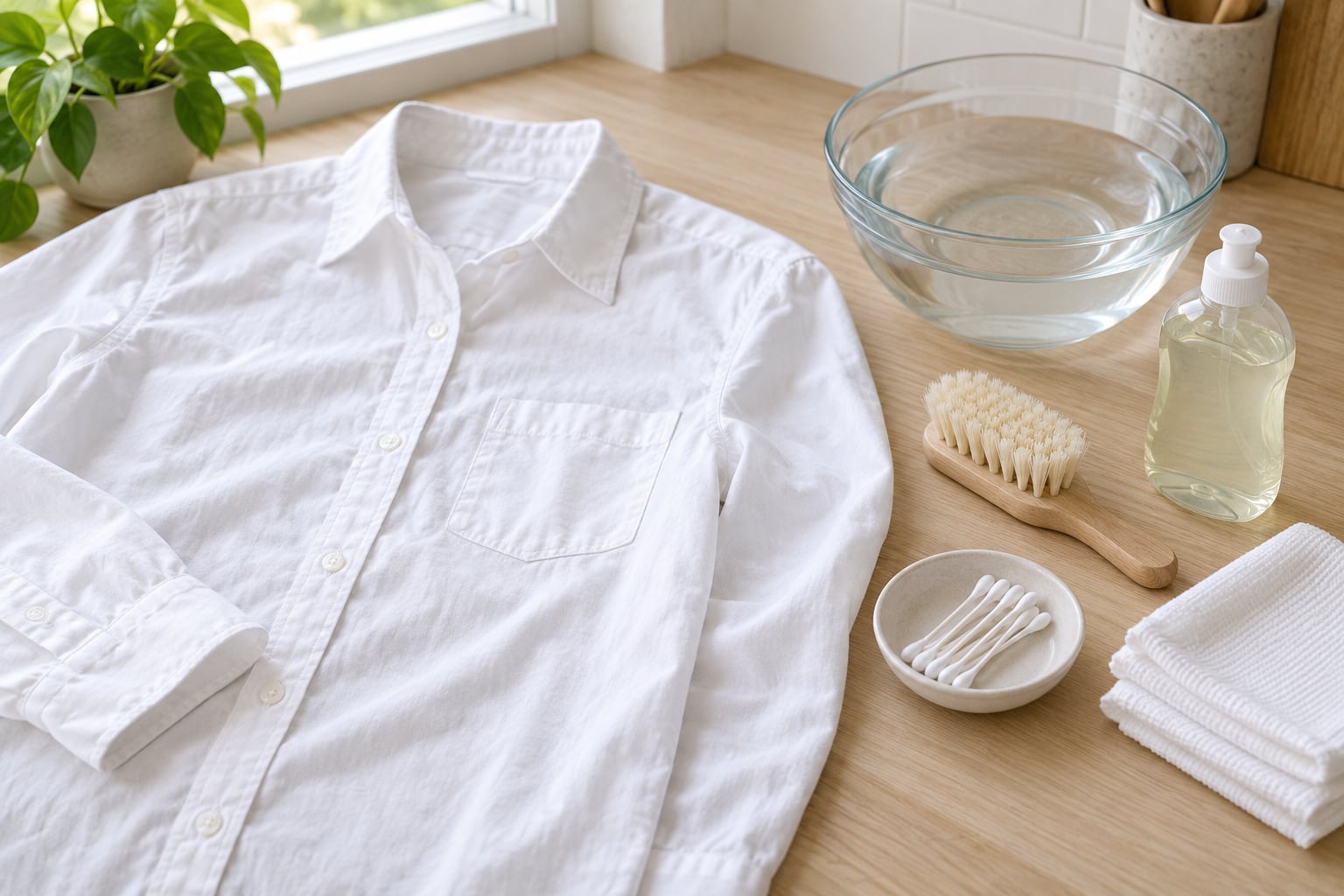
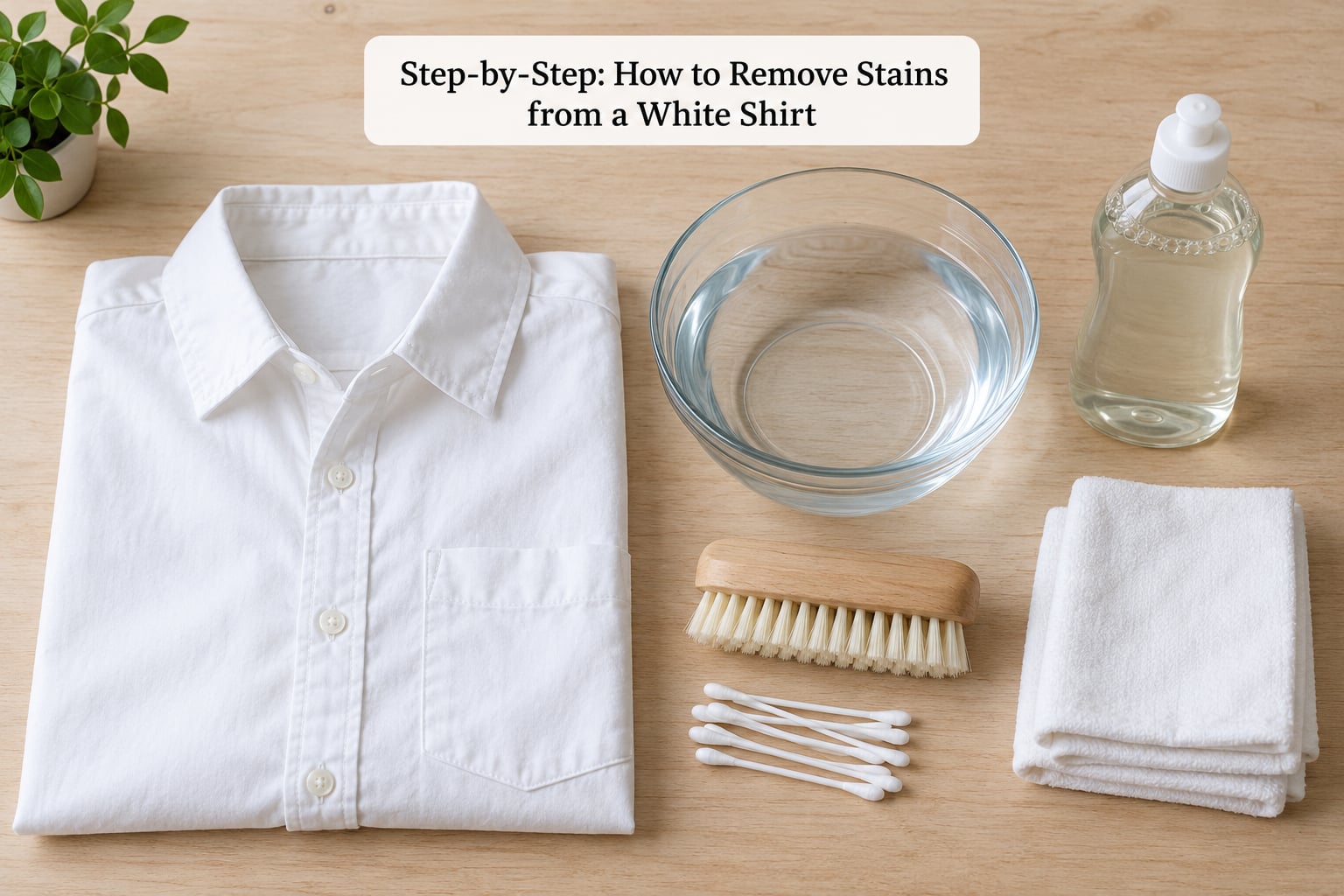
Gather these before you start. Nothing here is specialised, and most people already own all of it.
- Cool or lukewarm water, plus a sink or basin
- Plain laundry detergent or dish soap
- White cloth or paper towel for blotting
- Cotton swabs and a soft brush for small or detailed areas
- White vinegar, baking soda, or 3% hydrogen peroxide for stain-specific work
- An enzyme-based laundry detergent for protein stains like blood and sweat
Two checks come before any product. Read the care label to confirm the shirt can be wet and what temperature it tolerates. Then dab the treatment onto a hidden seam, wait a few minutes, and see whether the colour or fabric reacts.
Step-by-Step: How to Remove Stains from a White Shirt
Follow the order below rather than jumping straight to a stronger product. Each step is cheap, and skipping ahead is what usually ends with a damaged shirt.
Identify the Stain and Check the Fabric Before You Touch It
Ask what made the mark before asking how to remove it. Water-based stains — coffee, tea, juice, wine — spread through damp fibres and respond to rinsing and detergent. Protein-based stains such as blood, egg, and sweat set into the fibre with any heat and want cold water and an enzyme cleaner.
Oily stains like grease, makeup, and balm need a surfactant to loosen them before water can do anything. Dye stains, including ink, rust, and berry, are their own category and rarely respond to the same treatment as food.
Work From the Outside Toward the Center
Turn the shirt inside out and place a clean white cloth beneath the stain. Dab from the outer edge inward with a damp cloth or cotton swab, dabbing rather than scrubbing. Rubbing drives the stain deeper into the weave and spreads it across clean fabric.
Change the cloth as soon as it picks up colour. If the mark is thick — dried food, a lipstick print, a wax spot — lift what you can gently with a spoon or a dull edge before wetting anything.
Treat Fresh Stains Before Drying
Apply a treatment directly to the damp spot, then let it sit so it can work on the fibres. Give dish soap 5 to 10 minutes, baking soda paste 15 minutes, and hydrogen peroxide 10 to 20 minutes. For stubborn sweat or oil marks, an overnight soak in cool water with detergent is more effective than any short application.
Never put a stained shirt in the dryer or iron it while the mark is still visible. Heat reacts with most stains and locks them into the fibre, which turns a fixable problem into a permanent one.
Choose a Treatment for the Stain Type
Here is the ladder that works for the stains people actually deal with on white shirts.
- Food and drink: flush with cool water from the back of the fabric, then work liquid detergent into the spot and soak for 10 minutes before washing.
- Oil, grease and makeup: work a small amount of dish soap into the dry or damp spot, let it sit 10 minutes, then rinse and repeat if a shadow remains.
- Sweat and deodorant yellowing: make a paste of baking soda and a little water, spread it over the area, let it dry, brush off, then treat any remaining mark with 3% hydrogen peroxide.
- Blood: use cold water only, and an enzyme detergent if you have one. Hot water sets blood protein into the fibre.
- Grass: flush from the back with cold water, then blot with rubbing alcohol or a little dish soap.
- Wine, berry and dye transfer: blot with a cloth soaked in white vinegar, then flush with cold water and wash with detergent.
Never combine chlorine bleach with vinegar, ammonia, or hydrogen peroxide. The mixture releases gas and the heat can scorch or thin the fabric.
Rinse, Wash, and Air-Dry to Check the Result
Rinse the treated area thoroughly with cool water, then wash the shirt as the care label directs, adding the stain remover to the machine as well. Air-dry in shade with the shirt spread out rather than bundled, and check the area under good light once it is fully dry.
A faint shadow that is invisible when wet often disappears when the shirt is dry. If a mark is still there, treat it again and this time soak the whole garment rather than spot-treating — repeat treatments with the right product do work on old marks that one application could not shift.
Common Mistakes
- Using hot water first. Heat sets protein and dye stains. Start cool and only move warmer for oily marks.
- Scrubbing hard. Aggressive scrubbing damages fibres and spreads the stain. Blot and let the product do the work.
- Drying before the stain is gone. A dryer cycle or a hot iron can make a treatable stain permanent.
- Pouring bleach straight onto the fabric. Undiluted chlorine bleach removes colour unevenly and weakens cotton. Use oxygen bleach on all-over whitening and follow the dilution on the label.
- Mixing cleaning products. Bleach plus vinegar, bleach plus ammonia, or bleach plus hydrogen peroxide is a real safety risk. Apply one treatment at a time and rinse fully between steps.
Two habits make most of this unnecessary. Wash whites separately from colours, and take shirts off within a few hours of wearing them so body oils and sweat never dry into the fabric. A spray of diluted oxygen bleach in the wash every week or two keeps collars and cuffs from turning grey.
Frequently Asked Questions
How do I get stains out of white clothes that have already been dried?
A dried stain can usually still be reduced, but it needs a soak rather than a quick rub. Wet the garment, apply detergent or the treatment matched to that stain, and let the whole shirt soak for a few hours or overnight. Rinse, wash as the label allows, and air-dry in shade. Heat-set marks from a dryer need two or three repeats before you can judge the result.
Why won’t my yellow stains come out of my white shirt?
Yellow that returns after washing is usually not the shirt. Aluminium-based deodorant reacts with sweat to leave a yellow film that survives normal detergent, and a washer with a rust spot deposits small yellow-brown marks that never wash out. Clean the underarm with a baking soda paste and 3% hydrogen peroxide, then check the inside of the drum and the rubber seals for rust.
Can I use dish soap to remove stains from a white shirt?
Yes. Dish soap is built to break grease and oil, which makes it a solid first step for makeup, cooking oil, butter, and salad dressing. Apply a small amount directly to the damp spot, let it sit for 5 to 10 minutes, then rinse with cool water and wash normally. It will not lift protein or dye stains such as blood, grass, or wine.
Does hydrogen peroxide remove stains from a white shirt?
It does, on most whites. Use the 3% solution from a pharmacy rather than the stronger industrial strengths, apply it with a cotton swab or cloth, and allow 10 to 20 minutes before rinsing. It oxidises organic stains including blood, grass, wine, chocolate, and sweat yellowing. Skip it on silk and wool, and patch-test first because it can weaken fabric with repeated soaking.
Should I use hot or cold water to remove a stain?
Cold water first, almost always. Heat sets protein stains such as blood, egg, and sweat, and it drives fresh dye and tannin marks deeper into the fibre. Warm water is useful only for oily and greasy marks, and use the warmest temperature the care label allows for the final wash. If you remember nothing else, start cool and change later if the mark is not lifting.
Is it worth dry cleaning an old stained white shirt?
For silk, wool, viscose, or anything labelled dry clean only, yes — home treatment can shrink or spot a garment that a professional can handle. For cotton or polyester with heavy yellowing, a specialist laundry is more likely to succeed than a general dry cleaner. If you have already rewashed the shirt several times with no change, the mark may be permanent and the fee is better spent elsewhere.
Conclusion
Check the care label, identify the stain, and treat it while it is still damp. That sequence — blot, target, rinse, air-dry in shade — handles most of what lands on a white shirt, and it costs about ten minutes.
Give a stubborn mark two full treatment cycles before you decide it is finished, and never mix bleach with vinegar, ammonia, or hydrogen peroxide. For silk, wool, or anything marked dry clean only, hand the shirt to a professional rather than guessing.