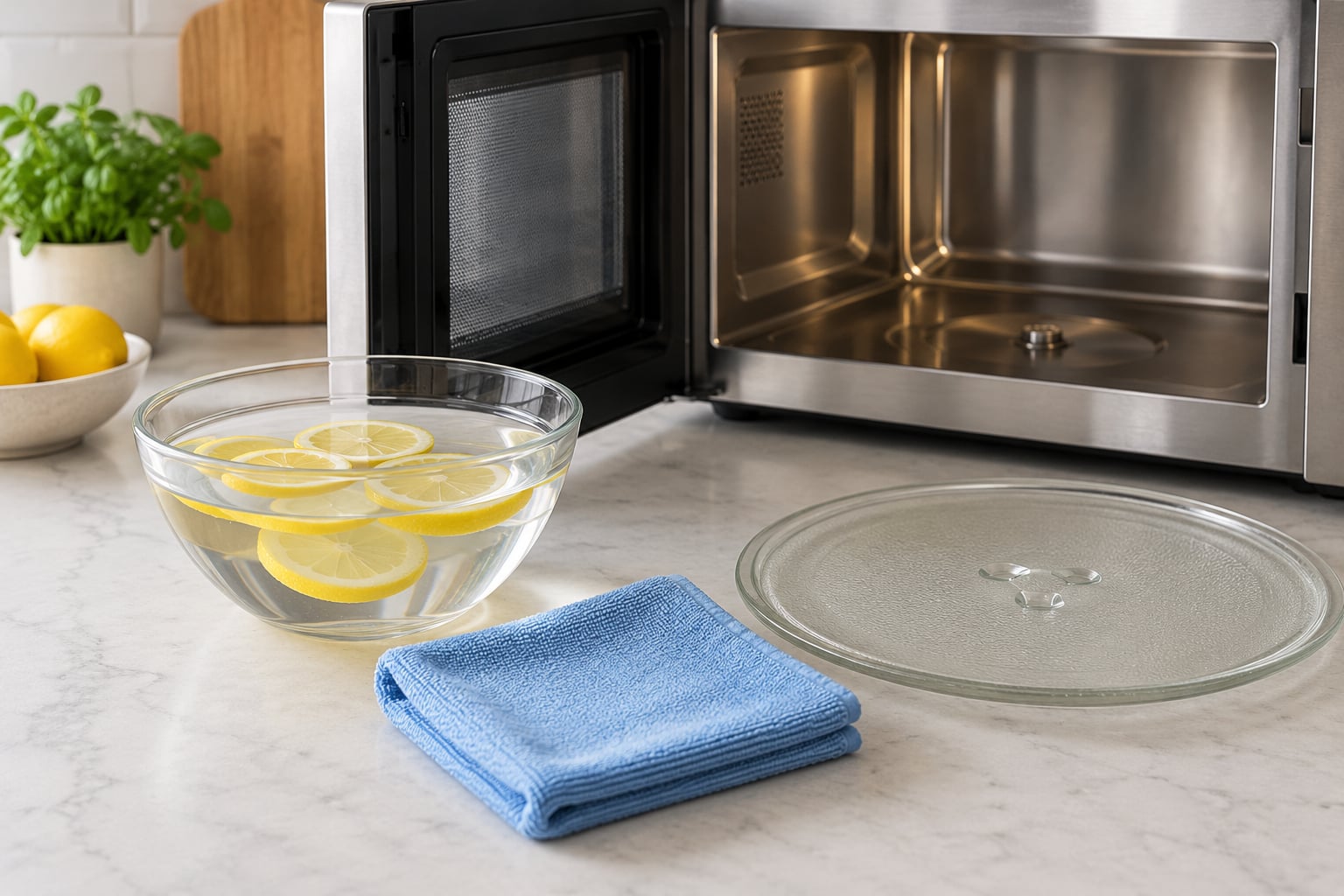
Clean a microwave with no harsh chemicals by using steam and one mild pantry staple. Heat a cup of water with a tablespoon of white vinegar in a microwave-safe bowl for two minutes, leave the door closed for two more so the steam soaks, then wipe the softened grease away with a damp cloth. The whole job takes about ten minutes.
That works because heat turns liquid into steam, and steam re-softens grease that has already hardened onto the walls. The vinegar or lemon supplies a mild acid, or baking soda supplies a mild alkaline, and either one loosens grease a cloth can lift instead of one you have to scrub at.
Here is what a harsh chemical means in a microwave, what to gather, and the whole process from prep to dry.
Table of Contents
- 1What You Need
- 2Step-by-Step
- 31. Prepare the Microwave Safely
- 42. Loosen Grease and Dried Food
- 53. Wipe the Interior Clean
- 64. Clean the Door, Seal, and Exterior
- 75. Dry and Check the Result
- 8Common Mistakes
- 9Frequently Asked Questions
- 10Can I clean a microwave with baking soda instead of harsh chemicals?
- 11What is the safest way to clean the inside of a microwave?
- 12How long should I heat water or vinegar to loosen microwave grease?
- 13How do I remove bad odors from a microwave without chemicals?
- 14Can I clean the microwave door and exterior with the same solution?
- 15How often should I deep-clean a microwave?
What You Need
A harsh chemical is a cleaner built around bleach, ammonia, quats, phosphates, or aerosol propellants. Those work, but the microwave interior is a food-contact surface, and film left behind gets reheated with every meal. Steam, dish soap, vinegar, lemon, and baking soda do the same job with ingredients you already eat.
- A microwave-safe bowl, wide enough that the steam does not press against the door seal. Glass or ceramic is the safe default. No container with a metal rim or trim.
- About one cup of water, plus one tablespoon of white vinegar, the juice of half a lemon, or one teaspoon of dish soap. Pick one, not all three.
- A teaspoon of baking soda for the dry paste, if you want to scrub anything the steam did not shift.
- A microfiber cloth or a damp paper towel for wiping, and a soft sponge for stubborn spots.
- A nylon brush or an old credit card for baked-on grease that has hardened into a crust.
- Rubber gloves if your hands are sensitive to hot water or dish soap.
Dish soap is the surfactant in this lineup. It is what makes plain steam more effective on grease, and a few drops in a bowl of water is enough. Skip the detergent that leaves a heavy fragrance if anyone in the house reacts to scents.
Step-by-Step
1. Prepare the Microwave Safely
Remove every bit of food first, including the paper liner and anything baked onto the glass plate. Take out the turntable and the roller ring underneath it so you can reach the floor of the cavity.
Run a dry paper towel or a stiff cloth around the interior to pick up crumbs and loose flakes. Lifting the big pieces out first means you are not trying to steam a chunk of dried rice into a wall.
Check for sharp fragments before you touch anything metal against the enamel. If the microwave has a control lock, engage it if your model uses one during cleaning. Wipe the outside with a damp cloth before you unplug it, since water running down into the casing is the one real damage risk in this job.
2. Loosen Grease and Dried Food
Fill the microwave-safe bowl with one cup of water and stir in one tablespoon of white vinegar, or squeeze in half a lemon, or add a few drops of dish soap. Cover it loosely if you have a microwave-safe plate or a piece of parchment.
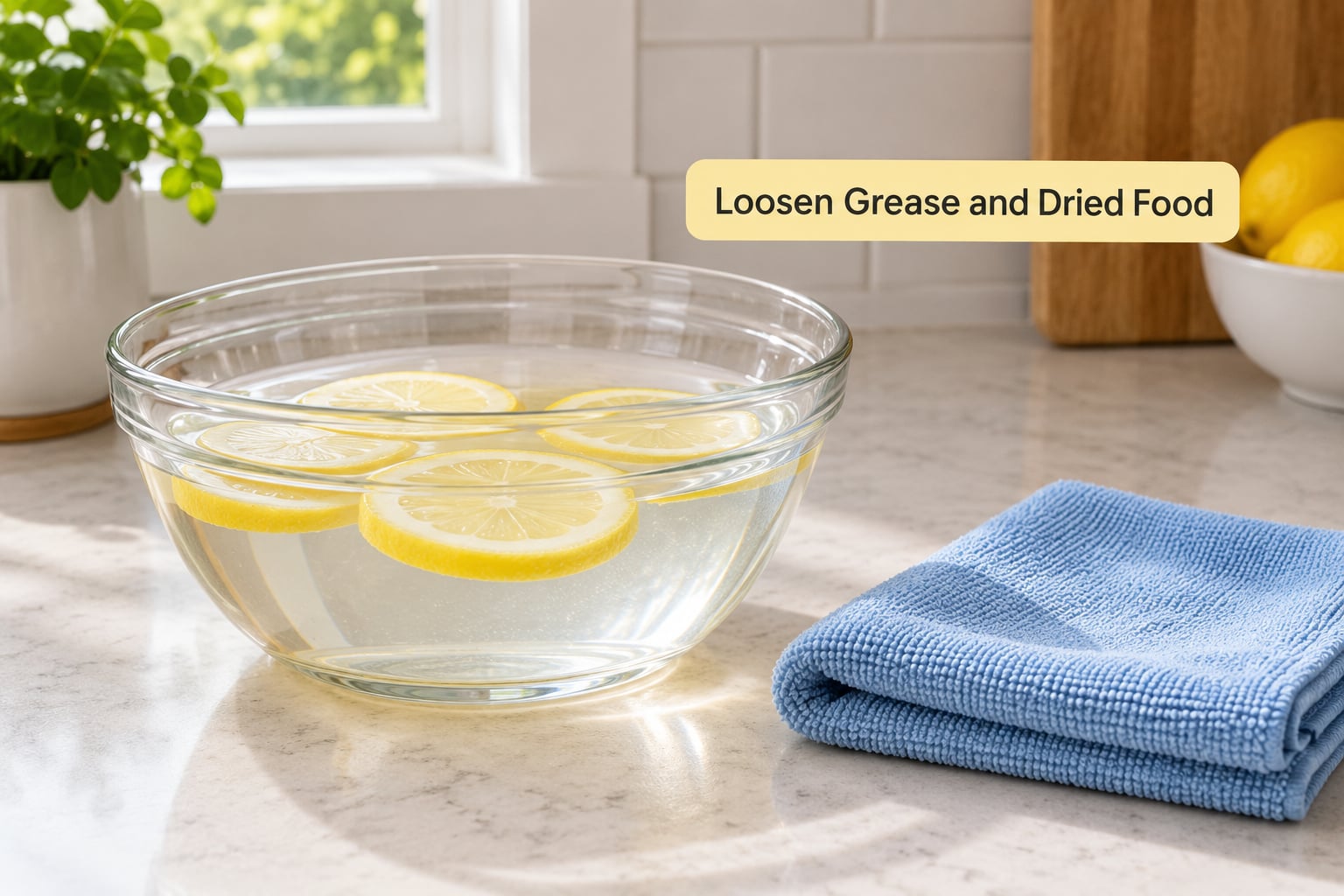
Heat it for two minutes on full power, then leave the door shut for two to three more minutes before you touch anything. That closed-door rest is the step people skip, and it is where most of the loosening happens.
Timing depends on your wattage. Heat for one minute at 1200W, ninety seconds at 1000W, and two full minutes at 700W. If the microwave is running hard, or you feel nervous about the bowl, start half that and repeat. Nobody wants to learn the limits of their appliance the expensive way.
Careful: the bowl and the steam are hotter than you expect, and water that has superheated can spit when you move it. Set it down with an oven mitt and let it sit ten seconds before you lift it.
3. Wipe the Interior Clean
Dip a microfiber cloth into the hot water in the bowl, wring it out so it is damp rather than dripping, and wipe. Start at the top and work down, since heat rises and the ceiling wall collects the most airborne grease.
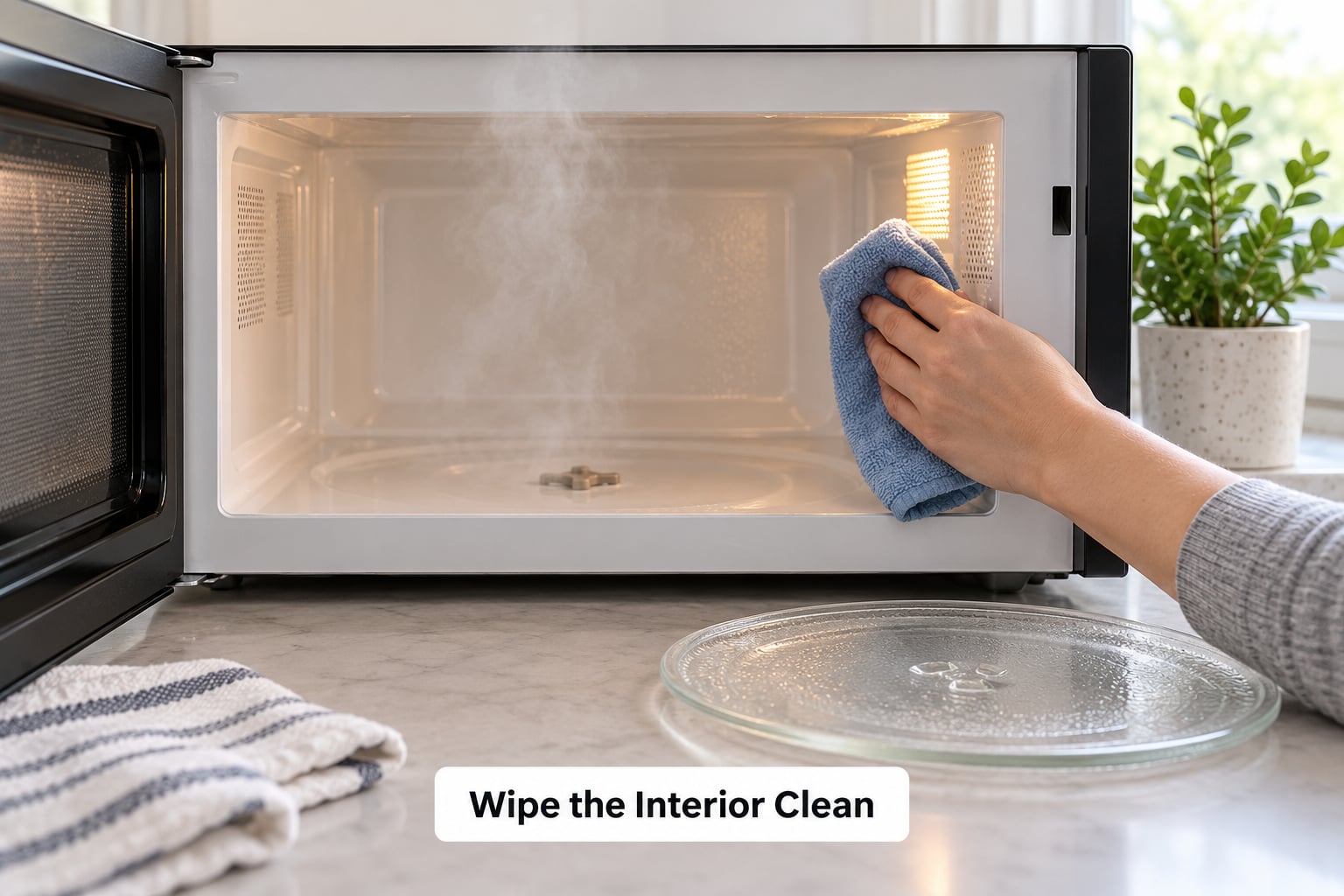
The cloth should come away greasy on the first pass and clean on the second. Most splatter comes off with nothing more than hot water and pressure from the cloth. What is left is the film baked on by heat, and that is what the vinegar or lemon is for.
Get into the corners and the seam where the floor meets the wall. A nylon brush or the corner of a damp cloth wrapped around an old credit card will lift a hardened crust that a sponge just slides over. Households that share the tip of scraping first and steaming second usually finish in one pass.
For a spot that is still there, make a paste of one teaspoon of baking soda and a little water. Spread it on, wait five minutes, then wipe with a damp cloth and go over it once more with clear water. Leaving dry baking soda sitting on enamel is how it cakes into a chalky patch you then have to scrub off, which is the opposite of what you wanted.
4. Clean the Door, Seal, and Exterior
The door glass has a light seal around its inner edge, and that seal is where microwave smells park. Open the door and wipe the inner glass, the seal, and the recessed lip with a damp cloth and a drop of dish soap. Work the cloth along the seal groove rather than across it.
Never spray a cleaner directly onto the door, the panel, or the vents. Liquid runs under the trim and toward controls, and on some models it reaches the circuitry. Spray the cloth, not the microwave.
For the exterior, follow the surface. Stainless steel has a brushed grain, so wipe with the grain using a microfiber cloth dampened with water and one drop of dish soap, and dry right away to avoid streaks. Painted panels and plastic trim want the same damp cloth, and glass doors with a printed face should stay dry-wiped so the print does not haze.
If yours is an over-the-range model, the charcoal filter behind the grille does its own job of trapping grease. Check it every few months and replace it when it feels greasy rather than trying to wash it.
5. Dry and Check the Result
Leave the door open for a few minutes so the cavity dries out, then wipe the floor and the turntable separately. Put the roller ring and the glass plate back in once everything is cool and dry. A damp plate on the roller can wobble and crack under heat.
Turn the light on and look for a cloudy film on the enamel, especially along the ceiling. If you can see a haze, another pass with clear water fixes it. Rub a clean dry cloth over the wall and any grease that transfers means it is not done yet.
Smell is the last check. If food still carries an odor, run the steam bath again with a cup of water and a tablespoon of vinegar, and leave it closed for a full five minutes this time. Repeat once more for burnt popcorn, which usually needs two rounds.
Common Mistakes
Using an abrasive pad or powder. Comet, steel wool, and the green scrub pads scratch enamel and the coating on the glass plate. Those scratches hold grease later. Use a non-abrasive sponge and let the steam do the breaking instead.
Spraying straight into the microwave. Anything you spray near the door, the vents, or the keypad can run under the trim. Put your solution in a bowl, or wet the cloth and wring it out.
Skipping the turntable, roller ring, and filter. The glass plate holds a ring of grease that reheats every time you use the microwave. Lift it out and wash it warm, not cold, because a plate that has just come out of the oven can crack under a temperature shock.
Mixing cleaners. Bleach with vinegar releases a gas that is genuinely unpleasant to breathe, and bleach with ammonia makes something worse. If you have used a chemical cleaner, rinse the interior with a damp cloth and let it air out before anything else goes in.
Skipping the door-closed rest. Opening the door the second the timer stops throws away the steam that was still working. Two to three minutes of closed door is the cheapest part of the job and the part that decides whether you scrub.
Leaving baking soda behind. This one gets reported a lot. If the paste dries to a chalky crust instead of coming off with the damp cloth, go over it again with clear water and dry it.
A few habits keep the deep clean rare. Cover food with a vented lid or a paper plate so splatter never reaches the walls. Wipe the interior with a damp cloth once a week, or any time you notice grease. And run the steam bath as a deep clean every two to three weeks, or right after you cook something greasy like bacon or fish.
Frequently Asked Questions
Can I clean a microwave with baking soda instead of harsh chemicals?
Yes. Baking soda is a mild alkaline, which makes it good at lifting grease film once the steam has softened it. Mix one teaspoon with just enough water to make a paste, spread it on the greasy spot, wait about five minutes, then wipe with a damp cloth and a second pass with clear water. Always get the residue fully off, since dried baking soda can cake onto the enamel.
What is the safest way to clean the inside of a microwave?
Steam plus one mild ingredient, wiped with a damp cloth, is the safest route. Put a cup of water with a tablespoon of white vinegar or a few drops of dish soap in a microwave-safe bowl, heat two minutes, let it sit closed two minutes more, then wipe. Avoid bleach, ammonia, aerosol sprays, and abrasive powders, and never spray liquid directly onto the door, vents, or control panel.
How long should I heat water or vinegar to loosen microwave grease?
Heat one cup of water with your cleaning ingredient for one minute at 1200W, ninety seconds at 1000W, or two minutes at 700W, then leave the door closed for another two to three minutes. The dwell time matters as much as the heating. If grease is heavy, repeat the bath once rather than reaching for a harsher product.
How do I remove bad odors from a microwave without chemicals?
Heat a cup of water with a tablespoon of white vinegar for two minutes and leave the cavity closed for a full five minutes before opening. Repeat for stubborn smells such as burnt popcorn, which usually needs two rounds. Wipe the door seal and the vent grille afterwards, since odor molecules settle there. A lemon peel in the water adds scent without adding any cleaner.
Can I clean the microwave door and exterior with the same solution?
Mostly yes, but apply it to the cloth rather than the microwave. Wipe the inner door glass and the seal with the hot soapy water from the bowl, then dampen a fresh cloth for the control panel and exterior. Stainless steel should be wiped with the grain and dried immediately. Keep liquid out of the vents and off the door trim.
How often should I deep-clean a microwave?
Give it a full steam bath every two to three weeks, and immediately after cooking something greasy or after a spill. A quick wipe of the walls with a damp cloth once a week keeps most of the build-up from ever forming. If you notice a haze on the enamel or grease on the turntable edge, do not wait for a schedule, clean it that day.
Start tonight with the steam-only version: a cup of water, two minutes, three minutes of closed door, one cloth. Add the vinegar or the lemon once you decide you like the smell, and you have a clean interior without anything from the cleaning aisle.