Fruit flies show up because something in your kitchen is quietly fermenting — an overripe banana, a trash can with fruit scraps, or the slime in a sink drain. To get rid of fruit flies in the kitchen for good you need to do two things at once: kill the adults you can see and destroy the place where new ones are hatching. A trap on its own just collects flies until the supply refills.
The active work takes about an hour, spread across an afternoon. Seeing the last of them takes longer, usually one to two weeks, because eggs laid in produce and drain grime keep hatching after the adults are gone. Nobody clears a kitchen in a single evening, and anyone who promises otherwise is selling something.
Here is the order I would do it in, with the checks that tell you whether each step is actually working.
Table of Contents
- 1What You Need
- 2Step-by-Step
- 31. Remove and Cover Exposed Food
- 42. Clean Surfaces, Spills, and Trash Areas
- 53. Clean the Sink Drain and Standing Water
- 64. Use Traps or a Targeted Bait
- 75. Seal Entry Points and Prevent a Return
- 8Common Mistakes
- 9Frequently Asked Questions
- 10How long does it take to get rid of fruit flies in the kitchen?
- 11Where are fruit flies coming from in my kitchen?
- 12Are fruit flies a sign of a serious problem in my home?
- 13Do fruit-fly traps actually work?
- 14Can I use apple-cider vinegar to get rid of fruit flies?
- 15How do I stop fruit flies from coming back?
- 16Conclusion
What You Need
Gather everything before you start, because most failed cleanups fail halfway through with no dish soap in the house. Nothing here is specialized equipment.
- Airtight containers — glass or plastic with snap lids, for leftovers, cut fruit and open bottles
- Small refrigerator space — for ripe fruit you intend to eat in the next day or two
- Dish soap — any kind; a couple of drops is what breaks the surface tension on the bait
- Apple cider vinegar — or red wine vinegar, white balsamic, leftover red wine or beer as a substitute
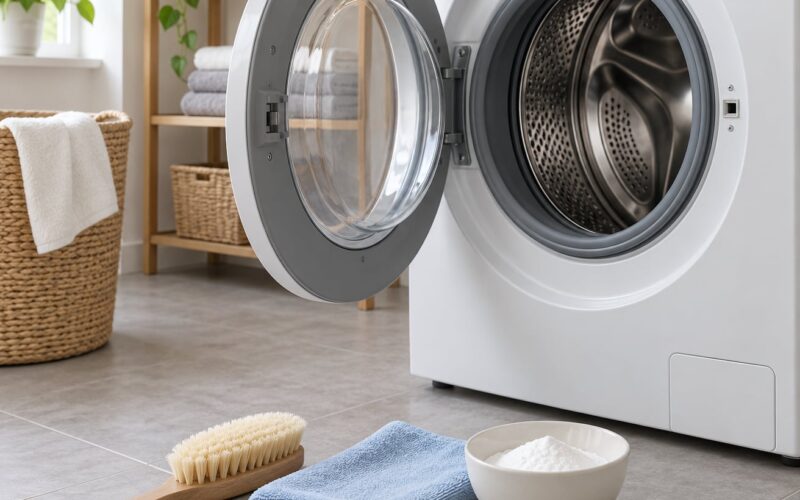
- Baking soda and white vinegar — for the drain treatment, plus a kettle for boiling water
- Old toothbrush or small scrub brush — the biofilm in a drain sits in the rim and the small holes around it
- A paper funnel, or plastic wrap and a rubber band — the cover for your trap
- All-purpose cleaner, a cloth and paper towels — for counters, stovetop, sink and appliance fronts
- Window mesh, weatherstrip or clear caulk — for closing entry points
- A flashlight and, if the swarm is heavy, a vacuum with a hose — to find breeding sites you cannot see and to knock down a dense cloud fast
A store-bought trap works fine for step four if you would rather not assemble one, though the jar method costs nothing and you control the bait.
Step-by-Step
Work top to bottom. Each step removes a food source, and each one makes the next step work better because there is less to attract flies in the first place.
1. Remove and Cover Exposed Food
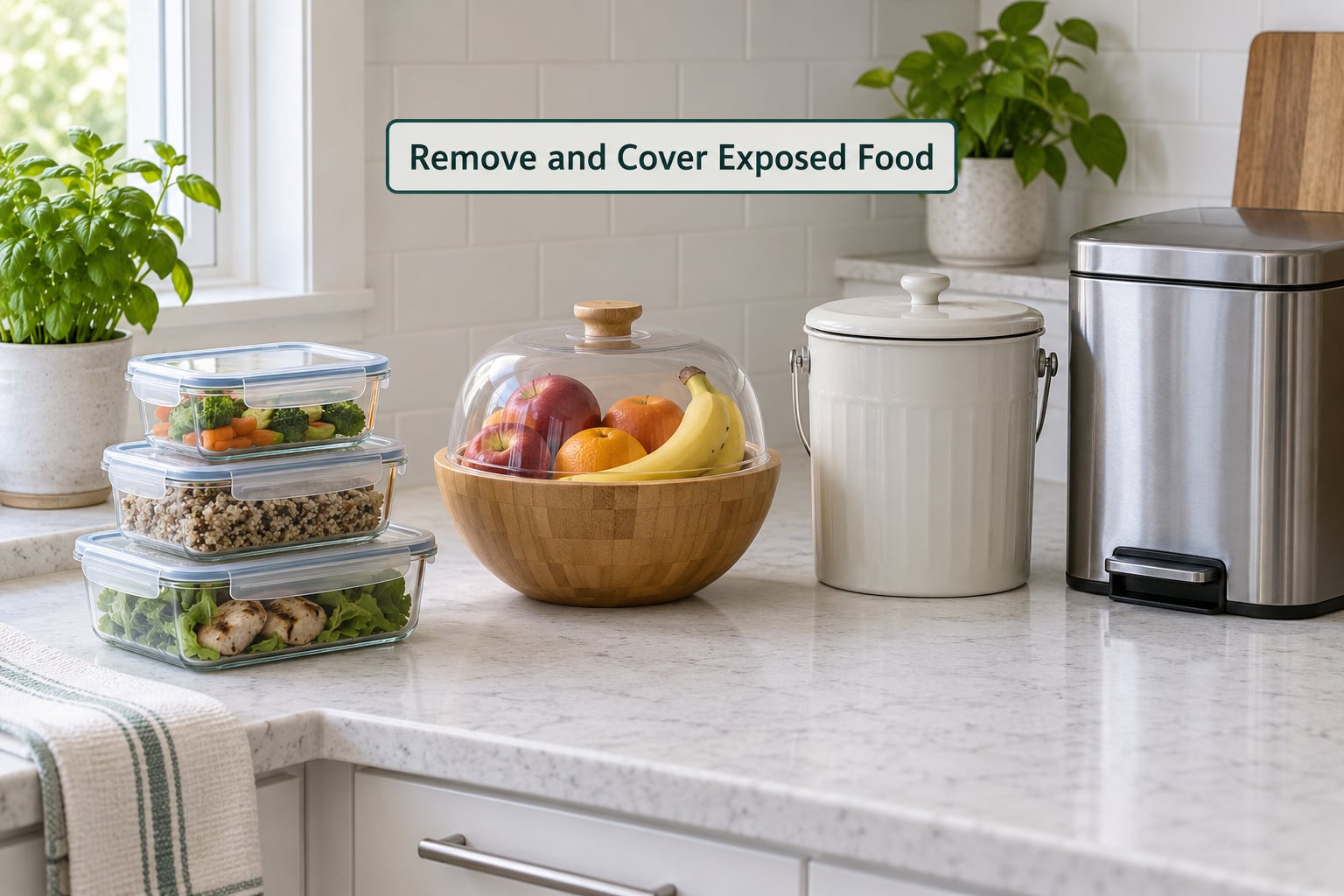
Start by throwing out anything soft, bruised or fermenting. Overripe stone fruit, soft berries, banana peels and anything that has gone past the smell stage go into a bag that ties shut and goes outside, not into the kitchen trash can.
Move the rest off the counter. Fruit that you will eat within a day or two can stay out, covered or in a bowl with a lid. Everything else goes in the refrigerator, in a container that closes. That includes cut fruit, open wine, juice, leftover sauce and any bowl of leftovers under a plate, which is a plate with a very loose cover.
Handle compost and trash next. An indoor compost bin needs a lid that actually latches, and if you cannot get a lid on it, move it outside for a week. Take the kitchen trash out every day until the flies thin out, and check the recycling bin too, because a juice carton or a beer bottle can hold enough sweet residue to raise a small population on its own.
How to tell it is working: within a day, the counter looks boring and the fruit bowl is not moving. If flies keep appearing in the same spot, that spot is the source and you have not removed it yet.
2. Clean Surfaces, Spills, and Trash Areas
Fruit flies can smell a thin film you cannot see. Wipe down the counters, stovetop, backsplash, sink rim and the outside of any appliance that takes a plate or a bowl, including the microwave door and the dishwasher front.
Pay attention to sticky spots specifically: drips under the fruit bowl, syrup near the coffee station, sugar near the toaster, juice splashes on the fridge handle. A dry cloth does nothing on a sugary smear. Use warm water with a drop of dish soap first, then a clean damp cloth to remove the soap film, then dry.
Empty the trash and the recycling bin, take the liners out, and wipe the bin rims and the floor around them. If your trash can has a pedal, the pedal and the lid hinge collect residue that a liner never catches.
Empty and wash any wine bottle, beer can or juice bottle that is sitting open in the sink. Rinse it, or cap it and put it in the recycling immediately.
How to tell it is working: sticky surfaces should be invisible and your cloth should come out clean. If the cloth comes back greasy, there is another source nearby.
3. Clean the Sink Drain and Standing Water
The sink drain is the single most overlooked breeding site, and it is the reason a lot of clean kitchens stay infested. That black film in the drain trap is organic matter holding moisture, which is exactly what a female fruit fly needs to lay eggs in.
Remove the drain stopper and scrub the grate and the rim around it with an old toothbrush and dish soap. Pull out whatever gunk you can reach. Then run the disposal briefly with ice cubes followed by hot water, which loosens larvae and sends them down the line.
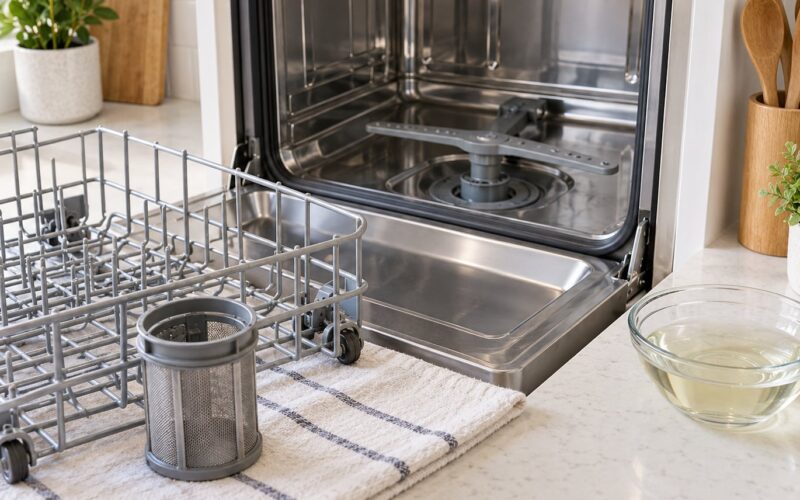
For the pipe itself, use the classic sequence: half a cup of baking soda down the drain, then a cup of white vinegar. Let it sit for fifteen minutes, then pour a kettle of boiling water down to flush the loosened film. Do this on every sink in the house, plus the dishwasher door edges and the small drip tray, which is a warm, wet, enclosed space that fruit flies find easily.
Check for standing water in a few places people forget: a dry flower vase on the dining table, a bottle cap or pet water bowl, and the groove where the sink meets the backsplash.
How to tell it is working: the drain should smell neutral rather than sour, and there should be no visible film on the grate. If the smell comes back within days, something is feeding the drain from upstream — usually a disposal fed with food scraps.
4. Use Traps or a Targeted Bait
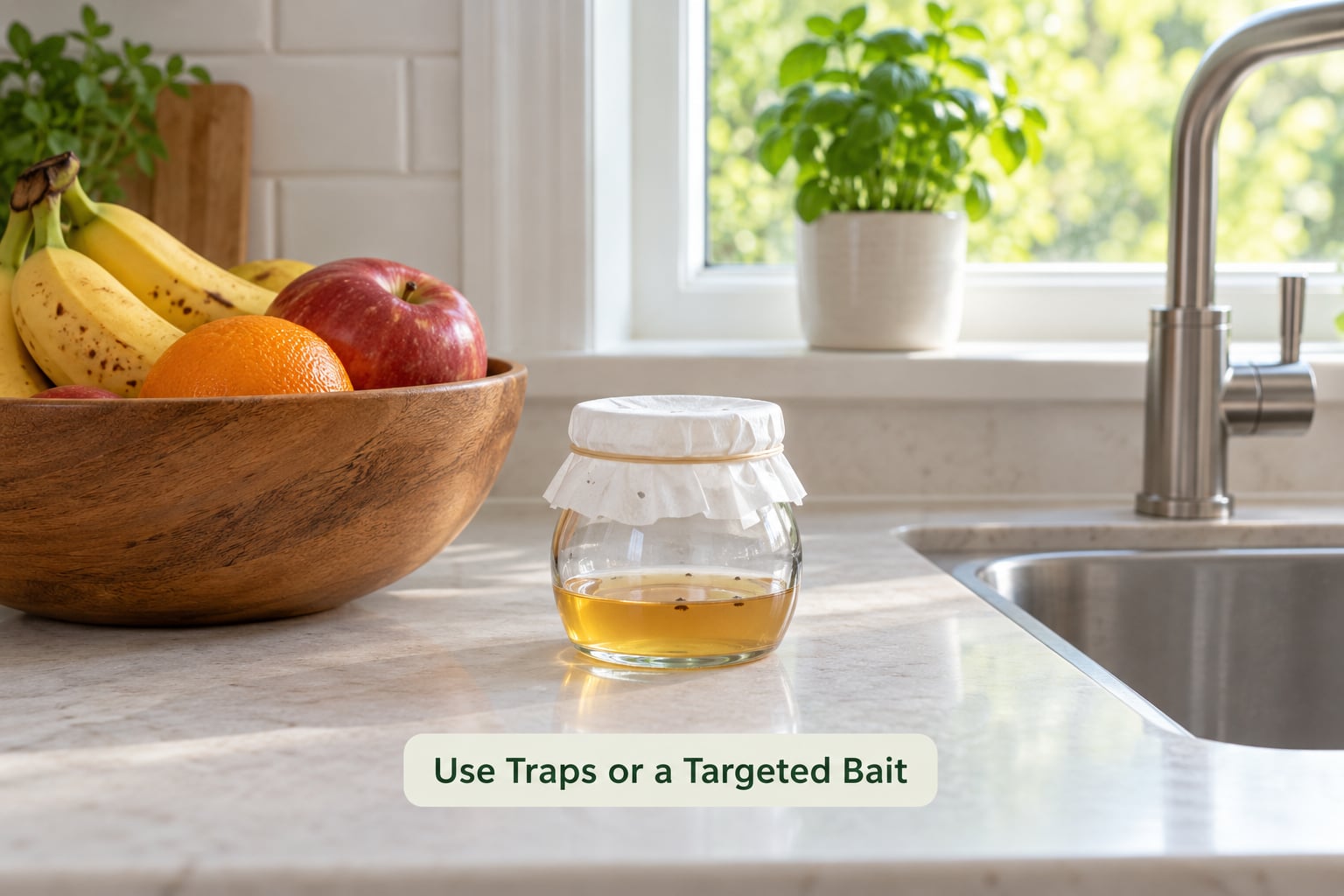
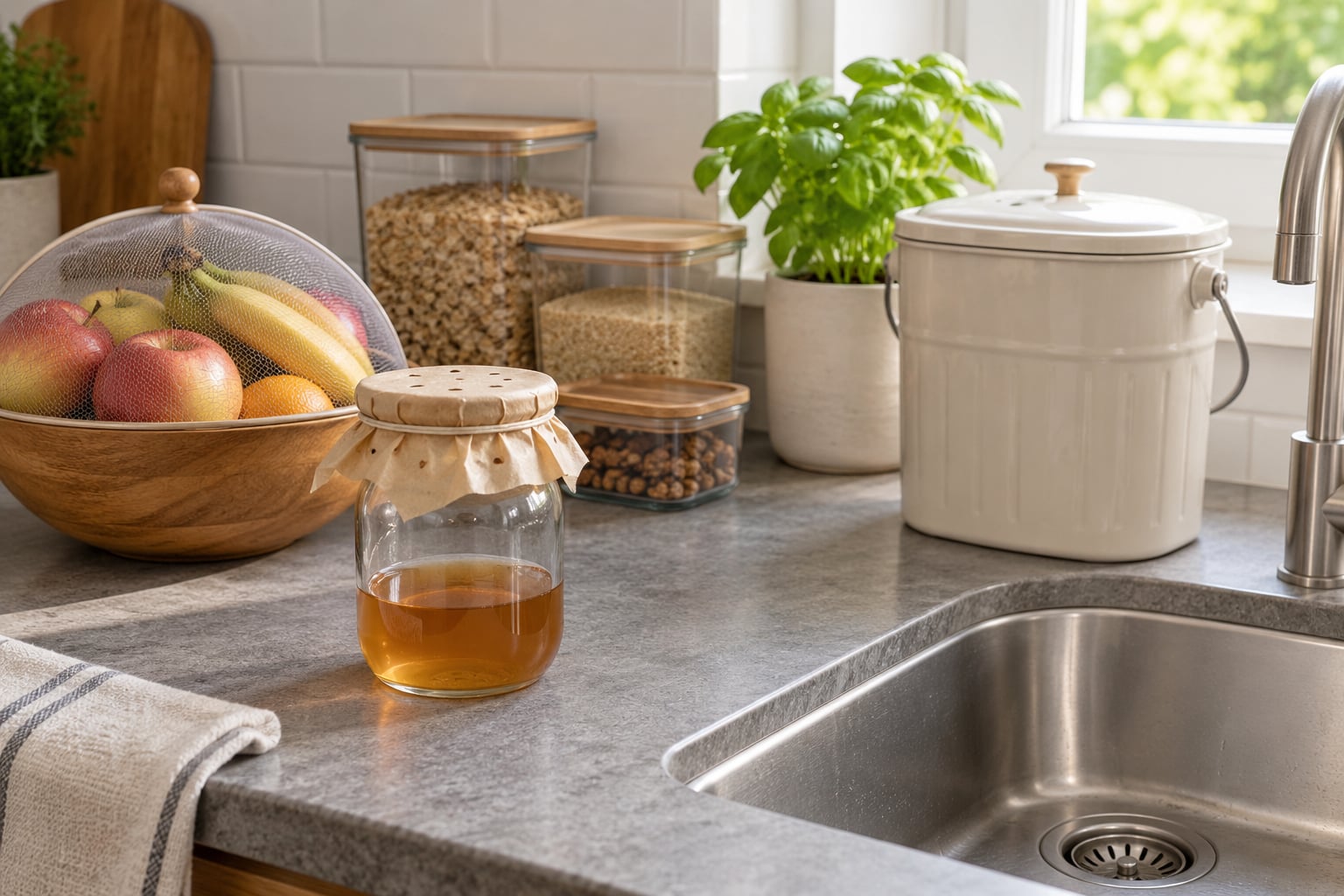
Put roughly a quarter cup of apple cider vinegar in a jar, add two or three drops of dish soap, and stir gently. The soap does the real work: it breaks the surface tension so a fly that lands cannot launch itself back off and drowns instead.
Cover it so flies can get in and cannot get out. Punch five or six small holes in a metal lid with a nail and a hammer, or cut a small opening in a plastic wrap cover. Keep the holes smaller than the fly, which means smaller than a pinhead for the smaller species. A wide opening or loose wrap is the most common reason a trap catches nothing.
A paper funnel is the other good option. Roll a sheet of parchment or plain paper into a cone, poke a pinhole in the tip, and slide the narrow end into the jar mouth, holding it with a rubber band. Flies follow the smell down through the tip and rarely find the hole again to climb out.
Place traps near the source rather than across the room — on the counter by the fruit bowl, beside the sink, on the windowsill closest to the door. Flies follow the strongest fermenting smell in a space, so a trap in a hallway competes with the kitchen and loses.
Change the bait every two or three days. Once the liquid has stopped smelling sweet and you can see flies resting on the surface without going in, it has stopped working and needs a fresh jar. Use a dark or opaque container if the pile of dead flies bothers you or anyone nearby.
Keep traps out of reach of children and pets, do not spray insecticide near food or dishes, and never mix cleaning products together. If you want a fast knockdown of the visible cloud while you clean, a spray bottle of water with a drop of dish soap will drop flying flies mid-air; a vacuum with a hose on the extension wand works well for a dense swarm.
How to tell it is working: flies land and do not leave, and you can see them through the glass. If the jar stays clean for two days while flies are still in the room, the trap is empty, the holes are too wide, or the bait is beside the wrong source.
5. Seal Entry Points and Prevent a Return
No source control means they come back, because fruit flies enter houses through small gaps constantly. Repair or replace torn window screens, check the door sweep along the bottom of an exterior door, and look around pipe penetrations where plumbing meets an outside wall.
Examine your produce before you put it away. Rinse fruit and vegetables under cool running water, and check the underside of anything stacked in the crisper, where damp and bruising collect. Bag leafy greens and soft fruit so one leaking item does not spread to the rest of the drawer.
Then set the habits that keep the kitchen unattractive to them: take trash out every two or three days, rinse the sink after every use, run the disposal for a minute with water on after food prep, refrigerate ripe fruit, and cap or rinse bottles and cans before recycling them.
Lastly, do a monthly check of the places you only look at when something is wrong — the dishwasher tray, the base of the fridge, the litter of dried residue under the toaster, and any drain in a bathroom that is seldom used.
Common Mistakes
Spraying or trapping without removing the food. Aerosol sprays kill the flies you hit and do nothing about the eggs. Household insecticide near dishes and counters also leaves a residue on food-contact surfaces, which is a poor trade for an insect that is not dangerous to people.
Rinsing the drain but leaving it wet. A rinsed drain with a wet film is still a nursery. Let the sink run dry between uses, scrub the grate, and repeat the baking soda and boiling water treatment every week or two until the flies stay gone.
Using an open bowl of bait. Flies land, drink, and fly off again, so the bowl never empties. Anything you set out needs a cover that lets flies in and keeps them in.
Punching holes that are too big. Large openings or a loose plastic wrap sheet let the fly walk straight out. Small holes, a paper funnel tip, or a shrink-wrap seal all work better than a guessing hole pattern.
Forgetting the compost bin, recycling and the disposal. These three account for a large share of repeat infestations in kitchens that are otherwise spotless. An outdoor compost bin or a sealed countertop model ends the argument.
Mixing homemade solutions. Unlabeled jars and unlabeled spray bottles get mixed up, sometimes by the people they are meant to help. Write the date and contents on anything you mix, and never combine a cleaning product with another one.
Expecting one evening to fix it. A trap plus a cleaned drain gives you a sharp drop in numbers, not a cleared kitchen. Set two traps in different spots, refresh them, and judge the result after a week rather than after a night.
Frequently Asked Questions
How long does it take to get rid of fruit flies in the kitchen?
Expect a noticeable drop within three to five days of removing the food source, and a mostly clear kitchen in one to two weeks. Eggs already laid in produce, drain grime or trash keep hatching after the adults are gone, so the curve is slow at the end. Heavy infestations in warm weather can run longer. If numbers do not fall after a week of clean traps and no exposed food, a breeding site is still in the house.
Where are fruit flies coming from in my kitchen?
Usually one of four places: fruit or vegetables ripening past eating quality, a trash or recycling bin with organic scraps, an indoor compost bin, or the biofilm in a sink drain or garbage disposal. Store-bought produce is a frequent source because eggs ride on the skin. People posting in r/pestcontrol rarely blame flies that were already inside; they come in through screens and doors, then find the fermenting smell.
Are fruit flies a sign of a serious problem in my home?
No. Common fruit flies are a sanitation issue rather than a structural infestation, and they do not bite or sting. Drain flies and fungus gnats look similar but come from wet pipes and overwatered soil, and they are not dangerous either. If the insect is much larger than a pinhead, has a wasp-like waist, or appears in a bedroom away from food, that is a different insect worth identifying properly.
Do fruit-fly traps actually work?
Yes, when the trap sits near the breeding source and nothing stronger competes for them. Flies travel to the strongest fermenting smell in a room, so a trap across the house catches nothing while an uncovered banana keeps the population growing. A jar with holes in the lid catches far more than an open bowl, because an open bowl lets flies leave and come back.
Can I use apple-cider vinegar to get rid of fruit flies?
You do not need it. Any strong fermenting liquid works as bait: red wine vinegar, white balsamic, a splash of leftover red wine, or a piece of overripe fruit in the bottom of the jar. Distilled white vinegar is a poor choice because it is nearly odourless and pulls very few flies. Add two or three drops of dish soap either way so flies cannot escape the surface.
How do I stop fruit flies from coming back?
Keep ripe fruit in the refrigerator until you eat it, take trash out every two or three days, rinse the sink and run the disposal after food prep, and keep the compost bin sealed or outdoors. Wipe up juice and sticky spots the same day, and rinse or cap bottles and cans before recycling. Repair torn window screens and check door gaps once a season. Those habits take a few minutes a day.
Conclusion
The fastest route to a clear kitchen is always the same order. Remove every exposed food source and put the rest in closed containers, scrub the sink drain and disposal where the eggs are almost certainly sitting, then set two traps next to that source rather than across the room.
Judge it after a week, not after a night. If flies keep showing up in one spot, that spot is still producing them, so work backwards from where you see them: the fruit bowl, the bin, the disposal, the compost pail. Seal the screens once the numbers drop, and the next infestation waits until next summer.