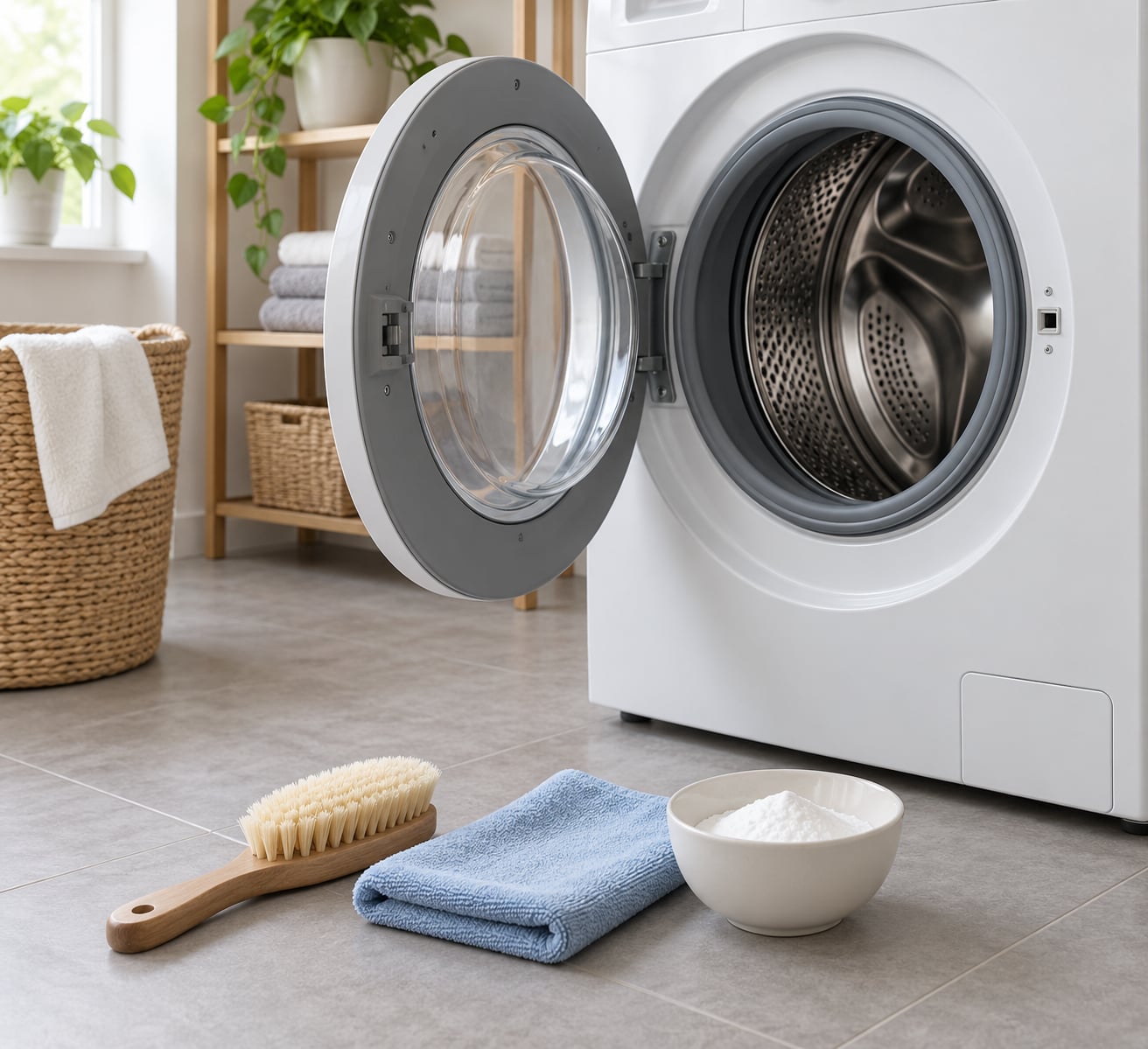
To clean a washing machine drum, empty it, scrub the drum walls and door seal, then run an empty load on the hottest cycle with two cups of white vinegar in the dispenser and half a cup of baking soda in the drum. Budget about 45 minutes for a full clean, and the job is easy enough for a first-timer as long as you unplug the machine first.
The drum is the perforated stainless basket your clothes sit in, and it collects far more than lint. Detergent and fabric softener leave a waxy film called soap scum, hard water leaves mineral crust, and warm damp folds in the door boot make an ideal home for mold and mildew.
Here is the honest part: running one hot cycle with vinegar fixes the smell for about two weeks, then it comes back. That is because the drum is rarely the dirtiest part. The gasket folds, the detergent drawer housing and the drain pump filter are usually holding the residue, and any of those can put the odor straight back onto clean clothes.
Everything below follows the same advice appliance manufacturers give: use approved cleaners, never combine chemicals, and check your owner’s manual before pulling any panel off.
Table of Contents
- 1What You Need
- 2Step-by-Step
- 3How to identify your washing machine type
- 4Unplug and prepare the washing machine
- 5Clean the detergent drawer and dispenser
- 6Wipe down the drum and door seal
- 7Treat stubborn residue or odors
- 8Run a cleaning rinse cycle
- 9Common Mistakes
- 10Frequently Asked Questions
- 11What is the safest way to clean a washing machine drum?
- 12Can I use bleach to clean my washing machine drum?
- 13How often should I clean a washing machine drum?
- 14Why does my washing machine smell bad even after cleaning the drum?
- 15How do I clean the rubber seal around a front-loading washer?
- 16When should I call a technician instead of cleaning the drum myself?
- 17Conclusion
What You Need
You do not need a toolkit. Most of this is wiping and waiting.
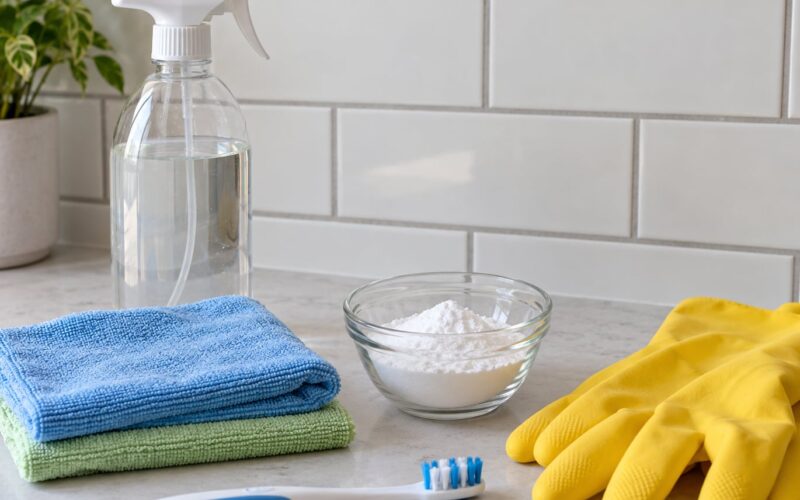
- Rubber gloves for the bleach option and for reaching into the gasket.
- Microfiber cloths, a few of them, since you will use separate ones for the drawer and the drum.
- White vinegar, roughly two cups, for soap scum and light mineral film.
- Baking soda, half a cup, for odor neutralising.
- A soft brush or an old toothbrush for gasket folds and drum perforations.
- A manufacturer-approved washing machine cleaner or citric acid tablet, if you prefer a set dose to a DIY recipe.
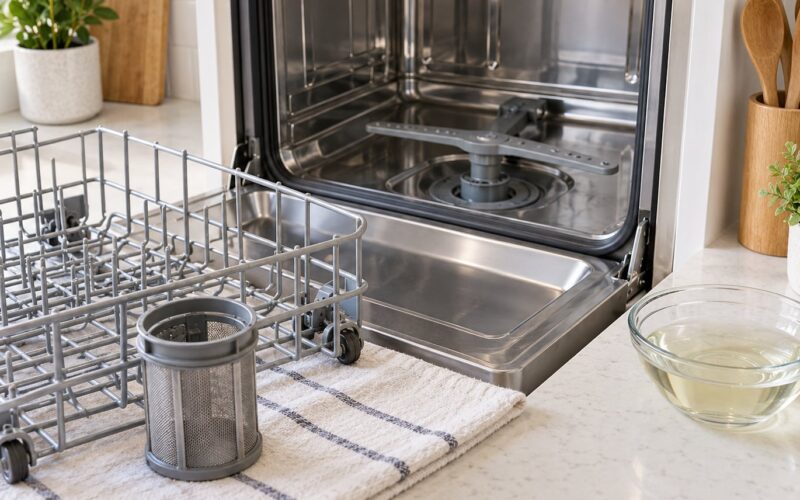
- A shallow pan and an old towel if you plan to open the drain pump filter.
- A flat-head screwdriver only if your owner’s manual shows how to remove a dispenser drawer or access panel.
Pick one cleaning approach per run: vinegar, or bleach, or a tablet. Never use vinegar and bleach in the same load or in the same session on the same parts, because the two off-gas chlorine gas. If in doubt about what your machine’s finish can take, the manual wins.
Step-by-Step
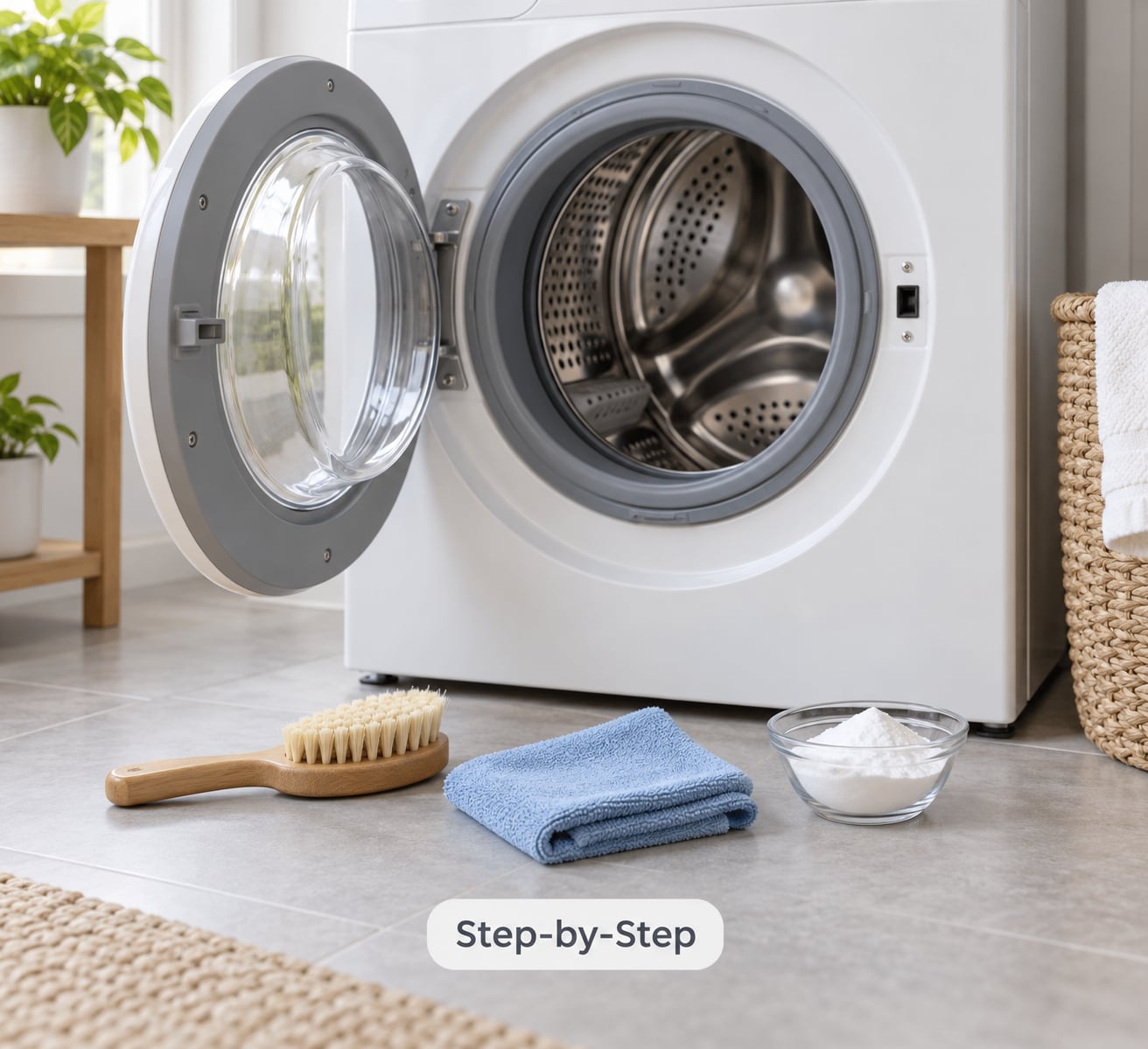
Work top to bottom and outside in, and you will not have to redo anything. First, know which machine you are standing in front of.
How to identify your washing machine type
Front loaders have a round glass door low on the front panel and a wide rubber boot you can reach straight into. Top loaders have a lid on top and a tub you look down into; older ones have a finned agitator in the middle, while newer impeller machines have a smooth, dimpled disc with no central post.
The difference matters because the parts that trap residue differ. Front loaders hide mold in the bottom fold of the door boot. Agitator top loaders bury gunk in the fins and under the cap. Impeller machines collect scum in the dimples and in the gap between the impeller and the tub wall.
Unplug and prepare the washing machine
Switch the machine off at the control panel and unplug it at the wall. Shut off the water supply valves behind or beside the machine if you are going anywhere near the filter or the hoses.
Take out any laundry, including damp loads that have been sitting since this morning, and pull anything out from between the rubber seal folds and behind the dispenser drawer. Coins, hairpins, and small socks hide there and they do not survive a full hot cycle.
Wipe down the outside while you are at it: the control panel, the door glass, the detergent drawer front and the ring around the door. Soap that has sprayed onto the panel turns sticky and eventually cloudy.
Clean the detergent drawer and dispenser
Most drawers lift out after you pull them straight out and press a release tab or notch on the back. Some models have a screw you remove instead, and some you cannot remove at all without taking the whole housing apart, which is a technician job.
Once it is out, rinse each compartment under warm running water until the water runs clear. For dried-on residue, fill the compartments with warm water, add a splash of dish soap, and let them soak for about 30 minutes, then scrub with an old toothbrush.
Pop the siphon cap off the fabric softener compartment if it comes free, and rinse the little spray jet inside it. That jet is a classic source of musty smell because softener sits in it for months.
The housing matters as much as the drawer. Look up into the cavity where the drawer slides and wipe out the film you will almost certainly find with a cloth dampened with vinegar. Mold growing unseen in that recess will re-infect a freshly cleaned drawer in a week.
Wipe down the drum and door seal
Run a damp microfiber cloth around the stainless drum walls, the back plate and the paddles. The rubber door boot needs fold-by-fold attention: pull the lip of the seal outward, wipe down into the crease, then work around the whole ring, several times, until the black smudges stop coming off on the cloth.
Where you see grit or slime, use the toothbrush with a little dish soap or diluted vinegar. The dimples in an impeller drum and the perforations in a stainless drum are both worth a slow pass, since detergent residue settles into those holes and re-dissolves into every load.
For black mold that will not scrub off, wet a cotton pad with undiluted white vinegar, wedge it into the fold, and leave it there for an hour or two. Vinegar soaking gets under the lip where a brush cannot reach. Do the same on the door glass if you see haze there.
You will know the seal is done when the rubber looks matte and even rather than patchy and glossy, and when the cloth comes away clean on the final pass.
Treat stubborn residue or odors
For a routine clean, add half a cup of baking soda directly into the empty drum, then pour two cups of white vinegar into the detergent dispenser so it flushes through during the fill. That pairing loosens soap scum and neutralises odor.
For visible black mold, use bleach instead of vinegar: add one cup of chlorine bleach straight into the drum, or into the bleach dispenser if your machine has one. Never combine the two approaches in a single run.
Baking soda is mild enough for routine scrubs but too weak on its own for heavy scale. In a hard-water area, a citric acid or washing machine cleaning tablet handles the mineral crust that vinegar only loosens, and commercial tablets are also the set dose people trust most for a tub clean cycle because they are designed for heated water and a long agitation.
If the buildup is really stubborn, start the cycle, let it fill, then pause it and leave the machine to soak for 30 to 60 minutes before resuming. Heat and dwell time do most of the dissolving work that scrubbing alone cannot.
Run a cleaning rinse cycle
Set the machine to its longest and hottest wash setting, or use the dedicated Tub Clean or Drum Clean cycle if your model has one. Both front loaders and top loaders have it, and it is worth finding because it runs hot enough and long enough to sanitise rather than merely wash.
Once the cycle finishes and the water drains, run a short plain rinse with nothing added to flush the loosened residue out of the hoses. Then wipe the seal and drum dry and prop the door open, or the lid up, until everything is bone dry.
From here, the maintenance habit matters more than any single deep clean. Wipe the seal dry after every load and leave the door open, take wet washing out promptly, and the mold never gets the standing moisture it needs to take hold.
Common Mistakes
Most failed drum cleans come down to a handful of avoidable moves.
- Overdosing the cleaner. Extra vinegar or bleach does not scrub harder; it leaves a film that can redeposit on clothes. Use the measured amount.
- Mixing vinegar and bleach. Never. The combination releases chlorine gas. Pick one for the run and give the machine a plain rinse before switching methods.
- Pouring bleach straight into the drum on a machine with a stainless interior and a long gap to the outlet. Many manufacturers specify the dispenser instead, so follow your manual.
- Using steel wool or a scouring pad on a porcelain or coated drum. It scratches the surface, and scratches hold dirt. A nylon brush does the same job without the damage.
- Cleaning only the drum. If the gasket folds, drawer housing and pump filter are skipped, the smell returns within days.
- Closing the door straight after a load. A sealed, damp machine is a mold incubator, and a tidy-looking door is not worth that trade.
- Ignoring the owner’s manual. Cycle names, filter locations and approved cleaners differ across brands, and a screwdriver in the wrong panel is how people break machines.
- Leaving a load sitting for hours. Mildew smell starts far faster than most people expect, usually within a day or two of damp fabric sitting closed up.
If the odor returns almost immediately after a full clean, you have a hiding spot rather than a dirty drum, and that changes the job. Pull the drain pump filter and rinse it, then check the door boot again. Next suspect is the dispenser housing, then the outer tub and drain hose where sludge and mold grow where you cannot see. Over-deterging is the fourth culprit, since the extra suds that stay in the machine feed the growth you are trying to remove.
Frequently Asked Questions
What is the safest way to clean a washing machine drum?
Unplug the machine, remove all laundry, then run an empty wash on the hottest setting with two cups of white vinegar in the dispenser and half a cup of baking soda in the drum. Afterward, scrub the drum walls, perforations and door seal by hand with a damp cloth and a soft brush, clean the drain pump filter, and wipe everything dry. This method uses no harsh chemicals and needs no tools beyond gloves and cloths.
Can I use bleach to clean my washing machine drum?
Yes, for black mold or heavy residue, but check your owner’s manual first because some manufacturers specify the dispenser rather than the drum. Use about one cup of chlorine bleach, run it on a long hot cycle, and rinse the machine with a plain cycle afterward. Never mix bleach with vinegar in the same session: the combination releases chlorine gas. Use one method or the other, not both.
How often should I clean a washing machine drum?
Once a month for most homes, and that is plenty if you wipe the door seal dry after every load and keep the door open between washes. Clean every two to three weeks in hard-water areas, humid climates, homes with pets or small children, or any machine that has held damp laundry. A newly inherited or second-hand washer should be cleaned twice before the first real load of clothes.
Why does my washing machine smell bad even after cleaning the drum?
Because the drum is rarely the source. Residue hides in the bottom fold of the door boot, inside the detergent drawer housing, behind the spray jet of the fabric softener compartment, and in the drain pump filter where lint and coins collect. Work through those in that order, then check whether you are using more detergent than the machine needs. If the smell still returns within days, call a technician.
How do I clean the rubber seal around a front-loading washer?
Pull the boot outward, wipe down into the crease with a vinegar-dampened cloth, and work around the whole ring several times until the smudges stop transferring to the cloth. Use a soft toothbrush on stubborn spots, and wedge a vinegar-soaked cotton pad into the fold for an hour or two if the discoloration will not scrub off. Finish by wiping it dry and leaving the door open.
When should I call a technician instead of cleaning the drum myself?
Call an appliance technician if mold returns within days of a full clean, if the gasket is torn, cracked or stiff and no longer seals, or if the machine will not drain. Unscrew the drain pump filter yourself first under a shallow pan and towel, since a clogged filter explains most drainage complaints. Never remove the drum or outer tub yourself; that is sealed, heavy work that belongs to a professional.
Conclusion
Start by unplugging the machine and scrubbing the door boot fold by fold, since that is where the odor usually lives. Then clean the detergent drawer housing and the drain pump filter alongside the drum, run one hot cycle with vinegar and baking soda, and wipe everything dry. Do that once a month and it stays solved.