To protect hardwood floors from furniture legs, fit a soft, load-bearing buffer under every leg that touches the wood: thick felt pads or clear plastic cups for sofas, tables and bookcases, and hard-plastic or silicone sliders for chairs that move every day. Most damage comes from three causes, and each has its own fix.
The whole job takes an afternoon for a normal room. Start by checking whether the piece actually moves, because a pad that works on a stationary bookcase fails within weeks on a kitchen chair.
Table of Contents
- 1What You Need to Protect Hardwood Floors
- 2Step-by-Step
- 3How to Choose the Right Protector for Each Furniture Leg
- 4Install the Protection
- 5Check and Maintain the Result
- 6Common Mistakes That Damage Hardwood Floors
- 7Frequently Asked Questions
- 8Are felt pads safe for hardwood floors?
- 9What is the best furniture leg protector for hardwood floors?
- 10Are rubber furniture pads safe on hardwood floors?
- 11How do I protect a heavy bookcase or dresser on hardwood?
- 12How do I remove sticky residue left by old felt pads?
- 13How do I fix a scratch a furniture leg already left?
- 14Conclusion
What You Need to Protect Hardwood Floors
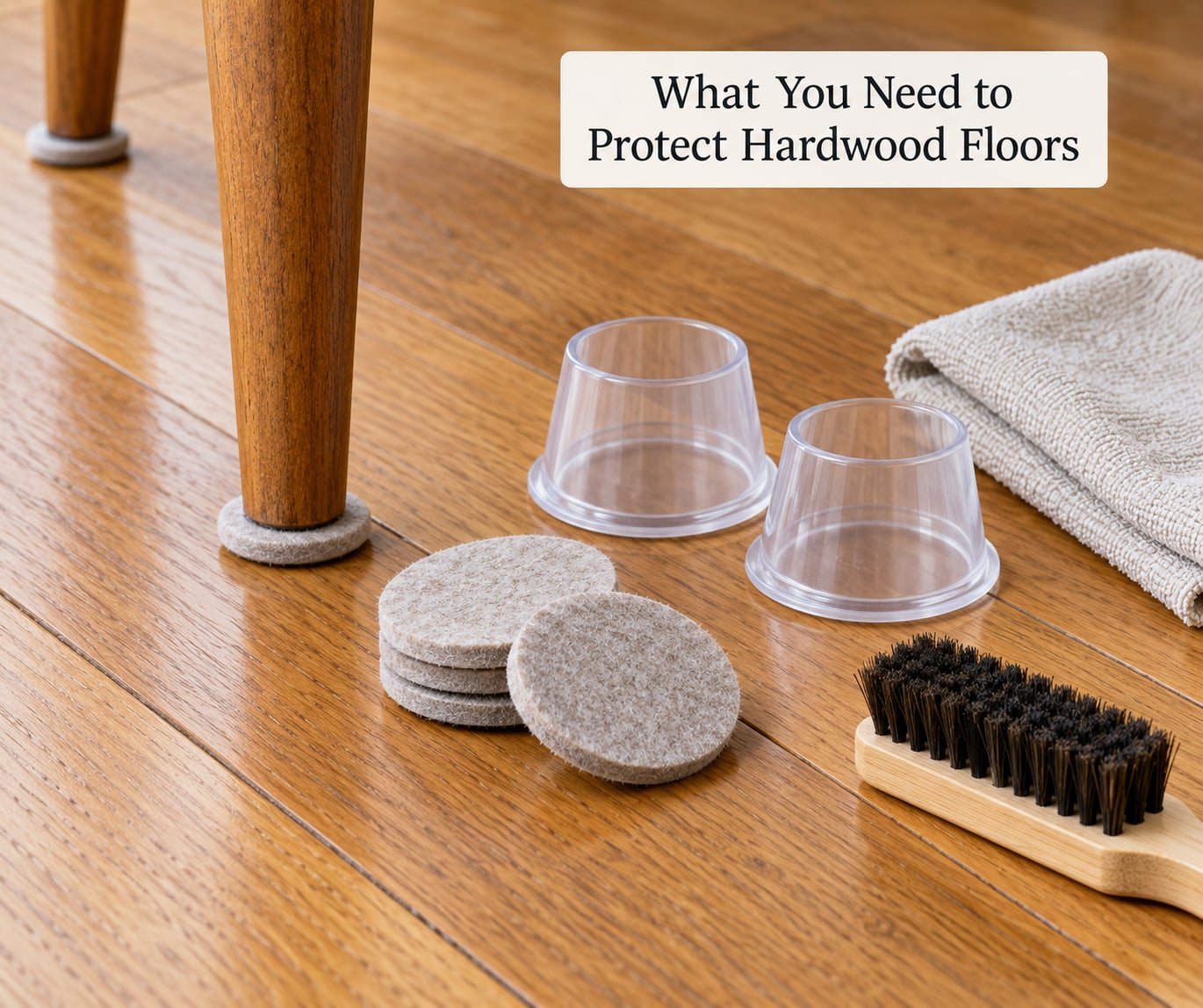
You do not need much. Gather the protectors first, then the tools to put them on properly.
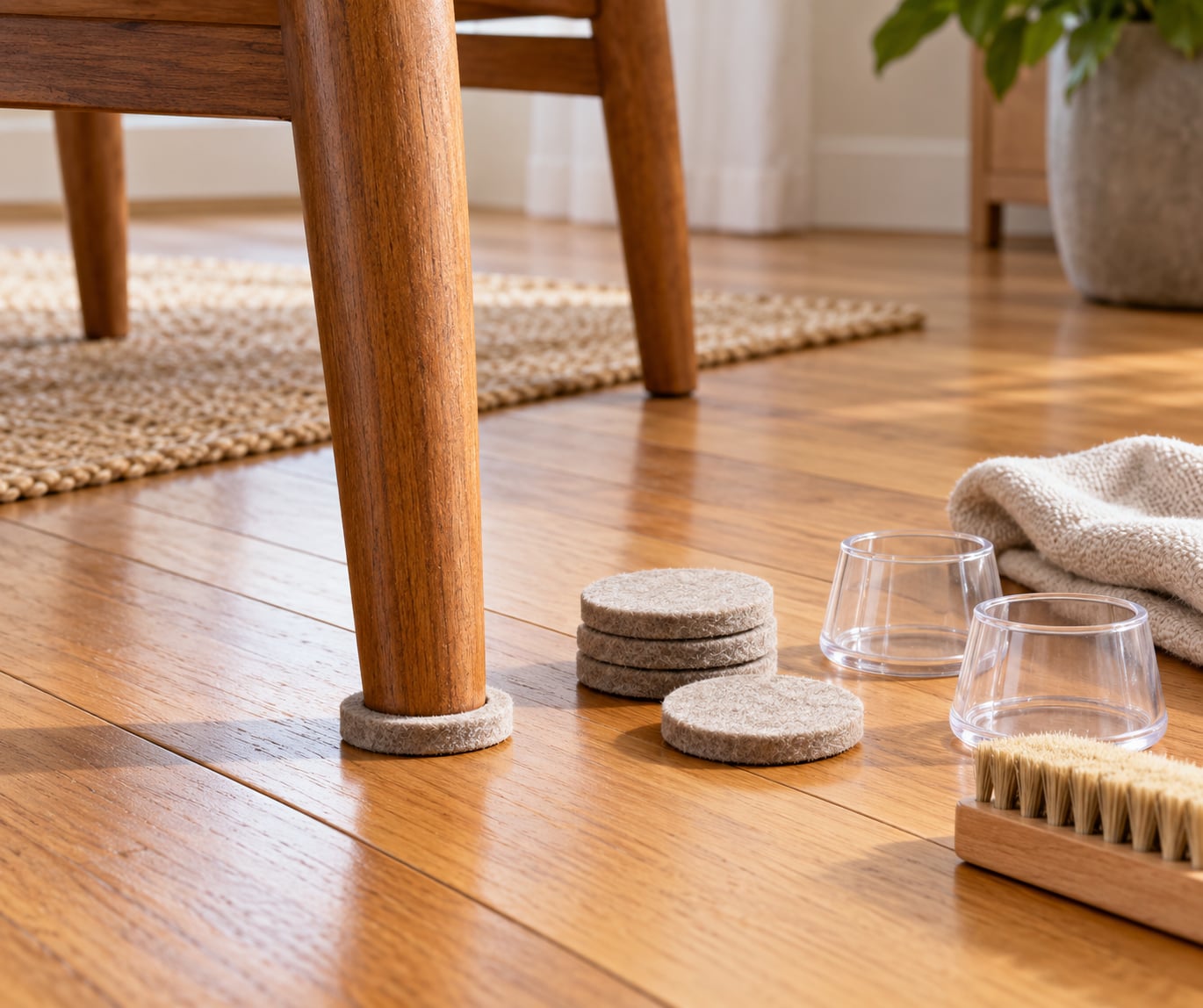
- Felt furniture pads for stationary pieces and mid-century tapered legs. Buy the largest diameter that fits the leg tip, because a small pad concentrates weight into a tiny spot on the finish.
- Clear plastic or silicone furniture cups for dining chairs, bar stools and anything on a hard plastic leg. The hard cup grips without adhesive, so nothing is left behind when the leg moves.
- Hard-plastic or nylon furniture sliders for rolling and frequently moved pieces. They glide quietly and resist the tearing that adhesive felt suffers under daily use.
- Silicone or rubber tape as a wrap-around option for tapered, square or curved legs that round pads cannot grip.
- Nail-on felt glides for heavy wooden legs that stay put. Pre-drill first or the wood splits.
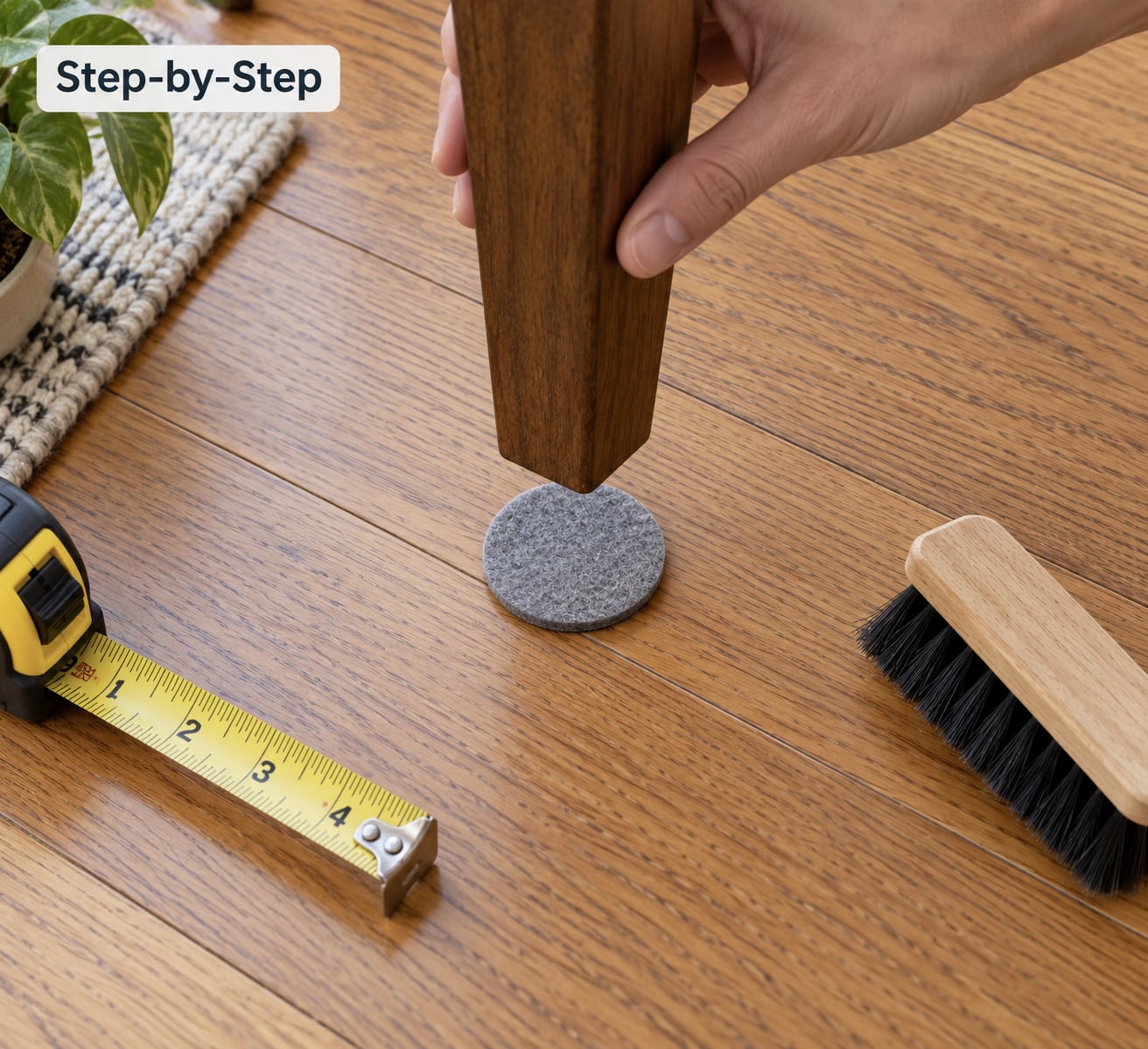
- A soft cloth, a small stiff brush and a tape measure for cleaning the leg bottom and sizing the pad correctly.
Step-by-Step
How to Choose the Right Protector for Each Furniture Leg
Match the protector to how often the piece moves and how much it weighs. Movement decides the category: anything that gets dragged needs a mechanical grip, not a glue bond.
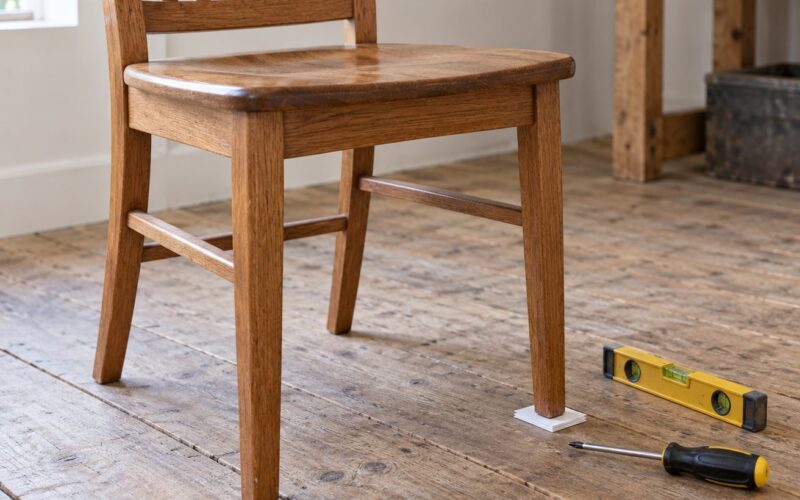
Chairs pulled in and out at a dining table are the hardest case. Self-adhesive felt on a chair leg typically gives up within days, then grinds whatever stuck to it across the finish. A hard plastic or nylon slider slides on over the leg and stays on, because nothing is glued to anything.
For a stationary sofa, coffee table or sideboard, self-adhesive felt pads are genuinely fine. The legs sit in one spot, the adhesive never has to survive a drag, and felt spreads the load quietly across a wide area.
For a bookcase, dresser or bed frame, size up. A larger pad area lowers the contact pressure on the finish, which is what causes the shallow permanent indentations people mistake for damage. Measure the tip diameter, then buy the biggest pad that fits under it.
Secondhand furniture deserves its own check. Many pieces arrive with hard plastic factory feet that gouge wood on the first move. Pry those off before you fit anything, using a screwdriver to lever the seam and pliers to pull the nails.
Install the Protection
Clean and dry the leg bottom completely before applying anything. A thin film of dust or floor wax is the usual reason an adhesive pad peels off within days, and the grit trapped underneath becomes the scratch that follows.
Work one leg at a time. Wipe the tip with the damp cloth, dry it, then press the pad or cup straight onto the flat end of the leg with your thumb for a solid ten seconds. For an adhesive pad, let it sit about five minutes before you put weight back on it, which is enough time for the bond to set.
Slip-on cups and sliders go on over the leg with a firm push and a slight twist. Nail-on glides need a pilot hole first, drilled slightly smaller than the nail, so the fastener holds without splitting the leg.
If a pad keeps letting go, a small blob of hot-melt glue on the leg before pressing the felt on gives the adhesive something to grab. Users on woodworking forums report this simple addition extends pad life dramatically.
Finish by centring every leg in its pad and nudging the piece. It should not rock, and it should not slide when you push it gently. Fix any wobble now, because a rocking leg concentrates its load on one edge and dents the finish over time.
Check and Maintain the Result
Give each leg a firm push and watch the pad, not the furniture. If the felt edge is peeking out, if the leg has shifted, or if the piece rocks at all, re-seat it.
Check pads on a schedule rather than waiting for a scratch. A quick walk-through every month catches compressed felt, grit packed into the pad, and pads that have walked halfway off a leg. Vacuum or brush the felt with a small stiff brush, since a worn pad collecting dust and hair becomes the thing that scratches your floor next.
Replace any pad that has flattened, torn or lost its grip. Thick felt is usually good for months on a stationary piece and weeks on a chair that moves daily, so keep a small pack of spares on hand for the dining room.
Common Mistakes That Damage Hardwood Floors
Most scratches I get asked about come from one of these, and every one of them is avoidable.
Leaving furniture bare on the wood. Factory plastic feet, bare wood and metal all mark a finished floor. The rule is simple: if it touches the floor, it gets a protector.
Using hard plastic or metal with no cushioning layer. A bare glide can be worse than nothing, because a loose metal head grinds a groove straight into the finish. Cushion the underside with felt or cork.
Skipping the clean-the-leg step. Adhesive pads bond to dust and wax, then peel off and take finish with them. Wipe the leg first, every time.
Choosing a pad that is too small. Halving the pad area roughly doubles the contact pressure, which is exactly the load that dents a floor under a bookcase. Buy the largest pad that fits.
Dragging furniture instead of lifting it. Even a padded leg skips and grinds when the piece is dragged. Lift, or use a furniture lifter on the hard end of the move.
Trusting cheap rubber-backed rugs. Rubber backing can stick to and discolor the finish underneath, and cheap rubber pads on kitchen chairs scuff badly. Use carpet padding with carpet tape under a rug instead.
Two habits prevent most of it: keep grit off the floor, because debris under a leg is what turns a slide into a deep gouge, and lift rather than drag. Add felt or cups to every leg that touches the wood, and check them monthly.
Frequently Asked Questions
Are felt pads safe for hardwood floors?
Yes. Felt is the default answer for hardwood because it is soft enough not to scratch the finish and it spreads weight over a wide area, which reduces denting. It works best on furniture that stays in one place. On chairs that move daily, adhesive felt tends to tear off, so use hard plastic or nylon sliders instead and reserve felt for sofas, tables and bookcases.
What is the best furniture leg protector for hardwood floors?
It depends on movement more than weight. Use hard plastic or silicone sliders for chairs and stools that move every day, self-adhesive felt for stationary sofas and tables, and large felt pads or nail-on glides for heavy bookcases and dressers. Match the pad diameter to the leg tip so the load is spread instead of concentrated.
Are rubber furniture pads safe on hardwood floors?
They can be, with care. Rubber is useful under heavy stationary furniture because it grips the floor and stops the piece sliding, but softer rubber pads on frequently moved kitchen chairs can scuff and leave marks on the finish. If the leg is hardwood or has a wax finish, test one pad in a hidden corner for several days before fitting the rest.
How do I protect a heavy bookcase or dresser on hardwood?
Buy the largest pad that will fit under each leg and cut nothing smaller. The damage under heavy furniture comes from pressure concentrated into a small area, not from the weight itself. If you cannot find a large enough pad, use a furniture coaster or a strip of carpet padding secured under the leg, and lift the piece slightly while you fit it.
How do I remove sticky residue left by old felt pads?
Scrape up thick clumps gently with a plastic card so you do not gouge the finish, then warm a little water and work in a drop of dish soap with a soft cloth. For stubborn spots, a plastic scraper over a cloth and a little mineral oil usually lifts it. Avoid harsh solvents, which can dull a polyurethane finish.
How do I fix a scratch a furniture leg already left?
For a light scuff in the finish, a hardwood cleaning product used as directed usually blends it away. A shallower scratch can be treated with a touch-up pen or repair kit matched to your stain and sheen. Deep gouges that go into the wood need a board replacement or full refinishing, so catching the problem with pads early is far cheaper.
Conclusion
Start by looking at the bottom of every leg that touches your floor and decide how often that piece moves. Sliders or cups for daily-movers, large felt pads for heavy stationary furniture, then clean each leg before you fit the protector and push the piece to confirm nothing rocks. Do that once and the scratches, scuffs and dents stop.