Learning how to care for a hamster properly comes down to four things: a large enclosure with deep bedding, a solid-surface wheel big enough for the species, a plain seed-and-pellet diet with fresh vegetables, and a daily routine that includes observation. Most problems new owners run into trace back to a setup bought on impulse plus a hamster that hides illness until it is serious.
This guide walks through the supplies worth buying, a six-step routine you can follow from day one, and the warning signs that mean a call to an exotic veterinarian. Budget about ten minutes a day and a deeper clean once a week.
Table of Contents
- 1Is a Hamster Easy to Take Care Of?
- 2What You Need
- 3Syrian, Dwarf, or Roborovski: Which Are You Buying?
- 4Step-by-Step: Your Hamster Care Routine
- 51. Prepare a Safe, Spacious Habitat
- 62. Feed a Balanced Diet and Provide Fresh Water
- 73. Handle Your Hamster Gently
- 84. Provide Exercise and Mental Stimulation
- 95. Clean the Cage Without Causing Stress
- 106. Monitor Sleep, Behavior, and Health
- 11Common Mistakes: How to Care for a Hamster Properly and Avoid These
- 12A cage that is too small
- 13Wire floors and wire wheels
- 14Pine and cedar bedding
- 15Hamster balls
- 16Sugary treats and seed-heavy mixes
- 17Overhandling and waking them up
- 18Human medication and untrained diagnosis
- 19Keeping two hamsters together to save space
- 20Frequently Asked Questions
- 21How often should I clean my hamster’s cage?
- 22What foods are safe for a hamster, and which foods should I avoid?
- 23How long should a hamster be handled each day?
- 24How can I tell if my hamster is stressed?
- 25What is the best bedding for a hamster?
- 26When should I take my hamster to a veterinarian?
- 27Conclusion
Is a Hamster Easy to Take Care Of?
Yes, in the way a fish is easy to care for: the daily workload is small, but the setup has to be right before you buy the animal. A healthy hamster needs food, water, an exercise wheel, bedding to burrow in, and a few hiding places, and it needs all of them every single day.
The difficulty for beginners is that pet store starter kits are almost always too small. Owners on hamster forums routinely report buying three or four enclosures before finding one with enough unbroken floor space, and switching from a small wire wheel to a large solid one changed how active their hamster was almost overnight.
Two other things trip people up. Hamsters are nocturnal, so they are lively when your house is quiet and asleep while you are working, which can look like neglect when it is normal. And they are prey animals that hide pain, so a hamster that still eats and drinks can be seriously unwell. Daily observation is the only way to catch that early.
What You Need

Buy the enclosure and the wheel first. Everything else can follow, because those two items decide whether your hamster can burrow and run, and a hamster that cannot burrow or run will chew the bars of its cage instead.
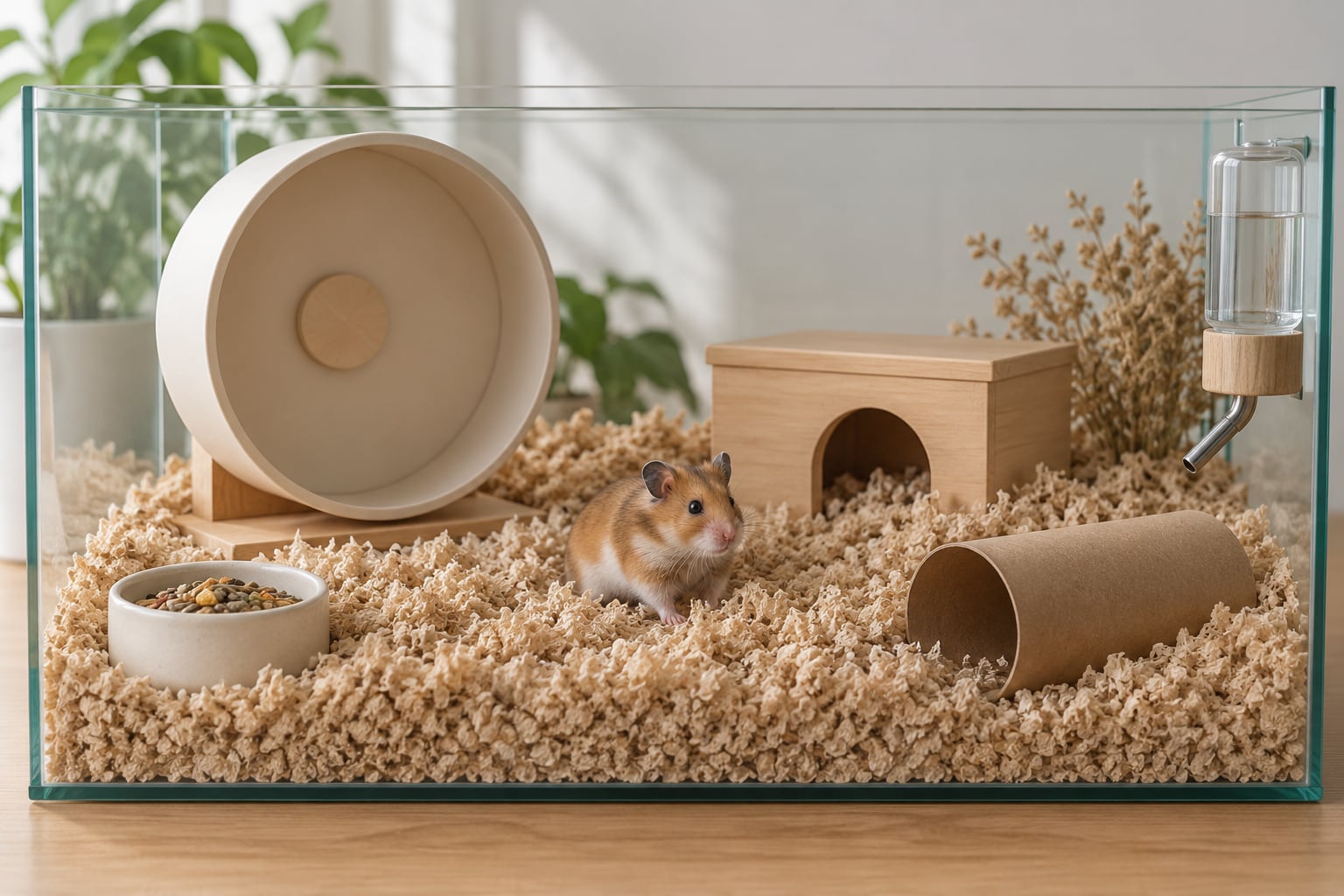
- Enclosure: at least 775 square inches of unbroken floor space (about 5000 square centimeters). Unbroken means no shelves, no tubes and no levels that split the base into small compartments. A large bin with a fitted, ventilated lid works well for many owners and is often the cheapest way to hit that number.
- Exercise wheel: a solid-surface wheel, not a wire mesh one. Eleven to twelve inches for a Syrian, eight to ten inches for a dwarf. Wire wheels are sold everywhere and cause foot sores and back problems with long use.
- Bedding: enough to fill the enclosure to eight to ten inches deep for a Syrian. Paper-based bedding and kiln-dried aspen shavings are the safe choices.
- Nesting material: plain toilet paper or paper towels torn into strips, plus a small hideout made of wood, ceramic, or a cardboard tube.
- Food bowl and water bottle: a heavy ceramic bowl that does not tip, and a sipper bottle checked daily for clogs and leaks. Bowl water goes stale fast, so the bottle is the better option.
- Sand bath: a small dish of dry, calcium-free sand. Grooming dust is not the same thing and clumps in the coat.
- Chews: wooden chew blocks, apple wood sticks, and cardboard tubes to tunnel through. Chewing is a need, not a hobby to discourage.
- Sand, bedding and food storage: airtight bins so the bedding does not stay damp and the food does not go stale or attract pests.
Skip the hamster ball. Owners report that plastic balls cause freezing, frantic escape attempts and stress, and the space is far too small to be useful. Skip wire floors too, for the same reason as wire wheels.
Syrian, Dwarf, or Roborovski: Which Are You Buying?
The species decides your wheel size, bedding depth and how much handling time the animal tolerates. Ask the seller exactly which dwarf type you are buying, since dwarf species look nearly identical but have different temperaments.
| Feature | Syrian (golden) | Dwarf (Campbell’s, winter white) | Roborovski |
|---|---|---|---|
| Adult size | Largest of the three | Small | Smallest, fastest |
| Minimum unbroken floor space | 775 sq inches | 650 sq inches | 650 sq inches |
| Wheel diameter | 11-12 inches | 8-10 inches | 8-10 inches |
| Minimum bedding depth | 8-10 inches | 8 inches | 8 inches |
| Best kept | Alone, best beginner choice | Alone | Alone, pairs possible but expert-only |
| Handling tolerance | Highest | Lower, faster and more nervous | Lowest, prefers minimal contact |
| Health watch-outs | Weight gain, dental issues | Diabetes, wet tail | Obesity from small portions |
| Typical lifespan in captivity | 2-3 years | 2-3 years | 3-4 years |
Syrians are the easiest for a first-time owner: slower, more tolerant of handling, and less likely to starve themselves over a missed meal. Dwarf species are smaller and more active but they are more easily stressed, and wet tail is far more common in young dwarfs.
Step-by-Step: Your Hamster Care Routine
Work through this once before the hamster arrives, then repeat the daily parts every evening. Each step below tells you what to do and how to tell it is working.
1. Prepare a Safe, Spacious Habitat
Set the enclosure up completely before the hamster moves in. Fill the base with eight to ten inches of bedding for a Syrian and eight for a dwarf, then press it down lightly so it holds tunnels instead of collapsing.
Add at least two hiding places at opposite ends of the enclosure. A hamster that can see you from every direction does not feel safe, and a single exposed hideout is a common reason new owners mistake a nervous animal for a lethargic one.
Place the enclosure somewhere quiet and away from direct sunlight, heaters, air conditioners, kitchen fumes, and loud speakers. Hamsters are extremely sensitive to heat and to temperature swings, and a drafty spot near a window in winter can trigger a dangerous state of torpor.
Give the water bottle a squeeze test before it goes in. If nothing comes out, the sipper is clogged. Wipe the nozzle with a paper towel rather than your mouth, and check the bottle for algae every time you refill it.
Run a hazard check. Look for gaps a hamster could squeeze through, exposed wire, loose lids, small parts that could be swallowed, and anything scented. Perfumed bedding and scented bedding marketed as calming are a respiratory irritation risk, and the label usually buries that fact in small print.
How you know it worked: within a day or two you should see fur or bedding pushed around a hideout, tunnels started in the deep substrate, and food missing from the bowl overnight.
2. Feed a Balanced Diet and Provide Fresh Water
Build the base diet around a plain, fortified pelleted diet. Seed and nut mixes marketed as hamster food are frequently sugar-heavy, and dwarf hamsters in particular are prone to diabetes on a loose mix. If you keep a mix as a topper, keep it to a small portion and watch body condition.
Read the label. A good staple lists grains and vegetables with added vitamins, and it does not list molasses, honey, corn syrup or sweetened pieces. Those are the ingredients behind the obesity and diabetes problems vets see most often in pet hamsters.
Scatter feed rather than using a bowl. Toss a measured portion across the bedding and let the hamster forage, which stretches the time it spends searching and digging. Owners who switch from a bowl to scatter feeding often report the same hamster becoming more active within a few days.
Fresh food is a small supplement, not a meal. Offer one or two safe vegetables a few times a week in a piece no bigger than the hamster’s eye, in the evening when it wakes up. Safe options include cucumber, bell pepper, broccoli, romaine lettuce, pumpkin, and a small piece of unsweetened carrot. Introduce new foods one at a time and remove anything uneaten within a few hours.
Never give chocolate, caffeine, alcohol, onions, garlic, avocado, raw beans, potato sprouts, fruit pits, or anything salty, sugary, or seasoned. Treats, including yogurt drops marketed for hamsters, should stay under about ten percent of the total diet, and dwarf hamsters need even less because of diabetes risk.
Check the water twice a day, morning and night. Clean the bottle and nozzle every few days and fully scrub it once a week, since algae forms fast and many owners only ever see the outside of the bottle.
How you know it worked: a steady portion eaten overnight, a firm and rounded body you can feel under the fur, a coat that is clean rather than dull, and droppings that look normal and fairly dry.
3. Handle Your Hamster Gently
Wash your hands with soap and water and dry them before touching your hamster. Human scent smells strong to a prey animal, and leftover food or lotion is a good reason to back off.
Let the animal choose the first approach. Sit beside the enclosure, keep your hands low and still, and let it come to you. Never reach down and grab from above; that triggers the escape reflex and sets the taming process back.
When you do pick your hamster up, cup both hands together and support its body and chest so it feels supported rather than dangling. Keep sessions short, around five to ten minutes, once or twice a day, and never wake a sleeping hamster to hold it.
Watch the body language. A relaxed hamster lies flat or moves slowly, grooms, and rears up to look at you. A tense one freezes, leans away, squeals, or frantic-grooms. When you see the tense version, put it back and try again tomorrow.
How you know it worked: the hamster no longer flattens when you approach, comes out on its own in the evening, and settles rather than scrambling off within a minute or two. Taming is measured in weeks, not days.
4. Provide Exercise and Mental Stimulation
Running is not optional for a hamster. It is the single best outlet for the energy a nocturnal animal builds up overnight, and a hamster with nowhere to run will pace, climb the bars, or chew plastic in an attempt to escape.
Use a solid-surface wheel and keep it running with a light touch, one finger able to stop it. Put it flat against a smooth wall so the hamster can run without catching their back legs in gaps, and never use an open wire mesh wheel for a small animal. Wire wheels are a leading cause of spinal and foot injuries.
Rotate enrichment rather than piling everything in at once. Cardboard tubes to tunnel through, wooden bridges, cork logs, chew blocks, and paper foraging toys all change week to week. Owners report that switching from a shallow bedding layer to ten inches of deep substrate stopped bar chewing within days, so depth is enrichment in its own right.
Leave some of the food scattered and buried rather than presented. Pulling buried items out of the bedding each morning is a free foraging task and it takes five seconds.
Do not force interaction. Interaction should happen on the hamster’s schedule, and forced handling does not teach trust, it teaches escape.
How you know it worked: you hear steady wheel use at night, bedding gets reshaped, and droppings appear in the wheel tray.
5. Clean the Cage Without Causing Stress
A hamster should never be moved into an unfamiliar home more than once a week. Frequent full cage cleanups mean a new smell, a new layout and a new level of stress every time, and owners often see the hamster start bar chewing right after a heavy clean.
Do spot cleaning daily. Remove droppings, wet bedding, and any food left outside the hideout. Use a scoop or your hands, and keep the bedding depth roughly where it was so tunnels survive.
Do a partial clean weekly. Replace bedding only where it is damp or soiled, move the hamster to a secure travel container or a playpen with bedding and a hideout, and put everything back in the same positions. Keeping the layout familiar matters more than being thorough.
Do a full clean only for a reason, such as a persistent smell, mites, mold, or a bedding changeover. When you do it, wash every plastic or ceramic piece with pet-safe unscented soap, rinse thoroughly, and dry completely before reassembling.
Control odor at the source. A clean enclosure should not smell at all, so if yours does, suspect dropped food buried in the bedding, a wet bedding pocket, or a water bottle that is leaking into the substrate rather than reaching the bedding.
Never use scented cleaners, ammonia products, or pine-scented anything near the enclosure, and never let the room spray aerosols while the hamster is in its cage.
How you know it worked: bedding stays clean and dry, tunnels survive the week, and the hamster resumes normal wheel use the first night after cleaning.
6. Monitor Sleep, Behavior, and Health
Hamsters sleep most of the day and are active from dusk to dawn, so evening observation is the useful window. Ten minutes each night, looking rather than touching, catches most problems early because these animals hide illness.
| Frequency | What to do |
|---|---|
| Daily | Refill water and check the bottle, refresh food, scoop droppings and damp bedding, watch for normal eating and wheel use |
| Weekly | Partial bedding change, wash the water bottle, check the wheel for stuck fur, weigh the hamster if you have a kitchen scale |
| Monthly | Check every plastic and wood piece for chew-through gaps, confirm the enclosure is 775 sq inches of unbroken floor space, replace worn chew toys |
| Yearly or at first sign | Exotic veterinary check-up, ideally before a problem starts |
| Immediately | Wet or bloody diarrhea, a hamster that is cold to the touch and unresponsive, no eating for 24 hours, labored breathing, or a swollen abdomen |
Watch for the changes that mean something is wrong. A hamster that stops eating or drinking is an emergency, particularly for dwarfs. Wet tail, a bacterial intestinal infection, causes severe diarrhea, and forum accounts describe it killing a young dwarf within a day of symptoms appearing. Emergency vet, same day.
Other red flags include weight loss you can feel along the spine, sunken eyes, a wet or matted rear end, limping or a reluctance to use a wheel, discharge from the eyes or nose, hair loss, a hunched posture, or a hamster that sits in one corner and does not move. Difficulty breathing, collapse, and seizures need an emergency veterinarian immediately.
Do not give human medication. Ibuprofen, acetaminophen, cold remedies and pain relievers are toxic to hamsters, and dosing advice written for people is dangerous for a 30-gram animal. Medication only ever comes from an exotic veterinarian.
One cold-weather emergency deserves its own warning. If the room drops too low, a hamster can enter torpor, a lower heart rate and body temperature that mimics death. Do not warm it with direct heat. Keep the room at normal temperature, keep the enclosure out of drafts, and check with a veterinarian if your hamster has not woken on its own. Owners who assumed their hamster was dead found it alive and recovering with a simple room temperature increase.
Find your exotic veterinarian before you need one. Not every practice sees rodents, and owners report weeks of phone calls and drives of two hours or more to find one. Search for an exotic or small mammal practice in your area, call and ask whether they treat hamsters and whether they see respiratory cases, and book an initial visit while your hamster is well so you know the trip.
How you know it worked: you can tell what normal looks like for your hamster, so a change stands out the day it starts.
Common Mistakes: How to Care for a Hamster Properly and Avoid These
Almost every mistake below comes from a product sold in a pet store as suitable for hamsters. Fixing them usually means replacing something rather than adding something.
A cage that is too small
Pet store cages and plastic travel habitats are undersized. Measure the usable base before buying, aiming for at least 775 square inches of unbroken floor space, and add bedding to at least eight inches deep. Many owners solve this cheaply with a large storage bin and a secured lid.
Wire floors and wire wheels
Wire is sold as bedding-saving and looks modern. It causes foot sores known as bumblefoot, and small animals can catch their legs and develop back problems on wire wheels. Use a solid plastic base and a solid-surface wheel sized to the species.
Pine and cedar bedding
Softwood shavings smell pleasant and are sold for small pets, but pine and cedar contain aromatic oils that irritate a hamster’s airways and can cause chronic respiratory problems. Use paper bedding, kiln-dried aspen, or another unscented material instead.
Hamster balls
A plastic ball is a rolling trap. It is too small, offers no enrichment, and owners report hamsters freezing and panicking inside them. Delete it from the shopping list.
Sugary treats and seed-heavy mixes
Yogurt drops, honey sticks, and treats marketed as healthy are candy, and they are a major reason vets treat diabetic hamsters. Keep treats under ten percent of the diet and dwarf hamsters under five. Use a plain fortified pellet as the staple and add fresh vegetables.
Overhandling and waking them up
A hamster that is dug out during the day to play is not relaxed, it is stressed, and it may bite. Let it set the pace, keep sessions under ten minutes, and reward calm behaviour rather than forcing contact.
Human medication and untrained diagnosis
Symptoms like wet tail, diarrhea, or shivering look similar but have different causes. Never give over-the-counter medicine meant for people or other animals. Get a diagnosis from a vet who treats hamsters.
Keeping two hamsters together to save space
Syrians must live alone, and most people are not equipped to manage dwarf pairs or groups with the space and supervision they need. Group housing goes wrong quietly, with bullying and one animal starving. One hamster, enough space.
Frequently Asked Questions
How often should I clean my hamster’s cage?
Spot clean every day by scooping droppings, wet bedding and uneaten food. Do a partial bedding change about once a week, moving your hamster to a secure container with bedding so tunnels survive. Only do a full wash when there is a real reason such as a persistent smell, damp corners or pests, because frequent full cleanups reset the enclosure and cause stress.
What foods are safe for a hamster, and which foods should I avoid?
Safe everyday foods include a plain fortified pellet diet plus small pieces of cucumber, bell pepper, broccoli, romaine and pumpkin offered a few times a week. Avoid chocolate, caffeine, alcohol, onions, garlic, avocado, raw beans and fruit pits. Keep sugary treats and yogurt drops under ten percent of the diet, and less than five percent for dwarf hamsters, which are prone to diabetes.
How long should a hamster be handled each day?
Keep handling to one or two sessions of five to ten minutes, ideally in the evening when your hamster is awake and active. Wash and dry your hands first, cup both hands under the body, and never reach down from above. If your hamster freezes, squeals, leans away or frantic-grooms, return it to its cage and try again another day.
How can I tell if my hamster is stressed?
Common signs of stress include bar chewing, rapid pacing along the edge of the enclosure, biting, freezing when you approach, frantic grooming, hunched posture and hiding whenever you enter the room. Stress in a hamster usually has a cause: too small an enclosure, no burrowing space, a wire wheel, excessive handling, strong scents, or a drafty or excessively warm room. Fix the environment first.
What is the best bedding for a hamster?
Paper-based bedding and kiln-dried aspen shavings are the safest choices, as long as they are unscented and dust-free. Depth matters as much as material: aim for eight to ten inches for a Syrian and at least eight for a dwarf so tunnels stay open. Avoid pine and cedar shavings, whose aromatic oils irritate airways, and cotton bedding, which stays damp and can mold.
When should I take my hamster to a veterinarian?
Go the same day for wet or bloody diarrhea, no eating or drinking for 24 hours, labored breathing, a swollen abdomen, discharge from the eyes or nose, or a hamster that is cold to the touch and unresponsive. Schedule a routine exotic vet visit while your hamster is healthy, since finding a practice that treats rodents can take weeks of calls. Never give human medication.
Conclusion
Caring for a hamster properly comes down to space, depth, exercise and attention: at least 775 square inches of unbroken floor space, eight to ten inches of safe bedding, a solid-surface wheel in the right size for the species, a plain pellet-based diet with the occasional safe vegetable, and ten minutes of observation each evening.
Start by building the whole setup before the hamster comes home, and book a visit with an exotic veterinarian while yours is still healthy. Then repeat the same routine daily, adjust the bedding weekly, and watch for the small changes that mean something is wrong.