How to keep pets off furniture without losing their trust comes down to three things working at the same time: a cue word they actually respond to, a better place to be that they choose willingly, and a physical barrier or deterrent on the pieces you want protected. Training on its own is slow, and covers on their own never teach anything. Most households see steady progress in two to four weeks of short daily practice. This guide was updated for October 2026.
The order matters more than most people expect. If you put up covers first and train later, you have bought yourself time but not a result. Work the steps below in sequence, keep sessions under five minutes, and expect a few setbacks along the way. Setting a furniture rule is kind, not cruel, even when it feels unkind at first.
Table of Contents
- 1What You Need to Keep Pets Off Furniture
- 2Step-by-Step
- 3Step 1: Identify the Furniture Pets Prefer
- 4Step 2: Set Up an Appealing Alternative
- 5Step 3: Redirect Before Your Pet Jumps Up
- 6Step 4: Block Access When You Are Away
- 7Step 5: Reward Calm Furniture-Side Behavior
- 8Step 6: Test the Routine and Reduce Aids Gradually
- 9Common Mistakes
- 10Shouting, Chasing and Spraying
- 11Changing the Rules Between Rooms
- 12Rewarding the Wrong Moment
- 13Making the Alternative Uncomfortable
- 14Expecting It to Work Overnight
- 15How to Keep Pets Off Furniture When Everyone Else Breaks the Rule
- 16Tips for Multi-Pet Homes, Renters and Stubborn Climbers
- 17Frequently Asked Questions
- 18How do I stop my dog from jumping on the couch?
- 19What is the best way to keep cats off furniture?
- 20Should I use spray bottles or other deterrents on my pet?
- 21How long does it take to train a pet not to get on furniture?
- 22Will furniture covers prevent my pet from getting on the sofa?
- 23What should I do if my pet becomes anxious or destructive when kept off furniture?
- 24Conclusion
What You Need to Keep Pets Off Furniture
You do not need all of this at once. Start with the first three items, add barriers only when the training needs backup, and read the label on anything you spray or tape down before it touches a surface your pet can reach.
- Treats — small, soft, and used within seconds of the right choice. Choose something your pet values more than the sofa does, which for most pets means cheese, lunch meat, or a bit of their dinner.
- A marker — a clicker, a treat pouch, or a single consistent word like “yes” that you use for everything you approve.
- A good alternative spot — a floor bed, foam mat, window perch, cat tree, or scratching post placed beside the furniture you are protecting.
- Removable covers — a fitted slipcover or furniture skirt that hides cushions and takes the hair and claw hits instead of your upholstery.
- Physical deterrents — double-sided tape, plastic or silicone runners, or a motion-activated mat placed where paws or claws land.
- Pet-safe deterrent spray — only if you need a scent or residue barrier, and only from a product labelled for pets and safe on your fabric.
- Cleaning supplies — because the first week always involves a mess, and a stain you clean quickly is a smaller loss than a cushion you replace.
- Something to burn energy — a puzzle feeder, a snuffle mat, or ten extra minutes of walking. Boredom is the most common reason a pet goes looking for furniture in the first place.
Step-by-Step
Step 1: Identify the Furniture Pets Prefer
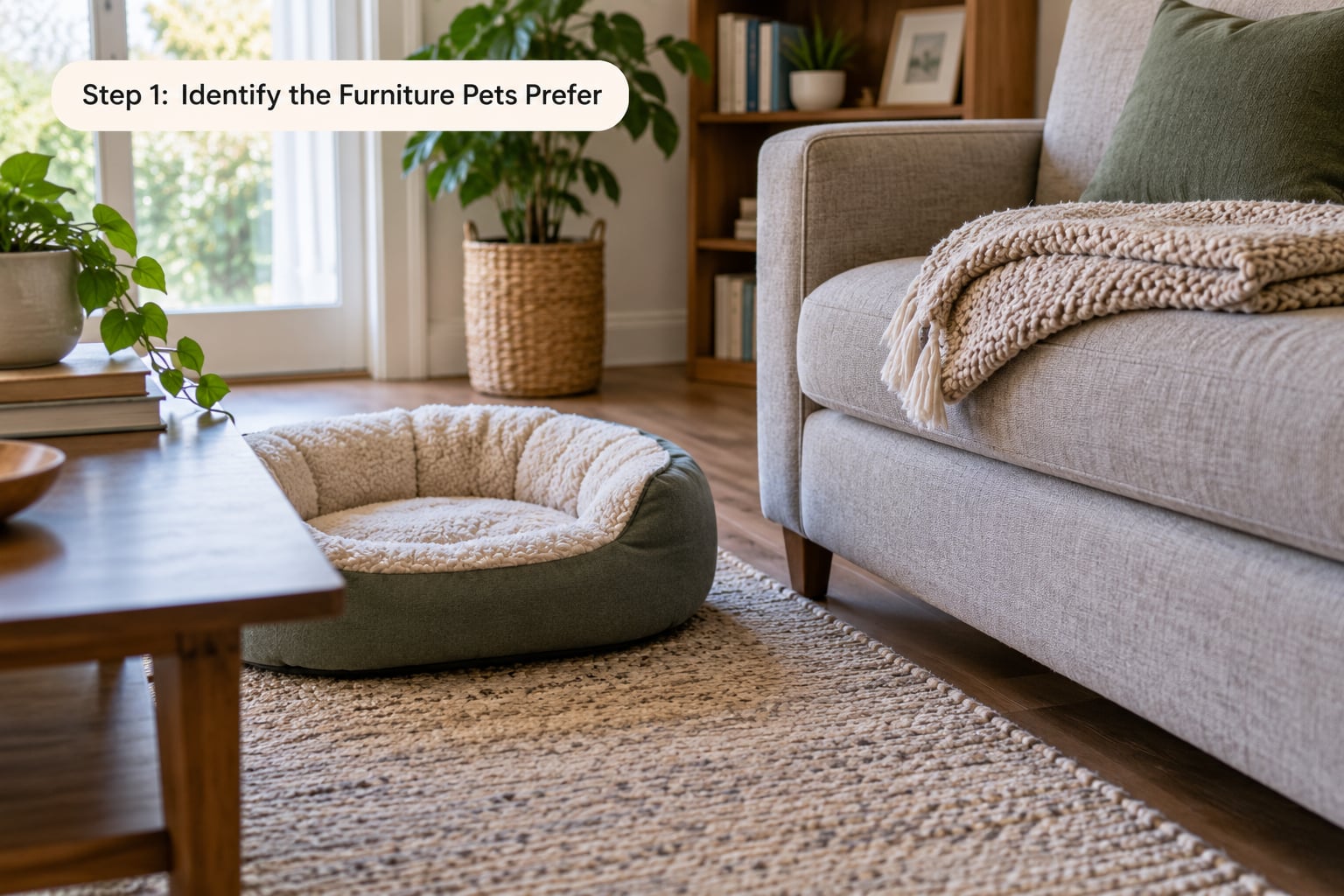
Watch which pieces get used. Most sofas show it clearly: flattened cushions, a worn throw, a faint smell of dog, hair in the seams. Note the times too, because a couch that gets jumped on at 7am and a chair that gets ignored at 7am need different amounts of attention.
Pick one or two priority pieces and start there. Trying to change every seat, bed, and table in the house at once is the fastest way to give up. Two weeks of focus on the sofa will teach you more than one distracted afternoon of ruling the whole room.
Step 2: Set Up an Appealing Alternative
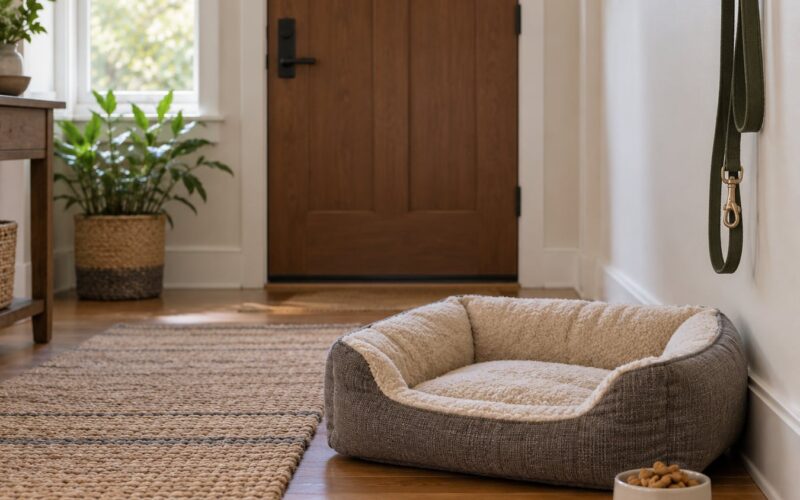
Put the alternative directly beside the targeted furniture, not across the room. A bed three metres away is a different offer from a bed at the arm of the sofa, and pets read distance as a deal-breaker.
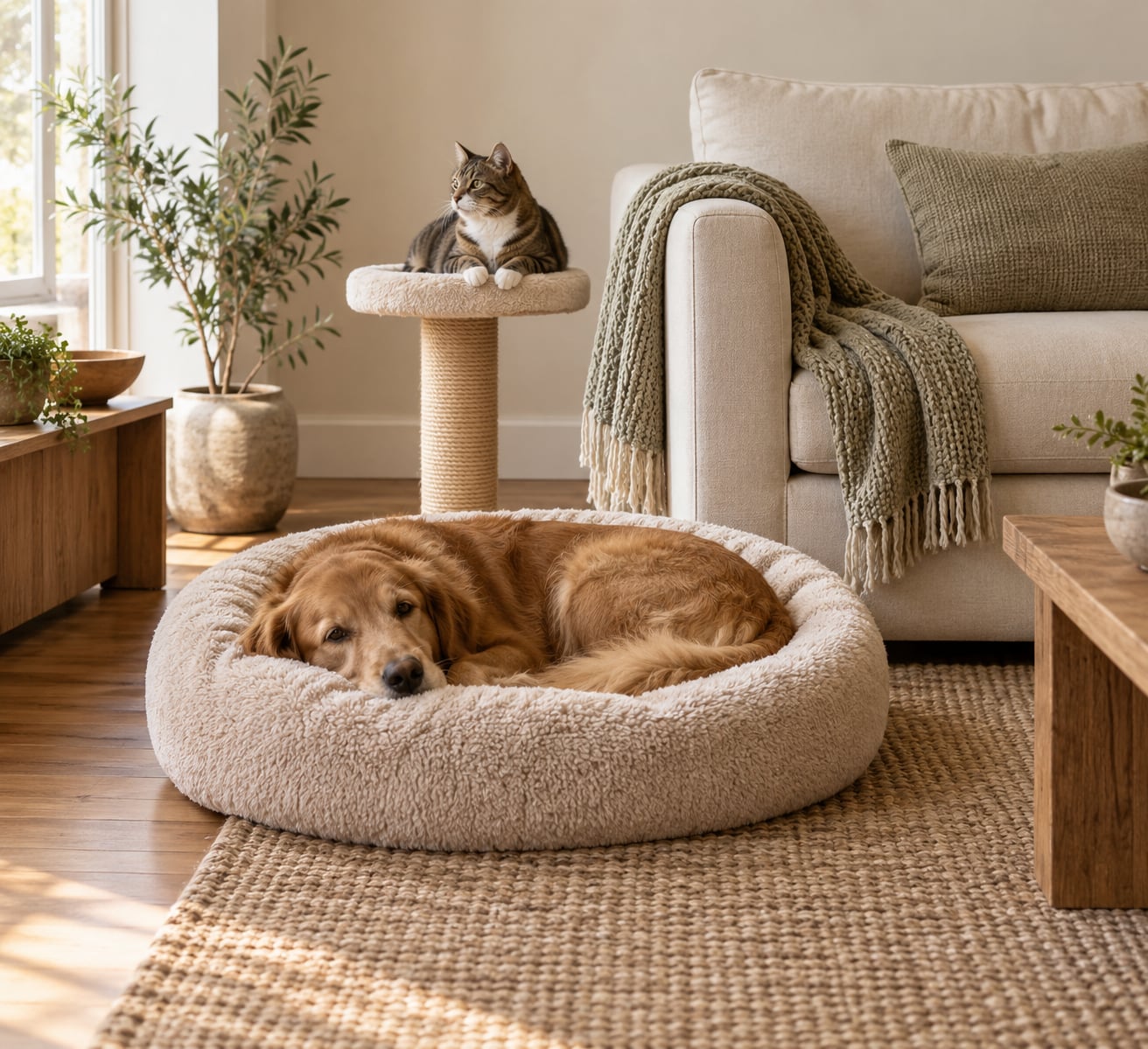
Match the spot to the pet. Cats want height, a perch, or a shelf above the sofa line. Dogs that settle only on furniture usually want elevation, so an elevated cot or a sturdy floor bed at sofa height works better than a flat mat. Put down a treat on the alternative without pushing your pet onto it, and walk away. Most animals investigate within a day or two.
Step 3: Redirect Before Your Pet Jumps Up
Catch the moment before the jump: paws on the seat, head turned up, weight loading. That is the moment to work. Say your cue word once, guide them to the alternative with a treat held low, and as soon as they touch down, mark it and give a treat there.
Say the cue word once and calmly. Repeating it four times while they ignore you teaches you nothing and adds noise. If you miss the timing, wait for the next attempt rather than chasing them mid-leap.
One technique that works well indoors is to keep a lead attached for a few minutes so you can guide your dog down without grabbing and carrying them. Carrying a pet off a sofa turns the whole thing into a game of attention, and attention is exactly what they wanted. Letting them walk off on their own keeps the reward attached to the behaviour you want.
Step 4: Block Access When You Are Away
Unsupervised hours are when furniture habits get built. Close the door to the room, or use a pet gate across the opening, and cover the pieces that are still in the shared space.
Choose non-toxic materials and check that nothing can be chewed loose. Skip anything with loose thread, dangling ties, or a size a dog could get a paw or a head stuck in. Never leave a pet trapped or shut in a space it cannot leave on its own.
A fitted slipcover or a washable throw does double duty: it protects the upholstery, and it makes the surface feel less like an invitation. If you are renting, tape and runners are usually removable without damage, while adhesive sprays on an unfamiliar fabric are not worth the risk.
Step 5: Reward Calm Furniture-Side Behavior
Deliver the next reward away from the furniture. When your dog lies on the floor beside the sofa, mark and treat. When your cat settles on the perch next to the chair, mark and treat. The rule you are teaching is that floor-level rest pays, and it pays immediately.
Let the duration and distance grow slowly. Start with a second of settling, then build to a minute, then to a step away and back. Keep a treat in your hand during the first few sessions, and switch to occasional rewards as the behaviour holds on its own. If the settling stops working, you pushed too fast and should step back one stage.
Step 6: Test the Routine and Reduce Aids Gradually
Once your pet settles on the alternative for most of a session, start removing the aids one at a time while you are in the room. Drop the runners first, then the cover, and keep the gate for another few days. A successful test is not a day where nothing happened; it is a day where the pet chose the floor without a prompt.
Practice in short, regular sessions rather than one long effort. Two five-minute rounds a day beat a Saturday of exhaustive enforcement, because the rule needs to survive short intervals, not a single intense hour. Told plainly, how to keep pets off furniture is about ninety percent consistency and ten percent equipment.
If a bad day knocks you back, return to the last step that worked rather than restarting. Re-teaching usually takes a few days, not a few weeks. And if the rule was learned in one room, expect to teach it again in a new home or around new furniture, because context is part of what the pet learned.
Common Mistakes
Shouting, Chasing and Spraying
Every one of these adds something to the behaviour. Yelling gets attention, chasing is a game, and a spray in the face teaches avoidance of you rather than of the sofa. Skip the noise and go back to the alternative, the marker, and the timing.
Changing the Rules Between Rooms
Off in the living room and welcome in the bedroom is not a rule, it is a coin flip. Pick your policy early: furniture is off-limits everywhere, or a covered zone is allowed. Then apply it identically, because a rule that depends on the room is the one your pet will test in the room you were not in.
Rewarding the Wrong Moment
Scratching your hand as you guide them down, mid-jump praise, and a treat on the sofa for good behaviour all pay the wrong thing. Mark after they are on the floor or the bed, never before, and keep the treat out of sight until the right choice is done.
Making the Alternative Uncomfortable
A thin mat in a drafty hallway will lose to a warm sofa every time. Wash it, refill it, move it somewhere with light, and give your pet a reason to claim it. If the pet would rather sit on the armchair than the new bed, put the bed where the pet already likes to sit.
Expecting It to Work Overnight
A week of steady work usually looks like this: week one, the pet forgets and you redirect. Weeks two and three, the forgetting drops sharply and short-lived attempts appear. By month two, it is mostly habit, with a relapse any time the routine changes. A puppy that gets consistent training usually settles into a house rule faster than an adult rescue that has never been asked.
How to Keep Pets Off Furniture When Everyone Else Breaks the Rule
This is the most common reason training collapses, and it is not a pet problem. Guests, partners, and older relatives are often the ones letting the pet up, and the pet reads the pattern instantly.
Say the rule out loud before people arrive, put a sign on the door, and give guests something else to do with the animal, such as a chew on a rug or a feeder in the kitchen. Then decide, calmly, whether an allowed covered zone is worth less friction than a total ban. Owners who pick the covered sofa often get more cooperation from a whole household than owners who insist on total exclusion.
Tips for Multi-Pet Homes, Renters and Stubborn Climbers
- Multi-pet: train them apart first, one at a time, then together. Two pets on the sofa turn a cue word into a race, and the faster one teaches the slower one that jumping works.
- Renters: favour removable methods. Washable covers, runners, tape on a hard surface, and closed doors leave the flat exactly as you found it.
- Large breeds and older dogs: if your dog will not settle on the floor, joint pain is often the reason. An elevated bed at sofa height gives them the height they want without the upholstery.
- Kittens and adolescent cats: climbing and jumping at this age is normal development, not defiance. Give them a tall, appealing option and expect the habit to soften with age.
- Overnight jumping: when you cannot supervise, close the bedroom door rather than relying on a deterrent you will not be there to reset.
Two things deserve a clear warning. Never use essential oil diffusers or sprays around cats, as several are toxic and cats have few safe ways out of a room. Never leave a static or shock-style mat under a small, young, senior, or anxious pet that might not be able to move away from it, and never spray a deterrent into an animal’s face.
Frequently Asked Questions
How do I stop my dog from jumping on the couch?
Start by catching the moment before the jump, not after it. Say your cue word once, guide your dog down with a treat held low, and mark and reward the instant all four paws hit the floor. Do not carry them off, because lifting turns jumping into a game of attention. Keep sessions short and repeat several times a day, and reward settling on the floor beside the sofa for as long as it lasts.
What is the best way to keep cats off furniture?
Give a cat somewhere higher and more interesting than the sofa, then protect the sofa while you do it. A window perch, cat tree, or shelf placed at or above seat height pulls a climbing instinct onto a surface you chose. Combine that with a closed door or fitted cover when you are away, reward any use of the alternative, and keep the rule identical in every room of the house.
Should I use spray bottles or other deterrents on my pet?
Skip spray bottles, shouting, and anything sprayed toward the face. They teach a pet to fear or avoid you, and often the behaviour continues anyway. Safer options are double-sided tape, plastic or silicone runners, a motion-activated mat, and barriers such as a closed door or pet gate. If you use a spray, choose one labelled for pets, follow the label, and keep essential oil products away from cats entirely.
How long does it take to train a pet not to get on furniture?
Most households see a reliable rule in two to four weeks of short daily practice, with the first week feeling like nothing is working at all. A puppy with no furniture habit usually picks it up faster, while an adult rescue may need six weeks. Progress is not a straight line: a change of routine, a new sofa, or guests allowing the pet up will set you back to an earlier stage.
Will furniture covers prevent my pet from getting on the sofa?
No. Covers protect the fabric and take the hair, claws and accidents, which makes an occasional slip harmless, but they do not teach anything. A pet that cannot see a cushion will sometimes find another way up. Use a cover alongside a cue word, a rewarded alternative, and a barrier for the hours you are away, not instead of them.
What should I do if my pet becomes anxious or destructive when kept off furniture?
Stop the deterrents and book a vet visit. Guarding a spot, barking, destructive chewing, or distress that appears only when you block access can point to anxiety, pain, or a fear association rather than a preference for the sofa. Your veterinarian can rule out joint pain or illness, and can refer you to a certified behaviourist or qualified trainer who works without punishment.
Conclusion
Start with one piece of furniture tonight. Watch for a day to confirm which one it is, put a bed, perch, or mat directly beside it, and reward every single time your pet chooses that spot. Redirect before the jump rather than after, and use a closed door or a cover for the hours you are away.
From there it is short, regular practice rather than one long session, with the whole household enforcing the same rule. Get the phrasing right and how to keep pets off furniture stops being a daily battle: expect a few good days and a few bad ones along the way, and step back to the last stage that worked when things wobble. If the behaviour comes with anxiety, guarding, or destructive chewing, talk to a veterinarian or a qualified behaviour professional before adding any deterrent.