A first puppy vet visit is a wellness appointment: your puppy gets weighed, checked over from nose to tail, and the vet builds a preventive care plan around vaccines, parasite control and feeding. The hands-on exam usually takes 15 to 20 minutes, and the rest is conversation. Here is how the whole thing unfolds, from the front desk to the follow-up booking.
This guide is general information, not medical advice for your dog. Your veterinarian decides what your puppy needs based on age, breed, health history and what has already been given.
Table of Contents
- 1What to Expect at a First Puppy Vet Visit
- 2First Puppy Vet Visit Checklist: What Happens Step by Step
- 3How to Prepare Your Puppy for the Appointment
- 4What to Bring to the First Appointment
- 5Questions to Ask About Your Puppy’s Care
- 6How Much Does a First Puppy Vet Visit Cost?
- 7When to Schedule a Follow-Up or Contact a Vet
- 8Frequently Asked Questions
- 9Can a puppy be examined before its first round of vaccines?
- 10Should I bring stool to my puppy’s first vet visit?
- 11How long does a first puppy vet appointment usually take?
- 12Can I give my puppy treats during the visit?
- 13Should I bathe my puppy before the appointment?
- 14What to Do First
What to Expect at a First Puppy Vet Visit
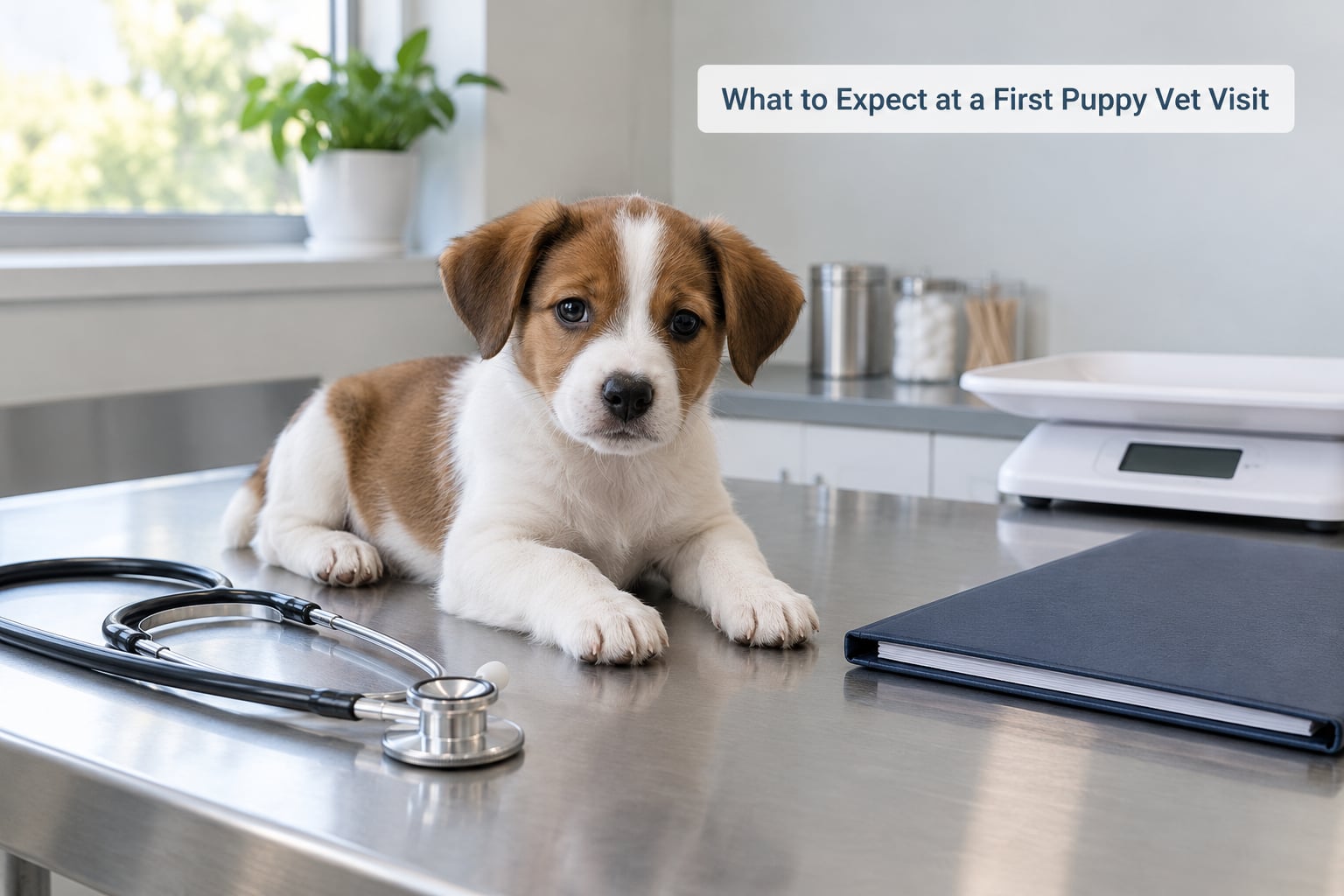
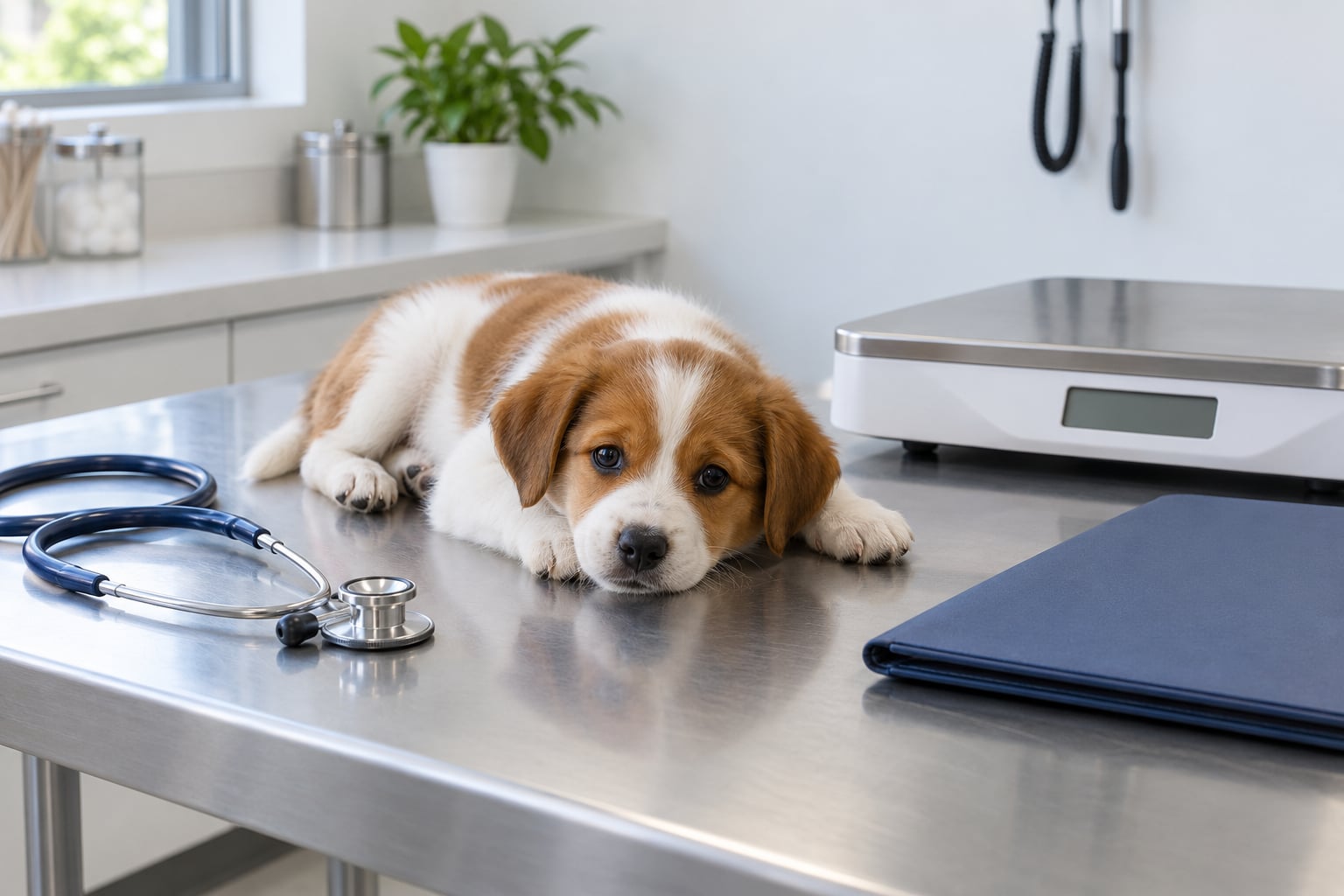
You start at the front desk with paperwork, then a veterinary technician usually takes over: weight, a quick history interview, and often a nail trim or a look at the ears. The veterinarian comes in afterward for the physical exam and the decisions about vaccines, parasites and nutrition.
The order is fairly predictable, and the sequence below is what most clinics run. What varies is the length of the appointment, which checks get done on the day, and which vaccines are given, because those depend on your puppy’s age, prior vaccination history, lifestyle and local rules.
One thing worth knowing before you go: the exam itself is quick. The questions are where the value sits, and those are the part that gets skipped when nobody has them written down.
Plan on leaving with a few new facts — your puppy’s weight, whether the heart sounds normal, whether a stool test is recommended — plus a written care plan covering the next vaccine doses and when to come back.
First Puppy Vet Visit Checklist: What Happens Step by Step
- Check-in and paperwork. You confirm the puppy’s name, age, source and vaccine history. Some clinics fill forms online beforehand, so filling that in early saves a few minutes in the room.
- Weight and body condition. A tech weighs the puppy and scores body condition by feel, checking ribs and waist from above. This number becomes the growth baseline that every later visit is compared against.
- History questions. Feeding, water, elimination, sleep, play, behavior, exposure to other dogs, and anything that worries you. Have the past two or three days in mind rather than the whole puppy’s life.
- Heart and lungs. The vet listens with a stethoscope, called auscultation, checking the heart rhythm and lung sounds.
- Temperature. A rectal temperature reading, usually taken early while the puppy is calm.
- Abdomen and lymph nodes. Palpation, meaning pressing with the hands to feel for lumps, pain or enlargement, including the lymph nodes under the jaw and behind the knee.
- Eyes, ears, nose and feet. Checking for tearing, redness, discharge, debris in the ears, and the pads and nails. This is where a limp or a grass-seed in a paw usually shows up.
- Teeth and mouth. Counting the baby teeth, looking for bite problems, and checking gums and tongue. Retained puppy teeth are common enough that owners regularly ask about them here.
- Skin and coat. Looking for fleas, ticks, dryness, lumps or irritation, particularly around the belly and groin where parasites hide.
- Genitalia. A quick check, which also tells the vet whether the puppy is male or female and helps with spay or neuter timing later.
- Fecal exam. A stool test screens for intestinal parasites such as roundworm, hookworm, whipworm and coccidia. If the puppy came from a shelter, farm or kennel, this is often done on day one.
- Vaccines and parasite prevention. Depending on age and history, the first dose in the puppy series may be given here, along with a plan for deworming and for flea, tick and heartworm prevention.
- Follow-up booking. The next wellness visit and remaining vaccine doses get scheduled before you leave, with a note of what to watch for in between.
Some of these are observations only the vet can make. Others are things nobody at the clinic can know but you.
| Check | What the vet records | What only you can report |
|---|---|---|
| Weight and growth | Weight in ounces or grams, body condition score | Whether appetite and portion size have changed this week |
| Heart and lungs | Rhythm, rate, any murmur heard | Coughing, gagging, or breathing hard after play |
| Mouth and teeth | Number of teeth, bite alignment, retained baby teeth | Chewing trouble, dropped food, bleeding gums |
| Skin and coat | Fleas, ticks, irritation, lumps | Itching, licking at paws, any new bumps you noticed |
| Abdomen | Palpation of organs, any discomfort | Bloating, belly pain, vomiting, diarrhea, worms in stool |
| Elimination | Fecal test result if a sample is provided | How often the puppy poops and what it looks like |
| Behavior | Fear, handling tolerance, energy in the room | Skittishness around people, resource guarding, sleep pattern |
| History | Vaccine dates and products, deworming given, source of the puppy | Breeder or shelter records, prior treatments, current medication |
Read that left-hand column as a mental script. If your puppy is on a medication, on a current parasite treatment, or reacting to a food, say it at check-in rather than at the end.
How to Prepare Your Puppy for the Appointment
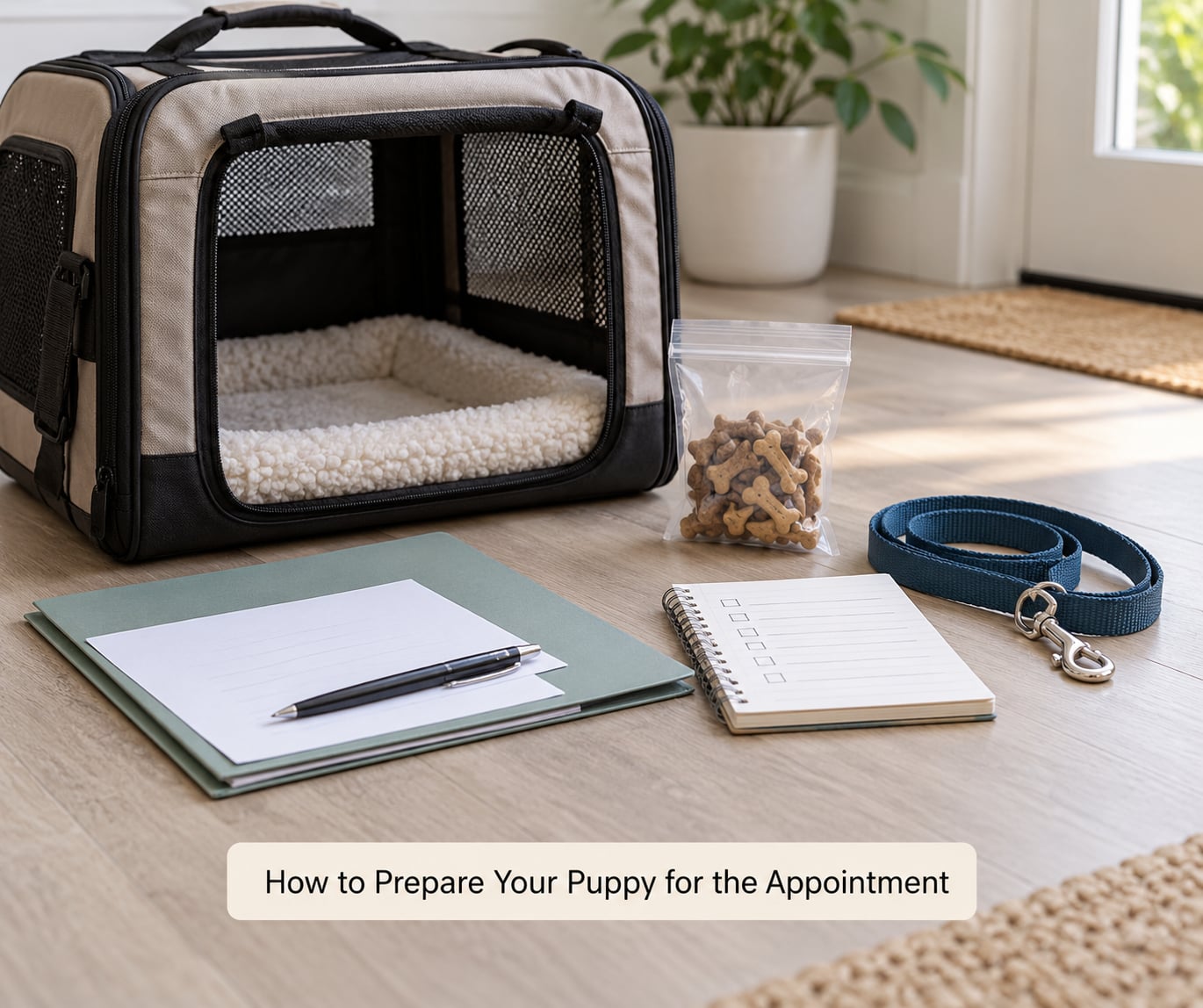
Call the clinic before the day and ask what they need from you. Some want stool collected that morning, some want records uploaded, some will email the intake form. A two-minute call removes most of the friction.
Then write down what you actually observed: how much the puppy eats, how often the puppy eliminates and what it looks like, sleep, play, and anything unusual. Vets cannot read this off a chart, and owners who arrive with specifics get answers that generic notes don’t produce.
Bring a pocketful of high-value treats, like small soft chews or training treats the puppy has never seen before. Those get used for holding, distraction and rewards during the exam, which keeps a nervous puppy more settled.
For handling, carry a small puppy in a carrier rather than on the shoulder near an unfamiliar dog. For a larger puppy, use a secure harness and leash. Puppies slip, and a dog that bolts in a parking lot is a much worse morning than a wiggly one.
Also spend a few days beforehand making the car and the carrier boring: short drives, treats near the carrier, no long errands. Owners who do that practice credit it with calmer arrivals, and it costs nothing.
Skip the bath. A clean-smelling puppy is not a requirement, and a stressed, wet puppy is harder to examine.
What to Bring to the First Appointment
These are the things that are genuinely hard to replace later:
- Adoption or breeder paperwork. Contract, invoice, and any health guarantee terms, including deadlines the breeder set for extra vaccine doses.
- Vaccination and medical records. Every page, including the lot numbers your vet may ask about. Records with gaps are normal; missing pages are the problem.
- Medication and parasite-treatment labels. Photos of the boxes work, and they show dosage, active ingredient and how recently it was given.
- A fresh stool sample. Only if the clinic asked for one. A small amount from the same morning, sealed and labeled.
- A written list of your concerns and questions. This is the item owners most often say made the biggest difference to the visit.
- Payment information and a way to authorize extras, so the cost conversation happens before the exam rather than at checkout.
These help, but nothing breaks without them:
- A secure carrier or harness and leash
- Treats and a favorite chew toy
- Waste bags and a towel for accidents
- A phone to take photos of the vaccine labels and the discharge instructions
One more thing: if the puppy came from a breeder or shelter, bring every page, even the ones that look like marketing. Handwritten notes about deworming in the first weeks often sit on a separate sheet, and that sheet is exactly what explains the puppy’s history.
Questions to Ask About Your Puppy’s Care
Ask these during the appointment, not in the car afterward. Owners who feel too nervous to speak up in the room can write the list down and hand it to the vet, or ask for the questions to be covered at checkout.
Vaccines
- Which vaccines does my puppy need today, and which can wait?
- When is the next dose in the series, and how many are left?
- Which of these are core, and which depend on where we go and who we meet?
Parasites
- Is a fecal test worth doing today?
- What deworming has my puppy already had, and what should continue?
- Which flea, tick and heartworm prevention fits a puppy this age, and when does it start?
- Is heartworm testing needed before starting prevention?
Nutrition and daily life
- How much should my puppy eat at this age, and how often?
- Should I be on puppy food, and when do we switch to adult food?
- What should I do about chewing, house training and crate training?
- When is safe socialization with other dogs, and where should it happen?
Long-term care
- Should we microchip now, and is it done at this visit?
- When is a good age to discuss spay or neuter?
- What is the next wellness visit, and what should happen between now and then?
- Which signs mean I should call you today rather than wait?
And the one question people forget: ask the vet what they noticed. Plenty of owners describe appointments that felt rushed, with the puppy weighed, vaccinated and sent out in minutes. Saying “what did you see that concerns you?” is a reasonable question, and a clinic that cannot answer it is telling you something useful.
How Much Does a First Puppy Vet Visit Cost?
Most first visits land somewhere in the low hundreds of dollars in the US, and the spread is wide because the total is a bundle. Fees vary by location, clinic, puppy size, health history and which services you accept on the day.
| Service | Typical US range (USD) | Notes |
|---|---|---|
| Wellness examination | 55 to 160 | Some clinics charge more for a first visit because it includes baseline records |
| Core puppy vaccines per dose | 15 to 40 each | Usually given as a series across several visits |
| Non-core vaccines | 20 to 60 each | Depends on lifestyle and local disease risk |
| Fecal exam | 20 to 60 | Some clinics include it in the exam fee |
| Deworming dose | 10 to 40 | Product and puppy weight decide the cost |
| Flea, tick and heartworm prevention | 15 to 60 per month | Usually the first purchase covers several doses |
| Microchip implantation | 25 to 75 | Registration for the chip number is a separate fee |
| Nail trim or ear cleaning | 10 to 30 | Often bundled into the visit |
These are typical US ranges, not quotes. They shift by region and change over time, so treat them as a rough plan and confirm actual costs with your clinic before any additional services happen.
Two ways to keep it predictable. Ask for a written estimate before the exam starts, and ask whether the clinic offers a wellness plan that bundles visits and vaccines. If you are considering pet insurance, enrolling before the first visit usually gives cleaner coverage, but the terms differ enough that you should read the policy rather than take a summary at face value.
When to Schedule a Follow-Up or Contact a Vet
Puppies are seen repeatedly through the first year, because the vaccine series is a series rather than one shot, and because growth is measured against a curve. How often that happens is your veterinarian’s call, based on your puppy’s age, health and what they find.
Book the next visit before you leave the building. Puppies on a vaccine schedule that is 3 to 4 weeks between doses drift quickly when the appointment gets postponed, and a series that stretches out has to be restarted in some cases.
Routine return timing is one thing. Urgent signs are another, and they should never wait for a scheduled appointment. Contact a veterinary clinic immediately if your puppy has difficulty breathing, collapses, vomits repeatedly, seems in severe pain, cannot urinate, or refuses to eat entirely. Puppies dehydrate fast, and a puppy that is not eating or not producing urine is an emergency, not a wait-and-see.
Sooner rather than later also fits: repeated diarrhea or vomiting, blood in the stool, coughing or gagging, limping, or a swollen belly. A phone call is enough to find out whether you should come in today.
Frequently Asked Questions
Can a puppy be examined before its first round of vaccines?
Yes. The physical exam, weigh-in and history questions do not depend on vaccination status, and a puppy can be seen at any age. Vaccinations given before the puppy has a solid series may simply need to be repeated on a schedule your vet sets. The one thing to mention at check-in is any prior reaction to a vaccine, so the clinic knows before anything is given.
Should I bring stool to my puppy’s first vet visit?
Only if the clinic asks for it. A fecal exam screens for roundworm, hookworm, whipworm and coccidia, and puppies from shelters, rescues, farms or multi-dog homes are more likely to need one. If requested, collect a small fresh sample from that morning, seal it in a clean container, label it and keep it cool. A sample that sits at room temperature for hours gives a misleading result.
How long does a first puppy vet appointment usually take?
Allow 30 to 45 minutes at the clinic, though the hands-on exam is only part of it. Weigh-in and history take several minutes, the physical exam runs 10 to 20, and vaccines or a nail trim add a few more. A first visit often runs longer than later ones because the vet is building a baseline and the questions take real time. Booking 30 minutes of quiet after the appointment avoids a rushed exit.
Can I give my puppy treats during the visit?
Yes, and most clinics encourage it. Small high-value treats are used to hold the puppy’s attention, reward cooperation during handling and make the exam less stressful. Keep them tiny, because a puppy that fills up on treats during the exam may not finish the appointment. Ask the clinic first if your puppy has a dietary restriction, is on a treatment diet, or is due for sedation or a blood test at that visit.
Should I bathe my puppy before the appointment?
Skip it. A bath on the morning of the visit leaves a wet, distracted puppy that is harder to examine, and some products interfere with fecal testing or skin assessment. Do bathe the puppy normally, not on appointment day, if it has been rolling in something unpleasant. If your puppy is overdue for a bath and extremely dirty, mention it at check-in so the vet knows what they are looking at.
What to Do First
Before you think about anything else, run this list. It takes ten minutes and it changes the appointment.
- Call the clinic and confirm the time, the age they expect your puppy to be, and whether they want a stool sample or forms completed in advance.
- Collect every record from the breeder, shelter or rescue, including handwritten deworming notes and any contract deadlines.
- Note the last two or three days: how much the puppy ate, how often it eliminated, sleep, play, and anything that worried you.
- Pack a secure carrier or harness, a leash and treats, and a pen for writing down answers.
- Write your questions down, including which concerns you want raised and when the next visit should be.
Everything beyond that is detail. What to expect at a first puppy vet visit is simpler than most people fear: a weight, a nose-to-tail check, a few decisions about vaccines and parasites, and a plan for what happens next.