A healthy adult dog needs roughly 1 ounce of water per pound of body weight each day, so a 20 lb dog drinks about 20 ounces (2.5 cups) and a 50 lb dog about 50 ounces. Always keep fresh water available, and never restrict a dog’s intake unless a veterinarian tells you to.
That single number is a starting point rather than a target to hit. Dogs get water from three places: the bowl, the moisture in their food, and metabolic water produced as nutrients break down. Counting only what passes through the bowl means a wet-fed dog looks thirsty when it isn’t, and a dog working in summer heat needs far more than the math suggests.
What matters most is knowing your own dog’s normal pattern. Owners who know what a full bowl looks like on a Tuesday in February can spot a problem in August without any math at all.
Table of Contents
- 1How Much Water Should a Dog Drink a Day?
- 2How much water should a dog drink a day by weight?
- 3What Factors Change How Much Water a Dog Needs?
- 4How Much Water Do Puppies, Adult Dogs, and Senior Dogs Need?
- 5How Can You Tell If Your Dog Is Getting Enough Water?
- 6Should You Limit or Force Water on a Dog?
- 7When Do You Need to Call a Veterinarian?
- 8Frequently Asked Questions
- 9How much water should a dog drink in a day if it is small?
- 10Can a dog drink too much water in one day?
- 11Is it safe to give a dog water with a syringe?
- 12How often should a healthy adult dog urinate each day?
- 13What type of water is safest for dogs?
- 14Conclusion: Start With Your Dog’s Normal Pattern
How Much Water Should a Dog Drink a Day?
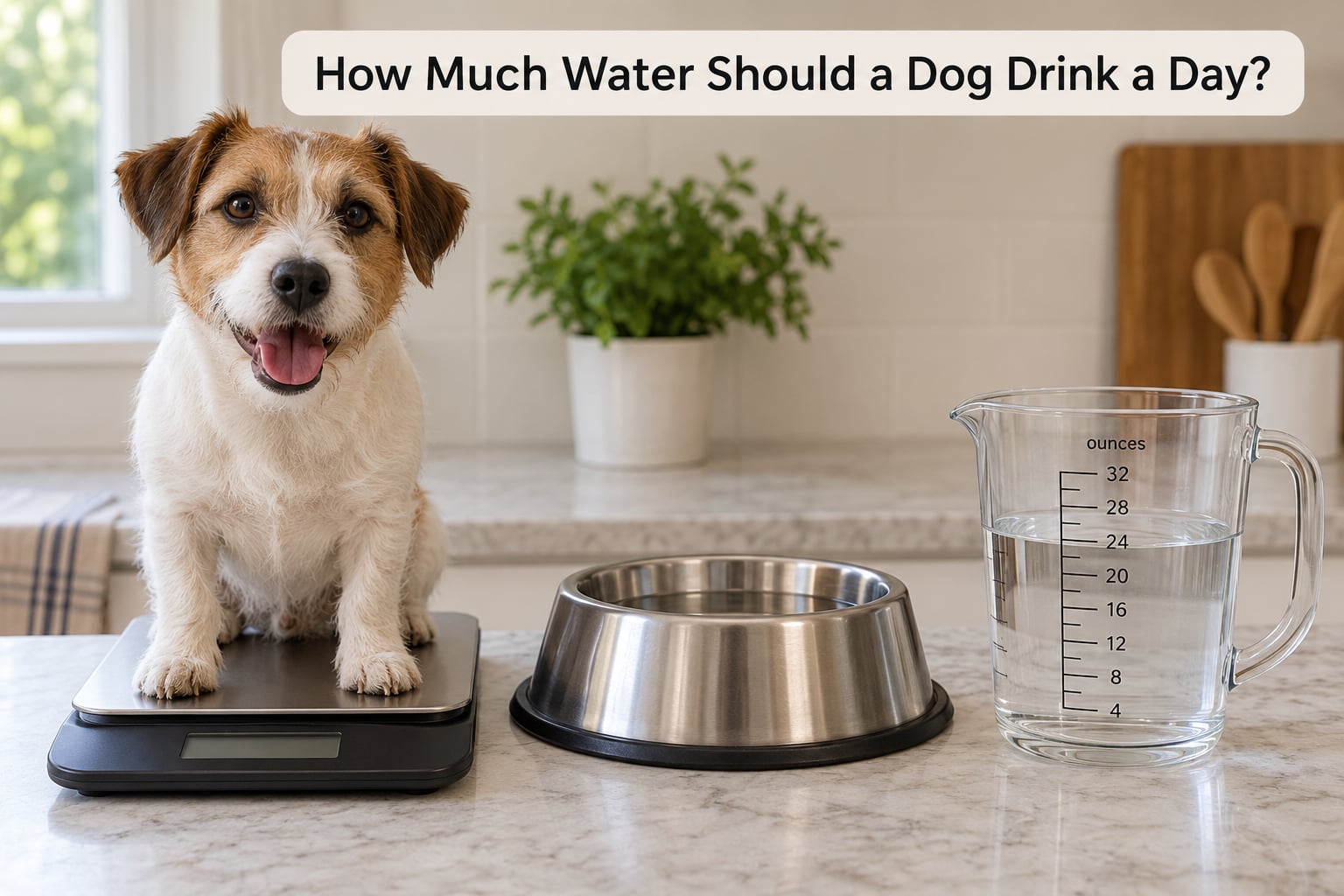
Here is the daily range most veterinary sources land on, converted into the units Americans actually use at home.
| Dog’s weight | Ounces per day | Cups per day | Millilitres per day |
|---|---|---|---|
| 5 lb puppy | 5 oz | about 0.6 cup | about 150 ml |
| 10 lb | 10 oz | about 1.25 cups | about 295 ml |
| 20 lb | 20 oz | about 2.5 cups | about 590 ml |
| 30 lb | 30 oz | about 3.75 cups | about 890 ml |
| 40 lb | 40 oz | 5 cups | about 1180 ml |
| 50 lb | 50 oz | about 6.25 cups | about 1480 ml |
| 75 lb | 75 oz | about 9.4 cups | about 2220 ml |
| 100 lb or more | 100 oz or more | 12.5 cups or more | about 2950 ml or more |
Two adjustments make the table more honest. A dog eating wet food drinks noticeably less from the bowl, since canned food is roughly 75% water against about 10% in dry kibble. And any dog working hard in hot weather can double its losses through panting alone.
How much water should a dog drink a day by weight?
Multiply the weight in pounds by one, then read across. A 12 lb terrier needs about 12 ounces, a 45 lb border collie about 45 ounces, and a 90 lb mastiff close to 90 ounces or roughly 1.8 litres.
Cups trip people up because eight ounces make one cup, so a 24 oz daily figure is three cups and a 32 oz figure is four. Millilitres are the easiest unit for anyone who already thinks in metric, since 1 ounce is about 30 ml.
Treat the table as an orientation point. A sedentary 20 lb house dog drinking 15 ounces on a cool day is doing fine. The number is there to help you spot a dog at twice the expected intake, not to ration one sitting at the expected amount.
What Factors Change How Much Water a Dog Needs?
Body size sets the baseline, and everything after that shifts it. Here are the factors that move the number most often.
- Diet moisture. A 20 lb dog on canned food may take only 5 to 8 ounces from the bowl and get the rest from dinner. The same dog on dry kibble might drink the full 20 ounces.
- Activity level. Walking, chasing, agility work and swimming all raise fluid loss. Offer water every 20 to 30 minutes during long or hot outings rather than waiting until the dog collapses on the trail.
- Weather. Panting evaporates water fast. Summer demand can exceed winter demand by a wide margin in the same dog, and indoor-only dogs in dry heated homes lose more than most owners expect.
- Life stage. Puppies, pregnant and nursing females, and senior dogs all need closer attention, though their needs run in different directions.
- Medication. Some drugs change thirst or urine output, and so does a switch to a new food. Any sudden change after a medication or diet change is worth a call to the clinic.
- Health conditions. Kidney disease, diabetes, Cushing’s disease and liver problems all alter fluid handling. Owners should never adjust intake on their own in these cases.
How Much Water Do Puppies, Adult Dogs, and Senior Dogs Need?
Puppies have small bodies and no bladder to speak of, so they drink in small amounts many times a day. The ounce-per-pound math still applies, but a large-breed puppy at three months may need its daily total split across a dozen or more offerings. A 3-month-old puppy drinking a couple of ounces every hour or two is unremarkable.
Adult dogs in the prime of life are usually the easiest to read. Their pattern is steady, their bowl empties at roughly the same rate each day, and they stop when they are done.
Senior dogs get less thirst drive, which is precisely the danger. A dog that once emptied two cups may quietly drop to half that without seeming unwell. Flat-faced breeds such as pugs and bulldogs add another wrinkle, because panting is their primary way of cooling down and they dehydrate faster for it.
How Can You Tell If Your Dog Is Getting Enough Water?
Run these three checks. They take under a minute and catch most problems well before a dog looks obviously unwell.
- Lift the gums and press with a thumb. Press a clean finger against the pink gum above a front tooth, then lift. Healthy gums are slick and wet, and colour returns in under two seconds. Slow return, tacky or sticky gums, or gums that look pale, white, blue or brick red all point to trouble.
- Do the skin tent test. Gently lift a small fold of skin over the shoulder blades and let it go. It should snap back almost immediately. A tent that stays raised for more than a second or two suggests a fluid deficit. The test is unreliable on very thin, very fat, senior or loose-skinned dogs, so weigh the result accordingly.
- Look at the urine. Well-hydrated urine is pale straw yellow. Dark, strong-smelling urine points one way, and unusually clear, dilute urine with frequent accidents points the other.
A dry nose proves nothing on its own. Plenty of healthy dogs sleep with dry noses, and plenty of dehydrated ones have damp ones. It is the gums, the skin and the urine that carry information.
Veterinarians grade dehydration by how much body weight water has been lost, which is why the table below matters.
| Severity | Water lost | What you see | What to do |
|---|---|---|---|
| Mild | under 5% | Slightly tacky gums, a little thirst, mild tiredness | Offer water freely and watch closely |
| Moderate | 5 to 10% | Dry tacky gums, sunken-looking eyes, skin tent lingers, dark urine, poor appetite | Contact a veterinarian the same day |
| Severe | over 10% | Very pale or red gums, collapse, weakness, confusion, no urine, failure to keep water down | Emergency care now |
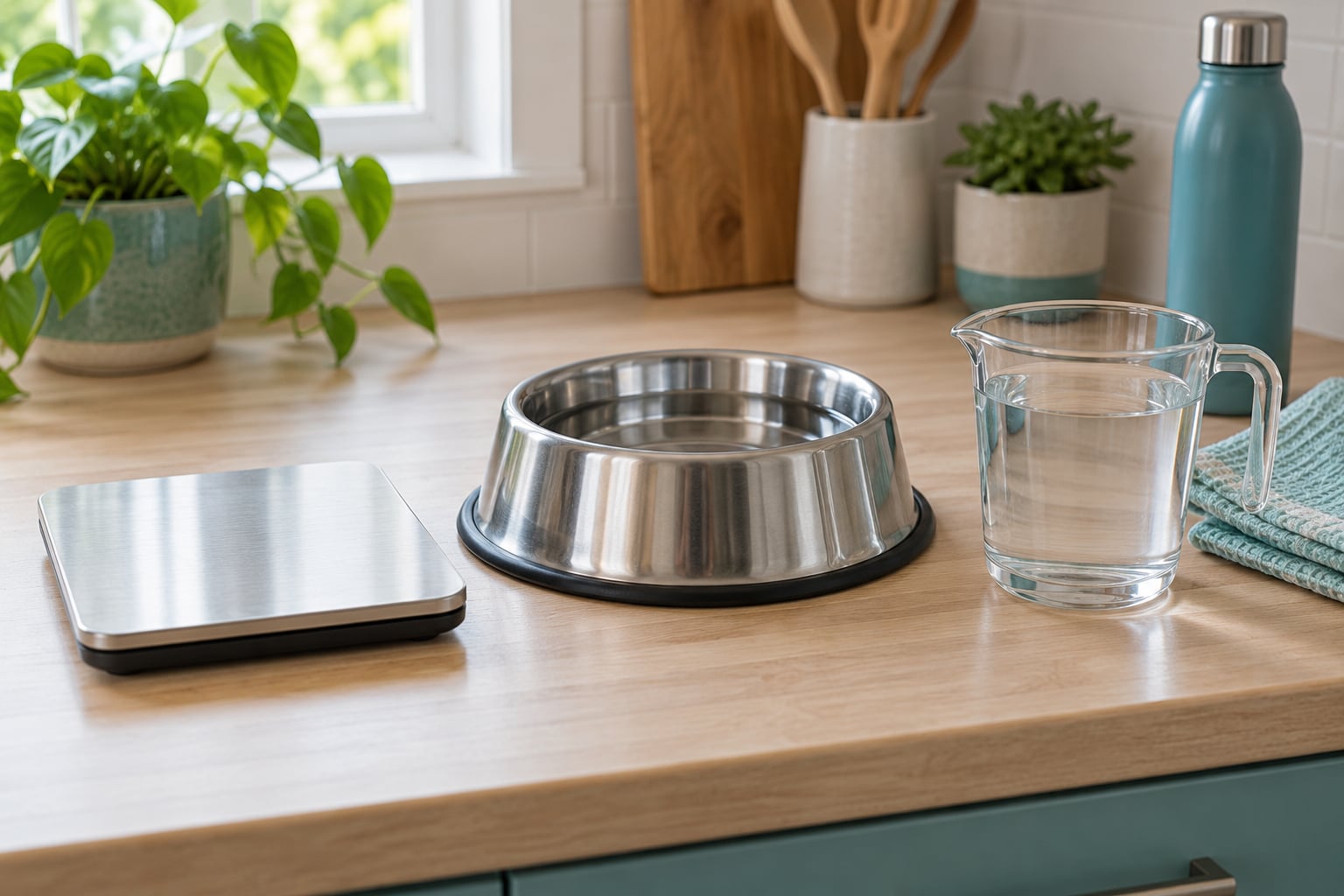
To measure actual intake over 24 hours, fill one bowl, mark the water line with a dry-erase marker, and count every refill from the same measuring cup. Weighing the bowl on a kitchen scale before and after is more accurate still. Do it on an ordinary day, not on one when something already seems wrong.
Too much drinking is just as worth naming. Consistently doubling the normal intake, emptying a large bowl several times a day, or asking for water every hour or two is called polydipsia. It often shows up before any other symptom of kidney disease, diabetes or Cushing’s disease does, and a veterinarian will likely check urine specific gravity along with bloodwork.
Should You Limit or Force Water on a Dog?
Do not limit water as a behaviour tool. Advice to withhold water through housetraining still circulates widely, and it is genuinely risky, especially for puppies, flat-faced breeds and dogs in warm weather. A house-training problem is a training problem. Small, frequent outings solve it, and a veterinarian can suggest a schedule that fits your dog.
Do not force water into a dog’s mouth with a syringe or a squeeze bottle either. Water forced into the throat can travel into the lungs and cause aspiration pneumonia, which is far harder to treat than the dehydration that started the problem. Never give a dog human medication, either. If a dog will not drink, the answer is a phone call, not a workaround.
What you can do safely is make drinking more appealing: refresh the water two or three times a day, add an ice cube, offer a splash of low-sodium broth, switch some meals to wet food, set out more than one bowl in different rooms, or try a fountain for dogs that refuse still water. A well-placed bowl matters too, away from the food and from another dog who might guard it.
When Do You Need to Call a Veterinarian?
Call the same day if drinking or urination changes suddenly and without an obvious reason, if your dog drinks noticeably more or less for more than a day, if it has produced very little or no urine, or if the gums look pale, dark, blue or bright red.
Go to an emergency clinic right away for collapse, severe weakness, confusion, repeated vomiting or diarrhoea, trouble breathing, a swollen or hard abdomen, tremors, or a dog that cannot keep water down. Seizures and a dog that is unresponsive count as emergencies too.
One more rare situation: a dog that drinks extremely fast in a pool or lake, then shows vomiting, wobbliness, extreme sleepiness or a swollen abdomen afterward may be water intoxicated. It is uncommon and it is serious, so head straight in.
Frequently Asked Questions
How much water should a dog drink in a day if it is small?
A small dog needs less in absolute terms but the same amount per pound. A 5 lb dog needs roughly 5 ounces (about 150 ml) a day and a 10 lb dog about 10 ounces (about 1.25 cups), assuming no extra activity, heat or illness. Because small dogs dehydrate proportionally faster, they need more frequent refills rather than bigger amounts. A veterinarian can give a figure tailored to your dog.
Can a dog drink too much water in one day?
Yes. Drinking noticeably more than usual, emptying a large bowl several times, or asking for water every hour or two is called polydipsia and deserves a veterinary check. Common causes include kidney disease, diabetes, Cushing’s disease and liver problems, plus some medications. Occasionally a dog overdrinks after hard play, but persistent change from the normal pattern should never be assumed to be harmless.
Is it safe to give a dog water with a syringe?
Generally no, not without a veterinarian instructing you to do it. Water forced into the mouth can pass into the lungs and cause aspiration pneumonia. Offer water freely in a bowl instead, add ice cubes or a little low-sodium broth, or switch to wet food. If your dog is refusing water because of illness, the safe route is a clinic visit where fluids can be given properly and the cause investigated.
How often should a healthy adult dog urinate each day?
Most healthy adult dogs urinate roughly three to five times a day, though frequency varies with water intake, diet, weather and activity. What matters more than the count is whether the pattern is normal for your dog. Very dark, concentrated urine that occurs less often can point to dehydration, while frequent pale urination with accidents can signal a different problem. Sudden changes warrant a call.
What type of water is safest for dogs?
Plain fresh tap water is fine for most dogs, and filtered or bottled water is not necessary as a rule. The bigger issues are freshness and cleanliness: wash bowls daily, replace water two or three times a day, and keep bowls out of direct sun. Avoid heavily fluoridated or strongly scented water, and skip any product with added flavourings, minerals or sweeteners unless your veterinarian recommends it.
Conclusion: Start With Your Dog’s Normal Pattern
Start with one ounce per pound per day, convert it to cups, and treat that as a reference rather than a prescription. Diet, heat, activity and age all shift the figure, so the number on any given day matters less than the trend across weeks.
Spend ten minutes measuring a single normal day. Mark the bowl, count the refills, note how often the dog urinates and where the water sits after eight hours. That becomes the baseline you will be glad to have later.
Then use the three checks whenever something looks off: gums, skin tent, urine colour. Call a veterinarian when intake or urination changes suddenly, when gums look abnormal, or when there is vomiting, weakness, collapse or trouble breathing. This guide covers general hydration guidance and does not replace advice for a dog you are worried about. For everything else, refresh that bowl and let your dog drink when it wants to.