The fastest way to clean a mattress and remove odors is to strip it bare, vacuum the whole surface, work baking soda across it for at least 30 minutes, spot-treat any stains with a damp cloth and mild detergent, then let it dry completely before you remake the bed. The whole job takes about an hour of active work plus drying time, and it needs no special equipment.
Most mattress smell comes from sweat, dead skin cells, body oils and dust mite waste that soak into the foam over years of use. You cannot scrub that out of the core, but you can lift what sits on the surface, neutralize what binds to it and keep moisture from getting trapped inside.
Table of Contents
- 1What You Need
- 2Step-by-Step: How to Clean a Mattress and Remove Odors
- 3Check the Care Label and Prepare the Mattress
- 4Vacuum the Mattress Surface
- 5Deodorize with Baking Soda
- 6Spot-Clean Stains with Mild Detergent
- 7Dry the Mattress Completely
- 8Maintain a Fresh-Smelling Mattress
- 9Smoke Odor and New-Mattress Off-Gassing
- 10Common Mistakes
- 11When Odors Persist
- 12Frequently Asked Questions
- 13Does baking soda really remove smells from a mattress?
- 14How long does it take for a mattress smell to go away?
- 15Can you machine wash a mattress?
- 16How often should you clean a mattress?
- 17Why does my mattress smell bad again a few days after cleaning it?
- 18Conclusion
What You Need
Everything here is a household item or a cheap tool you probably already own.
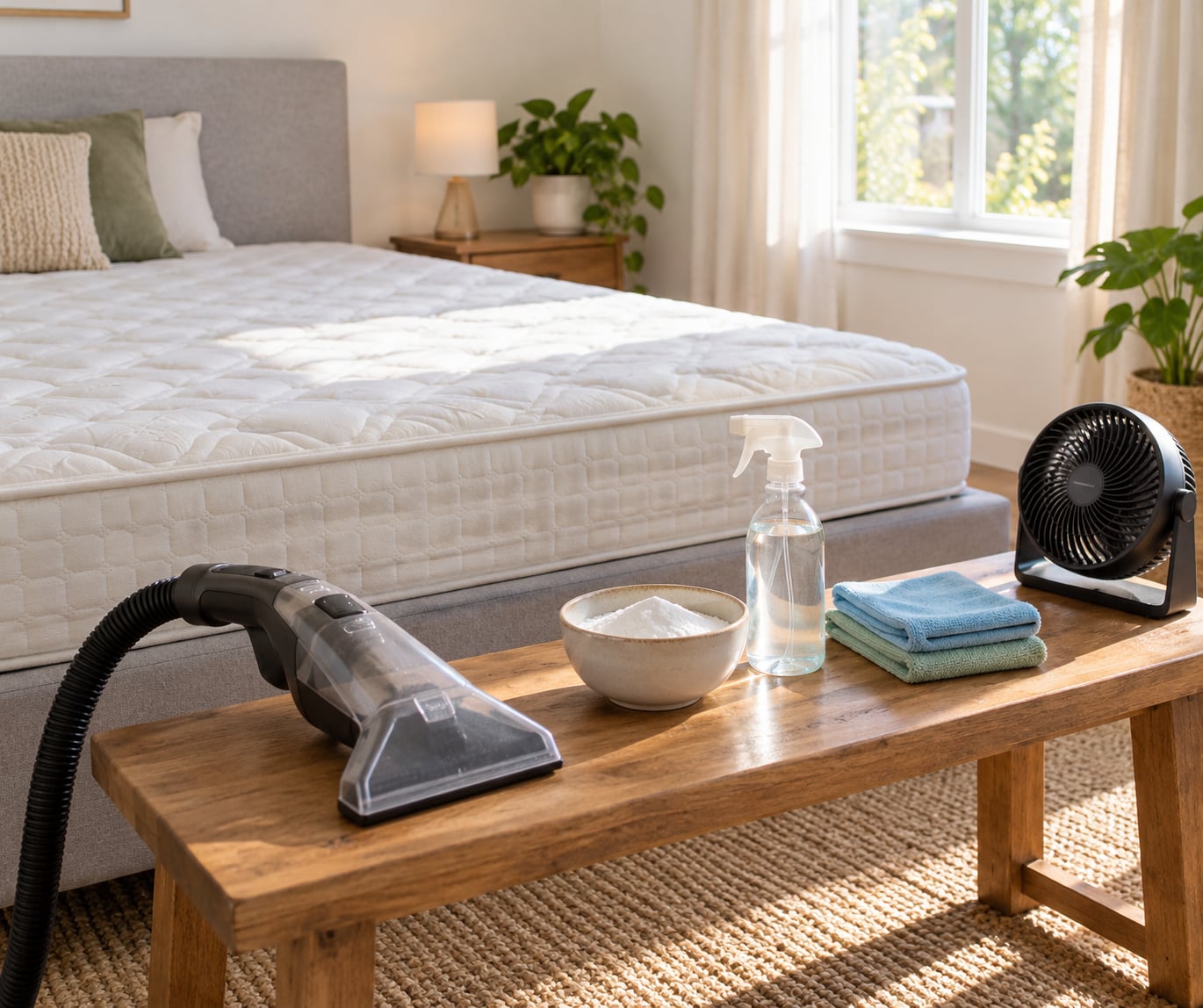
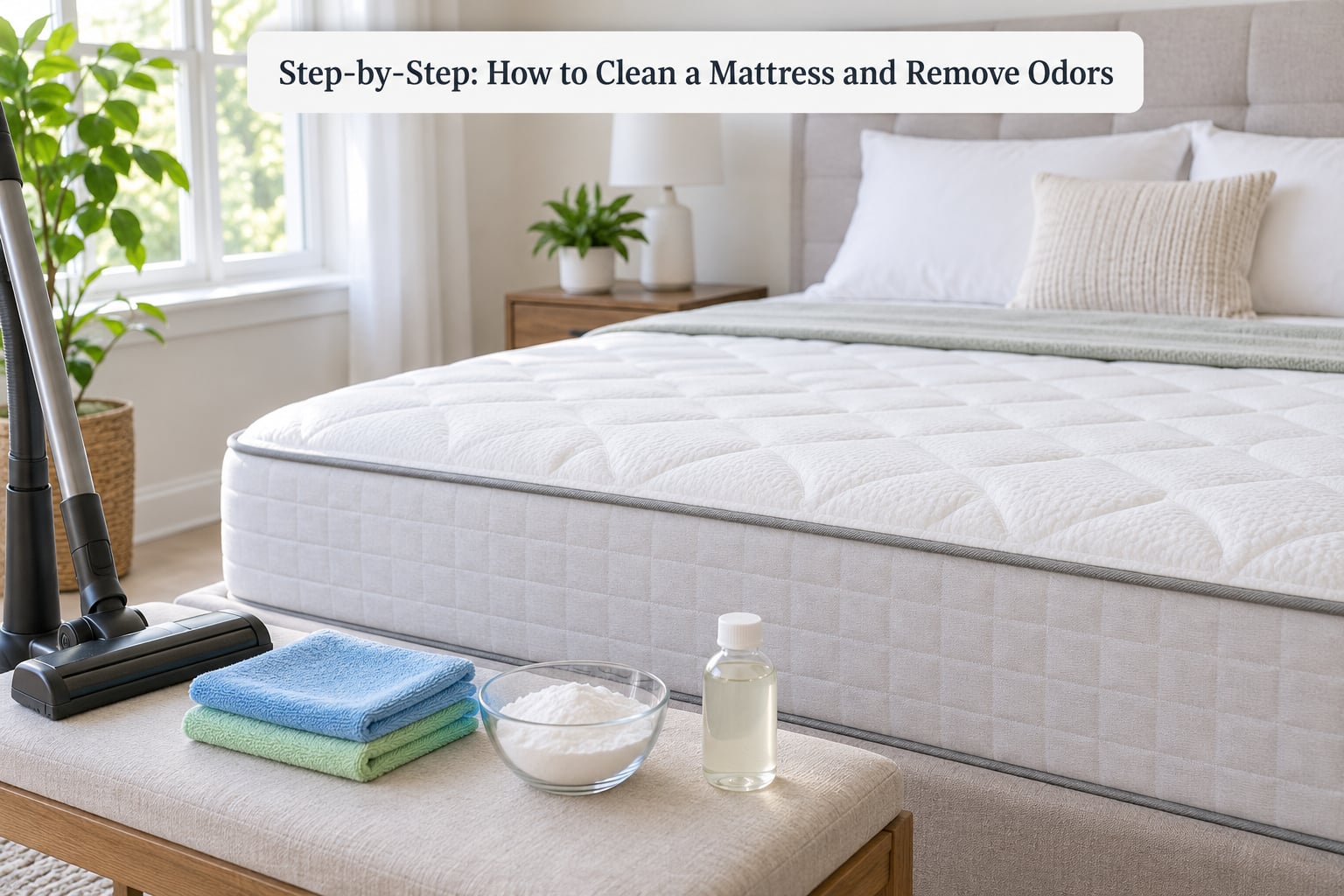
- Vacuum with an upholstery attachment. A crevice tool works in the seams and piping. This is the one item worth buying if you do not have one.
- Baking soda. A standard 1-pound box is enough for a queen. You need enough to dust the surface lightly, not bury it.
- Mild detergent or dish soap. A clear liquid laundry detergent mixed with water is fine. Skip anything with bleach in it.
- Clean microfiber cloths. Have two, because you will want a dry one for blotting.
- Spray bottle. For diluting detergent and for mixing a deodorizing spray.
- Fan or open window. Optional for small jobs, essential if you clean more than a few spots.
A waterproof mattress protector counts as optional for the clean itself and mandatory for the follow-up. It is the single thing that keeps a mattress from needing this whole process twice a year.
Step-by-Step: How to Clean a Mattress and Remove Odors
Check the Care Label and Prepare the Mattress
Mattresses come with a care tag, usually on the side or underside, and it tells you more than any generic guide can. Foam, latex and hybrid models usually say spot clean only. Innerspring and pillow-top models often tolerate more moisture.
Strip every sheet, protector, comforter and pillow off the bed. Those items trap the same odors, and if you put them back on while the mattress is still damp, the smell comes back within days.
Before wetting anything, run your hand across the surface and look for yellowing, dark spots, a damp cool area or any mustiness in a specific corner. Those findings decide whether you keep going or head to the section on persistent odors.
Vacuum the Mattress Surface
Vacuum first, always before any liquid. Dust, crumbs, pet hair and dead skin come up dry and easily, and if you spray first you are just moving a wet mess around.
Use the upholstery attachment and work in slow overlapping passes, head to toe. Spend extra time along the side seams, the piping and the tufted buttons, where most of the buildup hides. A HEPA vacuum pulls more of the fine particulate that triggers allergies, though any vacuum with an attachment will do the job.
If the mattress has a removable cover or zippered topper, open it and vacuum underneath too.
Deodorize with Baking Soda
Baking soda neutralizes odor molecules because it absorbs both acidic and basic compounds, and it pulls light moisture out of the surface while it sits. Sprinkle it on in a thin, even layer, roughly like a light dusting of snow rather than a blizzard. Do not scrub or rub it in. Disturbing the powder breaks the contact surface that makes it work.
Leave time depends on how bad the odor is:
- Light mustiness or ordinary body odor: 30 to 60 minutes. More than that buys you very little.
- Sweat odor or a stronger stale smell: 4 to 8 hours. Many people leave it overnight.
- Dried urine, pet accidents or smoke: 8 to 12 hours, ideally overnight, and combined with an enzyme cleaner rather than baking soda alone.
Then vacuum the powder off completely. If you leave residue behind, your sheets will turn gray within a week.
For an extra nudge, mix a few drops of essential oil such as lavender or eucalyptus into a cup of baking soda before sprinkling. The oil mostly smells nice; the soda does the deodorizing.
Spot-Clean Stains with Mild Detergent
Mix a small amount of mild detergent with warm water in your spray bottle, roughly a tablespoon per cup. Test it on a hidden corner first and let it sit a minute to make sure the color does not change.
Spray the stain, not the mattress. Dampen a microfiber cloth and blot outward from the center of the stain. Blotting lifts the soil; scrubbing drives it deeper into the foam where nothing will reach it.
Keep the surface barely damp. Memory foam and latex should never be soaked, and neither should any surface with quilting or a sewn-in layer, because the liquid finds the batting inside and stays there.
For dried urine, baking soda alone often only masks the smell. An enzyme cleaner such as Nature’s Miracle breaks down the protein molecules the urine left behind. Dampen the area, apply the enzyme cleaner, then lay a dry towel over the spot and press to pull liquid up. Cover with a plastic bag or plastic wrap and leave it for several hours, then blot and let it dry. Enzyme work needs time, not force.
For blood, blot with cold water first. Heat sets blood protein into the fabric.
Dry the Mattress Completely
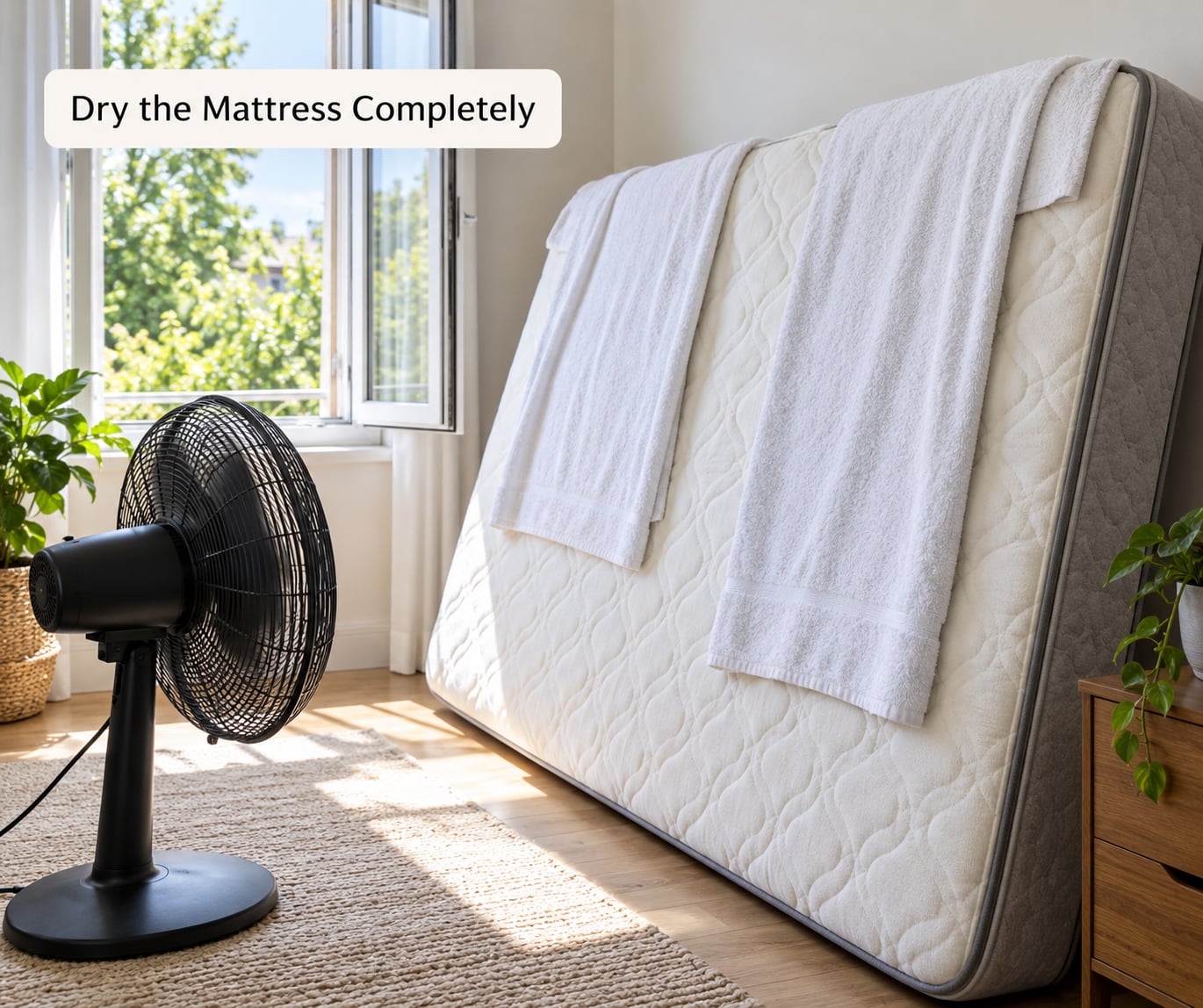
Drying is the step people rush, and it is the reason many mattresses smell worse a week later. Moisture sealed inside the core ferments.
Blot any remaining damp areas with dry towels, then stand a fan pointed at the mattress and open a window if the weather is dry. In humid weather a dehumidifier in the room pulls water out of the air faster than a fan alone.
Sunlight helps with odors and kills some bacteria, but direct sun can fade fabric and degrade foam in a latex or memory foam mattress, so give it morning light rather than a full afternoon. Press your palm firmly into the surface. If it feels cool and damp, it is not dry yet.
Once it is dry, put the mattress protector on before the sheets. That is your barrier for everything that follows.
Maintain a Fresh-Smelling Mattress
Wash sheets, pillowcases and the comforter weekly in hot water, following the care label. Comforters hold more smell than most people expect, and if you do not wash yours the whole room keeps the stale note even after the mattress is clean.
Vacuum the mattress every month. Rotate it every three months if the model is designed to flip, and rotate just the head-to-foot position if it is not, so one area does not take all the sweat.
Aim for fresh air on dry days, even if it is only twenty minutes with a window cracked. Treat new stains the same day they happen, because fresh matter sits on the surface and dried matter soaks in.
Smoke Odor and New-Mattress Off-Gassing
Cigarette smoke is different from body odor because it is a gas that penetrates the foam, so surface cleaning alone rarely wins. Air the mattress outdoors for a full sunny day if you can, then work baking soda across it for a day. For stubborn smoke, an ozone generator kills the odor in the air and inside the foam, but run it in a sealed, unoccupied room and follow the unit’s instructions exactly.
A brand-new mattress smelling chemical is off-gassing, which is the adhesive and foam releasing volatile compounds. It is strongest in the first 24 to 48 hours and fades over a few weeks, faster with airflow. Unbox the mattress, remove all plastic and let it air in a well-ventilated room with a fan running before anyone sleeps on it.
Common Mistakes
- Soaking the mattress. Foam cannot be wrung out, so the water stays inside and grows mold. Correction: damp cloth only, never a soaked patch.
- Using bleach or ammonia. Both are wrong for a mattress. Bleach can bleach the fabric, and ammonia plus any other cleaner makes toxic gas. Correction: mild detergent, or an enzyme cleaner for organic stains.
- Scrubbing stains. It pushes urine and body oils deeper. Correction: blot outward from the center with a clean section of cloth each pass.
- Skipping full drying. Damp foam is how a clean mattress turns musty again by Thursday. Correction: fan, airflow, palm test on the surface.
- Ignoring the care label. A warranty can be voided by the wrong cleaner. Correction: read the tag before you wet anything.
- Overdoing vinegar. A light spray on a damp cloth neutralizes alkaline odor, but soaking the surface in vinegar leaves its own sharp smell behind. Correction: use it diluted and sparingly, never full strength.
- Remaking the bed too early. Sheets trap whatever moisture is still in the foam. Correction: dry fully first.
One more that costs people an entire weekend: cleaning the mattress but not the box spring or bed frame. Dust and odor collect underneath, and smell wicks up through the mattress from below. Vacuum under the bed while the mattress is off.
When Odors Persist
Some smells mean the mattress has a problem you cannot clean from the outside.
Look at these signs before booking any more DIY attempts:
- Mold inside the foam. Dark spotting, or a musty odor that returns within days of a thorough clean, usually means moisture reached the core. Surface cleaning will not touch it, and a mattress cover hides it while the problem grows.
- Bed bugs. They give off a sweet, musty scent at close range, and you may see rusty spots, shed skins or small blood marks along the seams. If you find any of that, do not clean the mattress. Contact a pest professional, and expect to replace the mattress and possibly the frame.
- A deep set odor that no deodorizing method moves. If you have done the vacuum, the baking soda overnight and the enzyme treatment, and the smell is still there in a month, the material itself is saturated. Replacement is cheaper than fighting it.
A persistent smell that gets worse in humid weather often traces back to the room, not the bed. Check the window, the baseboard behind the headboard and the box spring for dampness, and run a dehumidifier for a few days to see whether the odor drops.
Professional cleaning is worth it when the odor is deep-set and the mattress is otherwise in good shape, since it uses steam and extraction to pull material out of the core rather than just neutralizing the top. If the smell came from smoke, expect more than one visit. For black mold, do not clean it yourself at all. A mattress with confirmed mold inside it gets replaced, not cleaned, and the source of the moisture gets fixed first, or the next mattress fails the same way.
Frequently Asked Questions
Does baking soda really remove smells from a mattress?
It absorbs both acidic and basic odor compounds and pulls light moisture out of the surface, so it works well on sweat odor, mustiness and general staleness. For urine, blood and pet accidents it mostly masks the smell, because the odor comes from protein molecules that soda does not break down. Pair it with an enzyme cleaner for those, and scale the sit time from 30 minutes for light odors to 8 to 12 hours for strong ones.
How long does it take for a mattress smell to go away?
A new mattress smell fades over two to four weeks if you leave it unboxed in a ventilated room with a fan running. A mattress that has absorbed sweat or mustiness usually smells noticeably better within 24 hours of vacuuming and baking soda, and fully fresh after a day of drying. Urine odor takes longer, usually several days of enzyme treatments. If the smell is unchanged after a week of work, the source is likely inside the core.
Can you machine wash a mattress?
Almost never. A standard home washing machine cannot handle the weight or the water, and the agitation damages foam and internal spring units. Check the care label first, but the safe rule is spot clean only. A few mattress pads and covers are machine washable, which is another reason to use a washable waterproof protector rather than treating the mattress itself.
How often should you clean a mattress?
Vacuum it monthly and do a full deodorizing every six months, more often if you have pets, young children or allergy sufferers. Wash sheets weekly in hot water, since most bedroom smell comes from bedding rather than the mattress. Treat stains the same day they happen. With a protector in place and a consistent routine, most mattresses need a deep clean once or twice a year and that is enough.
Why does my mattress smell bad again a few days after cleaning it?
Almost always trapped moisture. Either the mattress was not fully dry when you put the sheets back on, or your cleaning method wet the foam deeper than it could dry from the surface. Test by pressing your palm firmly into the center for ten seconds. If it feels cool or damp, that is the problem. Air the mattress with a fan, check the box spring underneath, and make sure the comforter is being washed too.
Conclusion
Start with the care label and strip the bedding, because those two minutes decide whether the rest of the job works. Vacuum the dry surface, work baking soda across it and give it the time the odor deserves, spot-treat stains with a barely damp cloth, then dry it until your palm says it is cool no more.
Once it is dry, put the protector on before the sheets. That is what keeps you from repeating this whole routine next spring.