If you want to know how to make a home smell good naturally, the answer is shorter than most articles make it sound: find whatever is producing the smell, get it out into fresh air, wash or absorb what you cannot remove, and only then add a light scent. Most people skip straight to the last part, which is why their house still smells off no matter how many candles they light. The whole routine takes about an hour the first time, then fifteen minutes a week to hold onto.
None of it needs plug-in diffusers, aerosols or candles. That matters more than it sounds, because fragrance sprays and diffusers are the most common trigger in homes with asthma, migraines, chemical sensitivity, birds, or small pets. Air exchange and honest cleaning work for every one of those households.
Table of Contents
- 1What You Need
- 2Ventilation, if you have it
- 3Cleaning basics
- 4Odor absorbers
- 5Gentle scent sources, all optional
- 6Step-by-Step: How to Make a Home Smell Good Naturally
- 7Step 1: Find and Remove the Source of the Odor
- 8Step 2: Freshen the Air Without Letting Stale Air Build Up
- 9Step 3: Clean Surfaces That Hold Odors
- 10Step 4: Absorb Remaining Smells with Everyday Materials
- 11Step 5: Keep Trash, Drains, and Laundry Fresh
- 12Step 6: Add a Gentle Natural Scent
- 13Step 7: Refresh Different Rooms Throughout the Week
- 14Step 8: Check Whether the Home Actually Smells Fresh
- 15Common Mistakes
- 16Frequently Asked Questions
- 17What is the best way to make a home smell good naturally without fragrance oils?
- 18How often should I ventilate my house to keep it smelling fresh?
- 19Does baking soda remove odors or only mask them?
- 20Are scented candles or essential-oil diffusers better for a fresh-smelling home?
- 21How can I stop my house from smelling musty?
- 22What natural scents work for pets and small children?
- 23Conclusion
What You Need
Almost everything below is already in your house or in the kitchen cupboard. That is the honest pitch: this is not a shopping list, it is a list of things you own that are not being used properly.
Ventilation, if you have it
- A box or desk fan to push air between two open windows
- A screen or mesh to keep insects out while the windows are open
- A bathroom or kitchen exhaust fan, if the house has one
Cleaning basics
- Hot water and whatever unscented or lightly scented cleaner you already use
- Baking soda for scrubbing sinks, drains and stovetops
- White vinegar for glass, counters and hard floors
- A vacuum, ideally with a HEPA filter, for carpets and rugs
Odor absorbers
- An open jar or bowl of baking soda
- Activated charcoal bags or pouches
- Unscented clumping cat litter, which works the same way at a fraction of the cost of a charcoal pack
Gentle scent sources, all optional
- Lemon, orange or grapefruit peels
- Fresh herbs: rosemary, thyme, mint, basil, lavender stems
- Cinnamon sticks, whole cloves and vanilla extract
- Fresh coffee beans
If you have a diffuser or essential oils already, keep them for step six and read the safety notes there before you use them. If you have pets, a bird or a baby, skip the oils entirely and use the food-based options, which are the safest and honestly the most reliable.
Step-by-Step: How to Make a Home Smell Good Naturally
Step 1: Find and Remove the Source of the Odor
Start by walking through the house with your nose, room by room, and write down where the smell is strongest. That spot is your starting point, not the whole problem.
The usual suspects, in the order they show up in most homes: food cooking or a trash can that has sat too long, a dry or slow drain, damp laundry or towels that stayed in the machine, pet bedding and litter areas, and musty soft furnishings such as curtains, cushions and carpets that have trapped moisture. Smelly shoes and wet coats by the door are quietly responsible for a surprising share of bad-housing complaints.
It worked if, when you clear the source, the smell drops noticeably within an hour even before you do anything else. If it does not change, that tells you there is a second source somewhere else in the house, so go back to the walkthrough.
Step 2: Freshen the Air Without Letting Stale Air Build Up
Open a window on each side of the house so air moves straight through instead of pooling. Then put a fan in one opening, set it to blow outward, and you have cross-ventilation: stale air leaves through the far window rather than swirling back in.
Fifteen minutes of real air exchange does more for a stuffy room than an hour of any scented product. Choose mild weather when you can, because smoke, pollen and a neighbour’s barbecue drifting indoors will undo the work in minutes.
Watch for these signs it worked: the room feels cooler and drier on your skin, dust motes stop hanging in the light, and the smell is thinner rather than stronger. In winter, do the same thing twice a day for five minutes and the air quality gain is real.
Step 3: Clean Surfaces That Hold Odors
Odor molecules stick to porous surfaces and to whatever is spilled into them, so the fix is washing rather than spraying. Vacuum carpets and rugs first, working slowly, then mop hard floors with a solution of about one cup of white vinegar per bucket of water.
On counters, tile and sinks, baking soda on a damp cloth handles grease and drains without leaving a perfume layer behind. Upholstery and curtains do best with steam, and you do not need a specialist machine for it; a damp towel heated in the microwave and pressed against the fabric lifts a surprising amount of trapped smell. Always rinse and dry properly, because damp upholstery that never fully dries grows the smell you were trying to remove.
You know the cleaning worked when the surface is cool to the touch and feels free of residue. If it feels tacky or you can see a film, you have not rinsed enough.
Step 4: Absorb Remaining Smells with Everyday Materials
Baking soda neutralizes acidic odours and adsorbs moisture, which is why it is the base of nearly every homemade deodorizer. Spoon an open layer into a jar or bowl, leave it uncovered, and place it near the problem rather than in the middle of the room. It needs air to work, so a sealed container does almost nothing.
Replace or stir the contents every two to four weeks, and immediately if you pour liquid into it, because damp soda turns into paste and stops absorbing. Activated charcoal works on the same principle with far more surface area, and unscented cat litter performs similarly for a small closet or a car boot.
A couple of safety notes, because this is the step where people get careless. Keep every container labelled, out of reach of children and pets, and never on a surface where someone eats. Do not put loose baking soda into a washing machine or dishwasher, and never inhale the dust when you pour it, because that is the fastest route to an irritated throat.
It worked if the air in the small space reads neutral to you after an hour, and if the soda is still dry and powdery rather than damp and gritty.
Step 5: Keep Trash, Drains, and Laundry Fresh
The hidden places cause more trouble than the visible ones. Take the trash out every day rather than on a full-bin schedule, rinse reusable containers before they go back in, and lift the sink stopper to wipe the drain grate, which collects more residue than people expect.
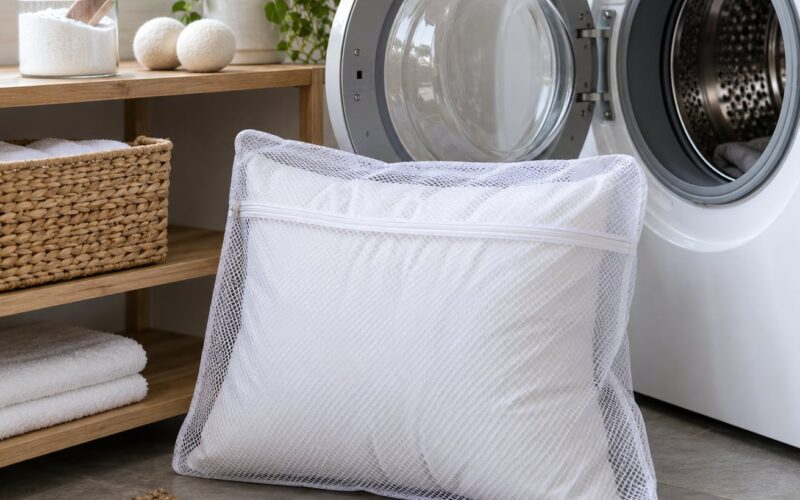
Pour hot water down kitchen and bathroom drains weekly and scrub the overflow holes, which smell because they are rarely touched. Laundry is the other one: hang towels and bedding until completely dry, leave the machine door ajar between loads, and wash the drying rack itself, since it holds the smell of the last load and gives it back to the next one.
The test here is simple. If a room stops smelling the moment the bin goes out or a drain gets scrubbed, you have found the real source and the rest of your routine becomes much easier.
Step 6: Add a Gentle Natural Scent
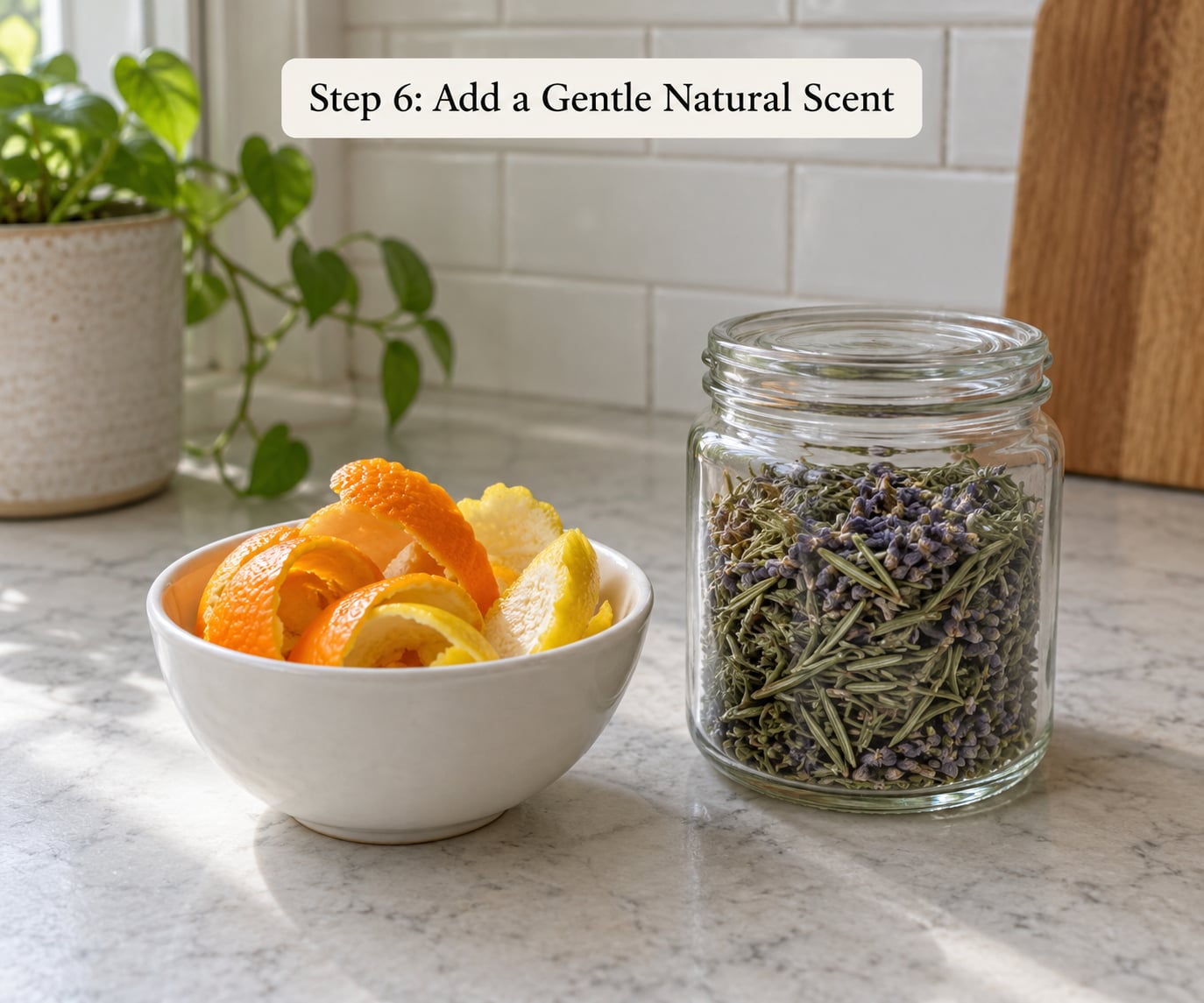
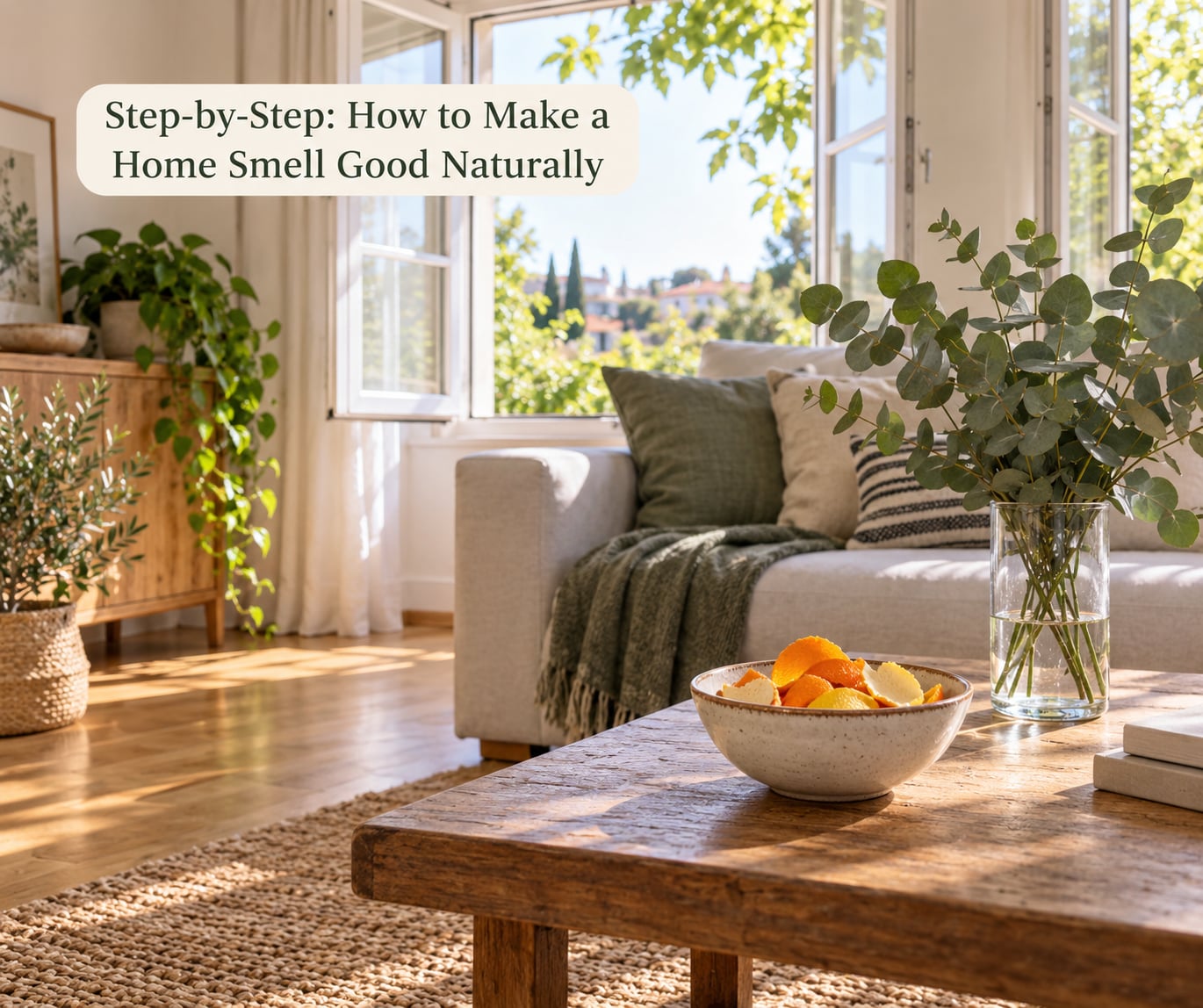
Now, and only now, do you add scent, and keep it restrained. Put citrus peels in a small bowl of water, add a few herb stems, and change them every two or three days. Coffee grounds work the same way and smell good for about a week before you dump and refill them.
A simmer pot is the strongest natural method for a whole house. Put water in a pan, add cinnamon sticks, cloves and citrus peel, bring it to a light simmer and turn the heat to the lowest setting. It holds for two to four hours, and you must stay in the kitchen with it, because unattended simmering water is how people start fires.
For a room spray that lasts, mix roughly three ounces of rubbing alcohol with two ounces of water and add four or five drops of oil, shake and mist from about a foot away. If you prefer no alcohol at all, a spray bottle of water with a few drops of oil and a drop of dish soap works nearly as well, just shake it before each use. Skip both if you have birds or small pets in the room.
A few cautions about scent. Candles, aerosol fresheners and diffusers mask odors rather than removing them, they build up on curtains and upholstery, and they can trigger asthma, allergies and pet respiratory problems. Never mix vinegar with bleach or any other chlorine product. And if your home has birds, a hamster, or a bird cage in a room you are scenting, ask your vet about specific oils first, since several common ones are harmful to birds and small animals.
You have gone too far when a guest walks in and comments on the smell before you have even opened the door. One noticeable scent in one part of the house is plenty.
Step 7: Refresh Different Rooms Throughout the Week
One routine does not fit every room. The kitchen needs the exhaust fan on while cooking, the bin emptied nightly and the stovetop wiped down afterward. The bathroom needs the smallest fan or window used during and for fifteen minutes after a shower, because trapped moisture there is what produces the musty smell people describe.
Bedrooms and laundry rooms benefit from dry air and washed bedding, since a dehumidifier or a simple open window does more than any scent in those two rooms. The entryway is where shoes and wet coats pile up, so a washable mat and a bowl of soda near the door handle it better than scenting does. Pet areas need washing and dry bedding far more than they need fragrance.
Set a weekly rhythm rather than occasional deep cleans: bins out Monday, drains flushed, towels washed and fully dried, a fresh load of bedding, and absorbers stirred or replaced on the first of each month. Most households in this situation find the difference between a house that smells fresh and one that does not comes down to the towels drying completely.
Step 8: Check Whether the Home Actually Smells Fresh
Walk out of the house, close the door for five minutes, then come back in. That is the closest thing to how a guest arrives, and it is the only honest test. The first breath back in tells you what you need to know.
If the smell returns fast, the source is still there. Walk through again room by room and check the sinks, the bin, the litter tray, the bathroom floor, and any laundry that has been left. If a room smells fine for two weeks and then turns, you have a recurring source, usually a drain or a pet area that needs attention on a schedule.
Be careful not to over-correct with scent during this process. Adding more fragrance to a house that still has an unresolved smell only hides the evidence you need. If you find yourself reaching for a second jar of soda, look for the leak instead.
Common Mistakes
Almost every disappointing result traces back to one of six habits.
- Masking instead of removing. A candle over a smelly drain does not touch the drain. Fix: work through steps one to three before you add anything that smells pleasant.
- Scenting stale air. Fragrance sprayed into an unventilated room just concentrates. Fix: ventilate first, then decide whether you still need scent at all.
- Mixing vinegar and baking soda. The fizz is the two reacting with each other, not with the odor, and the result can smell sour for a day or two. Use vinegar for cleaning and baking soda for absorbing, in that order, never at the same time in the same spot.
- Overloading a room with scents. Two different smells competing makes both worse, and repeated heavy scent in the same room gives you scent fatigue, where you stop noticing and guests notice immediately. Fix: one scent per room, and less than you think.
- Neglecting drains, bins and washing machines. You can clean every visible surface and still have a house that smells off. Fix: the hidden-source routine in step five, weekly.
- Leaving absorbers where a child or pet can reach them. Fix: labelled open containers, positioned where nothing can be spilled or eaten, with the contents refreshed and never reused on food surfaces.
Two habits carry most of the benefit long term. Air exchange twice a day is free and keeps everything else working, and washing towels and bedding on a schedule keeps the biggest soft surfaces in the house from becoming odor storage. Add a monthly absorb-and-replace and your house holds its smell between deep cleans.
Frequently Asked Questions
What is the best way to make a home smell good naturally without fragrance oils?
Ventilate first, then clean, then absorb. Open windows on opposite sides of the house for fifteen minutes with a fan pushing air out, wash the surfaces that hold odors, and set out an open jar of baking soda near the problem spot. Citrus peels, fresh herbs and coffee grounds add scent if you want it. Skip oils entirely and the routine still works for most rooms.
How often should I ventilate my house to keep it smelling fresh?
Twice a day is a good baseline, even in winter, with five to ten minutes each time. Cross-ventilate by opening windows on opposite sides and running a fan outward. In warm weather, longer and more often air exchange makes a bigger difference than any scented product. If someone in the house has asthma or chemical sensitivity, regular air exchange is the single most useful thing you can do for them.
Does baking soda remove odors or only mask them?
It genuinely neutralizes them. Baking soda is alkaline and reacts with acidic odor molecules, and its surface also adsorbs moisture that odors need to settle. It works best uncovered, where air can reach it, sitting near the source rather than in the middle of the room. Stir or replace it every two to four weeks, and immediately if it gets damp, or it stops working.
Are scented candles or essential-oil diffusers better for a fresh-smelling home?
Neither, if an odor source is still present. Candles and aerosols mask smells and add chemicals to the air, and diffusers can leave an oily film on surfaces and overwhelm small rooms. They are a reasonable finishing touch in a room that is already clean and ventilated. In homes with birds, small pets, babies or anyone with asthma or chemical sensitivity, skip them and use food-based scents instead.
How can I stop my house from smelling musty?
Musty smell almost always means moisture that has not dried. Run the bathroom or kitchen exhaust fan during use and for fifteen minutes after, keep relative humidity down with a dehumidifier or regular airing, and check under sinks, behind appliances and inside wall cavities for leaks. Wash and fully dry any fabric that has been damp, and replace carpet or underlay that stays wet after cleaning.
What natural scents work for pets and small children?
Stick to food-based options: citrus peels, cinnamon, vanilla, coffee, and fresh herbs such as rosemary and mint. These smell good without adding airborne chemicals, and they are the safest choice in a nursery or a home with a bird, hamster or small dog. Keep any bowls out of reach and empty them before they turn, since stale peels smell worse than no scent at all. Ask your vet before using any essential oil around animals.
Conclusion
The order is what makes this work: remove the source, ventilate, clean, absorb, and only then add a light scent. Skipping ahead to the last step is why so many houses never improve.
So start now by inspecting four places, in this order: the bin, the kitchen and bathroom drains, any towels or bedding that dried in the machine, and the room that gets no air at all. Fix those before you buy or mix anything, and the rest of this guide becomes maintenance rather than rescue work.