The fastest way to get rid of a musty basement smell is to find and stop the moisture, then dry the space, clean what got wet, and keep air moving through it. Most of the work is one afternoon of diagnosis plus a dehumidifier on a timer.
The odor itself is never the problem. Musty is what damp, dark, low-airflow spaces smell like once mold and mildew start feeding on something porous. Fragrance covers it for a day, then the smell comes back stronger because the moisture never moved.
Table of Contents
- 1What You Need
- 2Step-by-Step: How to Get Rid of Musty Basement Smell
- 31. Find the source of the musty smell
- 42. Remove standing water and improve drainage
- 53. Increase airflow and lower humidity
- 64. Clean walls, floors, carpets, and storage areas
- 75. Remove or isolate musty materials
- 86. Prevent the odor from coming back
- 9Common Mistakes
- 10Masking the smell with fragrance
- 11Running a dehumidifier and calling it fixed
- 12Buying an undersized unit
- 13Cleaning before stopping the moisture
- 14Leaving porous materials in place
- 15Opening windows on a humid day
- 16Frequently Asked Questions
- 17What causes a musty smell in a basement?
- 18Is a musty basement smell always caused by mold?
- 19What humidity level should I maintain in my basement?
- 20Can I use a dehumidifier to remove a musty basement smell?
- 21How do I get musty smell out of basement carpet?
- 22When should I call a professional for a musty basement smell?
- 23Conclusion
What You Need
Gather these before you start, and you will avoid the two most common mistakes: cleaning before diagnosing, and buying a dehumidifier that quits within an hour.
- Bright flashlight or headlamp — you will be looking at seams, joints, and the underside of joists.
- Moisture meter — a pin-type or pinless meter tells you whether concrete or drywall is actually wet, not just cool.
- Dehumidifier with a continuous drain line — the single most-repeated fix in homeowner threads.
- Box fan or a vented exhaust fan — for moving air across the floor and out.
- Wet/dry vac, squeegee, and floor drain cover
- Mildewcide cleaner or a bleach solution for routine cleaning, plus detergent and a brush for concrete.
- Nitrile gloves, goggles, and a N95 or P100 respirator if you will be disturbing suspected mold.
- Hydraulic cement, polyurethane caulk, and masonry or encapsulation paint for permanent crack repairs.
- Odor absorbers — baking soda, unscented cat litter, or activated charcoal.
Step-by-Step: How to Get Rid of Musty Basement Smell
1. Find the source of the musty smell
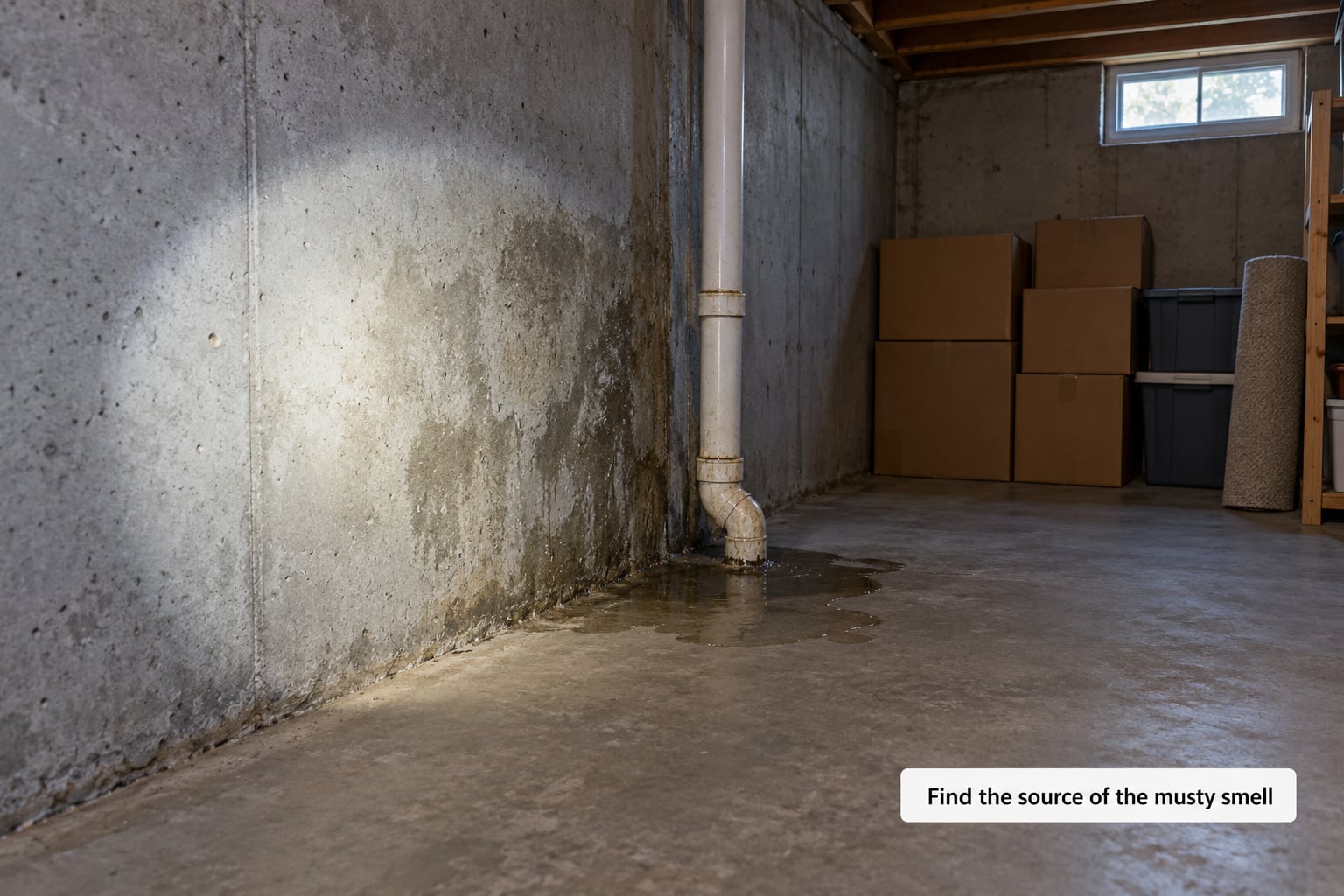
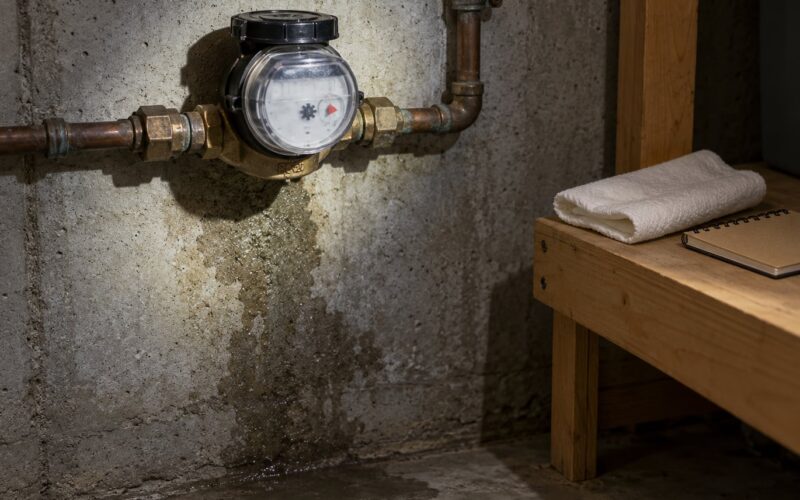
Start on a dry day, turn off any dehumidifier, close the door, come back in, and sniff. Then walk the perimeter with the flashlight and look for dampness, efflorescence (white powdery bloom on concrete), dark staining at wall joints, and sweating cold-water pipes.
Then check the drain. This is the fix most people never make: floor drains and P-traps under laundry sinks, floor drains, and rarely-used bathroom fixtures dry out completely, and an empty trap lets sewer gas into the room and reads as damp, musty staleness. Pour a gallon of water into every floor drain and every unused trap, and do it monthly.
If there is genuinely no water anywhere, work through this list: dry floor drains, condensation beading on cold concrete or ductwork, seasonal outdoor humidity working through a leaky window well, damp cardboard and stored fabric holding odor from an old leak, and a downspout that dumps right at the foundation wall.
Match the smell to the source. Earthy and damp usually means mold or mildew on something porous. Sharp and sulfurous means a dry drain trap or a sewer line issue. Sour and muffled points at damp carpet or storage boxes. A smell that spikes two days after rain points at an exterior water path, not at anything inside.
2. Remove standing water and improve drainage
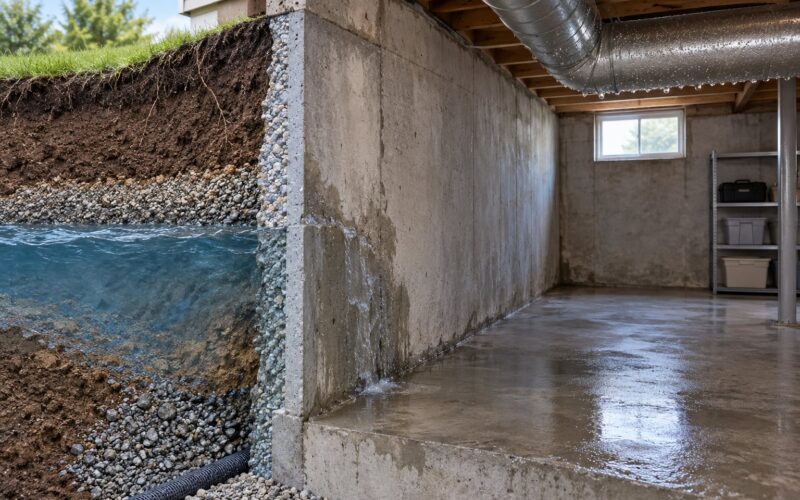
If there is water on the floor, deal with it before anything else. Wet-vac it, clear the floor drains, and confirm the sump pump actually runs by filling its pit with a hose and watching the float switch.
Outside, extend downspouts at least six feet from the foundation and check that the soil slopes away rather than toward the house. That slope should drop roughly six inches over the first ten feet. Inside, seal cracks and wall-to-floor joints with hydraulic cement, not regular caulk, which will peel away from damp concrete.
3. Increase airflow and lower humidity
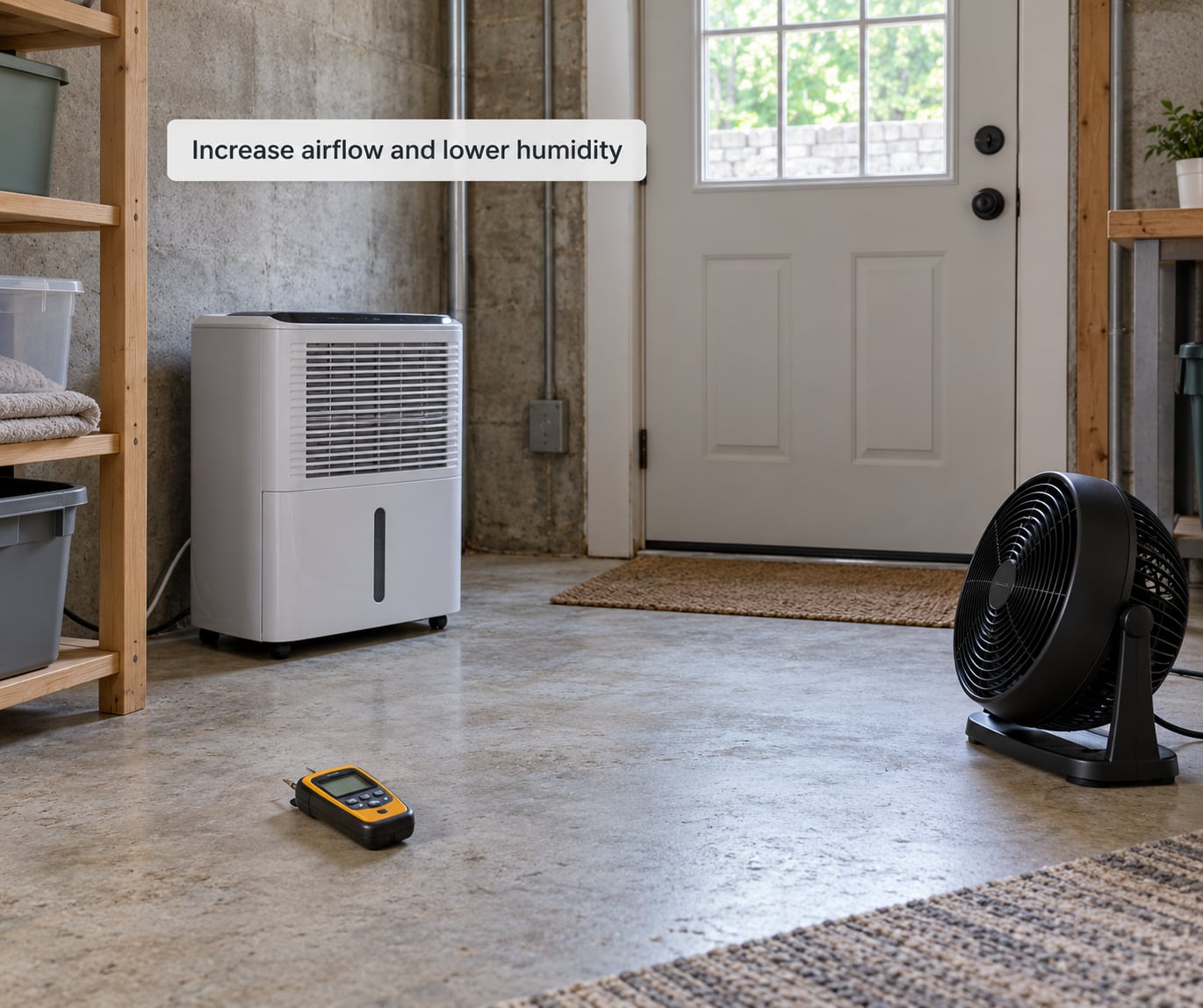
Hold relative humidity between 40% and 60% year-round. Above 60% mold can begin on surfaces; sustained readings above 70% mean you have a standing growth problem, not just a smell problem. A cheap hygrometer on the wall is the only way to know.
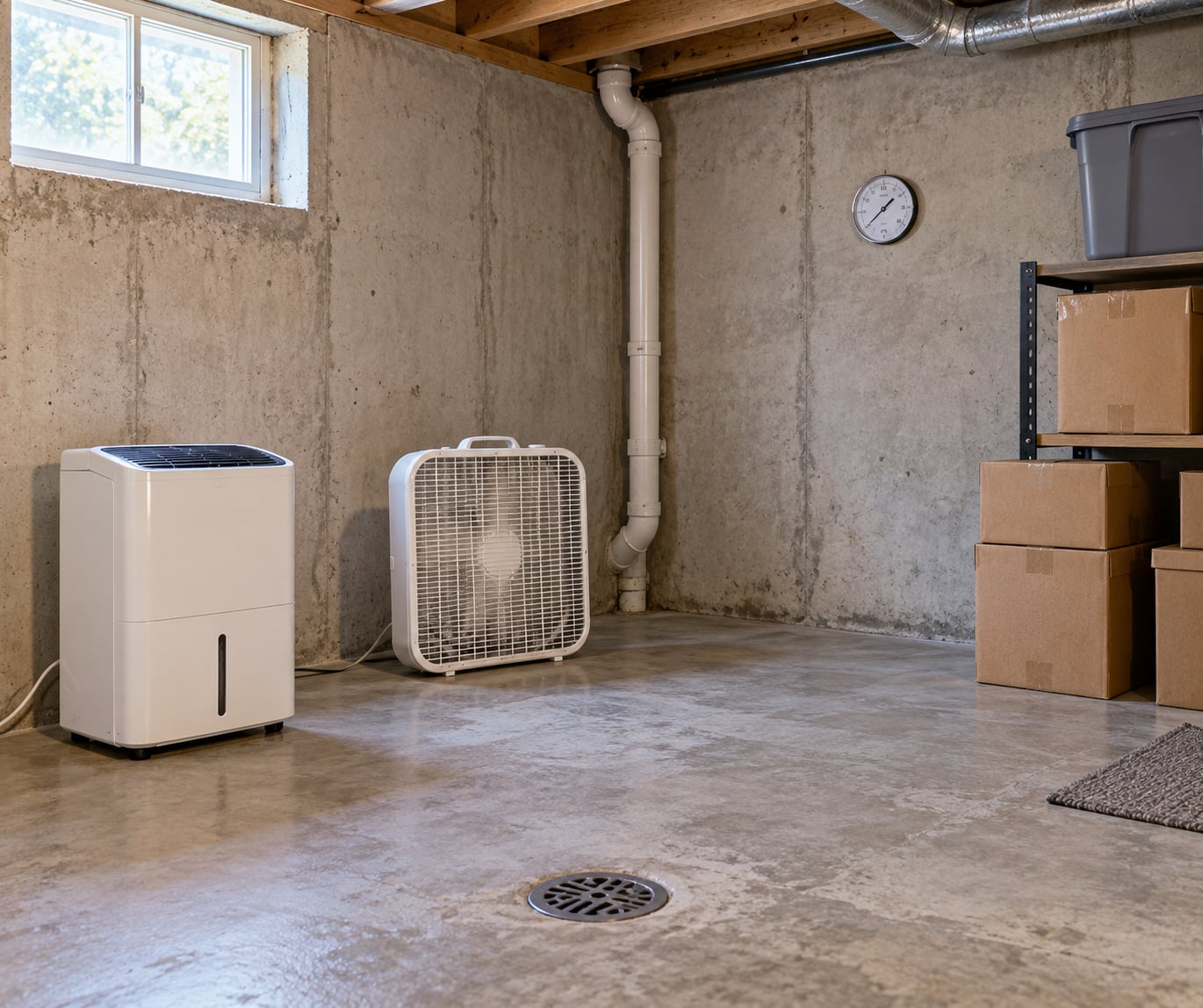
Size the dehumidifier for 30% to 50% of its rated pint capacity, because basement air is cool and damp and the unit’s rating assumes warmer conditions. A unit rated for 2,000 square feet usually cannot handle a 1,200 square foot basement in humid weather.
- Up to 800 square feet: a 20 to 30 pint unit works as a starting point.
- 800 to 1,200 square feet: look at 40 to 50 pint capacity.
- 1,200 square feet and up, or any finished basement: a 50+ pint unit with a built-in pump and continuous drain line.
Set the humidistat so it holds 50% to 55%, and run it continuously rather than only when you notice the smell. Set the drain hose before you need it.
For airflow, run a box fan low, aimed across the floor toward a window or door, and keep interior doors propped open so air moves room to room. Watch the weather though: when outdoor humidity is high, opening windows feeds the problem instead of fixing it. Run an exhaust fan only while air is actually leaving, such as during a shower or a dryer cycle.
4. Clean walls, floors, carpets, and storage areas
For routine cleaning, wash concrete floors with detergent and water, scrub painted walls and drywall with a mildewcide cleaner, and dry everything thoroughly. Save the disinfecting wipe-down for after the source is fixed.
Never mix bleach with vinegar, ammonia, or any other cleaner. The combination releases toxic gases. Use one or the other, and never more than one part bleach to ten parts water.
On carpet, pull it up if it has been wet and cannot be dried within 24 hours. Wet carpet dries two layers at a time — the top feels dry while the padding underneath stays saturated. For musty but dry carpet, vacuum thoroughly, shampoo it, and dry it with fans running until the pad is dry to the touch all the way through.
For visible mold larger than about 10 square feet, or mold in a heating duct, stop and call a remediation pro rather than scraping it yourself.
5. Remove or isolate musty materials
This step surprises people. Cardboard boxes, paper, fabric, upholstery, carpet padding, and insulation are sponges: once they take on a musty smell, they will re-release it for years even in a dry room. Clearing out damp stored items is usually where people notice the biggest change, and it costs nothing but an afternoon.
Bag anything that was stored damp and take it out. Wash what you can keep on a hot cycle, dry it completely, and store the rest in sealed plastic bins or on metal shelving off the floor, never against a foundation wall. Cardboard does not belong in a basement that has ever had water.
Once everything is dry and the source is fixed, set out baking soda, unscented cat litter, or activated charcoal in open containers. They absorb odor slowly over days rather than masking it, and they need replacing every few weeks. Vinegar is a cleaning product, not an absorber.
6. Prevent the odor from coming back
Keep a routine rather than a one-time cleanup. Run the dehumidifier on 50% to 55% humidity year-round, empty or flush the tank and wash the filter twice a month in summer, and flush the floor drains monthly.
Check the humidity reading monthly with a hygrometer, keep downspouts pointed away from the foundation, and keep at least six inches of clearance between stored items and basement walls. If the smell returns within days of cleaning, the source is still active and every cleaning job you do is wasted effort.
Common Mistakes
Masking the smell with fragrance
Air fresheners, candles, and scented sprays add chemicals to the air without touching the moisture. They are the least useful thing you can do here. Absorb, do not cover.
Running a dehumidifier and calling it fixed
A dehumidifier controls humidity going forward. It does not remove mold that has already colonized drywall, carpet, or shelving, and it does nothing about a dry drain trap. People who run one unit and see no change usually have a source the unit cannot touch.
Buying an undersized unit
This is the number one reason people decide dehumidifiers do not work. They buy a small unit for a large damp basement, it empties into a bucket constantly, and they give up. Size to 30% to 50% of rated capacity and buy the pump and drain line.
Cleaning before stopping the moisture
Every scrubbed surface grows the stain back in days. Diagnose and fix first, then clean. If the odor is back within a week, that is your answer.
Leaving porous materials in place
Boxes, rugs, insulation, and fabric that got damp hold the odor. Wash what is washable, discard what is not, and store the survivors in sealed containers.
Opening windows on a humid day
Outdoor air at 75% relative humidity makes a 55% basement worse. Check the forecast and the outdoor humidity before you ventilate, and close up when it is high.
Frequently Asked Questions
What causes a musty smell in a basement?
Musty odor almost always traces back to excess moisture with nowhere to go. Common sources include a leak in a plumbing line or the foundation wall, condensation on cold concrete, seasonal humidity working through a window well, damp stored cardboard and fabric, and dry floor drain or P-trap traps letting in sewer gas. Poor airflow lets all of it sit long enough for mold and mildew to feed on damp porous material, which is what you actually smell.
Is a musty basement smell always caused by mold?
No, and assuming it is costs homeowners time. A dry floor drain or P-trap produces a sharp, sulfurous mustiness that disappears the moment you pour water down the drain. Damp cardboard and stored fabric produce a sour, muffled smell that fades once the items are removed. Earthy damp odors that spike after heavy rain usually mean an exterior water path, not visible mold. Only a genuinely earthy smell on damp porous surfaces points to mold growth.
What humidity level should I maintain in my basement?
Aim for 40% to 60% relative humidity, and set your dehumidifier’s humidistat between 50% and 55%. Mold can begin growing on surfaces above 60%, and sustained readings above 70% mean you have an active growth problem rather than a smell problem. Buy a simple wall hygrometer and check it monthly, since seasonal outdoor humidity pushes basement readings up without any visible change inside.
Can I use a dehumidifier to remove a musty basement smell?
A dehumidifier stops new mold from growing and prevents the musty smell from getting worse, which makes it the most important piece of the fix. It will not remove odor already embedded in drywall, carpet padding, or storage boxes. Use it alongside source removal, cleaning, and clearing out damp stored items, and size it at 30% to 50% of rated capacity for a basement.
How do I get musty smell out of basement carpet?
First find out whether it was ever wet. If carpet and padding cannot be dried within 24 hours, pull it up and replace it, since wet padding dries unevenly and stays damp under the surface. If the carpet is dry, vacuum it, shampoo it, and run fans and the dehumidifier until the padding is dry to the touch all the way through. A carpet deodorizing powder only helps after the carpet is fully dry.
When should I call a professional for a musty basement smell?
Call a pro when mold covers more than about 10 square feet, appears in a heating duct or crawl space, or comes back within days of cleaning every time. You also need a professional when water comes through the foundation wall, the sump pump cannot keep up, or a floor feels spongy or a wall bulges. Get a plumber for sewer smells and a waterproofing contractor for persistent seepage.
Conclusion
The smell is a symptom, and the cure is moisture control rather than fragrance. Start by pouring water into every floor drain, then walk the perimeter looking for dampness, stains, and sweating pipes.
Run a correctly sized dehumidifier at 50% to 55% humidity, move air across the room, and get damp cardboard and fabric out of the space entirely. If the odor returns within days or mold covers more than about 10 square feet, that is the point to bring in a plumber, a waterproofing contractor, or a remediation pro rather than scrub again.