Picking the right home water filter comes down to three things: what is actually in your water, where you want filtered water to come out, and how much upkeep you are willing to take on. Get those three answers straight and the choice narrows fast, because the expensive mistake is buying a system that treats the wrong problem. This guide walks through the whole process, from reading your utility’s water report to comparing cartridges on certification rather than marketing copy.
The whole thing takes an afternoon of reading and one test report. I have installed the under-sink type in a rental and learned the hard way that a system plumbed in the wrong spot can quietly waste half your water.
Table of Contents
- 1What You Need
- 2Step-by-Step: How to Pick a Water Filter for a Home
- 3Step 1: Identify What You Want to Filter
- 4Step 2: Compare the Main Filter Types
- 5Step 3: Check Capacity and Flow for Your Household
- 6Step 4: Look for Verified Performance
- 7Step 5: Consider Installation and Maintenance
- 8Step 6: Compare the Total Cost Before Buying
- 9Common Mistakes
- 10Frequently Asked Questions
- 11How do I filter the water in my house?
- 12What are the two most common water filtration systems?
- 13Which is better for my home, an under-sink or a whole house water filter?
- 14What cannot be filtered out of water?
- 15What are the disadvantages of a whole house water filter?
- 16How do I know what contaminants are in my water?
- 17Conclusion
What You Need
Before you open a product page, gather six facts about your household and your supply. Everything else in this guide depends on them.
- Your water source. Municipal water from a utility is regulated and tested at the plant. A private well is not tested by anyone but you, and what comes out of the ground depends on your soil, nearby land and the weather.
- Household size and daily use. Count adults, kids and how much you cook and brew with tap water. This sets both the daily gallons you need and the peak flow rate a whole-house system must handle.
- The actual complaint. Chlorine smell, cloudy water, orange stains in a sink, white crust on the showerhead, a metallic taste. Write it down in one sentence before shopping.
- Where you want filtered water. One drinking tap, the fridge and ice maker, the sink, or every tap and appliance in the house.
- Space under the sink or in the utility area. Under-sink systems need vertical clearance and a shutoff valve nearby. Whole-house housings mount on a pipe and need a drain or a bypass plan.
- Your cartridge budget. Not the purchase cost, the ongoing one. If a system needs three cartridges a year and you will not order them, pick a simpler one.
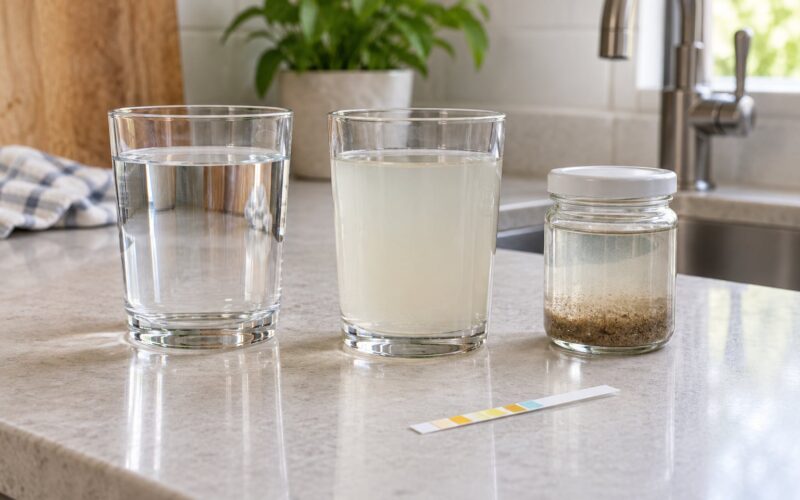
If you have never tested your water and you are on a well, this is the step people skip and regret. A panel ordered from a state-certified lab, testing for coliform bacteria, nitrates, iron, manganese, hardness and pH, tells you what you are buying against.
Step-by-Step: How to Pick a Water Filter for a Home
Step 1: Identify What You Want to Filter
Name the contaminant first, because no single filter handles everything. The categories you are most likely to deal with in a home are sediment, chlorine taste and odor, lead, hard water minerals, and microbial contamination on wells.
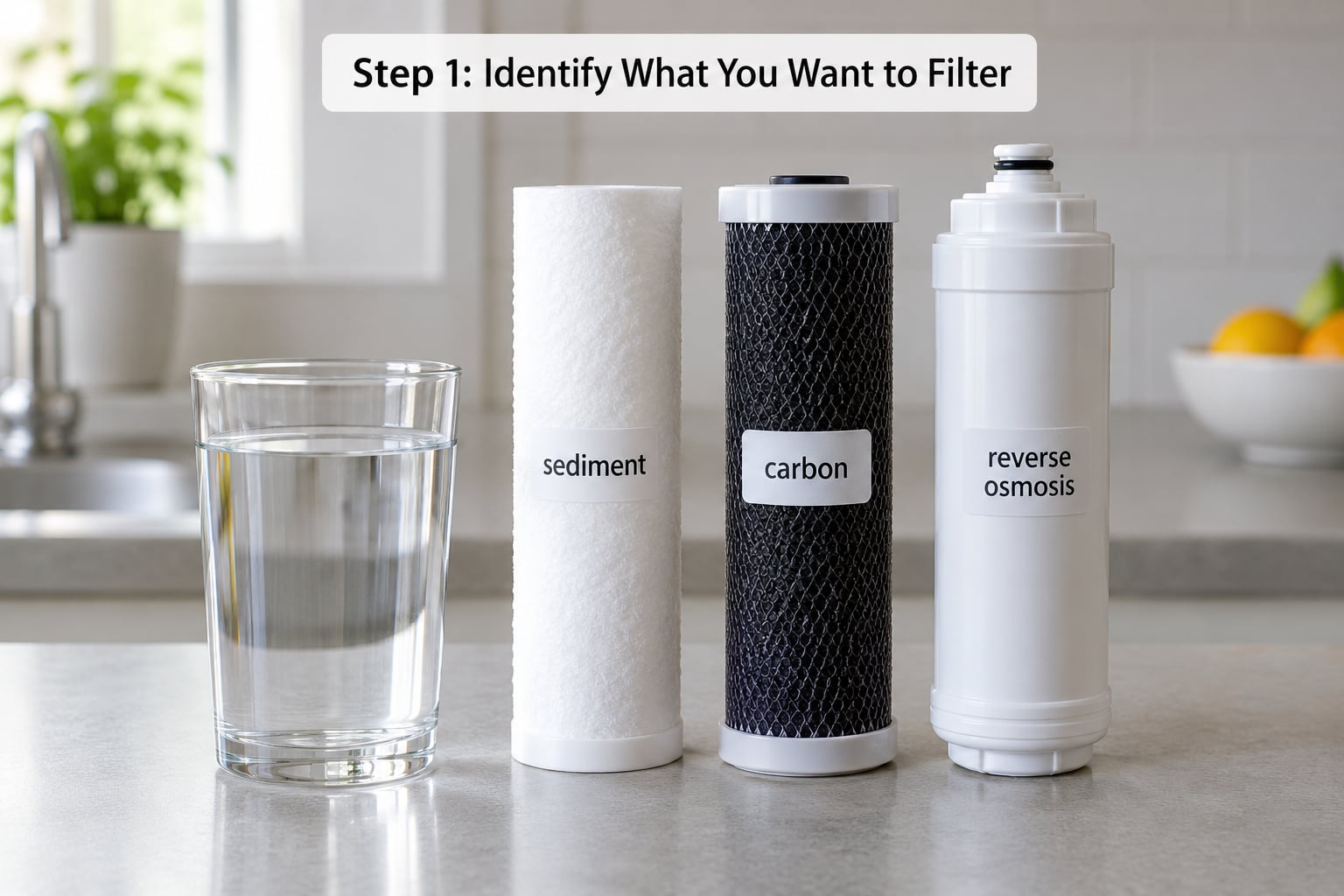
- Sediment and rust. Grit, sand or orange flecks from aging municipal pipes, or dirt after flooding. Caught physically by a cartridge rated in microns.
- Chlorine taste and odor. The most common household complaint, and the easiest to fix. Chlorine is an aesthetic problem rather than a health one, and carbon handles it.
- Chloramine. Some utilities use it instead of chlorine. It survives standard carbon and breaks down slowly, which is why carbon cartridges on chloraminated supplies burn out faster than the label suggests.
- Lead. Relevant if your home has copper pipe installed before 1986. Certification matters here, because marketing claims do not.
- Hard water. Calcium and magnesium that scale showerheads, kettles and appliance internals. Most filters do not fix this; a softener does, and it is a different category of device.
- Bacteria and cysts. The concern on a well. Coliform, Giardia and Cryptosporidium need either a membrane fine enough to strain them out or UV disinfection.
Flouride and PFAS are worth adding to the list if either bothers you. Fluoride needs a dedicated media, often activated alumina. PFAS is stubborn: standard carbon block units are not certified for it, so you need a system with a documented PFAS claim or an RO membrane.
Step 2: Compare the Main Filter Types
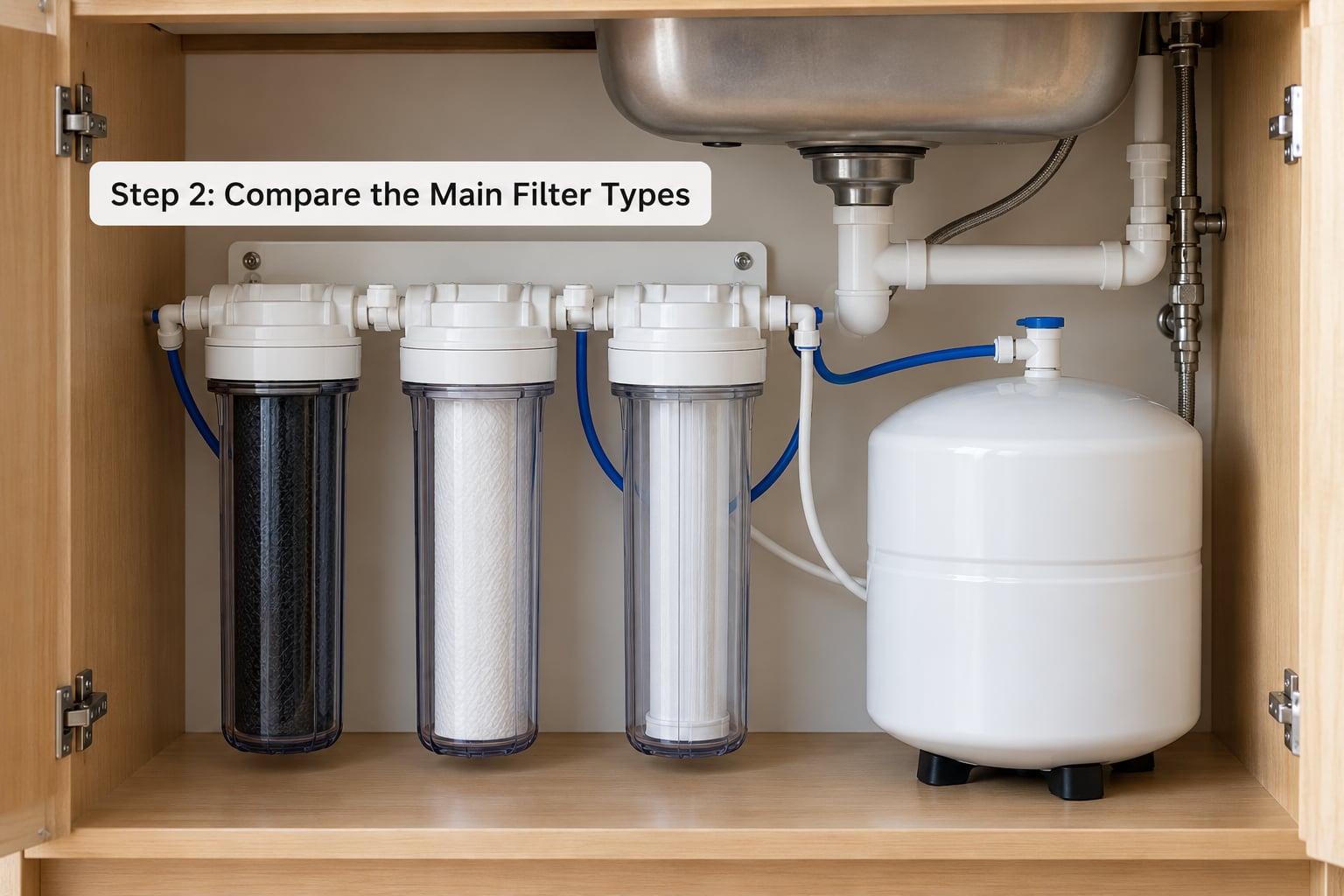
There are two families of home water filter: point-of-use systems treat water at one tap, and point-of-entry systems treat every drop entering the house. Most households that filter drinking water only need the first; the second is for protecting plumbing and appliances.
- Pitcher. Gravity, ceramic or carbon, sitting in the fridge. No installation and a low ongoing cost, but small volume and a limited claim list. Fine for taste, weak on anything health-related.
- Faucet-mounted. Clamps onto the tap spout in about a minute. Good for one person who wants better drinking water without plumbing.
- Countertop. Sits on the counter with a line to the tap. Higher capacity than a faucet unit and easy to move when you move.
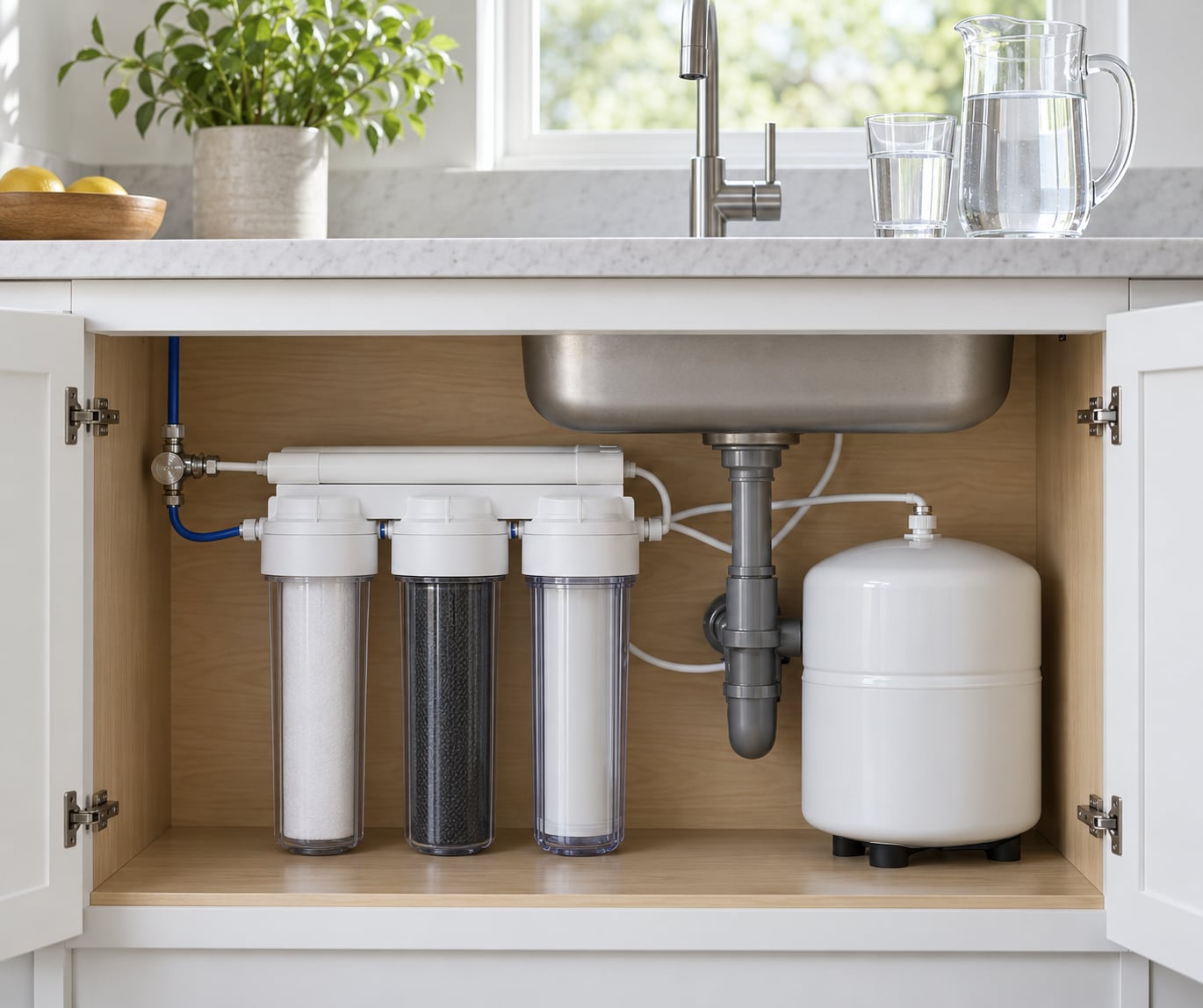
- Under-sink. The workhorse of the point-of-use category. Plumbed into the cold water line under the sink, usually with a dedicated filtered-water faucet, and the only realistic way to run an RO membrane.
- Reverse osmosis. A semi-permeable membrane that forces water through at pressure and blocks dissolved metals, salts, fluoride and most PFAS. The most thorough drinking-water treatment available at home, and the most wasteful: three to five gallons of waste per gallon you drink. It also strips out the minerals that give water its taste, which is why many people add a remineralization cartridge.
- Whole-house (point-of-entry). Mounted on the main line after the softener. Sediment, carbon, iron and catalytic media options, sized in GPM. It protects the water heater, dishwasher, ice maker and every tap at once, which is the reason people buy it.
- UV. Not a filter. UV light deactivates bacteria, viruses and cysts without removing anything chemically, and it does nothing about taste, sediment or lead.
Layering works well. A whole-house sediment and carbon system feeding an under-sink RO gives you protected plumbing and thorough drinking water, which is a common setup on well water.
Step 3: Check Capacity and Flow for Your Household
Work out your daily gallons before you look at any spec sheet, then match it to the system’s rated capacity. A household of two generally gets through two to three gallons a day of drinking and cooking water; a family of four with frequent coffee and cooking can push past five.
For an under-sink RO, the number that matters is recovery rate: how much finished water comes out per hour. Low recovery means you wait, and it usually means a drain-storage tank that takes up half the cabinet. Continuous-flow systems skip the tank and give you water on demand, at the cost of more wasted water going down the drain.
For a whole-house system, size by peak flow, not average. A 5 gpm shower, a washer, a dishwasher and a couple of faucets running at once can pull double digits. People with two baths and a family generally need a housing rated for 8 to 10 gpm or a larger one, and choosing undersized is the most common sizing error out there. It shows up as a noticeable pressure drop every time two things run at the same time.
Housings come in two standard sizes. A 10 inch housing fits more cartridges per dollar and suits modest flow. A 20 inch housing holds roughly four times the media, lasts longer between changes, and handles higher flow without choking.
Step 4: Look for Verified Performance
Only trust a reduction claim if it carries an NSF or ANSI standard number. Certification means an independent lab tested the unit against a published protocol, which is the one piece of evidence that separates a working filter from a box with a carbon block in it.
- NSF/ANSI 42 covers aesthetic effects: taste, odor, chlorine, sediment. It is the weakest claim and the most heavily used.
- NSF/ANSI 53 covers health effects, including lead, mercury, cysts and bacteria. This is the one that matters when you have a health concern.
- NSF/ANSI 58 is the reverse osmosis standard.
- NSF/ANSI 372 covers lead reduction specifically and is often listed alongside 53.
- NSF/ANSI 401 covers emerging contaminants, which is where PFAS claims usually sit.
- NSF/ANSI 177 is the shower filter standard, where contact time with carbon is the limiting factor.
Check that the certification covers the whole assembly you are buying, not just the cartridge, and that the contaminant you care about appears on the certificate. Certification also covers material safety and structural integrity, which tells you the housing will not crack or leach into your water.
Step 5: Consider Installation and Maintenance
Point-of-use systems are straightforward DIY work if you can shut off a valve under the sink and swap a braided supply line. Whole-house work involves cutting into the main line, choosing where in the plumbing sequence it sits, and making sure there is a way to bypass it for cartridge changes.
Two details cause most of the complaints found on home improvement forums. The first is skipping the bypass valve: without it, every filter change means shutting off water to the whole house. The second is a pressure drop, which owners read as the filter failing. Usually the cartridge is simply spent, but it can also mean the housing is too small for the household’s flow, and no amount of filter media fixes that.
Match the maintenance to the commitment you actually have. Carbon and sediment cartridges usually need changing every 6 to 12 months, RO membranes every 2 to 3 years, and whole-house media depends entirely on how dirty the water is. Well owners who see cloudy water right after a change usually have air in the housing, not a failed filter.
Step 6: Compare the Total Cost Before Buying
Compare five-year totals rather than purchase price, because the cartridges are the larger number in most categories. Add up the system, every replacement cartridge across five years, any membrane or media flush, installation if you hire it out, and the cost of wasted water if you are considering RO.
RO is the honest example. The unit is the smallest part of the bill; three filter changes a year and a membrane every couple of years run well past the purchase price, and the drain water is a real cost if you are on a well or on a metered supply. A point-of-use carbon system with one annual cartridge is far cheaper to own, and for chlorine taste that is all you need.
A whole-house system is different. The upfront work is the biggest line, but it protects everything downstream, and the cartridges for a sediment and carbon setup are modest. If scale and sediment are eating your appliances, that protection is the return.
Common Mistakes
Most wrong filters come from the same handful of errors. Each one has a simple fix before you spend anything.
- Buying on marketing language. Claims like “removes 99 percent of contaminants” tell you nothing without a standard number. Fix: look for NSF/ANSI 53 or 58 on the certificate before anything else.
- Filtering water you never tested. On municipal water, read the utility’s Consumer Confidence Report. On a well, order a panel. Fix: know the contaminant list before the product list.
- Undersizing a whole-house system. Symptoms are weak shower flow and pressure drops whenever two fixtures run. Fix: size for peak household flow, not for the smallest housing available.
- Skipping the bypass valve. Fix: treat it as a required part of the purchase, not an accessory.
- Buying third-party replacement cartridges for a fridge or pitcher. Owners raise counterfeit filter concerns constantly in forums, and an uncertified cartridge can pass water through without removing anything. Fix: use the manufacturer’s cartridge, or one carrying the same certification as the original.
- Expecting one filter to fix hard water. Filters reduce particulates and adsorb molecules; they do not exchange dissolved ions. Fix: treat hardness with a softener and decide separately whether you want to drink softened water.
- Filtering a well with carbon alone. Carbon handles taste and some sediment, not bacteria or cysts. Fix: add disinfection, usually UV, and test yearly.
- Putting a chloraminated supply on a standard carbon setup and forgetting the schedule. Fix: shorten the change interval and monitor pressure and taste rather than the calendar alone.
One more worth naming: buying a system with no idea what you want it to fix. Write the problem in one sentence before you shop, and if you cannot, the right next step is a test, not a purchase.
Frequently Asked Questions
How do I filter the water in my house?
Most families start with an under-sink system that plumbs into the cold water line and feeds a dedicated filtered tap, because that covers drinking, cooking and ice with one installation. If your complaint is scale, sediment or chlorine smell everywhere, treat the whole house instead with a point-of-entry system mounted on the main line. Add UV if you are on a well and bacteria are a concern.
What are the two most common water filtration systems?
The two are point-of-use and point-of-entry. Point-of-use systems filter water at a single tap and include pitchers, faucet mounts, countertop units, under-sink filters and reverse osmosis systems. Point-of-entry systems are installed on the main line and filter everything entering the house, including the water heater, dishwasher and every faucet.
Which is better for my home, an under-sink or a whole house water filter?
An under-sink filter is better if you only want better drinking and cooking water, because it costs less and installs in minutes. A whole house water filter is better if you are chasing chlorine smell, sediment, iron staining or scale at every tap, or you want to protect appliances. On well water, many owners run a whole house sediment and carbon stage feeding an under-sink reverse osmosis unit.
What cannot be filtered out of water?
Most household filters do not remove dissolved minerals, which is why hard water needs a softener rather than a cartridge. Standard carbon block units are not certified for PFAS without a dedicated claim. Viruses and very small pathogens need UV or a membrane fine enough to strain them out, and nothing removes dissolved salts without reverse osmosis. Nothing you buy for taste and odor is a treatment for safety concerns.
What are the disadvantages of a whole house water filter?
The main drawbacks are cost, permanent plumbing changes and ongoing cartridges. A whole house system needs to be sized correctly, or flow drops whenever two fixtures run, and every cartridge change requires either a bypass valve or shutting off the house. Filters that reduce taste and odor do nothing for hard water scale, so scale problems usually still need a softener.
How do I know what contaminants are in my water?
On municipal water, your utility publishes an annual Consumer Confidence Report listing what it tests for and what it found. State health departments also run tap water databases with local results. On a well, nobody tests it for you, so order a panel from a state-certified laboratory covering coliform bacteria, nitrates, iron, manganese, hardness and pH, and repeat it yearly.
Conclusion
Start by writing down the one water problem you actually want solved, then find out what is causing it from your utility’s report or a well test. Measure your household’s daily use and peak flow, and only then compare filter types against that. Certification numbers, install location, maintenance interval and five-year cartridge cost will separate the right system from the expensive wrong one faster than any feature list.