Learning how to meal plan for a week comes down to four moves: check what you already have, look at the week ahead, pick dinners with overlapping ingredients, and write one categorized shopping list. Do that and the daily question of what is for dinner disappears. Most people can finish the whole thing in an hour on a Sunday, and the prep work on top of that takes another 30 to 60 minutes.
The reason most plans collapse by Wednesday is not discipline. It is ambition. A plan with seven from-scratch dinners and a two-hour cook on Sunday night is a plan for someone who does not have a job, three kids and a commute. The plans that survive are boring: five or six home dinners, one leftovers night, one flexible night, and one night where someone else cooks.
What follows is the system I would hand a beginner. Seven stages, each one ending with something you can check before moving to the next. Skip a stage and you will feel the gap by Wednesday.
Table of Contents
- 1What You Need
- 2Step-by-Step: How to Meal Plan for a Week
- 31. Set Your Weekly Food Goals
- 42. Check the Calendar and Schedule
- 53. Build a Simple Dinner Rotation
- 64. Check the Pantry and Plan Leftovers
- 75. Make the Grocery List by Store Section
- 86. Prep, Cook and Label Meals
- 97. Finish the Week Without Food Waste
- 10Common Mistakes
- 11Planning seven ambitious dinners instead of five easy ones
- 12Shopping before checking the pantry
- 13Treating every night as a formal dinner
- 14Leaving no buffer night
- 15Forgetting an ingredient on the list
- 16Ignoring storage and freezing guidance
- 17Saving perishable food for last
- 18Tips for Making the Plan Stick
- 19Frequently Asked Questions
- 20How far ahead should I meal plan for a week?
- 21How long does it take to meal plan one week?
- 22How do I meal plan for a family with different preferences?
- 23How long can meal-prepped dinners stay in the refrigerator?
- 24Do I need a special meal-planning app or printable template?
What You Need
Nothing here is expensive or hard to find. If you have the first four items, you can start planning tonight.
- A weekly calendar. A paper grid on the fridge or a shared calendar app. The point is that everyone in the house can see it without asking.
- Seven dinner slots. One line per night, Monday through Sunday, left blank until you fill them.
- A pantry and fridge inventory. Not a formal audit. Open both doors, see what is there, and note anything close to needing use.
- A recipe collection you actually trust. Fifteen to thirty meals your household will eat without complaint. Ten if you are honest about it.
- A shopping list that lives in a specific place. Paper in a notebook by the door, or an app on your phone. Somewhere you will actually see.
- Labeled storage containers. Glass or clear plastic, plus masking tape and a marker. A container without a date is one nobody eats.
- Basic prep equipment. A sheet pan, a couple of knives, a cutting board, a rice cooker or pot, and a skillet that fits your fridge.
Specialty gear is optional. A magnetic planner on the fridge is genuinely useful if your family argues about dinner every evening, and anything that auto-builds a grocery list from chosen recipes saves typing. Neither is required to make the system work, and plenty of people plan on nothing more than a notebook.
Step-by-Step: How to Meal Plan for a Week
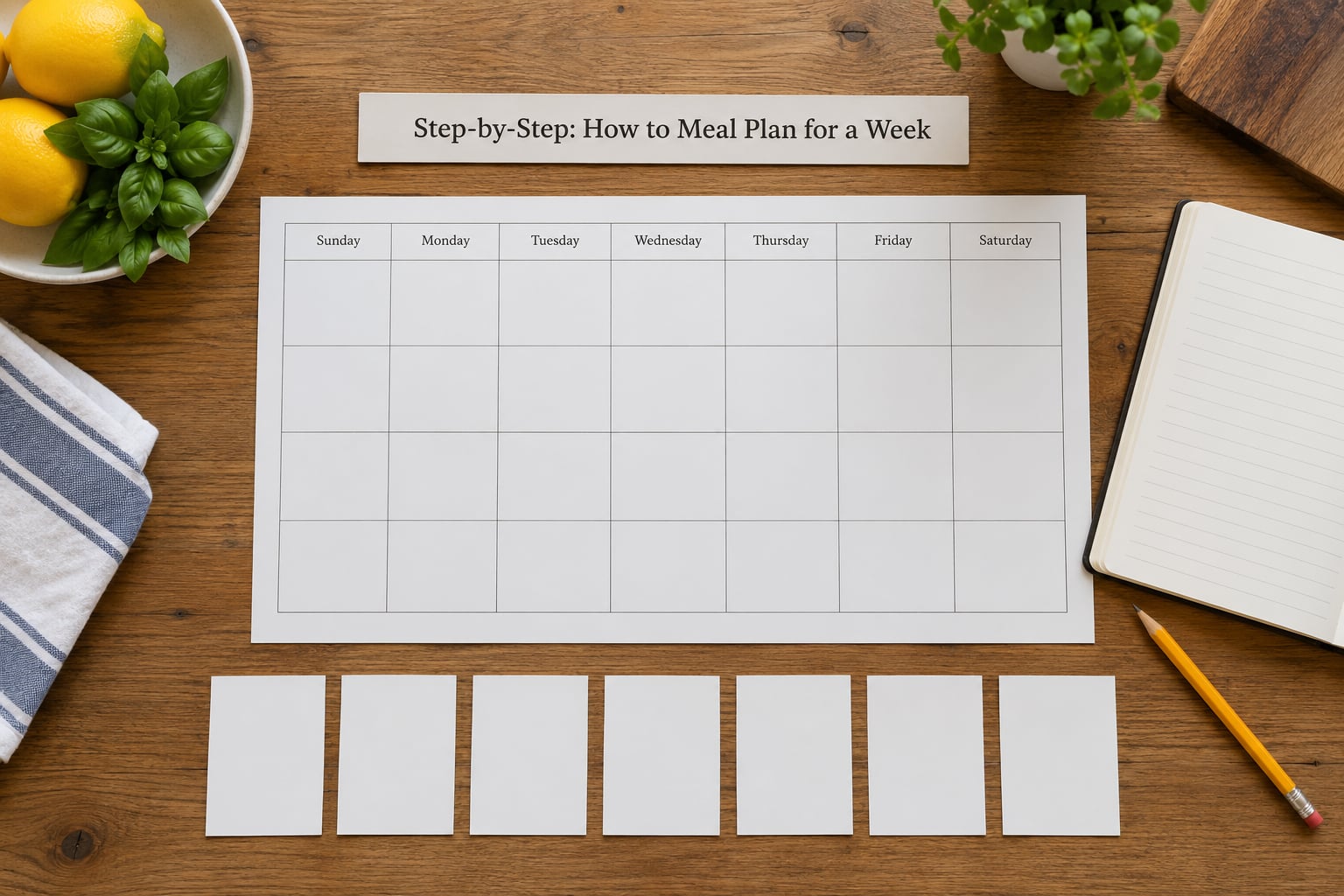
Budget 60 to 90 minutes for the planning portion itself. Set a timer rather than promising yourself the whole afternoon.
1. Set Your Weekly Food Goals
Write down five things before you pick a single meal: how many people you are feeding, what format dinner usually takes, how much cooking time you actually have on a weeknight, what your budget looks like, and how many leftovers meals you are willing to eat in a row.
Those answers turn into a template you reuse. A household of four with two working adults and two teenagers might land on five home-cooked dinners, one leftovers night and one flexible night. Two adults working late might land on three home dinners and three flexible ones. Both are successful weeks.
The mistake is setting a goal for somebody else’s week. If your realistic weeknight cooking time is 25 minutes, every dinner in the plan should be reachable in 25 minutes, with a longer one at most on the weekend.
You are done when: you have one line that describes your week, for example five home dinners, one leftovers night, one flexible night, and no cooking after 8 pm on weeknights.
2. Check the Calendar and Schedule
Open the actual calendar, not the one in your head. Look at appointments, practices, deadlines, travel, work shifts, and anything that reliably eats an evening. Then mark the week.
Mark at least two nights as low-effort. These are your 15-minute or takeout nights, and putting them on the calendar early is the difference between a plan and a hope. Mark one night to eat leftovers, and one night as fully flexible, meaning you decide that day based on how the week actually went.
For shift work or an irregular schedule, build the plan around three anchors instead of seven. Pick the days off that never move, anchor your cooking there, and let the other four shift.
You are done when: two low-effort nights, one leftovers night and one flexible night are marked, and no planned dinner sits on an evening you already know is busy.
3. Build a Simple Dinner Rotation
Now fill the remaining slots using your trusted recipe list, leaning hard on ingredients that overlap. If three dinners use the same protein, the same grain and the same bag of spinach, you bought once and ate three times.
The popular 3-3-3 method is a shortcut version of the same idea. Build three proteins, three vegetables and three grains or sauces across the week, then mix them. Nine components produce far more than nine meals, and almost nothing goes to waste.
Here is a sample week for a family of four, using shared ingredients:
- Monday: sheet-pan chicken thighs, baby potatoes, broccoli
- Tuesday: leftovers from Monday, plus a quick green salad
- Wednesday (low effort): rotisserie chicken, bagged salad, sliced bread
- Thursday: black bean tacos with corn, salsa and pickled onions
- Friday (flexible): whatever Thursday’s taco night left behind, or pizza
- Saturday: one-pot vegetable and rice soup, using the leftover carrots and broth
- Sunday: baked fish, roasted sweet potato, green beans
The same chicken, the same rice and the same onion show up three times without repeating a meal. That is the whole trick.
If you are building your recipe list from scratch and want a machine to help you draft it, treat an AI assistant as a brainstorming tool rather than an authority. Ask for fifteen dinners built from five proteins and six vegetables, then delete whatever your family will not eat.
You are done when: all seven slots are filled, no meal appears twice, and you can point to at least three ingredients used in more than one dinner.
4. Check the Pantry and Plan Leftovers
Stand in front of your kitchen and actually open the doors. Check the pantry, the fridge and the freezer. List what is already there, and separately flag anything that needs to be eaten soon: open cream, wilting greens, part of a bag of carrots.
Work backwards from that list. Spinach that expires in two days should be the first thing in tonight’s dinner. Half a tub of yogurt should turn into breakfast or a sauce before it goes bad. Then write leftover dinners into the calendar as planned meals, not as leftovers that may or may not happen.
On food safety, keep it simple. Refrigerate cooked food within two hours, use shallow containers so the center cools fast, and eat refrigerated leftovers within three to four days. Reheat to 165 degrees Fahrenheit until steaming throughout, and only reheat the portion you plan to eat.
You are done when: every perishable already in your kitchen has a slot on the calendar, a meal of its own, or a freezer destination, and nothing is being bought that you already have.
5. Make the Grocery List by Store Section
Read the week top to bottom and pull every ingredient into one list. Then sort it the way the store is laid out, because a sorted list is a faster trip and fewer backtracks.
- Produce: vegetables and fruit, listed by where they grew up in your kitchen. Leafy greens first, since they fade fastest.
- Protein: meat, poultry, fish, eggs, beans, tofu.
- Dairy and refrigerated: milk, cheese, yogurt, butter, condiments.
- Grains and bakery: rice, pasta, bread, tortillas.
- Pantry goods: oils, sauces, spices, canned goods, stock.
- Frozen: anything already in the plan plus backup items you will thank yourself for later.
Two habits keep the list honest. Plan portions before you pick package sizes, so you buy the amount you will actually cook instead of the amount that looks like value. And treat staples as staples: once you have enough rice, pasta, canned tomatoes and spices, they stop appearing on the weekly list and become inventory instead.
A useful rule of thumb for people trying to shop less wastefully is to aim for a varied produce list rather than a large one. Roughly two fruits and three vegetables per person across a week covers most dinners with room for leftovers. If a shopping app is going to help you, the time to use it is here, adding up the quantities once rather than each time you pick something up.
You are done when: one list covers every dinner on the calendar, it is sorted into sections, and every ingredient already in your pantry has been crossed off.
6. Prep, Cook and Label Meals
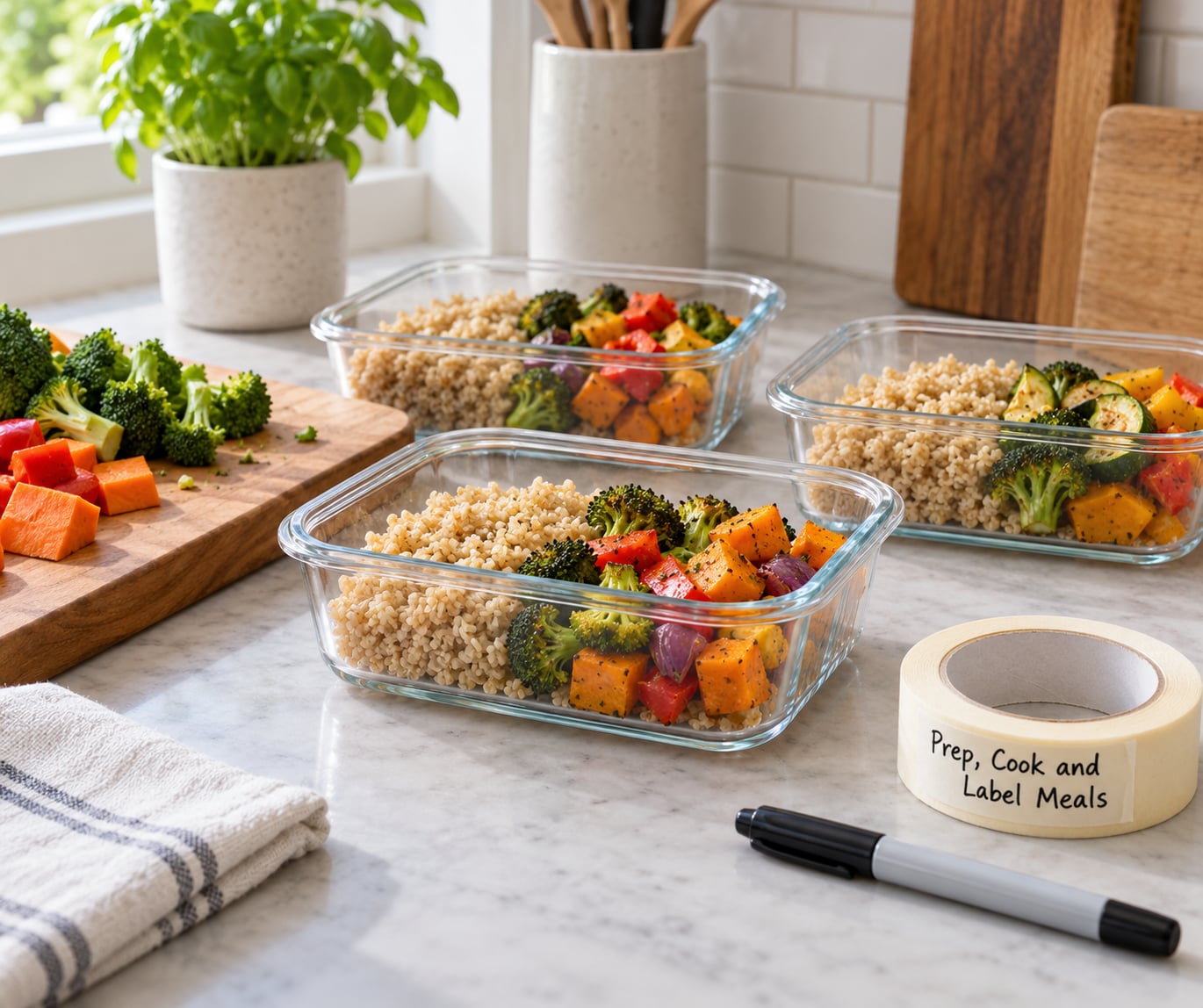
Prep does not have to be a marathon. An hour of useful work on Sunday covers most households, and the goal is components rather than finished meals.
Work in this order, because each step sets up the next:
- Start the oven. Sheet-pan protein or roasted vegetables go in first since they take longest.
- Put grains on. A pot of rice or quinoa cooks unattended while the oven works.
- Make one sauce or dressing that several dinners will use.
- Chop vegetables that will not cook well, like onions and peppers, and store them covered.
- Cook one extra protein specifically for a flexible night later in the week.
- Portion and label everything with the dish name and the date it was cooked.
Cooking food safely matters more than cooking it fast. Whole cuts of meat and fish need an internal temperature of 145 degrees Fahrenheit. Ground meat needs 160. Poultry, whether whole or ground, needs 165. A thermometer in the thickest part is the only way to know for sure, and the same temperatures apply when you reheat leftovers.
Stack your containers in a sensible order. Whatever goes on Wednesday sits in front, whatever is for Saturday sits behind. Label with the day, not just the dish, so nobody has to open lids to find out.
You are done when: the fridge and freezer hold labeled containers in day order, with the flexible night covered.
7. Finish the Week Without Food Waste
Thursday is when most plans fall apart. Something ran late, someone changed plans, and the containers sit there looking like a chore. The fix is having meals that take no cooking at all.
Keep a short list of assembly-only meals that use what is already in the kitchen: a salad built from washed greens and any roasted vegetable, a grain bowl over leftover rice with beans and a dressing, sheet-pan vegetables reheated with a fried egg, or soup from the freezer with bread. A container of cooked vegetables eaten cold with a dip is a legitimate dinner on a night when you have nothing left.
When something does not get eaten, move it to the freezer the day after cooking rather than waiting until it turns. Most cooked dinners freeze well for two to three months, and a frozen container beats a compost bin every time.
Finish the week by noting one thing to keep and one thing to change. Sunday night, before you plan again, is the moment when that note is still fresh.
You are done when: you know what tonight’s backup dinner is without opening the fridge to decide.
Common Mistakes
Most repeated problems are system problems. Each of these has a fix you can apply to the plan you already have.
Planning seven ambitious dinners instead of five easy ones
The fix: count your realistic cooking windows before you choose any meal. Then plan one fewer dinner than your windows allow, so the week has breathing room.
Shopping before checking the pantry
A half-used bag of rice and a jar of salsa both get bought again because nobody opened the cabinet. Fix: take 10 minutes at the pantry step, every time, before you list anything.
Treating every night as a formal dinner
Not every evening needs a recipe. Fix: decide in advance that two nights are assembly, one is leftovers, and one is flexible. Deciding now keeps it from feeling like failure later.
Leaving no buffer night
A plan with nothing spare turns one sick day into three ruined ones. Fix: leave one slot unfilled on purpose. It is not wasted space, it is insurance.
Forgetting an ingredient on the list
You get home, discover the garlic was never on it, and the meal collapses at 6 pm. Fix: read the full recipe list for each planned dinner before you write the grocery list, not while you shop.
Ignoring storage and freezing guidance
Unlabeled containers get tossed, and things that need using get buried. Fix: label with the dish and the date, put older items in front, and freeze anything you will not eat within three to four days.
Saving perishable food for last
Leafy greens bought on Monday and used on Friday are a salad nobody wants. Fix: schedule your quickest-perishable items in your first two dinners and buy sturdy vegetables for later in the week.
Tips for Making the Plan Stick
Put a recurring 30-minute block on Sunday or whatever evening works, and treat it like an appointment. A weekend reset that happens reliably beats a longer session that happens once.
Give people a say. Letting the household vote on two nights a week, or letting kids pick one, raises the odds the plan gets followed. Post the calendar where everyone eats, so the answer to what is for dinner never requires asking you.
Use theme nights as a safety net. Taco Tuesday or pizza Friday gives you two slots that are already decided and that everyone accepts, which makes the rest of the week easier to fill.
Keep your plan realistic. Most people who succeed at meal planning for a week cook at home roughly half the time and eat leftovers or takeout the rest. If your plan has no flex in it, it is not a plan, it is a fantasy.
Frequently Asked Questions
How far ahead should I meal plan for a week?
Two to four days ahead is the sweet spot for most households. It is far enough that you can shop without a list last minute, but close enough that you still know what your week looks like. Weekly planners plan on Sunday for the week starting Monday and shop once. New cooks often do better planning two dinners ahead at first, then extending as the routine settles.
How long does it take to meal plan one week?
Thirty minutes for the planning itself and 30 to 60 minutes for prep on the weekend. The planning splits into small pieces: goals, calendar check, filling seven dinner slots, a 10-minute pantry check, and writing the sorted shopping list. If you have been doing it for a few weeks, the recipe decisions get much faster because you are drawing from a list you trust.
How do I meal plan for a family with different preferences?
Give the picky eater some ownership rather than trying to please everyone with one dish. Let each person choose one meal a week, then build the rest around side dishes everyone eats. Cook the components separately and let people assemble their own plates, which stops one dislike from taking out a whole dinner. Theme nights help too, because they are familiar enough that nobody objects.
How long can meal-prepped dinners stay in the refrigerator?
Three to four days, kept at 40 degrees Fahrenheit or below. Get food refrigerated within two hours of cooking, use shallow containers so the center cools quickly, and reheat only the portion you are eating to 165 degrees Fahrenheit. If a prepared meal will not be eaten within four days, freeze it that day rather than waiting. Frozen cooked meals generally stay good for two to three months.
Do I need a special meal-planning app or printable template?
No. Plenty of people plan entirely on an index card in a notebook, and a template that lives where you will see it beats a clever app you abandon. Apps help if they build your grocery list from the recipes you choose, since that removes the typing. Test one for two weeks. If you end up rewriting the list on paper anyway, keep the paper.
Start where the plan itself starts: open your calendar and write down your dinner format for the week. Five home dinners, one leftovers night, one flexible night. Everything after that is just filling in the slots, and most of the work happens before you ever open the refrigerator door.