Most healthy adult dogs need one wellness exam a year. Puppies need visits every three to four weeks until they reach 16 to 20 weeks of age, senior dogs need one every six months, and a dog with an ongoing condition goes as often as its veterinarian says, often every three to six months.
That is the short answer. The rest of this guide works through the question of how often should you take a dog to the vet across a lifetime, breaks the schedule down by age and health status, lists the symptoms that should move a visit up from next month to this afternoon, and explains what actually happens once your dog is on the exam table.
Table of Contents
- 1How Often Should You Take a Dog to the Vet?
- 2How Often Do Puppies and Adult Dogs Need Checkups?
- 3Puppies: the first-year schedule
- 4Adult dogs: once a year is the baseline
- 5Senior dogs: twice a year, and earlier for large breeds
- 6How Often Should Dogs See a Vet for Ongoing Conditions?
- 7What Symptoms Mean a Dog Should See a Vet Sooner?
- 8Go to an emergency vet now
- 9Call the clinic the same day
- 10Watch at home for a day or two
- 11What Happens at a Routine Dog Vet Visit?
- 12The history conversation
- 13The hands-on physical exam
- 14Vaccinations and parasite prevention
- 15Bloodwork and other screening
- 16How Do You Prepare for a Vet Appointment?
- 17How to Choose the Right Vet Visit Schedule for Your Dog
- 18Frequently Asked Questions
- 19Can every dog go to the vet once a year?
- 20How often should a healthy puppy visit the vet?
- 21Does an older dog need more vet visits than a young adult?
- 22Should I take my dog to the vet for mild symptoms?
- 23Can I give a dog human medicine before the appointment?
- 24What should I do if my dog cannot urinate?
How Often Should You Take a Dog to the Vet?
Healthy adult dogs: once every twelve months. Puppies: every three to four weeks from six to eight weeks old until sixteen to twenty weeks, then a visit around the six-month mark for spaying or neutering advice and a final check near the first birthday. Senior dogs: every six months. Dogs on long-term medication or managing a chronic illness: the interval your veterinarian sets, frequently every three to six months.
The table below shows how the interval shifts with age and health status, and what usually justifies an earlier visit.
| Dog’s situation | Age or status | Typical interval | Reasons to go sooner |
|---|---|---|---|
| Puppy | 6 to 20 weeks | Every 3 to 4 weeks | Core vaccine series, deworming, growth and socialization checks |
| Young newly adopted dog | Any age, unknown history | Within the first week, then follow up | Unknown vaccination record, intestinal parasites, no baseline weight |
| Healthy adult dog | 1 to 7 years (small breeds) | Every 12 months | Weight change, dental smell, new lumps, vaccines coming due |
| Senior dog | About 8 years and up (small breeds) | Every 6 months | Arthritis stiffness, increased thirst, weight loss, cloudy eyes |
| Large-breed senior | About 5 years and up | Every 6 months, sometimes sooner | Hip and joint pain, heart murmurs, mobility changes |
| Chronic condition | Diabetes, heart, kidney, thyroid, cancer | Every 3 to 6 months, or monthly | Appetite change, medication reaction, abnormal thirst or breathing |
| Post-surgery or on new medication | Days to weeks after a procedure | Scheduled recheck, often 7 to 14 days | Swelling, wound opening, refusal of food, lethargy |
One distinction trips a lot of owners up: a vaccine-only visit is not a wellness exam. Shots take two minutes. A wellness exam is a hands-on check of weight, mouth, eyes, ears, skin, heart, lungs, abdomen, and joints, plus a conversation about lifestyle and any testing your dog’s age calls for. Ask for the full exam rather than a quick stop for the booster.
The American Animal Hospital Association and the American Veterinary Medical Association both frame wellness care as a preventive, life-stage program rather than a single yearly appointment. Your own veterinarian can adjust the plan based on your dog’s breed, history, and what is available in your area.
How Often Do Puppies and Adult Dogs Need Checkups?
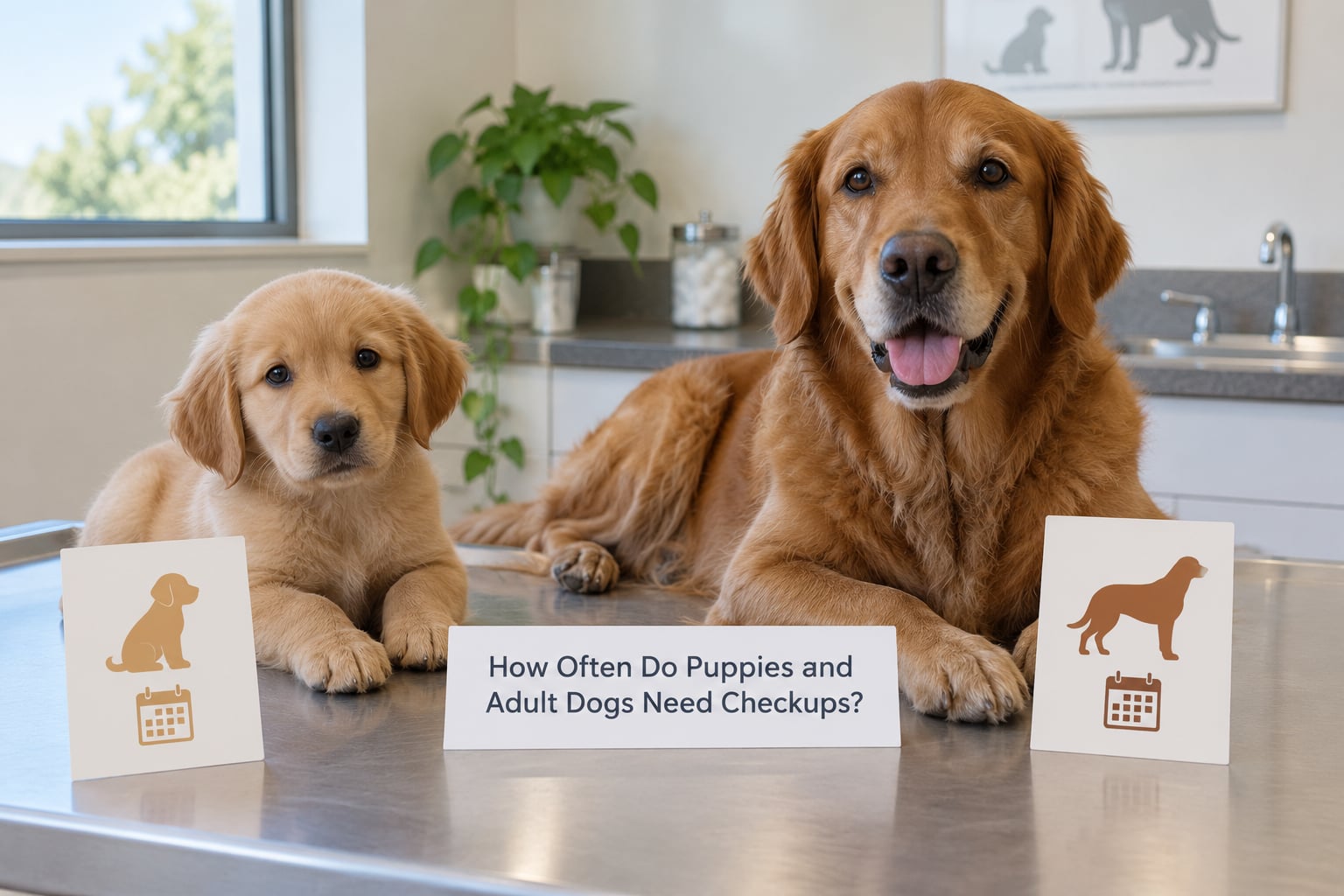
Puppies: the first-year schedule
The puppy series exists for a simple reason: maternal antibodies wear down over the first few months, and a vaccine given too early may not take. That is why visits are spaced three to four weeks apart instead of all at once.
- 6 to 8 weeks: first wellness exam, core vaccine series begins, deworming, a fecal test, and a discussion of feeding and socialization.
- 10 to 12 weeks: booster doses, a weight check, and a look at how the puppy is moving and chewing.
- 14 to 16 weeks: final boosters of the core series for many puppies, plus a discussion of classes and safe exposure to the world.
- 16 to 20 weeks: the last visit of the intensive series for most dogs, along with leeway for lifestyle vaccines such as bordetella or leptospirosis if your dog will have exposure.
- 6 months: spay or neuter planning, including pre-anesthesia bloodwork, and a switch to adult feeding.
- 12 months: a first full adult wellness exam, then yearly from here.
So how often should you take a dog to the vet as a puppy? Roughly six to eight visits across the first year, front-loaded into the first five months. Ask your clinic for the schedule in writing; a vaccine record booklet is worth more than memory when you are booking the follow-up.
Adult dogs: once a year is the baseline
For a healthy dog between one and seven or eight years old, an annual wellness exam is the standard. During that visit the vet establishes a baseline you can compare against later: weight and body condition score, heart and lung sounds, gum color and capillary refill time, dental grading, mobility, and any bloodwork your dog’s age warrants.
Twice a year is reasonable for dogs that spend a lot of time outdoors, at boarding facilities, at dog parks, or in regions where ticks, mosquitoes, or heartworm are a seasonal concern. Many owners simply book the second visit around the same season each year so parasite coverage never lapses.
Senior dogs: twice a year, and earlier for large breeds
Age thresholds differ by breed size, which surprises most first-time owners of a Labrador or a Great Dane. Large and giant breeds are usually counted as senior around age five, medium breeds around seven, and small breeds closer to eight or nine.
Every six months lets the vet compare two readings taken six months apart, which catches gradual drift. Bloodwork and a urinalysis at that stage can pick up kidney or liver changes, thyroid disease, or anemia before your dog shows anything obvious. Mobility changes and early detection are the two things twice-yearly visits tend to buy owners, and those changes are often invisible from the outside until testing is done.
How Often Should Dogs See a Vet for Ongoing Conditions?
Once a dog is diagnosed with a chronic condition, the annual schedule stops applying. Your veterinarian sets a custom interval based on the condition, its severity, and how your dog responds to treatment, and that interval can change month to month.
- Diabetes: typically every three to six months for a stable dog, but often monthly early on while insulin dosing is adjusted. Blood curves and glucose checks drive the frequency.
- Heart disease: rechecks every three to six months, often including blood pressure measurement, radiographs, or an ultrasound to see whether the heart is changing size or function.
- Kidney and liver disease: usually every three to six months with a chemistry panel and urinalysis to track how the organs are coping.
- Arthritis: weight and pain assessments every three to six months so medication, joint supplements, and activity level can be adjusted as mobility shifts.
- Obesity: weigh-ins every one to three months. Short intervals make weight loss achievable because the target is visible at the next appointment.
- On daily medication: rechecks tied to the drug, including monitoring bloodwork when a medication can affect the liver, kidneys, or blood cells.
- After surgery or dental work: a recheck in about 7 to 14 days to check the incision, swelling, and whether pain is being controlled.
Two rules matter here. Never stop, start, or change a dose or a treatment plan on your own between appointments, even if your dog seems fine or seems worse. And if a chronic-condition dog suddenly stops eating, vomits repeatedly, or collapses, skip the next scheduled appointment and call the clinic or an emergency hospital right away.
What Symptoms Mean a Dog Should See a Vet Sooner?
Schedule depends on severity rather than on your dog’s usual appointment date. The tiers below are how clinics generally sort calls, and where you land decides how quickly you go.
Go to an emergency vet now
Difficulty breathing, or gums that look white, blue, or brick red. Collapse, sudden weakness, or an inability to stand. Repeated attempts to urinate with nothing produced, or straining and crying in the litter, which in a male dog can mean a urinary blockage and is a true emergency. Seizures or a seizure lasting more than a few minutes. Suspected poisoning, including chocolate, xylitol, grapes and raisins, onions, human medication, and lawn or garden chemicals. A swollen, hard belly, which can signal bloat. Major trauma, a wound that will not stop bleeding, or a suspected broken bone. Heatstroke signs after time in hot weather, including heavy panting, drooling, and confusion.
Call the clinic the same day
Not eating for more than a day for an adult dog, or refusing water. Repeated vomiting or diarrhea, especially with blood or a black, tarry stool. Drinking noticeably more than usual, which can signal diabetes or kidney disease. Limping that does not settle, reluctance to jump or climb, or a hunched posture. Coughing that continues, or gagging and retching. Lumps or swelling that appear or change size. A sudden change in behavior, including hiding, irritability, or confusion. Female dogs with a discharge from the vulva, or abdominal swelling, which can signal a pyometra. Any unexplained change you cannot account for. Dogs hide discomfort well, so your read of “something is off” is legitimate information and worth a phone call.
Watch at home for a day or two
Mild sneezing or a few coughs with normal appetite and energy, a slightly off appetite for a single meal, a day of softer stool after something unusual was eaten, or a small limp that resolves. Write down what you observed and when, and call if any of it worsens or lingers beyond a day or two. Being wrong in the direction of calling costs an appointment; being wrong in the other direction can cost your dog.
Do not give human medication while you wait. Ibuprofen, acetaminophen, and naproxen are toxic to dogs and can cause stomach ulcers and kidney injury. Antihistamines, cold remedies, and pain reliever products are common accidental poisonings in dogs. If your dog needs something for pain or itching, ask a veterinarian for a dog-safe product and dose.
What Happens at a Routine Dog Vet Visit?
A wellness visit is longer than a shot stop, often 20 to 40 minutes. Knowing the sequence helps you tell whether it was rushed, and it helps you ask better questions about how often should you take a dog to the vet between visits.
The history conversation
The vet asks about eating and drinking, bowel habits, activity level, sleep, any coughing or sneezing, changes in behavior, current food and treats, parasite prevention, allergies, past illnesses and surgeries, current medications and supplements, and lifestyle changes such as a new home, a new child, or a new dog. Write down questions ahead of time; this is the easiest part of the appointment to forget once your dog is on the table.
The hands-on physical exam
The vet weighs your dog and assigns a body condition score, listens to the heart and lungs with a stethoscope, checks gums and hydration, examines the mouth and grades the teeth, looks in the eyes and ears, runs hands over the skin and coat for lumps or fleas, palpates the abdomen, and watches your dog walk and turn to assess joints and mobility. A calm dog that has already been at the clinic gets a more readable exam, which is part of why preparation matters.
Vaccinations and parasite prevention
Core vaccines, usually DHPP and rabies, are discussed on their own schedule, which for many adult dogs means boosters every one to three years rather than annually. Lifestyle vaccines, such as bordetella, leptospirosis, and canine influenza, depend on boarding, daycare, dog parks, hunting, and regional disease patterns. The vet also reviews flea, tick, and heartworm prevention, including whether your dog’s weight has changed enough to affect the dose.
Bloodwork and other screening
A complete blood count, chemistry panel, urinalysis, fecal examination, and heartworm test are common at annual visits for adult dogs and more frequent for senior dogs. Which ones are ordered depends on your dog’s age, history, medications, and clinical signs, so it is fair to ask what each test is meant to find and what happens if it comes back abnormal. A fecal exam at least annually catches intestinal parasites that cause no obvious symptoms in adult dogs.
How Do You Prepare for a Vet Appointment?
Ten minutes of preparation makes the appointment faster and the exam more accurate. The advice owners pass to each other before a first visit comes down to three habits: bring high-value treats, have your dog practice sitting and lying down on the floor for treats in the days before you go, and spend a few minutes playing with your dog in the waiting room so the vet can watch natural movement rather than a tense standing animal.
A short checklist covers the rest:
- Medical records: vaccination history, past lab results, and any records from a previous clinic, on paper or emailed in advance.
- Medication list: every prescription, over-the-counter product, supplement, and chew, with doses. Bring the containers when you can.
- Food details: what your dog eats, how much, treats, and any recent change in either.
- Symptom notes: when it started, frequency, what triggers it, and any video of coughing, limping, or a seizure. Phone video is often more diagnostic than a description.
- Toilet habits: a note on urination and stool, including changes in frequency or color.
- A stool sample: if a fecal test is planned and your dog is cooperative, a same-day sample saves a second trip.
- Carrier and leash: for nervous or reactive dogs, a secure carrier or harness matters more than people expect.
- Pet insurance details: the policy number and clinic contact, so billing goes correctly the first time.
For an anxious dog, keep the previous night’s routine normal, skip a large meal right before the appointment, and ask the clinic about pre-visit calming medication or a quiet waiting spot when you book. Carrier or vehicle desensitization, done over days or weeks before the appointment, does more for stress than anything you can do in the car park.
Call the clinic before you set off whenever your dog is sick or injured. Many practices triage by phone, fit emergencies around scheduled wellness visits, or tell you to go straight to an emergency hospital. For genuine emergencies, skip the phone call and drive to the nearest emergency vet with your dog’s records in the car.
How to Choose the Right Vet Visit Schedule for Your Dog
The right schedule for your dog comes down to six factors, and your veterinarian should set the interval with you at the end of each visit.
- Age and breed size. Senior thresholds shift by size, and large breeds arrive there years earlier than small ones.
- Vaccination and parasite status. Boosters and heartworm or fecal testing set their own calendar, separate from the exam.
- Chronic illness and medications. An active condition overrides the annual baseline, often downward into a three-month range.
- Lifestyle and exposure. Boarding, daycare, dog parks, travel, hunting, and regional ticks or heartworm push toward twice-yearly visits.
- What was found last time. If the prior visit raised a question that was not resolved, the next visit is not twelve months away. That is your cue to book sooner.
- Access to care. Distance, transport, and cost all affect how reliably a schedule is followed, so tell your clinic about the constraints instead of stretching intervals silently.
To check whether your dog is actually overdue, pull the last date you can document from a vaccination record, a clinic invoice, a receipt, or a text from the clinic. If you cannot find a date anywhere, treat it as more than a year since the last full exam. Plenty of owners turn out to have been booking vaccine-only visits for years without ever having an annual wellness exam, and that distinction alone changes what gets caught.
If cost is the barrier, ask the clinic about a wellness plan, which spreads yearly preventive care into monthly payments; a veterinary school teaching clinic, humane society clinic, or low-cost mobile clinic for routine vaccines and exams; payment plans through the practice; and whether pet insurance is worth enrolling while your dog is young and healthy. Hesitation about using low-cost clinics for anything beyond shots comes up a lot, and it is a question worth asking directly: what care can that clinic actually provide, and where do they refer complex cases?
Continuity of care is worth as much as frequency. The owners who report the best experiences are the ones who stopped rotating through whoever had an opening and found a regular veterinarian who knows their dog’s history. Staying with that clinic is a choice you may have to make by moving house, and switching before your dog gets sick is far easier than scrambling later.
Frequently Asked Questions
Can every dog go to the vet once a year?
Once a year is the right frequency for a healthy adult dog with no ongoing condition. Puppies need a series every three to four weeks until 16 to 20 weeks, senior dogs need one every six months, and dogs on medication or managing an illness need rechecks your veterinarian sets, often every three to six months. Boarding, dog parks, and regional ticks or heartworm can also justify a second annual visit.
How often should a healthy puppy visit the vet?
A puppy typically visits every three to four weeks from 6 to 8 weeks of age until 16 to 20 weeks, covering the core vaccine series, deworming, and growth checks. After that there is usually a visit around six months for spay or neuter planning and another near the first birthday. Expect roughly six to eight visits in the first year, and ask your clinic for the schedule in writing.
Does an older dog need more vet visits than a young adult?
Yes, most senior dogs benefit from wellness exams every six months instead of yearly, because two readings six months apart make gradual change easier to spot. Large and giant breeds count as senior around age five, medium breeds around seven, and small breeds closer to eight. Those visits often include a blood count, chemistry panel, and urinalysis that can reveal kidney, liver, or thyroid changes before symptoms show.
Should I take my dog to the vet for mild symptoms?
Call the clinic and describe what you are seeing. A single skipped meal or a day of softer stool after something unusual was eaten is usually fine to monitor, but write down when it started and how often it happens. Reduced appetite lasting more than a day, increased thirst, repeated vomiting, blood in the stool, or any behavior change deserves a same-day call. When you are unsure, calling costs an appointment, and waiting can cost more.
Can I give a dog human medicine before the appointment?
No. Ibuprofen, acetaminophen, and naproxen are toxic to dogs and can cause stomach ulcers and kidney injury, and human cold or allergy remedies cause accidental poisonings every year. Antihistamines and pain relievers are among the most common calls emergency vets receive. If your dog seems to be in pain before the appointment, call the clinic and ask for a dog-safe option and dose instead of guessing.
What should I do if my dog cannot urinate?
Treat this as an emergency and go to an emergency vet now. Repeated straining with little or no urine, crying while trying, licking at the genital area, or a swollen abdomen can mean a urinary blockage, which is most common in male dogs and can become fatal within hours. Frequent small amounts of bloodied urine, straining with a few drops, and excessive drinking are also urgent. Do not wait for the next scheduled appointment and do not give human pain medicine.
Start by finding the date of your dog’s last full wellness exam, not just the last shot. If you cannot find one, book a complete exam now and ask your vet to set the next interval for your dog’s age and health. If anything on the symptom list above is happening today, call the clinic now rather than waiting for a scheduled slot.