A grocery list that saves money gets built in one order: plan your meals, check what you already own, then write a list grouped by store section with a firm spending limit. Skip those steps and you end up buying a third jar of mustard nobody needed. Twenty minutes on a Sunday afternoon covers a full week for most households.
The part people miss is that the list is the last step, not the first. Once the meal plan and the pantry check are done, writing the list takes about five minutes and it tells you exactly what a week’s food is supposed to cost. That is the whole system.
Table of Contents
- 1What You Need
- 2Step-by-Step: How to Make a Grocery List That Saves Money
- 3Set a grocery budget and choose your meals
- 4Check your pantry, refrigerator, and freezer
- 5Build the list by store section
- 6Compare prices and choose store brands
- 7Add a flexible budget and avoid impulse buys
- 8Shop from the list and check the result
- 9Common Mistakes That Cost More Money
- 10Shopping without a meal plan
- 11Listing brands instead of ingredients
- 12Skipping the pantry check
- 13No quantities on the list
- 14Shopping the store’s path instead of your own
- 15Forgetting about leftovers
- 16Frequently Asked Questions
- 17What is the 3-3-3 rule for groceries?
- 18What is the 5-4-3-2-1 method for grocery shopping?
- 19What foods should I include on a weekly budget grocery list?
- 20How do I stop impulse buying at the grocery store?
- 21How can I make 100 dollars of groceries last a month?
- 22Start With Your Next Meal
What You Need
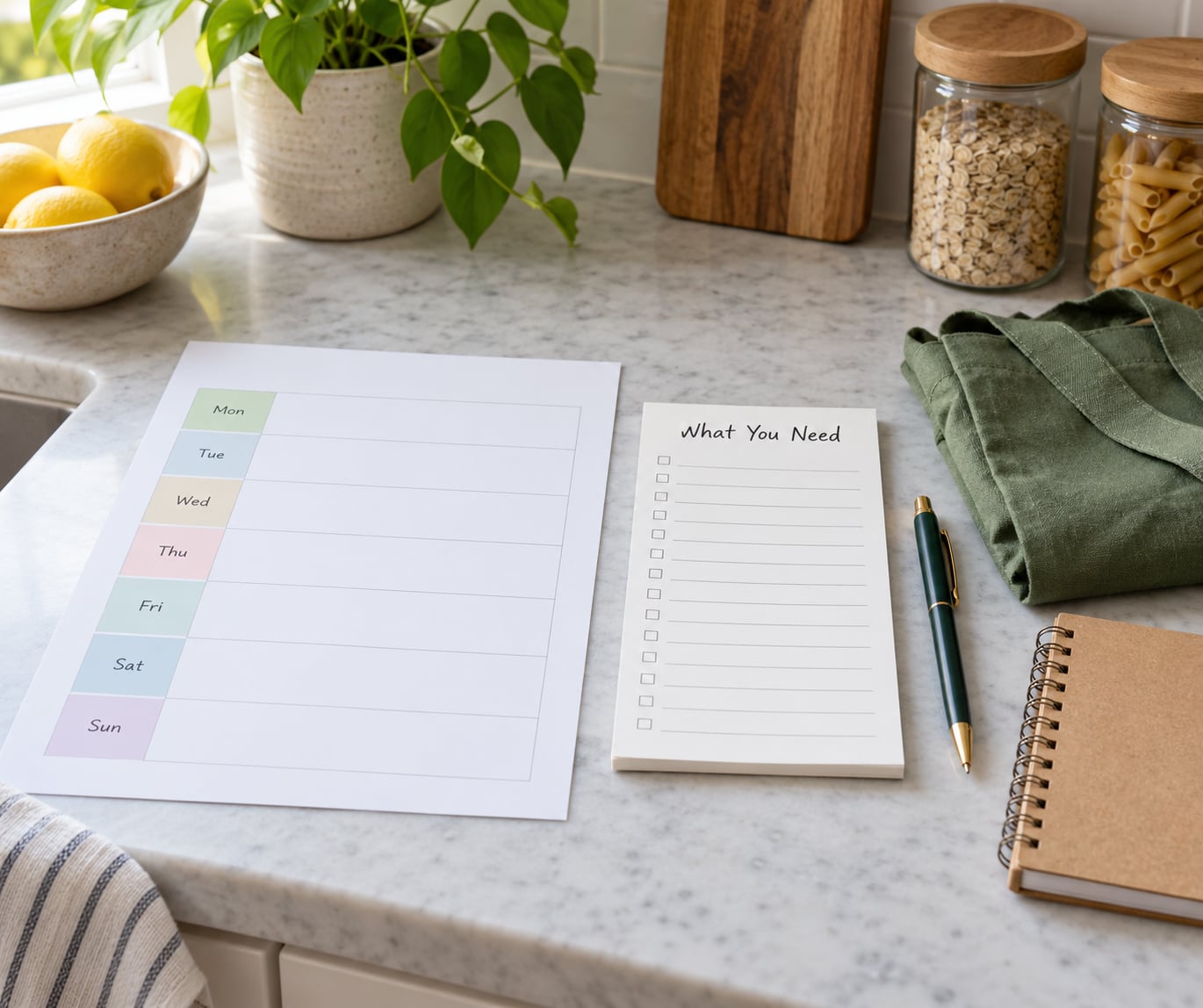
Five things, and none of them expensive. Most households already own all of them.
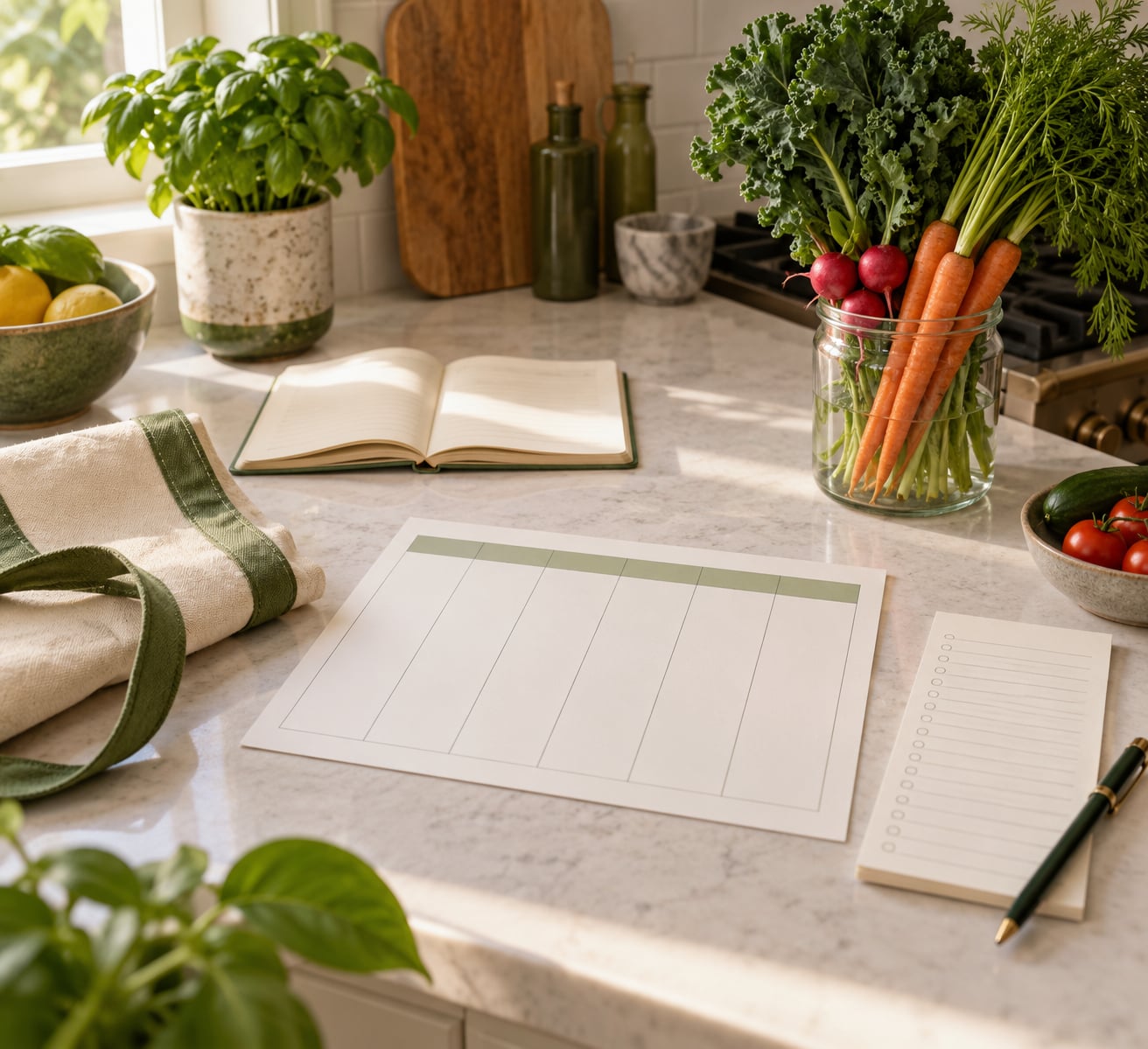
- A meal plan for the week. Even a loose one on the back of an envelope works. You are naming dishes, not writing recipes.
- A way to track what you have. A notebook, a note on your phone, or a photo of the pantry shelves.
- A grocery budget for the week. A single number you pick before you write the list, not after you shop.
- A list that travels. Paper and a pen, or a notes app. It needs to be readable while one hand holds a cart.
- Something to record prices. A pen on the back of the list is fine. The receipt goes in the same pocket.
If you only take one of these seriously, take the budget. A list with no number attached turns into a wish list, and wish lists fill carts.
Step-by-Step: How to Make a Grocery List That Saves Money
Set a grocery budget and choose your meals
Pick one number for the week and write it at the top of the list. A family of four might target 120 to 160 dollars for a week of groceries, a couple half that, and a single person working from home far less. Your own number depends on how often you eat out, but the rule is simple: decide before you write.
Then choose your meals. Most people do better with two or three firm dinners and a handful of repeat meals than with seven brand-new recipes. Repeat meals are cheaper because the ingredients overlap, and they use up the half bags already sitting in the cupboard.
Plan two or three flexible meals a week too, built from whatever needs using before it turns. That gap is where leftovers get eaten instead of thrown out. If a week runs from Sunday to Saturday, dinner on Monday can become Tuesday’s lunch with no extra cooking.
How do you know it worked? At the end of the week you should be able to point to a number of meals actually cooked and a leftover container in the fridge. If you planned eight dinners and cooked three, the plan was fiction.
Check your pantry, refrigerator, and freezer
Spend three minutes looking at what you have before you look at what you want. Open the fridge door, actually open it, and check the freezer. Most people find three to five things they would have bought again.
Put soon-to-expire items on their own short list at the top of the page. Soft spinach, wilting herbs, half an onion, a few carrots. Those go into tonight’s dinner whether or not you planned it.
Then check the dry shelves for staples you are actually out of. Rice, pasta, canned beans, oil, tortillas, breakfast cereal. Pantry staples are the easiest place to overspend because nobody counts them, and a household running out of oil mid-week ends up paying convenience store money at nine at night.
This step is why learning how to make a grocery list that saves money is really a lesson in shopping at home first. A hundred-item list that started as a brainstorm can drop to fifty once you know what you own.
Build the list by store section
Write the list in the order you will walk the store: produce, proteins, dairy and eggs, pantry and dry goods, household and personal care, frozen, then checkout extras. A list organized by aisle takes less walking, which means less browsing, which means fewer things you did not plan on.
Under each heading, write a quantity. “Onions” becomes “6 onions”. A quantity is what stops the double buy, and doubles are the quietest way a budget dies: two bags of spinach used one at a time while the other one turns.
Include ingredients for meals you will cook twice. If you are making a chili on Tuesday, write enough for two pots on purpose rather than discovering on Wednesday that there is nothing left.
Compare prices and choose store brands
Unit price is the number that matters, not the shelf tag. The price per ounce, pound, or count tells you which size is actually cheaper, and it is printed on the shelf label in the fine print most people skip.
Store brands usually win on staples: rice, pasta, canned vegetables, peanut butter, cleaning supplies, toiletries. Compare them against the name brand by unit price, not by package. Where the gap is small, buy the one your household actually finishes, because a cheaper item wasted is not cheaper.
Proteins are where substitution pays off. Ground turkey for ground beef in chili or meatballs, a leg roast where you usually buy tenderloin, dried beans in place of canned when you have time to soak them. Nobody has to be told about the swap; it just goes in the list that way.
Add a flexible budget and avoid impulse buys
Build one small allowance into the plan, maybe 10 percent of the weekly number or two or three items. People abandon a strict list the first time something unexpected comes up, so the allowance is what keeps them on it.
The allowance is not a licence. It is for the item you forgot, the sale you did not expect, the birthday candles. It is not for chips you saw an aisle earlier.
Most impulse purchases at a grocery store happen in three places: the end caps, the aisle with the snacks, and the checkout lane. Walk past all three on the way in and back rather than browsing them. If something genuinely needs to be bought and it is not on the list, it waits for the next trip unless it is in the flexible budget.
Shopping hungry is the other reliable way to blow a budget. Eat something before you go, every time.
Shop from the list and check the result
Walk the store in the order you wrote the list and stop when the list is done. If the list said 6 onions, buy 6 onions and move on. The exception rule is simple: if it was not on the list and it is not in the flexible budget, it stays on the shelf.
Keep the receipt. At the checkout you write down two things: the total, and anything on the list you could not find. The total tells you whether next week’s number goes up or down. The missing items tell you whether your list was wrong or the store was out, which are two very different problems.
Write both notes while the receipt is still in your hand. It takes a minute and it is what turns a list into a system that gets better every week.
Common Mistakes That Cost More Money
These six mistakes show up in almost every household that overspends, and each one has a straight correction.
Shopping without a meal plan
Shopping hungry for dinner produces a cart full of ingredients for seven meals you never intend to cook. Build the list from dishes, not from appetite.
Listing brands instead of ingredients
A list full of specific brands blocks store brands and makes substitution impossible. Write “chicken thighs” and let the shelf decide.
Skipping the pantry check
You buy a second bag of rice, a third jar of salsa, and a duplicate spice you already had behind the mustard. Three minutes at home prevents all three.
No quantities on the list
“Tomatoes” invites either one or five. Write the number next to the item and the guesswork disappears.
Shopping the store’s path instead of your own
End caps and checkout displays are placed to slow you down and trigger buys. Follow your list order and skip the aisles you did not need.
Forgetting about leftovers
Cooked food left in the fridge past three or four days gets tossed, and tossing is money spent twice. Plan a leftover lunch before you plan dinner, not after.
A few extras worth knowing. Buy frozen vegetables when fresh ones spoil on you, since you can cook from frozen and skip the waste entirely. Keep your refrigerator at or below 40 F, and treat anything that smells off or looks slimy as gone rather than hoping. Cook poultry to 165 F, ground meat to 160 F, and whole cuts of meat or fish to 145 F, measured with a thermometer rather than guessed at.
Once you know what is already at home, food gets used in the order it will spoil first. A few stalks of celery that will not last the week get eaten this week, whether they were on the plan or not.
Frequently Asked Questions
What is the 3-3-3 rule for groceries?
The 3-3-3 rule is a planning structure, not a shopping discount: plan three main meals for the week, aim for three sides or vegetables alongside them, and repeat or repurpose at least three of those meals for lunches or a second dinner. It works because repeated meals share ingredients, so you buy each item once and use it three times instead of buying three sets of ingredients.
What is the 5-4-3-2-1 method for grocery shopping?
The 5-4-3-2-1 method is a shopping rule built around triage. Take five items from the flexible budget at most, buy only four of the planned extras, and limit yourself to three unplanned items in the whole trip, then check two things before checkout and keep one item for next week. The point is to cap impulse adds before you reach the register rather than counting them afterwards.
What foods should I include on a weekly budget grocery list?
Build the list around a short list of staples you eat all the time: a grain such as rice or pasta, a protein such as beans, eggs, chicken or canned tuna, a handful of vegetables, a fruit, milk or a dairy alternative, cooking fat, and seasonings you actually use. Add ingredients for two or three specific meals, then a small amount of flexible extras. Staples anchor the budget and repeat use means less waste.
How do I stop impulse buying at the grocery store?
Eat before you shop, walk the store in your list order, and treat anything not on the list as a no unless it fits your flexible budget. Skip the end caps, the snack aisle and the checkout lane on the way in and out, since those three spots produce most unplanned purchases. Write the total at the top of the list and check it against the receipt in the car, where nobody is watching.
How can I make 100 dollars of groceries last a month?
Treat the money as a monthly number and divide it by four weeks instead of planning a fixed weekly trip. Most of it goes to proteins, grains and vegetables, so beans, eggs and frozen chicken usually stretch the budget further than beef. Buy vegetables and meat in small amounts twice a week rather than once, use the flexible allowance only for gaps, and cook two planned meals for every new recipe so nothing is wasted.
Start With Your Next Meal
Do one thing this week: before you write anything down, decide what you are cooking for dinner on three nights. Everything else on the list grows out of those three dishes.
That is how to make a grocery list that saves money, in the order that actually works. Meals decide the ingredients, the pantry check removes the duplicates, the store sections keep the trip short, and the budget plus flexible allowance keeps the cart honest. The result is fewer wasted vegetables, fewer unplanned checkouts, and a bill you can look at on Friday without wincing.