To find pet-friendly hotels, filter booking sites for pets, read each property’s actual pet policy and house rules, compare the pet fee, deposit and cleaning charges, check reviews and the surroundings, then get the policy confirmed in writing before you pay. The whole process takes about 30 minutes once you know what your pet needs.
The part that catches people out isn’t the search. It’s the gap between a listing that says “pet-friendly” and the actual house rules waiting for you at the desk — a weight cap, a breed restriction, a non-refundable cleaning charge, or a rule that your dog can never be alone in the room.
Here is how I work through it, step by step.
Table of Contents
- 1What You Need Before You Start Searching
- 2Step-by-Step: Finding and Booking the Right Hotel
- 3How to define your pet and location needs
- 4How to search for hotels that welcome pets
- 5How to compare pet fees, restrictions, and room choices
- 6How to check location, amenities, and reviews
- 7How to confirm the policy before booking
- 8Common Mistakes
- 9Tips for a smoother pet-friendly stay
- 10Frequently Asked Questions
- 11How do I know if a hotel is truly pet-friendly?
- 12Are service dogs allowed even when pets are not?
- 13How much do pet-friendly hotels usually charge?
- 14Can I find pet-friendly hotels that allow cats?
- 15What should I do if my pet is too large for the hotel?
- 16What if the hotel changes its pet policy after I book?
- 17Conclusion
What You Need Before You Start Searching
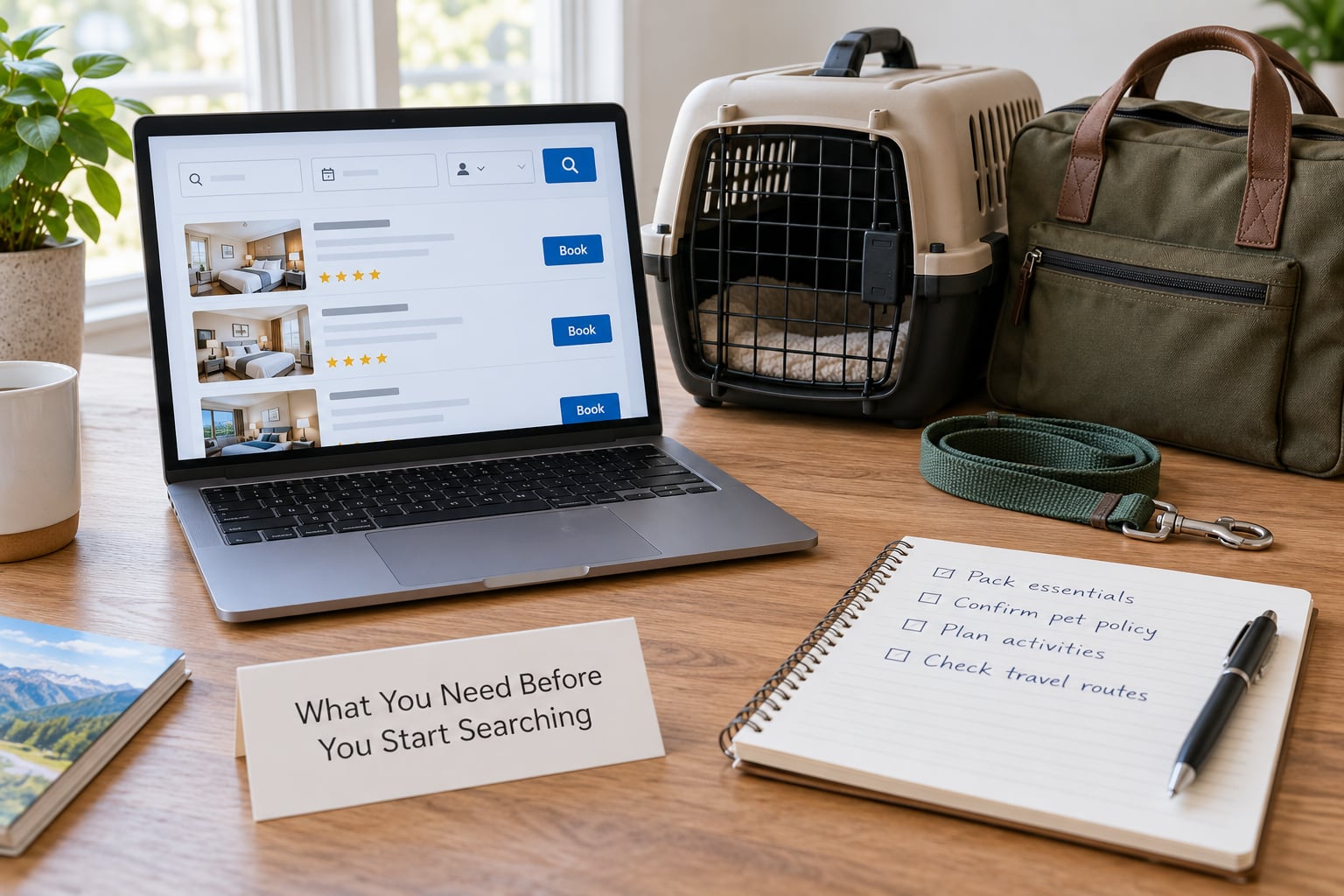
Gather the pet’s details first. Filter buttons can’t screen for a 70-pound dog or a cat, so the specifics have to come from you.
- Pet profile: species, breed, weight, age, spay or neuter status, temperament around other dogs, and any mobility limits like stairs or a bad back.
- Trip basics: destination, exact dates, number of nights, and how many people share the room.
- Service or support animal status: if your animal is a trained service dog, say so early, because the rules are different and better.
- Budget for the whole stay: the room rate is only part of it. A 200-dollar room with a 50-dollar pet fee is a different trip from a 200-dollar room with no fee at all.
- Paperwork: vaccination record, rabies certificate, and any veterinary documents the destination requires for entry. Airlines and some states ask for them, and having them ready saves a phone call to a vet at 9pm.
- A shortlist of amenities that matter to you: ground-floor access, an elevator, a fridge, on-site laundry, free parking, a fenced relief area, or a courtyard.
Anything medical goes to your vet first, including questions about sedation or travel stress. Hotels cannot advise on that, and forum advice is not a substitute for a professional who has seen your pet.
Step-by-Step: Finding and Booking the Right Hotel
How to define your pet and location needs
Write your requirements as a short spec you can paste into an email later. For most trips it looks something like: one dog, 45 pounds, house trained, fine with other dogs, needs a ground-floor or elevator-accessible room, staying three nights in October.
Then add the location side. Is the hotel a base for day trips, or a stop on a longer drive? A downtown property with a paid garage and no green space nearby is a poor fit for a dog who needs three walks a day, however good the room rate is.
Check size and count limits against your own pet before you search. A surprising number of properties cap dogs at 35 to 50 pounds, allow one pet per room, or restrict specific breeds — pit bulls, Rottweilers and Dobermans come up often. If your dog is a large or senior animal, note the elevator and stair situation too, since that decides which floor you can request.
How to search for hotels that welcome pets
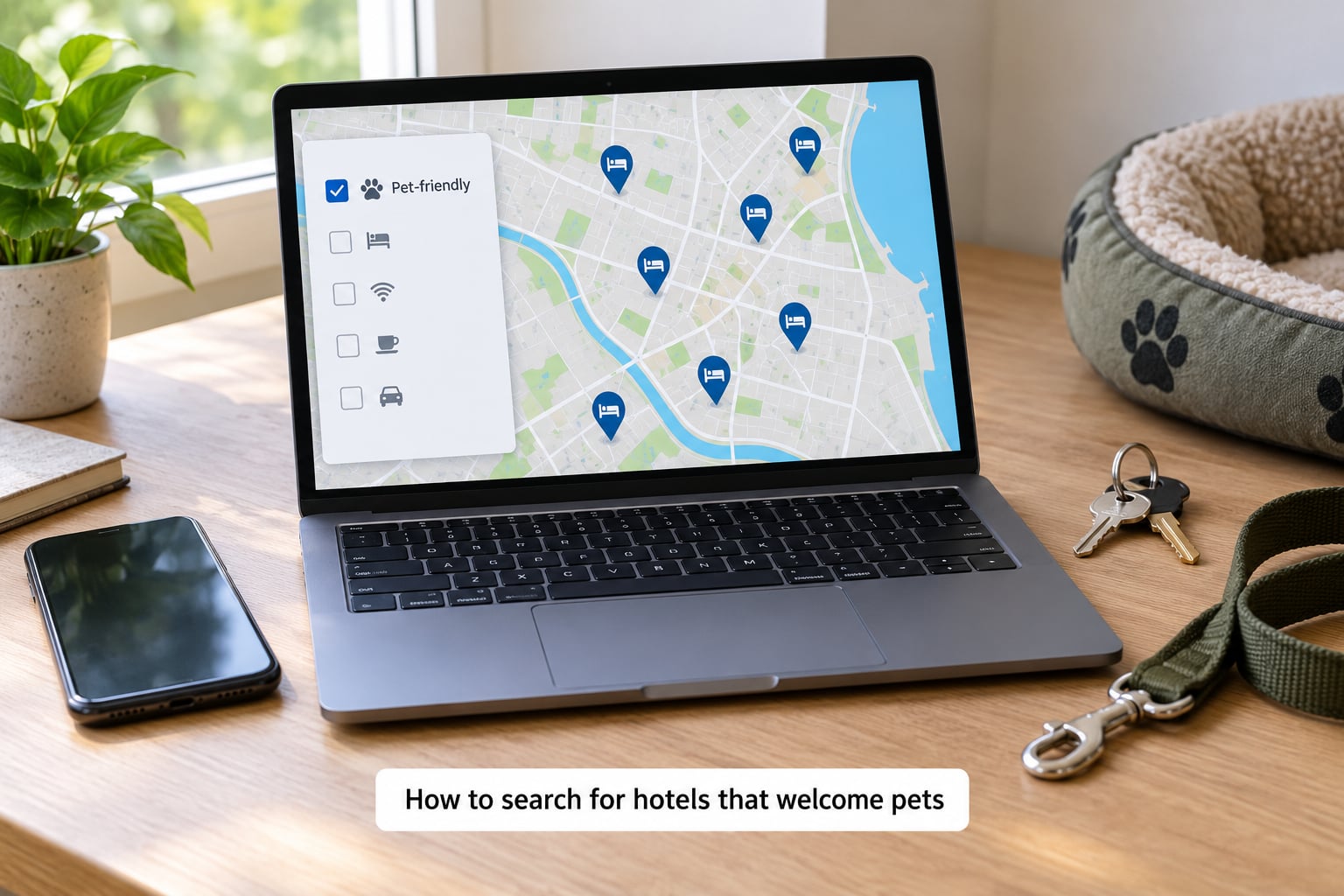
Use more than one source, because none of them is complete on its own.
- Booking-site filters: Booking.com, Expedia, Hotels.com, Travelocity and Airbnb all have a pets option. Good for building a shortlist, weak on details — the filter says pets allowed, not what that means at this property.
- Pet-specific directories: Bring Fido and similar sites are built around pet policies, often flagging which properties charge no fee, welcome two or more pets, or set no weight limit. That last data point saves you a lot of email.
- TripAdvisor and Google Maps reviews: best used later, in the review step, rather than for the initial list.
- Chain websites: useful for extended stays, where a consistent policy across locations matters more than a one-off boutique find.
Treat every filter as a starting point, not a fact. A property can keep an outdated policy page, or accept dogs only on certain floors. When I contact a hotel I get a shortlist of four or five from the filters, then cut it to two after the policy conversation.
How to compare pet fees, restrictions, and room choices
Most travelers budget only for the pet fee and get surprised by three other charges. Know all four before you compare anything:
- Pet fee: a nightly or flat charge for the animal. Many mid-range and budget properties sit in the 25 to 75 dollars range per night; upscale and urban hotels frequently run well past 100 dollars a night, and a few charge a flat stay-long fee instead. Fee levels change over time, so treat any figure you find as a starting point and confirm the current one.
- Pet deposit: a hold on your card for damage, typically released after checkout. It is not a charge, but it counts against your available balance, which matters if you are on a tight travel card.
- Cleaning or deep-clean fee: often non-refundable, and sometimes charged whether or not the pet actually made a mess. This is the charge that annoys people most.
- Resort or destination fee: unrelated to pets, but it lands on the same total. Compare the final figure, not the headline room rate.
On restrictions, get answers to five specific questions: the weight limit, whether there is a breed list, the maximum number of pets per room, whether the fee is per pet or per room, and whether larger dogs are charged more. Also ask which room types are allowed, since many properties keep pets out of suites and sometimes out of the top floor.
Two room requests are worth making in advance and often free. Ask for a ground-floor or elevator-accessible room near an exit, which shortens the walk for an older dog and makes potty breaks easier. Ask for a room away from the elevator and ice machine, since barking is what gets guests and staff annoyed and what leads to complaints and penalties.
How to check location, amenities, and reviews
Location matters more with a pet than it does without one. Check the map for a fenced dog park, a long walking loop, or reliable sidewalks within a few minutes’ walk. Look at street view for the area immediately around the property, because “near the park” can mean a gated botanical garden you cannot enter with a dog. Note the nearest emergency vet, since a 24-hour clinic within roughly ten miles makes a stressful trip far more manageable.
Read the reviews with a keyword filter. Search within the review text for pet, dog, cat, fee, deposit, bark, and clean, and sort by most recent. That is where the useful detail lives: whether the pet fee appeared as expected on the bill, whether staff were relaxed about dogs, whether the grounds were quiet, and whether the room was spotless or needed a hoover after checkout.
Reviews also tell you about the guests around you. A property popular with families tends to tolerate dogs; one attached to a conference centre or a nightlife district often does not, however kind the staff is.
On amenities, laundry and a fridge are underrated for stays longer than two nights. So is air conditioning in a warm climate and a non-slip bath mat, which is kinder to older dogs’ hips than tile.
How to confirm the policy before booking
This is the step that prevents the check-in argument. Contact the property directly — the on-site chat works on Booking.com and Airbnb, and a phone call to the front desk is often faster than email. Send your pet details up front rather than waiting for a “yes” with no information attached.
This template does most of the work:
Hello, I’m planning to stay from [dates] to [dates] and would like to book with my [dog/cat]: [breed or description], [weight], [age], [spayed or neutered], [temperament around other animals]. I have vaccination records and a rabies certificate. Could you confirm: the total pet fee and how it is charged, any deposit and cleaning fee, weight or breed limits, the maximum number of pets per room, which room types allow pets, whether my pet can be unattended briefly, and whether you can note the pet request on the reservation? If a ground-floor room is available, I’d appreciate it. Thank you.
Travelers who send details like these, rather than a bare “do you allow pets?”, report far smoother check-ins — and occasionally a host or property that quotes a lower fee once the request is specific.
After the reply, save it. Screenshot the chat or keep the email in the same folder as your confirmation. Then check the cancellation terms, and look closely at whether any pet-related charge is non-refundable, because that is the one that hurts when plans change. Finally, make sure the booking record itself carries the pet note; a conversation that never reaches the reservation is a conversation the front desk will not see.
When you book direct with the property rather than through an aggregator, you keep the conversation in one place. The rate is sometimes better, and the pet terms are sometimes clearer.
Common Mistakes
Assuming a pet-friendly hotel is the same as a service-animal-friendly hotel. Properties that charge pet fees and refuse pets may still be legally required to accommodate trained service dogs. Know the difference before you book, and raise it early if your animal is a service dog.
Skipping size and breed limits. A 60-pound dog is refused at the desk often enough that it is worth a two-line email. Ask the weight limit in pounds, and ask about the breed list by name.
Believing the booking-site filter. The filter is generated from a property’s own data, which is often stale. The house rules page is closer to the truth, and a direct answer is closer still.
Booking through an unclear third party or a deeply discounted rate. A rate far below the rest of the market often comes with a different room type or a pet exclusion buried in the terms. Read the pet clause on any deal rate before you pay.
Failing to confirm in writing. A phone call is a memory. You want the fee, the deposit and the restrictions in text, attached to the reservation.
Ignoring the cleaning fee in the total. Add room rate, pet fee, cleaning fee and any resort fee together before comparing two properties. On a five-night stay, cleaning charges change which option looks cheaper.
Requesting a pet room but not a floor. Asking for a quiet ground-floor room near an exit costs nothing and solves a lot of problems at 6am.
Tips for a smoother pet-friendly stay
Pack a small kit rather than trusting the room: a bowl, water, a leash and a spare collar, waste bags, a towel for wet paws, and your pet’s usual food in the quantity you need plus one extra meal. A collapsible travel bowl and a washable mat cover most hotel rooms.
Bring something that smells familiar — a worn t-shirt or a blanket from home sits on the bed and settles a nervous pet faster than you would expect. For crates, carry a towel or mat that fits the bottom so it does not slide.
Keep vaccination paperwork in your bag, not in a photo gallery on a phone you might lose. A rabies certificate is asked for more often than people expect, particularly for boarding fallback situations.
Set rules for yourself, not just your pet. Relieve your dog before you cross the lobby, and use a designated spot rather than the landscaped strip behind the building. If your pet is anxious in unfamiliar rooms, a chew, a food puzzle, or a short sniff walk usually beats leaving them with nothing to do.
On leaving a pet unattended: some properties permit it, some forbid it outright, and others only allow it during certain hours. Ask directly and get the answer in writing. If nobody will let you leave your dog alone, plan for a pet sitter, a walk-in pet care service, or a sitter arranged through the property. A single hour of separation suits many dogs, but not all, and the right answer depends on your specific animal rather than general advice.
Have a backup plan for the stay going sideways. Know the nearest emergency vet, the nearest pet-friendly alternative property, and a reliable boarding or pet-care service near you. That is the part travelers who have been burned on a road trip value most.
Finally, treat the stay as a neighbour would. Keep the pet off the furniture if the room has posted house rules, take the bedding outside to shake before reloading the car, and check the bed and floor for hair. A tidy checkout is also what stops a noise complaint from turning into a fee.
Frequently Asked Questions
How do I know if a hotel is truly pet-friendly?
Only the property’s own policy tells you, and even that can be stale. Look for a written pet policy covering the fee, weight and breed limits, pets per room, cleaning charges and rules on leaving a pet unattended, then confirm the same details by email or phone and save the reply with your booking.
Are service dogs allowed even when pets are not?
Generally yes. A property that charges pet fees or refuses pets must still accommodate a trained service dog, and it may not charge a pet fee, deposit or cleaning charge for that dog. Staff may ask limited questions, such as whether the animal is a service dog, the task it performs, and a breed or size description. Documentation is not required in the US.
How much do pet-friendly hotels usually charge?
It varies widely by brand, city and season, and fees change over time, so confirm current pricing. Budgeters and mid-range chains often charge nothing or a modest per-night fee, while upscale and urban hotels commonly charge a nightly fee that can run into triple digits, plus a refundable deposit and sometimes a separate non-refundable cleaning charge. Some properties cap the total per stay instead.
Can I find pet-friendly hotels that allow cats?
Yes, but you will have to work harder. Most properties are dog-first, and cat guests often face a stricter room-type list, sometimes a higher fee, and a rule that the pet cannot be left unattended. Cat-specific directories and the same direct-confirmation process work well, and it helps to state your cat is indoor-only and litter-trained in your first message.
What should I do if my pet is too large for the hotel?
Ask whether they have a nearby partner property or a sister hotel that takes large dogs, since chains often transfer policy exceptions between locations. Some properties accept large dogs with a higher fee or a ground-floor room only. If the answer is still no, look at extended-stay properties, vacation rentals with fenced yards, or pet-friendly campgrounds and cottages, which rarely apply weight limits.
What if the hotel changes its pet policy after I book?
Check the cancellation terms first, because pet-related charges are often non-refundable while the room itself is refundable. If the property becomes non-compliant with the agreement you confirmed in writing, ask for a full refund on the pet portion, escalate to the booking platform, and then send a written dispute. Keep your confirmation messages, the listing screenshot, and your card statement together before you start.
Conclusion
Start by writing down what your pet actually needs, weight and breed included, then search only on platforms that let you filter or sort by pet policy. Read the house rules, compare the full cost including deposits and cleaning charges, and then get the answer in writing before you pay.
That last step takes one email and it is the difference between a smooth check-in and a problem at the front desk at nine at night.