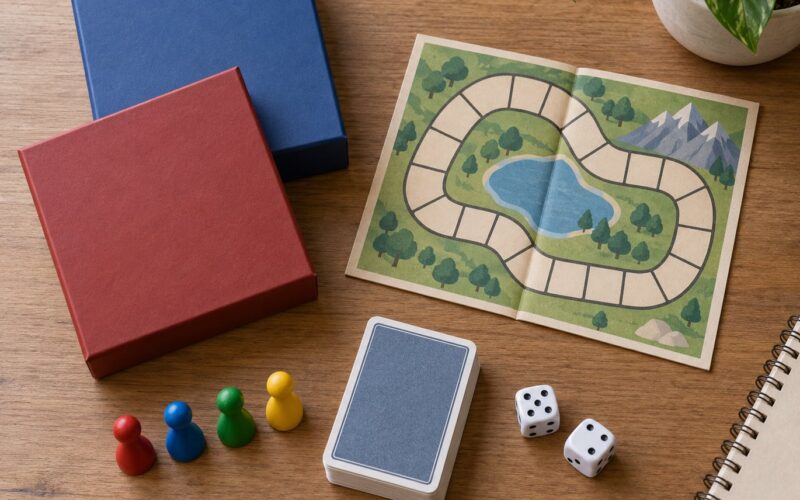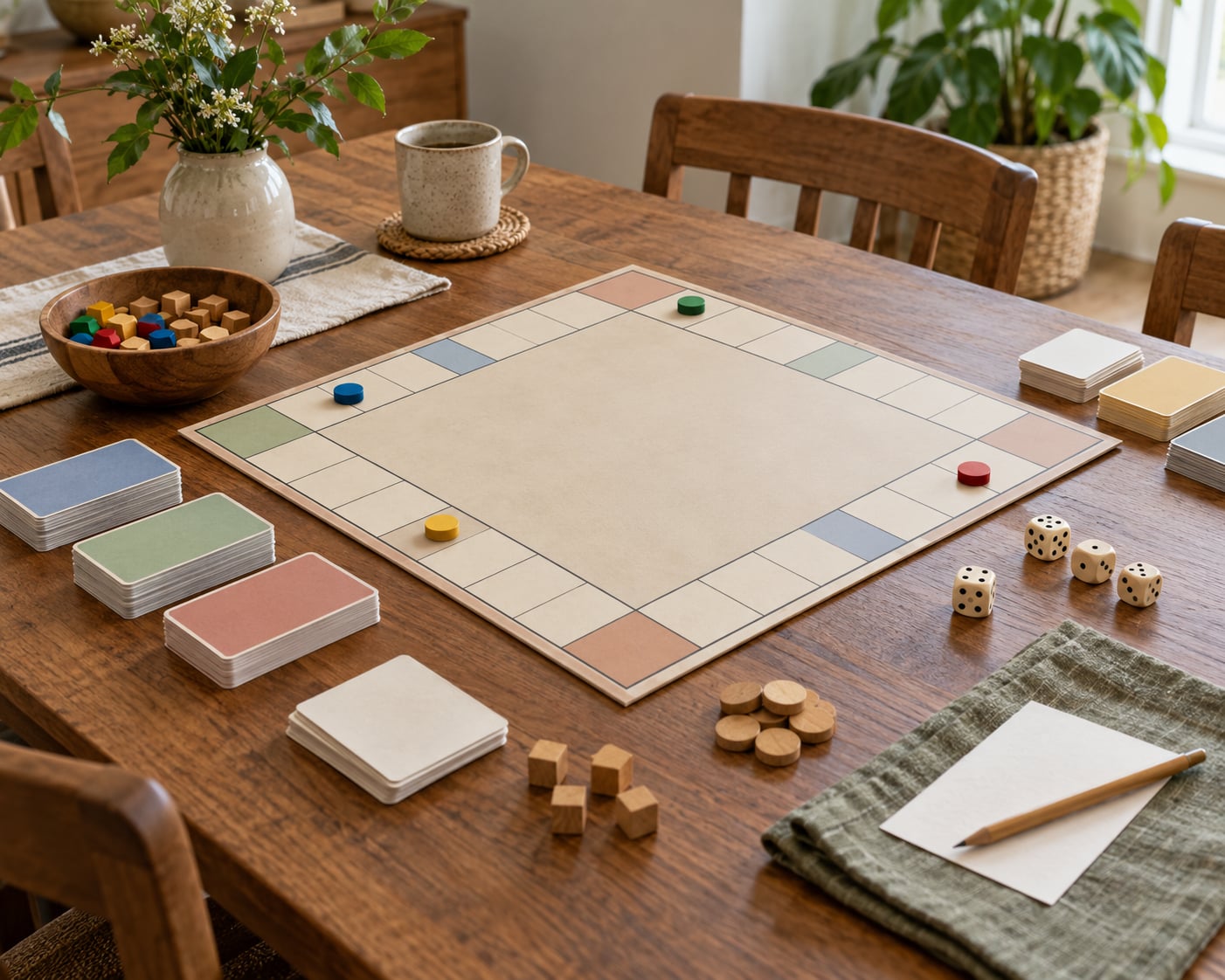
To teach kids a new board game, skip the rules briefing and get them playing within about ten minutes: explain what the game is about and how you win, teach one complete turn, then let a low-pressure practice round do the rest. The talking you do at the table should take less time than the game itself.
That sounds obvious once someone says it, but most first-time teaches go wrong the same way. An adult opens the rulebook, reads for four minutes, and watches a child’s attention leave the room somewhere around the third paragraph.
A few practical details make the difference. Most kids need two rounds before the rules click, so plan on playing the same game twice in a row. And the single most useful trick is letting your child do the setup with you, because handling the pieces teaches them what the pieces do.
Below is the whole method: what to have ready, six steps in order, and the mistakes that turn a first game into a bad evening.
Table of Contents
- 1What You Need
- 2Step-by-Step: How to Teach Kids a New Board Game
- 3Choose a Game That Fits the Child
- 4Explain the Goal Before the Rules
- 5Set Up the Board Together
- 6Teach One Turn at a Time
- 7Use a Practice Round With Short Prompts
- 8Start the Real Game and Check In
- 9Common Mistakes
- 10Frequently Asked Questions
- 11How young should a child be to learn a new board game?
- 12What if my child keeps forgetting the rules?
- 13How long should the first game last?
- 14Should I teach my child the entire rulebook before playing?
- 15How can I help a child who gets frustrated when losing?
- 16A Simple Plan for the Next Game Night
What You Need
- The game, plus its quick-start guide. Box inserts and printed quick starts are written for exactly this. Rulebooks assume you already know tabletop vocabulary.
- Any player aids. Most games include reference cards, cheat sheets, or solo tutorial booklets. Collect them before the kids arrive so you are not hunting mid-teach.
- A quiet practice space. Not the whole table if the table is your homework spot. Kids read frustration in a cluttered environment faster than adults do.
- Index cards and a pencil. You are going to write a one-sheet rule crib, and you will use it every turn for the first two games.
- A token tray or bowl. Coins and small cards end up on the floor, and a floor-staring child has left the game in their head.
Step-by-Step: How to Teach Kids a New Board Game
The sequence below is the whole method. Each step has a checkpoint so you know it worked before moving on.
- Choose a game that fits the child.
- Explain the goal before the rules.
- Set up the board together.
- Teach one turn at a time.
- Run a practice round with short prompts.
- Start the real game and check in.
Choose a Game That Fits the Child
Pick a game whose complexity, length, theme, and player count match the child’s age and attention span. The age rating on the box is the best available signal, but weight it by how much your child actually reads rules versus how much they want to be doing something.
Three complexity tiers make the choice easier:
- Gateway games. One round, one main decision, under 25 minutes. Ages 3 to 6. Plenty of card draw, matching, or simple movement.
- Medium games. A core loop plus two or three special abilities, 30 to 45 minutes. Ages 7 to 10.
- Heavy games. Multiple resources, scoring chains, and a rulebook longer than two pages. Ages 10 and up.
Two filters matter more than the rating. A theme with a knowledge prerequisite will stall a teach — a game about geography or obscure history needs facts the child does not have, and you will end up teaching trivia instead of gameplay. And a game with heavy downtime between turns gives a young child time to get bored and wander off.
If a child is under seven or new to board games, start at the gateway tier no matter how much the older kid wants the medium one.
Explain the Goal Before the Rules
Describe what players are trying to achieve in one or two plain sentences before touching setup, turns, or scoring. Then add the theme, because the story is what makes the goal stick.
Say something like: “Everyone is building their own little town. You want to be the person with the most people living in your town when we stop.” That is the whole win condition, and a seven-year-old can repeat it back to you.
Check the checkpoint: ask the child what they are trying to do. If they can say it in their own words, move on. If they cannot, you explained it in game language instead of human language.
Set Up the Board Together
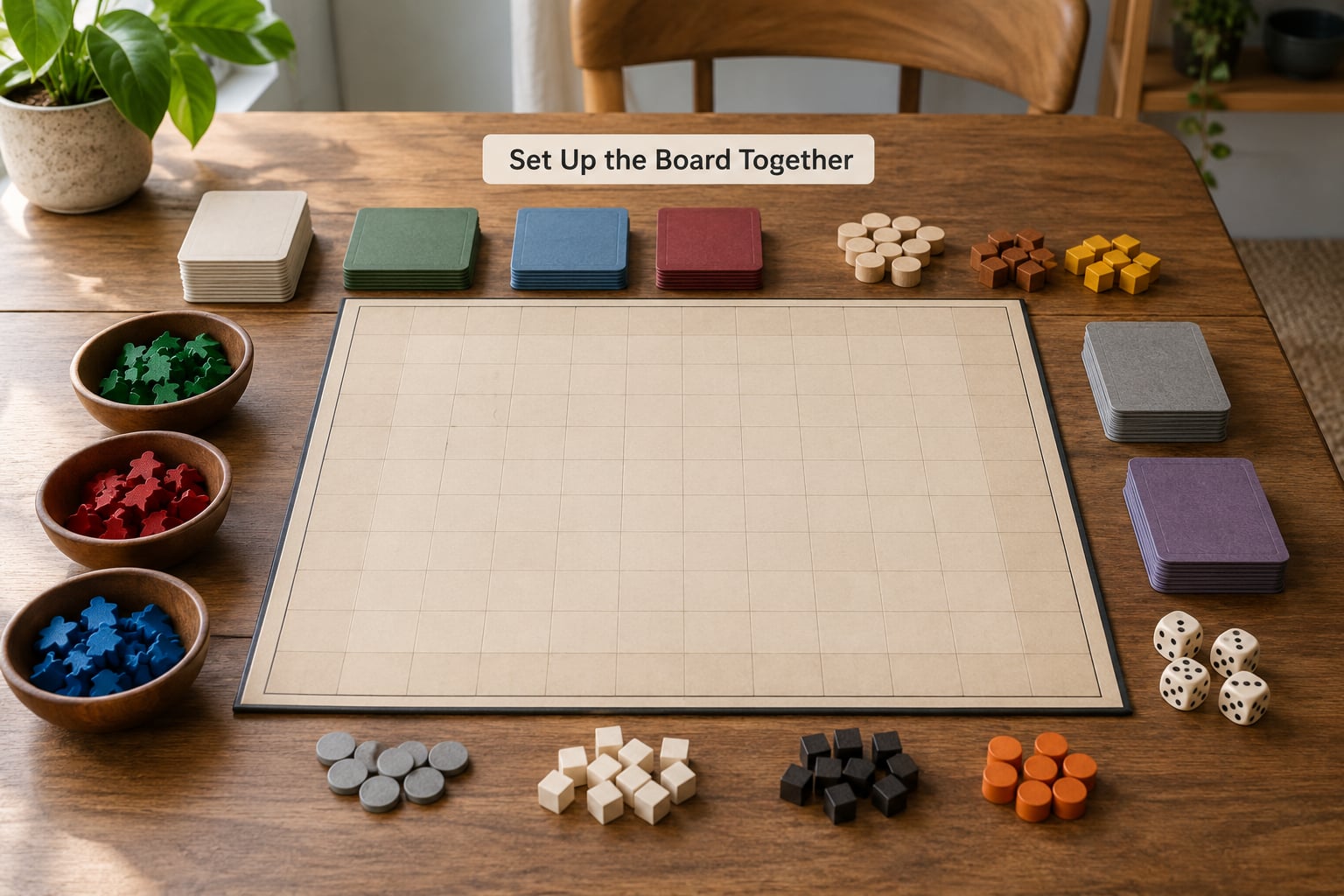
Have the child help place the board, cards, tokens, and starting resources. You give the instructions, they do the placing, and each setup action quietly teaches what a piece does.
Keep setup and rules separate. This is the step most parents skip, and skipping it is why kids flip cards without reading them later. If you never made them build the deck, they have no reason to believe the deck matters.
Two useful lines while you set up: “Put your score marker here. Every time you collect something, it moves up.” And, for the first play, “We are only using these two cards tonight. The rest can wait.” Naming what you are leaving out stops the rulebook from feeling endless.
The checkpoint is simple: ask the child what happens to the deck of cards they just built. If they can say it gets reshuffled or drawn from, setup worked.
Teach One Turn at a Time
Demonstrate a single complete turn yourself, naming each action in child-friendly language, and let the child repeat it before you add anything else. One turn is the largest useful unit.
Break the turn into its parts and say each part out loud as you do it: “It is your turn. You roll the die. You move five spaces. You land on a market, so you get a coin. Now it is the next player’s turn.”
Then stop talking and hand it over. The child repeats the turn with you watching. When they finish without asking, teach the next piece.
Expect four or five things to be true before a game works well: who goes first, what a turn contains, where the pieces live, what the pieces are worth, and how the game ends. If a game has more than that, some of it belongs to round two.
One piece of vocabulary is worth teaching explicitly: the turn sequence. Whether it runs clockwise, counterclockwise, or around the table in one direction, saying “we go this way around” and tracing it once saves the same confusion every round for the rest of the game’s life.
The checkpoint: the child completes a turn with no verbal help. Do not start round one until they do.
Use a Practice Round With Short Prompts
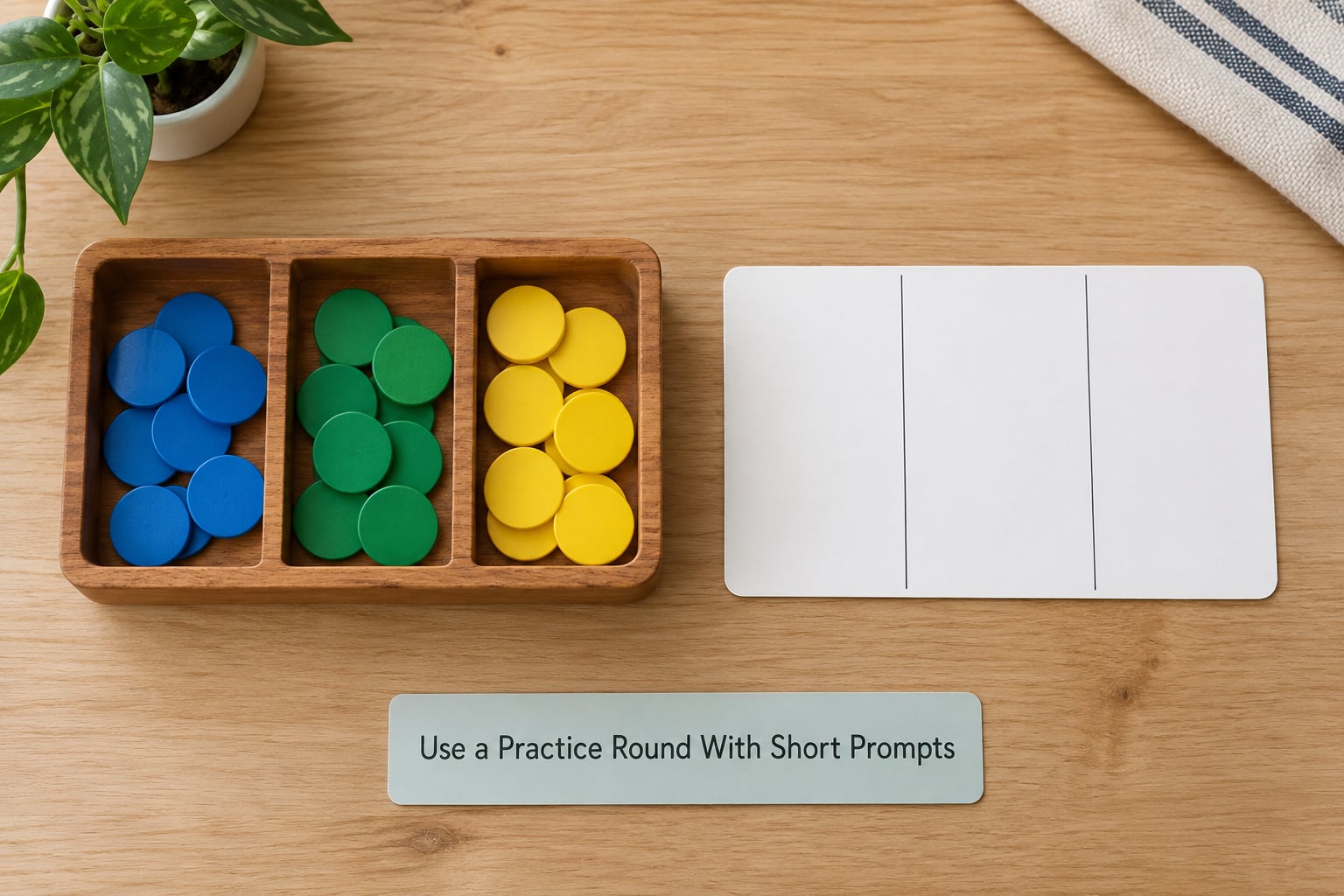
Run a relaxed practice round with brief prompts instead of a rules review. Keep the prompts to three: whose turn it is, what they may do, and what happens next.
Say the prompt, then stay quiet. Kids will pause, look at the board, and usually finish the turn themselves. A prompt that ends in a question — “what can you do now?” — gives them a chance to retrieve the rule rather than wait for you to supply it.
Correct misunderstandings quietly and in the moment. “Coins go up on your track, not in the middle of the board. Here, watch me move this one” fixes it without stopping play. If you halt the whole game to relitigate a rule, you have made the rule feel more important than the fun.
If the practice round falls apart, restart it. Put the pieces back and go again without comment. A restart costs three minutes and saves the evening, and parents are always surprised how often the second attempt is clean.
Community teaching advice keeps landing on the same point from the tabletop side: have the kids play rather than watch you, and explain the rules as you go. That advice usually comes from adults teaching other adults, and it transfers to a child table just as well.
The checkpoint: the child answers all three prompts without help for two turns in a row.
Start the Real Game and Check In
Begin the actual game with your one-sheet rule crib face up, check in early rather than constantly, and step back as the child remembers more on their own. Defer edge cases until they happen.
Pick one person as the one voice. If two adults are both explaining rules, the child cannot tell which one governs the game, and the arguments start. This single rule, borrowed from adult game groups, prevents most of the mid-turn confusion parents report.
Do not lecture about strategy during the teach. Telling a child the best opening move adds a layer of information they cannot use yet, and it turns a lesson into a puzzle they might get wrong. Strategy lands better on round three, after they have seen what actually happens.
When an edge case appears, use the deferral line: “That’s a good question. Let’s see what happens, and we’ll sort it out when it does.” Most edge cases resolve themselves in the first round.
Set your expectation on timing. The rules usually click by round two or three, not during the teach. Children who understood a game by the briefing were either very young or playing something extremely simple, and expecting that first time sets everyone up to feel slow.
Common Mistakes
Most failed teaches come down to seven habits, each with a straightforward fix.
- Explaining every rule up front. Fix: teach the core loop only. Rules that have not come up yet can wait, and deferring them is not a promise to never teach them.
- Correcting too harshly. Fix: name the correction and model the action in one sentence, then move on. A child who is corrected publicly stops trying things.
- Moving too fast. Fix: slow down to the child’s speed, not yours. Watch for the moment they go quiet and pause there.
- Treating a loss as failure. Fix: never let on that it bothered you, and never soften the rules to help them win. Letting a child win deliberately tends to backfire — they learn that the rules move, and the next loss feels like a betrayal.
- Several adults explaining at once. Fix: appoint one teacher for the session and have the other adults ask questions to the child rather than answer them.
- Giving strategy during the teach. Fix: describe what is allowed, not what is smart. Save advice for later rounds.
- Choosing a game with a knowledge prerequisite. Fix: if the theme requires facts the child does not have, swap the game or pre-teach the theme in a single sentence.
Expect at least one of these anyway. Parents writing about family game night say the same thing over and over: some games are simply too complex for the age at the table, and picking a different one is a legitimate outcome.
Frequently Asked Questions
How young should a child be to learn a new board game?
Most children handle a gateway game from about age three, when they can sit through a two-minute turn and understand that they lose points when the rules are broken. Start with games under 25 minutes with one main decision. Wait until about age seven for medium games with multiple abilities, and until around ten for anything with scoring chains. The age rating on the box is a reasonable guide, but how much your child tolerates rules matters more than the number printed on the side.
What if my child keeps forgetting the rules?
Forgetfulness at this stage is normal, and it means the load was too large rather than that the child cannot learn. Cut the game down to four or five rules and stop adding new ones. Use a picture crib card instead of a written one, keep it face up between you, and let the child restate the turn sequence once per game. Most children who seem to forget rules have simply been handed too many at once.
How long should the first game last?
Plan on 30 to 40 minutes for the whole session, including the teach. Keep the actual first round short, around ten minutes, and stop while the game is still going well rather than playing to a bitter finish. Children remember the first session by its last five minutes, so ending on a high note does more for future game nights than finishing a full round. Most children need two sessions before they ask to play it again on their own.
Should I teach my child the entire rulebook before playing?
No, and trying is the most common reason first plays go badly. Teach the theme, the win condition, and one complete turn, then let the first round teach the rest. Rules that have not come up yet can wait, and when one does, you can explain it in the situation where it matters. That is far easier for a child than hearing an abstract rule before they understand what the pieces are for.
How can I help a child who gets frustrated when losing?
Do not rig the outcome, and do not criticize their play afterward. Keep losses small by shortening the game so a loss comes fast, and name it before it happens so it is not a surprise. Praise the process — a good question, a patient turn, a rule they remembered — rather than the result. Cooperative games, where everyone wins or loses together, are worth trying first for a child who finds competition hard.
A Simple Plan for the Next Game Night
Start with one thing: pick a gateway-tier game with a theme your child already cares about and a play time under half an hour. Everything else follows from that choice.
State the win condition in two sentences, set the board up together, teach one complete turn, then run a short practice round with three prompts. Keep one voice, defer the edge cases, and stop the session while the game is still going well. The second time you play it, you will barely need to teach anything at all.