
Comparing warranties is a paperwork job, not a sales conversation. How to compare warranties before buying comes down to six checks: what the plan covers, what it excludes, who is allowed to do the work, what a claim really costs you, whether the coverage survives a resale, and what the total premium buys over the life of the item. Run the checks in that order and most bad decisions die before checkout. Budget 30 to 45 minutes per item.
This framework works the same whether you are shopping for a used vehicle, a major appliance, a laptop, a roof, or a boat engine. The names change, the six questions do not.
Table of Contents
- 1What You Need
- 2Step-by-Step: How to Compare Warranties Before Buying
- 31. Identify What the Warranty Covers
- 42. Check Exclusions and Limitations
- 53. Compare Service and Claim Terms
- 64. Verify Transferability and Ownership
- 75. Calculate the Total Cost When Comparing Warranties Before Buying
- 86. Read the Fine Print Before Checkout
- 9Common Mistakes
- 10Frequently Asked Questions
- 11Is a manufacturer warranty better than an extended warranty?
- 12What should I look for in a warranty before buying a product?
- 13Does an extended warranty cover accidental damage?
- 14Is a third-party warranty worth the price?
- 15Can I transfer a warranty when I sell or give away the product?
- 16Should I buy an extended warranty with my credit card?
- 17Conclusion
What You Need
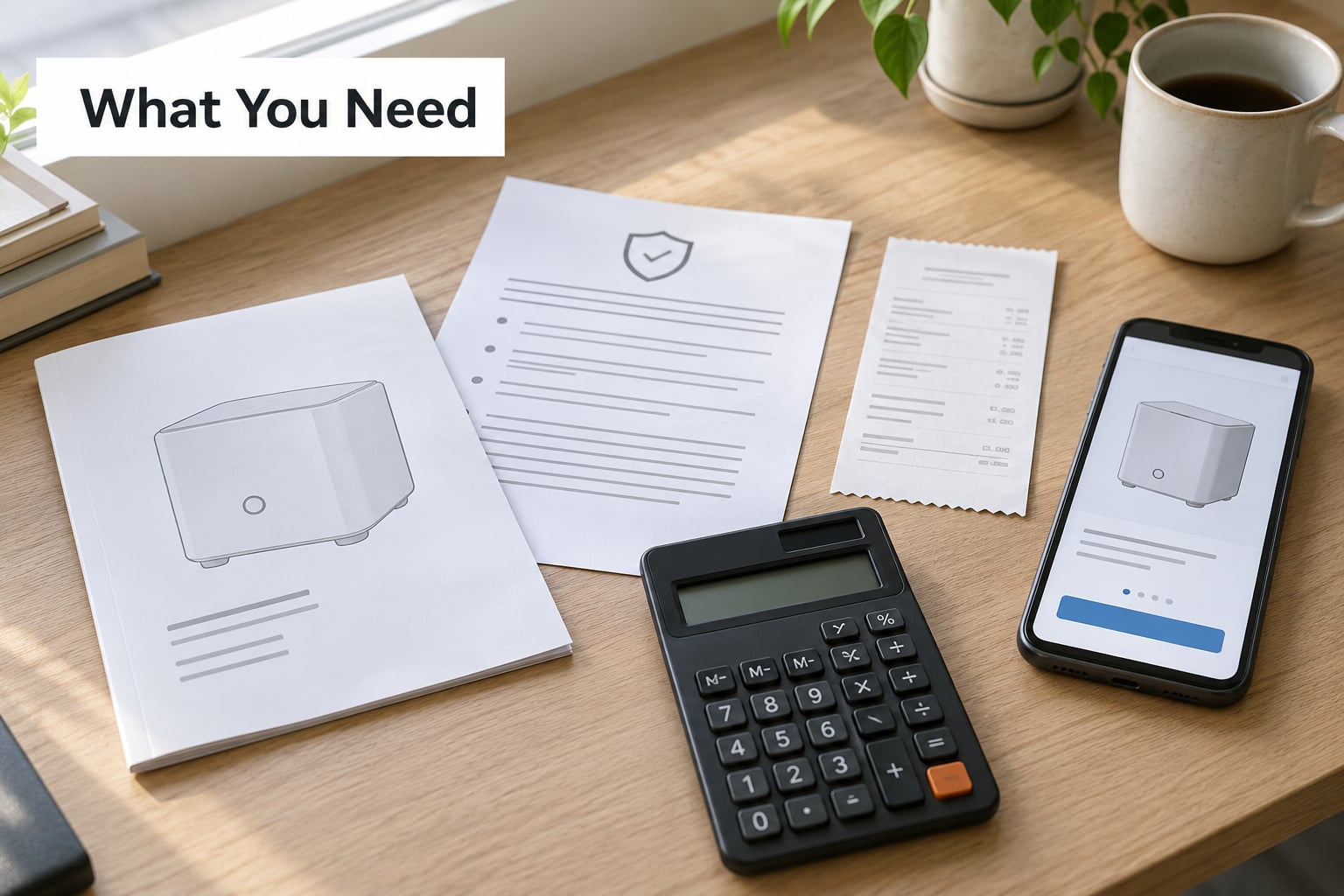
Half of warranty comparison happens before you read a single plan document, because most of the coverage you care about is already attached to the product and nobody mentions it unless you ask.
- The manufacturer’s own warranty terms for the exact model and year. Usually a support page on the brand’s site, a PDF in the manual packet, or a sticker in the glovebox and door frame.
- The full plan contract, not the brochure. Ask for the benefit summary, exclusions appendix, deductible schedule and claims phone number. If a seller will not give you the contract before payment, that tells you something.
- Purchase specifics: purchase date, serial number or VIN, mileage at delivery, and whether the item is new, certified pre-owned, or used with a history report attached.
- Your existing free coverage: the terms of your credit card, the retailer’s own repair program, and the manufacturer loyalty extension. These frequently outlast the plan being pitched to you.
- Repair cost references: dealer service estimates for that model, a service history, published repair cost guides, or a search of what other owners paid on ownership forums.
- A comparison sheet. One column per plan, one row per criterion. Pen and paper works fine; a spreadsheet is better.
Two documents are worth chasing down even though they are tedious. Statutory protections, such as state lemon law rules or warranty rights that cannot be waived in writing, come from your state rather than the seller, and they set the floor that every paid plan has to clear.
Step-by-Step: How to Compare Warranties Before Buying
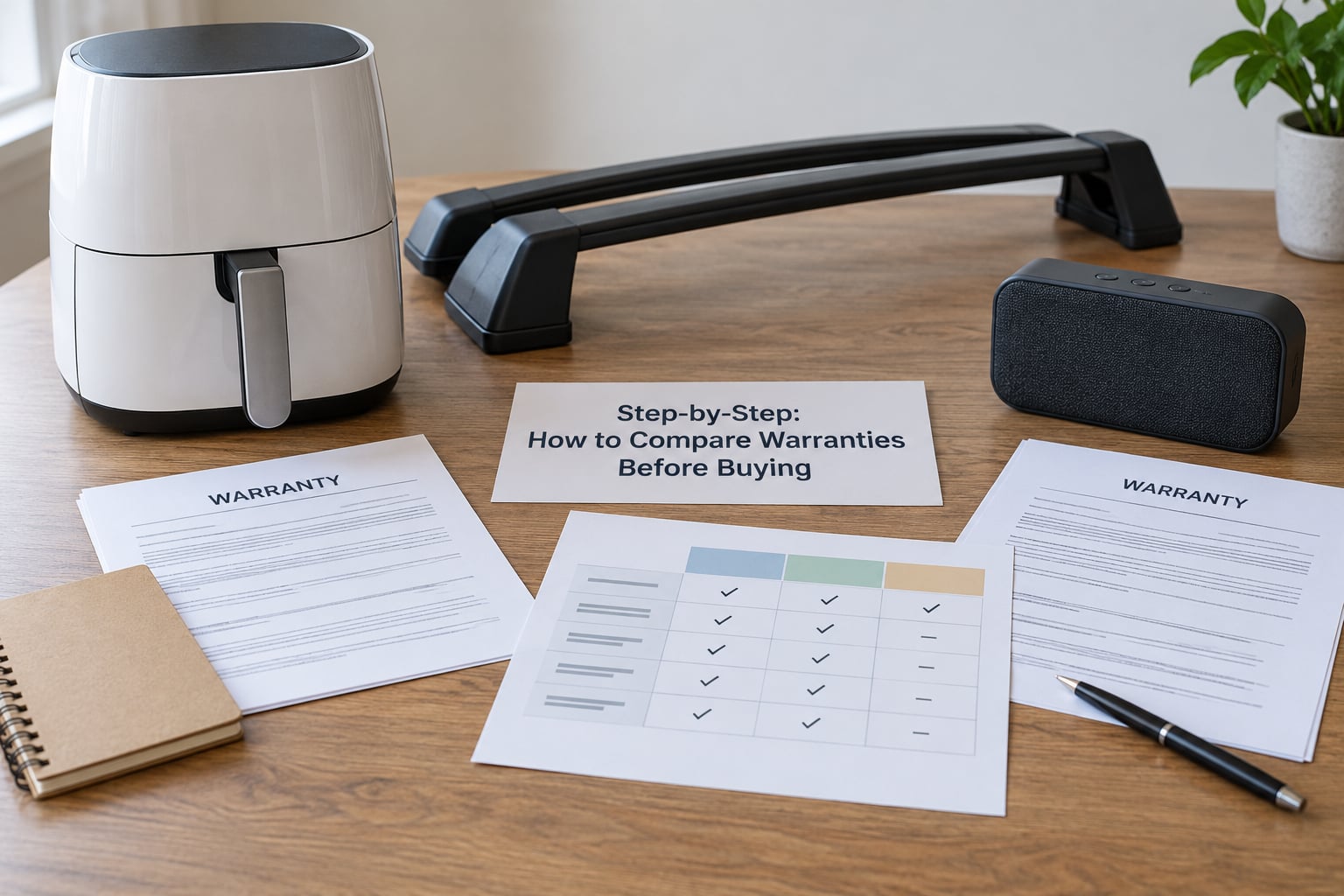
An extended warranty is a service contract sold after the purchase, or by the dealer, or by a third-party provider, that covers specified repairs beyond the manufacturer’s warranty for an extra premium plus a per-repair deductible. That definition matters because most disappointments are misread terms, not bad luck. Here is the sequence I use.
1. Identify What the Warranty Covers
Start by separating four things people routinely blur together: manufacturing defects, accidental damage, normal wear and tear, and the accessories that came in the box. Most plans cover the first and barely touch the rest.
Write down what is covered in plain language before you write down what is excluded. Then record the term in months, miles or hours, and find the exact start date, because plans often run from the delivery date rather than the purchase date, and vehicle plans age out on whichever comes first.
The category changes the vocabulary, not the method. Vehicles are sold in tiers: bumper-to-bumper, then powertrain or drivetrain coverage, plus separate emissions and corrosion terms. Appliance plans often single out the compressor and the sealed system while leaving motors and control boards out. Electronics plans cover the failure, almost never the drop. Home improvement plans split workmanship, which covers the installer’s labor, from materials, which covers the product itself.
2. Check Exclusions and Limitations
The exclusions appendix is where the real contract lives. Look for normal wear and tear, pre-existing conditions on a used item, cosmetic damage, and consequential loss such as lost data or a spoiled load of laundry.
Then check the conditions attached to coverage, because they decide whether a claim survives. Maintenance schedules often have to be met and documented. Non-genuine parts or fluids can void the whole warranty rather than the one repair. Misuse has a specific contractual meaning that is usually broader than the word suggests.
Three things cause most voids in practice: unauthorized or non-certified repair work on a covered component, modified or non-original parts where the manufacturer specifies originals, and documented misuse, neglect or missing maintenance records. Geographic limits matter too, since some plans only pay at authorized locations in the country of purchase. Every one of those conditions should appear in your comparison sheet as a line of its own.
3. Compare Service and Claim Terms
Two plans with identical terms can be worth very different amounts because of how the claim actually works. Find out whether you are covered for repair or for replacement, because replacement of a part often triggers a brand-new deductible and a service visit.
Check the deductible amount and whether it applies per repair or per claim. Then find out who may perform the work. An authorized-network plan is cheaper to the provider and expensive to you if you have a trusted independent shop; forum buyers treat the loss of shop choice as a real cost, and an industry-side view from a service advisor forum is that exclusions and shop flexibility vary more between providers than the marketing suggests.
Also check whether pre-authorization is required before the repair starts, what documents the claim needs, how long the provider claims to take, and whether roadside help, a rental car or towing is included or capped. Unapproved work is the most common reason an otherwise valid claim gets denied.
4. Verify Transferability and Ownership
Ask who the coverage belongs to. Some plans follow the product, some follow the original owner, and dealer plans frequently do neither in a way that helps you at resale time.
Secondhand buyers on ownership forums treat non-transferability as a discount to the purchase price, since they are effectively buying the plan for nothing. Ask whether the next owner has to call and register, whether you get documentation for the transfer, and whether coverage is reduced rather than voided on a sale.
Ownership events matter too. Ask what happens if the item is sold, refinanced, or moved out of state, and whether unused coverage can be cancelled for a pro-rata refund. A plan you cannot cancel and cannot transfer is a plan you have bought outright.
5. Calculate the Total Cost When Comparing Warranties Before Buying
Compare the plan premium against the realistic repair cost of the item you are actually buying, not against a worst-case number. Forum discussions often miss this and compare a plan against an extreme repair price, which flatters the plan; the break-even point is the sum of the two or three repairs you would most likely face.
Then add everything you would still pay: deductibles, out-of-pocket diagnostic fees, service visits, and any premium required to keep using an authorized shop. Dealer plans rolled into the auto loan add another layer, because you pay interest on the premium as well as the premium itself.
There is one more comparison worth making. Buyers on frugality forums regularly discover that a dealer’s price on the same plan is well above what the plan costs elsewhere, and the same comparison shows up on model-specific boards. ConsumerAffairs figures cited by GOBankingRates suggest only about one in ten extended car warranty holders ever files a claim, which is worth weighing against the possibility that you are that person for an expensive, non-wear-and-tear failure.
6. Read the Fine Print Before Checkout
The last pass is short and mechanical. Confirm the cancellation window, the pro-rata refund formula, and any cancellation fee. Confirm whether the plan renews automatically or lapses at the end of the term, and whether it overlaps or duplicates what the manufacturer or your credit card already provides.
Write down the claims phone number and address, the required proof of purchase, and whether the retailer imposes conditions of its own. Then check whether the price can move; negotiation is normal on dealer add-ons, and independent comparison shopping is the cheapest way to know what fair looks like.
One warning applies wherever you are: if someone contacts you by phone, mail or email offering a warranty for an item you already own, that is almost always a scam. Verify independently through the manufacturer’s official contact details, not the ones in the message.
Common Mistakes
Most warranty comparisons fail on the same seven errors, and each one has an easy correction.
- Comparing by headline term length. Twelve months of everything beats sixty months of nothing, so compare covered components first and duration second.
- Ignoring the deductible. Two plans with similar premiums can differ by hundreds over the life of the item once per-claim deductibles are added in.
- Comparing only one seller. A dealer’s price for a third-party plan is rarely the market price. Get at least two quotes from outside the seller pitching it.
- Buying on top of coverage you already have. Audit the credit card, the retailer’s program and the manufacturer warranty first; the plan you are being sold may duplicate all of it.
- Treating wear and tear as a defect. Filters, belts, brake pads and batteries are consumables. If a plan pays for them, the premium is priced accordingly.
- Skipping transfer and cancellation terms. Non-transferability reduces what you recover at resale, and no refund means you are stuck for the full term.
- Deciding at the finance desk. The last minute of a purchase is the worst time to read a contract, and it is exactly when add-ons get bundled together.
A simple habit handles most of these: put every term you find in writing on the sheet, and treat anything the seller will not put in writing as an exclusion.
Frequently Asked Questions
Is a manufacturer warranty better than an extended warranty?
The manufacturer’s warranty is better value for the risks it covers, because it comes at no cost and repairs usually happen in the authorized network. It is limited to defects, usually shorter, and it does not cover accidental damage or wear. An extended warranty trades a bigger premium and a deductible for more time and sometimes more components. Compare the two documents side by side rather than treating one as a replacement for the other.
What should I look for in a warranty before buying a product?
Look for five things: which components are covered, what is excluded, the term in months or miles and when it starts, the deductible per repair, and who may perform the work. Then check whether the plan is transferable and cancellable with a pro-rata refund. Write every answer in a column of its own so two plans can be lined up. Anything the seller will not state in writing should be treated as not covered.
Does an extended warranty cover accidental damage?
Usually not. Most extended plans cover defects and breakdowns, and explicitly exclude drops, spills, impacts and other accidental damage. Some electronics and mobile-device plans add accidental damage as a separate tier with its own deductible, and vehicle plans may cover glass or interior damage under a specific rider. Read the exclusions appendix rather than assuming, because the word accidental is the single most common reason a claim is denied.
Is a third-party warranty worth the price?
It can be, if you buy it independently, compare two or three quotes, and pick a plan whose covered components match that item’s real failure points. Third-party plans are often cheaper than dealer plans and travel with the vehicle, which helps at resale. They are poor value when they duplicate coverage you already have, when repairs must go through a limited network, or when the premium exceeds the likely repair cost of the item.
Can I transfer a warranty when I sell or give away the product?
Only some plans can. Coverage that follows the product usually transfers with a signed document or a call to the provider. Coverage tied to the original owner, especially many dealer plans, does not. Ask in writing before buying and get the terms in the contract, because a non-transferable plan is money you recover nothing on when you sell. Home warranty contracts also often restrict transfer to the same owner and the same address.
Should I buy an extended warranty with my credit card?
No. Credit cards that extend manufacturer coverage do it at no cost, and the extension is often longer than the cheapest paid plan. Check the card’s terms for the covered purchase price ceiling, the required payment method, and the registration deadline. Card extensions still exclude accidental damage and wear, so if you want broader coverage you may still need a plan, but the free extension should be the baseline you compare against.
Conclusion
Start by pulling the manufacturer’s warranty, the credit card terms and the applicable state rules before you look at a single paid plan. Then compare the written coverage, the exclusions, the claim process and the all-in cost of each option, not the warranty label on the box. Updated for 2026, that single pass is usually enough to tell which plan is genuinely worth buying and which one only exists to fill a signature line.