Negotiating a price in a store means politely asking the person who can actually authorize a change, usually a department manager rather than the cashier, for a lower price or an added perk, using a competitor’s price, a visible pricing error, a bulk purchase, or your own loyalty as the reason. It takes about five minutes, and the only real skill needed is deciding your number before you walk in.
The idea that US stores have one fixed price is mostly a habit, not a policy. Floor staff, department managers and shop owners routinely have unadvertised manufacturer incentives, loyalty credits, and a little discretion, especially on big-ticket items and during slow periods. Cashiers, though, usually have none of that authority, which is why asking the wrong person is the most common way a negotiation dies before it starts.
This guide was checked against current retail practice in 2026. Most of the advice floating around online is eight to fifteen years old, and a few of the tips people still copy are aimed at farmers’ market stalls, not at a checkout counter.
Table of Contents
- 1What You Need
- 2Step-by-Step: How to Negotiate a Price in a Store
- 31. Research the Price Before You Go
- 42. Set a Target and a Walk-Away Price
- 53. Ask the Person Who Can Approve a Discount
- 64. Make a Specific, Supported Offer
- 75. Respond to a Counteroffer or Silence
- 86. Confirm the Final Terms in Writing
- 9Common Mistakes
- 10What not to do when negotiating a price in a store
- 11Quick tips before you open your mouth
- 12Frequently Asked Questions
- 13Is it rude to negotiate a price in a store?
- 14How much can I realistically negotiate off the price?
- 15The cashier said the price is final. What should I do?
- 16Does price matching work in store?
- 17How do I ask a store manager for a discount politely?
- 18What can I negotiate besides the sticker price?
- 19Conclusion
What You Need
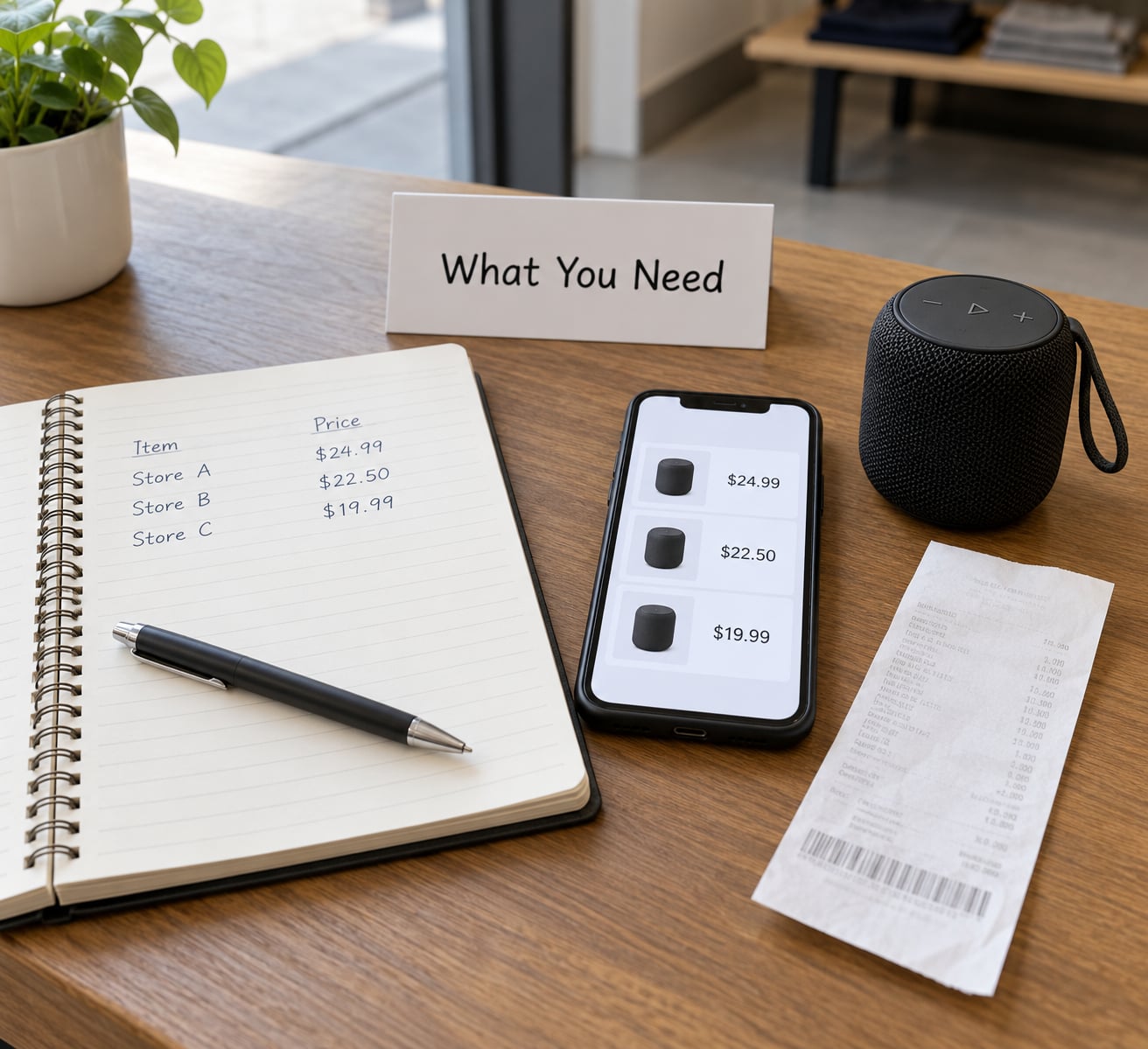
Four things, and you can gather them in about fifteen minutes the night before.
- Comparable prices. The same model at two or three other retailers, including whether anyone is shipping it free or charging for delivery. Screenshots on your phone beat a half-remembered number.
- Condition and included features. Warranty length, what comes in the box, whether the model on the shelf is a floor display or a returned unit. These are your reasons as much as the price is.
- A target number and a walk-away point. Two separate figures. The target is what you say out loud; the walk-away point is the maximum you will pay before you turn around, and you do not say that one out loud.
- A quiet moment and the right person. Early in the week, away from the lunch rush, and at the department desk rather than in front of a checkout line.
Buy something you actually want, not something you plan to flip. A buyer with a real reason to own the item is far easier for staff to help than a browser who might never come back.
Step-by-Step: How to Negotiate a Price in a Store
1. Research the Price Before You Go
Search the exact model number, not a vague product name. Retailers price-match each other constantly, and a chain that sees your screenshot may simply tell you to buy it from the competitor, which costs them nothing and settles the conversation.
Then add up the extras that hide the real comparison. Delivery and installation fees, membership requirements, protection plans, and financing costs can erase a headline discount entirely. If you are only going to compare sticker prices, you are negotiating on the wrong number.
2. Set a Target and a Walk-Away Price
Write both numbers down. Your target should sit below the best price you found online, adjusted for what you would lose in convenience by going somewhere else. Your walk-away point is the most you would pay to avoid the trip, the shipping fee, and the argument.
That distinction is what keeps a negotiation calm. A shopper with a ceiling can say no and mean it. A shopper without one keeps talking until they are embarrassed.
3. Ask the Person Who Can Approve a Discount
This is the step most guides get wrong. A cashier rings up a fixed price and rarely has the software to change it. A sales associate may have a small budget for damaged boxes. A department manager usually controls promotions for that aisle. Only a store manager or an owner handles anything meaningful.
| Person | Typical authority | What to ask |
|---|---|---|
| Cashier | Almost none | Unadvertised promos, loyalty sign-up savings, a coupon the register accepts |
| Sales associate | Small, often unadvertised | Damage, open-box or floor model pricing |
| Department manager | Aisle-level discretion | Manager override on a marked price, bundle pricing |
| Store manager | Wide discretion on high-ticket items | A modest percentage off, free delivery, a better warranty |
| Owner (independent shop) | Full pricing control | Anything, especially for a cash buyer or a repeat customer |
Ask quietly, away from the line. Employees describe the difference sharply: a calm, reasoned request at the department desk is treated completely differently from a demand made at the register in front of a queue.
4. Make a Specific, Supported Offer
Name a number and give it a reason in the same breath. A number with a reason is a request; a number without one is a demand.
Try: “I saw the same model at two other places for noticeably less. If you can meet that today, I’ll buy it right now.” Or, if the shelf tag looks wrong: “This is showing a higher price than the one I was quoted yesterday. Can someone correct it?”
Here is roughly what a fair first ask looks like depending on where you are standing.
| Store type | Typical realistic ask | Often available instead of a price cut |
|---|---|---|
| Supermarket or pharmacy | Rarely anything | Loyalty pricing at checkout |
| Big-box electronics | 0 to 5 percent, or a price match | Free delivery, open-box unit, extended warranty |
| Furniture or mattress store | 5 to 15 percent | Free delivery and setup, frame upgrade, pillow and topper |
| Car dealership | Several percent off the agreed figure | Lower financing rate, free service years, a cleaner vehicle |
| Jewelry store | 5 to 10 percent | Free setting, sizing, or a small stone upgrade |
| Independent shop or boutique | 10 to 20 percent on a bundle | An extra item, loyalty credit, a note for next time |
| Thrift, consignment, pawn or market stall | Expected, especially late in the day | A bundle deal across several pieces |
On cash, be honest about why you are offering it: small independent sellers pay a percentage on every card payment, so cash is worth real money to them. On chain retail it is worth nothing, because the store never sees the difference.
5. Respond to a Counteroffer or Silence
If they say no, do not repeat the same number louder. Change one variable: ask them to meet you somewhere between your offer and the shelf price, ask for a perk instead of a discount, or ask for a manager.
“I understand. If I pay today instead of waiting for the sale, could you do anything on delivery or on the setup?” gets asked constantly in staff forums and it works, because a store can often give away something that does not touch its margin.
If you hear immediate, unqualified agreement to your first number, that was likely too generous. Take it, thank them, and go home knowing the market rate for next time.
6. Confirm the Final Terms in Writing
Before a card touches the reader or a contract gets signed, restate the whole deal out loud: the agreed price, sales tax, delivery and installation fees, what is included, warranty length, return window, and the payment terms.
Then check that the receipt or paperwork shows those numbers. Mistakes get corrected easily when raised before the sale closes and argued about afterwards. If the price drops after you buy, that is a price adjustment conversation, and you have far less leverage the longer you wait.
Common Mistakes
What not to do when negotiating a price in a store
Asking the cashier to override a price. They usually cannot, and they have to say no in front of you. Ask for unadvertised promotions and loyalty savings at the register, then find the department manager for anything bigger.
Opening with a lowball. Half the sticker price is an insult, not an anchor, and it makes staff decline the rest of your request too. Ask for a realistic percentage and justify it.
Negotiating in front of a queue. Both of you lose. Step aside, or wait until the person who handles that aisle is free.
Pushing after a clear no. One ask, one counteroffer, one polite request for a manager. Repeating yourself turns a normal shopper into someone staff remember badly.
Confusing a discount with a better total. A 10 percent price cut on an item with a 15 percent delivery fee is a loss. Compare totals, including membership costs and required add-ons.
Treating every store the same way. A supermarket register and a furniture showroom have completely different authority structures. Expecting a discount where none exists is how shoppers get labeled as bargain hunters, which is exactly the reputation most people are trying to avoid.
Quick tips before you open your mouth
- Time it for the end of a month, the end of a season, or the last day of a promotion, when quotas and deadlines are doing the persuading for you.
- Buy two or three of something rather than one; bundle requests work far better than percentage requests.
- Ask about open-box, returned, or display items. You rarely have to argue for those discounts because the store already wants to move them.
- Keep your evidence to yourself until someone asks why your number is fair.
- Thank the person either way. You may want to buy from them again next month, and word travels.
Frequently Asked Questions
Is it rude to negotiate a price in a store?
Not at chain retail, where staff follow a posted price and have little authority, and yes at independent shops, where the owner set the price personally and expects a friendly haggle. It turns unpleasant when you target the cashier, argue in front of a line, or keep pushing after a polite no. Ask calmly at the department desk and it comes across as a normal shopper doing research.
How much can I realistically negotiate off the price?
On big-box electronics, expect nothing to about 5 percent, usually limited to a price match. Furniture, mattresses, and cars have room for 5 to 15 percent, and independent shops are the only category where 10 to 20 percent is normal. On a large purchase, a smaller cut paired with free delivery, setup, or a warranty upgrade is often easier for a store to approve.
The cashier said the price is final. What should I do?
Accept it without an argument and ask for something else: an unadvertised manufacturer promotion, a loyalty sign-up discount, or a coupon the register accepts. If the item is significant, thank them and ask whether a department manager handles promotions for that aisle. Cashiers rarely have override ability, so pressing them simply puts them in an awkward position.
Does price matching work in store?
At many national chains it does, though the fine print usually requires the identical model, in stock locally, and a current advertisement from a competitor. Show the screenshot at the service desk rather than the register, and be ready for them to suggest you buy it from the other retailer instead. Independently owned stores have no such policy but often match informally.
How do I ask a store manager for a discount politely?
Wait until the floor is clear, mention what you like about the item, then connect a number to a reason and a timeline: you compared the same model elsewhere and can buy today if they meet it. Give them a moment to say no, and offer a non-price concession as a fallback such as delivery or an accessory. Ask once and accept the answer.
What can I negotiate besides the sticker price?
Delivery and installation, setup and removal of the old unit, protection plans, warranty length, accessories such as cases or bedding, loyalty sign-up savings, and financing terms. On a payment plan the rate matters more than the price, and on an installation the labor fee is often easier to drop than the merchandise price.
Conclusion
Start with the market, not the salesperson. Check the same model elsewhere, decide the most you are willing to pay, and then find the person who can approve a change instead of asking the person who cannot. One calm question, one supported number, and a polite either way. That is the whole method, and it works just as well when the answer is no.