Packing a carry-on for a week works when you build a small capsule wardrobe where every piece mixes with every other, pack those clothes into compression cubes, and do one laundry session halfway through the trip. Wear your bulkiest layers on the flight, keep every liquid under 100 ml, and carry a full change of clothes in your under-seat bag as insurance.
Seven days sounds like a lot until you look at it as outfits instead of garments. Five tops, three bottoms, two layers and one sleepwear set give you twenty-plus combinations, which is more than most people need in a week.
What follows is the system I use, from the empty suitcase to the boarding queue. It takes about twenty minutes once you have decided your outfits, and it means no bag check, no gate-check scramble and no laundry emergency on day six.
Table of Contents
- 1What You Need
- 2Step-by-Step: How to Pack a Carry-On for a Week
- 3Step 1: Choose a Seven-Day Capsule Wardrobe
- 4Step 2: Pack Clothing by Using Layers and Mix-and-Match Pieces
- 5Step 3: Roll or Fold Clothes to Save Space
- 6Step 4: Pack Shoes and Toiletries Strategically
- 7Step 5: Do a Wear-Heaviest Items and Laundry Plan
- 8Step 6: Check Weight, Dimensions, and Security Rules
- 9Common Mistakes
- 10Bringing three or more pairs of shoes
- 11Packing seven full days of underwear and socks
- 12Filling the quart bag to the brim
- 13Ignoring the weight limit
- 14Packing the whole outfit for one good dinner
- 15Skipping the airline check
- 16Frequently Asked Questions
- 17How many outfits do I need for a one-week trip?
- 18Can I do laundry during a one-week trip?
- 19What size liquid containers can I bring through airport security?
- 20How many pairs of shoes should I pack in a carry-on?
- 21Can a backpack count as a personal item on a flight?
- 22How do I avoid overpacking a carry-on for a week?
- 23Conclusion
What You Need
Before anything goes in the bag, gather the support kit. Without a clear bag for liquids and a way to weigh the case, most of the strategy falls apart at the airport instead of at home.
- Two packing cubes — one compression cube for tops and layers, one regular cube for bottoms and anything that creases. Add a small cube for underwear and socks so dirty laundry has its own home.
- One clear quart-size resealable bag for liquids. Every bottle has to fit inside it, so pick containers that are genuinely small.
- A luggage scale that weighs up to roughly 11 kg. Free airline apps guess; a cheap spring scale tells you the truth.
- A laundry solution — a small pack of detergent sheets or a sink bottle that rinses clean with no fragrance.
- Travel documents — passport or ID, insurance details, cards split between two bags, and any prescriptions in original packaging.
- One packable day bag that folds into a cube, for the day you do not want to dig through the suitcase.
Optional organizers earn their place when you travel often: a shoe bag so boots do not soil your clothes, a waterproof packing mat for damp swimware, and a laundry bag. Skip anything decorative — a cube you cannot close is wasted space.
Here is the working shopping list for one traveller for seven days. The quantity column is the whole formula, so you are not counting as you pack.
| Category | Quantity | Notes |
|---|---|---|
| Tops | 5 | Same colour palette, all working with every bottom |
| Bottoms | 3 | Two everyday, one dressier if the trip needs it |
| Layers | 2 | One light cardigan or overshirt, one warm layer |
| Underwear and socks | 7 pairs each plus 1 spare | Pack 4 of each, wash the rest mid-trip |
| Sleepwear | 1 lightweight set | A thin set also works as an extra top |
| Shoes | 2 pairs | Wear the heavier pair on the plane |
| Liquids | Under 100 ml each | All inside one quart-size clear bag |
| Laundry | 1 pack of detergent sheets | Rinse clean, no residue |
| Electronics | Phone, charger, power bank, adapter | Power bank stays in the personal item |
| Backup outfit | 1 tee, underwear, socks, medication | Packed in the personal item or a ziplock |
Adjust the numbers for your trip. Three days needs four tops and two bottoms. Cold weather trades a top for a warmer layer and usually costs you the dressier bottom.
Step-by-Step: How to Pack a Carry-On for a Week
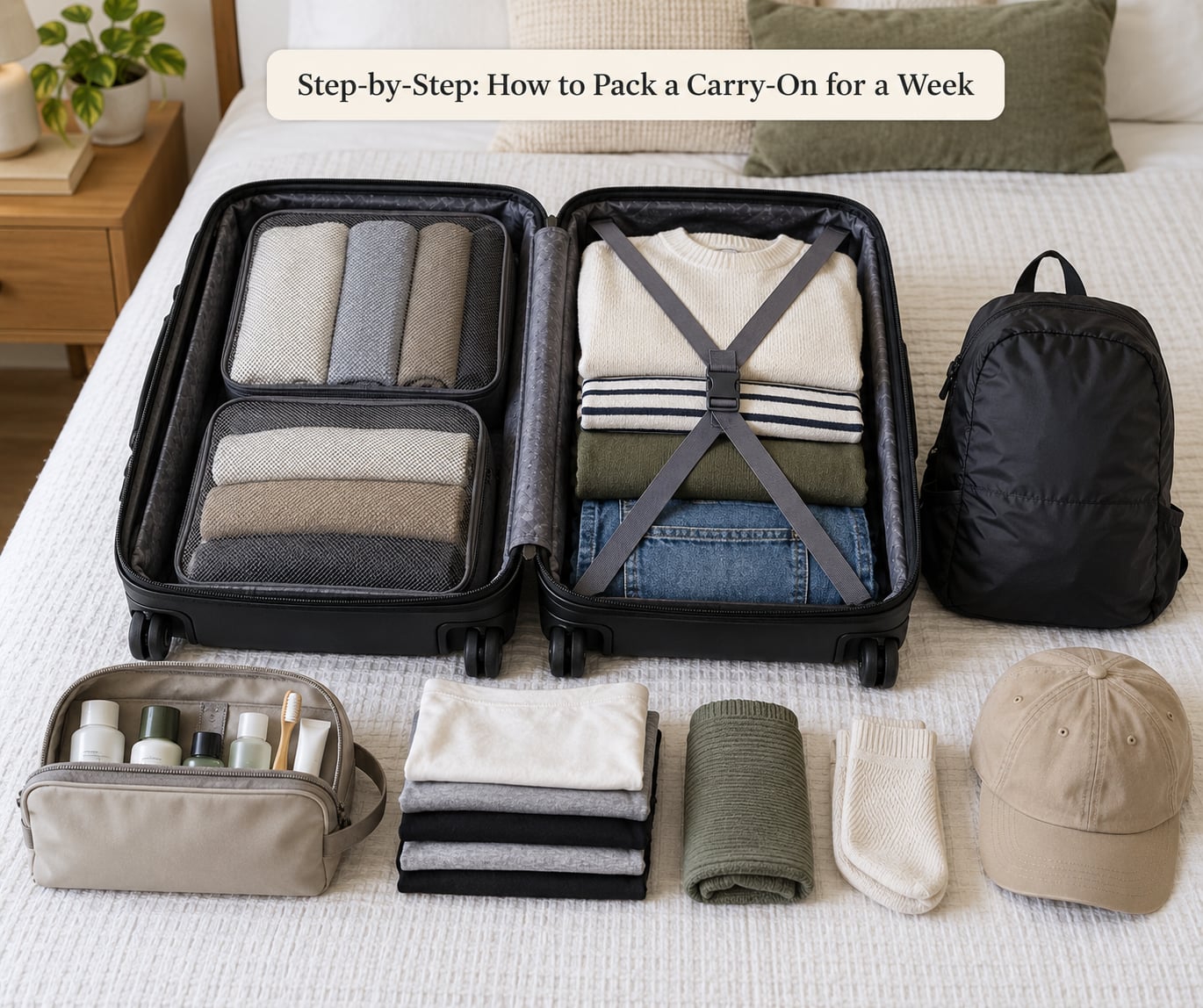
Pack in an order that keeps the bag stable and the last-minute items reachable. Most people start with clothes and end up wedging shoes on top; work bottom-up instead and the case closes easily on the first try.
Step 1: Choose a Seven-Day Capsule Wardrobe
Check the forecast for the whole week, not just the arrival city, and decide whether you will do laundry. If you will, you need six days of clothes. If you will not, you need seven and a cube you can reuse.
A capsule works when everything shares a colour palette. Pick navy, grey, cream and one accent, and any top works with any bottom. Add fabric considerations: merino wool resists odour, quick-dry synthetics dry in a hotel sink overnight, and wrinkle-resistant blends survive being folded into a cube.
Here is the formula I fall back on: five tops, three bottoms, two pairs of shoes, two layering pieces and one sleepwear or swimwear set. Most travellers manage well with three bottoms, and cutting one frees up half a cube.
Step 2: Pack Clothing by Using Layers and Mix-and-Match Pieces
Layers do the work that extra volume cannot. A thin overshirt, a shirt and a light knit give you three looks from the same base, and all three fit into one compression cube.
A practical outfit formula: one neutral bottom plus one top for daytime, add a layer for cool evenings, and swap in a dressier bottom for one evening out. Plan seven day outfits on paper before you touch the bag, and make sure no two days in a row use the same combination.
If a business trip is involved, pack one meeting outfit and steam or hang it in the room on arrival. Ten minutes under a bathroom shower or on a hotel rail handles most creases in synthetics.
Step 3: Roll or Fold Clothes to Save Space
Rolling works best for stretchy and wrinkle-resistant fabrics: leggings, tees, underwear, socks and travel trousers. Fold knits, button-downs and anything structured, because a roll leaves a visible crease line along the edge.
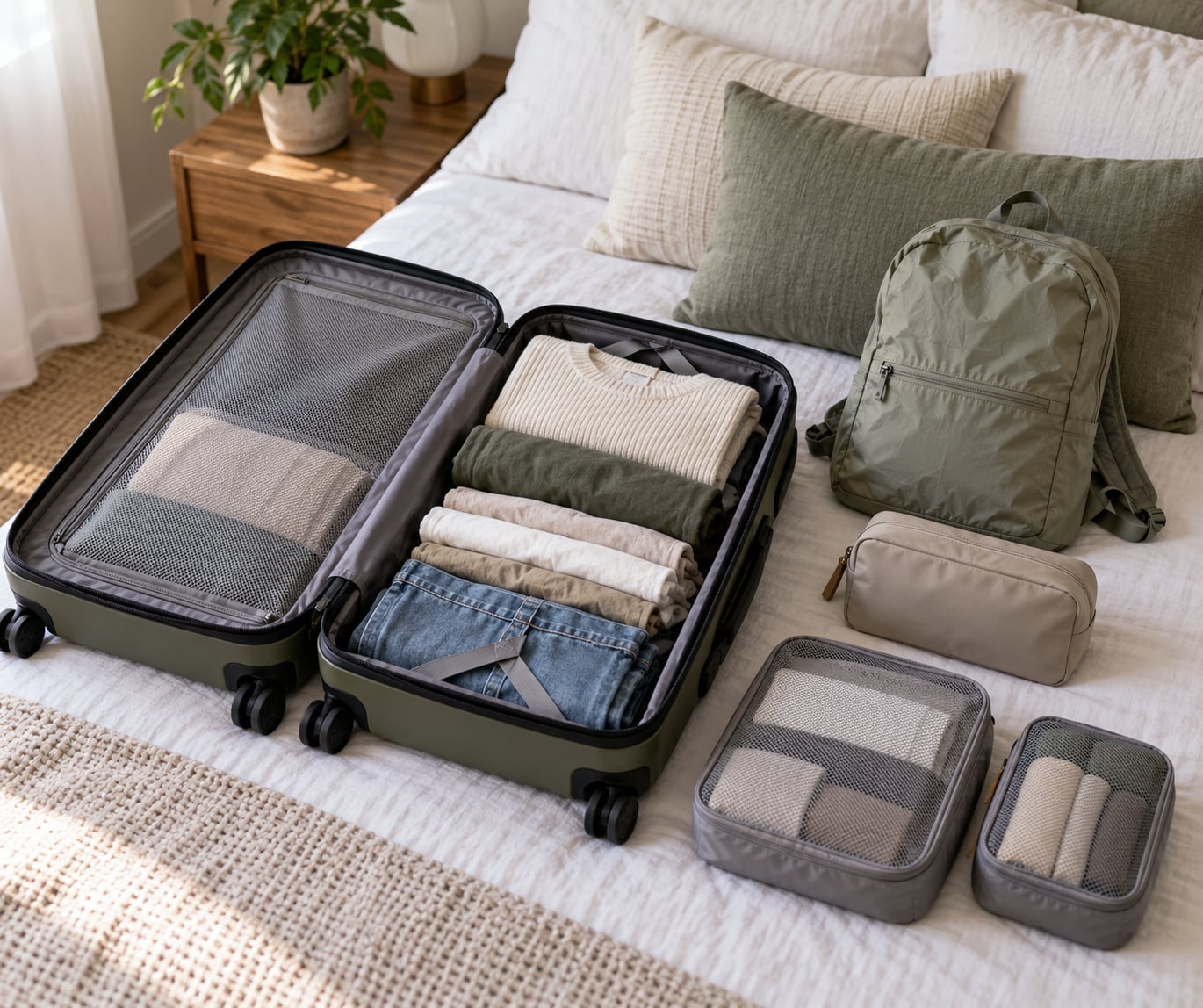
Compression cubes zip out most trapped air and typically buy 20 to 30 percent more room than the same clothes loose. They also make unpacking on arrival faster, which matters more than the space when you only have a bed and a floor.
Compression hurts in one place: heavily wrinkled or bulky items like towels and puffer jackets. Those need air, and crushing them longer just restores the volume. Pack those loose or wear them, and use cubes for everything flat.
Step 4: Pack Shoes and Toiletries Strategically
Shoes are the biggest space problem in any carry-on. Two pairs is the practical ceiling: the pair you walk in most, plus one that works with the trip — trainers that can pass a casual dinner, or flat sandals for hot weather. Wear the heavier pair and pack the lighter one in a shoe bag at the bottom of the case.
Fill shoe bags with socks, underwear or a soft sweater. You reclaim dead space and you have something to wear if your suitcase goes missing.
For liquids, every container must be 100 ml or smaller and all of them go in one clear quart-size bag. Shampoo bars, solid deodorant and a decant bottle in a reusable container cut the volume dramatically. Buy full-size sunscreen, toothpaste or shaving foam after landing instead of carrying it through security.
Step 5: Do a Wear-Heaviest Items and Laundry Plan
Wear your heaviest shoes, bulkiest jacket and thickest sweater in transit. Those items take the most space and the least abuse, and on arrival you go straight to lighter clothes.
Plan one sink wash around day four or five. Run lukewarm water, add one detergent sheet, agitate the clothing by hand for a minute, then rinse until the water runs clear. Roll the garment in a towel to press out water, and hang it on a shower rail or a hanger overnight. A light load dries in most climates before breakfast; in humid weather it takes longer, so wash early.
Pack one fewer underwear and sock set than the trip length and rotate them, so nothing needs a last-minute wash. One underwear set, one sock set and all medication in the personal item covers you if your main bag goes missing or gets gate-checked.
Step 6: Check Weight, Dimensions, and Security Rules
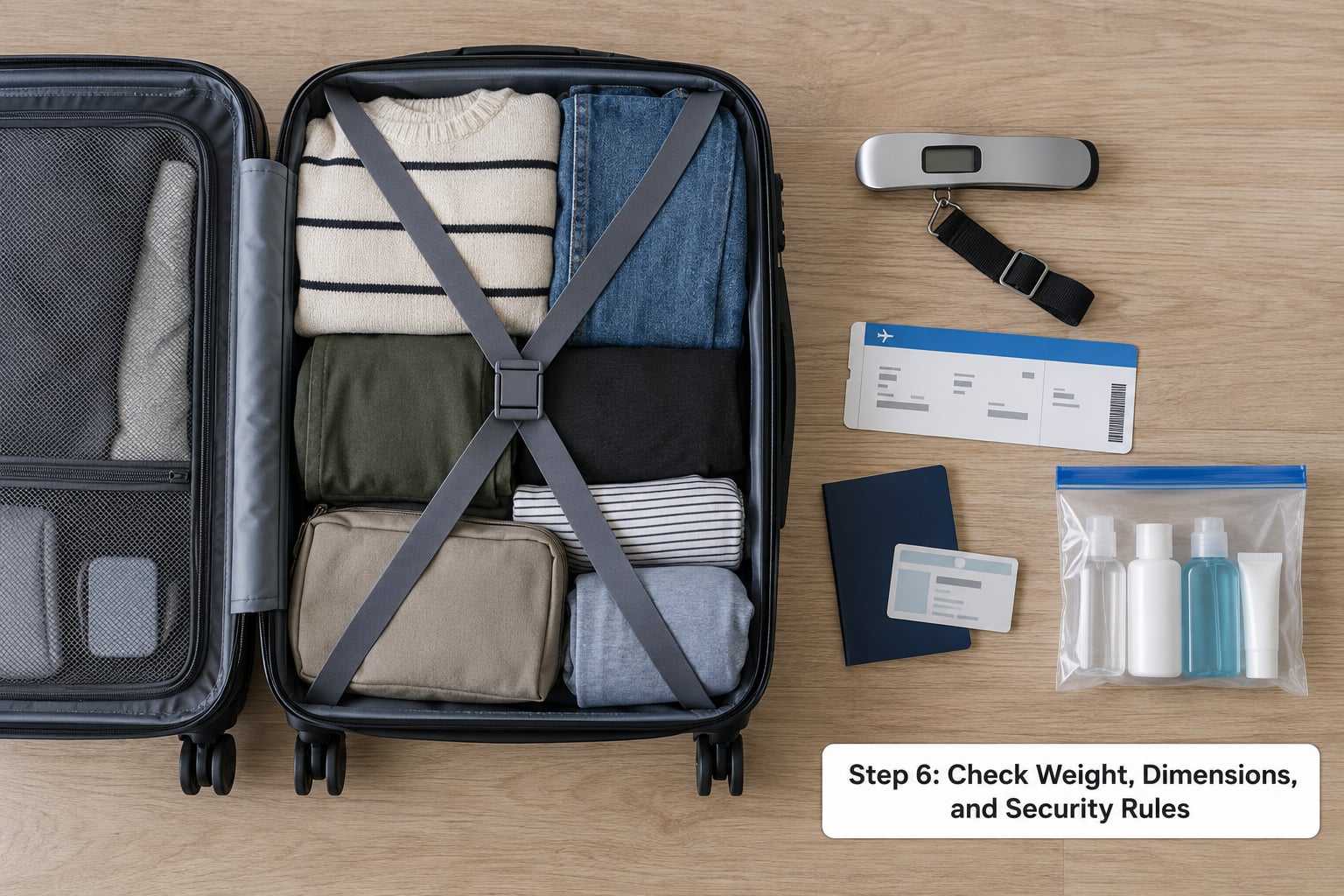
Measure the case including wheels and handles before you leave. A common US domestic allowance is about 22 by 14 by 9 inches, but every airline publishes its own number and budget European carriers are stricter. Checking online takes two minutes and removes the guesswork.
Weigh it too. US carriers usually judge carry-on by volume, while several European budget airlines cap hand luggage around 7 to 10 kg and charge a fee above it. Zipping a compression cube is the fastest way to shave off a kilogram before the airport.
At security, put medication in original labelled packaging and keep it in your personal item so it stays with you. Keep your clear liquids bag and any power bank in easy reach, and remove them first at the scanner. Nothing sharp, no full-size scissors, no loose aerosols over the allowed limit.
Pack the case with heavy items at the bottom near the wheels, the liquids bag on top, and the compressed cube zipped last so the bag stays flat. Then lay the personal bag against the front of the case and take a photo of both before you leave for the airport.
Common Mistakes
Overpacking a carry-on for a week almost always comes from one of six habits. Each has a simple fix that costs you nothing.
Bringing three or more pairs of shoes
Shoes fill the volume of half your clothing. Two pairs is the realistic limit for a week, and one of them should be the pair you walk in. If you are packing for cold or hiking, that one serious pair replaces the dressy option rather than adding to it.
Packing seven full days of underwear and socks
Five sets plus one spare covers a week if you wash on day four. Underwear and socks compress better than anything else you own, so trimming them is the cheapest space win in the bag.
Filling the quart bag to the brim
Travel-size bottles are usually larger than you think. Measure once with a kitchen jug, choose containers under 100 ml each, and switch what you can to bars. Buying deodorant, sunscreen or shaving foam at the destination costs less than the bag space it frees.
Ignoring the weight limit
Volume and weight are different rules, and strict carriers check weight at the gate where correcting it is impossible. Weigh the bag at home, note the number, and subtract a margin before you pack rather than after.
Packing the whole outfit for one good dinner
A separate dressier bottom and one top handle dinners, hotel lounges and anything that needs a little polish. A whole second set of smart clothing does not fit and rarely gets worn.
Skipping the airline check
Every carrier publishes size and weight limits, and they change. Look up the specific airline and route, including any budget segment, before you buy the bag. If a gate-check looks likely, carry your backup outfit in the personal item so a forced check is a nuisance rather than an emergency.
Frequently Asked Questions
How many outfits do I need for a one-week trip?
Plan for five tops, three bottoms and two layers, which gives you more than twenty mix-and-match combinations across seven days. Add one sleepwear set and one dressier bottom if your trip needs it. If you will do a sink wash on day four, you can cut one top and one bottom without noticing a gap in your wardrobe.
Can I do laundry during a one-week trip?
Yes, and most carry-only travellers do it once around day four or five. Put clothes in lukewarm water with one detergent sheet, agitate by hand for a minute, rinse, then roll them in a towel to press out water and hang overnight. Pack one set fewer underwear and socks than trip length and rotate through them.
What size liquid containers can I bring through airport security?
Each container must hold 100 ml or less, and every container has to fit inside one clear, resealable quart-size bag that you take out at the scanner. Shampoo bars, solid deodorant and decant bottles cut the volume dramatically. Buy full-size sunscreen, toothpaste or shaving foam after you land instead.
How many pairs of shoes should I pack in a carry-on?
Two pairs is the practical ceiling for a week, and wear the heavier one in transit. Pack the second pair at the bottom of the case in a shoe bag, and fill the bag with socks or underwear so you use the space rather than waste it. A third pair usually means checking a bag.
Can a backpack count as a personal item on a flight?
Most airlines allow one carry-on plus one personal item that fits under the seat in front of you, and a backpack is usually accepted if it is within those dimensions. Some budget carriers charge for the personal item as well, and some only allow a small handbag. Check the specific airline before you rely on a larger daypack.
How do I avoid overpacking a carry-on for a week?
Write every outfit down before you pack, then commit to the list. Give yourself a hard item count, pack only what fits the formula, and keep a separate not-to-pack list of things you want but will not use this trip. One underwear set, all medication and a tee in the personal item means a lost bag no longer ruins the trip.
Conclusion
Start tonight with the outfit list, not the suitcase. Write down seven days of outfits, cut anything that repeats a colour or fabric, and pack only what survives that edit.
Then pack bottom-up, wear the bulkiest layers on the flight, weigh the bag at home, and check your airline’s size and liquid rules for that specific route. Those three checks take less time than a coffee and they are what make the carry-on-only week actually work.