Blot the accident up, flush it with cold water, work an enzyme cleaner into the fibers, and let the carpet dry completely. That four-part approach handles fresh urine, dried set-in stains, vomit, and feces accidents, and it takes about 30 minutes of active work plus drying time.
The reason most pet stains come back is simple. Urine soaks through the carpet and into the foam padding underneath, where the odor source sits. Cleaning the surface gets the visible mark off but leaves the smell, and your dog or cat finds it again the next day.
Before you touch anything, put your pet in another room, put on gloves, and move any furniture sitting on the spot. Take a photo of the area first so you can judge the change once the carpet dries.
Table of Contents
- 1What You Need
- 2How to Clean Pet Stains Out of Carpet Step by Step
- 31. Remove solids and blot the area
- 42. Flush fresh urine with cold water
- 53. Treat urine with an enzyme cleaner
- 64. Clean feces, vomit, and food stains
- 75. Dry and inspect the carpet
- 8Common Mistakes
- 9Frequently Asked Questions
- 10How do I remove a dried pet urine stain from carpet?
- 11What removes pet urine odor from carpet naturally?
- 12Can I use baking soda or vinegar to clean a pet stain?
- 13Is hydrogen peroxide safe for pet stains in carpet?
- 14Why does a carpet pet stain keep coming back after cleaning?
- 15Conclusion
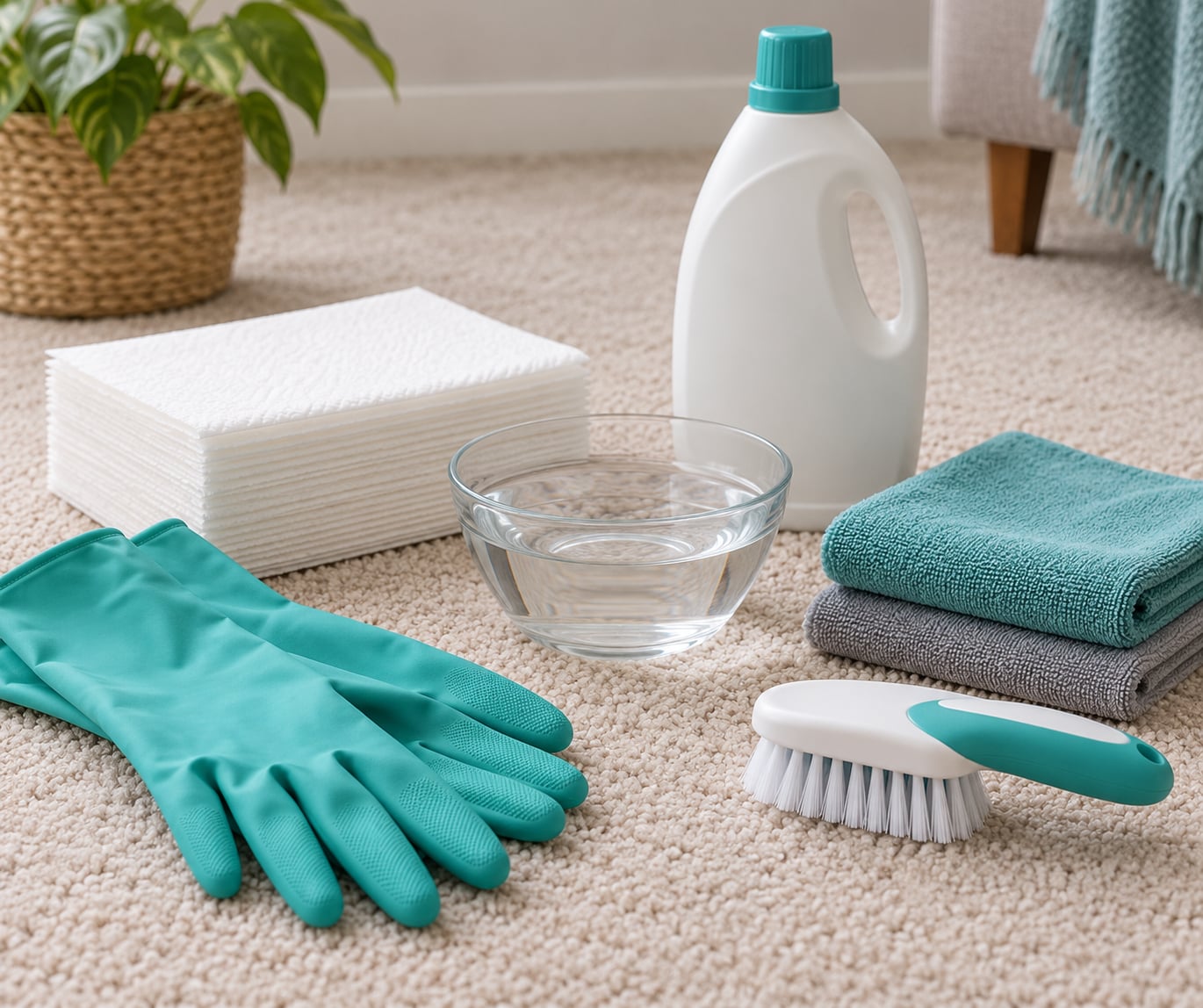
What You Need
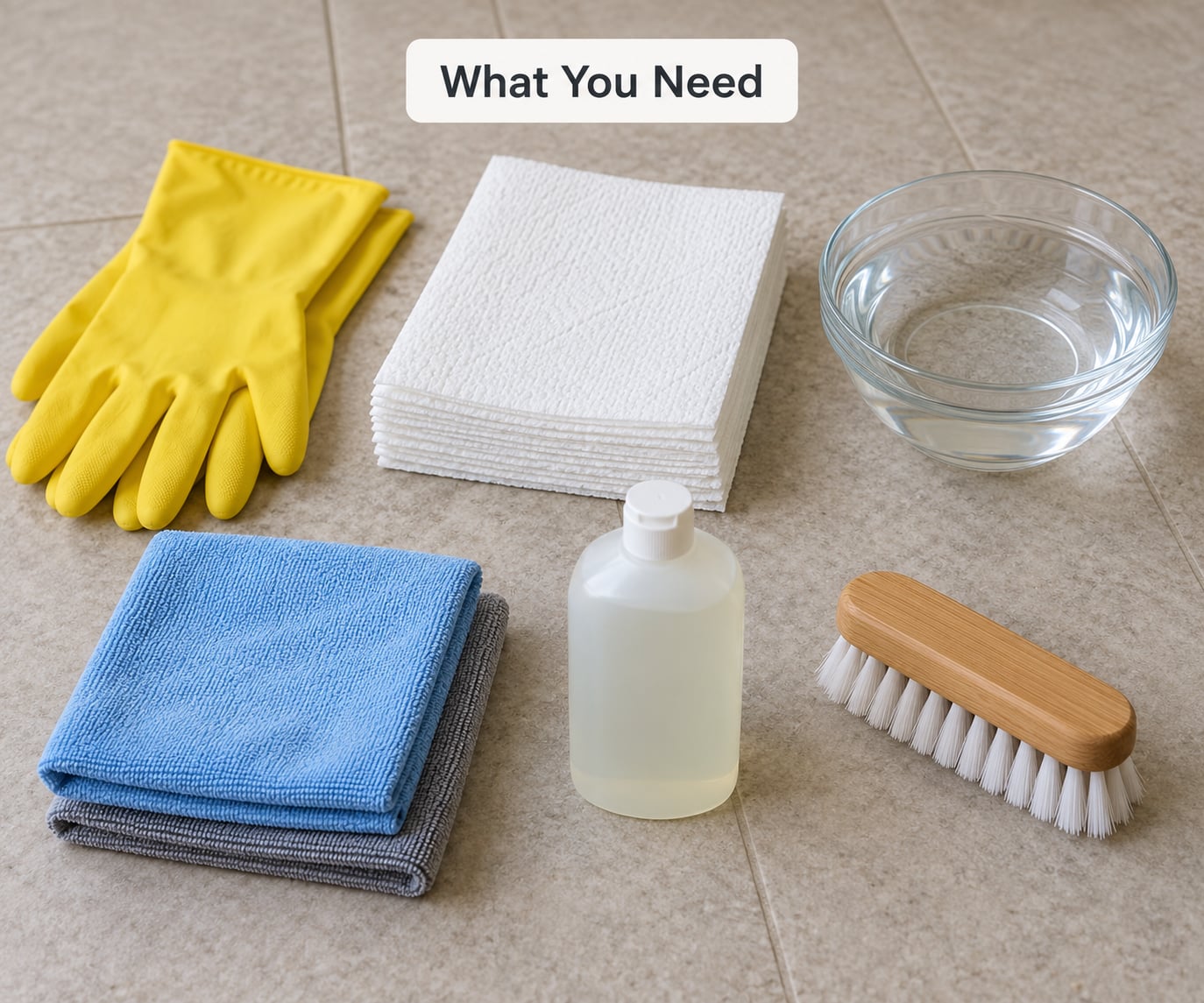
- Rubber gloves
- Paper towels and plain absorbent cloths, white cotton if you have it
- A small bowl and cold water
- A mild, pet-safe carpet cleaner, ideally an enzymatic one
- A stiff-bristled brush
- A spoon or dull utility knife for solid residue
Enzyme cleaners are the useful category here. They contain bacteria that feed on the organic compounds in urine, so they break the odor out instead of masking it. Vinegar and dish soap handle the surface but do nothing to the padding.
Keep bleach, ammonia, and harsh solvents out of the room entirely. Ammonia is a urine breakdown product, so a floor cleaned with it still carries the scent signal your pet is looking for. Any cleaner you use should also be labeled safe for pets and fragrance-free, since you will not be able to keep your dog off the floor while it dries.
Move furniture you do not have to move. Most accidents land under a couch corner or a bed, and you need access to the whole area, not just the top.
How to Clean Pet Stains Out of Carpet Step by Step
1. Remove solids and blot the area
Put on gloves and lift out any feces, vomit chunks, or food with a spoon. Scrape from the edge toward the middle so you do not push residue deeper into the pile. A dull utility knife helps on dried material that has hardened onto the fibers.
Then blot moisture with paper towels, pressing straight down. Work from the outside of the wet area inward, changing towels as soon as they are saturated. Rubbing spreads the mark and damages the fibers, so this is a press-and-lift motion, not a wipe.
You have done enough when the towels come up with no more color and no damp spot. For a fresh accident this takes five minutes and it removes most of what you will ever get out.
2. Flush fresh urine with cold water
After soaking up what you can, wet a clean cloth with cold water and press it over the spot, then blot dry. Repeat with small amounts of water a few times. You are diluting and lifting the liquid out of the fibers rather than pushing it around.
Cold water only. Hot water sets protein into the fibers, which is the reason an old-looking mark often shows up worse after someone scrubs with a hot soapy mix. Never pour hot water on a fresh accident, even though it feels like it would help.
Do not scrub, and do not work the stain with a stiff brush at this stage. Save the brush for later, and only for a dried stain.
3. Treat urine with an enzyme cleaner
Once the surface is damp but not soaking, apply a pet-safe enzyme cleaner according to its label. Most labels call for a generous application, not a light mist. Undiluted product is what professionals actually use, and forum users on r/CarpetCleaning consistently report that people under-dose and then give up too early.
Work it in gently with a clean cloth, then leave the area alone. Give it 10 to 15 minutes of dwell time so the enzymes can reach the padding and start breaking down the uric compounds. A slow fan pointed at the spot helps that dwell time do more work.
Blot the cleaner out with clean white cloths after the dwell. For deeper extraction, people on carpet-cleaning forums use the towel press method: lay a folded towel over the wet area, stand on it with your full weight for several seconds, then check the underside. Repeat with a fresh towel until it pulls up clean.
When accidents repeat in the same spot, a second and third treatment spaced a day apart usually beats one heavy dose. The residue sitting in the padding for months is harder to break up than something applied while it is still concentrated.
4. Clean feces, vomit, and food stains
Solid and food-based accidents follow a slightly different route because the staining compounds are fats and proteins rather than uric salts. Remove the solids first, then dilute what remains with cold water and blot it out the same way you would urine.
For a mild stain, a dilute solution of dish soap and cool water, applied sparingly and blotted, is enough. Go easy on the soap. Too much detergent leaves a sticky residue that traps dirt and makes the area look dirtier than before, and this is the single most repeated complaint in cleaning forums about Dawn-type products.
Avoid hot water, bleach, ammonia, and vigorous scrubbing here as much as with urine. A mild pet-safe carpet cleaner applied after blotting handles the last trace, then follow with the drying step below.
5. Dry and inspect the carpet
Press clean cloths over the damp area to pull out remaining moisture, then speed things up with a fan, an open window, or a dehumidifier. Let the carpet dry fully before you walk on it or push furniture back. A fan is the single most useful tool in this whole process, and a damp carpet under a couch can start smelling again within a day.
Wait until it is bone dry before judging the result. A urine mark often looks worse while drying and then lightens, because the dark wet appearance masks a permanently lightened spot. If a yellow or brown ring shows up after drying, that is a urine light, not a fresh stain, and it needs another round rather than more scrubbing.
Check by sniffing the spot from a kneeling position a few days later. If there is no odor and no visible mark, you are done. If the smell returns, the source is in the padding and you need another application, more dwell time, or professional help.
Common Mistakes
Using hot water. Heat binds urine protein to the fiber and spreads the mark. Cold water every time.
Scrubbing with a brush. It frays fibers and drives the stain deeper. Blot and press instead; use a stiff brush only to lift dried residue after the cleaner has done its work.
Reaching for ammonia. It smells like urine to your pet and actively invites a repeat visit in the same spot. Never use it on carpet, even diluted.
Using bleach. It oxidizes the dye, leaves a bleach ring that no further cleaning fixes, and it is unsafe around animals. If you want an oxidizer, hydrogen peroxide is the measured alternative, and only after a colorfastness test.
Soaking the carpet. Oversaturating drives liquid into the padding and the subfloor, where you cannot reach it. Small amounts, repeated, work better than one flood.
Using a cleaner not labeled for pets. A young puppy or kitten will walk across the damp area the moment you turn around. Residue-free and fragrance-free is the safer default.
Ignoring the odor after the mark disappears. If the smell is still there, the stain is not gone. Pets locate a spot with a trace odor left, which is why the same tile keeps getting hit. Block the area off with an overturned laundry basket while it dries, and keep your pet away for several days rather than minutes.
For everyday control, a HEPA vacuum on a slow pass every couple of days picks up hair and dander before they work into the pile, and a washable entry mat at the door catches most of what comes in on paws. Neither replaces treating a real accident.
Frequently Asked Questions
How do I remove a dried pet urine stain from carpet?
Soak the area with cold water and blot it dry, then apply an enzymatic pet cleaner generously and leave it for 10 to 15 minutes so it can reach the padding. Blot it out with white towels and repeat after the carpet dries. Old stains usually need two or three passes, and the smell should be checked again a few days later.
What removes pet urine odor from carpet naturally?
Baking soda works as a deodorizer once the carpet is dry, not as a cleaner. Sprinkle it over the area, leave it for several hours or overnight, then vacuum it up. For the odor itself, an enzyme cleaner is the only option that removes the source, because baking soda and vinegar absorb or mask the smell rather than breaking it down.
Can I use baking soda or vinegar to clean a pet stain?
Vinegar diluted 50/50 with water is a reasonable first rinse for a light fresh stain, and it is safe on most synthetic carpet once colorfastness-tested. It will not pull out dried urine. Baking soda handles odor after drying but is not a stain remover, and used heavily it can leave a residue that is harder to vacuum than the original mark.
Is hydrogen peroxide safe for pet stains in carpet?
It can be, used carefully. Test an inconspicuous corner first and wait until the carpet is fully dry to see if the color shifts, and never use it on wool, jute, or sisal. Once cleared, a solution of about 3 percent works for lingering discoloration, with 6 percent reserved for very stubborn marks. Keep your pet off it until completely dry.
Why does a carpet pet stain keep coming back after cleaning?
Two reasons are common. The urine soaks into the foam padding and subfloor, so a surface clean removes the mark but leaves the odor source, and the pet returns to the same spot. Or the area is still damp or not fully treated, so residue remains. Keep the pet off the spot for several days, treat repeatedly with an enzyme cleaner, and call a professional if the smell persists.
Conclusion
Start by removing solids and blotting, then match the method to the accident: cold water and an enzyme cleaner for urine, dish soap and blotting for vomit, feces, and food. Give it time to work and let the carpet dry fully before you judge the result.
If accidents keep happening in the same spot, keep your pet away for several days and treat the padding on repeat. Routine enzyme cleaning and a steady vacuum schedule stop most recurring problems before they set in. Where the smell has soaked into padding or the subfloor, a professional cleaner with proper extraction equipment is the honest answer.