Every collector eventually walks past the same shelf and sees a fine grey film on every figure. That is dust settling from the air, and the answer to how to display action figures without dust is simple: put them behind a door, a lid, or a front panel, cut down the dust floating in the room, and brush off what still lands on a schedule you can keep.
Nobody reaches a permanently dust-free shelf. Long-time collectors say enclosed cases slow accumulation rather than stop it, which is still the difference between cleaning twice a year and cleaning twice a week. This guide covers the four layers that make that difference: where the case goes, what encloses it, how you clean it, and how often.
Table of Contents
- 1What You Need
- 2How to Display Action Figures Without Dust
- 3Step 1: Choose a Display Location That Keeps Dust Off
- 4Step 2: Clean the Figures and Shelves Before Display
- 5Step 3: Add Risers, Racks, or Secure Mounts
- 6Step 4: Enclose the Collection
- 7Step 5: Maintain the Display on a Set Schedule
- 8Common Mistakes
- 9Frequently Asked Questions
- 10What is the best way to display action figures without dust?
- 11Are glass display cabinets better than open shelves for preventing dust?
- 12How often should I dust an action figure display?
- 13Can I clean painted action figures with a damp cloth?
- 14Does direct sunlight help protect action figures from dust?
- 15How do I reduce dust inside a display case?
- 16Conclusion
What You Need
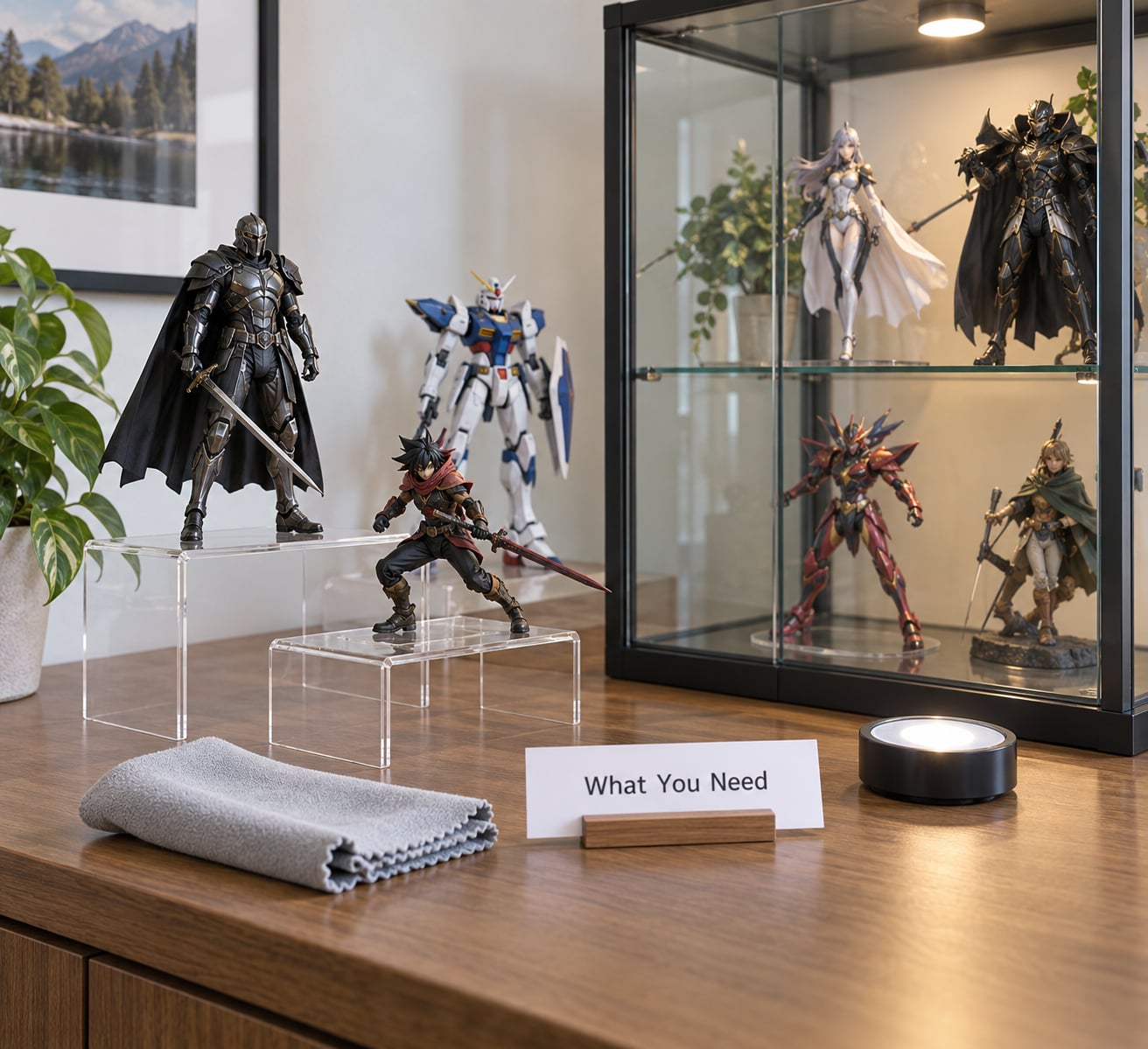
Gather these before you start, because half of them you probably already own.
- Enclosure. A glass-front bookcase, a wall cabinet, a stackable acrylic display case, or a clear storage tote with a snap-fit lid. Any of these works; the sealed option wins outdoors and in basements.
- Risers and stands. Acrylic risers, figure stands, or wall-safe mounting hardware so nothing has to sit loose on a bare shelf.
- Soft brushes. A makeup brush and a wide-bristle paint brush with a long handle. The long handle gets between legs and weapons where a short brush cannot reach.
- Microfiber cloths. One for glass and shelves, a separate one for figure bodies.
- Tweezers and a lint roller. For hairline gaps, and for fabric outfits where dust has worked into a weave.
- A compressed air duster, optional. Good for tight corners and fabric, used carefully and never sprayed straight onto a figure.
- A HEPA air purifier, optional. Worth it in a room you also use for sleeping or working. Worth far less in a closed spare room nobody enters.
- Silica gel packs, optional. Only if the shelf sits somewhere humid, such as a basement or an enclosed cabinet on an exterior wall.
Cheap tools solve most of this. Collectors on r/ActionFigures and r/McFarlaneFigures repeatedly say the same thing: a brush and a cloth beat an expensive machine for the amount of dust actually landing on a figure.
How to Display Action Figures Without Dust
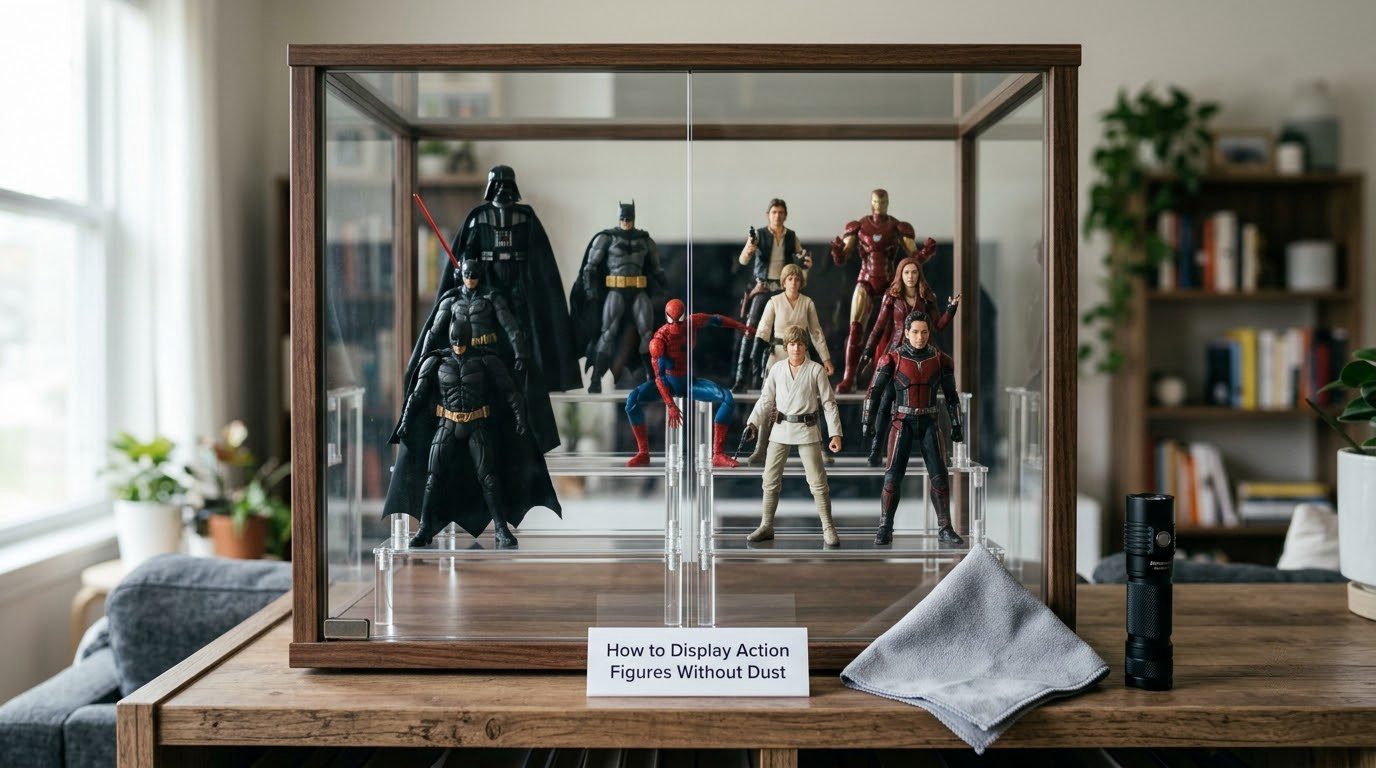
Work through these five steps in order. Skipping ahead to the enclosure and then setting dusty figures inside just moves the problem behind glass.
Step 1: Choose a Display Location That Keeps Dust Off
Pick the spot before you pick the case. The best shelf in the room is rarely the most dramatic one.
Avoid open doorways, which push air and dust into the room every time someone passes. Avoid windows and any direct sunlight, since ultraviolet exposure fades paint and vinyl over time and warm air lifts dust into circulation. Avoid heating vents and air conditioning units, which blow dust straight onto a shelf.
Interior walls at roughly eye-to-shoulder height work well. Higher shelves gather less dust but you will not look at the figures, which defeats the point of displaying them.
Step 2: Clean the Figures and Shelves Before Display
Clean everything dry, before it goes into the case. Use a makeup brush for the body, the long-handled brush for gaps between limbs and accessories, and a microfiber cloth for the shelf surface itself.
Never dampen a painted, printed, or decaled surface, and never soak a fabric outfit. Paint lifts, decals bubble, and printed details smear. If you feel grit, brush it off rather than wiping it across the surface, because grit acts like sandpaper on a finish.
Lift each figure, clean the base and the shelf beneath it, then set the figure back on its riser. This one habit keeps dust from being trapped in a sealed case where it sits against plastic for months.
Step 3: Add Risers, Racks, or Secure Mounts
Stable figures are easier to clean and harder to knock over. A stackable acrylic riser gives you a second display level, which also lets you see and reach the figures behind.
Stand figures in poses that face slightly forward rather than square to the shelf. You will be dusting from an angle instead of straight into a flat wall of plastic.
Leave a finger’s width between figures. Crammed shelves cannot be cleaned properly and every knock sends dust into the air. For anything tall or unstable, a wall-safe mounting strip rated for the weight keeps the pose intact and the floor clean.
Step 4: Enclose the Collection
Do display cabinets stop dust? No. They slow it substantially, which is what actually matters.
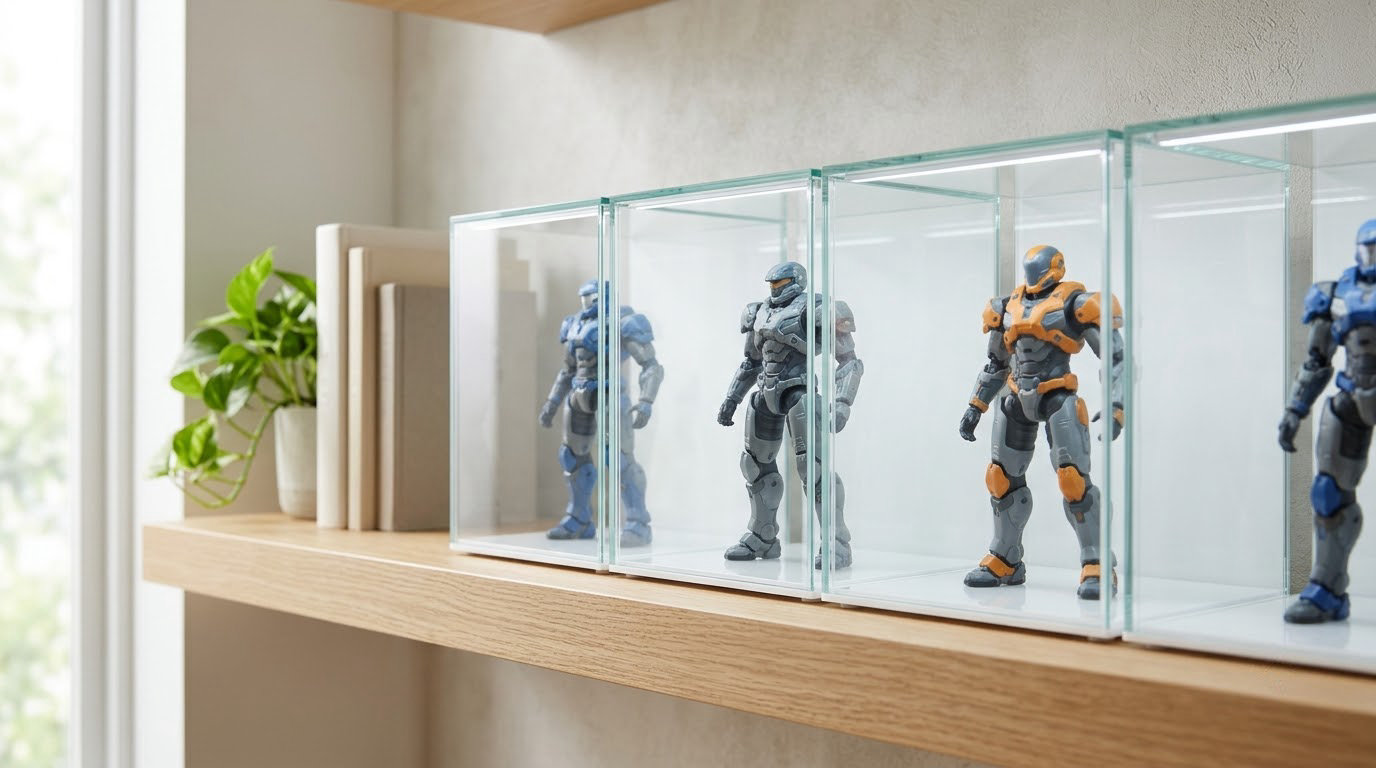
A glass-front bookcase or a wall cabinet gives the strongest protection and shows the collection best. Acrylic display cases are lighter, cheaper, and stackable, so they suit a growing collection or a rental where you cannot drill. Sealable plastic totes work for boxed figures and long-term storage rather than for showing off.
Collectors using IKEA DETOLF cabinets commonly report that they cut cleaning from weekly to a few times a year, while still finding a little dust inside on the top shelf. Shared walls and gaps around the door are where it sneaks in.
Check two things before sealing anything up. First, ventilation: a completely airtight case in a warm room can trap moisture, so leave a small gap or add a silica gel pack if you cannot. Second, humidity: aim for roughly 35 to 55 percent relative humidity in the room, and avoid basements and attics entirely, where figures pick up moisture and mould risk.
If you have pets, a closed door is not enough on its own. Dander works its way under cabinet gaps and onto fabric clothing faster than ordinary dust does, so wipe the bottom edge of the case on your cleaning day.
Step 5: Maintain the Display on a Set Schedule
Put the dusting on a calendar, not on a mood. How often depends almost entirely on how enclosed the display is.
| Display type | Typical cleaning rhythm | What the job involves |
|---|---|---|
| Open shelving | Weekly | Brush each figure, wipe bases, sweep the shelf and the floor below |
| Acrylic case or tote | Every 2 to 3 months | Wipe the inside panel, brush figures, check the lid seal |
| Glass-front bookcase | 2 to 3 times a year | Clean the glass, dust the top shelf, check the door gasket |
| Closed room with cabinets | Twice a year | Interior surfaces only; vacuum the room on its own schedule |
While you are in there, inspect the door gasket and hinge seals for gaps, confirm risers are still flat, and look for figures leaning or fading near the glass. A seal that has crept open is the reason a case that used to stay clean now collects dust.
Handle figures by the base or the legs, never by an outstretched arm or a sword tip. Paint transfers off skin and fingerprints show on gloss surfaces within minutes.
One honest note on air purifiers. Forum collectors report mixed results, including ionic models that failed or produced an odour with little visible dust reduction. A HEPA unit helps with the room, especially with pets, but it does not touch dust that has already settled, and it never replaces an enclosure.
Common Mistakes
Displaying on open shelves near a window. Sunlight fades paint and the moving air from a window carries dust straight onto the figures. Move the display to an interior wall and add a door, lid, or front panel.
Using a damp cloth on a painted figure. Moisture lifts paint, softens decals, and dulls printed detail. Use a soft brush on the figure and a barely damp cloth on the glass only.
Crowding figures together. Tight spacing blocks airflow and your cloth. Leave gaps between figures, and use risers so you can reach the back row.
Storing figures in a basement or attic. Heat and humidity cause mould, warping, and sticky joints. Keep them in a climate-controlled room, and add silica gel packs if you have no choice.
Spraying compressed air directly at a figure. The cold gas can frost surfaces and drive moisture into joints and fabric. Use short bursts from a distance, angling air past the figure rather than at it.
Using tape to lift dust off fabric clothing. Collectors on collectorfreaks.com describe tape pulling threads and leaving visible pulls on a robe. Brush fabric out instead, then lift the last stubborn fibres with tweezers.
One more worth naming: putting figures into a case without cleaning first. That seals existing dust in with them, and you will keep opening the door to look at it.
Frequently Asked Questions
What is the best way to display action figures without dust?
The best setup is an enclosed display: a glass-front bookcase, wall cabinet, or stackable acrylic case with the door or lid closed. Keep the case away from windows, doorways, and heating vents, and raise figures on risers so you can reach every surface. Then clean inside on a schedule that matches the enclosure, not the collection size.
Are glass display cabinets better than open shelves for preventing dust?
Yes, and the gap is large. Glass cabinets cut how much airborne dust reaches a figure, while open shelving collects it within days. Collectors using IKEA DETOLF cabinets report cleaning inside only two or three times a year instead of weekly. Glass does not stop dust completely, since fine particles still enter around gaps and the door gasket, but it slows accumulation dramatically.
How often should I dust an action figure display?
Match the rhythm to the enclosure. Open shelving needs a weekly pass. Acrylic cases and totes work at every two to three months. Glass-front bookcases need two or three passes a year, and a closed display room twice a year is realistic. Vacuum or wipe the room itself on its own schedule, separately from the figures.
Can I clean painted action figures with a damp cloth?
Avoid it. A damp cloth can lift paint, soften decals, and smear printed details, and moisture wicks into joints and fabric clothing. Use a soft or makeup brush for dust on the figure, and reserve a barely damp microfiber cloth for the shelf surface and glass. If grit is stuck to a painted area, brush it off instead of wiping, since grit scratches.
Does direct sunlight help protect action figures from dust?
No. Direct sunlight does nothing for dust and causes real damage instead. Ultraviolet exposure fades paint and vinyl over time, and warm sunlight on a shelf lifts dust into the air so it settles elsewhere. Display near a window only with UV-filtering film or a panel curtain, and place the case on an interior wall instead.
How do I reduce dust inside a display case?
Start with the room. Close the door to the room that holds the collection, run a HEPA air purifier sized for the space, keep an entry mat at the door, and hold relative humidity around 35 to 55 percent. Vacuum on a schedule so resettling dust has less to land on. Inside the case, add silica gel packs if it is warm, and never seal dusty figures in.
Conclusion
Start with the enclosure. Move your figures off open shelving into the cleanest closed cabinet or acrylic case you can get, placed on an interior wall away from windows and vents, and raise them on risers so you can reach every surface.
Then keep it that way. A makeup brush and a long-handled dust brush every few months will keep a closed display looking sharp, and that is the whole trick. You are not trying to win against dust, just slow it down until cleaning takes minutes.