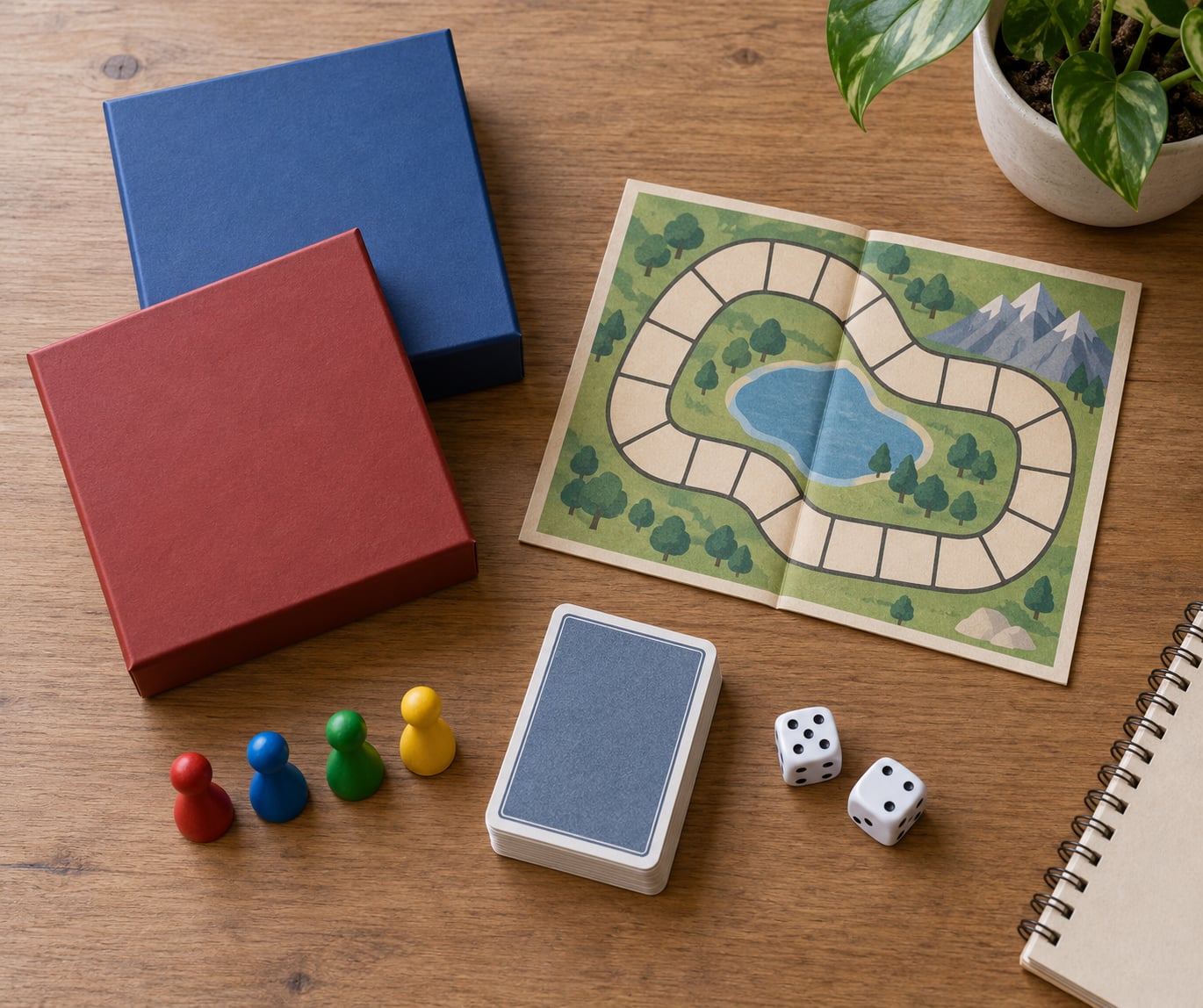
Board games for small groups are tabletop games built for two to five people: short enough to finish in one sitting, quick to set up and teach, and interesting even when only three people are around the table. Most published games assume five or more players, which is exactly why the wrong pick leaves a small group bored and waiting through long turns. Below, twelve games that hold up at small player counts, plus the reasoning behind the choices.
This is an explainer rather than a ranking. I break down what “small group” actually means in game design terms, how player count changes difficulty and pace, which style suits which occasion, and how to teach a game to newcomers without losing them in the first ten minutes. Last updated for October 2026.
Table of Contents
- 1Board Games for Small Groups Explained: Quick Guide
- 2What Makes a Board Game Good for a Small Group?
- 3Low player-count minimums
- 4Short setup and a teachable rules burden
- 5Low downtime
- 6Readable components
- 7Balanced turns and forgiving rules
- 8Little penalty for a small or uneven group
- 9How Do Player Count, Game Size, and Session Length Affect the Choice?
- 10Should You Choose Party, Strategy, Cooperative, or Two-Player Games?
- 11Board games for small groups explained by style
- 12Party games: short rounds and social bluffing
- 13Cooperative games: one win condition for everyone
- 14Two-player-only designs: built for one opponent
- 15Strategy games that survive a small table
- 16Board Games for Small Groups Explained by Complexity
- 17Lightweight (weight 1 to 2): teach in under five minutes
- 18Medium (weight 2 to 3): the sweet spot for most small groups
- 19Heavy (weight 4 and up): bring patience or skip it
- 20How to Choose the Right Game for Your Group
- 211. What is the occasion?
- 222. How many people are actually coming?
- 233. How experienced is the group?
- 244. How much time is left?
- 255. How much setup will people tolerate?
- 266. What will bring the group back for a second play?
- 277. Which cost tier fits?
- 28How to teach a game in five minutes
- 29What to bring to game night
- 30Frequently Asked Questions
- 31What are the best board games for a group of three players?
- 32Are two-player board games harder to buy than larger games?
- 33How long should a board game last for a casual small-group night?
- 34What is the easiest board game for three to five beginners?
- 35How do I know if a board game will work with exactly four players?
- 36Start With the Shortest Game Everyone Can Learn
Board Games for Small Groups Explained: Quick Guide
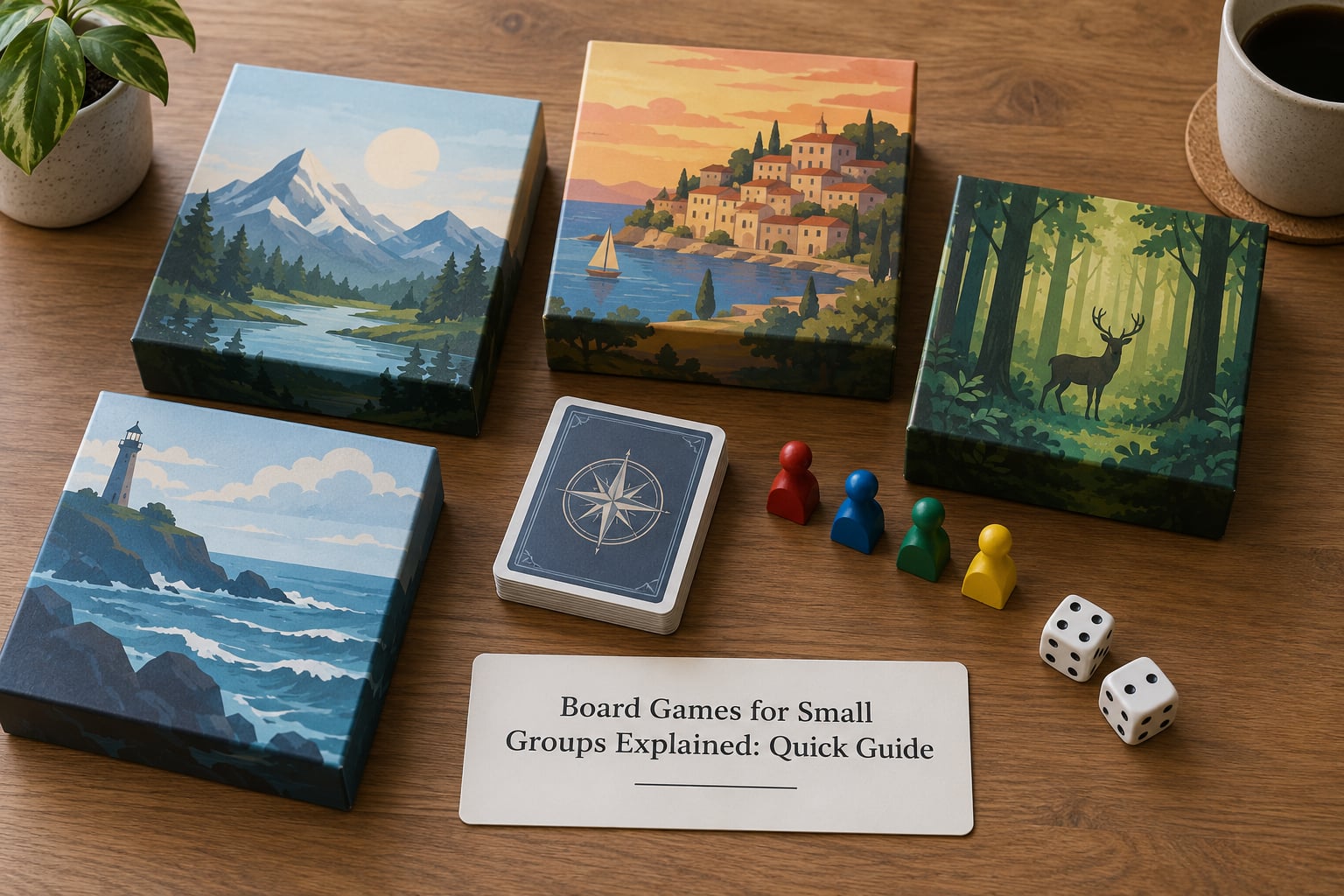
Here is the short version. Every game below works for a small table, states its real player count, and tells you how long it takes. Weight is rated out of five, which is the hobby’s own scale for how much rules and planning sit between you and a satisfying decision.
| Game | Players | Play time | Weight | Style | Best for |
|---|---|---|---|---|---|
| The Crew: Mission Deep Sea | 2–5 | 20 min per mission | 2/5 | Cooperative | A group of mixed experience levels |
| Codenames Duet | 2–4 | 15–30 min | 1/5 | Party / word | Dinner parties and first-timers |
| Patchwork | 2 | 30–45 min | 3/5 | Strategy | Couples who like a think |
| Jaipur | 2 | 30 min | 3/5 | Card strategy | A 30-minute date night |
| Splendor Duel | 2 | 30 min | 3/5 | Card strategy | Two people with sharp decision-making |
| 7 Wonders Duel | 2 | 30 min | 3/5 | Card strategy | Players who like visible conflict |
| Keyflower | 2–4 (best at 3) | 60 min | 4/5 | Strategy | Three players who want real depth |
| Forbidden Desert | 1–4 | 60 min | 3/5 | Cooperative | A group that dislikes losing |
| Cascadia | 1–4 | 30–45 min | 2/5 | Tile drafting | A calm game night with any number |
| Tiny Towns | 1–4 | 30–60 min | 2/5 | Tile drafting | Two to four relaxed players |
| Tsuro | 2–8 | 30–45 min | 1/5 | Abstract | Drop-in guests and travel |
| Small World | 2–5 | 40–80 min | 3/5 | Strategy | Four or five competitive players |
If you only read one row, read the first one. The Crew: Mission Deep Sea teaches its own rules trick by trick, and BoardGameGeek threads about small cooperative games keep landing on it because each mission is short enough that a group can play three or four in an evening and stop whenever they like.
What Makes a Board Game Good for a Small Group?
Six qualities separate a game that works for four people from a game that merely allows four people. The distinction matters because “supports 4 players” is a box-top claim, while “plays well at 4” is a design property.
Low player-count minimums
Check the minimum, not the maximum. Tsuro starts at two players and Small World starts at two, while Just One and Blank Slate need three and simply cannot be opened for a couple. Games with a two-player minimum keep working when someone cancels, which is the normal state of most game nights.
Short setup and a teachable rules burden
Setup should not eat the session. Card games and small-box games like Jaipur or Codenames Duet are on the table in under two minutes. A heavy economic game can take fifteen minutes to explain before the first turn, which is a bad trade for people who came out for an evening rather than a study group.
Low downtime
Downtime is the dead time while other people think. It is invisible in a game for eight and brutal in a game for two, because a ninety-second pause between turns becomes a third of your evening. Games with simultaneous or continuous decisions, like Tsuro or Captain Sonar, sidestep it entirely.
Readable components
With few players, everyone can see the board. That is a luxury large groups never get, and it means hidden-information games lose their appeal unless hidden information is the point. Open drafting games such as Patchwork, Keyflower and Cascadia look better the fewer people sit at the table.
Balanced turns and forgiving rules
Turn structure decides whether one player carries the table. Games with no elimination and no punishing catch-up rules treat a newcomer and a veteran roughly the same. Games that punish hard losses to the last seat get quiet fast when one person at the table is new to the hobby.
Little penalty for a small or uneven group
Some games quietly assume a full table. Junk Bazaar is fine at four and thin at two; Tales of the Arabian Nights demands five or six to hide its swings and feels chaotic below that. Forum regulars draw the same line from the other direction: they separate games built for two from games that merely tolerate two.
How Do Player Count, Game Size, and Session Length Affect the Choice?
Player count is not a formality; it changes difficulty, pace and how a game feels. Most published games are tuned for four or five players, so dropping to two or three makes the decisions heavier and the random swings larger. That is why a two-player design is usually better than a four-player game with two spaces empty.
| Players | What changes | What works well | What to watch |
|---|---|---|---|
| 2 | Full attention, heavier decisions, no wasted turns | Duel designs: Patchwork, Jaipur, Splendor Duel, Targi, Keyflower | Games that need a third player to police bluffing |
| 3 | The awkward middle: one role is often thin or a bonus turn | Keyflower, The Crew: Mission Deep Sea, Tiny Towns, Cascadia | Anything that scales badly between 2 and 4 |
| 4 | Competition sharpens, downtime spreads thinner | Codenames Duet, Cascadia, Small World, Forbidden Desert | Heavy economic games with four-way auctions |
| 5 and up | Bluffing hides mistakes, teaching takes longer | Small World, Tsuro, party games | Rule-heavy designs; teaching three people at once |
Box size is a rough proxy for session length, and it is a decent one. Small boxes tend to hold card and abstract games with under 30 minutes of play. Medium boxes usually mean 45 to 90 minutes including setup. Large boxes rarely finish under two hours once you teach them, so check the box before committing an evening.
Do the honest time math before game night. Take the listed play time, add 20 to 30 percent for the first teaching session, and add setup. A game advertised at 20 minutes will realistically take 45 minutes the first time your group plays it. That is why The Crew works so well for a short evening: its missions are small enough that losing one does not cost you the night.
How many games fit a session depends on how long people stay. For a two-hour window, plan two short games or one medium one with a snack break in the middle. For a long evening, pick one game that grows in complexity as people learn it rather than three that all require a full explanation.
Should You Choose Party, Strategy, Cooperative, or Two-Player Games?
Pick the style that matches the occasion, not the style that sounds impressive. Party games need talk and a loose group, strategy games need thinking time and quiet, cooperative games need everyone engaged, and two-player designs need only one other person.
Board games for small groups explained by style
Style is really a set of answers about interaction. Party games are loud and rely on bluffing, so a confident talker can dominate them. Strategy games reward planning and punish mistakes, so new players finish last and feel it. Cooperative games share one win condition across everyone, so the table argues about the plan rather than about the winner. Two-player designs were built around one opponent, so every rule has been tuned for that face-off.
Party games: short rounds and social bluffing
Codenames Duet is the safest opener for a dinner table. Two people give clues to help their partner identify objects, and a bad clue costs a card, so everyone stays in the game. Exploding Kittens, The Chameleon Game and Just One fill the same role; Just One and Blank Slate need at least three players, so keep them for groups of four or more. The trade-off is real: whoever talks most wins more often.
Cooperative games: one win condition for everyone
Co-op removes the loser, which matters most when the group is mixed. Forbidden Desert runs 60 minutes with four players and stays tense because the water level rises for everyone. The Crew: Mission Deep Sea is the light, teachable version, and Forbidden Island is a gentler option for younger or less experienced groups. r/soloboardgaming regulars also point out that these two-player co-ops can carry a single player later, which is why they keep earning their space on a small shelf.
Two-player-only designs: built for one opponent
This is the category enthusiasts recommend most and newcomers rarely hear about. Patchwork is a tile-laying draft with almost no randomness. Jaipur is a tight 30-minute card game about market rows. Splendor Duel and 7 Wonders Duel handle conflict directly, while Targi and Keyflower reward planning over ten careful minutes. The point is simple: a game built for two does not feel like a big game with one box removed, and both players act on every single turn.
Strategy games that survive a small table
Small World plays with two to five people, and at four or five it is a clean 40 to 80 minutes of area control. Keyflower is the standout at exactly three players, where most competitive games lose balance. Cascadia and Tiny Towns fill the middle ground for relaxed drafting and both work from one to four players.
Board Games for Small Groups Explained by Complexity
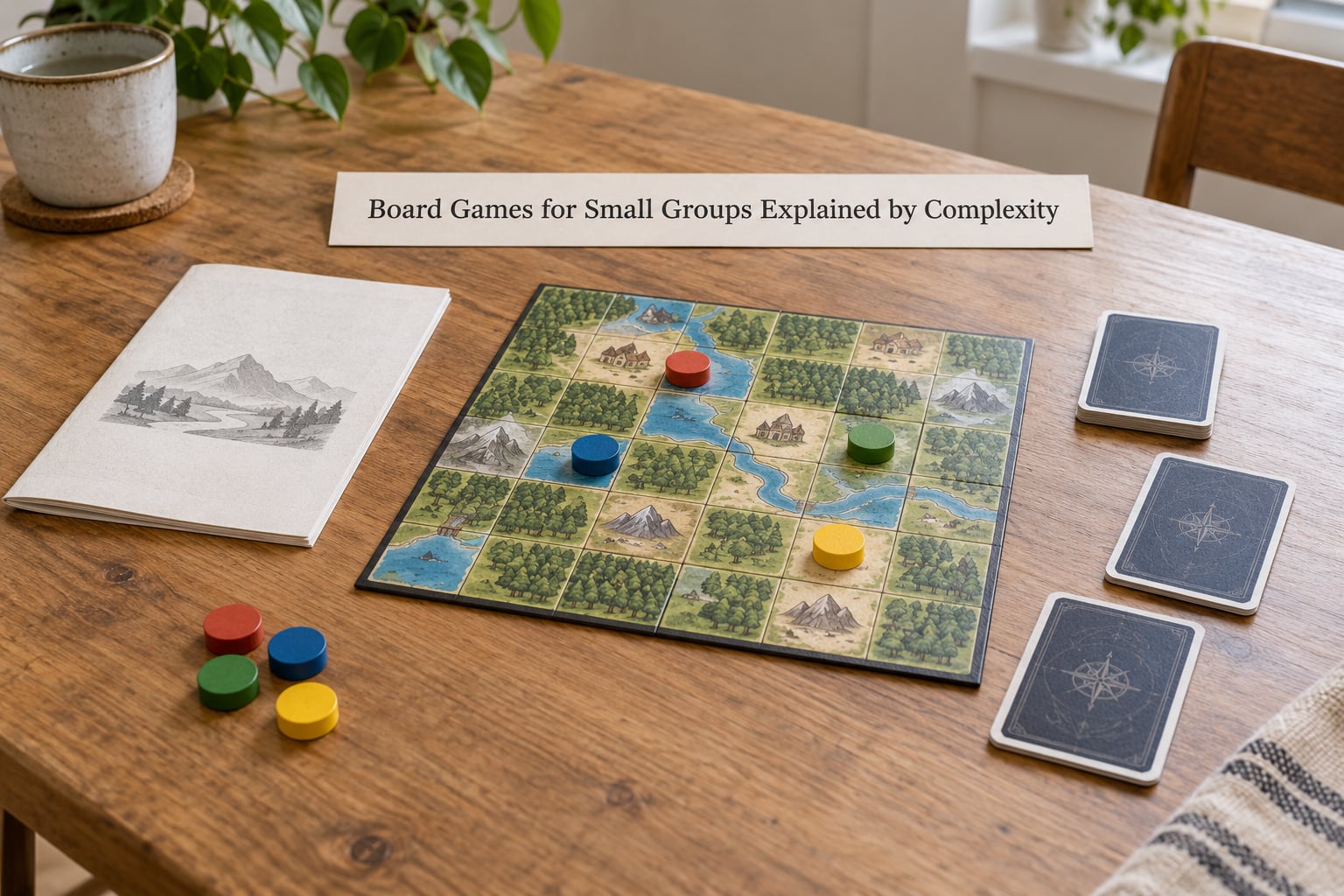
Complexity, called game weight in the hobby, is the total load of rules, hidden maths and long-term planning. Rated out of five, weight 1 is a card game you can explain in one sentence and weight 5 is a rulebook with a chapter per subsystem. For small groups, lower weight is usually better, because the cost of teaching falls on the same few people who have to keep playing it.
Lightweight (weight 1 to 2): teach in under five minutes
Codenames Duet, Tsuro, The Crew: Mission Deep Sea, Cascadia and Tiny Towns live here. Rules fit on one page, decisions come quickly, and a newcomer is competitive within a round. If your group has never played a modern board game, start here. The only downside is that pure strategy fans may find the decisions thin after a few plays.
Medium (weight 2 to 3): the sweet spot for most small groups
Jaipur, Splendor Duel, 7 Wonders Duel, Patchwork, Forbidden Desert and Small World sit in the middle. You spend five minutes teaching and the rest of the time making decisions, which is the balance most mixed groups want. Just One and Blank Slate are light but social rather than strategic, so they fill gaps between heavier games at the same table.
Heavy (weight 4 and up): bring patience or skip it
Keyflower rewards planning over a full hour. Gaia Project and Terra Mystica ask for sustained attention that a small social group rarely has. They are fine for a quiet two-person evening, but they are the wrong first game for a dinner party with three newcomers and a bottle of wine. High player-count support does not rescue them either; the teaching time scales faster than the fun does.
How to Choose the Right Game for Your Group
Run through these questions in order, and you will usually land on one game within a couple of minutes. The order matters, because the first two questions eliminate most options instantly.
1. What is the occasion?
Dinner conversation calls for Codenames Duet. A quiet evening with one person calls for Jaipur or Splendor Duel. A group that hates losing calls for Forbidden Desert. A competitive table that wants a project calls for Keyflower. Write the occasion down first, and half the shelf disappears.
2. How many people are actually coming?
Count confirmed players, not invited players. Then check the minimum player count. If the number is uncertain, choose a game that supports two and plays well at four, such as Tsuro, Cascadia or Small World.
3. How experienced is the group?
Mixed experience is the most common situation and the most commonly mishandled. Cooperative games and light games absorb it. Heavy strategy games reward the veteran and expose the newcomer, so put a heavier game on the table only when the group has already agreed to learn it.
4. How much time is left?
Subtract setup and teaching from your window before choosing. A listed 60-minute game with a 20-minute teach is an 85-minute commitment. Games like Tsuro and Codenames Duet cost less than 30 minutes all in, which makes them the reliable filler when an evening is running late.
5. How much setup will people tolerate?
Ask whether anyone will sort cards and tokens beforehand. Large-box games often need ten minutes of setup by one person; small-box games need almost none. If nobody volunteers, keep the box small.
6. What will bring the group back for a second play?
Replayability comes from hidden information, asymmetry or meaningful choices, not from components. Jaipur and Splendor Duel give a fresh puzzle every time because the cards reshuffle differently. The Crew adds new mission difficulties for exactly this reason, and the crew grows louder as the table gets better.
7. Which cost tier fits?
Hobbyists consistently keep their everyday purchases in one narrow price band, with heavier strategy titles reserved for occasional splurges. Buy your first two small-group games from the middle of that band, confirm the group enjoys the style, and only then look at the premium tier. Entry-level party and card games are where most small groups start.
How to teach a game in five minutes
Teach the goal before the rules. Everyone should know how the game ends before they see a single component. Then explain only what the first round needs, play two dummy turns, and reveal the rest when the first real decision arrives. On The Crew this is built into the design, since the trick-taking tutorials hand you the rule one card at a time. Stop talking once people start making decisions, which is usually faster than you expect.
What to bring to game night
Bring one short game, one game that matches the group’s experience level, and a third option in case a rule explanation stalls. Have the rulebook open to the setup page, and set up before anyone arrives so the first ten minutes are not spent folding boards. Snacks that do not need plates help more than any game choice.
Frequently Asked Questions
What are the best board games for a group of three players?
Three players is the awkward middle, because many games tuned for four go slack at three. Keyflower was designed around three players and stays balanced. The Crew: Mission Deep Sea, Cascadia and Tiny Towns all work well at three, and Patchwork or Jaipur are strong options if the group shrinks to a pair.
Are two-player board games harder to buy than larger games?
Not really, though they are less stocked. Major retailers and game shops usually carry one or two duel games in the popular ranges, while a four-to-six-player box is easier to find. Two-player designs are also compact, so a small box is often cheaper than a large one, and most also fit a travel bag.
How long should a board game last for a casual small-group night?
Thirty to sixty minutes per game fits a casual evening with people who arrived to talk, not to play. Keep one short game in reserve as a filler. Longer sessions work better when everyone wants the same experience, so match play time to the group’s mood rather than to how much time is technically left.
What is the easiest board game for three to five beginners?
Codenames Duet takes under two minutes to explain and needs no setup beyond dealing cards. It works for two to four players, plays in 15 to 30 minutes, and the only real difficulty is that some people find clue-giving stressful. For a group above four, Just One or Blank Slate fill the same role with the same short teach.
How do I know if a board game will work with exactly four players?
Four players is the most commonly designed count, which makes it the easiest to check. Look for the player range on the box, then read reviews that mention four specifically. If the range runs two to five, four is usually safe. If it runs three to eight or requires five, expect a weaker experience at four and have a backup.
Start With the Shortest Game Everyone Can Learn
Pick one game that matches your player count, your time limit and the least experienced person at the table, then read the rules yourself before you arrive so you can teach it in five minutes. Most small groups start with something like Codenames Duet or The Crew: Mission Deep Sea and build up from there.
Play a relaxed trial session first. When the group asks for a rematch rather than checking the time, you have found your game, and the next purchase is easy to justify.