An alternator that is on its way out rarely fails all at once. It fades first: the headlights dip when you turn on the big electrical loads, the battery light flickers for a few minutes after you start the engine, then everything cuts out at once on the highway. Those are the signs your alternator is going bad, and catching them early is the difference between a fifteen-minute fix and a tow.
Here is how the failures actually show up, in the order most drivers notice them, along with what else can cause the same symptoms and how to check the charging system yourself. If the warning light is already on or the car is struggling to run, read number 3 first.
Table of Contents
- 1Signs Your Alternator Is Going Bad at a Glance
- 21. Flickering or Dim Headlights
- 32. A Battery That Keeps Going Dead
- 43. The Alternator or Battery Warning Light Comes On
- 54. Slow Cranking or Difficulty Starting
- 65. Electrical Accessories Work Intermittently
- 76. A Burning Smell or Heat Near the Engine
- 87. Unusual Noises From the Engine Area
- 98. A Swollen, Hot or Leaking Battery
- 109. The Car Runs Better With Jumper Cables Connected
- 1110. Voltage Warnings or Readings Outside Normal Range
- 12How to confirm the signs your alternator is going bad
- 13Frequently Asked Questions
- 14Can I drive with a bad alternator?
- 15How long does an alternator usually last?
- 16How do I know if it is the battery or the alternator?
- 17Does a battery warning light always mean the alternator is bad?
- 18Can I replace an alternator myself?
- 19What to Do First
Signs Your Alternator Is Going Bad at a Glance
This table matches each warning sign with what you are likely seeing, how urgent it is, and the first sensible move. The urgency column matters more than most people expect, because three of these signs mean you should not keep driving.
| Sign | What you notice | How urgent | First action |
|---|---|---|---|
| Flickering or dim headlights | Lights dim at idle and brighten when you rev | Monitor, test soon | Check voltage at the battery while the engine runs |
| Battery keeps dying | Starts fine, then is flat after a short drive | Get it checked soon | Test the battery and charging output separately |
| Battery or ALT warning light | Red light stays on or flickers while driving | Stop driving soon | Do not run accessories; drive straight to a shop |
| Slow cranking | Engine labers on start, especially after a rest | Monitor | Test battery health before blaming the alternator |
| Intermittent accessories | Windows slow, radio resets, screens glitch | Get it checked soon | Check terminals and grounds first |
| Burning smell or heat | Hot wire or rubber smell near the engine | Stop driving now | Shut the engine off and have it inspected |
| New noise | Whine that rises with revs, grinding, rumbling | Get it checked soon | Have the belt and alternator bearing checked |
| Swollen or hot battery | Case bulges, hisses, smells sour | Stop driving now | Do not touch it; have it handled professionally |
| Runs better when jumped | Car steadies out with cables attached | Diagnostic clue | Treat as an alternator fault until proven otherwise |
| Odd voltage readings | Under 13.5 V or over 14.5 V at the battery | Varies by reading | Compare against the voltage table in section 10 |
1. Flickering or Dim Headlights
Headlights that brighten every time you rev the engine and dim again at idle are one of the clearest signs your alternator is going bad. Alternator output is not perfectly smooth, and a worn voltage regulator stops smoothing it, so the whole car’s lighting rises and falls with engine speed.
Interior lighting and the instrument cluster usually show it first, followed by the headlights at night. Turn the high beams on and switch from low to high at idle: a healthy charging system barely changes brightness. A visibly large swing points at charging voltage rather than the bulbs.
Do not ignore this one, though, because a dying bulb, a corroded headlight connector or a poor ground can produce the same flicker. Checking a bulb costs nothing, so do that before assuming the expensive part.
2. A Battery That Keeps Going Dead
A battery that will not hold a charge after driving is the second most common alternator symptom. The alternator’s job is to top the battery back up while the engine runs, so if the car starts normally, drives for twenty minutes, and then has no juice to turn around, the alternator probably never replenished what the starter used.
The pattern that gives it away: the car starts fine every morning, then the morning after a longer drive it does not. If your battery is new and the same thing happens again within weeks, that is a strong hint the charging system, not the battery, is the real problem.
Watch for the parasitic version too. A failed rectifier diode can let current flow the wrong way while the car sits parked, so the battery drains overnight with no warning light and no noise at all. That is one of the hardest alternator failures to spot from the driver’s seat.
3. The Alternator or Battery Warning Light Comes On
A red battery-shaped light or an ALT or GEN light on the dash means the charging system is not keeping up. It can stay on continuously or flicker, and a flickering version often shows up about ten minutes into a drive, which fits a regulator that works intermittently rather than one that has failed outright.
The light itself does not identify the culprit. It comes on when system voltage drops below the threshold the car uses to decide it is fine, and that can happen with a weak alternator, an old battery that will not accept a charge, or a loose or corroded main cable.
Treat it as a “get home carefully” light. Turn off the radio, heated seats, blower and anything else you can live without, avoid long highway stretches, and drive the shortest route to a shop. Charging power comes from the battery alone once the alternator quits, and headlights plus ignition plus fuel pump can empty a healthy battery faster than most people expect.
4. Slow Cranking or Difficulty Starting
Slow cranking is one of the most misread signs your alternator is going bad, and it is usually the battery. An alternator that has been undercharging for weeks leaves the battery unable to support a quick start, so the symptom shows up at the starter while the real fault is upstream.
Here is the distinction that helps. If the car cranks slowly, then starts fine and drives normally, suspect the battery or a cold cranking condition. If the car starts normally but dies, or stalls shortly after you shut it off and let it sit, that points harder at charging.
A clicking sound with no crank at all is a different problem entirely: that is a starter or a fully discharged battery, not an alternator.
5. Electrical Accessories Work Intermittently
Power windows that crawl, a radio that resets itself, heated seats that go cold, a phone charger that stops, or an instrument cluster that flickers through a startup check all point at unstable voltage. Modern cars run a priority list when power gets scarce, and the order is not what people expect.
Non-essential electronics tend to drop first: audio, seat heaters, interior lights, climate control. Lighting usually survives longest because the car treats it as more important. So a radio cutting out while the headlights still work is a normal early symptom, not a sign that the stereo is faulty.
Before you buy an alternator, check the battery terminals and the ground cables. Corroded connections and a sagging ground cause voltage drop that mimics a dying alternator, and they are far cheaper to fix.
6. A Burning Smell or Heat Near the Engine
A hot wire smell, burning rubber, or heat you can feel radiating off the engine bay near the front of the car is not a “monitor it” situation. It usually means a bearing is overheating or the belt is rubbing a misaligned pulley, and both get worse fast.
Stop driving. Pull over safely, shut the engine off, and let it cool before touching anything. If you smell a sharp chemical sweetness from the battery itself, that is acid venting and it needs the same treatment.
Overheating an alternator can take the serpentine belt with it, and a thrown belt on many engines means no power steering assist and no water pump circulation. That is how a small warning becomes an expensive roadside problem.
7. Unusual Noises From the Engine Area
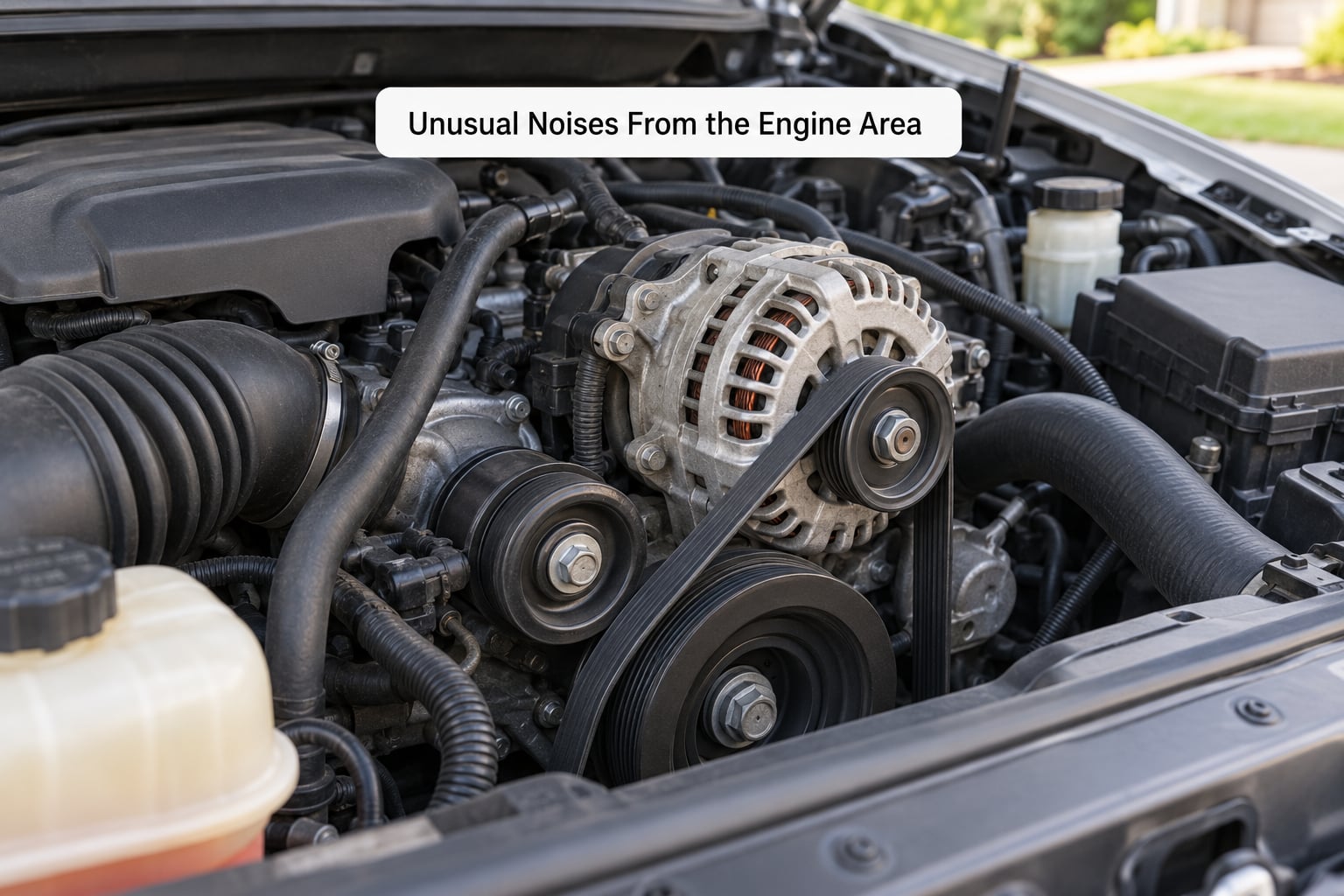
Alternators make a thin electrical whine that rises in pitch as engine speed climbs. A worn bearing adds a growl or rumble underneath it, and a belt or pulley problem adds a chirp or squeak that comes and goes with load.
The most common misdiagnosis is the sound that gets loud on revs and quiets with the air conditioning switched on. That is usually the power steering pump, not the alternator. A squeal that appears for a second and stops when you back off the throttle is belt tension. A low hum that follows nothing you do is more likely an alternator bearing.
A dead alternator does not always make noise at all. Silence is common on rectifier or voltage regulator failures, so rule noise in or out and check voltage instead.
8. A Swollen, Hot or Leaking Battery
When the voltage regulator fails on the high side, the alternator can push too much voltage into the battery. Hissing, a bulging case, a sour smell, or a battery that is uncomfortably hot to touch after a drive are all signs of overcharging.
Do not touch electrolyte, do not pry off a cap, and do not jump-start from another vehicle if the case is already bulged. An overcharging alternator can also burn out a perfectly good new battery in a matter of weeks, so anyone replacing batteries repeatedly should have the charging system tested first.
9. The Car Runs Better With Jumper Cables Connected
If the car starts and runs noticeably more smoothly while jumper cables are attached from a good battery, the alternator was not charging properly before. The running battery was doing all the work, and the donor battery was quietly filling the gap.
That is a useful clue, not a fix. Once you remove the cables, the vehicle is running on its own battery again and the same flat, unstable voltage returns. Use it as evidence when you talk to a mechanic, then have the charging system tested properly.
The reverse also holds. A jump start that produces a week of good driving suggests the battery had simply gone flat and the alternator is fine.
10. Voltage Warnings or Readings Outside Normal Range
This is the only sign on the list you can measure yourself. With the engine running and the battery terminals connected, a healthy charging system holds roughly 13.5 to 14.5 volts. It sits higher in cold weather, when the battery accepts less charge, so a reading of 14.8 on a frosty morning is not alarming.
Anything consistently under 13.5 volts means the battery is losing ground while you drive, and anything above roughly 15 volts points at the voltage regulator. Readings that swing wildly as you rev are worse than a stable low number, because they explain flickering lights and resetting electronics.
How to confirm the signs your alternator is going bad
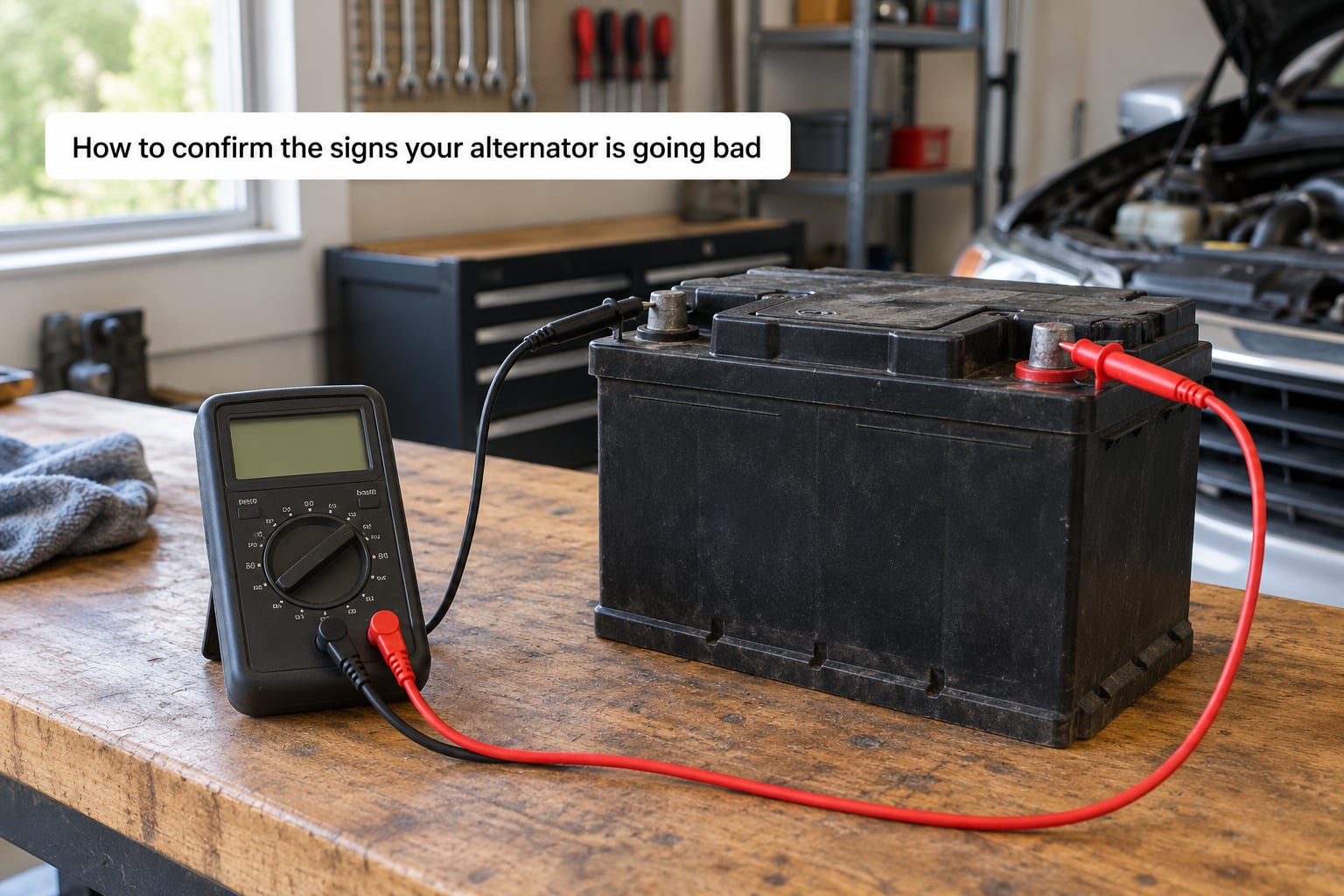
Testing is simple and low-risk if you know where the terminals are. Park, put the transmission in neutral or in park, and set the parking brake.
- With the engine off, set your digital multimeter to DC volts and touch the probes to the battery terminals. A rested battery should read about 12.4 to 12.6 volts. Well below 12 means the battery itself is worn out.
- Start the engine and watch the reading. It should climb above the engine-off reading and settle between 13.5 and 14.5 volts.
- Bring the engine up to roughly 1500 rpm. The voltage should stay steady or rise slightly. If it falls as rpm climbs, the alternator is not keeping up with demand.
- Turn on headlights, blower, and rear defroster. A healthy system holds about half a volt above battery voltage under load. A collapse here is a classic weak-alternator result.
Many auto parts stores will run this test on your vehicle at no charge. It is a useful baseline, but a pass only proves the alternator charged under those conditions, and technicians regularly see units that charge fine in the bay yet cannot keep up with real driving.
Follow your owner’s manual for anything beyond a voltage check, and let a qualified mechanic handle diagnosis and repair.
Frequently Asked Questions
Can I drive with a bad alternator?
Only briefly, and only if the car starts reliably. Once the alternator quits, everything runs on battery charge alone, and headlights, ignition and the fuel pump will empty a healthy battery in a short distance. Turn off every accessory you can, avoid highway speeds, and drive the shortest route to a shop. If the battery light is on and the car is hesitating, slowing or stalling, do not drive at all.
How long does an alternator usually last?
Most alternators last roughly the life of the vehicle, often somewhere around 100,000 to 150,000 miles, though plenty fail earlier. Heat, heavy underhood salt and grime, worn brushes, failing rectifier diodes, a slipping belt and a battery that is already weak all shorten that life. Cars that sit for long stretches or drive mostly short trips also stress the charging system more.
How do I know if it is the battery or the alternator?
Test them separately. A worn battery will not hold a charge and usually will not come back after driving, while the engine still cranks normally. An undercharging alternator lets the car start normally but then leaves a flat battery after a drive, and often shows dim lights or a flickering battery light while running. A jump start that steadies the car points at the charging system rather than the battery.
Does a battery warning light always mean the alternator is bad?
No. The light comes on whenever charging voltage drops below what the car expects, and a very old battery, a loose main cable, a corroded ground or a failing voltage regulator can all trigger it. That is why the battery and the charging system should be tested separately before any parts are bought.
Can I replace an alternator myself?
On many vehicles it is a moderate job involving removing the serpentine belt, disconnecting cables and mounting bolts, and swapping the unit, then setting belt tension. On others the alternator sits high in the engine bay or under a bracket that is awkward to reach. If you have no experience with belts and charging systems, have a mechanic do it and follow the vehicle owner’s manual.
What to Do First
Stop driving immediately if you notice a burning smell, unusual heat near the engine, or a battery that is swollen or hissing. In those cases the cheapest repair is the roadside one you avoided.
If the car still starts and runs, do a voltage check before anything else, then have a technician test the charging system and the battery separately. Clean and tighten the terminals and grounds while you are there, because loose or corroded connections cause the same symptoms and cause perfectly good alternators to be replaced twice.
And do not replace parts on a guess. Signs your alternator is going bad overlap with battery, starter, belt and wiring faults, and the wasted-money path almost always starts with swapping a battery that did not need it.