A shallow dent with intact paint on a flat part of your car door is one of the few body repairs most drivers can genuinely handle at home, and learning how to get a dent out of a car door takes about an hour once you know which side of the dent you should be pushing on. The catch is location: dings in the middle of a flat door skin come out surprisingly often, while damage sitting on a crease or a body line fights you almost every time. Everything below is ordered from free to least free, so you can stop as soon as the dent stops improving.
I have pulled more of these out of my own garage doors than I care to admit, and the two things I got wrong early on were pulling too hard in one go and grabbing the wrong spot on the door. Fix both habits and you will avoid the classic beginner outcome, a small pimple-shaped high spot in the middle of a dent you started with.
Table of Contents
- 1What You Need
- 2Step-by-Step: How to Get a Dent Out of a Car Door
- 31. Inspect the Dent and Test the Paint
- 42. How to Get a Dent Out of a Car Door With a Glue Puller or Suction Cup
- 53. Use Warmth to Make a Shallow Dent More Flexible
- 64. Push From Behind, Knock Down High Spots and Check the Door
- 7Common Mistakes That Can Make the Dent Worse
- 8When to See a Professional
- 9Frequently Asked Questions
- 10Can I remove a dent from a car door myself?
- 11How large should a dent be for DIY repair?
- 12Will a heat gun damage my car door’s paint?
- 13Does removing a dent affect the door’s alignment?
- 14When is a car door dent not worth repairing?
- 15Conclusion
What You Need
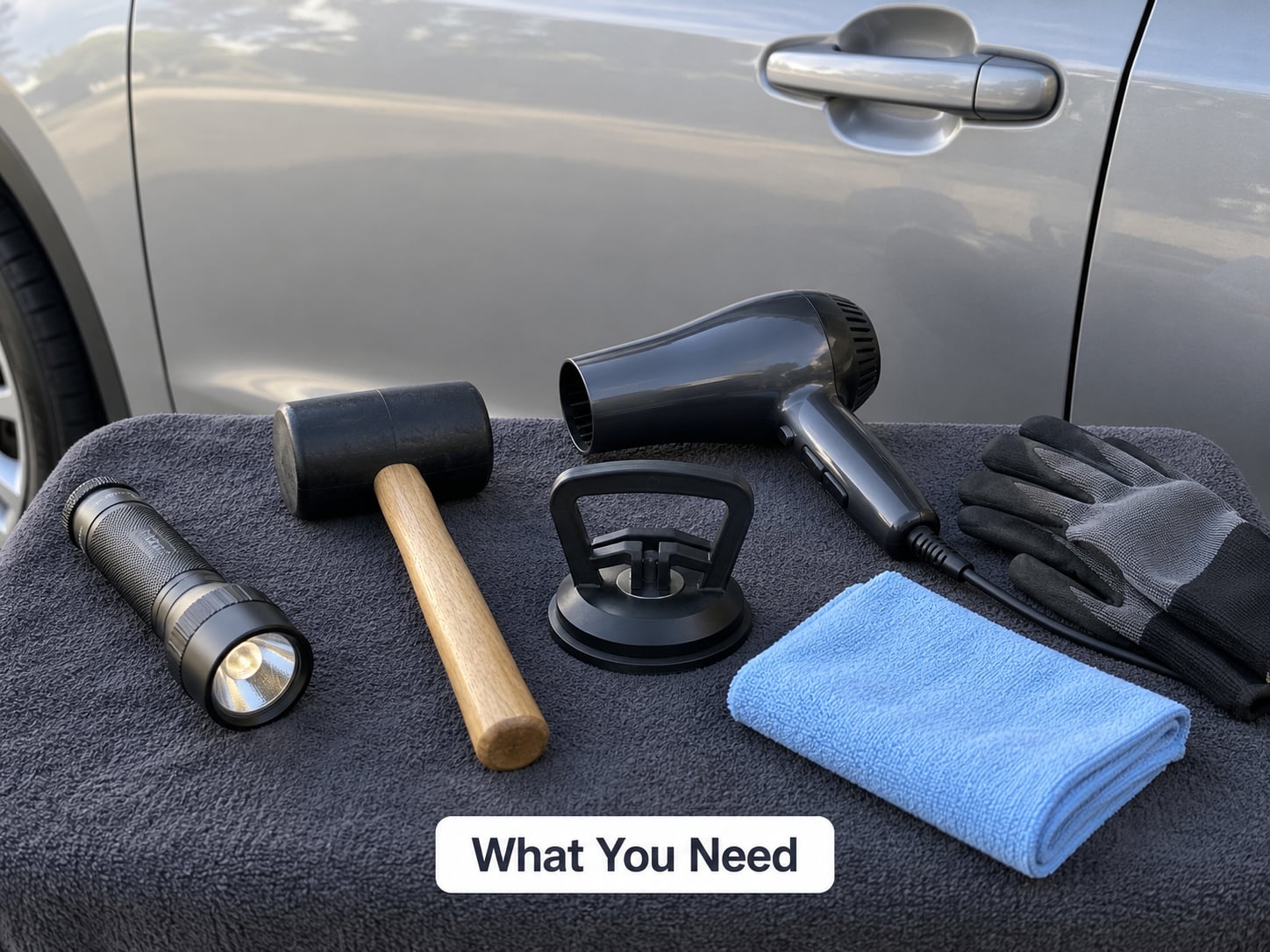
You do not need a workshop for a shallow dent. You need light, a way to hold or pull, and a way to push from the far side. Everything else on this list is optional, and the car’s owner’s manual is worth a look before you apply heat or pressure to any panel.
- A bright flashlight or a work lamp. Angle light across the panel rather than straight at it. A dent that vanishes when the light is behind you is shallow; one that stays visible from every angle has deeper tension in it.
- A clean microfiber cloth and a mild car shampoo. Paint is the thing you are trying to protect, and dirt under a suction cup or glue tab turns into a swirl mark.
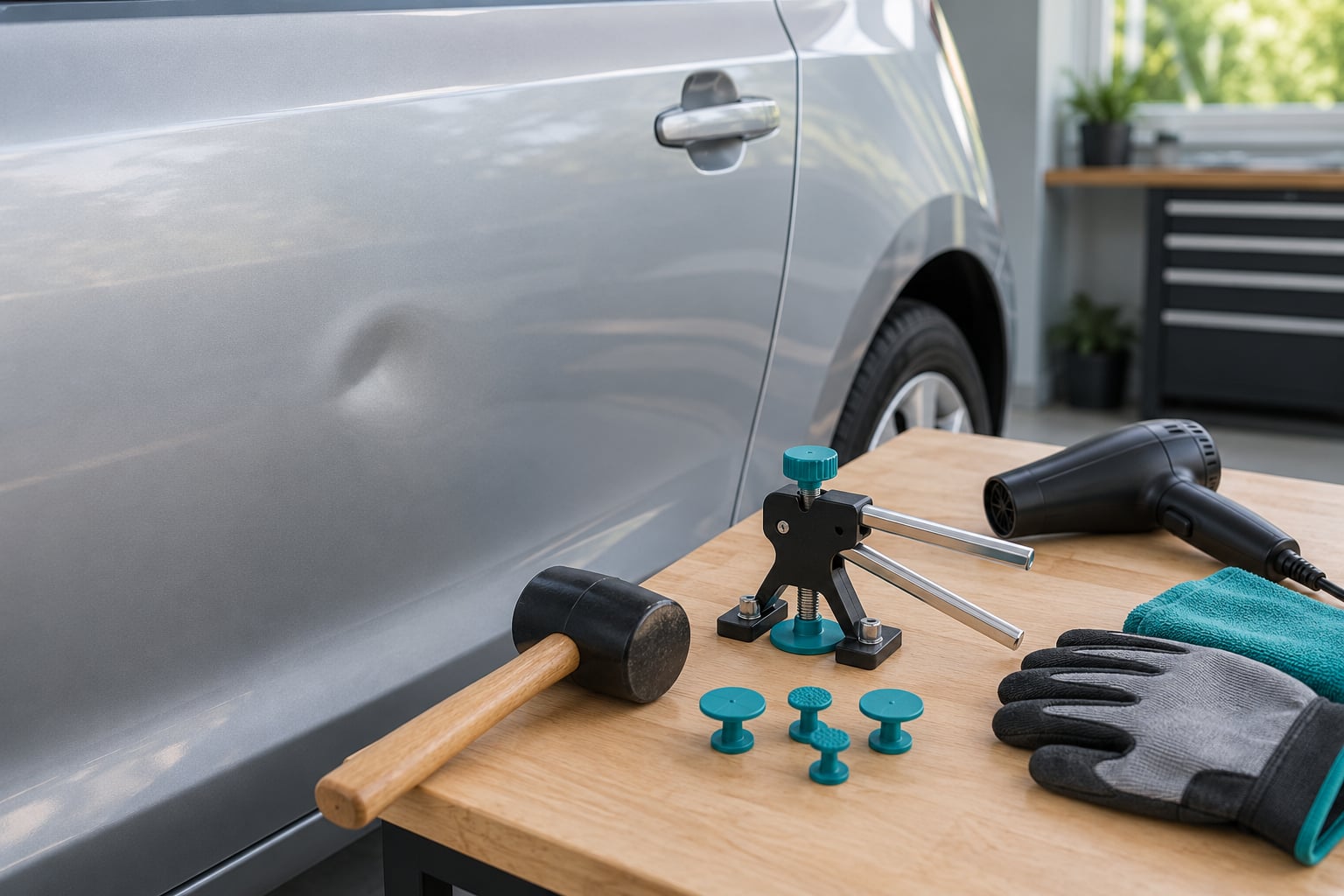
- Heat source. A hairdryer on medium is the safest option. A heat gun exists in this category but demands a lower setting, constant movement and a much shorter dwell time.
- Cooling source. A can of compressed air is the useful one here, because rapid cooling is what does the work after the panel has been warmed.
- A rubber mallet, a plastic body hammer or a nylon knockdown block. For tapping metal back down from behind the panel.
- Optional: a suction cup puller, a plunger, or a glue tab with a bridge dent lifter. These matter more on aluminum doors and on dents that a push from behind cannot reach.
- Gloves and a trim-removal tool. Only if you intend to take the inner door panel off, which is the step that unlocks the best results and the one most people skip.
A note on panel material: modern doors are frequently aluminum, and aluminum is thinner, springs back harder and stretches more easily than the high-strength steel used on older cars. Gentler pressure and more careful heat are the rule there.
Step-by-Step: How to Get a Dent Out of a Car Door
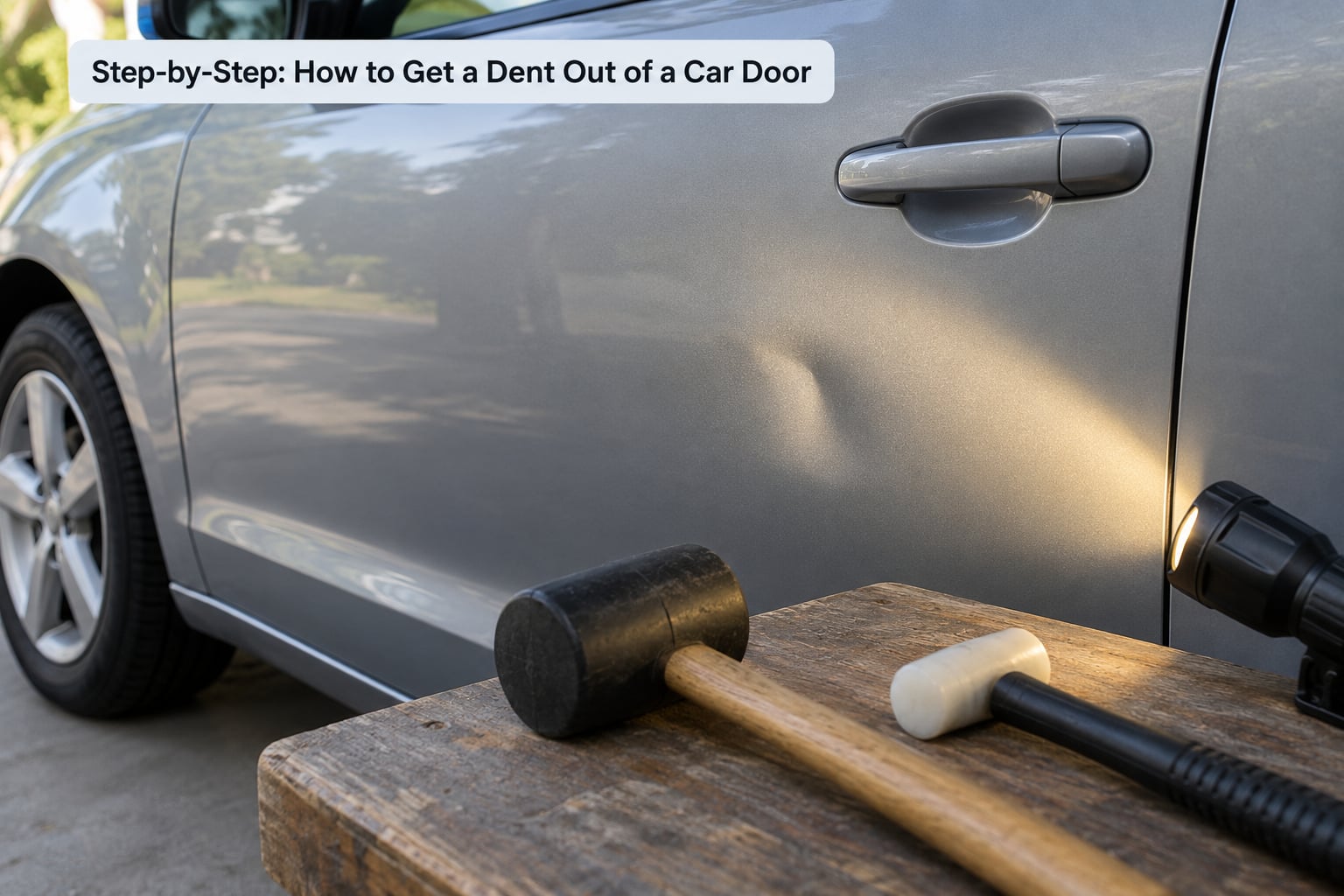
Work in one method at a time and check the result under angled light between attempts. A dent that has stopped improving after two or three patient tries is telling you something useful, usually that the damage is deeper than the paint.
1. Inspect the Dent and Test the Paint
Clean and dry the door, then walk around it looking at the dent from several angles with the flashlight raking across the surface. Run a fingernail lightly across the deepest part of it. If your nail barely catches, the metal is still close to its original contour and the dent is worth trying at home; if the nail digs in, plan on a professional.
Next, check the paint closely under bright light. Chipped, cracked or flaking paint means you stop, because pulling on broken clear coat lifts it and turns a simple repair into a repaint. The same goes for a dent that sits on a hinge, at the latch striker, along the door edge or where the window drops into the channel, since those areas move or carry the door’s structure.
Here is how location and condition decide the answer:
- Flat centre of the door, paint intact. Yes, most of the time. The best case by a wide margin, because you can push from behind.
- Shallow dent near a crease or body line. Sometimes. The body line is the hard part, so expect partial improvement at best.
- Sharp fold or crease in the metal. Rarely. Locked metal usually needs shop tools or a panel replacement.
- Paint cracked, chipped or flaking. No. DIY pulling risks lifting the clear coat.
- At the hinge, latch or window channel. No. Alignment and sealing are affected, so treat it as a mechanical repair.
While you are there, look for hidden damage: a rattle when you close the door, moisture inside, or a speaker that sounds different. Dents that come from a real impact sometimes leave more behind than the visible mark.
2. How to Get a Dent Out of a Car Door With a Glue Puller or Suction Cup
Best for: shallow round dings in the middle of the panel, especially on aluminum doors where pushing from behind is awkward.
How to do it: Work on paint that is clean, dry and at room temperature. Press a glue tab or the pad of a bridge dent lifter straight onto the deepest part of the dent, then wait for the adhesive to set, which takes a minute or two with a proper tab and considerably longer if you used ordinary hot glue. Warm the tab with the hairdryer for thirty seconds so it releases cleanly, then pull steadily away from the panel in one smooth motion rather than yanking. Most home glue pullers rely on a small hammer strike to break the bond, so brace the tool and keep your hands clear of the release direction.
Check the dent after each pull. Two or three gentle attempts beat one heroic one, because over-pulling pushes the metal past flat and leaves a raised high spot in the centre, which looks worse than the dent you started with. Suction cup pullers and plungers follow the same logic with less risk to the paint, though they only work on broad, smooth, unbroken paint and they lose their grip on a dusty or textured panel.
If the dent is still there and the paint looks clean, stop. A stretch mark, a whitish stress line or a lifted edge means the panel is beyond what a suction or glue method can do without causing damage.
3. Use Warmth to Make a Shallow Dent More Flexible
Best for: round, shallow dings with intact paint, and it pairs with the compressed air trick that makes this the most-repeated method on car repair forums.
How to do it: Run a hairdryer on medium over the dent for three to five minutes, moving it constantly so no single spot gets hot, and hold it about fifteen centimetres from the paint. Then spray the warmed area with compressed air and watch the panel contract. Metal shrinks as it cools, and that shrinkage is what pushes the dent back out, so the contrast between hot and cold matters more than the heat itself. If you are not using compressed air, the back of a spoon held over the spot is a reasonable stand-in.
Boiling water gets recommended constantly online and it is not the answer here. It is a trick for flexible plastic bumpers, where the water softens the polymer. Poured on a metal door skin, hot water does almost nothing to the panel and risks staining, warping sealant and getting into the door’s inner structure. Skip it.
Two limits worth respecting. Do not use heat at all on cracked paint, on aftermarket or tinted window glass, or on damaged trim, and give the hairdryer a break if the panel feels uncomfortably hot to your hand. If the dent does not move after a couple of heating and cooling cycles, you are not undershooting the heat, you are pulling against damage that is deeper than it looks.
4. Push From Behind, Knock Down High Spots and Check the Door
Best for: anything in the flat centre of the door, and this is the method experienced owners recommend first for good reason.
How to do it: Roll the window up, then open the access port in the inner door trim. On many cars you can now work through the hole, though the full answer is to remove the inner panel, which involves popping trim clips, setting them aside in order and unplugging the window regulator wiring and speaker connector before you lift the panel free. If you do that, unplug the electrical connectors first and keep every clip in its original position. Opening the door with the panel off exposes the glass and the top of the door, so keep children and pets away and support the glass if you work near the top of the panel.
Put a rubber mallet or a plastic body hammer on the inside of the panel and tap gently, starting at the edge of the dent and working toward the centre in small repeated blows while a second hand pushes from the outside. Metal wants to return to its original shape, so a light tap and a pause does more than a hard swing. Knockdowns are for stretched areas, so tap the very high spot, where the metal has been pulled past flat, and leave the shallow edges alone.
Finish by opening and closing the door a few times, checking the latch and the window, and looking at the panel in daylight and again with a flashlight held at a low angle. Reflections show ripples that your eyes miss head-on, so judge the finish by the reflections rather than by the overall look. If the door is straight, the reflection is a continuous line, and a dab of clear coat from a touch-up pen handles any tiny chip, the job is done.
Common Mistakes That Can Make the Dent Worse
Most bad outcomes come from four or five repeated errors, and all of them are avoidable once you know what they look like.
Pulling from a spot that is not the low point. Anchoring the tool off-centre twists the panel instead of lifting the dent. Find the deepest point under angled light, mark it lightly with a pencil, and centre everything on that mark.
Going hard on the first attempt. A single violent pull creates a high spot, and now you have a bump instead of a dent. Progress in small, even steps and check the reflection after each one.
Heating one spot for minutes. Parked heat under the hairdryer can haze clear coat, soften adhesive and bake dirt into the paint. Keep it moving, keep it fifteen centimetres out and give the panel breaks.
Reaching for sharp tools. Screwdrivers, keys and pry bars are for a stuck door, not for a dent. They cut paint, and paint damage turns a free repair into a paid one. Plastic hammers and nylon blocks are slower and they are the right tool.
Prying the door edge or crease. A crease is where the metal is folded. Unfolding it with leverage in a home garage tears the paint, so leave crease work to a shop with panel-beating equipment.
Treating every dent as cosmetic. A dent near the hinge, the latch or the window channel can mean the door no longer seals or no longer latches properly. Alignment problems are a safety and a water problem, not a looks problem.
Leaving hot glue on the clear coat. If adhesive residue remains, soften it with a plastic card and a little isopropyl alcohol on a cloth, keep the alcohol off the finish, and never scrape with anything metal. Let it sit a few minutes first rather than scrubbing a dry patch, which dulls the clear coat permanently.
When to See a Professional
Some damage is worth a shop visit before you touch a tool, and the signals are easy to read. A deep crease or a sharp fold where the metal has been stacked on itself, a dent that has cracked the paint, and a dent sitting on the body line or at a crease are the classic three. Add any door that latches unevenly, sits proud of its neighbours, catches wind or lets water past when it closes.
It also helps to know what you would be getting from a professional. Paintless dent repair reshapes the metal behind the paint with rods, leverage and knock-down tools, so nothing is sprayed and the original finish stays intact. A conventional body shop repairs and refinishes the panel, which matters once paint has been damaged or filler is involved. A replacement panel is the last option and the one a shop will quote when the metal has lost its shape badly enough that reshaping would take longer than making a new door fit.
Two practical notes. A dent that involves the door’s structure is worth quoting properly rather than attempting, because a badly shaped door can cause wind noise, water ingress and wear on the latch that costs more later. And if a dent came from a parking incident, a comprehensive policy may cover the repair, which changes the arithmetic entirely in favour of letting a shop handle it. Check your policy before buying a kit.
Frequently Asked Questions
Can I remove a dent from a car door myself?
Yes, if the dent is shallow, the paint is completely intact and it sits on a flat part of the door. A fingernail run across the deepest point should barely catch. Push from behind the panel after opening the access port, or pull with a glue tab and bridge puller, working in small steps. Creases, body-line dents, cracked paint and damage near the hinge or latch belong in a shop.
How large should a dent be for DIY repair?
Size matters less than depth and location. A dent the width of your palm can come out if the metal is stretched only slightly, while a small dent on a crease can resist every home method. Judge depth with your fingernail and location by sight. If a dent is wider than about a hand, the stretch is usually deeper than a suction cup or glue tab can handle safely.
Will a heat gun damage my car door’s paint?
A heat gun can, and it is not my first recommendation for a door. A hairdryer on medium, held about fifteen centimetres away and kept moving, is far easier to control. If you use a heat gun, use a low setting, never hold it in one place, and keep it off tinted or aftermarket glass, cracked paint and damaged trim. Boiling water on a metal door does nothing useful and risks staining.
Does removing a dent affect the door’s alignment?
Pulling a shallow dent on a flat part of the door does not affect alignment, because the hinges, latch and window channel are untouched. Once you start tapping hard near the edges or prying at the door gap, you can distort the opening and the latch no longer engages cleanly. That is the point at which the repair stops being cosmetic and starts being a mechanical job for a shop.
When is a car door dent not worth repairing?
A dent is rarely urgent, but a sharp crease, cracked paint, a body-line dent that will not pull, or a door that has lost its latch and its seal are worth having quoted before you spend on tools. Paintless dent repair usually restores the original finish, and a body shop handles the rest. If a parking incident caused the damage, check whether your insurance covers it first, because that removes the cost question entirely.
Conclusion
Start by looking at the paint and the location, because that decision sets everything else. A shallow, paint-intact dent in the flat centre of the door is worth ten patient minutes of warming, cooling and pushing from behind, and a glue puller is a good second attempt when the push cannot reach.
Stop the moment the metal creases, the paint chips or the door no longer closes and latches the way it did. At that point a shop quote for paintless dent repair is cheaper than a repair you have to redo, and on a dent that came from someone else’s parking mistake your insurer may pay for it anyway.