To wash a car without leaving water spots, keep the paint cool and wet until you are ready to dry it, then remove the water completely with a clean microfiber towel or a blower before it can evaporate. Spots are not dirt. They are the minerals in your water — mostly calcium and magnesium — left behind as the water evaporates. Kill evaporation and most of them never form.
Hand washing is also the gentlest way to clean a car, and doing it well takes about 40 minutes on a normal-sized sedan. The whole method comes down to four habits: clean tools, small sections, a thorough rinse, and immediate drying.
Table of Contents
- 1What You Need
- 2Step-by-Step
- 3Step 1: Choose a Spot-Safe Washing Setup
- 4Step 2: Wash the Car in the Right Order
- 5Step 3: Rinse Away Every Trace of Soap
- 6Step 4: Dry the Car Before Water Can Leave Marks
- 7Common Mistakes
- 8How to Prevent Water Spots Between Washes
- 9Frequently Asked Questions
- 10What causes water spots on a car after washing?
- 11What is the best way to dry a car without water spots?
- 12Can I use Dawn dish soap to wash my car?
- 13Do ceramic coatings prevent water spots?
- 14How do I remove water spots that are already on my car?
- 15Conclusion
What You Need
The essentials are cheap and the optional upgrades solve specific problems. If you only own four things, own these four.
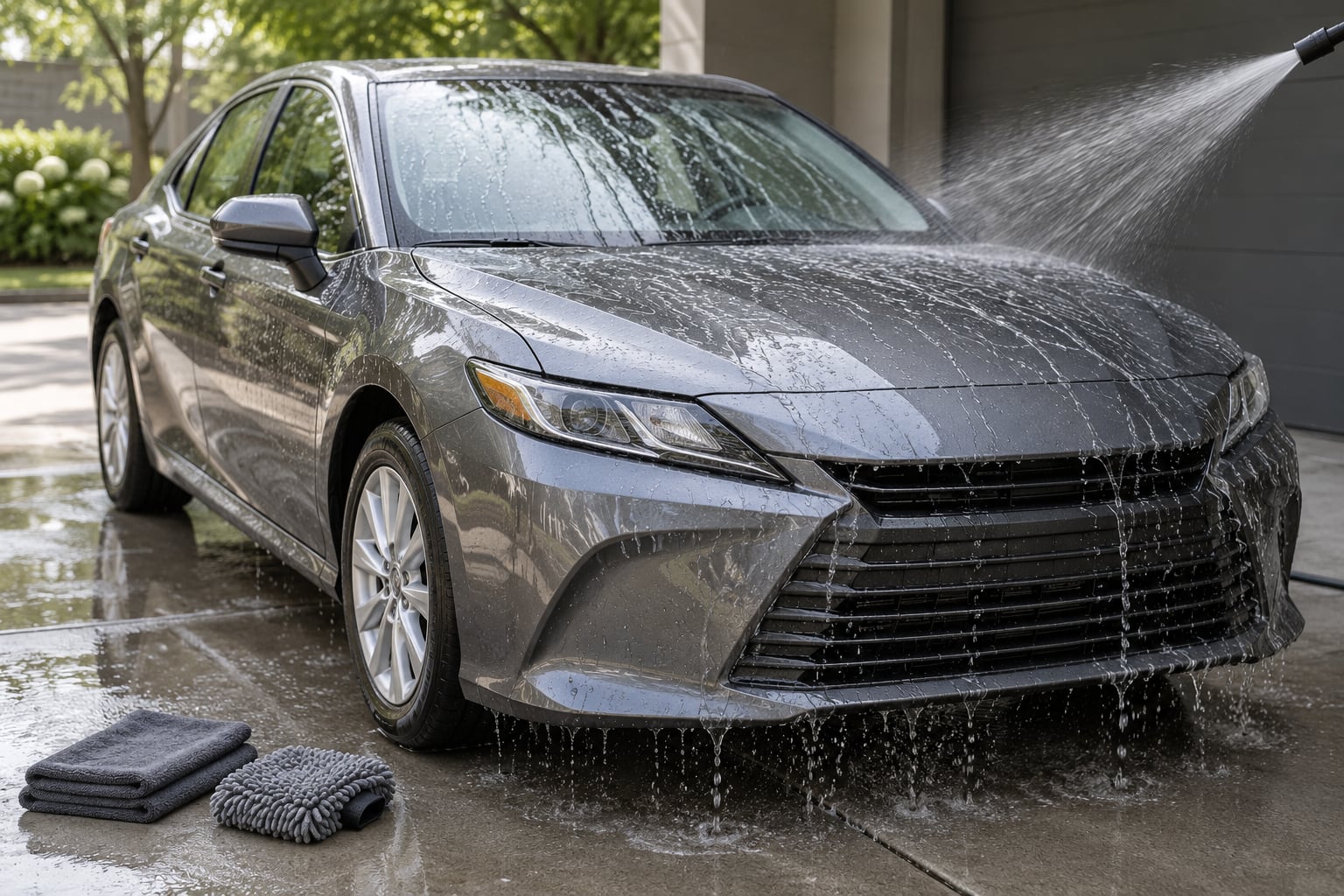
- Two microfiber drying towels in the 400-600 GSM range, roughly 60 by 90 cm, so you have a spare while the first one is still wet.
- A grit-safe wash mitt with a soft microfiber or lambskin face. A mitt traps grit in the fibers away from the paint; a bare sponge drags it across the finish.
- Two buckets — one for soapy water, one for rinsing the mitt. Never put a rinsed mitt back into the same solution.
- A pH-neutral car shampoo, used at the dilution on the label. Household dish soap is not a substitute.
Optional but useful: a drying aid like a quick detailer spray or spray sealant, a blower or air cannon for pushing water off the panels before towels touch them, and a hose-end filter or a spot-free rinse system if your tap water is hard.
Step-by-Step
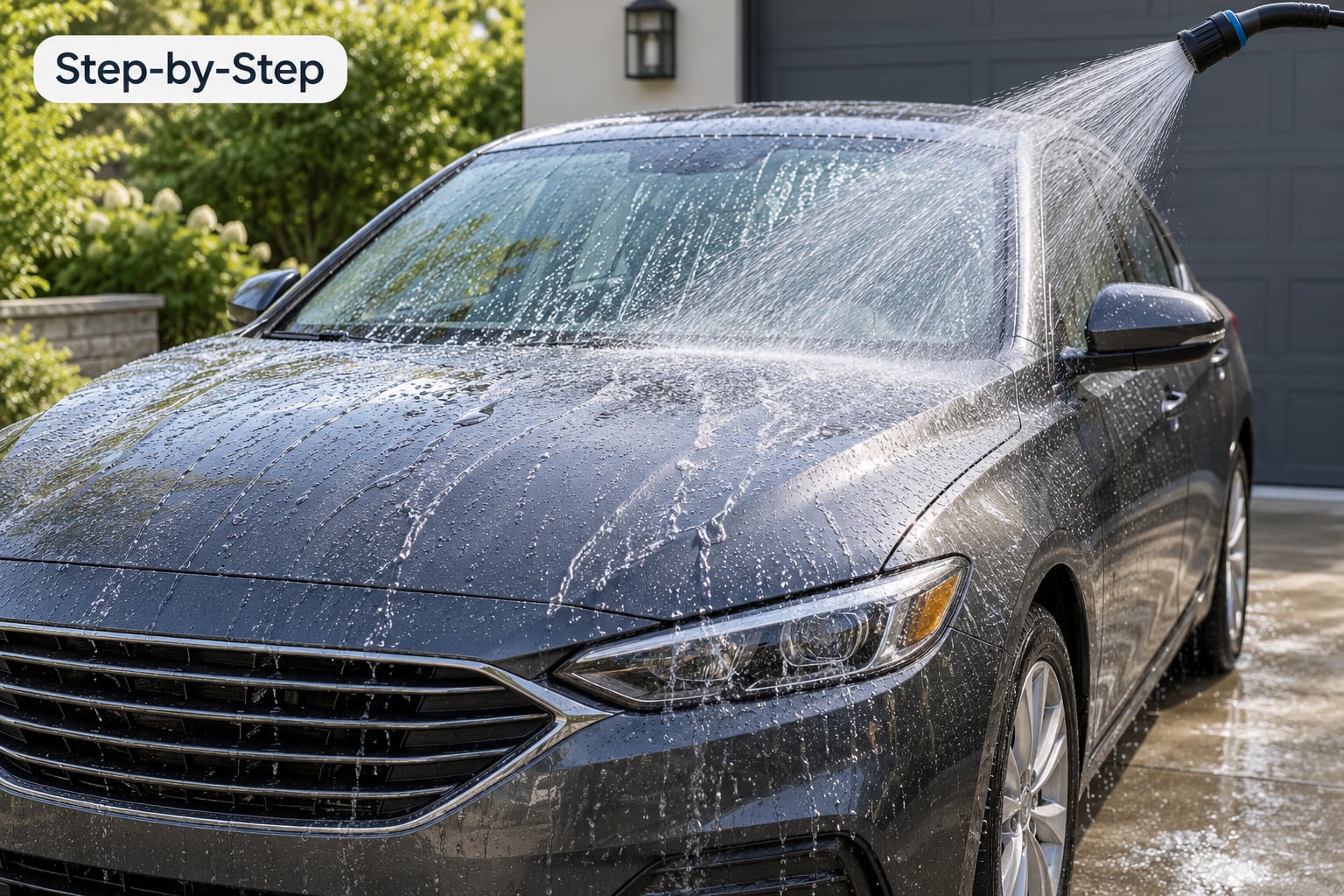
Step 1: Choose a Spot-Safe Washing Setup
Start in the shade on a surface that is cool to the touch. If the hood is hot, the water you throw on it will flash to steam and leave minerals behind no matter how carefully you work.
Mineral content is measured as total dissolved solids, or TDS. Municipal tap water commonly sits somewhere in the 50 to 300 ppm range, and well water can run much higher. The higher the number, the more visible the spotting.
You can check yours at home with a TDS meter, the kind that costs about the same as a sandwich, or by letting a glass of tap water sit overnight and seeing whether a white ring forms on the bottom. If it does, filtration is worth looking into later.
Step 2: Wash the Car in the Right Order
Rinse the whole car first, from roof to bumper, before any mitt touches it. That first rinse knocks off most of the loose grit that would otherwise end up in your soap bucket.
Fill the wash bucket with water and shampoo at the label ratio, and stir it until it feels slick. That lubricity is what keeps grit suspended instead of grinding into the clear coat.
Then work one small panel at a time. Start with the roof, hood and windows, then the doors, then the bumpers last. Rinse the mitt in the clean bucket after every panel, and if the mitt turns grey, change it before continuing.
Keep the whole car wet while you work. If you start at the roof and finish at the bumper while taking breaks, the top panels will already be drying.
Step 3: Rinse Away Every Trace of Soap
Before you touch the drying towel, rinse the car from the top down with plenty of running water until the suds stop and the runoff runs clear. Rinse the mitt in the dedicated rinse bucket several times during this pass as well.
Leftover shampoo is a common cause of hazy, streaked patches after drying. It leaves a film that traps whatever minerals are still in the water, and it makes a clean towel spread smears instead of lifting moisture.
Once the runoff runs clear, wipe a finger down a door edge. If it squeaks, there is still detergent left. Rinse again.
Step 4: Dry the Car Before Water Can Leave Marks
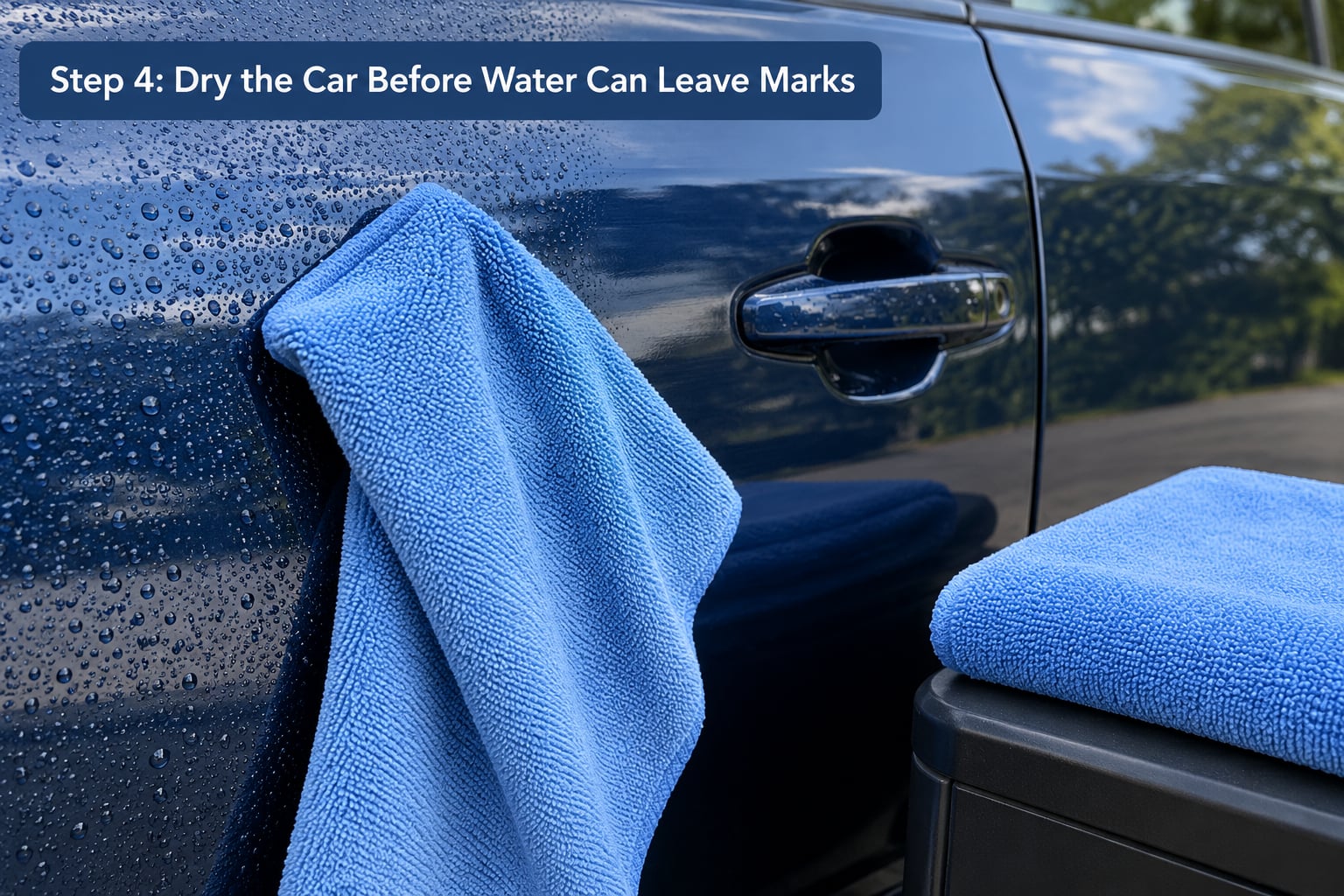
This is the step that actually decides whether you get spots. Water that sits on paint and evaporates leaves its minerals behind, so the goal is to remove water faster than the sun or air can take it.
Start at the top of the car and work down, panel by panel. Lay the towel flat rather than dragging it with tension, and use light pressure — you are pushing water to the edge of the panel, not scrubbing it in.
Pat the edges. A common trick is to use a second, drier towel to pick up the concentrated water that collects along door bottoms, mirror edges, door handles and license plate recesses. Those areas hide water that runs onto already-dry paint minutes later, which is exactly where people notice their spots came from.
On a large car, one towel goes a long way. The 400 to 600 GSM range absorbs plenty without becoming too bulky to control, and if you wash a truck or three-row SUV, grab the largest towel you can find rather than fighting with a small one.
If a blower is available, use it first. Push the water off the panels from the top down, then finish with towels for what’s left. Detailers on the AutoDetailing forum pair a blower with microfiber cloths for exactly this reason — the blower removes the volume of water, and the cloth removes the film.
Spraying a quick detailer on each wet panel before drying gives the towel something lubricated to glide over, which cuts both streaks and the chance of a stray swirl mark.
Common Mistakes
Almost every persistent spot problem traces back to one of a handful of habits. Here is what goes wrong and the fix.
- Washing a dusty car dry. You are sanding the dust into the paint. Rinse first, always.
- Using laundry detergent or dish soap. Dish soap strips wax and sealant, leaves a sticky film, and drags grime back onto the panel. Use pH-neutral car shampoo instead.
- Reusing a saturated towel. A wet towel stops absorbing and starts pushing a film ahead of itself, which leaves streaks. Flip to the dry side, and swap towels often.
- Washing in direct sun. Hot paint turns soap into a drying film and evaporates water in seconds. Work in shade or at dusk.
- Not rinsing the mitt. You are putting the dirt you just removed back onto the car.
- Drying with a chamois or paper towels. Chamois holds grit and pushes it around; paper towels shred and scratch.
- Letting the car air-dry. This is the one habit behind nearly every “why does my car always get water spots” complaint.
Two more that surprise people. Using WD-40 or a similar oil-based product on spots will not dissolve minerals; it just coats them and dulls the paint. And a ceramic coating alone will not stop spotting, because water still evaporates on top of the coating if you let it sit.
How to Prevent Water Spots Between Washes
Drying after rain matters more than most people expect. Rain carries dust, pollen and road film, and if it evaporates on warm paint it deposits all of it. Lay a quick detailer on the wet panels and towel it off, or at least rinse it off before it dries.
Keep your towels clean. Wash them on a hot cycle without fabric softener or dryer sheets, because those leave a hydrophobic coating that kills absorbency. Air dry them fully and store them in a closed drawer or bin so the cupboard dust does not become the grit in your next wash. Wash towels used on wheels separately from paint towels.
Add protection according to your timeline. A spray sealant or ceramic spray applied right after drying makes water bead and roll off the paint, which shortens drying time. A traditional sealant or wax lasts longer and needs more effort. A professional ceramic coating lasts longest of the three.
On hard water, work through the options in order. Distilled or bottled water for the final rinse costs more per wash but solves it. A reverse osmosis or deionized system attached to your hose solves it permanently. If you rent and cannot install anything, a sealed water spot remover used regularly keeps deposits from bonding to the clear coat.
Fresh spots wipe off. Spots that have sat through several hot cycles or a week of sun start bonding chemically, and bonded mineral deposits need an acidic water spot remover or a clay bar. Spots that have etched into the clear coat need mechanical polish correction — no product will fix those.
Frequently Asked Questions
What causes water spots on a car after washing?
Water spots are mineral residue, usually calcium and magnesium, left behind when water evaporates on the paint before it has been dried off. Hard water with high total dissolved solids makes it worse, and so does washing on hot paint in direct sun. If the deposits sit through repeated wet and dry cycles in the heat, they bond to the clear coat and eventually etch into it.
What is the best way to dry a car without water spots?
Start at the roof and work down panel by panel, using a clean, high-absorbency microfiber towel laid flat rather than dragged with tension. Push water to the edge of each panel, then go back over creases, mirror edges, door handles and plate recesses with a second dry towel. A blower first and microfiber after is the combination most detailers recommend.
Can I use Dawn dish soap to wash my car?
No. Dawn is designed to cut grease, and it strips wax, sealant and ceramic protection, then leaves a sticky film that traps dust and drags across the paint. On a coated car it means the coating stops repelling water and spots come back immediately. A pH-neutral car shampoo cleans just as well and leaves the protection intact.
Do ceramic coatings prevent water spots?
They help, but they do not stop them on their own. A coating makes water bead and sheet so it runs off faster and carries fewer minerals onto the surface. Spots still appear if you let water sit and evaporate in the sun, and some strong car shampoos will strip the coating over time. Coating plus proper drying is what works.
How do I remove water spots that are already on my car?
Work up a ladder by severity. Fresh spots come off with a damp microfiber towel and a quick detailer. Spots that have hardened need a dedicated acidic water spot remover, left to dwell and wiped off. Deposits that grip the paint usually need a clay bar with lubrication. Only etching, which leaves a dull dimple in the clear coat, requires a machine polish.
Conclusion
Water spots are a drying problem, not a soap problem. Wash on cool paint in the shade, keep the surface wet while you work in small sections from top to bottom, rinse until the runoff runs clear, and dry it immediately with a clean microfiber towel before anything evaporates.
If spots still show up after that, the cause is usually one of three things: hard water, saturated towels, or protection that has worn away. A drying aid and a spray sealant handle the third, and distilled water for the final rinse handles the first.