Starting a movie poster collection comes down to three decisions: pick a focus, set a spending limit, and learn to tell an original from a reprint. Buy a few prints you genuinely want, check their size and condition before you pay, then store them flat in acid-free folders away from light and heat. Most people who regret a poster wall skipped one of those three steps.
None of it needs a big budget or a house with spare walls. A rented flat with a picture rail and five well-chosen prints is a real collection, and it is how most serious collectors began. Updated for 2026, this guide walks through the whole process, from the supplies you need to the spreadsheet you will wish you had started on day one.
Table of Contents
- 1What You Need
- 2Step-by-Step
- 3Choose a Focus for Your Collection
- 4Set a Budget and Buying Rules
- 5Find the Right Posters
- 6Check Authenticity, Size, and Condition
- 7Protect Each Poster
- 8Display the Collection
- 9Record and Grow the Collection
- 10Common Mistakes
- 11Frequently Asked Questions
- 12What is the easiest way to start a movie poster collection?
- 13Should I buy original movie posters or reproductions?
- 14How should movie posters be stored to prevent damage?
- 15How do I know which poster size fits my wall or frame?
- 16Can movie posters be framed without glass?
- 17How do I keep track of a growing movie poster collection?
- 18Conclusion
What You Need
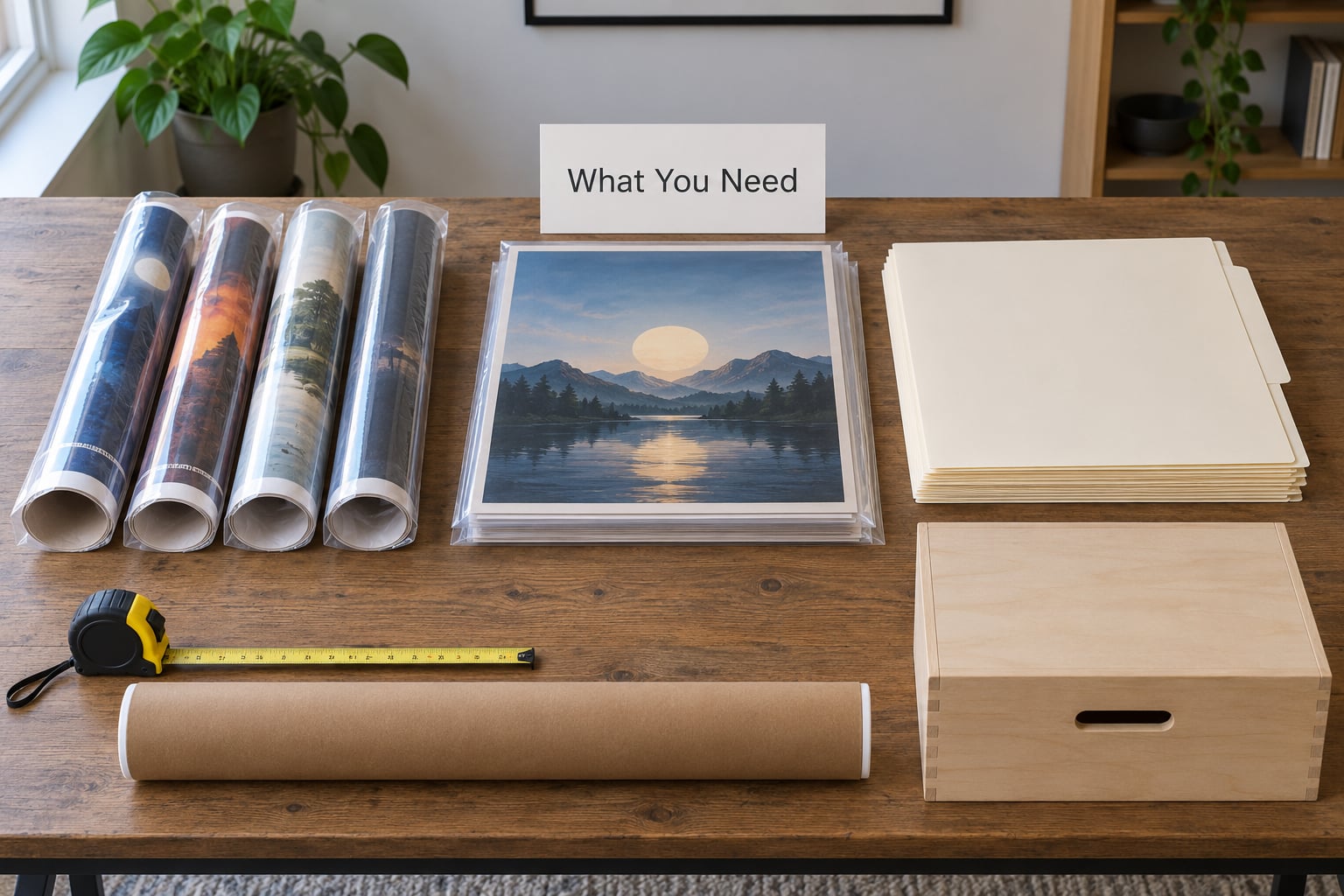
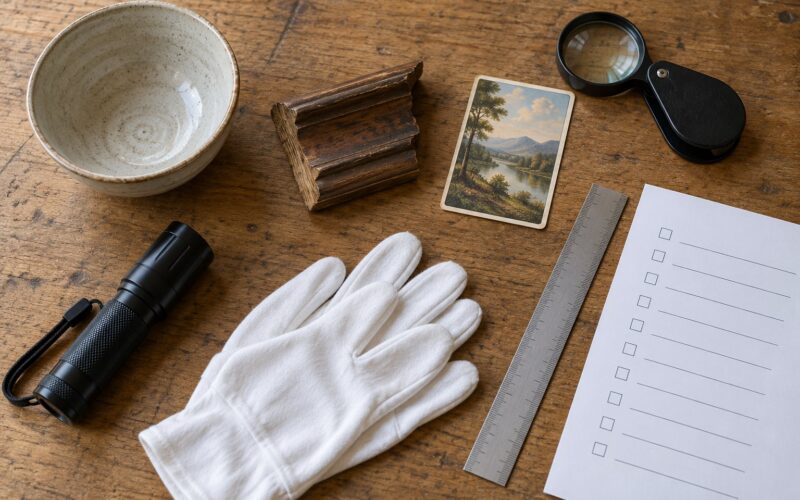
Buy the protection gear before you buy the posters. Paper is cheap to replace; a poster folded for thirty years is not, and most damage happens in the first year of ownership, not in year ten.
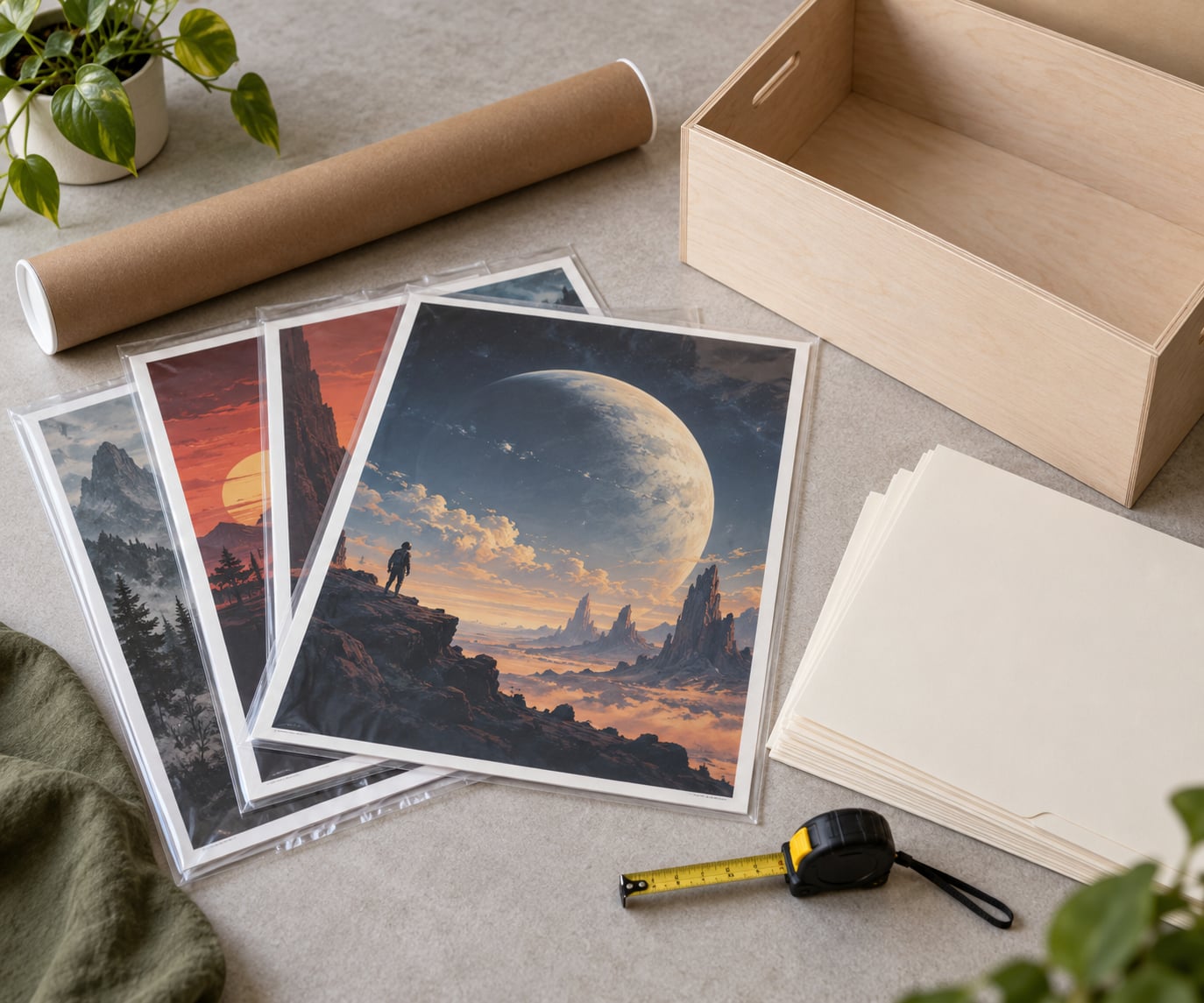
- Archival polyester sleeves for anything you plan to display within the year. They block dust, fingerprints and abrasion without touching the ink.
- Acid-free tissue and folders for flat storage. Unbuffered tissue is the safer choice for brightly coloured inks.
- A flat storage box, sized so the poster lies flat with room to spare, or a rigid poster tube if you have no room for a box.
- A soft brush and a kneaded eraser for surface dust. Neither touches the image.
- A tape measure and a phone camera. Measurements and photographs save you from a wall that does not fit the print.
- UV-filtering glazing for any frame that sits in a lit room.
Storage is the choice worth thinking hardest about. Rolling keeps posters visible and compact, and collectors with large collections often start there. One collector running roughly 700 posters described moving from tubes to a blueprint-style box holding oversized flat folders: it saved space overall and made retrieval far easier, at a higher upfront cost. Under about thirty posters, tubes are fine. Above that, flat storage wins.
Two decisions also matter before the first purchase. Decide whether original theatrical posters are a requirement or a bonus, because hunting for originals changes your budget entirely. Then count the wall space you can actually fill, since the display limit is what stops most collections from swallowing money.
Step-by-Step
Seven steps, in the order that keeps a beginner from wasting money. Do them roughly once a month and the collection builds itself.
Choose a Focus for Your Collection
A focus is a filter. Without one, you buy whatever looks good on a Saturday and end up with a wall that says nothing and a storage problem that only gets worse.
The usual focuses are a film series, a director or actor, a genre such as horror or science fiction, a studio era, a poster artist, or the films tied to your own childhood. Each one changes what you look for when a listing opens. A genre focus sends you toward half sheets and monster imagery, cheap and plentiful. A franchise focus sends you toward the big one sheets everybody else is hunting too.
Write the focus as one line you would repeat to a stranger: every poster is science fiction from the 1970s and 80s, and I own at least one for each film I love. That sentence settles arguments later, including with yourself at midnight.
Set a Budget and Buying Rules
Pick a total you are comfortable spending over a year, then divide it into monthly amounts. Most beginners set the monthly figure and stop there; the annual total matters less than the rhythm.
Three rules keep a hobby from becoming a leak. First, decide in advance which formats and conditions you accept, so a folded original is still interesting to you and a torn one is not. Second, keep three lists: must-have titles, watch-list titles, and titles you already own, which exist to stop duplicates. Third, apply a one-in-one-out rule once the collection passes twenty pieces.
A simple split works well: roughly seventy percent of the spend on your core focus, twenty percent on one adjacent thing you find interesting, and ten percent on something completely frivolous that you buy for no reason but the look of it.
Find the Right Posters
Posters come in three broad flavours, and knowing which is which is what stops you paying reprint money for original money.
| Signal | Original theatrical print | Reprint or reproduction |
|---|---|---|
| Size | Usually 27 x 41 inches with a white border | Almost always 27 x 40 inches, border trimmed off |
| Printing | Single-sided, older flat colour | Double-sided with an image on both faces |
| Numbering | NSS number in a bottom corner, meaning National Screen Service, which handled most US distribution from 1940 to 1984 | No NSS number, often a modern studio or edition number instead |
| Paper | Heavier, glossier or matte stock of the era, with slight age tone | Uniform modern coated stock, often perfectly flat |
| Edge | Softened, rounded, occasionally with wear from being rolled around a theatre wall | Crisp machine-cut edge on all four sides |
Where you look matters as much as what you look at. Established dealer sites and long-running marketplace sellers with detailed photos and a grading description are the safest place to begin. Local poster shops give you something no listing can: you can hold the print and feel the paper. Estate sales and charity shops produce the occasional genuine surprise, especially for older or foreign titles.
Skip ripped or discarded bus-stop posters sold as collectibles, and walk away from listings offering a famous title with no seller history, no measurements and no condition notes. Those are the bootlegs collectors complain about most often.
Check Authenticity, Size, and Condition
Measure first. A legacy original one sheet is 27 x 41 inches; a modern one sheet is 27 x 40. That single inch plus the presence of an NSS number and a white border is the check long-running collector threads keep coming back to: if it is 27 x 41 with an NSS number in the corner and a white border, odds are good it is original. Double-sided prints, meanwhile, are generally authentic, because modern originals are printed on both faces.
Then look at condition honestly. Check the four corners, the folds, and the edges under a lamp. Pinholes mean it hung on a wall somewhere, which is fine and often adds history; white or brown marks near the edge mean the backing or mount is failing against the print, which is not fine. Look for fading gradients along one side, moisture ripples or cockling along the bottom, and any small tears near the corners.
Most originals were folded by whoever owned them, so a folded original is normal rather than a defect. Rolled originals are genuinely scarce, which is exactly why they cost more. Sellers describe condition in terms like mint, near-mint, fine and good, and those words mean different things to different people, so read the description closely and ask for extra photographs of anything you cannot see clearly.
Protect Each Poster
Start with restraint. Dust with a soft brush, lift stubborn surface marks with a kneaded eraser, and never use tape of any kind on the face of a poster. Adhesive strips and corner mounts are the single most common way people destroy a print they paid real money for.
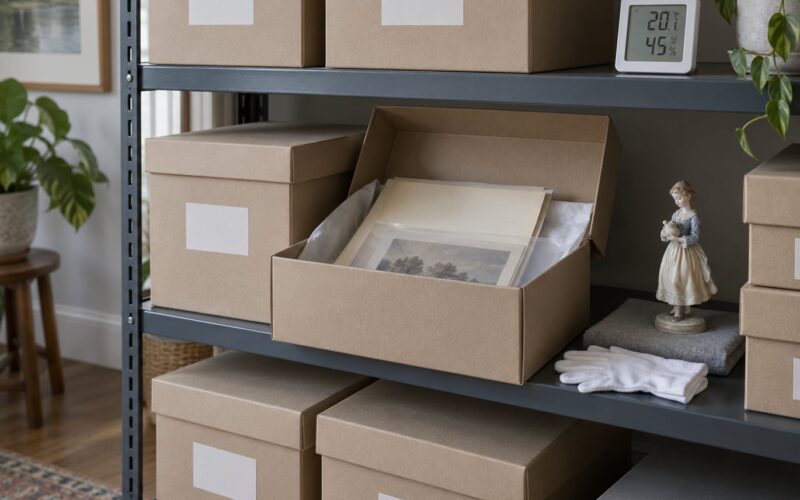
For storage, slide the poster into a polyester sleeve, interleave with acid-free tissue, and file it flat in an acid-free folder inside a box that does not sit on a concrete floor. Keep the room cool and dry and away from radiators, exterior walls and cupboards above plumbing.
Rolling is acceptable when a poster is too large for a box, provided you roll it image side out around a wide tube, never tighten the roll, and never store it rolled for years. For anything valuable, a professional linen backing is the real fix: it removes old acidic backings and stabilises the paper. It is the most worthwhile money a beginner with a precious print can spend.
Display the Collection
Match the frame to the poster, not the other way round. Buy the frame after you measure the print, and choose one that gives a few centimetres of white margin on every side so the paper does not touch the frame edge.
- Renters: a hanging rail on drywall, or removable mounting strips rated for the weight. Never use nails you cannot patch easily.
- Homeowners: a picture hook and wire is simpler and stronger than any adhesive product.
- Limited space: one rotating frame on the wall and everything else stored flat keeps a small collection looking intentional.
Space posters generously, roughly 5 to 8 centimetres apart at 27 x 40 inches, and keep the grid consistent rather than centring everything by eye. Keep prints off direct sunlight entirely, use UV-filtering glazing in any room with a window or lamp nearby, and prefer LED lighting. For a single favourite piece, a light box or backlit display shows saturated colour better than any frame on a wall.
Record and Grow the Collection
Track purchases from day one, because memory fails and you will buy things you already own. One collector auditing a catalogue found many posters they could not remember buying and no longer wanted.
A spreadsheet with these columns does the job: title, release year, format and size, original or reprint, NSS number if present, where you bought it, the date, what you paid, condition grade, storage location, and whether the piece has sentimental value. Add a photo of each poster and record wall coordinates for the ones on display.
Grow on purpose. Swap duplicates with other collectors rather than buying near-identical titles, check completed marketplace listings before any purchase so you know what a poster actually sells for, and set a firm limit of new purchases per month. Leave a little room in the budget for something you did not plan, because that is the piece you will still care about in ten years.
Common Mistakes
Nearly every beginner mistake here has a two-minute fix once you know about it.
- Buying duplicates. Keep a master list and check it before every purchase. It is dull and it works.
- Ignoring dimensions. Measure the print and the wall, then buy the frame to fit. A 27 x 41 original needs a frame that does not assume 27 x 40.
- Using cheap unprotected frames. Thin acrylic, cardboard backing and adhesive mounts cost you condition. Use UV-filtering glazing and acid-free backing board.
- Hanging in direct sunlight. Fading is cumulative and irreversible. Choose a wall out of the sun or accept a lower grade forever.
- Not recording purchases. Start the spreadsheet with the first poster, not the thirtieth.
- Overpaying for common titles. Most originals are common. Check sold listings before bidding and walk away from inflated asks on ordinary titles.
- Taping or dry-mounting the print. Neither comes off cleanly, and both wreck resale value.
- Buying with no room to hang it. Count your wall before you commit. Display space is the real limit on a collection.
A few tips that smooth the whole thing out: buy the protection supplies first, photograph everything the day it arrives, and let a poster rest flat for a day before rolling or framing it. Start small and display well. Five framed prints hung properly look better than twenty rolled in a closet, and cost less.
Frequently Asked Questions
What is the easiest way to start a movie poster collection?
Pick one focus, such as a genre, director or franchise, and buy five posters inside it rather than one of everything. Measure each print before framing, sleeve it the day it arrives, and keep a simple spreadsheet from the start. Most successful beginner collections stay small for a year and then grow on their own once the habit is set.
Should I buy original movie posters or reproductions?
Originals carry real scarcity and resale value, but most are folded, worn and priced beyond a casual budget. A high-quality reprint framed well looks excellent on a wall and costs a fraction. Buy originals when a title genuinely matters to you and the condition is honest, and fill the rest of the wall with good reprints you are not embarrassed by.
How should movie posters be stored to prevent damage?
Store them flat, not rolled. Slide each poster into an archival polyester sleeve, interleave with acid-free tissue, and file it inside an acid-free folder in a cool, dry box away from sunlight, heat and damp. Under about thirty posters, a rigid tube works fine. Never use tape or corner mounts, and avoid basements, attics and exterior walls.
How do I know which poster size fits my wall or frame?
Measure the print first, then measure the wall area where it will hang, then choose a frame with a few centimetres of margin on each side. Standard US one sheets are 27 x 40 inches, while older originals are usually 27 x 41 with a white border. Buy the frame after the poster, never before, because those two sizes are not interchangeable.
Can movie posters be framed without glass?
Yes, and many collectors prefer it. A frameless, float-mounted presentation avoids glare and reflections and works well for double-sided prints where you want both faces visible. It needs a rigid mount and a backing board so the print cannot curl, and the poster stays more exposed to dust and handling, so a sleeve or a clear acrylic cover still helps.
How do I keep track of a growing movie poster collection?
Use one spreadsheet or notebook as the single source of truth: title, year, size and format, original or reprint, NSS number, source, date, price paid, condition, storage location and whether it is on display. Add a photograph of each piece. Review the list before every purchase and again every few months to find duplicates and things you no longer want.
Conclusion
Three things to do this week. Write your focus as a single sentence, set a monthly figure you can live with, and buy one poster you will still want in ten years. Measure it, sleeve it, log it in your spreadsheet, and store it flat.
Everything after that is easy. Protect the paper, skip direct sun, frame to fit, and let the collection grow one deliberate piece at a time rather than in a panic purchase.