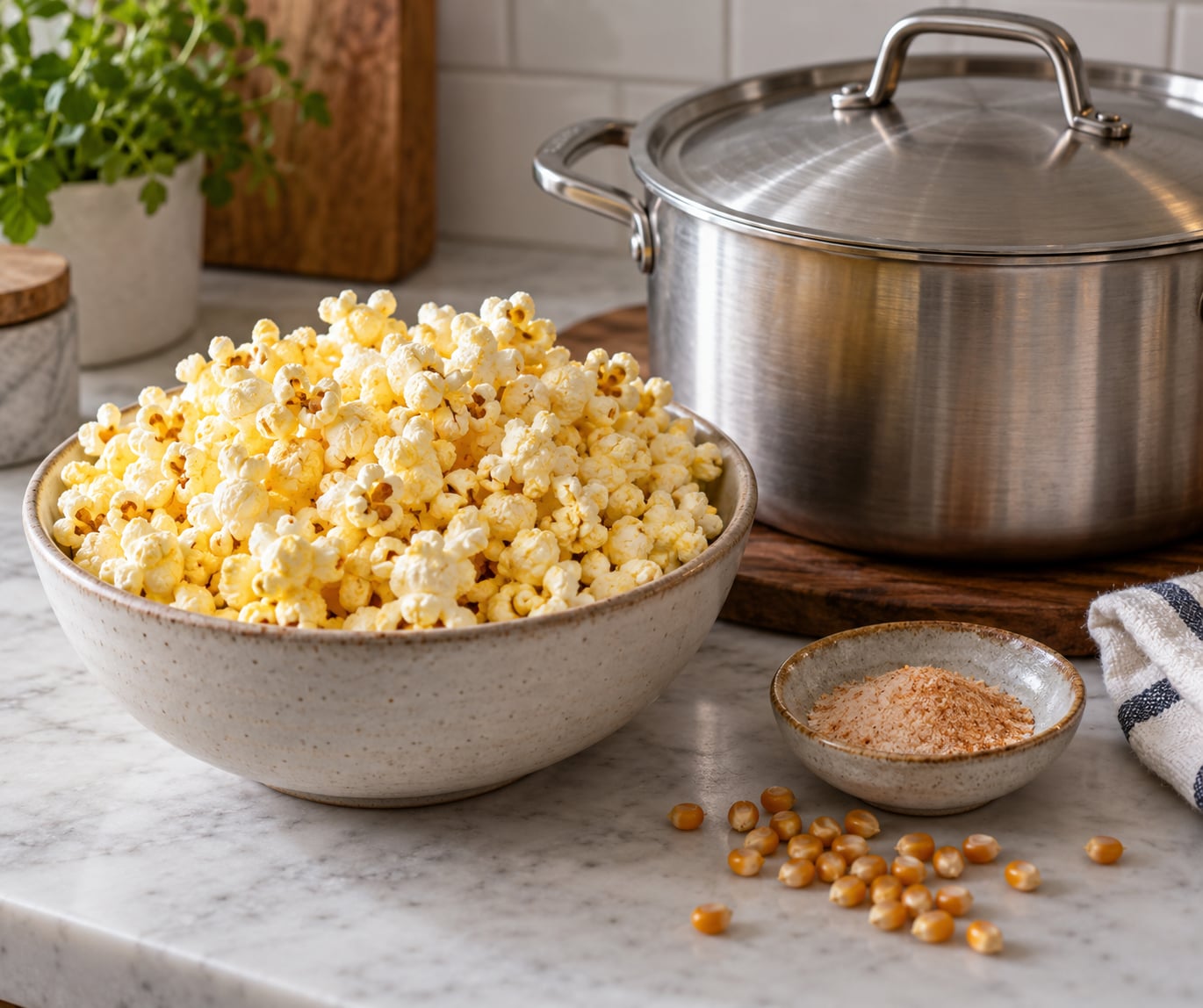
The difference between theater popcorn and homemade popcorn comes down to two things: a very fine, butter-flavored seasoning salt and the fact that it goes into the pot with the kernels, not on top afterward. Learning how to make popcorn like a movie theater takes about five minutes of prep and three minutes of cooking, and you do it on your stovetop with a heavy pot and a tight lid. No popcorn machine required.
Here is the whole thing, measured the way the theaters measure it: 3/4 cup of popping kernels, 3 tablespoons of butter-flavored coconut oil, and 2 teaspoons of seasoning salt. Everything below just explains how to do it without burning it.
Table of Contents
- 1What You Need
- 2Ingredients (about 6 to 8 servings, roughly 8 cups popped)
- 3Equipment
- 4What to use instead
- 5Step-by-Step: How to Make Popcorn Like a Movie Theater
- 6Why the seasoning goes in before the kernels pop
- 7How to recognize the moment to stop
- 8How to Make It in an Air Popper, Microwave, or Popcorn Kettle
- 9Air popper
- 10Microwave
- 11Popcorn machine or 8 oz theater kettle
- 12Common Mistakes and Tips
- 13Which popping oil gets closest to the theater
- 14White or yellow kernels
- 15Scaling up and keeping it crisp
- 16Is movie theater popcorn worth making at home?
- 17Frequently Asked Questions
- 18What is the secret ingredient in movie theater popcorn?
- 19Why does movie theater popcorn taste better than homemade?
- 20Do I need oil to make movie theater popcorn?
- 21How much butter and seasoning salt should I use?
- 22How do I keep popcorn crisp instead of soggy?
- 23What snack was banned in movie theaters in the 1920s?
- 24Start With the Seasoning
What You Need
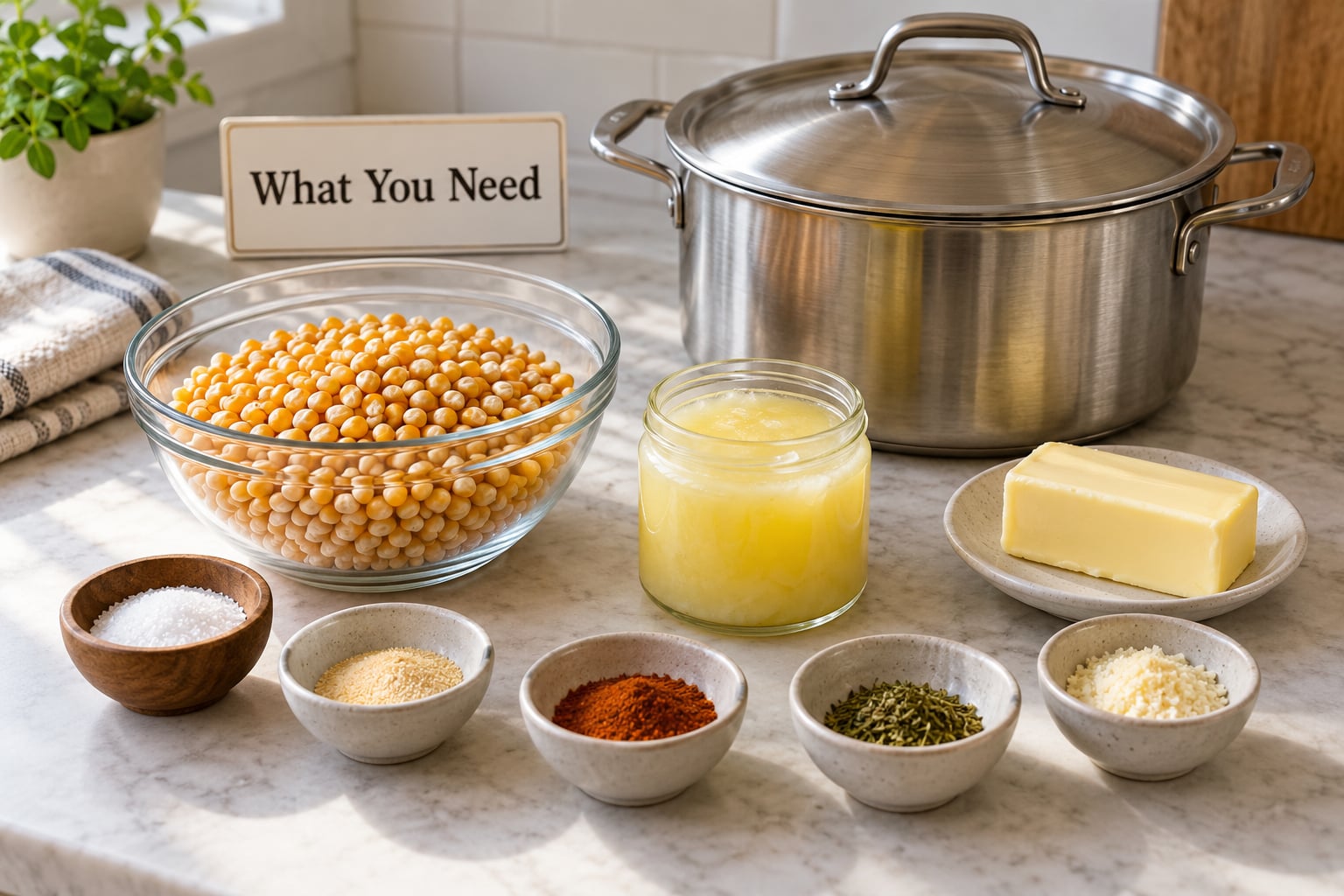
Nothing here is exotic except the seasoning salt, and that one carton lasts a long time because a 20-ounce box covers roughly 40 batches.
Ingredients (about 6 to 8 servings, roughly 8 cups popped)
- 3/4 cup popping corn — white or yellow, mushroom-style or butterfly-style, but not microwave bags
- 3 tablespoons butter-flavored coconut oil — this is the single closest match to theater oil you can buy in a jar
- 2 teaspoons seasoning salt (Flavocol or similar), plus more for finishing
- 3 tablespoons unsalted butter, melted — optional, for real dairy flavor drizzled over the top
- 1/4 teaspoon table salt — optional, for people who want more salt without more fake butter
The measurements are a guide, not a rule. Theaters typically work out to roughly 4 tablespoons of popping oil per 3/4 cup of kernels and about 1 teaspoon of seasoning salt per cup, so if your pot is deep and wide, nudge the oil up rather than down.
Equipment
- A heavy-bottomed pot, ideally 8 inches wide with 4-inch sides — something tall enough that when it does pop, it pops into the lid instead of across your stovetop
- A tight-fitting lid, clear if you can find one so you can watch the kernels
- A long-handled spoon or silicone spatula that can reach the bottom
- A small bowl or paper bag for tossing the finished popcorn
A glass lid is genuinely useful here, because the whole technique comes down to timing you by sound and by sight rather than by a clock. If your lid is solid metal, tilt it a few degrees so steam has somewhere to go.
What to use instead
Plain coconut oil works and tastes close, but it lacks the butter note. A mix of 1 tablespoon coconut oil plus 2 tablespoons melted butter gets you nearly the same result, and clarified butter works too since it will not scorch before the kernels finish popping. Olive oil is a bad swap — its smoke point is well below popping temperature and it will taste acrid. Plain canola works, it just tastes like movie theater popcorn with the butter left off.
For seasoning salt, the honest answer is that there is no perfect substitute. What you can do in a pinch is combine 2 teaspoons of very fine salt, a small pinch of butter powder (sold near the vanilla and spices), and a pinch of turmeric or annatto powder for the yellow. You will not fool anyone, but you will land closer than table salt alone.
One safety note. Popcorn pops violently and steam builds up fast under a sealed lid. Use a lid rated for the pot, keep the handle turned away from your face, and never lean over it when the first pop comes.
Step-by-Step: How to Make Popcorn Like a Movie Theater
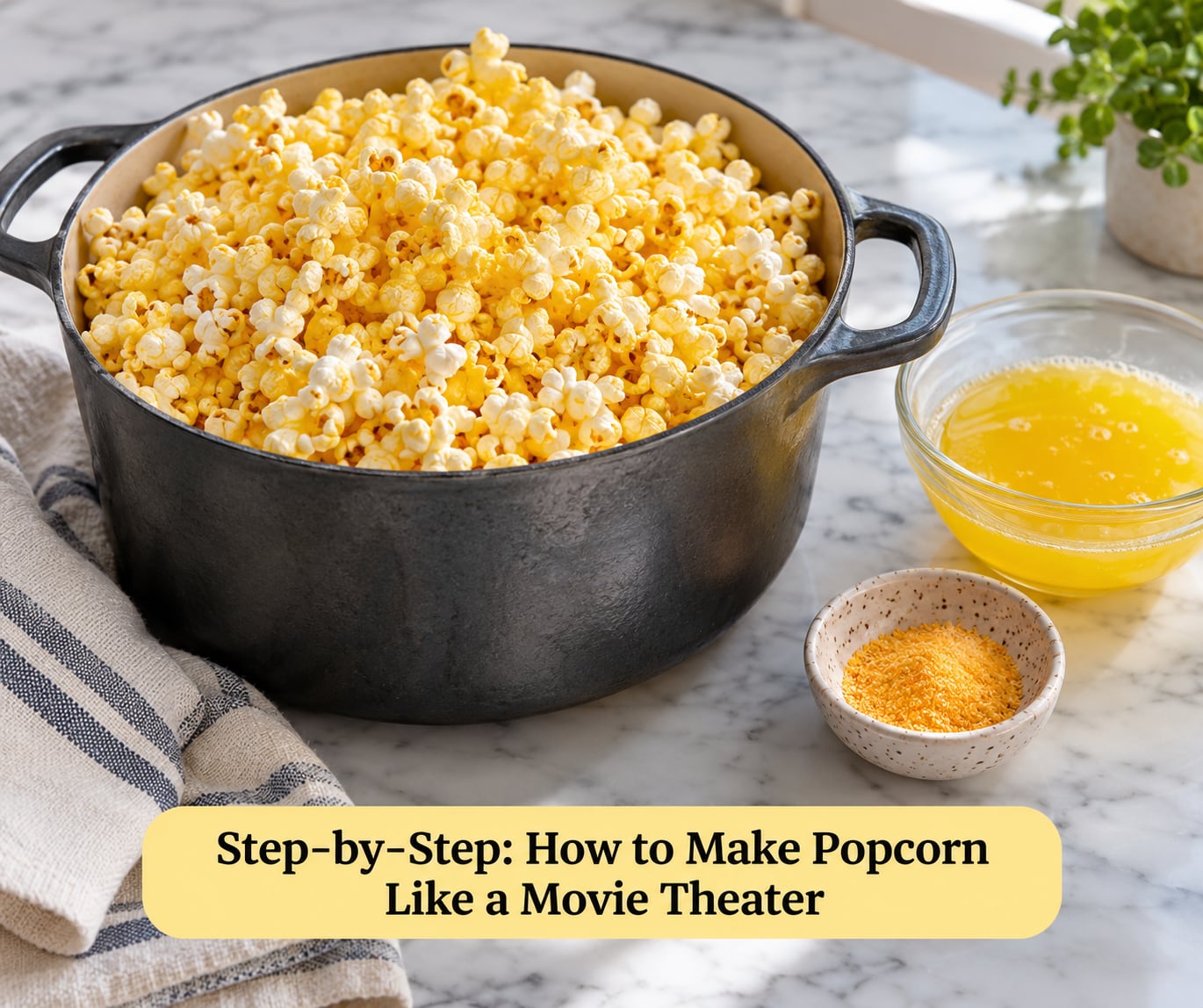
- Measure the kernels. Put 3/4 cup of popping corn into a small bowl. Pick out nothing — the odd dark or shriveled kernel is normal.
- Add the seasoning salt to the kernels. Sprinkle 2 teaspoons of seasoning salt over the kernels and mix with your fingers until every kernel looks faintly yellow. This step is the whole trick.
- Heat the oil in the pot. Set the pot on medium-high heat and pour in 3 tablespoons of butter-flavored coconut oil. Swirl it around as it melts and coat the bottom and lower sides.
- Run the 3-kernel test. Drop in three kernels and lid the pot. Wait until you hear three pops in about 3 seconds. If they take longer, the oil is too cool and everything will come out chewy.
- Add the kernels in an even layer. Dump the seasoned kernels into the pot, give the pot two good shakes to spread them flat, and put the lid back on. Cook over medium-high heat.
- Shake every 20 to 30 seconds. Lift the lid a crack, tilt it, shake the pot firmly, and close it again. This stops hot spots from scorching the bottom layer.
- Watch the pop interval. When the pops go from one every one or two seconds down to about one every two seconds, the batch is nearly done. A second or two later you will have a burst of two or three final pops — pull it off the heat then.
- Add butter and season. Dump the popcorn straight into a large bowl and immediately drizzle the melted butter over it while tossing. Dust with more seasoning salt while the popcorn is still hot.
That last step matters more than it looks. Butter on room-temperature popcorn turns greasy; butter on popcorn that came straight off a hot burner melts into it instead of sitting on top.
Why the seasoning goes in before the kernels pop
Popcorn is a small closed package of starch and water. When it bursts, the foam expands and the surface is still wet and sticky, which means anything you dust on afterward sits loosely on the outside. The seasoning salt is a very fine grind of salt, artificial butter flavor and yellow dye, so mixing it with the kernels lets it stick directly to that wet surface as each one pops.
The oil does something similar. Fat carries flavor into the popcorn itself rather than sitting on the kernel, and popping at a higher temperature than a microwave bag reaches encourages the same aromatic compounds that make browned butter taste buttery. That is why the finished bowl smells like a theater lobby the second you lift the lid.
How to recognize the moment to stop
Sound is the whole answer. Listen for the gap between pops. Wide gaps mean too cool, tight overlapping pops mean still hot, and a steady one-every-two-seconds rhythm means you have maybe two seconds left. Pull the pot then, dump the popcorn out, and keep shaking the pot — the residual heat finishes the last few kernels.
How to Make It in an Air Popper, Microwave, or Popcorn Kettle
All three work, and none of them are as close as the pot, but here is how to adapt each one.
Air popper
Use the same 3/4 cup of kernels, but drizzle 2 tablespoons of melted butter-flavored coconut oil over them and stir so the oil coats every kernel before they hit the chamber. Add the seasoning salt with them rather than after. Air poppers run hot and fast, so expect more old maids than the stovetop method and add a couple of tablespoons of extra oil if the batch looks dry coming out.
Microwave
Skip the paper bag entirely and use a deep microwave-safe bowl with a loose plate over the top. Microwave the seasoned kernels in three-minute bursts, stirring between each one. You lose some of the toasted flavor this way, which is the one real disadvantage, but the coating still lands on the corn. Set the bowl on a towel afterward so the trapped steam does not soften the bottom layer.
Popcorn machine or 8 oz theater kettle
If you have one, use the machine’s own instructions for oil and salt, because the built-in dispensers are calibrated to them. The one upgrade worth making is the butter pump on the side. A home cook on a popcorn forum described theaters as doing something extra after popping, and that is right — they mist the finished corn with more butter-flavored oil, which is why it never looks dry.
Drizzle melted butter over the popped batch and toss it in the kettle’s mixing drum to imitate it. One more trick from the same thread: many home cooks put butter in the kettle before the kernels so the corn sits in buttery oil and picks up more flavor while it pops.
Common Mistakes and Tips
Almost every disappointing batch traces back to one of six things. Here is what went wrong and what to change.
| What you got | What caused it | The fix |
|---|---|---|
| Burnt or scorched popcorn | Heat left on after the last pops, or the pot never shaken | Take the pot off the heat at a two-second pop interval and shake it every 20 to 30 seconds |
| Unpopped kernels (old maids) | Oil was below popping temperature, or the kernels were old | Run the 3-kernel test and wait for three pops in about three seconds before adding the batch; buy kernels with a current date |
| Greasy or gluey popcorn | Too much oil, or seasoning added after popping | Cut the oil back to 3 tablespoons and mix the seasoning salt in with the kernels instead of dusting later |
| Chewy, gummy popcorn | Kernels held moisture, or the pot was too cool at the start | Do not store cooked popcorn in the fridge, and let the oil hit temperature before the batch goes in |
| Bland popcorn | Salt sprinkled on cooled popcorn | Season while it is still hot from the pot; warm popcorn releases aroma and tastes far more seasoned |
| Popcorn stuck to the bottom | A thin-bottomed pot and a full pot’s worth of kernels | Use fewer kernels or a bigger pot, and shake more often so nothing sits still long enough to catch |
Which popping oil gets closest to the theater
| Oil | Smoke point | Flavor result | Best use |
|---|---|---|---|
| Butter-flavored coconut oil | High | Closest to theater butter flavor, very light aftertaste | The default choice |
| Coconut oil, plain | High | Clean and rich, no dairy note | Dairy-free batches |
| Clarified butter (ghee) | High | Real butter flavor that will not scorch | When you want dairy without the milk solids |
| Canola or peanut oil | High to very high | Neutral, so seasoning salt does all the work | Budget batches and larger quantities |
| Olive oil | Low | Scorches and tastes bitter before the corn finishes | Not recommended |
White or yellow kernels
Both pop fine. White kernels tend to be larger, fluffier and slightly less sweet, and a lot of people who chase the theater taste prefer them; yellow kernels are smaller, crunchier and pop a higher percentage, which is why they dominate commercial bags. What to avoid is anything labeled microwave popcorn — those kernels are coated in oil and sometimes salt, and the coating is what gives you greasy, flat-tasting popcorn that never quite matches the theater.
Scaling up and keeping it crisp
For a group of ten, double everything and use two batches rather than one big one. A pot packed past its normal fill line pops unevenly, and the bottom layer scorches long before the top layer finishes. A third of a cup of seasoning salt per cup of kernels scales cleanly.
Popped popcorn keeps its texture for about two to three days in an airtight container at room temperature. Do not refrigerate it — the starch goes damp and chewy, and the butter coating turns waxy. If you have leftovers, warm them briefly in a low oven with the lid cracked so they crisp back up.
Is movie theater popcorn worth making at home?
Skipping the concession stand is the main argument for making it yourself. A large theater bucket runs several times what the same amount of popcorn costs to pop at home, and it arrives already salted to a level most people would not choose if asked. Plain popped corn with no additions is a whole grain, and a lightly oiled batch still is — it is a snack, not a health claim, but it is a reasonable one for a movie night. For context, popcorn itself was one of the few snacks sold in theaters in the 1920s alongside candy bars and peanuts, which makes it the default concession for a reason.
Frequently Asked Questions
What is the secret ingredient in movie theater popcorn?
It is a very fine seasoning salt, usually sold as Flavocol, mixed into the kernels before popping instead of sprinkled on afterward. It contains salt, artificial butter flavor and a yellow dye, which is where the golden color and buttery smell come from. The second secret is butter-flavored popping oil, usually coconut based. Together they are the whole difference between theater popcorn and a bag of microwave popcorn.
Why does movie theater popcorn taste better than homemade?
Three reasons: the seasoning coats the corn from the inside as each kernel bursts, the popping oil carries butter flavor into the foam rather than sitting on top, and theater corn pops at a higher temperature, which builds the same aromatic compounds that make browned butter taste buttery. Homemade popcorn usually fails because the salt goes on after popping, so it falls off, and because the heat is too low to start.
Do I need oil to make movie theater popcorn?
You need some fat for the flavor to carry, and a pot is the safest place to put it. Use about 3 tablespoons of butter-flavored coconut oil per 3/4 cup of kernels. An air popper works but sprays hot unpopped kernels, so mix the oil into the bowl with the kernels first. Plain water and a lid will pop the corn, but you will have air-popped popcorn, not theater popcorn.
How much butter and seasoning salt should I use?
For 3/4 cup of kernels, use 2 teaspoons of seasoning salt mixed in with the kernels before popping, plus a light dusting afterward. For real butter, melt 3 tablespoons and drizzle it over the hot popcorn while tossing. That is roughly one stick of butter per two and a half cups of kernels, so scale up if you are making a big batch.
How do I keep popcorn crisp instead of soggy?
Season it hot and serve it in a bowl you can drain, not a sealed container sitting out. Butter added to warm popcorn melts in; the same butter on cold popcorn sits on the surface and makes it greasy. For leftovers, store at room temperature in an airtight container for two to three days and warm briefly in a low oven. Never refrigerate popped popcorn, because the starch turns chewy.
What snack was banned in movie theaters in the 1920s?
Several things came and went from concession stands, but the best-known story is that margarine was banned in some theaters because it was cheaper than butter and theater owners did not want it on their premises. Candy bars and peanuts were cleared early, while anything messy or hard to eat quietly did not survive. Popcorn was never the target and grew into the default instead.
Start With the Seasoning
If you only change one thing about the way you used to make popcorn, change this: stir the seasoning salt in with the kernels before they hit the hot oil, and pull the pot the moment the pops go quiet. Everything else — the pot, the oil, the butter — is a refinement on top of that one habit.
Pop a small test batch first if you have never done it. Three tablespoons of oil and two teaspoons of seasoning salt will teach you more in four minutes than any description can.