Movie remakes feel different because they are new films, not photocopies of old ones. A remake keeps the premise and the major plot beats, but everything else — dialogue, casting, tone, pacing, effects, even the ending — is decided by a different era, a different budget and a different set of creative choices. When you notice why movie remakes feel different from originals, the answer comes down to seven things, and none of them are accidental.
There is also a second reason that has nothing to do with filmmaking. You are not comparing two films. You are comparing a film you can watch against a memory you have already edited, softened and improved. That comparison is rigged from the first frame, and it is worth keeping in mind before you decide a remake failed.
The business side explains why the attempts keep coming. Widely cited industry figures put the average at roughly 19 remakes a year, with something close to 23 years typically separating an original from its remake. That rhythm explains a lot of what looks like coincidence: Dumbo (1941) came back in 2019, The Lion King (1994) was re-made in 2019, and The Exorcist (1973) produced The Exorcist: Believer in 2023. The remake arrives when a studio decides the audience that remembers the original is now old enough to be worth billing again.
Table of Contents
- 1Why Movie Remakes Feel Different from Originals
- 2How scripts and source material change
- 3Why casting creates a different tone
- 4How direction and visual style change the experience
- 5Why music and sound design matter so much
- 6How remakes reflect the time they were made
- 7Why original fans often react differently
- 8What remakes can add that the original does not
- 9Frequently Asked Questions
- 10What makes a movie remake feel different from the original?
- 11Why do remakes change the ending or a character’s story?
- 12Does a remake have to copy the original movie exactly?
- 13Can a movie remake be better than the original film?
- 14How should I compare a remake with the movie it is based on?
- 15What to notice first
Why Movie Remakes Feel Different from Originals
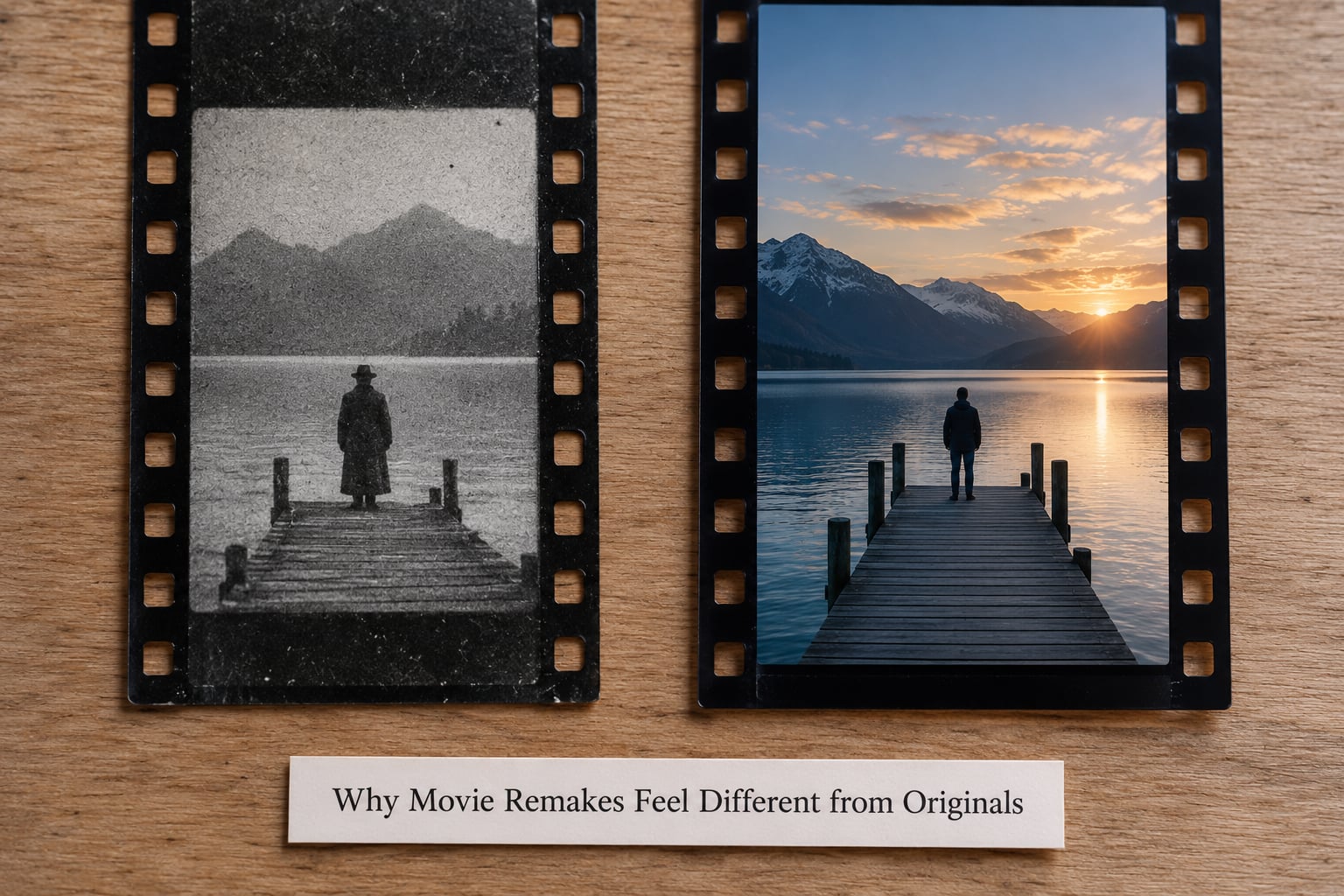
A remake re-tells a story that has already been told on film, usually keeping the core premise and the main story beats. A reboot goes further and starts a new continuity, discarding what came before. Neither is required to reproduce the original scene by scene, which is precisely why the results vary so much.
Remakes are shaped by what changed between the two release dates: the studio that greenlit it, the technology available, the censorship and content standards in force, the taste of the audience it is aimed at, and the taste of the people making it. The original was one set of answers to those problems. The remake is a different set of answers, and it is judged against the first one.
How scripts and source material change
Scripts get rewritten because the material is being sold to a new audience, and sometimes because the original text no longer reads the same way. Dialogue is modernised, structure is reshuffled to get to the ending sooner, and subplots appear where the original had none.
Take a purely hypothetical case. An original ends its final act with the protagonist walking out of a fight into a quiet kitchen scene, no music, letting the audience sit with the cost of what happened. The remake keeps the fight and rebuilds the ending as a public confrontation in a stadium, capped with a last-second reversal. Nothing in the premise changed. The emotional landing is a different film.
When a remake loses its bite, this is usually where it happened — in a rewritten third act, not in the effects budget. And audiences are unusually sensitive here, because an ending is the one thing a fan has usually argued about in advance.
Why casting creates a different tone
Casting is often the single biggest difference between the two versions, and the least discussed. Performers bring their own physicality, vocal habits and limits to a role that other people played before. A character played by someone older, quieter and heavier reads as weary; the same character played younger and leaner reads as hungry. Same lines, different animal.
Imagine the same antagonist in two films: in the original he is played as a bored administrator who treats the whole thing as paperwork, and the comedy comes from his calm. In the remake the same character is played by a physically imposing actor who never raises his voice, so the menace comes from control instead. Which version is funnier, or scarier, is now a casting decision rather than a script decision.
Casting also changes who the film is about. When a remake updates a setting, roles written for one generation are filled by performers of another, and the questions the characters ask change with them. Heathers (1989) leans on high-school hierarchy played entirely by teenagers; keep the structure and modernise the casting and you get a different kind of story, because adults acting teenagers behave differently than teenagers do.
How direction and visual style change the experience
Directors decide how much information the audience gets and when. A scene staged in one wide, static frame with natural light asks you to watch; the same scene covered in fast cuts with tight lenses and a heavy grade tells you what to feel about it. The story is unchanged and the experience is completely different.
Aspect ratio alone alters a film. A 1.85:1 frame and a full-screen 2.39:1 frame do not just crop the same picture; they change how close characters feel to you and how much room they have to move in.
Then there are effects. An original made in 1978 could reach for practical effects, makeup and tight editing because that was what existed. A remake has digital effects, and the temptation is always to show more — a collapsing building in wide shot, a face transformation held for two extra seconds. More spectacle is not automatically more frightening. The original horror films that still scare people did almost all of their work with a shadow and a sound.
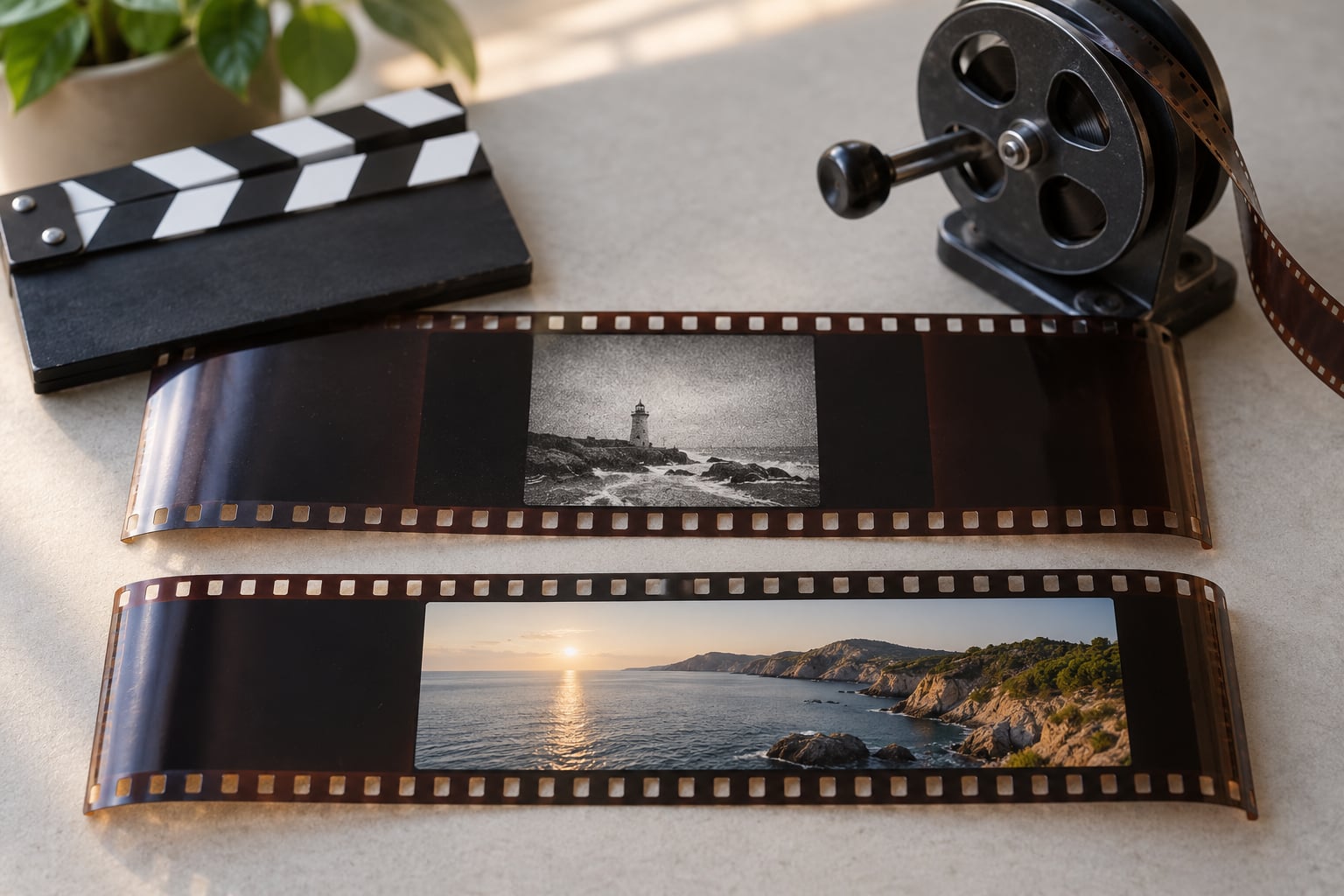
Look at A Christmas Story (1983) and think about how it would look shot on a modern sensor with clean digital sharpness and no grain. Nothing about the story would change and the film would lose its period warmth, because the texture was part of the memory people carry.
Why music and sound design matter so much
Score and sound carry emotion before dialogue does. Change the composer, the instrumentation or the arrangement and the same scene lands somewhere else entirely — and this is the quiet reason many remakes feel wrong to people who cannot articulate it.
The Wizard of Oz (1939) builds its emotional register on a single recurring theme. Swap that melody for a different one, in a different orchestration, and the film stops being about a girl trying to get home. It is still the same plot. It is not the same feeling.
Mixing has shifted too. Modern releases are louder and more compressed, with dialogue pushed forward and ambience squeezed down. That is good for streaming on a phone and bad for suspense, because suspense lives in the quiet parts of a mix, and those quiet parts are the first thing sacrificed.
How remakes reflect the time they were made
Every film is a product of its moment, and a remake is usually aimed at a moment that has moved on. Content standards change, humour dates, and the boundaries of what is acceptable on screen shift. A remake has to pass both a creative review and a cultural one.
Halloween (1978) traded on ambiguity: the threat was largely unseen, and the fear lived in what the characters assumed. The 2007 version, directed by Rob Zombie, reframed the film around backstory and the killer as a character, dropping the supernatural question mark. It is a different film about the same name, and the difference is entirely about what 2007 audiences were willing to be shown.
The 1980s example is even clearer. A film that made a joke out of something would now have that joke cut or rewritten, not because the remake team lacks nerve but because the marketing, and the preview audience, has changed expectations. Drifting tone is rarely an accident. Usually somebody in a meeting decided to be safer.
Why original fans often react differently
People who saw the original as children are not evaluating the remake on its own terms. They are scoring it against an emotional memory, and memories improve on the real thing every year. The film you loved had a score you half remember, a slower pace that felt right at eleven years old, and an ending you had built a whole theory about.
The pattern that shows up repeatedly on film forums, from r/movies to r/HorrorMovies, is that viewers who never saw the original as a child tend to rate remakes far more generously. Same film, different starting point.
Attachment plays its part too. Once a film is a favourite, a remake reads as an attempt to touch something private. The other recurring complaint is dilution: the jump scare removed because it was too effective, the character death cut because a test audience objected, the joke extended past the punchline. Iconic moments are exactly the moments people argue about most, which is why remakes tend to get them wrong.
What remakes can add that the original does not
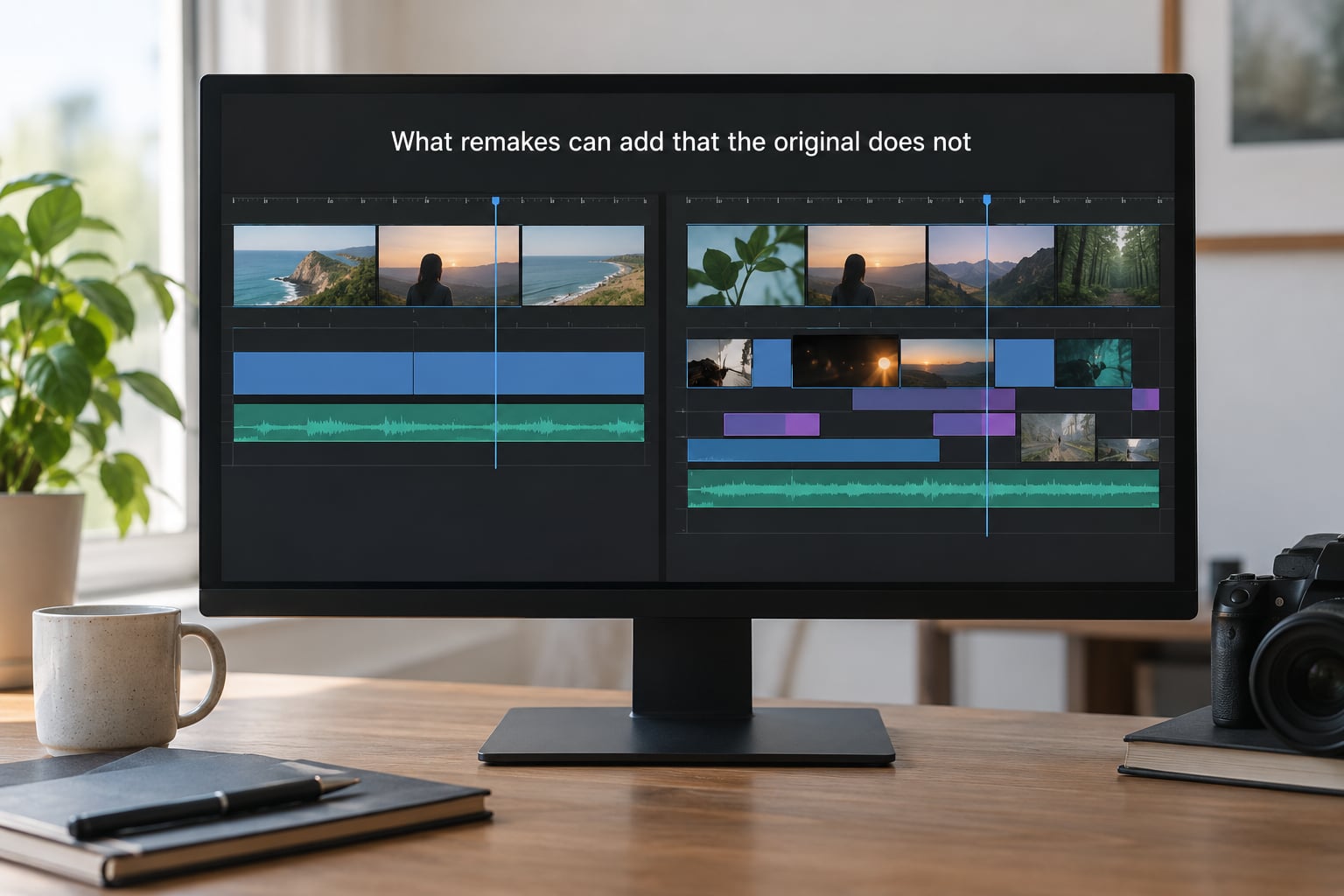
It would be dishonest to stop at the complaints. Remakes genuinely fix things, and the ones that work usually have a reason to exist beyond the audience already being built in.
Scarface exists twice, in 1932 and in Brian De Palma’s 1983 version. The 1983 film changed the ending, sharpened the moral ambiguity and gave the violence a style that still defines the genre. Most viewers who know both consider it the better film, and it is a remake rather than a sequel only in the technical sense.
A Star Is Born (1937) was re-made in 2018 with Bradley Cooper directing, co-writing and starring. The story of watching somebody you love become famous is the same; what changed is that the 2018 film knows what that machine looks like from the inside, and admits it.
Foreign-language remakes are the clearest case of an addition rather than a subtraction. The Ring (2002) moves material across languages and lands somewhere genuinely unsettling, as does Park Chan-wook’s Oldboy (2013). Martin Scorsese’s The Departed (2002) takes a Hong Kong film’s structure and rebuilds it around a different city and a different set of performances. When the language and cultural context change, viewers tend to grant more latitude, because nobody is pretending it is the same film.
Remakes can also update what did not age well, trim a runtime that outstayed its welcome, and reach an audience that would never have found the original. The trade-off is honest and worth stating: a remake inherits the original’s worst ideas as readily as its best, and it never gets to escape the shadow it was born in.
Frequently Asked Questions
What makes a movie remake feel different from the original?
A remake keeps the premise and major plot beats but is remade through a different era: new dialogue, a restructured script, different performers, a different director’s visual style, updated effects and current content standards. Because none of that is copied automatically, the two films usually differ in tone, pacing and sometimes ending, even when the story outline is the same.
Why do remakes change the ending or a character’s story?
Endings and character arcs are rewritten most often. Modern audiences tend to want closure that older films left open, runtimes are shorter so late beats get trimmed, and studios avoid killing characters that other films in a franchise still need. Remake teams also want the film to work for people who have never seen the original, which usually means a clearer resolution.
Does a remake have to copy the original movie exactly?
No. A remake only has to re-tell the same story in a new film, and the boundary is deliberately loose. Copying scene by scene usually produces something inert, while rebuilding the story from scratch becomes a reboot. The interesting remakes sit in between: they keep the shape of the story and change almost everything that fills it in.
Can a movie remake be better than the original film?
Yes, and a few are widely considered better. Brian De Palma’s Scarface from 1983 is usually rated above the 1932 original, and the 2018 A Star Is Born handles its subject with more self-awareness. Remakes can improve pacing, update effects and reach viewers the original never did, though even a superior remake usually gets less credit than the film it came from.
How should I compare a remake with the movie it is based on?
Compare them in a fixed order: script changes first, then casting, then tone in the opening twenty minutes, then music and sound design, then effects. Watch the original without looking up stills or reviews, and write down what you remember afterwards. That record is what you are actually comparing against, and it is usually kinder to both films than memory in its polished form.
What to notice first
Start with the screenplay, because that decides what the film is about. Then check the tone in the opening twenty minutes before you have an opinion you are defending. Casting, direction, score and sound design come after that, in that order, and by then you will usually know whether the differences are a loss or a gain.
Whatever you decide, watch the original first if you can. It costs two hours and it makes the comparison honest.