If your gas mileage is getting worse, something changed in how your car is burning fuel, how it is being driven, or how the number is being measured. Most owners notice it in the dashboard readout first, not at the pump, and the gap between those two tells usually explains the whole story.
The single most common reason is not a broken part at all. It is arithmetic done wrong on a partial fill, or a season change, or a set of tires that drifted a few PSI under the recommended pressure. Get that out of the way before you start ordering sensors.
Below is what is actually going on, in the order it is worth checking.
Table of Contents
- 1Why Is My Gas Mileage Getting Worse?
- 2The 9 Most Common Causes of Worse Gas Mileage
- 3What Can Make MPG Drop Suddenly?
- 4How to Check Your Car for Easy Fuel-Economy Problems
- 5What Does a Drop in MPG Usually Mean?
- 6How to Improve Gas Mileage Without Risky Modifications
- 7When Should You Take Your Car to a Mechanic?
- 8Frequently Asked Questions
- 9Why is my gas mileage getting worse in the winter?
- 10How much MPG loss is normal as a car gets older?
- 11What sensors cause bad gas mileage?
- 12Can I have poor gas mileage with no check engine light?
- 13What is the first thing I should check if my MPG drops?
- 14Conclusion
Why Is My Gas Mileage Getting Worse?
When gas mileage drops, the engine is either burning more fuel for the same work, the car is working harder against the road and air, or the sensors are reporting a number that no longer matches reality. Each of those three paths has its own set of causes, and they are easy to tell apart once you know which symptoms belong to which.
A lean air-fuel mixture, extra mechanical drag, a misfire, or a plugged exhaust will all burn extra gallons. So will 30 extra pounds in the trunk, a roof rack, and hard acceleration every day. Then there is the softer case: an upstream oxygen sensor drifting out of spec can dump fuel into a healthy engine, and the car will return a bad number while running perfectly fine.
The useful part is that most of these have a visible tell. Rough idle, a misfire flash, a sulfur smell, or a check engine light narrows the field before you touch a tool.
The 9 Most Common Causes of Worse Gas Mileage
Here is the short list, ordered roughly by how often drivers run into each one. The right-hand column matters as much as the symptom: some of these are scheduled maintenance, and some are a mechanic’s job the moment you confirm them.
| Cause | Typical effect | Most recognizable signs | Maintenance or repair? |
|---|---|---|---|
| Underinflated tires | Gradual loss, roughly 1 to 3 mpg | TPMS light, edges worn on one side | Maintenance, free to do yourself |
| Aggressive or stop-and-go driving | Immediate, 10 to 30 percent | High revs, hard launches, short commutes | Habit, free |
| Dirty or wrong air filter | Gradual loss | Rough idle, hesitation under load | Maintenance |
| Worn spark plugs or bad ignition | Sudden or sharp drop | Misfire, jerking under acceleration | Repair |
| Oxygen sensor | Gradual loss, can be large | Check engine light or nothing at all | Repair |
| Mass airflow sensor | Sudden drop, rough running | Stall, hesitation, low idle | Repair |
| Fuel injectors or fuel filter | Gradual to sudden | Rough idle, misfires, stumble | Repair |
| Thermostat or coolant temperature sensor | Sudden, worse in cold weather | Warm-up takes forever, fan runs constantly | Repair |
| Engine wear, exhaust restriction, or transmission fault | Large and usually sudden | Smoke, noise, slipping, burning smell | Repair, diagnose first |
Tire pressure leads the list for a reason. Every pound per square inch you are under increases rolling resistance, and the engine has to make up the difference. Add a bent rim from a parking lot, a worn tie rod, or a set of tires that were never rotated, and the penalty grows.
Ignition is the other big one. Spark plugs on a high-mileage engine are often past the interval, and a misfire sends unburned fuel straight through the exhaust. One owner on r/AskMechanics traced a collapse from 31 mpg to 16 mpg on a 1997 Honda Del Sol to a distributor cap with a cracked stud and a corroded rotor; a code scan found it in minutes, and no amount of filters and additives would have touched it.
Sensors fail quietly. An oxygen sensor that reads rich leans the fuel mixture and quietly wastes gallons, sometimes with no code at all, which is why owners end up swapping parts one at a time and wondering why nothing changed. Fuel trims on an OBD-II scanner narrow that down: sustained numbers well off zero point at the sensor, not the parts bin.
What Can Make MPG Drop Suddenly?
A gradual slide over six months looks like wear, maintenance debt, or gradual sensor drift. A sudden drop over one tank looks like a specific fault, and it is worth treating it as such.
Check the obvious context first. A weekend road trip with a full car and a roof box will cost you far more than your normal commute. A new route of stop-and-go traffic does the same. Winter alone explains a surprising share of complaints, since cold air is denser, engine oil thickens before it thins, cabin heat burns fuel, and short trips never let the engine reach full operating temperature.
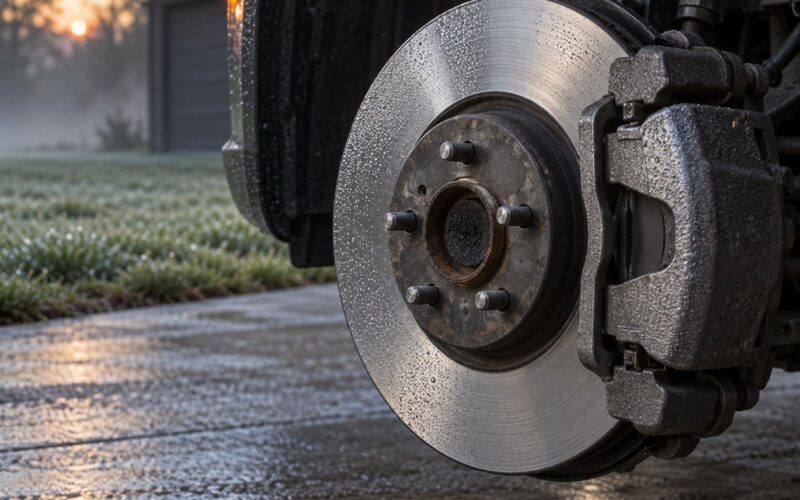
Then the harder clues. If the drop came with a check engine light, a tire that looks shredded or a wheel that got hit, or brake or suspension work, start there rather than at the engine. Owners on r/f150 routinely point out that a sticky caliper drags quietly and costs more gas than most sensors ever will.
How to Check Your Car for Easy Fuel-Economy Problems
Start with the free checks, in this order. Most drivers who go straight to a shop end up paying for diagnosis they could have done in a parking lot.
Cold tires, then tire condition. The recommended pressure is on the door jamb sticker, not on the tire sidewall, and it is usually higher than the number molded into the rubber. Inflate to spec while the tires are cold, before you drive more than a mile or so. Look across all four tires for uneven wear, and check whether one is noticeably lower than the others every week, because that points to a slow leak rather than weather.
Pull your service history and line up what is due. An air filter, spark plugs, and an oxygen sensor all have intervals, and a car driven to the sticker every year will fall behind schedule on all of them at once. That combination of three deferred items can look exactly like one mysterious fault.
Look at the air filter next. A restricted filter makes the engine work harder for the air it gets. On most cars this is an easy lift-and-clip job with a few basic tools, and the interval in your owner’s manual is a starting point rather than a rule, since dusty driving shortens it.
With the engine running cold, listen and look. A hissing leak near the fuel rail, a dripping stain under the car, an exhaust note that has gone raspy, or white or blue smoke all mean stop and look at that system. A burnt-plastic or sulfur smell usually points at the exhaust or a rich running condition.
Finally, write down your actual driving for the last month. Miles per gallon is a fuel-per-mile number dressed up as a performance figure, and it moves with the terrain, the weather, and how often the car sat in the driveway.
What Does a Drop in MPG Usually Mean?
Symptoms point at systems. Rough idling and hesitation when you press the accelerator lean toward air delivery or ignition, slow pickup and shudder under load lean toward fuel delivery, and a lit check engine light almost always means stored codes worth reading before anything else.
A scanner changes this conversation. Any OBD-II code reader will pull stored and pending fault codes in about a minute, and plenty of drivers borrow one from an auto parts store before buying a tool. Read the codes first, then use live data. Short-term fuel trim is what the computer is correcting right now; long-term fuel trim is what it has decided to keep correcting over many starts. Both hovering several percent above or below zero point at an oxygen sensor or a mass airflow sensor rather than a misfire or an exhaust fault.
Poor gas mileage with no codes is real, not a myth. An upstream oxygen sensor that has gone slow reports a lean mixture, the computer adds fuel to compensate, and the loss can be significant without throwing a single code. The same goes for a weak mass airflow reading on some vehicles. If fuel trims stay off zero and the engine runs clean, that is where I would point a technician first.
What is normal decline, then? There is no fixed number, but a few percent over a few years on a healthy car is unremarkable. A drop of 15 to 20 percent on a car with no warning light, no noise, and no smoke usually points to something specific. Owners who keep written mileage records tend to catch it earlier, and it also gives a dealer something concrete to respond to if the car is still under warranty.
How to Improve Gas Mileage Without Risky Modifications
The reliable gains are boring and repeatable. Keep the tires at the door jamb pressure and check them monthly, stay current on the scheduled service your owner’s manual lists, and use the oil viscosity it specifies rather than a thicker or thinner guess.
Drive for the fuel you burn. Gentle acceleration, fewer sudden stops, steady highway cruising at moderate speed, and no extended idling will each do more than most products people buy. Combine short trips where you can so the engine gets to temperature, and take excess weight and unused cargo out of the car. A roof rack that stays empty costs you around 2 percent in the city and can cost 20 percent at highway speeds because of drag.
Some folklore is worth dismissing plainly. Fuel additives sold to clean injectors, engine treatments, and performance parts do not reliably improve fuel economy on a healthy engine. Premium fuel in a car that does not ask for it buys you nothing, and a device charger left plugged in is a small parasitic load you can simply unplug.
One caveat on fuel itself: ethanol-heavy gasoline and water in the tank can cause knock and misfires on some engines. If the trouble followed a fuel change, say so to your technician rather than assuming the fuel system failed on its own.
When Should You Take Your Car to a Mechanic?
Stop driving and get it looked at when any of these show up. The point is that fuel economy loss on its own is a mild problem, and these symptoms are not.
A check engine light that stays on, especially with a flashing variant, which signals an active misfire that can burn out a catalytic converter. A strong fuel odor inside or behind the car. Visible fuel, coolant, or oil leaks onto the ground or under the car. Exhaust smoke that is thicker than a brief puff at startup. Overheating, or a temperature gauge that climbs and drops. Grinding, slipping, or shudder under acceleration.
Also worth a shop visit if the mileage drop is large and you have already done the free checks, or if it started right after brake, tire, or suspension work and no code explains it. Bring your written mileage log, the codes you scanned, and the date the change started. A qualified technician can work from those and skip straight to the test that matters, and that is the difference between one diagnostic hour and a day of parts roulette.
Frequently Asked Questions
Why is my gas mileage getting worse in the winter?
Cold weather lowers fuel economy for four reasons at once: denser air packs more fuel into the same mile, engine oil thickens before it thins, the cabin heater adds engine load, and short winter trips often never let the engine reach full operating temperature. Expect a drop of a few percent, and compare winter numbers against other winter numbers rather than against a summer baseline.
How much MPG loss is normal as a car gets older?
A few percent over several years on a healthy car is unremarkable and nobody notices it. A drop of 15 to 20 percent with no warning light, no noise, and no smoke usually points at something specific rather than age. The reliable way to know is to compare your last five full-tank readings with the five from a year ago, measured the same way.
What sensors cause bad gas mileage?
The usual suspects are the upstream and downstream oxygen sensors, the mass airflow sensor, and the coolant temperature sensor. A drifted oxygen sensor can push the engine rich without ever throwing a code, while a coolant temperature sensor or stuck thermostat makes the computer think the engine is still cold. An OBD-II scanner showing sustained fuel trims well off zero points at the sensor, not the parts.
Can I have poor gas mileage with no check engine light?
Yes, and it is common enough that owners chase it for months. An upstream oxygen sensor reading slightly lean makes the computer add fuel continuously, and the car can burn noticeably more without storing a single code. The same happens with some weak mass airflow readings. Checking live fuel trim data on a scanner is the fastest way to separate this from a driving or measurement problem.
What is the first thing I should check if my MPG drops?
Confirm the measurement first. Fill the tank, reset the trip computer, drive until it reads low, then calculate miles driven divided by gallons pumped back in. Do that across five full tanks and compare against the same period last year. If the number holds, move to tire pressure against the door jamb sticker and your service history before going near the engine.
Conclusion
Three things, in order. Compare your recent full-tank numbers against the vehicle’s own normal baseline, using the same calculation each time. Check tire pressure cold against the door jamb sticker, and pull the service history to see what has gone deferred. Then write down roughly when the change started and whether it came with a warning light.
If the loss is sudden, substantial, or paired with a check engine light, a fuel smell, smoke, or a misfire, take it to a qualified technician with those notes in hand. That is usually cheaper than replacing sensors one at a time and hoping.