What causes squeaky brakes in the morning? Almost always overnight moisture. Cool rotors collect condensation while the car sits, that water leaves a thin film of surface rust, and the first few brake applications scrape it away with a high-pitched squeal that fades as soon as the rotors warm up.
Cold metal, light pad movement and a squealer tab on a worn pad can add to it. The giveaway is whether the noise disappears after three or four gentle stops, or whether it stays with you all day.
Table of Contents
- 1Why Are My Brakes Squeaking in the Morning?
- 2What Causes Squeaky Brakes in the Morning?
- 3What Causes Squeaky Brakes in the Morning Most Often
- 4Cold metal contracting overnight
- 5Brake pad hardware, shims and anti-rattle clips
- 6Worn pads and the squealer tab
- 7Pads that have not finished bedding in
- 8Climates and parking situations that make it worse
- 9How to Tell a Harmless Morning Squeak From a Warning
- 10Morning Brake Squeak vs. Other Common Brake Noises
- 11What Can You Check Safely?
- 12When Should You Have the Brakes Inspected?
- 13Frequently Asked Questions
- 14Is it normal for brakes to squeak early in the morning?
- 15Why do my brakes squeak when I first start driving in the morning?
- 16Why are my brakes squeaking even though the pads are fine?
- 17Is it okay to drive on squeaky brakes?
- 18Can I spray WD-40 on my brakes to stop squeaking?
- 19What to Do About Morning Squeaky Brakes
Why Are My Brakes Squeaking in the Morning?
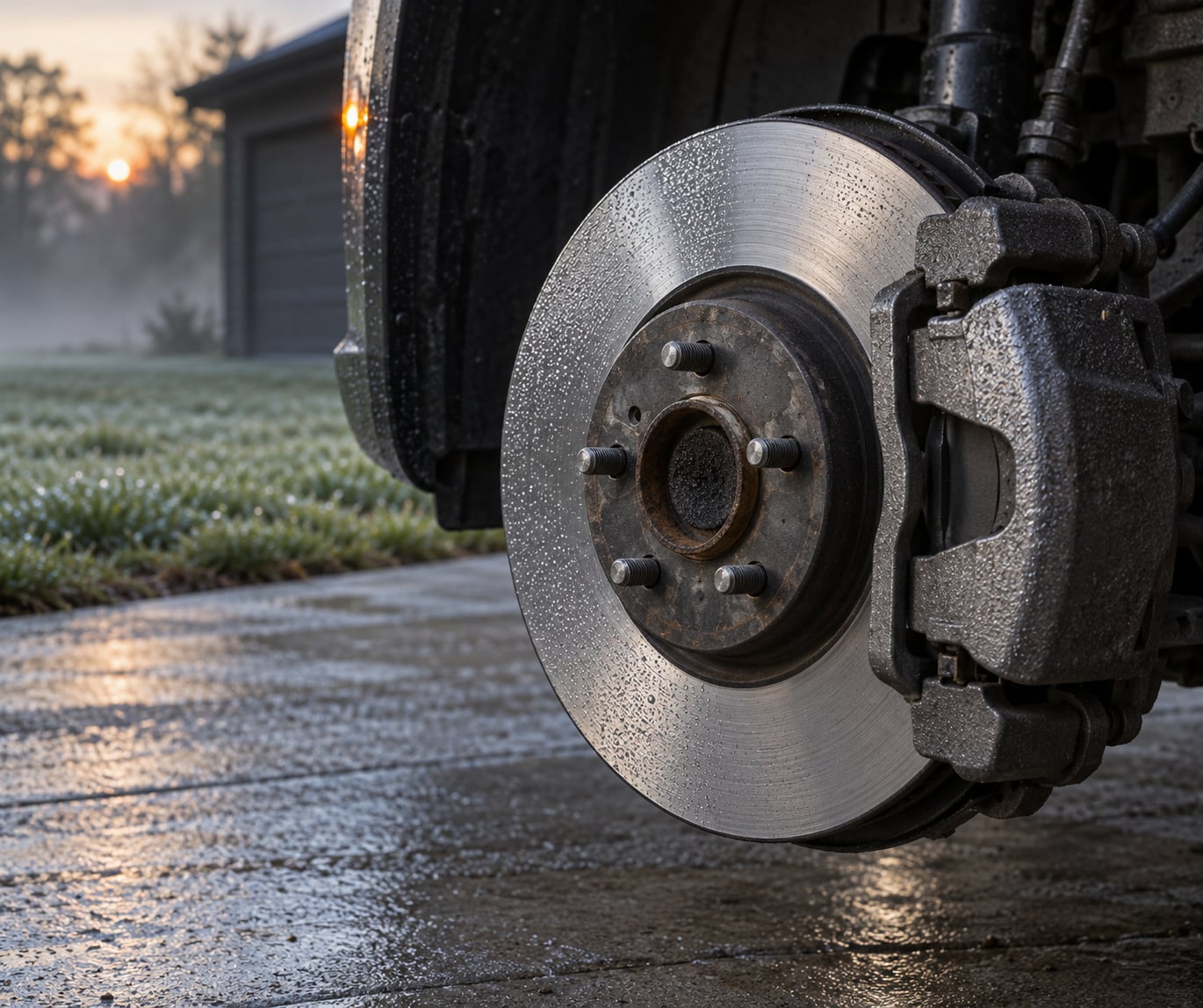
Brakes squeak when something is vibrating between the pad and the rotor under light pressure. Overnight, three things change at once: the rotor surface cools below the dew point and gathers moisture, the steel contracts slightly as it cools, and the pad sits still for hours with metal-to-metal contact that can leave faint rust transfer marks.
On the first stop of the day, the pad lands on a damp, faintly rusted rotor. That uneven surface makes the friction material buzz instead of grip, and the sound carries through the caliper into the body of the car where you hear it clearly.
Three or four stops clears the moisture off the swept area, and the noise usually goes with it. Mechanics on r/MechanicAdvice and r/askcarguys consistently name surface rust as the leading explanation for a squeak that only shows up before the car has warmed up.
If the sound sticks around after the rotors are hot, moisture stops being a plausible explanation. Something mechanical is then involved.
What Causes Squeaky Brakes in the Morning?
What Causes Squeaky Brakes in the Morning Most Often
Surface rust on the rotor edge and swept face is the big one, and it explains most of the cases people search for. A damp morning after rain, dew or high humidity gives the metal eight hours to oxidize.
Rust on a rotor is not a failure state. It sits on the outer edge where pads barely touch, and it flakes off under the first few applications. Rust that spreads across the whole swept face and stays after warming up is a different story.
Cold metal contracting overnight
Steel shrinks as it cools. As the rotor and caliper finger tighten overnight, clearances that were fine when warm can shift just enough for a pad to chatter against its backing plate or for the shim to start moving.
This is why the same brakes can be silent on an afternoon drive and noisy at 6 a.m. in the driveway. Users in northern climates report the squeak lasting longer and sounding louder when overnight temperatures drop below freezing.
Brake pad hardware, shims and anti-rattle clips
The friction material is only half the system. Shim edges, anti-rattle clips and the pad backing plate can all tick and squeak on their own, especially when they are dry or installed without the factory lubricant.
That kind of noise tends to be sharper and more metallic than rotor rust, and it often shows up at low speed when you are barely touching the pedal. Owners who had pads replaced recently sometimes find the squeak came back because the hardware was left dry or a clip was left off.
Worn pads and the squealer tab
Most pad sets include a small metal tab welded to the friction material. When the pad wears down to roughly a sixth of an inch, the tab touches the rotor and starts squealing loudly and continuously.
A wear indicator tab squeaks through everything. It does not fade with warmth, it does not care about the weather, and it usually gets louder as the pad thins further. If you can see shiny metal in the caliper window with little or no pad material left, that is the sound you are hearing.
Pads that have not finished bedding in
New pads need a bedding period, usually the first few dozen miles of normal braking. Until the friction material lays down an even transfer layer, a cold morning can sound rougher than it should.
That is not a defect. It usually settles once the pads have been used gently and stopped bedding in.
Climates and parking situations that make it worse
Humid air and frequent rain give rotors more chances to film over. Users in Florida and the Pacific Northwest report morning squeak far more often than people in dry areas.
Outdoor parking tends to produce more of it than a garage, though there is an exception: a car that sits for weeks without moving can accumulate more surface rust than one driven daily. If the squeak vanishes in the rain and returns the next clear morning, moisture is almost certainly the driver.
How to Tell a Harmless Morning Squeak From a Warning
Drive gently for a few minutes and listen again. A rust-related squeak fades as the swept face dries and warms, usually within three to five brake applications or the first half mile.
Warning signs look different. The noise stays after the brakes are warm, or it gets louder instead of quieter. Grinding that sounds like sandpaper rather than a squeal points at metal on metal, which means the pads or the pad material are gone.
Also take seriously: a pedal that feels spongy, sticky or harder than usual, a steering wheel or seat that shudders when you brake, a vehicle that pulls to one side, visible fluid around a wheel, a hot pedal after a short drive, or smoke with a burning smell. Any of those deserve a shop visit before more driving.
Pulsation is the one people miss. If the pedal pushes back in a rhythmic pulse that matches your speed, the rotor is probably warped and needs machining or replacement, not lubrication.
Morning Brake Squeak vs. Other Common Brake Noises
| Sound | Likely cause | Does it fade when warm? | How urgent |
|---|---|---|---|
| Squeal, first few stops only | Surface rust and condensation | Yes, within a few applications | Low. Normal if it stays quiet afterward |
| Squeal that never stops | Worn pad touching the wear indicator tab | No | High. Book an inspection soon |
| Grinding or rasping | Pad material worn away, metal on rotor | No | Urgent. Avoid further driving if it is severe |
| Growl or hum that rises and falls with speed | Warped or grooved rotor | No | Medium to high. Check for pedal pulsation |
| Rattling or ticking at low speed | Loose hardware, shims, backing plate | Sometimes | Medium. Usually a lubrication or clip fix |
| Clicking when the pedal moves | Worn pad shim, brake light or master cylinder | No | Medium. Often harmless, worth confirming |
What Can You Check Safely?
Most useful diagnosis happens from the driver’s seat and from outside the car. None of it needs a jack, a crawl under the vehicle or touching anything hot.
Note the conditions. Morning only, or all day? Only after rain, or every clear morning? Only the front wheels, or all four? Worn pads and warped rotors usually show up on the front axle first, while hardware rattles often appear on one corner.
Look at the wheel through the spokes with the car parked on level ground. You are looking for obvious fluid weeping, a visibly thin or missing pad, heavy rust coating the whole rotor face, or a wheel sitting oddly.
Test the braking at low speed in a safe, empty area. Gentle stops from about 20 mph tell you a lot: whether the sound fades, whether the pedal feels normal, whether the vehicle stays straight, and whether a pulse comes through the pedal.
Two things to leave alone. Never spray lubricant, cleaner or anything else on the friction surfaces, pads or rotors, and never put WD-40 on a squealing brake. Those surfaces are designed to be clean and slightly abrasive, and contamination has to be cleaned off properly afterwards.
And do not crawl under a parked car or reach near a rotor after driving. Brakes run hot enough to burn skin.
When Should You Have the Brakes Inspected?
Book an inspection when the morning squeak survives past the first few stops, when it comes back every single morning for more than a week, or when it started appearing without any change in temperature or weather.
Go sooner for grinding, a vibrating pedal, a pull to one side, a soft pedal, or anything visible like a leak, a cracked rotor or a pad worn to the metal. Your owner’s manual covers the inspection intervals for your specific vehicle, and a qualified brake technician can measure pad thickness, rotor thickness and runout properly.
One more reason to have it looked at: if the squeak started right after brake work. New pads that squeak cold for a few days are fine, but a noise that appeared after service and never went away often traces back to dry hardware, a missing clip or a rotor that was never cleaned or machined.
Forum complaints about morning squeak often end with the same story. Someone was told it was normal, drove for months, and eventually found worn pads or a hardware issue that a ten-minute inspection would have caught.
Frequently Asked Questions
Is it normal for brakes to squeak early in the morning?
Usually, yes. Overnight moisture settles on cool rotors and leaves a light film of surface rust. The first few brake applications scrape it away, and the squeak fades once the rotors warm up. If the noise lasts the whole drive or gets louder rather than quieter, treat it as a real issue rather than morning moisture.
Why do my brakes squeak when I first start driving in the morning?
Condensation forms on the cold rotor while the car sits, the moisture oxidises into light surface rust, and the cold caliper hardware tightens as the metal contracts. The pad then lands on an uneven, damp surface and vibrates under light pressure. Heat and a few gentle stops remove the moisture film and the noise with it.
Why are my brakes squeaking even though the pads are fine?
Fresh friction material is rarely the culprit. Surface rust, dry slide pins, loose shims, anti-rattle clips or backing plates, a pad that has not finished bedding in, and low-speed vibration from a warped rotor can all squeal with plenty of pad material left. Your technician can separate these causes by measuring thickness and checking for hot spots after a drive.
Is it okay to drive on squeaky brakes?
A brief morning squeak that fades after a few stops is generally fine to drive. A continuous squeal, any grinding, a soft or pulsing pedal, a pull to one side or smoke is not. Those mean the friction material, a caliper or a rotor needs attention, and continued driving can turn a small pad job into a rotor and caliper job.
Can I spray WD-40 on my brakes to stop squeaking?
No. WD-40 is a lubricant, and lubricants have no place on pads or the rotor friction surface. They soften the material, reduce stopping performance and have to be removed with a proper brake cleaner before the brakes can work correctly. If something has already been sprayed there, have the pads and rotors cleaned or replaced.
What to Do About Morning Squeaky Brakes
Start by writing down when it happens. Morning only, every clear morning, after rain, or one particular wheel tells you almost as much as any diagnosis.
Then drive gently for the first few stops at low speed. If the sound fades as the rotors warm, you are almost certainly dealing with condensation and light surface rust, and that is normal on a vehicle that sits outdoors overnight.
If it does not fade, or if the pedal feels soft, pulsed or hard, book a brake inspection. Padding wear, warped rotors and dry hardware are the usual reasons a squeak outlasts the warmth, and they are all things a technician can measure in a few minutes. Keep following the maintenance schedule and inspection intervals in your owner’s manual, and this is one noise that mostly wants attention early rather than late.